
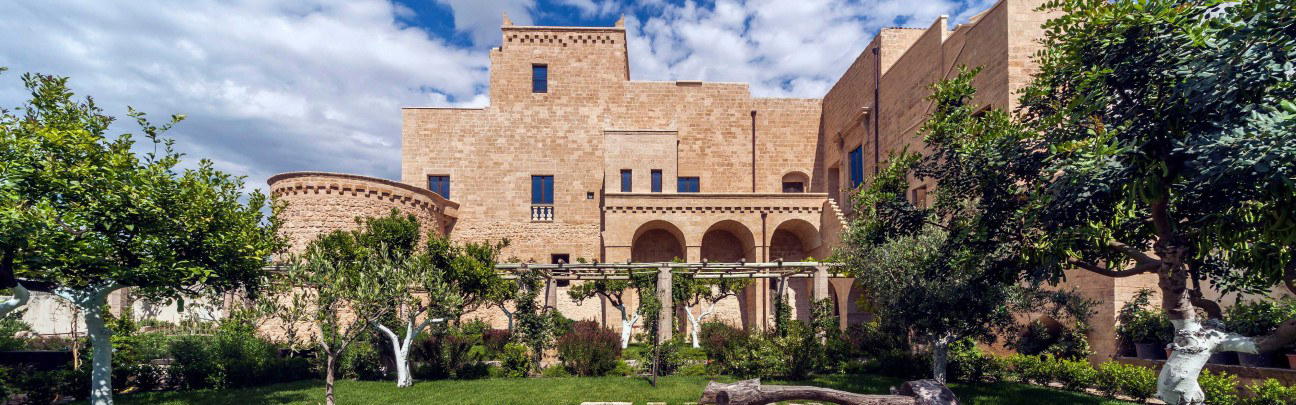
A Michelin Selected dimora storica in the deep Salento interior, Tre Bacili | L'Ospitalità in Dimora occupies a historic residence in Spongano, a village few visitors reach before turning toward the coast. The property sits in a tier of small-scale Puglian hospitality defined by architectural restoration over new construction, and its inclusion in the Michelin Hotels 2025 selection places it alongside Italy's most considered accommodation choices.
Pearl is the En Primeur Club membership app — saves, bookings, and concierge access live there. Same editors, same standards.
- Address
- Via Congregazione 48C, Spongano, Italy
- Phone
- +393289818359
- Directions
- Get directions
 Saves & bookings on Pearl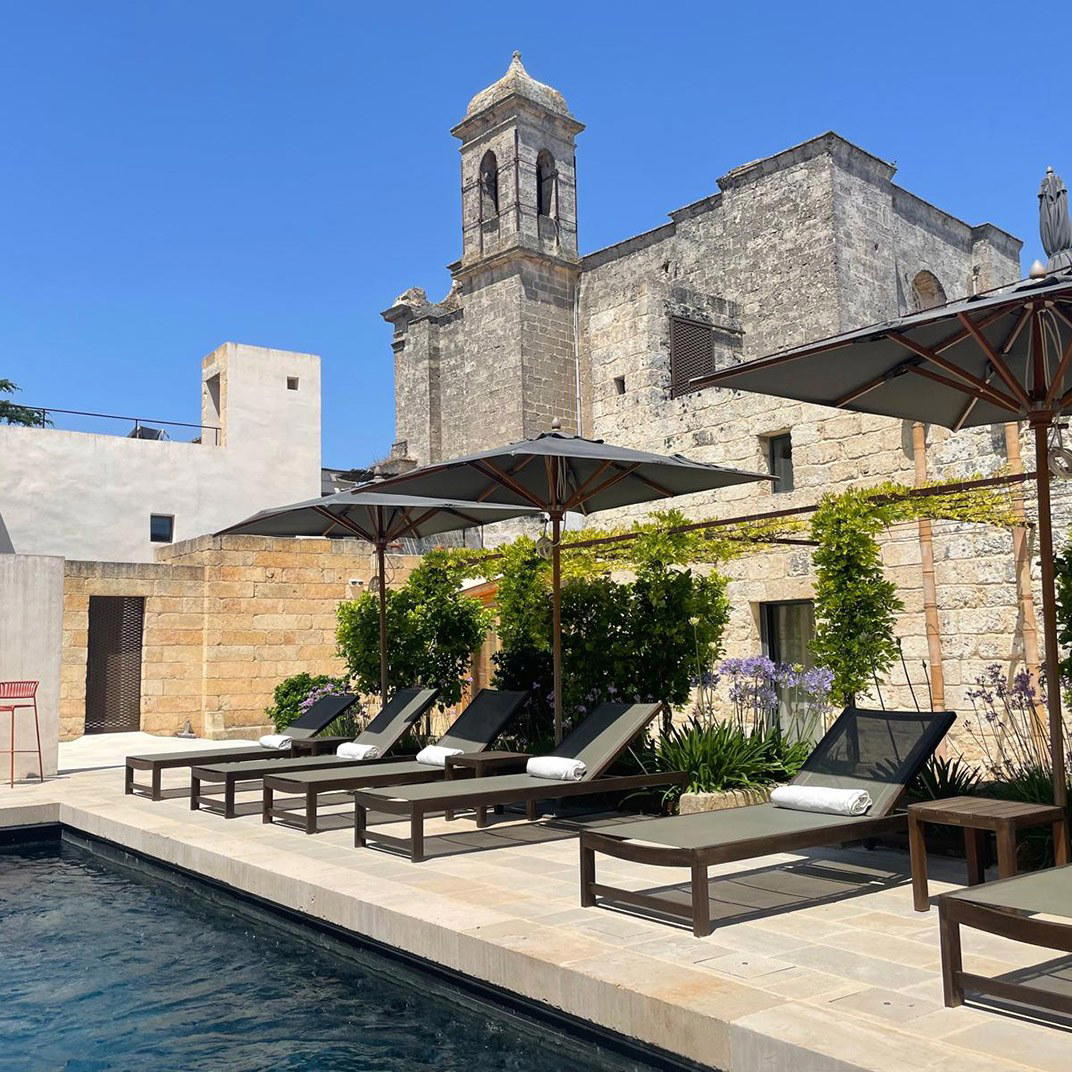
Stone, Silence, and the Interior Salento
The road into Spongano does not announce itself. There are no resort signs, no manicured approach roads, and no concierge pickup from Lecce. The village sits in the Salento hinterland roughly midway between the Adriatic and the Ionian coasts, in a part of Puglia where the tourist infrastructure thins out and the architecture begins to speak for itself. Dry-stone walls, low baroque facades, and the particular light of the deep Mezzogiorno define this stretch of the province more honestly than any curated coastal strip. Tre Bacili | L'Ospitalità in Dimora is at Via Congregazione 48C, Spongano, Italy, and the name itself frames the proposition: this is hospitality offered within a dimora, a residence, not a hotel constructed for the purpose.
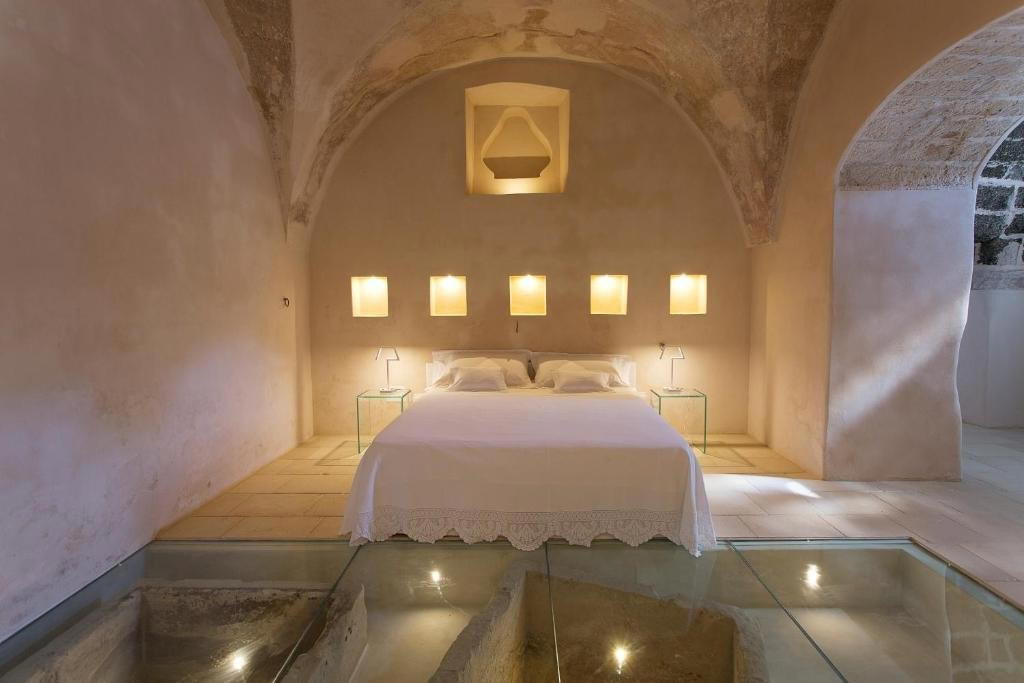
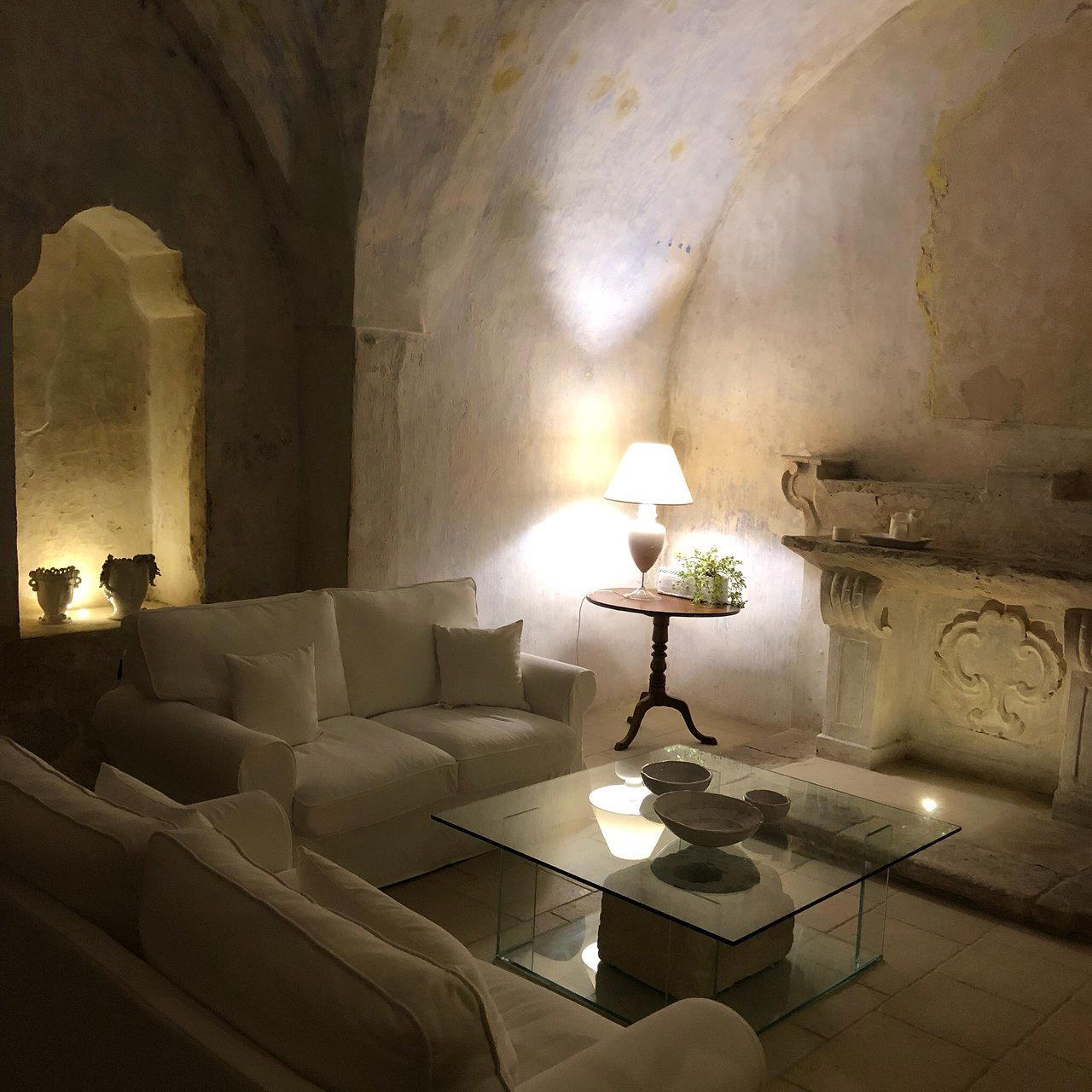
That distinction matters architecturally. The dimora storica tradition in southern Italy occupies a different category from the converted masseria model that has come to dominate Puglian luxury hospitality. Where properties like Borgo Egnazia in Savelletri di Fasano scale the masseria concept into a resort format, dimora-style properties preserve the domestic spatial logic of the original building. Rooms are arranged as they always were; the architecture is not reconfigured around a pool or a spa lobby. What arrives instead is a sense of occupying rather than visiting. The wall thicknesses, the courtyard geometries, and the materiality of local limestone carry the real character of the place.
A Michelin Selection in an Unlikely Location
Michelin's hotels programme has progressively extended beyond city-centre grand hotels and coastal resorts to include smaller, regionally embedded properties. Tre Bacili's inclusion in the Michelin Selected Hotels 2025 list places it alongside properties operating at a different scale but sharing a set of underlying qualities: distinctiveness of setting, care in the physical environment, and a sense of place that chain properties cannot replicate. Michelin Selected does not carry the same point-count signal as a starred restaurant distinction, but in the accommodation category it functions as a meaningful curatorial filter, separating considered properties from the undifferentiated holiday rental market.
In Puglia specifically, this matters. The region's accommodation tier has expanded rapidly over the past decade, with trulli conversions, masseria resorts, and boutique hotels occupying every price bracket and quality level. Within that volume, Michelin's selection process acts as a navigation tool. Tre Bacili sits in that edited tier alongside other regionally grounded Italian properties included in the 2025 guide, a comparable set that extends across the country to addresses like Corte della Maestà in Civita di Bagnoregio and Castel Fragsburg in Merano, properties where the physical environment and its preservation are the primary offer.
The Architecture as the Argument
The editorial angle on Tre Bacili is not about amenities. It is about what happens when a historic residential building is treated as the point itself rather than a shell to be modernised. Salento's vernacular architecture developed in response to specific conditions: the heat, the limestone availability, the need for cross-ventilation in buildings oriented around internal courtyards. These are not decorative decisions. The thick walls that keep rooms cool in July, the proportions of doorways and ceilings, the relationship between interior and exterior space, all carry functional and aesthetic intelligence accumulated across generations of building practice.
Properties that restore within this logic rather than overwriting it tend to produce a specific kind of guest experience: quieter, more spatially coherent, and more connected to the actual place. This is the model that defines a growing subset of Italian hospitality, visible also in the approach at Castello di Reschio in Lisciano Niccone and, at a grander scale, in the way Four Seasons Hotel Firenze absorbs its Renaissance palazzo envelope. The scale varies enormously, but the underlying logic is consistent: the building leads, and the hospitality operation follows its terms.
For Spongano, a village without the coastal or cultural magnetism of Lecce, Otranto, or Gallipoli, the architecture is also the reason to visit. The Salento interior offers a version of Puglia largely bypassed by the mass tourism flows that concentrate on the coast between May and September. Visiting in shoulder season, when the coastal towns are either packed or shuttered, the interior retains a working quality: markets, local bars, agricultural rhythms. Tre Bacili's position in the village fabric connects guests to that version of Salento rather than insulating them from it.
Placing It Among Italian Peers
The wider category of intimate Italian properties selected by Michelin in 2025 spans from lakeside addresses like Passalacqua in Moltrasio and Il Sereno in Torno to island properties like Therasia Resort in Lipari. These properties do not compete on room count or facilities breadth. They compete on specificity: the quality of a particular location, the coherence of a particular aesthetic approach, the depth of a particular sense of place. Tre Bacili competes in that register.
Southern Italy has its own internal hierarchy within this space. The Amalfi Coast tier, represented by properties like Borgo Santandrea and Il San Pietro di Positano, operates at high price points driven by coastal access and international demand. The interior Salento operates at a different register: lower profile, lower price pressure, and a guest profile that has actively chosen the unfamiliar over the established route. That choice reflects a particular kind of travel literacy, and the properties that serve it well tend to earn strong repeat rates regardless of whether they hold broad public recognition.
Getting There and Planning the Stay
Spongano sits in the Lecce province, accessible from Brindisi airport (the main regional hub for Puglia) or, for those approaching from further north, from Bari. The village is best reached by car; the Salento interior is not structured around public transport for the kind of unhurried movement between small towns that defines this area well. Reservations are recommended, as availability in a small dimora is limited by definition and shoulder season dates in April, May, September, and October fill ahead of the peak summer window. For readers planning a wider Puglian itinerary, our full Spongano guide covers the surrounding area in more detail.
For context on Italy's broader premium accommodation range, the EP Club portfolio extends to addresses including Aman Venice, Bulgari Hotel Roma, Casa Maria Luigia in Modena, Borgo San Felice Resort in Castelnuovo Berardenga, and Rosewood Castiglion Del Bosco in Montalcino, covering the full range from city grand hotels to rural wine-country retreats.
Comparable Spots, Quickly
Comparable venues nearby, for context on price, style, and recognition.
| Venue | Cuisine | Price | Awards | Notes |
|---|---|---|---|---|
| Tre Bacili | L’Ospitalità in DimoraThis venue — the venue you are viewing | Restored historic Salentine mansion with scattered layout and generous intimate spaces | $$$$ | 4-Star | Not listed |
| Maison Borella | Charming 18th-century balustrade house with modern comforts and internal courtyard. | $$$$ | 4-Star | Porta Ticinese - Conchetta |
| Martius Private Suites | Historic palazzo with modern luxury suites | $$$$ | 4-Star | Colonna |
| Hotel Continentale | Mid-century Italian glamour in a historic tower. | $$$$ | 4-Star | Santo Spirito |
| Martis Palace Hotel Rome | Luxury boutique hotel housed in a beautifully restored Renaissance palazzo with contemporary elegance and monastic architectural heritage. | $$$$ | 4-Star | Parione |
| Hotel Ciasa Salares | Family-run wooden chalet blending traditional Ladin heritage with luxury comfort. | $$$$ | 4-Star | San Cassiano |
Recognition history
Dated appearances from independent guides and award organizations, with the underlying list record or original source where available.
Michelin Selected
Michelin
Continue exploring
More in Spongano
Hotels in Spongano
Browse all →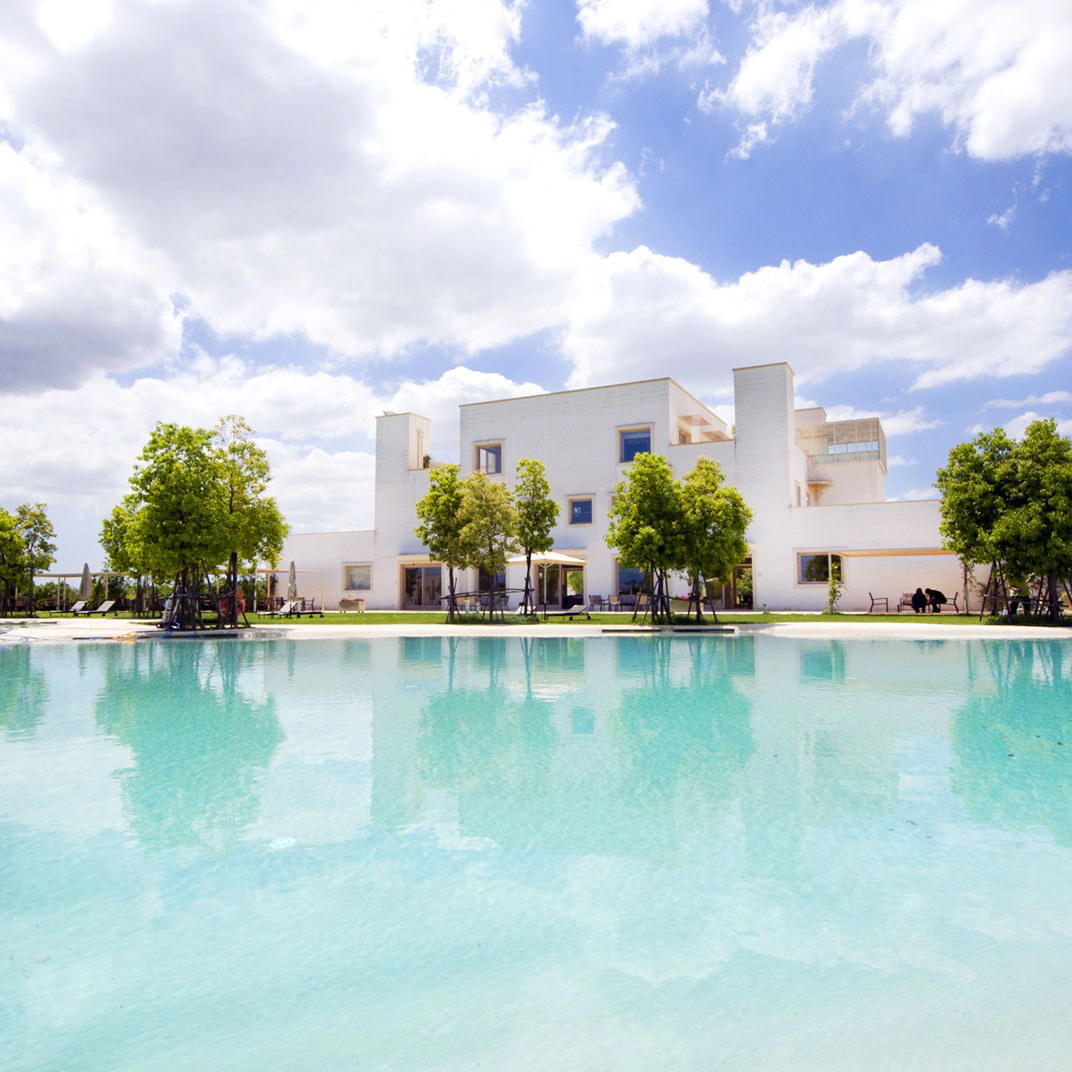
Bars in Spongano
Browse all →
Restaurants in Spongano
Browse all →

At a Glance
- Romantic
- Quiet
- Elegant
- Cozy
- Intimate
- Romantic Getaway
- Honeymoon
- Anniversary
- Weekend Escape
- Garden
- Historic Building
- Terrace
- Wi Fi
- Pool
- Breakfast Included
- Garden
- Wi Fi
- Pool
- Breakfast Included
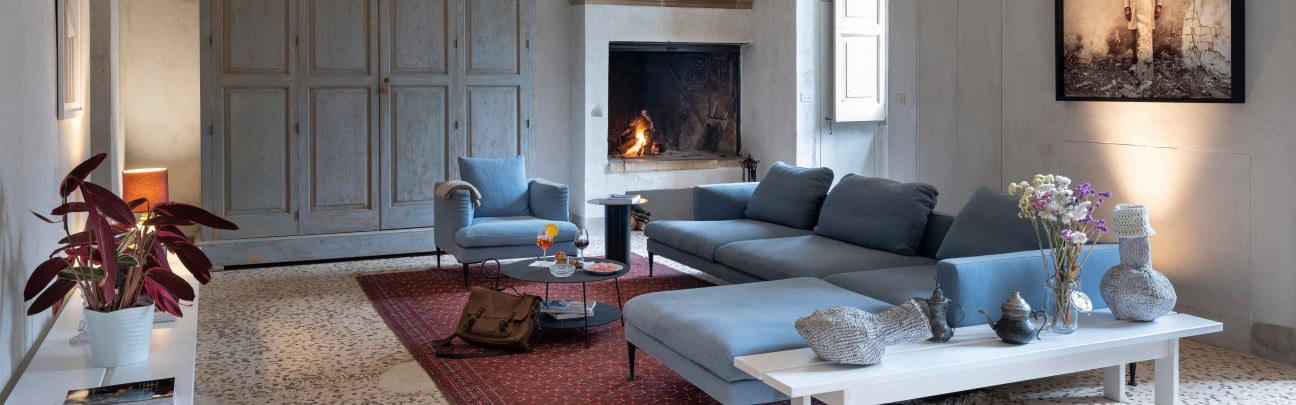
Discreetly tranquil and romantic atmosphere combining restored historical elements with modern furnishings in a peaceful village oasis.