

2 Michelin Keys · Forbes Recommended
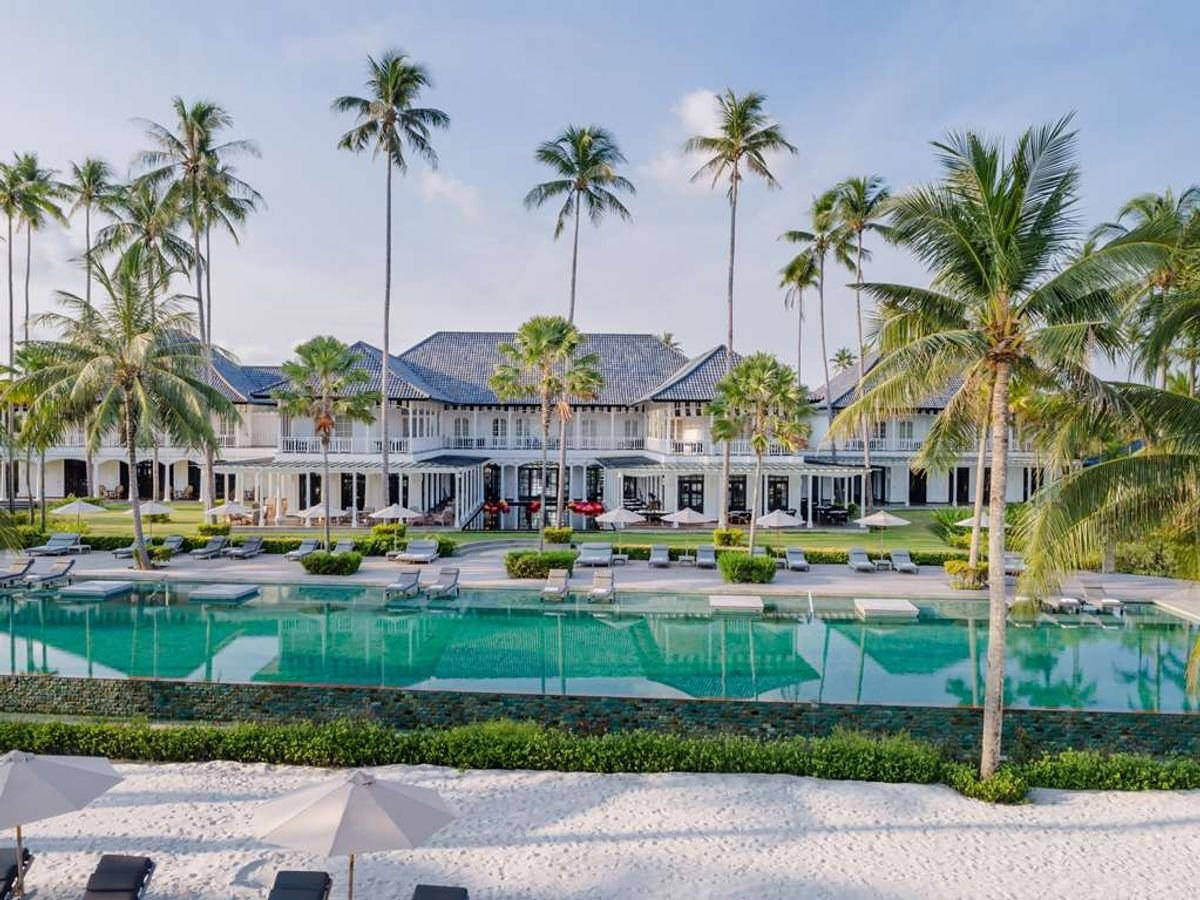
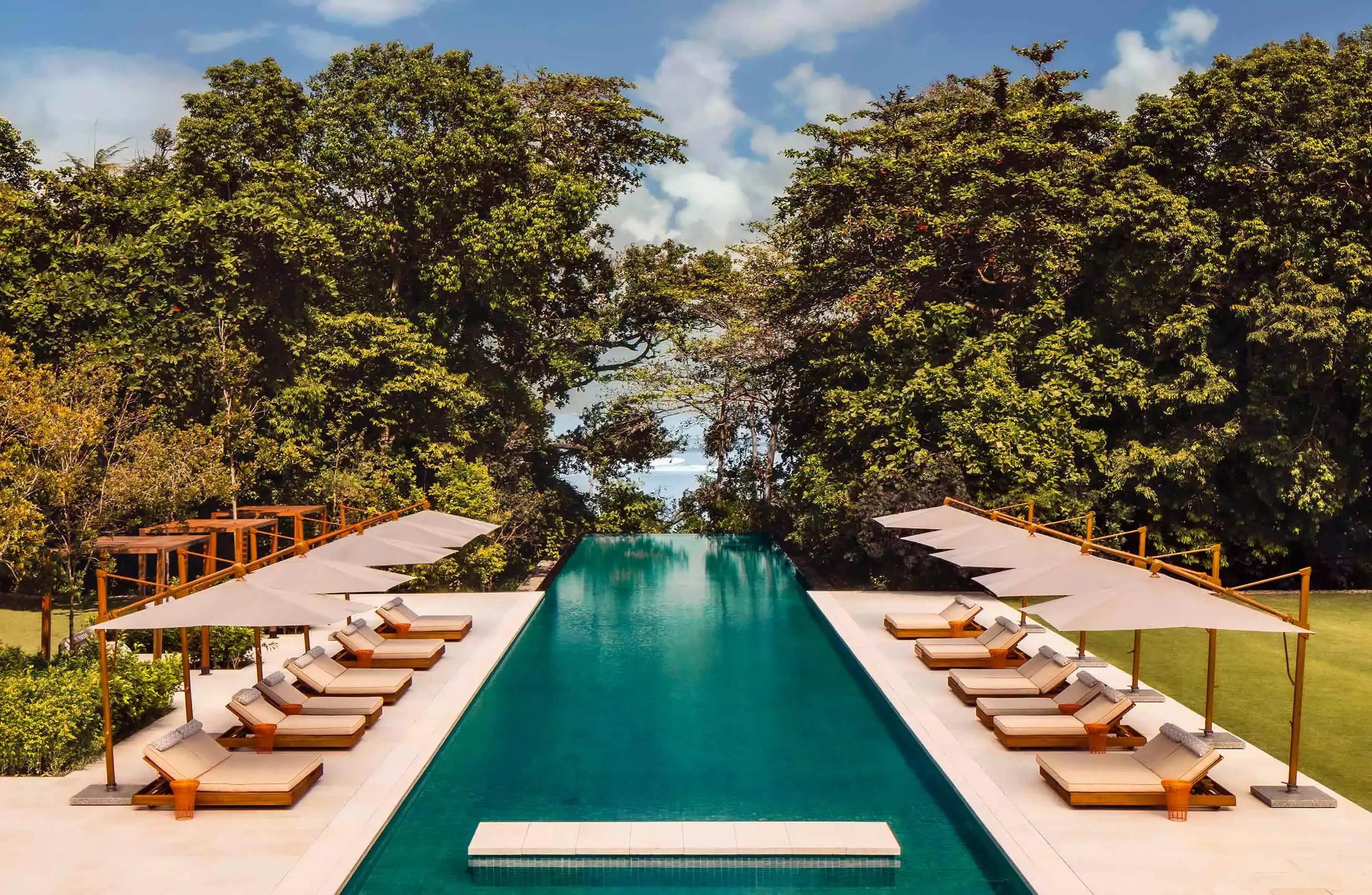
Thirty suites and villas across 24 beachfront acres on Bintan Island, reached by a 50-minute ferry from Singapore. The Sanchaya occupies a colonial-meets-contemporary design register, with Olympic-sized infinity pool, rainforest boundary, and a curatorial approach to Southeast Asian art and material culture. Rooms start from $512 per night.

Pearl is the En Primeur Club membership app, where members save venues, book tables and use the concierge.
The Architecture of Arrival
The journey to The Sanchaya is deliberate by design. From Singapore, the sequence runs: a 15-minute drive to the ferry terminal, a 45-minute crossing to Bintan's north shore, then another 15 minutes by road. That transit time is not a logistical inconvenience so much as a physical reset, the kind of enforced decompression that separates this tier of Indonesian island property from the fly-in-fly-out resort model. For those arriving from Singapore, the property manages a private VIP lounge inside the ferry terminal, handling express immigration and customs clearance while guests take tea or champagne. The paperwork, in other words, happens at a remove.
This approach to arrival reflects a broader pattern in Southeast Asian luxury. Properties in this bracket, small key counts, beachfront acreage, Singapore-proximate but genuinely remote, increasingly treat the journey itself as part of the product.
A Colonial Frame, Refurnished
The design language at The Sanchaya works from a colonial plantation template, then layers in decades of Southeast Asian material culture. Parquet floors, Chinese-style cabinetry, antique wooden writing desks, these sit alongside Bang and Olufsen televisions, espresso machines, and wine fridges fitted into rooms. The aesthetic is not nostalgic pastiche. It is more accurately described as a curatorial exercise: the building provides the frame, the objects inside establish a conversation between eras.
Colonial-register architecture in tropical luxury has a complicated precedent across the region. At properties like Amankila in Manggis and Amanwana on Moyo Island, the Aman group has long used local material and spatial tradition to anchor design intent. The Sanchaya operates in a related but distinct register, its colonial architecture is more literal, the Southeast Asian art and artifact collection used as counterweight and context rather than structural principle. The result reads as a property that knows what it is referencing and has thought carefully about how to reframe it.
The physical scale of the main house exceeds what the room count would suggest. With only 21 villas and nine suites split between the main building and the lagoon-facing Lawan Village, the acreage per key is generous. Guests do not feel the proximity of neighbors. This is a deliberate structural choice: in a 30-key property spread across 24 acres, the architecture of separation is itself an amenity.
The Interior as Collection
The description of The Sanchaya as a museum of Southeast Asian art and artifacts is not marketing language, it reflects a specific acquisitions-driven approach to interior design that distinguishes the property from hotel groups that use regional aesthetics as surface decoration. Antique writing desks stocked with artisanal stationery, traditional cabinetry, and hand-selected objects across public and private spaces suggest a property curated with the eye of a collector rather than an interior designer working from a brand standards manual.
This approach is more common in boutique properties than in chain-affiliated luxury. Compare it to a property like Bambu Indah in Banjar Badung, where material provenance is central to the guest experience, or Desa Seni Baturiti in Tabanan, where local craft is embedded in the architecture itself. The Sanchaya's version of this impulse skews grander and more eclectic, the collection spans cultures and centuries rather than celebrating a single tradition. The colonial architecture provides the organizing container; the objects inside resist any single national or cultural narrative.
Room amenities across categories include private terraces, pillow menus, yoga mats, and still water bottled on the estate, the last detail being the kind of hyper-localized touch that signals a property paying attention to the full sensory inventory, not just the headline numbers. Guests looking for comparison within the broader Indonesian luxury set might also consider Nihi Sumba in East Nusa Tenggara or Mandapa, a Ritz-Carlton Reserve in Ubud, both of which operate at the environmental-immersion end of the market. The Sanchaya's position is different: it prioritizes material culture and aesthetic precision alongside nature, rather than subordinating design to landscape.
Food, Drink, and the Tempo Doeloe Tradition
The Sanchaya operates several restaurants and bars, and the food and beverage programming extends into format as much as menu. Indonesian snacks served poolside in the tempo doeloe style, servers carrying two baskets suspended from a pole balanced across the shoulders, references a pre-independence street culture that has largely receded from commercial hospitality. Bringing that format into a resort context is an editorial choice, not just a service detail: it insists on cultural continuity in a setting that could easily default to international resort food.
The tea program involves a collaboration with Ronnefeldt to produce a signature blend, served with house-made pastries on fine bone china. The wine program includes sommelier-led tastings in an on-site cellar. These are not unusual amenities for a property at this price point, which starts at $512 per night, but the combination of a German specialist tea house, estate-bottled water, and tempo doeloe service creates a food and beverage identity that feels deliberate rather than assembled from a luxury resort checklist.
Positioning in the Regional Market
Bintan occupies a specific niche in the regional luxury market: close enough to Singapore to function as a weekend destination, far enough to feel genuinely removed from the city. For the Singapore-based traveler, Bintan's proximity makes it a different category from Bali, more accessible, less culturally layered, but capable of delivering the physical environment that longer-haul Indonesian destinations offer.
Properties serving the Singapore weekend-escape market have a particular set of pressures: they must deliver a sense of distance and remove while remaining genuinely accessible, and they must justify premium pricing against the alternative of a short-haul flight to more established luxury destinations. For context on how other Indonesian properties in the region approach this positioning, see our full Bintan restaurants guide.
For travelers comparing across the Indonesian archipelago, properties like Alila Villas Uluwatu in Uluwatu, Hotel Komune and Beach Club Bali in Gianyar, or AYANA Resort Bali in Jimbaran represent the Bali-centric alternative, each with their own design logic and market position. The Sanchaya's argument is simpler and geographically specific: for guests based in Singapore or transiting through it, the 50-minute crossing delivers a property that competes aesthetically with anything in the Bali luxury tier, without requiring the additional flight. Access from Singapore runs via ferry to Bintan, with the property managing VIP lounge access and immigration handling from the terminal. Nightly rates begin at $512. The 30-key capacity means availability can tighten during Singapore school holidays and long weekends, the property's primary feeder market runs to a predictable calendar. An activities concierge handles excursions for guests who want structured programming; the property also circulates recommended itineraries. The library and salon provide in-house alternatives for those who prefer to remain on-site.
Fast Comparison
Comparable venues nearby, for context on price, style, and recognition.
| Venue | Cuisine | Price | Awards | Notes |
|---|---|---|---|---|
| The SanchayaThis venue (the venue you are viewing) | Colonial-inspired luxury estate blending Southeast Asian heritage with European refinement across a private beachfront setting. | $1,000–1,500 | 2 Michelin Keys · Forbes Recommended | Not listed |
| Banyan Tree Bintan | Tropical Indonesian villa resort perched on cliffs | $500–750 | Michelin Selected | Lagoi |
| Four Seasons Hotel Jakarta | Contemporary luxury all-suite hotel designed as an intimate urban oasis with curated local art and prime central location positioning. | $300–500 | 2 Michelin Keys · Forbes Recommended | Kuningan Barat |
| The Langham, Jakarta | Contemporary luxury with refined British elegance and Indonesian hospitality; high-rise urban resort in Jakarta's financial district. | $300–500 | 2 Michelin Keys · La Liste Top Hotels | Senayan |
| Ulu Cliffhouse | Luxury boutique hotel designed as a spinoff of an exclusive beach club, blending high-end hospitality with laid-back clifftop living. | Not listed | Michelin Selected | Uluwatu |
| Amankila | Architectural masterpiece featuring freestanding thatched-roof suites staggered on a clifftside with interconnected stilted walkways, blending contemporary luxury with traditional Balinese design. | $1,000–1,500 | 2 Michelin Keys · Forbes 4-Star | Manggis |
Recognition history
Dated appearances from independent guides and award organizations, with the underlying list record or original source where available.
Michelin 2 Keys
Michelin
Forbes Recommended
Forbes
Full recognition history (3 entries)
Michelin 2 Keys
Michelin
Continue exploring
More in Bintan
Details
- Elegant
- Sophisticated
- Romantic
- Scenic
- Honeymoon
- Romantic Getaway
- Wellness Retreat
- Anniversary
- Beachfront
- Private Villa
- Butler Service
- Destination Spa
- Infinity Pool
- Private Dining
- Panoramic View
- Garden
- Wi Fi
- Pool
- Spa
- Fitness Center
- Room Service
- Concierge
- Valet Parking
- Beach Access
- Golf Course
- Waterfront
- Wheelchair Accessible
- Accessible Restroom
- Accessible Parking
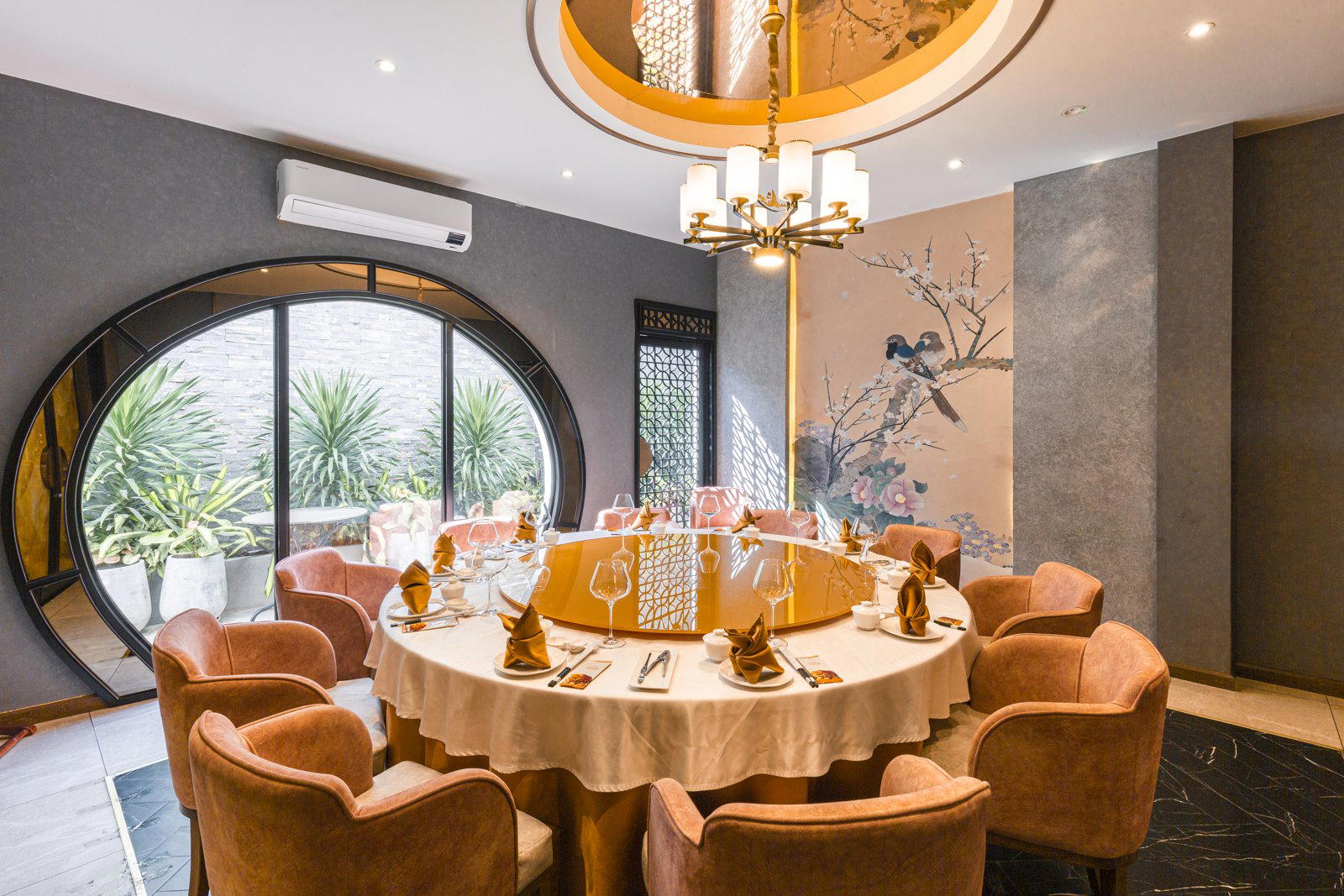
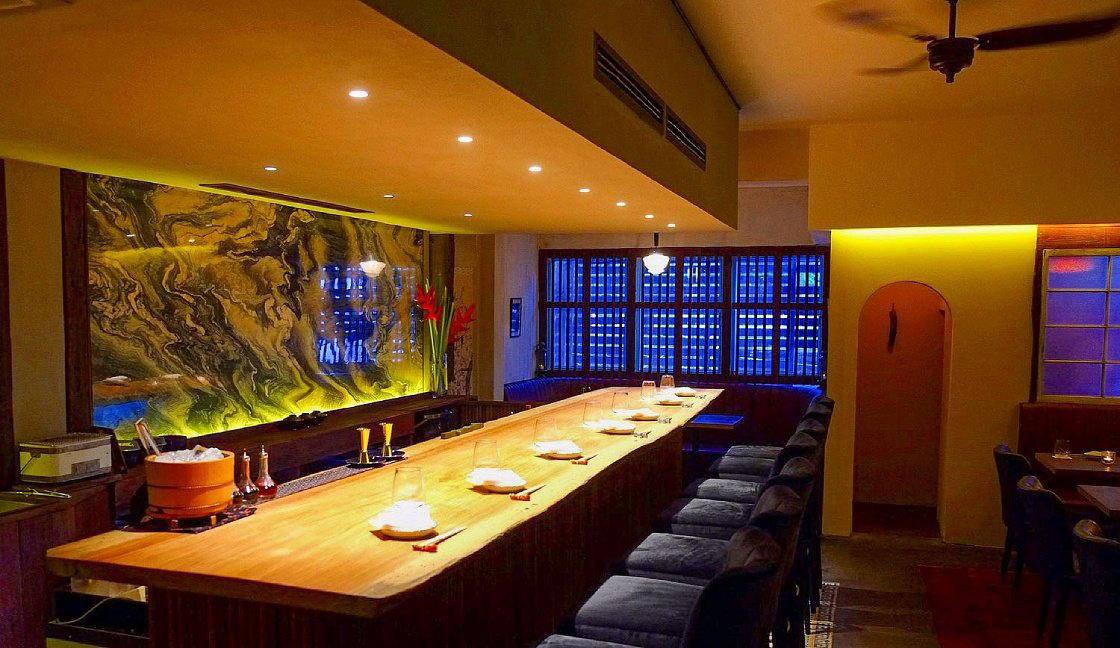
Refined and intimate with late-1800s explorers' club aesthetics, featuring antique furnishings, fine bone china service, and candlelit dining overlooking the South China Sea.