The Darcy
The Darcy occupies a converted historic building on Rhode Island Avenue NW, positioning itself within Washington D.C.'s mid-tier independent hotel tier. Its location places guests within walking distance of Dupont Circle and Logan Circle, two of the city's more architecturally distinct neighbourhoods. For travellers who want proximity to the capital's cultural corridor without the formality of the large Pennsylvania Avenue flagships, it fills a clear gap.

Pearl is the En Primeur Club membership app — saves, bookings, and concierge access live there. Same editors, same standards.
- Address
- 1515 Rhode Island Ave NW, Washington, DC 20005
- Phone
- (202) 232-7000
- Website
- thedarcyhotel.com
- Directions
- Get directions
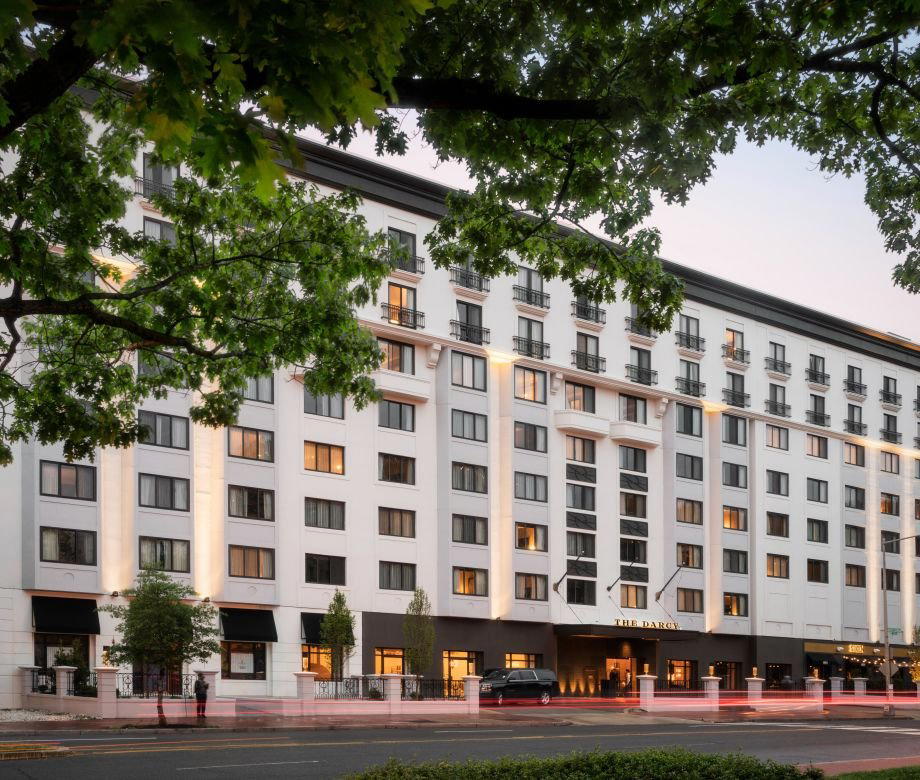
Rhode Island Avenue and the Architecture of Independent D.C. Hotels
Washington D.C.'s hotel geography has always been shaped by proximity to political power, with the corridor from the White House to Capitol Hill commanding the highest rates and the most institutional names. But a parallel tier has developed along the diagonal avenues that cut through the city's grid, particularly around Dupont Circle and Logan Circle, where converted historic structures have attracted a different kind of hotel operator: smaller, design-conscious, and less interested in ballroom capacity than in spatial character. The Darcy, at 1515 Rhode Island Ave NW, belongs to this cohort. Its address places it at a productive remove from the Pennsylvania Avenue flagships, close enough to the city's cultural corridor to be useful, far enough to avoid the transactional atmosphere that surrounds convention-facing properties.
Rhode Island Avenue as a hotel address carries specific associations in D.C. It runs through a stretch of the city that has seen sustained reinvestment over the past decade, with Logan Circle in particular becoming one of the more architecturally coherent neighbourhoods in the capital. For visitors, the immediate area means access to 14th Street's restaurant concentration, the Phillips Collection a short walk north, and the kind of residential streetscape that larger hotel districts rarely offer. For travellers who have stayed at the more institutional names closer to the National Mall, the contrast in neighbourhood texture is immediate.
The Physical Container: What the Building Communicates
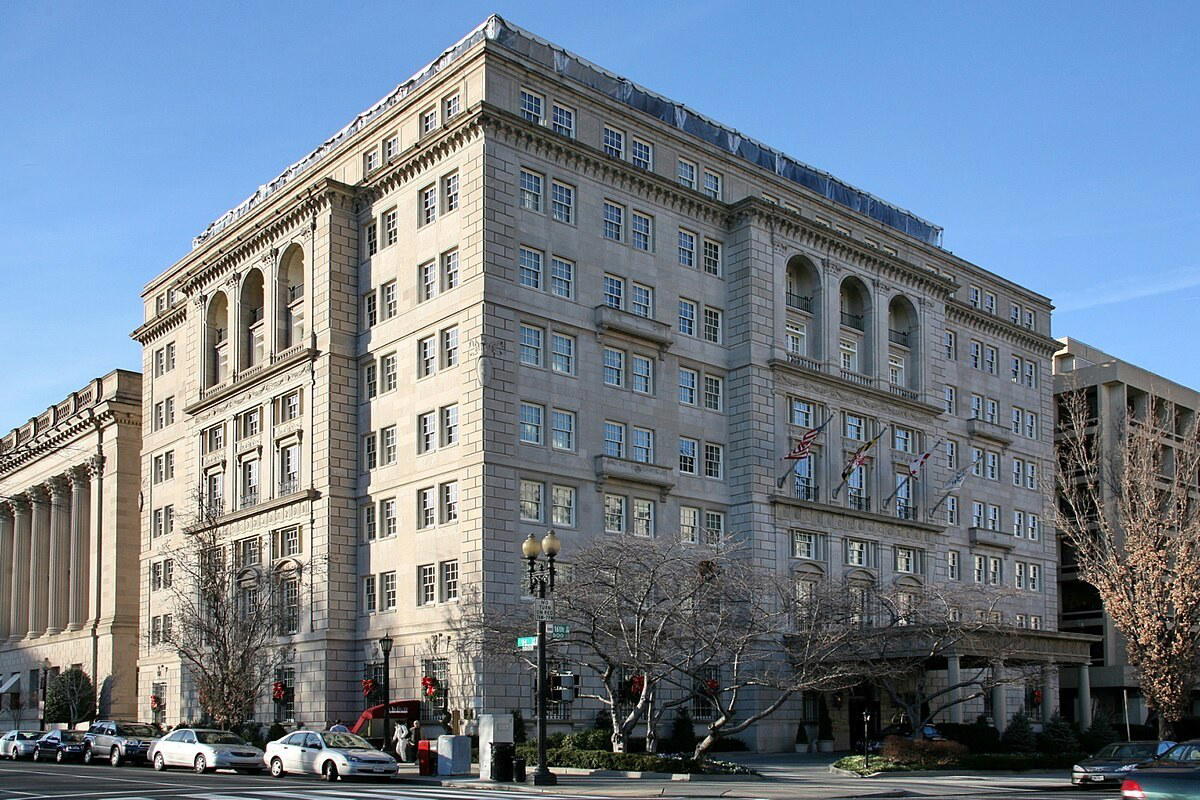
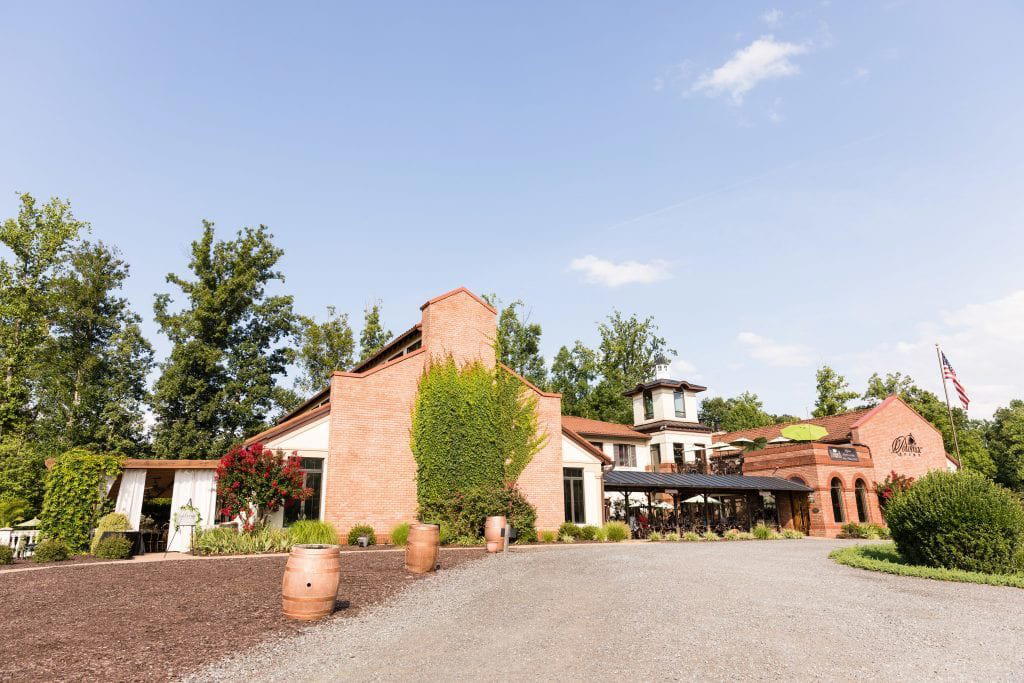
In D.C.'s independent hotel segment, the building itself tends to do most of the editorial work. The city's historic preservation framework means that the envelope of older structures is often retained while interiors are reworked, producing hotels where the facade signals one era and the lobby signals another. The Darcy follows this pattern: the structure's provenance as a historic property is present in the massing and the street-level relationship to the neighbourhood, while the interior approach reads as a considered repositioning rather than a restoration.
This design orientation places The Darcy in a specific competitive set within D.C. It is not operating in the same register as properties like The Jefferson, which trades on a particular kind of Federalist grandeur and deep-pocket formality, nor is it in the same conversation as The Hay-Adams Hotel, where the view of the White House and the weight of the building's history are inseparable from the product. The Darcy's spatial proposition is quieter and more contemporary in its references, aligned more closely with the design-led independent tier than with the capital's legacy grande dames.
Among D.C.'s independent properties, this design approach connects it to what has happened more broadly at hotels like Riggs Washington DC, where a former bank building was converted into a hotel with significant architectural ambition, or Eaton D.C., which used its F Street address to pursue a programmatic and spatial identity distinct from the convention hotel model. Each of these properties asks a guest to engage with the building as part of the experience rather than treating the room as a neutral container.
Location as Editorial Argument
The Dupont Circle and Logan Circle neighbourhoods have a particular utility for D.C. visitors who are not primarily here for government business. The density of independently operated restaurants along 14th Street NW, the presence of the Phillips Collection within the Dupont corridor, and the relative ease of reaching Georgetown or Adams Morgan by foot or short cab ride make the area function as a useful base for a certain kind of trip.
For visitors arriving in autumn or early spring, when the city's tourist volume drops below the peak Cherry Blossom and summer congress seasons, the Rhode Island Avenue location becomes particularly functional: the neighbourhood operates at a more residential tempo, the restaurant scene along 14th Street is easier to access without advance planning, and the city's museums are less crowded. These are the conditions under which The Darcy's proximity to Logan Circle and the Phillips Collection pays off most clearly.
D.C. visitors who want to compare the independent design-led tier against the larger luxury flagships can look to Rosewood Washington, D.C. or Pendry Washington DC at The Wharf for reference points at the upper end of the market. Both operate with significantly larger footprints and more extensive F&B programming, and both carry the brand infrastructure of international hospitality groups. The Darcy operates with a different logic, one that places spatial character and neighbourhood integration ahead of amenity breadth.
Travellers who have experienced similar positioning in other U.S. markets will recognise the model: it is close in spirit to what Raffles Boston represents in Back Bay, or what design-led independents in New York's outer midtown have been attempting. The common thread is the argument that the building and its neighbourhood context can carry the experiential weight that larger brands distribute across pools, spas, and branded restaurants.
Planning a Stay: Practical Orientation
The Darcy's Rhode Island Avenue address is served by the Dupont Circle Metro station on the Red Line, making airport transfers from Reagan National (DCA) direct via the Blue/Orange/Silver lines with a single interchange. For visitors travelling to the capital for a weekend cultural programme rather than a multi-week conference stay, the hotel's location reduces dependence on taxis or rideshare for most daytime movement.
Booking lead times for D.C. hotels in this tier vary considerably by season. Cherry Blossom season in late March and early April, major inauguration years, and the summer peak all compress availability across the city. Autumn, particularly October and early November, tends to offer the most favourable rate-to-availability ratio for the independent hotel segment. For first-time visitors to the city who want a fuller orientation to D.C.'s hotel and restaurant options, our full Washington, D.C. restaurants guide covers the city's dining geography in detail.
Travellers who are cross-shopping The Darcy against properties in other U.S. cities at similar design-led positioning might consider how the offer compares to Troutbeck in Amenia for a rural counterpoint, or to The Fifth Avenue Hotel in New York City for a comparable urban independent proposition. Each reflects the same broad category logic: historic or architecturally significant building, design-led repositioning, and a neighbourhood location that asks guests to engage with the city rather than retreat from it.
| Venue | Cuisine | Price | Awards |
|---|---|---|---|
| The DarcyThis venue — the venue you are viewing | This venue | $200–300 | Not listed |
| Rosewood Washington, D.C. | Not listed | $500–750 | 2 Michelin Keys · La Liste Top Hotels |
| Pendry Washington DC, The Wharf | Not listed | $300–500 | 1 Michelin Key · Star Wine List |
| Four Seasons Hotel Washington, D.C. | Not listed | Not listed | Michelin Selected · La Liste Top Hotels |
| Waldorf Astoria Washington DC | Not listed | Not listed | Star Wine List · Forbes 4-Star |
| The Ritz-Carlton Georgetown, Washington, D.C. | Not listed | Not listed | Michelin Selected · Star Wine List |
Continue exploring
More in Washington DC
Hotels in Washington DC
Browse all →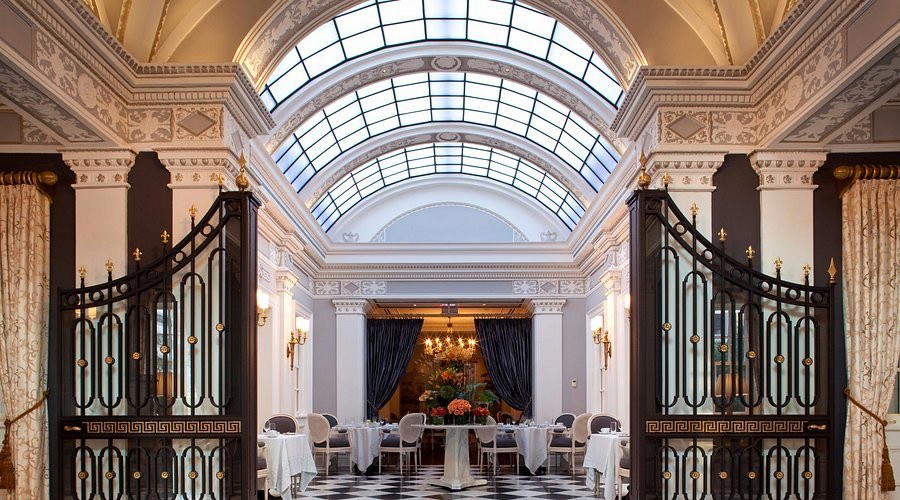
Bars in Washington DC
Browse all →
Restaurants in Washington DC
Browse all →
Details
- Elegant
- Modern
- Sophisticated
- Business Trip
- Weekend Escape
- Historic Building
- Design Destination
- Fitness Center
- Room Service
- Concierge
- Valet Parking
- Street Scene
- Wheelchair Accessible
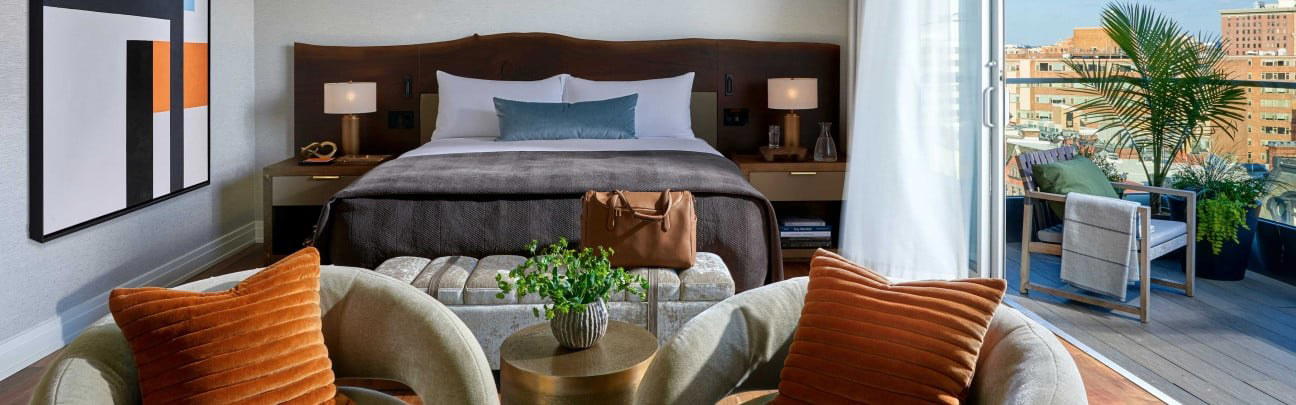
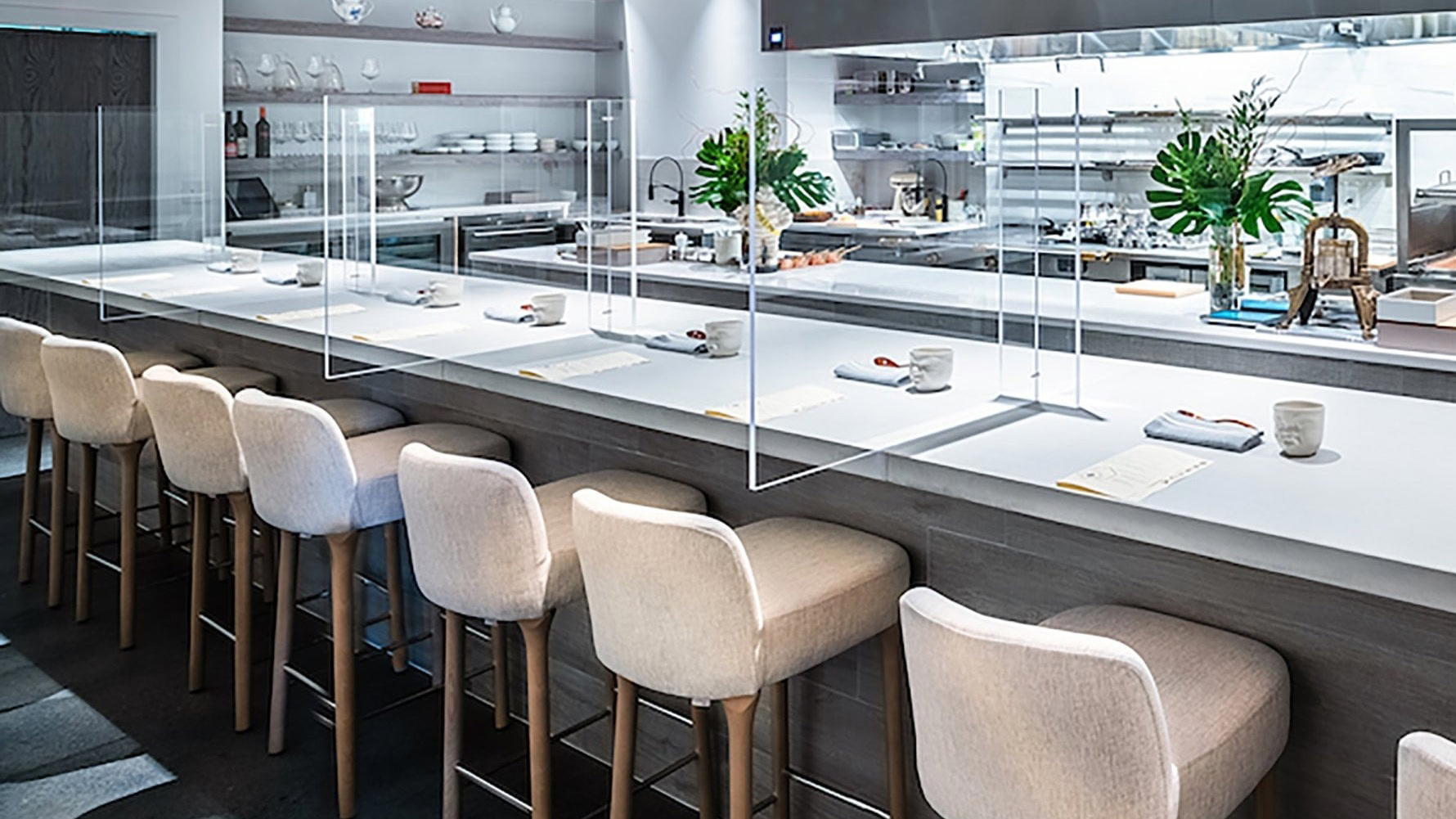
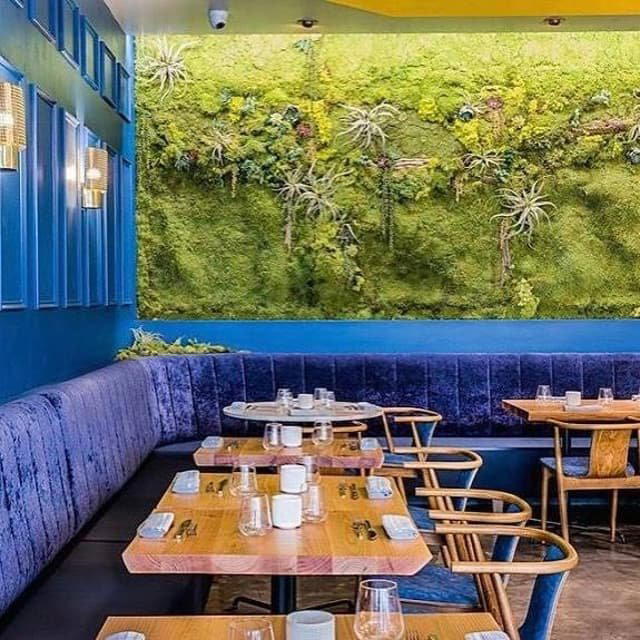
Sophisticated and residential-style atmosphere with refined lighting, comfortable furnishings, and a living room-like lobby featuring shimmering wallpaper and rose sculptures.