Tawana

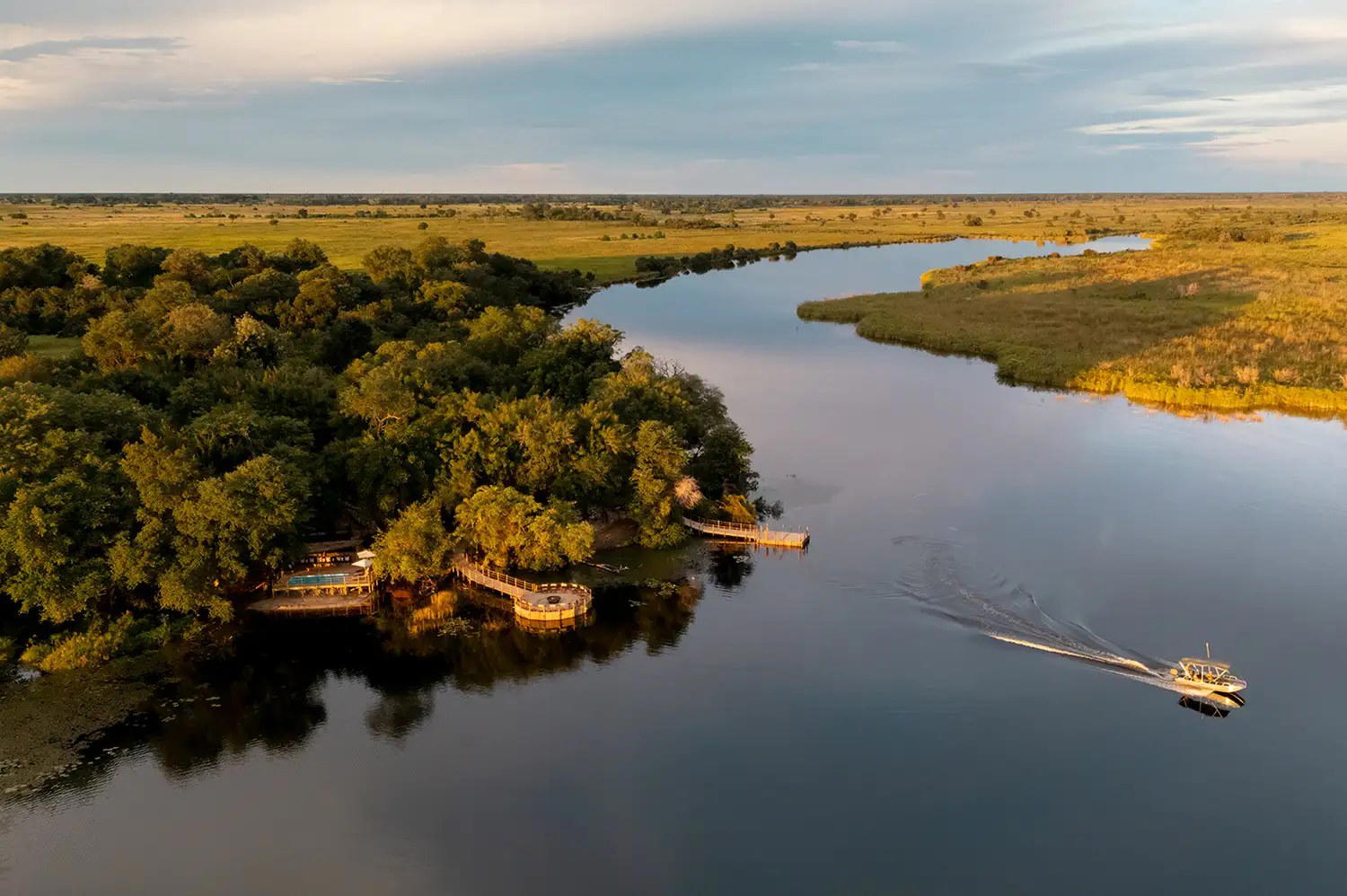
Tawana sits along the Gomoti River in Moremi Game Reserve, one of the Okavango Delta's most wildlife-dense corridors. The camp pairs contemporary design with the rhythms of the surrounding floodplain forest, positioning it among Botswana's more considered safari addresses for travellers who want close proximity to the Delta's permanent water channels and the game they sustain.
Pearl is the En Primeur Club membership app — saves, bookings, and concierge access live there. Same editors, same standards.
- Address
- Moremi Game Reserve, Okavango Delta, Botswana (no postal code - remote wilderness camp)
- Phone
- +267 684 0931
- Website
- naturalselection.travel
- Directions
- Get directions
 Saves & bookings on Pearl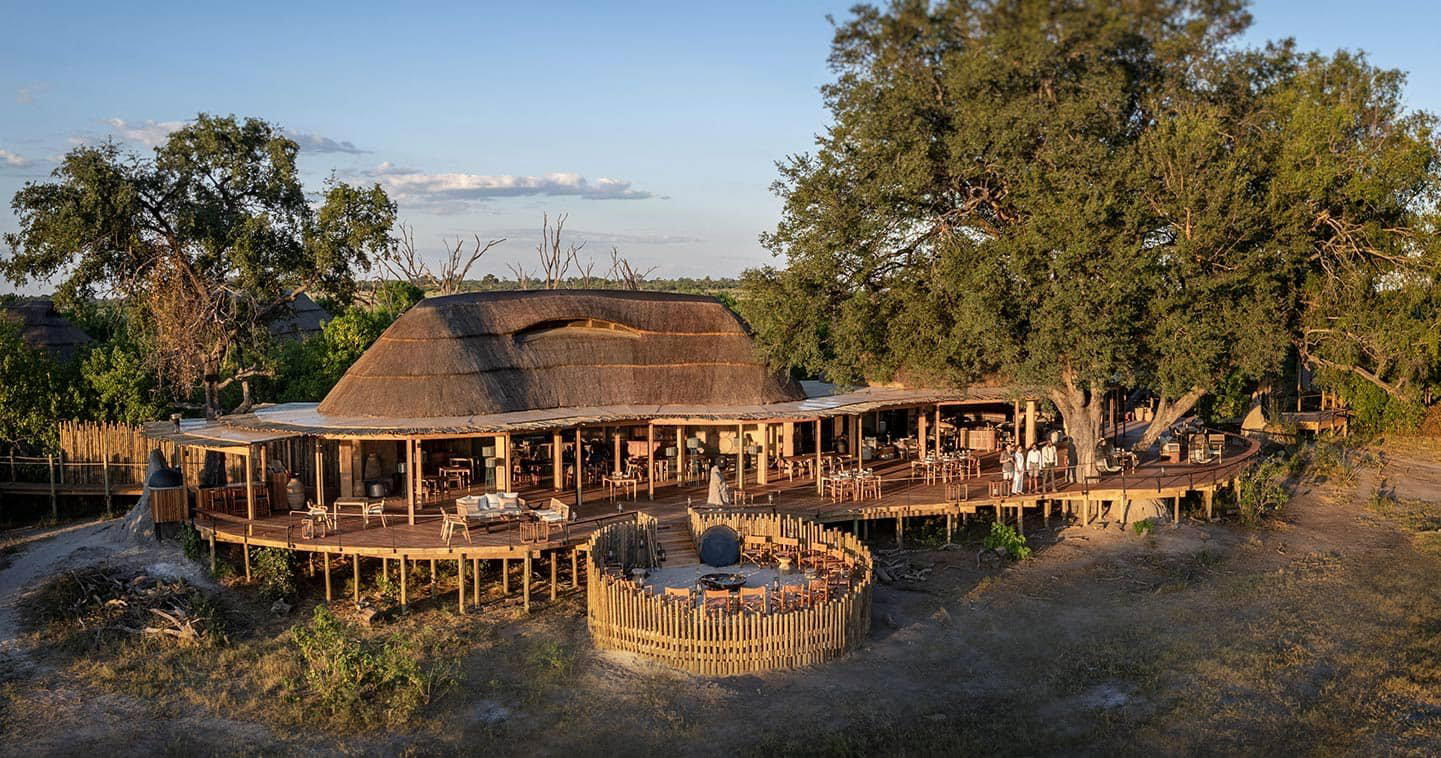
Where the Gomoti River Sets the Pace
Tawana is a five-star safari camp in Moremi Game Reserve, Okavango Delta, Botswana, with 8 rooms and a nightly rate from US$1,895. Arriving at Tawana means arriving at the edge of something genuinely wild. The Gomoti River runs as a perennial channel through this section of Moremi Game Reserve, and the camp sits in direct relationship with it: the sounds of water birds and the movement of large mammals through riparian forest define the experience before any formal introduction to the property begins. This is the Okavango Delta at its most concentrated, where permanent water draws predators, elephant herds, and the bird species that have made this ecosystem among the more studied in sub-Saharan Africa.
Moremi Game Reserve covers the eastern portion of the Okavango Delta and holds a specific distinction among Botswana's protected areas: it was the first reserve in southern Africa to be established by a local community rather than a government or colonial administration. That history shapes the land's character. Unlike the more curated concessions bordering Moremi, the reserve itself operates under stricter conservation principles, with visitor numbers managed to protect habitat integrity. Tawana's position along the Gomoti corridor places it within that framework, with access to game-viewing circuits that move through both floodplain and mopane woodland terrain.
The Service Register at a Camp of This Type
In the premium safari tier across Botswana, the guest experience increasingly turns on service architecture rather than physical plant. A tent can be beautiful anywhere. What separates camps in this bracket is whether the staff anticipates what a guest needs before the guest articulates it, and whether the guiding team reads the bush with enough depth to make each drive feel distinct from the last. Tawana sits in a category where these expectations are the baseline, not the aspiration.
The anticipatory service model that characterises camps of this type runs on small signals: a preferred wake-up time remembered without being noted on a clipboard, a dietary preference carried across from the first evening into every subsequent meal, a guide who notices that one guest slows at bird life and adjusts the pace of the vehicle accordingly. Properties like Sanctuary Chief's Camp and Xigera Safari Lodge, also positioned in or adjacent to Moremi, compete in the same service register. What they share is a staff-to-guest ratio that makes personalisation structurally possible rather than aspirational.
For travellers new to the premium end of southern African safari, the personalisation at this level can take a day to calibrate to. Guides at camps operating in Moremi are licensed through Botswana's Department of Wildlife and National Parks, and the field guiding culture here favours depth of knowledge over performance. The experience is more seminar than theatre, which is exactly what the Delta's complexity rewards.
The Delta as the Real Subject
The Okavango Delta receives its annual flood from rainfall in Angola's highlands, with peak water levels arriving in the Moremi area between June and August. This counter-intuitive flood cycle, which brings the highest water volumes during the dry season, produces the conditions that concentrate wildlife along permanent channels and attract the predator activity that camps along the Gomoti can access. A camp positioned here in the middle of the year is operating in a different ecological moment than the same camp in the summer green season, when animals disperse across a broader range.
For game-viewing, the dry season window from May through October delivers the clearest sightlines and the predictable large mammal movement. Bird life peaks differently: the wet season brings migratory species and breeding plumage, and the call is whether the guests are generalists who want lion and leopard, or whether there is a specific interest in the avian richness that Moremi's permanent water supports year-round.
Botswana's approach to high-value, low-volume tourism means that the camps operating in this corridor are never dense with visitors. The model, which commands premium pricing across the sector, funds conservation through exclusivity rather than through volume. Travellers comparing Tawana against broader regional alternatives should note that the Delta experience differs significantly from the drier savanna circuits: for elephant-heavy, water-adjacent game-viewing in a riverine forest setting, Wilderness DumaTau in Linyanti and andBeyond Sandibe Okavango Safari Lodge operate in comparable ecosystems and serve as useful reference points for itinerary planning.
Planning a Stay: Logistics and Approach
Access to Tawana follows the standard remote camp model for the Okavango Delta: a scheduled or charter flight into Maun, then an onward light aircraft transfer to an airstrip within or adjacent to Moremi. Belmond Safaris in Maun offers another point of comparison for travellers assembling multi-camp itineraries from this gateway town. Road access into the deeper sections of Moremi is possible in the dry season but is logistically demanding and rarely the route taken by guests arriving at camps of this tier.
Moremi is often combined in itineraries with the Chobe River corridor or the Makgadikgadi salt pans, giving guests a contrast between the Delta's water-rich ecosystem and the drier, open terrain further east. andBeyond Chobe Under Canvas, Zambezi Queen on the Chobe River, and Jack's Camp in the Makgadikgadi Salt Pans represent the main alternatives for those building a broader Botswana circuit. Guests who want to understand the full range of the country's ecosystems in a single trip typically combine two or three of these nodes.
How Tawana Sits Within Its comparable set
The premium safari camp market in Botswana has a clear internal hierarchy, and camps at this level compete not on price alone but on the quality of their concession access, the depth of their guiding team, and the coherence of the physical experience. Properties like Amangiri in Canyon Point or Castello di Reschio in Umbria occupy analogous positions in their own categories: destinations where the surrounding environment is the primary asset and the property exists to frame rather than overshadow it. Tawana's positioning along the Gomoti River in Moremi follows this same logic. The forest and floodplain are the experience; the camp is the instrument through which that experience becomes accessible.
Travellers who have stayed at design-intensive urban properties such as Cheval Blanc Paris, Aman New York, or Hotel Plaza Athénée will find that the service philosophy at a camp of this calibre translates across categories, even as the physical setting could not be more different. The specificity of attention, the calibration to individual preference, the absence of a transactional register in staff interactions: these are consistent signals of the upper tier whether the property looks out over the Seine or the Okavango floodplain.
What It’s Closest To
Comparable venues nearby, for context on price, style, and recognition.
| Venue | Cuisine | Price | Awards | Notes |
|---|---|---|---|---|
| TawanaThis venue — the venue you are viewing | Contemporary luxury safari camp rooted in local Batawana heritage and conservation. | $$$$ | 5-Star | Not listed |
| Xigera Safari Lodge | Contemporary African luxury with polished stilted architecture, organic shapes, and earthy tones inspired by the Okavango Delta ecosystem. | $$$$ | 5-Star | Moremi Game Reserve, NG28 |
| Sanctuary Chief's Camp | luxury safari lodge | $$$$ | 5-Star | Mombo Concession |
| Zambezi Queen | Luxury floating boutique hotel with contemporary design by South African designer Jenni Button, blending modern sophistication with African wilderness aesthetics. | $$$$ | 5-Star | Chobe River |
| Sitatunga Private Island | Eco-friendly luxury safari camp with understated elegance | $$$$ | 5-Star | Duba Concession |
| Selinda Camp | Luxury safari lodge blending Botswana cultural influences (European, Mokololo, Bayei) with contemporary comfort; raised wooden construction with canvas-and-thatch architecture designed to harmonize with the natural landscape. | $$$$ | 5-Star | Selinda Reserve, Kwando-Linyanti Area |
Recognition history
Dated appearances from independent guides and award organizations, with the underlying list record or original source where available.
Robb Report The 50 Greatest Luxury Hotels on Earth
Robb Report · 2026 Robb Report The 50 Greatest Luxury Hotels on Earth
AFAR Best New Hotels
AFAR
Continue exploring
More in Moremi Game Reserve
Hotels in Moremi Game Reserve
Browse all →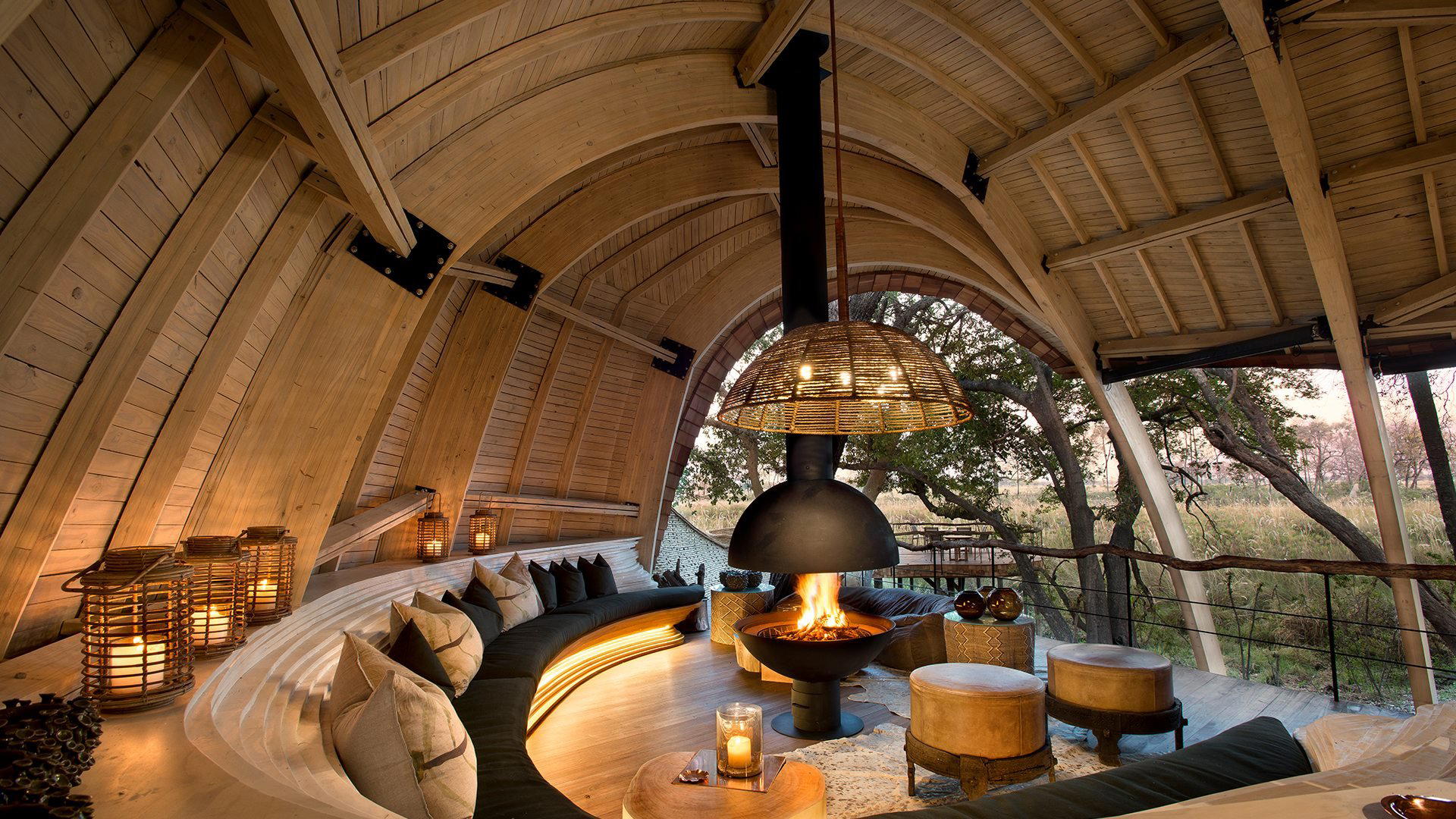
Restaurants in Moremi Game Reserve
Browse all →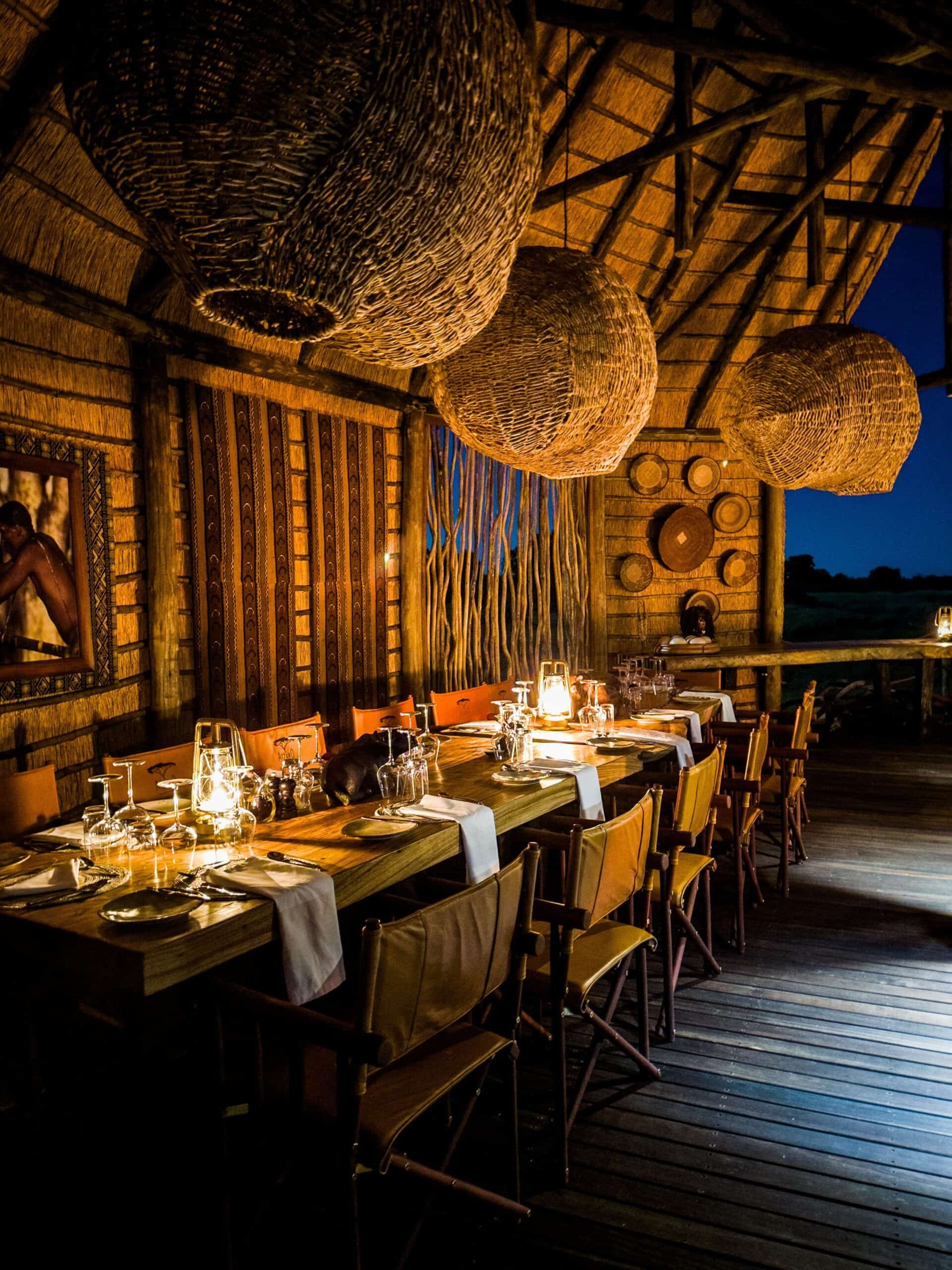
At a Glance
- Scenic
- Elegant
- Intimate
- Rustic
- Sophisticated
- Honeymoon
- Romantic Getaway
- Family Vacation
- Weekend Escape
- Panoramic View
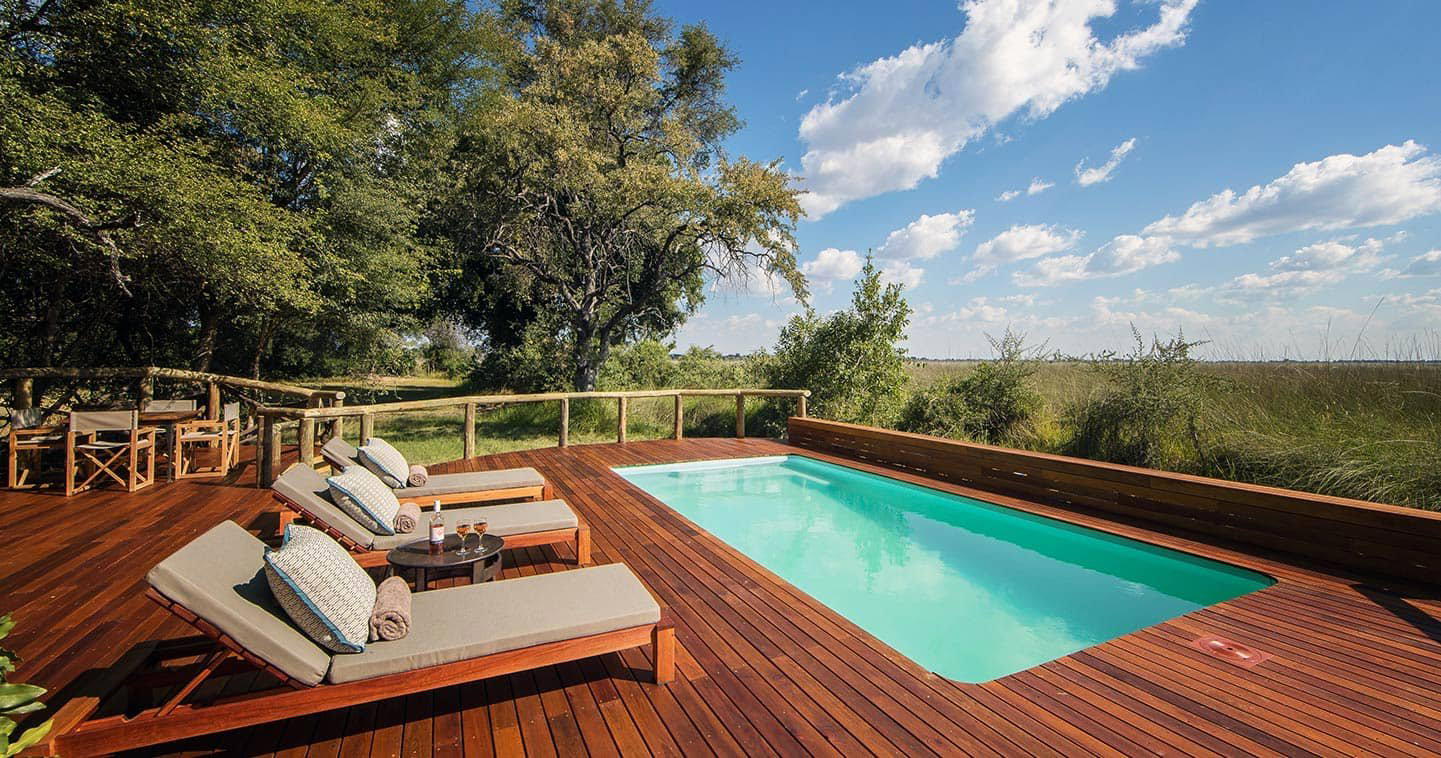
- Pool
- Spa
- Fitness Center
- Air Conditioning
- Pool
- Spa
- Fitness Center
- Air Conditioning
Serene and immersive wilderness atmosphere with warm lighting layers, cozy interiors blending contemporary African design and natural materials, enhanced by riverside views and starlit nights.