andBeyond Chobe Under Canvas

Preferred Hotels Member
andBeyond Chobe Under Canvas places six tented suites directly inside Chobe National Park, where the Chobe River corridor draws some of Africa's densest elephant concentrations. The camp sits at the small-capacity end of the Botswana safari spectrum, prioritising proximity to wildlife over resort-scale infrastructure. Access is through Ngoma Gate, positioning guests close to both the floodplain and the park's interior game-viewing circuits.

Pearl is the En Primeur Club membership app, where members save venues, book tables and use the concierge.
Canvas, Not Concrete: How Chobe's Smallest Camps Reframe the Safari Stay
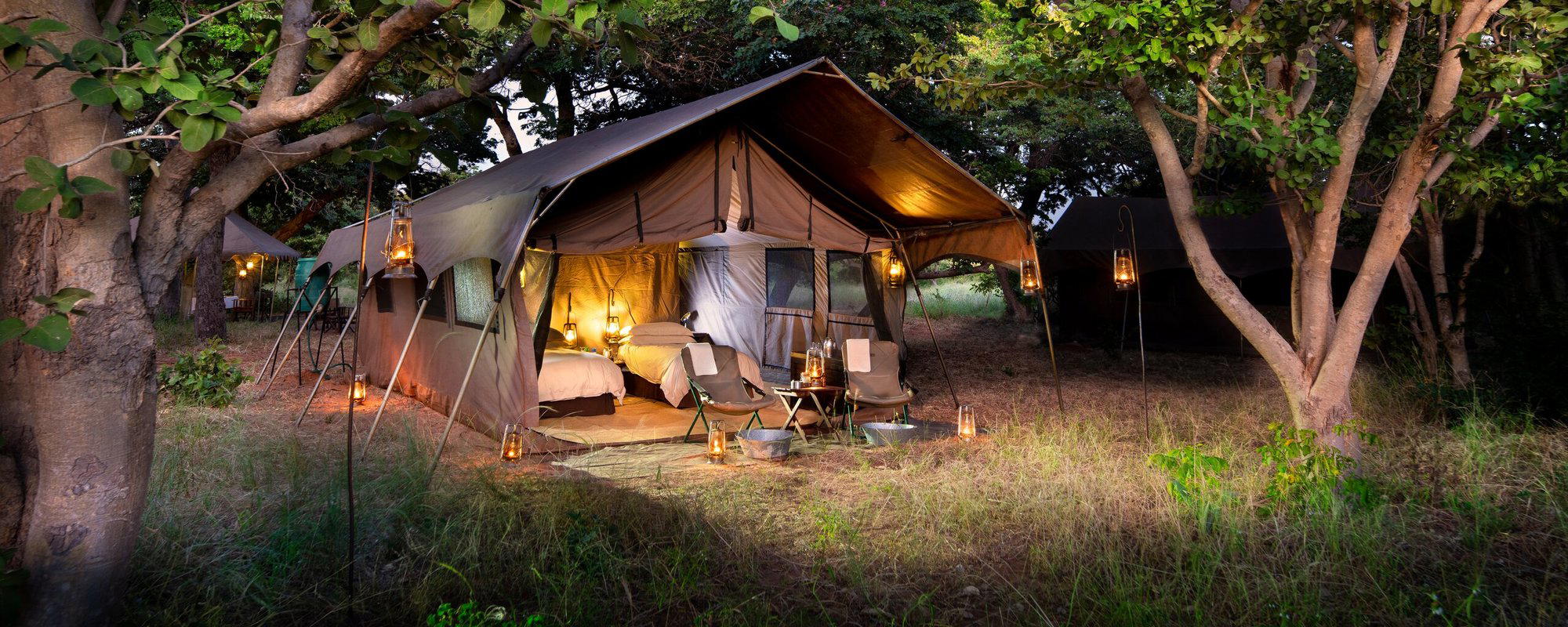
Botswana's premium safari market has split decisively over the past decade. On one side sit lodges with permanent architecture, swimming pools, and wine cellars deep enough to rival a Johannesburg restaurant. On the other, a smaller cohort of operators has doubled down on impermanence: tented camps where the canvas wall between guest and wilderness is the point, not a limitation to be designed around. andBeyond Chobe Under Canvas belongs firmly to the second group. With six rooms positioned inside Chobe National Park near Ngoma Gate, it operates at a scale that most lodge developers would consider commercially marginal, and that is precisely what defines its character within the broader Chobe accommodation spectrum.
Chobe is not a quiet corner of Botswana. The national park holds one of the largest elephant populations on the continent, and the floodplain along the Chobe River functions as a seasonal concentration point that draws herds in numbers that can feel almost implausible to first-time visitors. Lodges positioned along this corridor, including Savute Elephant Lodge, A Belmond Safari, Botswana and Zambezi Queen in Chobe River, each make a different architectural and experiential argument about how to receive that wildlife density. The Under Canvas format makes its argument through reduction: fewer rooms, lighter footprint, and a design philosophy rooted in the idea that the camp should feel temporary, even if the logistics behind it are anything but.
The Architecture of Impermanence
Tented camps in the East and Southern African tradition operate within a well-established design grammar. The mess tent anchors the social space, refined platforms or simple groundwork position sleeping tents to capture sightlines, and the aesthetic vocabulary runs from military-surplus pragmatism through to the canvas-and-hardwood language that andBeyond has refined across its portfolio. At Chobe Under Canvas, the six-unit configuration is the most architecturally significant decision on the page. That count sits well below the threshold at which a camp begins to feel like a resort: no lobby, no gift shop corridor, no long walk between your tent and the fire.
In the wider andBeyond network, which includes properties like andBeyond Sandibe Okavango Safari Lodge in Okavango Delta, a structurally ambitious lodge with permanent architecture that draws on the organic forms of the delta's termite mounds, Under Canvas represents the operator's intentionally lighter intervention. Where Sandibe is built to last, Under Canvas is designed to leave. That mobility matters in Botswana, where concession agreements and conservation partnerships sometimes require operators to shift footprint seasonally or by land-use negotiation.
The design comparison that most illuminates Under Canvas is not other tented camps in Chobe but rather what the format deliberately refuses. Properties like Wilderness DumaTau in Linyanti or Xigera Safari Lodge in Moremi Game Reserve invest heavily in architectural identity, Xigera, in particular, has become a reference point for Botswana safari design at its most considered. Under Canvas declines that conversation.
Position Inside the Park: What Ngoma Gate Access Means in Practice
The Ngoma Gate entrance places the camp in the southern sector of Chobe National Park, a positioning that matters for game-viewing circuits. This part of the park connects into the broader Chobe-Linyanti ecosystem, and guests have access to both riverfront drives along the Chobe floodplain and interior routes that reach into denser woodland cover, habitat that suits different species profiles than the open river corridor. For those consulting our full Chobe National Park guide, understanding entry-point positioning is one of the more practically useful distinctions between camps that can appear superficially similar on paper.
Access logistics for Botswana's premier camps typically route through Kasane, the town closest to Chobe's northern boundary, with light-aircraft connections to Maun serving guests arriving from the Okavango Delta on multi-destination itineraries. Belmond Safaris in Maun serves as a common staging point for such circuits. Guests combining Chobe with the Makgadikgadi salt pans, a pairing that covers two of Botswana's most ecologically distinct zones, might also route through Jack's Camp in Makgadikgadi Salt Pans on a multi-stop itinerary.
Six Rooms, and What That Number Actually Means
The six-room count at andBeyond Chobe Under Canvas is the single most operationally telling detail in the camp's profile. At that scale, the guest-to-guide ratio stays low enough for personalised routing, the communal areas never feel crowded, and the camp generates minimal visual or acoustic intrusion on the surrounding bush. It also means that booking windows matter considerably. Small-capacity camps in Botswana's high season, broadly May through October, when dry conditions concentrate wildlife around water sources, fill months in advance, and Chobe specifically draws itinerary pressure because it combines well with both the Okavango Delta and Zimbabwe's Hwange National Park on standard Southern Africa circuits.
The six-unit format places Under Canvas in a specific competitive tier within andBeyond's own portfolio, and within Botswana broadly. It is not a private-island experience in the manner of properties like Sitatunga, nor a fully architectural statement like Sandibe, but it operates in a register that many safari travellers find more honest: the accommodation is a vehicle for being in a place, not a destination in itself.
Contextualising Chobe Within Botswana's Safari Geography
Botswana's safari market commands premium pricing relative to East Africa, partly because of genuine exclusivity constraints, the country's high-value, low-volume conservation model limits bed counts across most key ecosystems, and partly because the infrastructure required to run camps in remote locations carries real operational cost. Under Canvas, as a format, compresses some of that infrastructure cost while retaining the access and guiding quality that justify Botswana's price positioning.
Travellers comparing Chobe to other Botswana zones should note that the park's wildlife profile differs from the Okavango Delta's water-dependent ecosystem and from the open grasslands of Makgadikgadi. Chobe's density, particularly elephant and buffalo along the river, makes it one of the more immediately dramatic entries into the country's wildlife circuit, which partly explains why it appears so often as a first or last stop on multi-destination itineraries rather than a standalone destination.
For context on how the region's premium safari experience compares to other high-design wilderness stays globally, from Amangiri in Canyon Point to Castello di Reschio in Lisciano Niccone, the common thread among small-capacity properties in remote settings is that operational simplicity at the room level tends to correlate with experiential intensity outside it. Under Canvas makes that trade explicitly.
Comparable Spots, Quickly
Comparable venues nearby, for context on price, style, and recognition.
| Venue | Cuisine | Price | Awards | Notes |
|---|---|---|---|---|
| andBeyond Chobe Under CanvasThis venue (the venue you are viewing) | mobile luxury tented camp blending rustic camping with five-star service | Not listed | Preferred Hotels Member | Not listed |
| Savute Elephant Lodge, A Belmond Safari, Botswana | Luxurious tented safari camp with eco-conscious design | $1,000–1,500 | La Liste Top Hotels | Chobe National Park |
| Xugana Island Lodge | luxury tented eco-lodge with classic safari elements and modern comforts | Not listed | Travel + Leisure It List Hotels | Okavango Delta |
| Selinda Camp | Luxury safari lodge blending Botswana cultural influences (European, Mokololo, Bayei) with contemporary comfort; raised wooden construction with canvas-and-thatch architecture designed to harmonize with the natural landscape. | $2,500+ | Relais Chateaux Award | Selinda Reserve, Kwando-Linyanti Area |
| Sanctuary Chief's Camp | luxury safari lodge | Not listed | La Liste Top Hotels · World Travel Awards | Mombo Concession |
| Wilderness King's Pool Camp | Luxurious tented safari camp with raised decks for wildlife viewing | Not listed | La Liste Top Hotels | Linyanti |
Recognition history
Dated appearances from independent guides and award organizations, with the underlying list record or original source where available.
Preferred Hotels Member
Preferred Hotels
Continue exploring
More in Chobe National Park
Hotels in Chobe National Park
All hotels in Chobe National Park →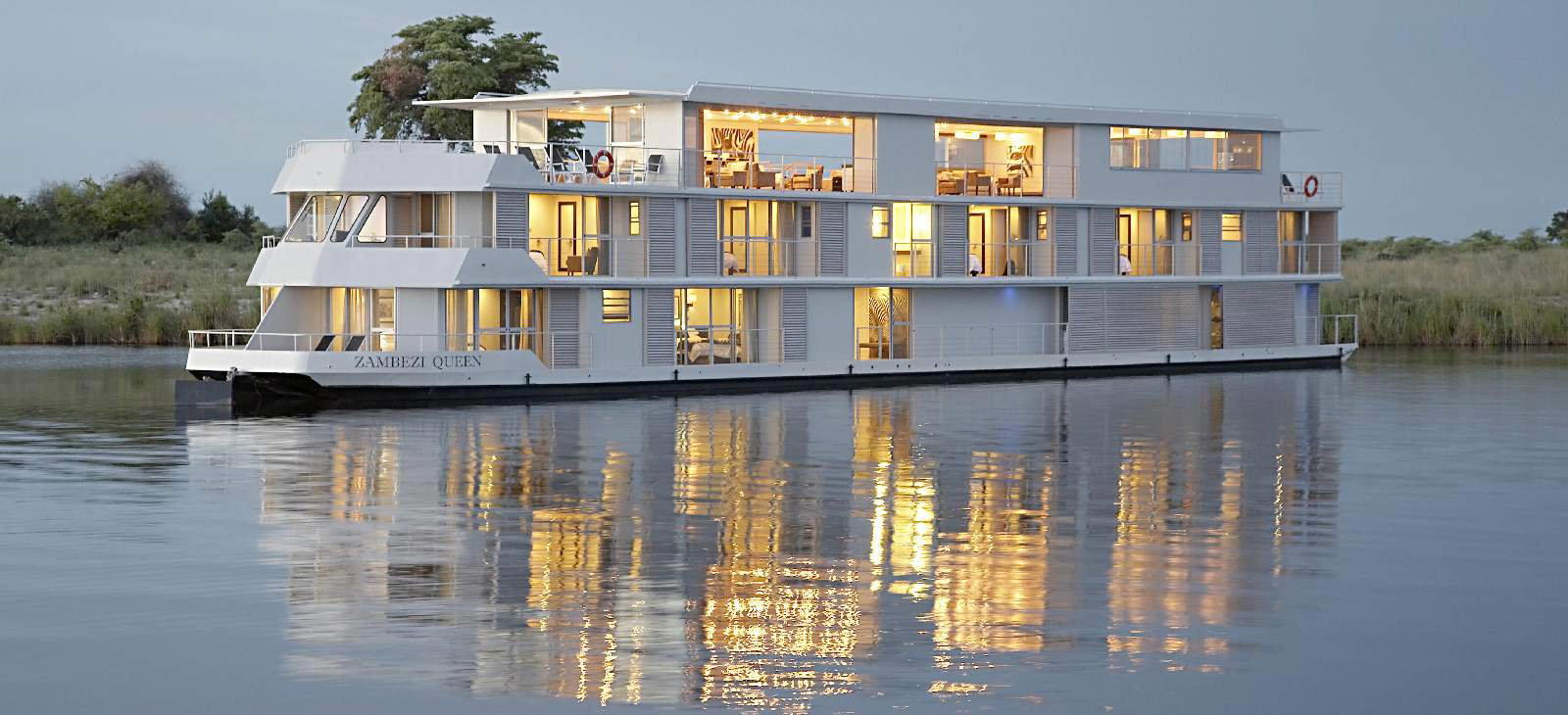
Restaurants in Chobe National Park
All restaurants in Chobe National Park →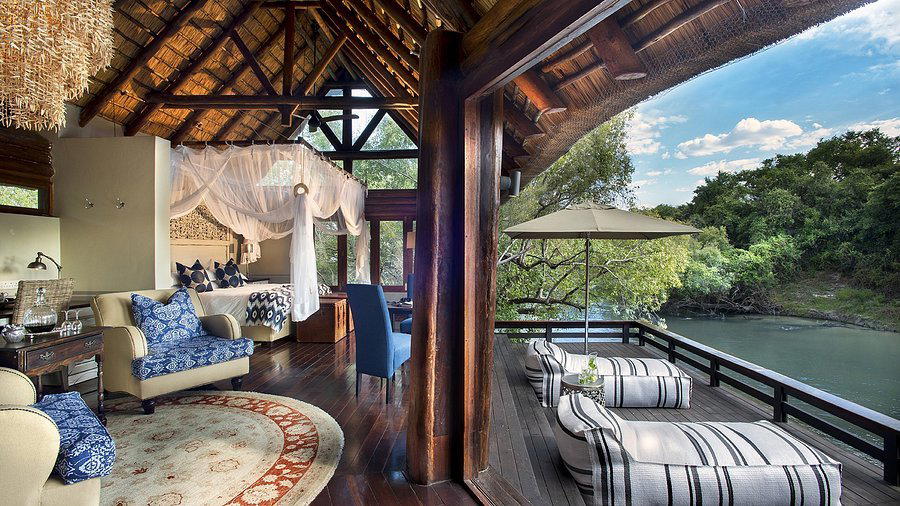
Details
- Rustic
- Scenic
- Intimate
- Elegant
- Romantic Getaway
- Honeymoon
- Weekend Escape
- Panoramic View
- Private Dining
- Terrace
- Room Service
- Concierge
- Airport Transfer
Intimate bush atmosphere with lantern-lit communal dining around a fire, natural sounds of wildlife, and no electricity for a raw nature immersion.