Jack's Camp


Virtuoso Luxury Hotel Partner · Conde Nast Gold List
Jack's Camp occupies a singular position in the Makgadikgadi Salt Pans: a nine-tent camp that rebuilt itself in 2021 around the theatrical logic of a 1940s expedition base, with 270-square-metre canvas suites, Natural History Museum-style display cabinets, and private plunge pools on every veranda. Operated by Natural Selection, it sets the reference point for design-led safari camps in one of Botswana's most geologically dramatic environments.

Pearl is the En Primeur Club membership app, where members save venues, book tables and use the concierge.
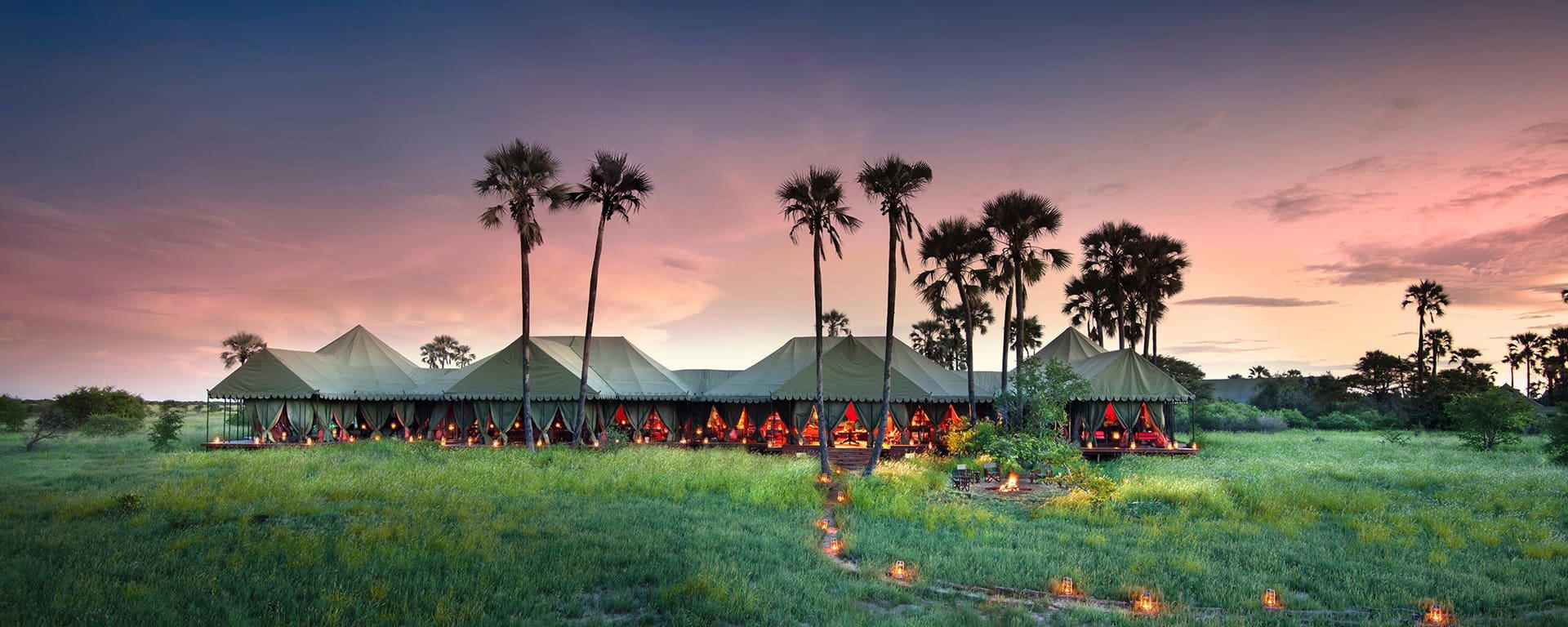
A Desert Theatre Built From Another Era
The Makgadikgadi Salt Pans do something to a traveller's sense of scale. At certain times of year, the earth is so dry and flat that the horizon appears to curve away in every direction, the cracked surface stretching further than peripheral vision can track. Into this elemental context, Jack's Camp inserts something that operates as its near-opposite: a material world of aged timber, Persian textiles, antique glass cases, and campaign furniture. The tension between the stripped landscape outside and the layered interior is, in architectural terms, the whole point. This is design that derives its force from contrast, not from integration.
The camp's original aesthetic logic was established in the 1990s by founder Ralph Bousfield, who named the property after his father Jack and built around a 1940s expedition aesthetic that has since become something of a reference point for the broader safari design conversation. After several decades of operation, a full rebuild completed in 2021 retained that identity while substantially expanding the physical scope of each tent. The result is a property that reads as a renovation success: the character survived, the comfort improved.
The Architecture of the Tents
In premium safari design, the central debate has long been between properties that pursue seamless integration with landscape, open-sided structures, raw materials, minimal visual interruption, and those that plant a deliberate counterpoint. Jack's Camp operates firmly in the latter tradition. The 2021 rebuild expanded each of the nine canvas structures to 270 square metres, a footprint that places them among the larger individual tent configurations in Botswana's premium tier, where most competitors in the same price bracket offer considerably smaller individual units.
The interior scheme reads like a collector's study transported into the field. Natural History Museum-style display cabinets hold archaeological and natural objects; the lighting is warm and directional; the textiles draw from multiple geographies, layered in a way that implies accumulation over time rather than a single design intervention. Campaign desks and hand-carved beds anchor each space. The overhead bed cooling system is the kind of detail that separates genuine operational thinking from aesthetic ambition: in the Makgadikgadi heat, it matters considerably. Each tent's ensuite bathroom offers both indoor and outdoor shower configurations, and the private veranda carries a plunge pool. The design logic holds across all nine tents, seven configured as twins and two as doubles, with no category that meaningfully underperforms relative to the others.
The mess tent, enlarged in the 2021 rebuild, functions as the camp's social core. It houses the Natural History Museum cabinet display, a library, an antique pool table, and what the camp describes as a well-stocked drinks chest. The nomadic Persian tea tent, also expanded, anchors the daily rhythm in a different register entirely: the act of stopping for tea in a dedicated canvas structure in the middle of a salt pan is the kind of considered formality that connects the camp's design philosophy to its experiential identity. For readers comparing properties across Botswana, from andBeyond Sandibe Okavango Safari Lodge in Okavango Delta to Wilderness DumaTau in Linyanti, Jack's Camp occupies its own lane on the question of interior character.
The Makgadikgadi as Context
Design choices only make full sense when set against where the camp sits. The Makgadikgadi is one of the world's largest salt pan systems, covering roughly 12,000 square kilometres across northern Botswana. In the dry season, it delivers the kind of lunar desolation that photographers and travellers describe in superlatives they cannot quite substantiate, the flatness is simply difficult to translate. In the wet season, the pans flood partially and draw one of Africa's notable wildebeest and zebra migrations, alongside flamingo populations that use the shallow water for feeding.
Wildlife profile differs from the major river systems and game-rich reserves that anchor camps like andBeyond Chobe Under Canvas in Chobe National Park or Xigera Safari Lodge in Moremi Game Reserve. The Makgadikgadi's wildlife is more dispersed, more seasonally variable, and more dependent on knowing where and when to be. Meerkat habituated groups are among the camp's more reliable daily encounters, and the open ground supports quad biking, horseback exploration, and 4x4 access to the pan surface itself. The activities program reflects the landscape: this is not a property where you sit at a waterhole and count predator sightings. The experience is more horizontal, more geological, and in certain respects more unusual within the broader Botswana safari circuit.
Camp Life and the Communal Table
Jack's Camp organises its daily social structure around a 36-seat communal table where guests and guides eat together. This is not incidental to the experience: the shared table format has long been a design choice in its own right among camps that want to blur the line between hosted guest and field companion. The pilipili-hoho, African chilies soaked in gin, functions as something between an aperitif ritual and a camp signature, and appears consistently in accounts of the camp across multiple sources.
This communal dining philosophy places Jack's Camp in a specific category within the broader luxury safari market, which has fragmented between properties offering high levels of private service and intimate couple-facing formats versus those that retain the intellectual and social energy of the traditional expedition table. Camps like Belmond Safaris in Maun occupy a different position on this spectrum. Jack's Camp's approach reflects the expedition aesthetic it has sustained since opening: the point of gathering around a table with guides is partly the food, mostly the conversation about what was seen that day.
Jack's Camp is operated by Natural Selection, a Botswana-based operator with a portfolio of camps across the country's major wildlife areas. Readers building multi-camp itineraries through Botswana will find the Makgadikgadi a natural pairing with the Okavango Delta or the Chobe River system, given how sharply the landscape and wildlife character contrasts between regions. The Zambezi Queen in Chobe River offers a further point of comparison for those considering river-based alternatives within the same broader geography.
The camp's nine-tent scale places it in the small-capacity tier of the Botswana premium market, a segment where advance booking is typically required months ahead of intended travel, particularly for peak dry-season dates between May and October when the pans are most accessible and the wildlife is most concentrated near remaining water sources. Those building first-time itineraries through the region will find our full Makgadikgadi Salt Pans restaurants guide a useful reference point. For those cross-referencing against design-led properties in other parts of the world, properties like Amangiri in Canyon Point or Castello di Reschio in Lisciano Niccone share a similar design-first commitment to place, though the environmental context differs entirely.
Quick Comparison
Comparable venues nearby, for context on price, style, and recognition.
| Venue | Cuisine | Price | Awards | Notes |
|---|---|---|---|---|
| Jack's CampThis venue (the venue you are viewing) | Vintage 1940s East African safari camp with Bedouin-style tents | $1,500–2,500 | Virtuoso Luxury Hotel Partner · Conde Nast Gold List | Not listed |
| Tawana | Contemporary luxury safari camp rooted in local Batawana heritage and conservation. | $1,500–2,500 | AFAR Best New Hotels | Moremi Game Reserve |
| andBeyond Sandibe Okavango Safari Lodge | Organic luxury eco-lodge with distinctive architectural design inspired by natural forms, seamlessly integrated into the forest canopy environment. | Not listed | World Travel Awards · Preferred Hotels Member | Okavango Delta |
| Wilderness DumaTau | luxury explorer tented safari camp | $2,500+ | Conde Nast Best Resorts #2 | Linyanti Wildlife Reserve |
| Xigera Safari Lodge | Contemporary African luxury with polished stilted architecture, organic shapes, and earthy tones inspired by the Okavango Delta ecosystem. | $2,500+ | 2 Michelin Keys · Virtuoso Luxury Hotel Partner | Moremi Game Reserve, NG28 |
| Duba Concession | Classic 1920s expedition-style luxury tented camp on raised decks | Not listed | Relais Chateaux Award · World Travel Awards | Duba Concession |
Recognition history
Dated appearances from independent guides and award organizations, with the underlying list record or original source where available.
Virtuoso Luxury Hotel Partner
Virtuoso
Conde Nast Gold List
Conde Nast
Details
- Well Known
- Elegant
- Rustic
- Whimsical
- Intimate
- Scenic
- Honeymoon
- Romantic Getaway
- Group Retreat
- Weekend Escape
- Panoramic View
- Private Villa
- Terrace
- Pool
- Spa
- Wi Fi
- Room Service
- Concierge
Ornate vintage safari atmosphere with rich Persian rugs, brass fittings, paraffin lamps, and eclectic natural history curios creating an adventurous yet sophisticated explorer vibe.