




Positioned in the Sacred Valley at roughly 2,800 metres, lower than Cusco city, Tambo del Inka serves as the considered first stop for travellers heading to Machu Picchu. The resort's private train station, on-site organic garden, and 128 rooms with mountain views place it in the upper bracket of Sacred Valley accommodation. Recognised by La Liste Top Hotels 2026 (95.5 points) and Star Wine List 2026.
Pearl is the En Primeur Club membership app — saves, bookings, and concierge access live there. Same editors, same standards.
- Address
- Sacred Valley, Av. Ferrocarril S/N, Urubamba 08660
- Phone
- +51 84 581777
- Website
- marriott.com
- Directions
- Get directions
 Saves & bookings on Pearl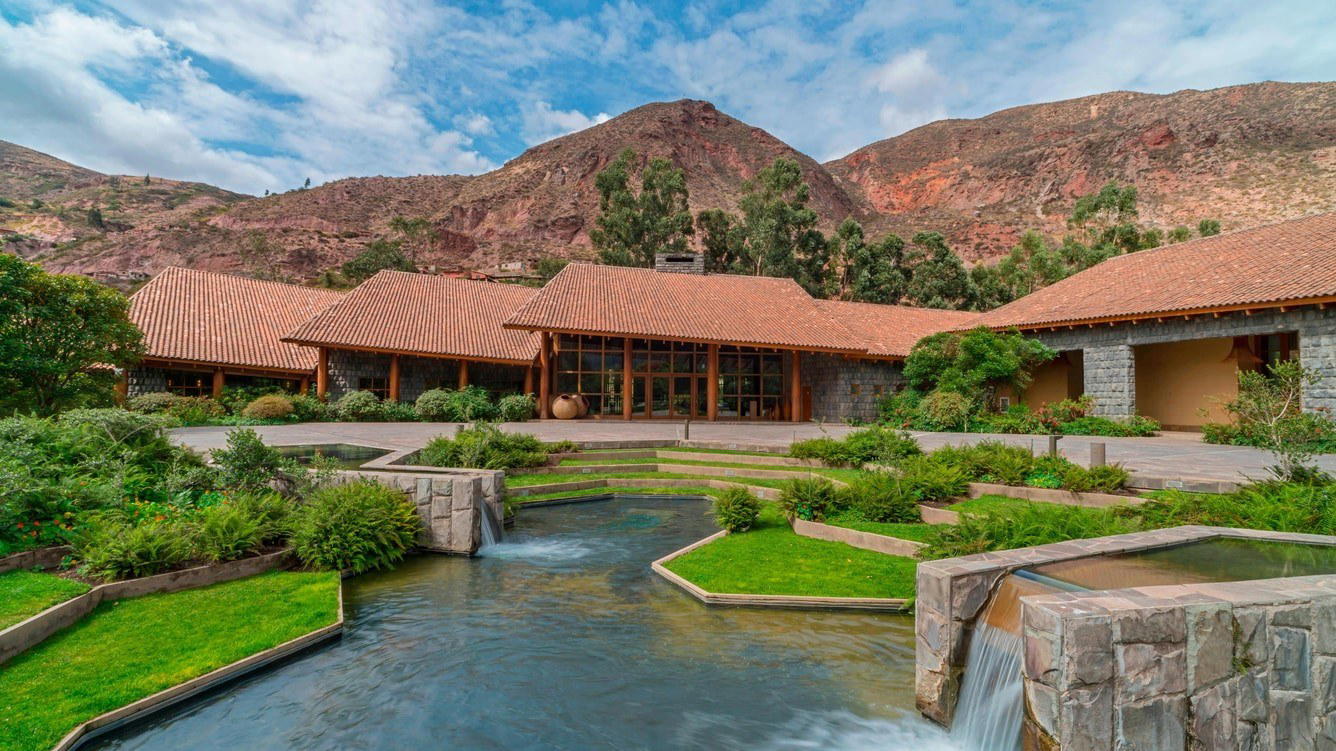
The Valley as the Starting Point
Altitude management defines the first 48 hours of any Andean itinerary, and the Sacred Valley's position, several hundred metres below Cusco city, makes it the medically sensible and scenically rewarding opening chapter. Tambo del Inka sits in the Sacred Valley in Urubamba, at Av. Ferrocarril S/N, as a 5-star Luxury Collection resort with 128 rooms and a nightly rate from $377. That placement is not incidental; it is the resort's primary structural advantage, offering guests a gentler physiological entry point before they ascend toward the 3,400-metre altitude of Cusco or the ruins above Aguas Calientes.
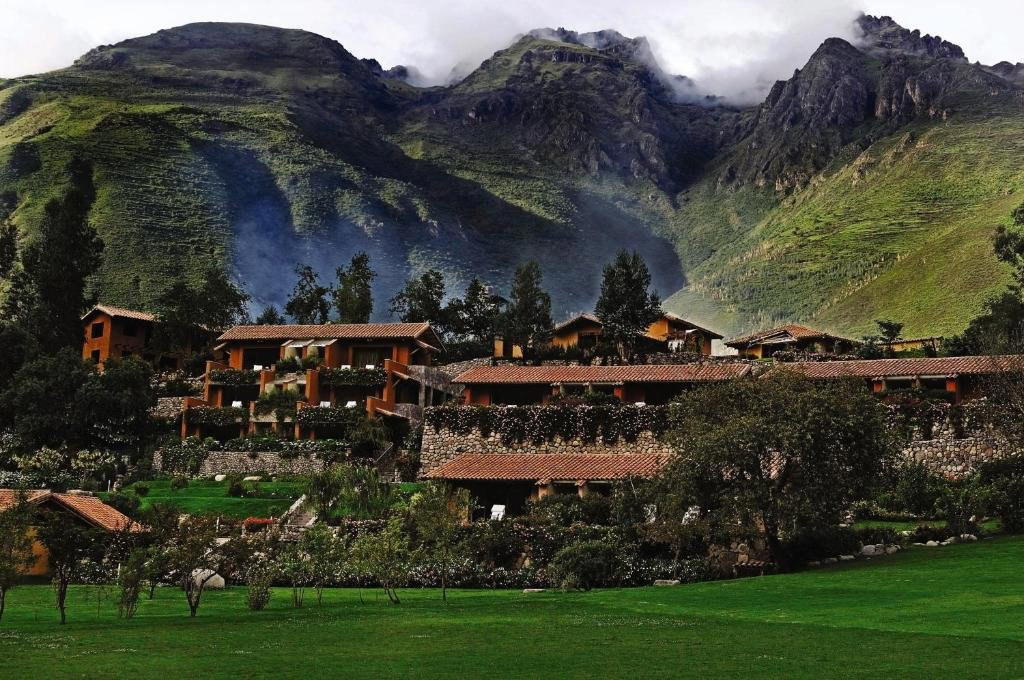
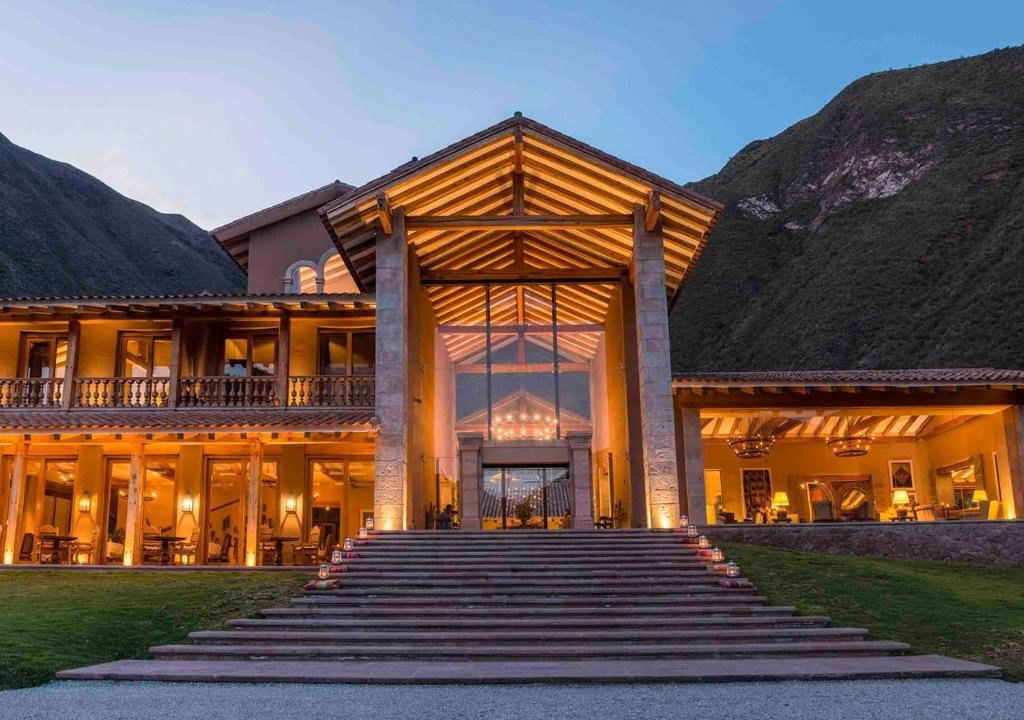
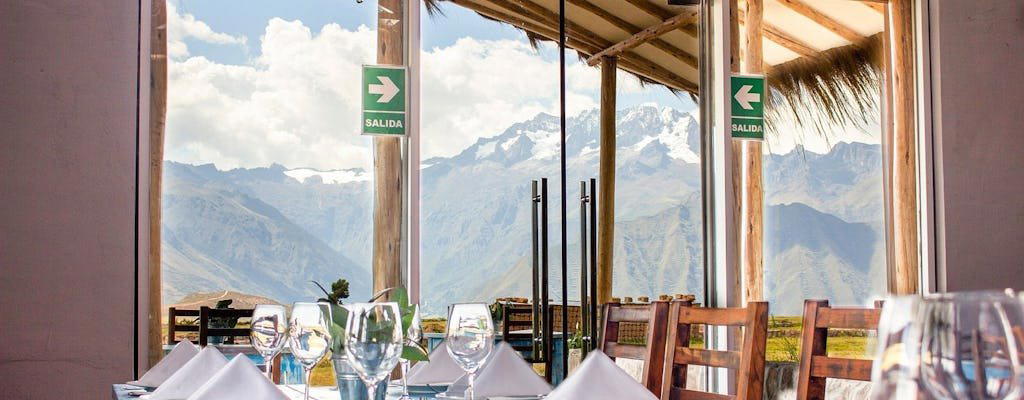
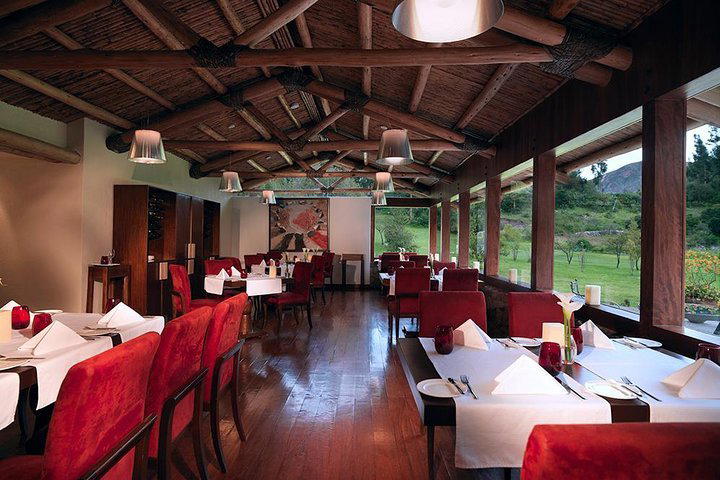
The approach sets expectations correctly. The Urubamba Valley here is wide and agricultural, with Andean peaks closing in on both sides. From almost every position inside the 128-room property, the Kallpa Spa, the indoor pool terrace, the lobby bar, the sightlines land on exactly what the Inca engineers looked at when they chose this valley as an imperial breadbasket. That continuity of view is not a design flourish; it is geography doing the work.
Palacio Nazarenas, Belmond Hotel Monasterio, JW Marriott El Convento Cusco, Inkaterra La Casona, and Palacio del Inka, a Luxury Collection Hotel are all colonial-fabric city properties. Tambo del Inka is a valley resort, which means its competition for the same traveller is the experience of arriving in a mountain landscape rather than a colonial plaza. That distinction shapes everything from the room design to the spa programming to the F&B; sourcing model.
Organic Supply as Operating Philosophy
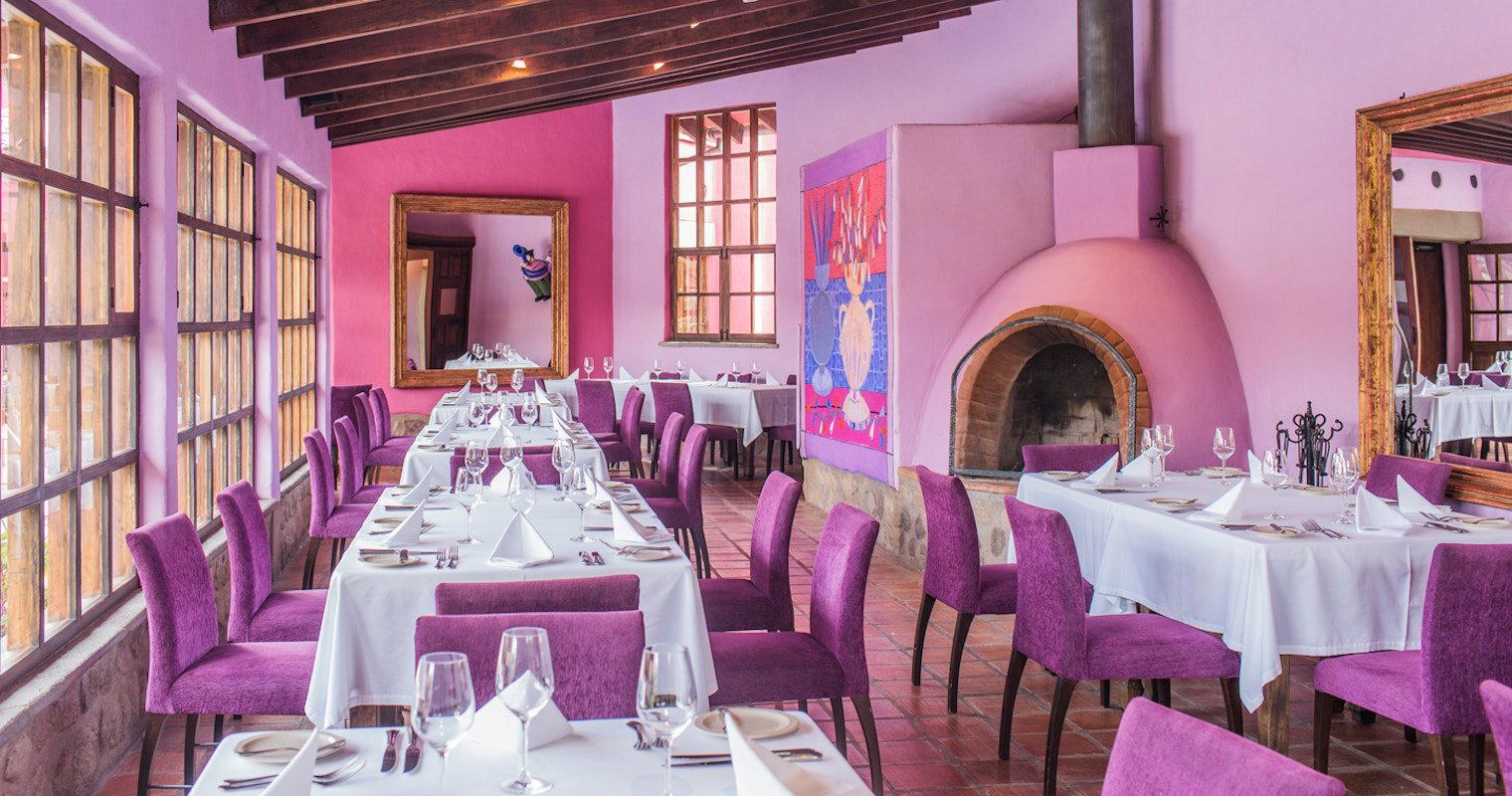
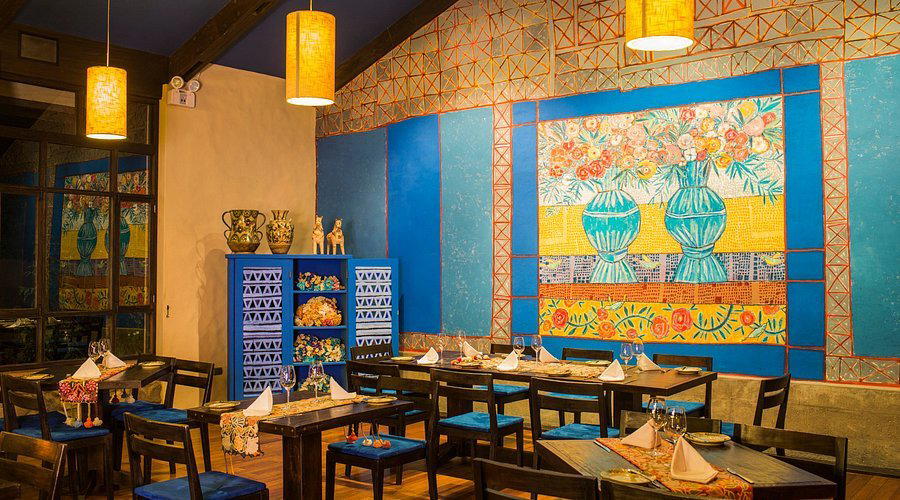
Novo Andean cuisine, the movement that draws on pre-Columbian ingredients, altitude-adapted produce, and contemporary technique, is now the default language of serious Peruvian fine dining, from Lima's destination restaurant circuit to the highlands. What distinguishes a hotel kitchen within that broader movement is the integrity of its sourcing chain. At Tambo del Inka, the supply chain is on-site: the property operates its own organic garden and greenhouse, and guests can join a guided greenhouse tour that ends with their selected produce going directly to the Hawa restaurant kitchen.
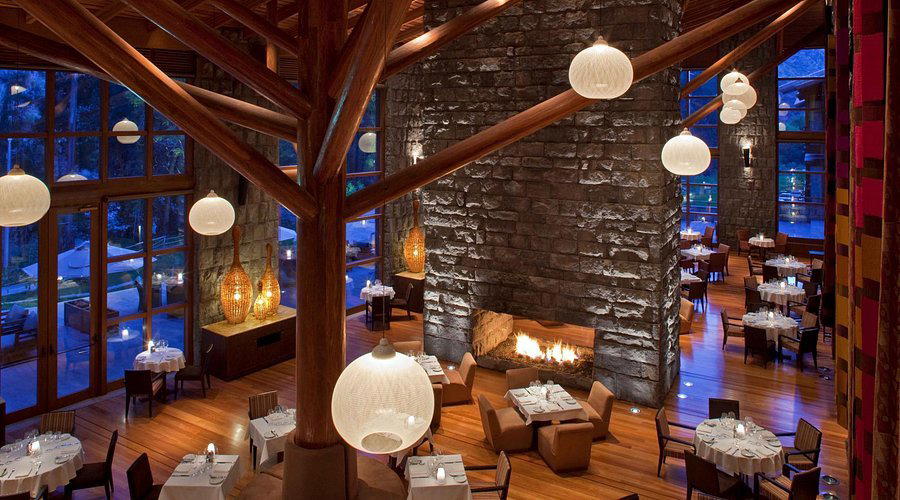
That model is more logistically demanding than it sounds at 2,800 metres, where growing conditions and frost risk require careful cultivation choices. The result is that the menu at Hawa reflects what the valley actually produces seasonally, rather than what a centralised supplier makes available. A stone hearth sits at the centre of the dining room, which grounds the visual register of the space in Andean highland domestic architecture rather than international hotel design convention.
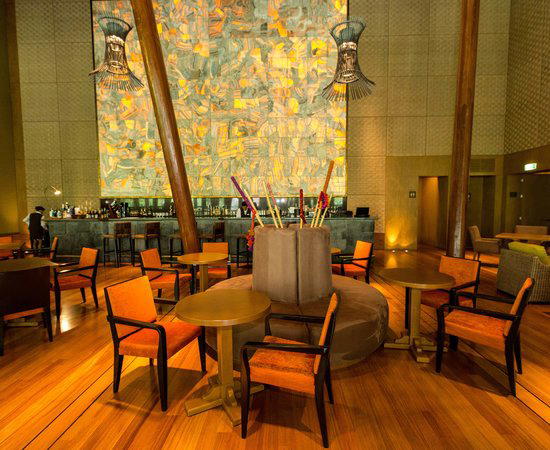
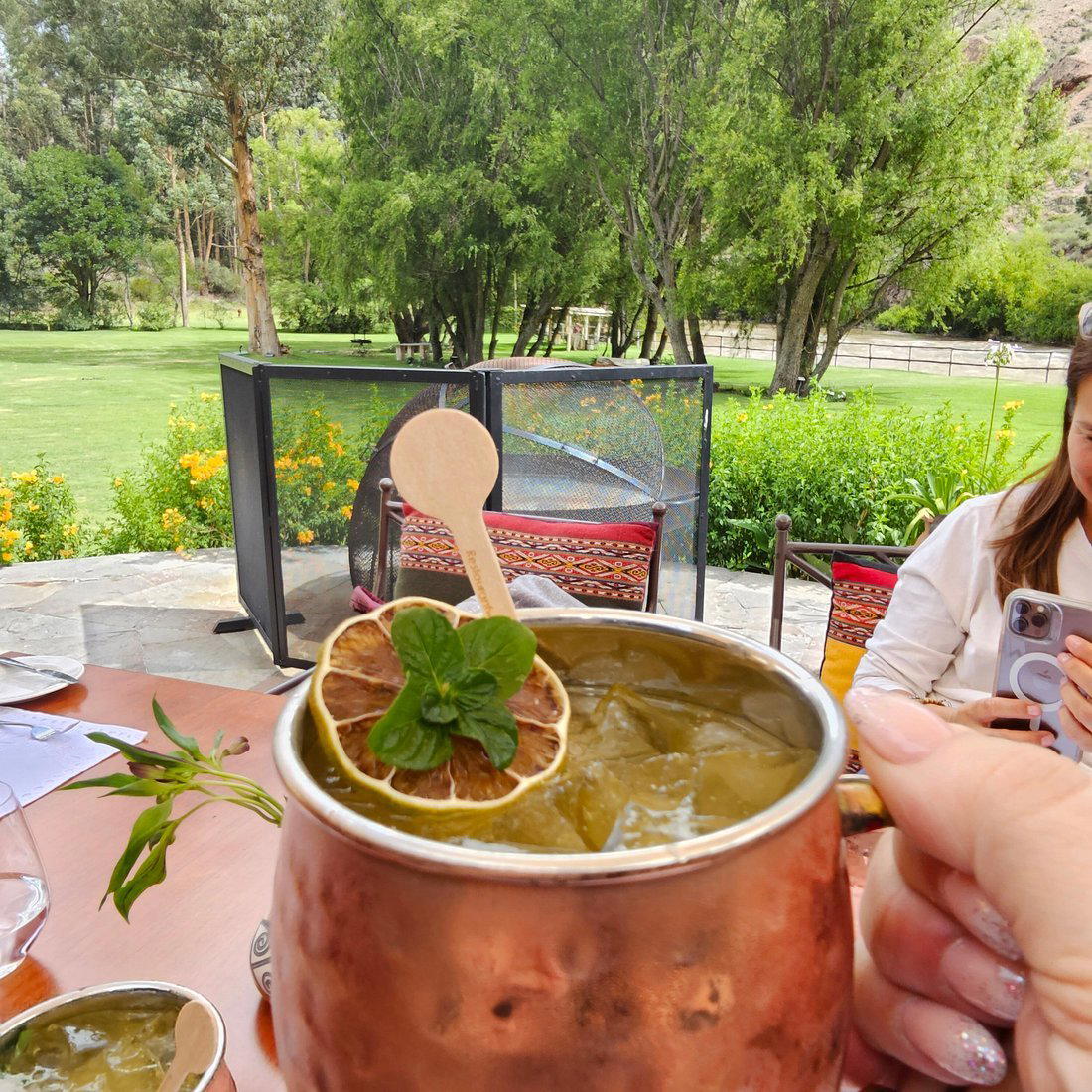
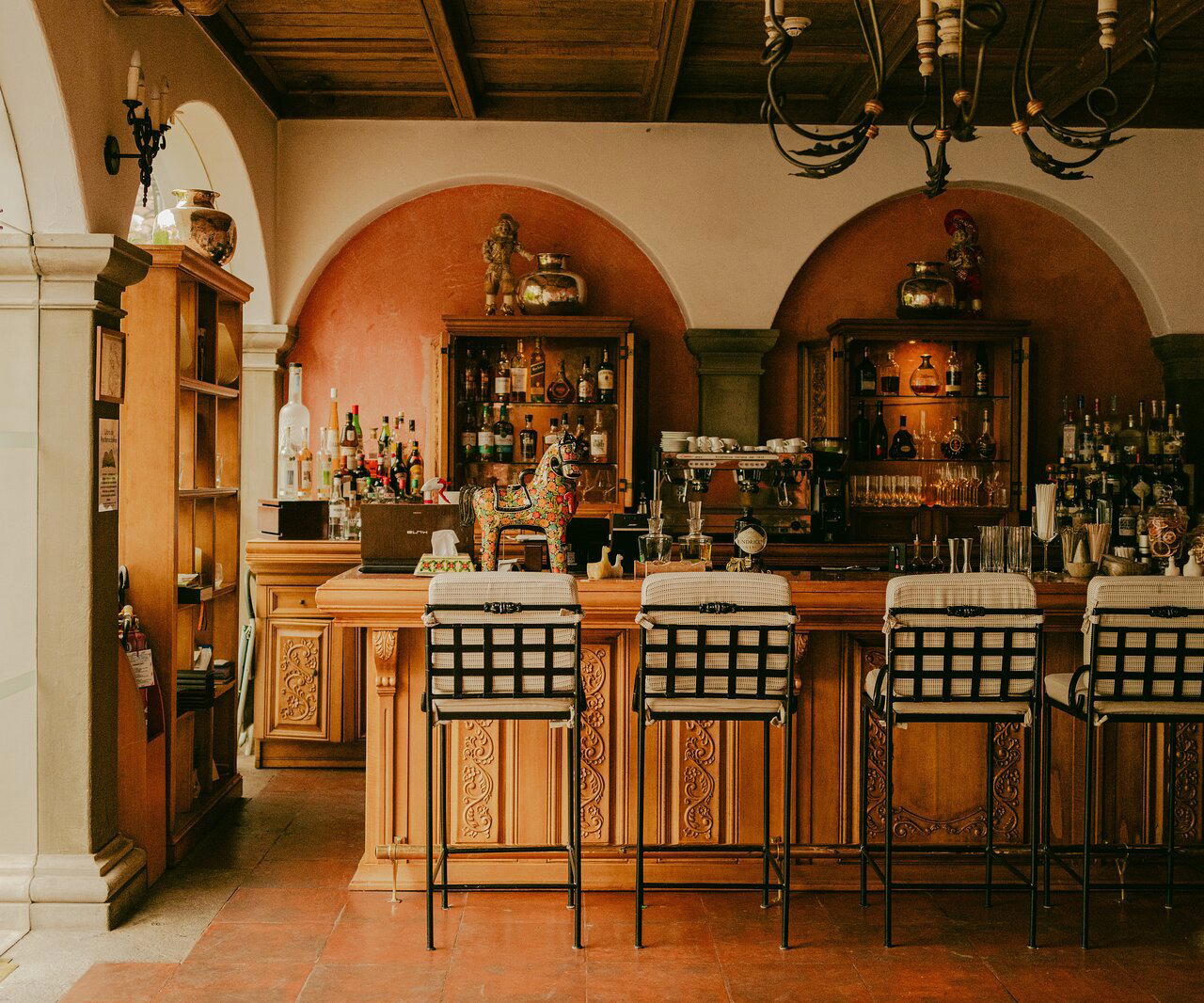
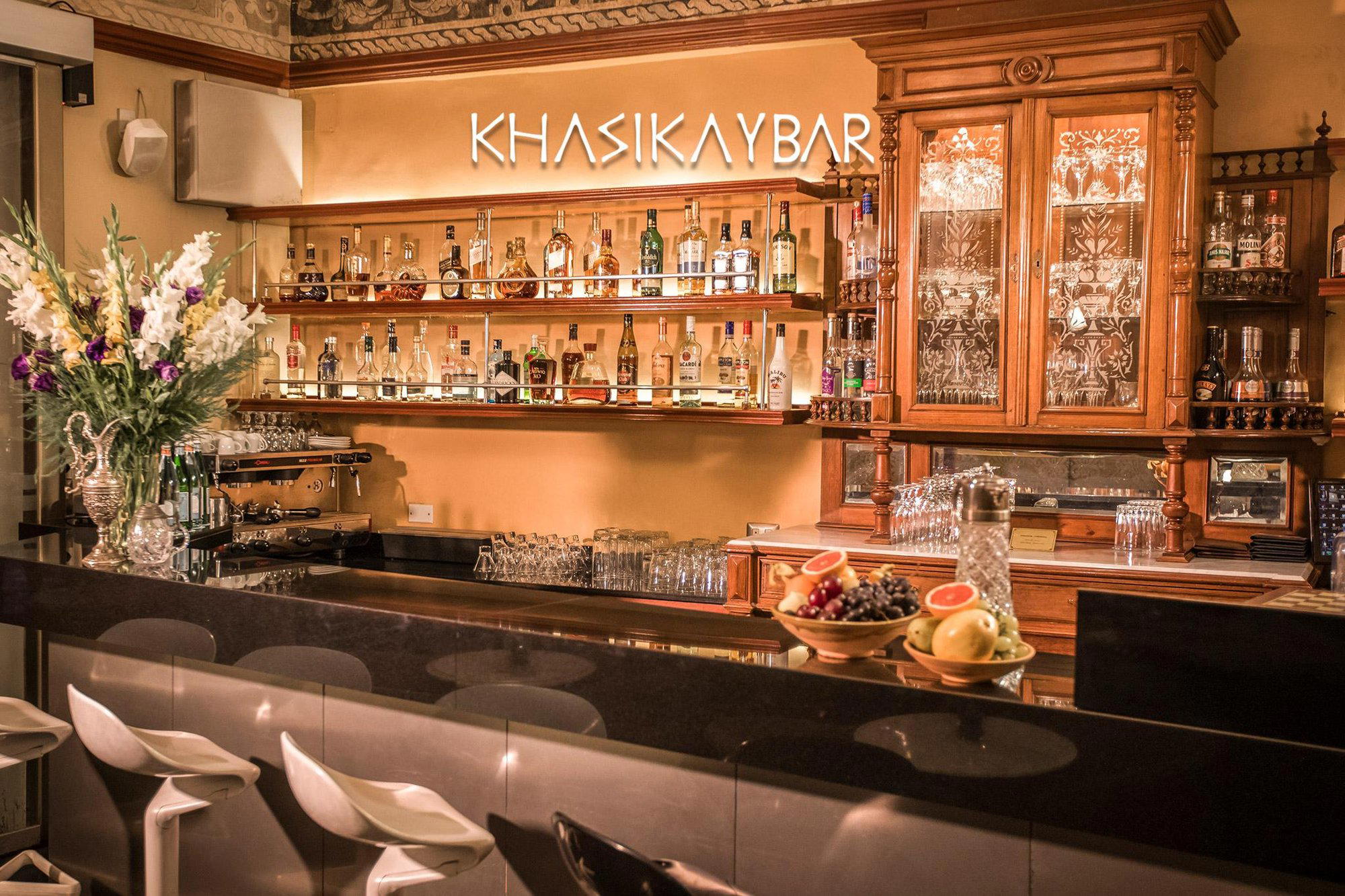
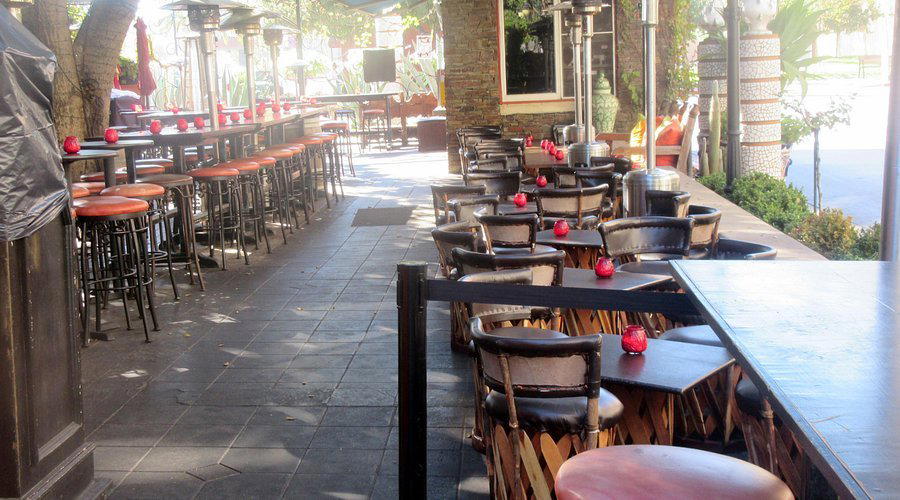
The lobby bar reinforces this: rattan furniture, wood-panelled walls, and cocktails finished with herbs cut from the property's own garden. It is a coherent expression of place rather than a generic hotel bar format.
The Private Train Station
Among Sacred Valley properties, Tambo del Inka holds a logistical distinction that no direct competitor in the valley replicates: a private train station on the grounds, with direct service to Machu Picchu. The carriages reference 1920s rail travel, and a panoramic Observation Bar Car is included on the journey. That detail matters beyond aesthetics. Aguas Calientes, the town below Machu Picchu, is accessible only by rail or multi-day trek from this section of the valley, which makes train access a genuine practical consideration rather than a theatrical amenity. The station is on the property; guests walk to it rather than being transferred to a public departure point.
For travellers comparing properties along the Machu Picchu corridor, including Inkaterra Machu Picchu Pueblo Hotel and Sumaq Machu Picchu Hotel in Aguas Calientes, the calculus is different: those properties place you already inside the Aguas Calientes footprint, closer to the site. Tambo del Inka's proposition is the reverse, stay lower, acclimatise well, then depart on your own terms via a private platform.
The Kallpa Spa and Recovery Programming
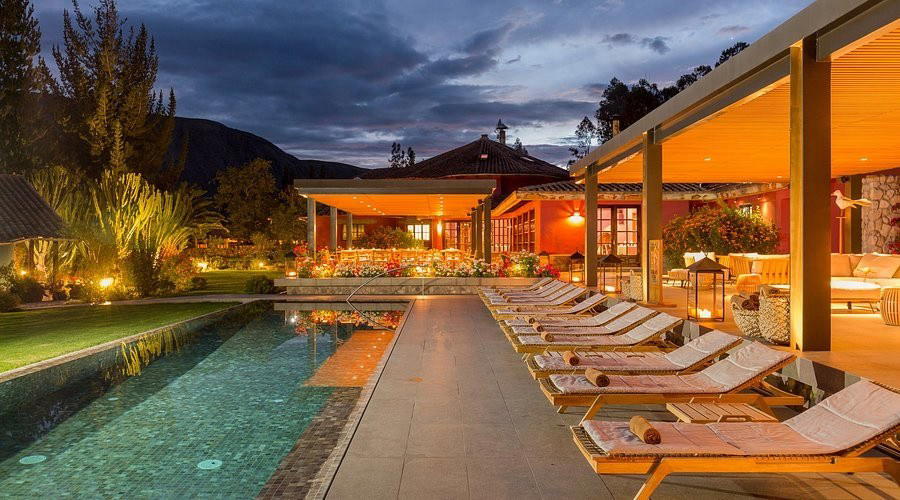
Altitude recovery and physical preparation for high-altitude trekking have driven the spa programming at properties across this region for two decades. The Kallpa Spa takes the Urubamba River as its design and treatment reference, with hydrotherapy circuits including underwater beds, a thermal circuit, and both heated indoor and outdoor pools. Sauna, steam room, and gym complete the physical recovery infrastructure. The pool maintenance closure running from January 15 to March 15, 2025 is worth noting when booking rainy-season dates; the rest of the hydrotherapy circuit remains operational during that window.
The cultural immersion programming carries the sustainability angle further. A destination fee covers access to local cultural experiences including classes with the property's master baker and bartender, Andean ancestral textile technique demonstrations, craft beer tastings, and storytelling sessions drawn from local oral traditions. These are structured engagement formats rather than passive entertainment. The textile demonstration in particular connects guests to a craft tradition that has sustained Andean communities for centuries and whose economic survival is increasingly dependent on heritage tourism infrastructure of exactly this kind.
Rooms and Design Register
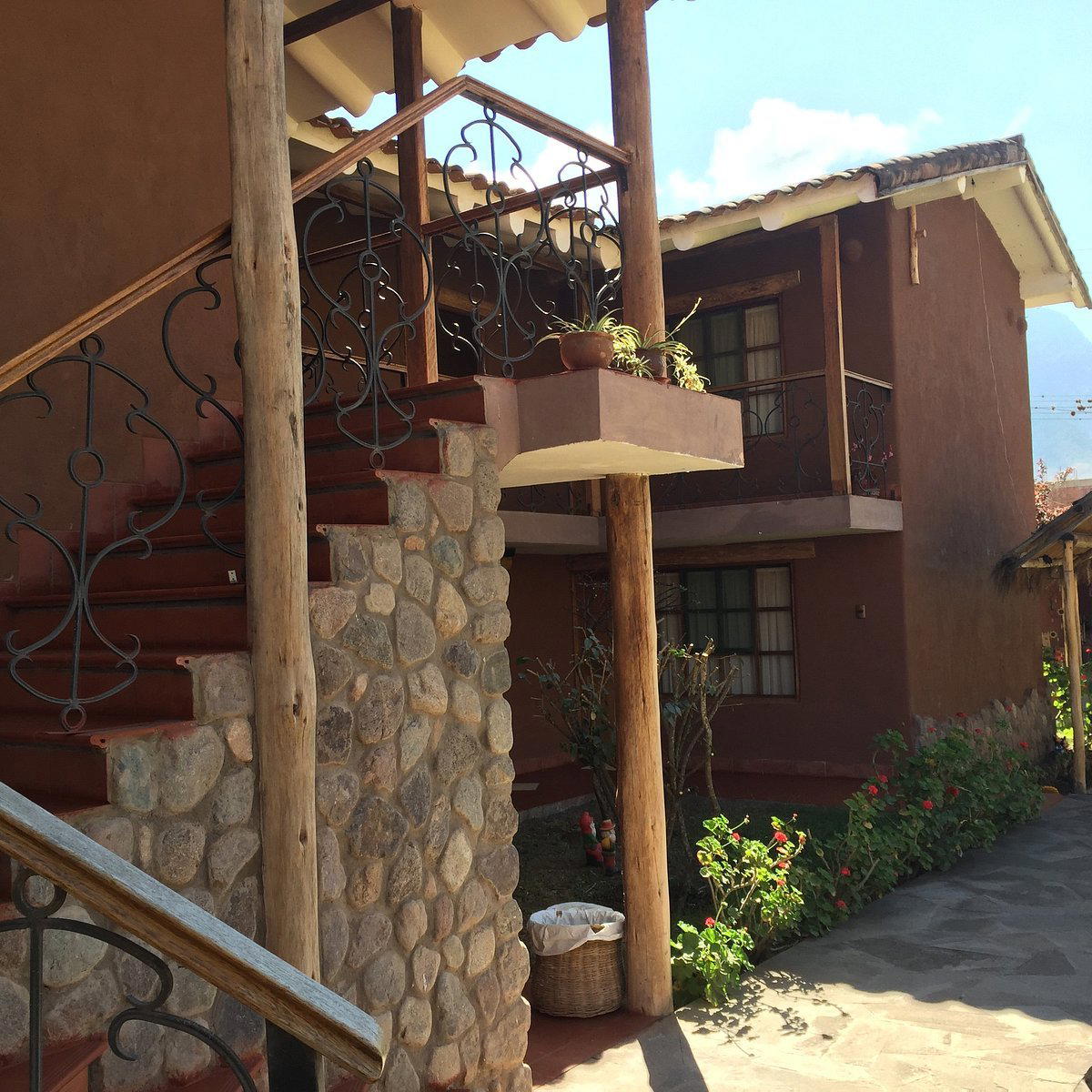
The 128 rooms and suites draw from the valley's material vocabulary: wooden panelling, hardwood floors, and natural fibre textiles read as site-specific rather than generically alpine. Rooms with private terraces extend the visual connection to the mountains and offer the clearest immersion in the landscape. Bathroom amenities are supplied by Byredo under the Le Chemin scent brief, a detail that places the property in a comparable set of luxury properties using specialist fragrance brands as part of a considered guest-experience design, alongside properties like Amangiri and Castello di Reschio in their respective landscape-anchored categories.
The property is managed by Marriott International under the Luxury Collection flag. Rates from $377 per night place it at a premium above mid-range Sacred Valley accommodation but below the upper ceiling of Andean luxury. For comparable positioning elsewhere in Peru, see Hotel Paracas, a Luxury Collection Resort. For other Peru destinations, Titilaka in Puno, Delfin Amazon Cruises, and Refugio Amazonas Lodge each anchor a different regional chapter of the same national itinerary. The Willka T'ika Essential Wellness property in Urubamba offers a lower price point in the same valley for travellers prioritising wellness programming over train access and restaurant credentials.
Planning Your Stay
The property is located at Av. Ferrocarril S/N, Urubamba 08660, in the Sacred Valley, a 45- to 60-minute drive from Cusco city depending on traffic and road conditions. The proximity to Urubamba's Plaza de Armas (a five-minute walk) gives guests access to local shops and independent restaurants without requiring a hotel vehicle. The grocery shopping service, which allows guests to pre-stock their room for valley excursions, is a low-friction practical tool worth requesting at check-in. Amenities include 24-hour room service, meeting rooms, a bar, and gym. The altitude of the Sacred Valley makes it a standard recommendation for itineraries arriving directly from sea-level cities; two nights before ascending to Cusco is a commonly cited acclimatisation window. Amangiri and Badrutt's Palace occupy analogous positions in their respective landscape categories. Also see Aranwa Cusco Boutique Hotel and Casa Andina Standard Cusco Catedral for city-based alternatives at different price points.
Price and Positioning
Comparable venues nearby, for context on price, style, and recognition.
| Venue | Price | Awards | Notes |
|---|---|---|---|
| Tambo del Inka, a Luxury Collection Resort & SpaThis venue — the venue you are viewing | $$$$ | Michelin 1 Key | Not listed |
| Palacio Nazarenas | $$$$ | World's 50 Best #87, 5-Star | near main square, 17th-century restored palace and convent with modern indulgence |
| Inkaterra La Casona | $$$$ | Michelin 2 Key | Plaza de las Nazarenas, Restored 16th-century colonial manor with original architecture and Inca heritage. |
| Palacio del Inka, a Luxury Collection Hotel | $$$$ | 5-Star | Cusco Historic Center, Restored 16th-century palace with ancient Andean-inspired decor and ornate modern amenities. |
| Aranwa Cusco Boutique Hotel | $$$$ | 5-Star | Cusco Historic Center, Colonial mansion boutique hotel-museum with Inca heritage fusion |
| JW Marriott El Convento Cusco | $$$$ | 5-Star | Cusco Historic Center, Restored 16th-century convent blending historic architecture with contemporary luxury |
Recognition history
Dated appearances from independent guides and award organizations, with the underlying list record or original source where available.
Forbes Recommended
Forbes
La Liste Top Hotels
La Liste
Star Wine List
Star Wine List
Virtuoso Luxury Hotel Partner
Virtuoso
Forbes Recommended
Forbes
Michelin 1 Key
Michelin
At a Glance
- Elegant
- Scenic
- Sophisticated
- Ornate
- Honeymoon
- Romantic Getaway
- Family Vacation
- Wellness Retreat
- Panoramic View
- Destination Spa
- Terrace
- Spa
- Pool
- Fitness Center
- Room Service
- Concierge
- Restaurant
- Wi Fi
- Business Center
- Mountain
- Spa
- Pool
- Fitness Center
- Room Service
- Concierge
- Restaurant
- Wi Fi
- Business Center
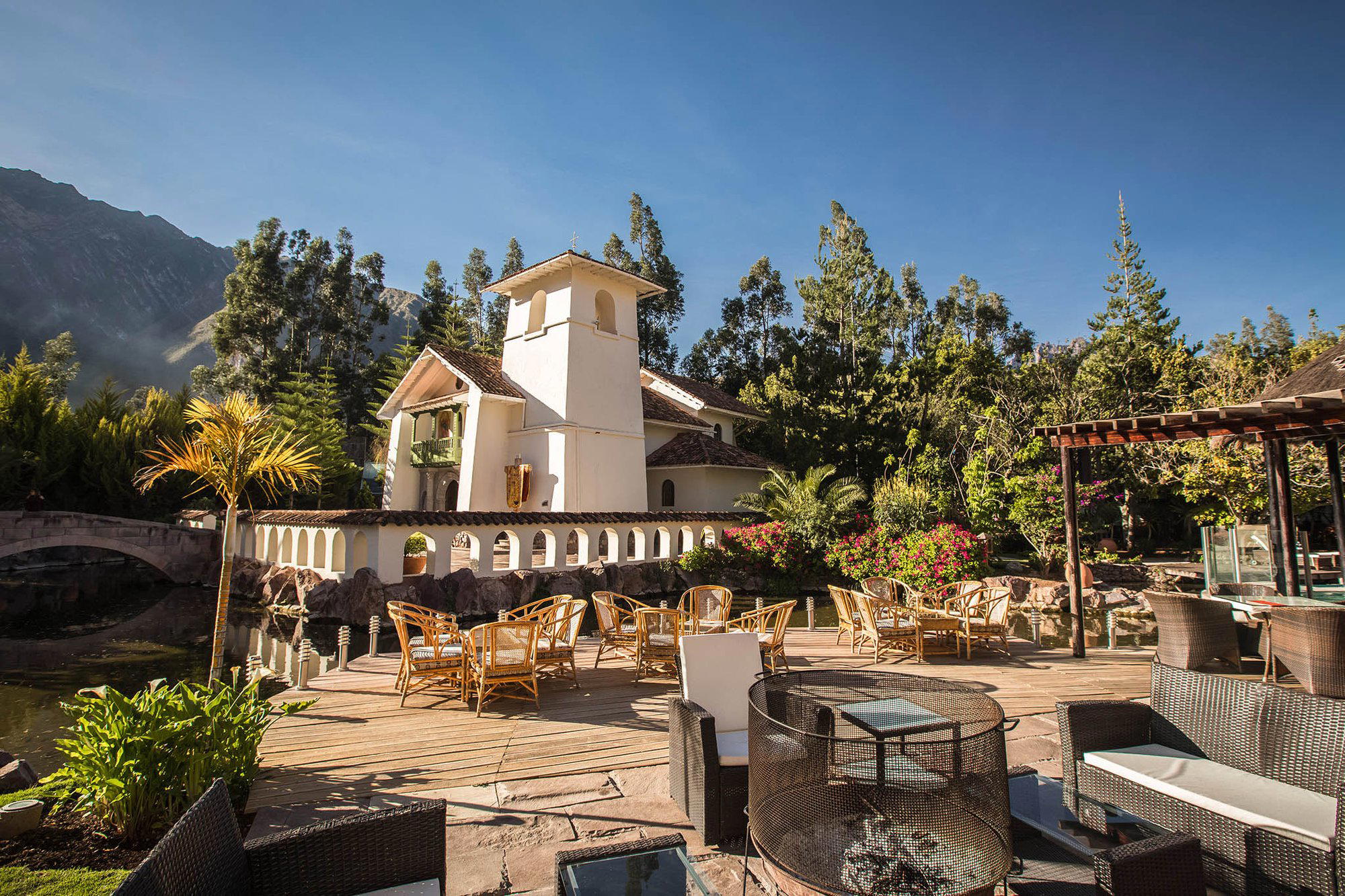
Serene and luxurious with immaculate gardens, riverfront terraces, soft lighting in spacious soundproofed rooms, and relaxing Andean music during breakfast.