
Michelin Selected
A Michelin Selected property occupying the ramparts and lawns of the 17th-century Portuguese Fort Aguada, this Taj Hotels flagship in Candolim sits where the Mandovi River meets the Arabian Sea. The resort's heritage architecture and position on Sinquerim Beach place it in a distinct tier among Goa's larger luxury properties, combining colonial stonework with the service infrastructure of one of India's most established hotel groups.

Pearl is the En Primeur Club membership app — saves, bookings, and concierge access live there. Same editors, same standards.
- Address
- Beach, Sinquerim Beach, Candolim, India
- Phone
- +91 0832-664 5858
- Directions
- Get directions
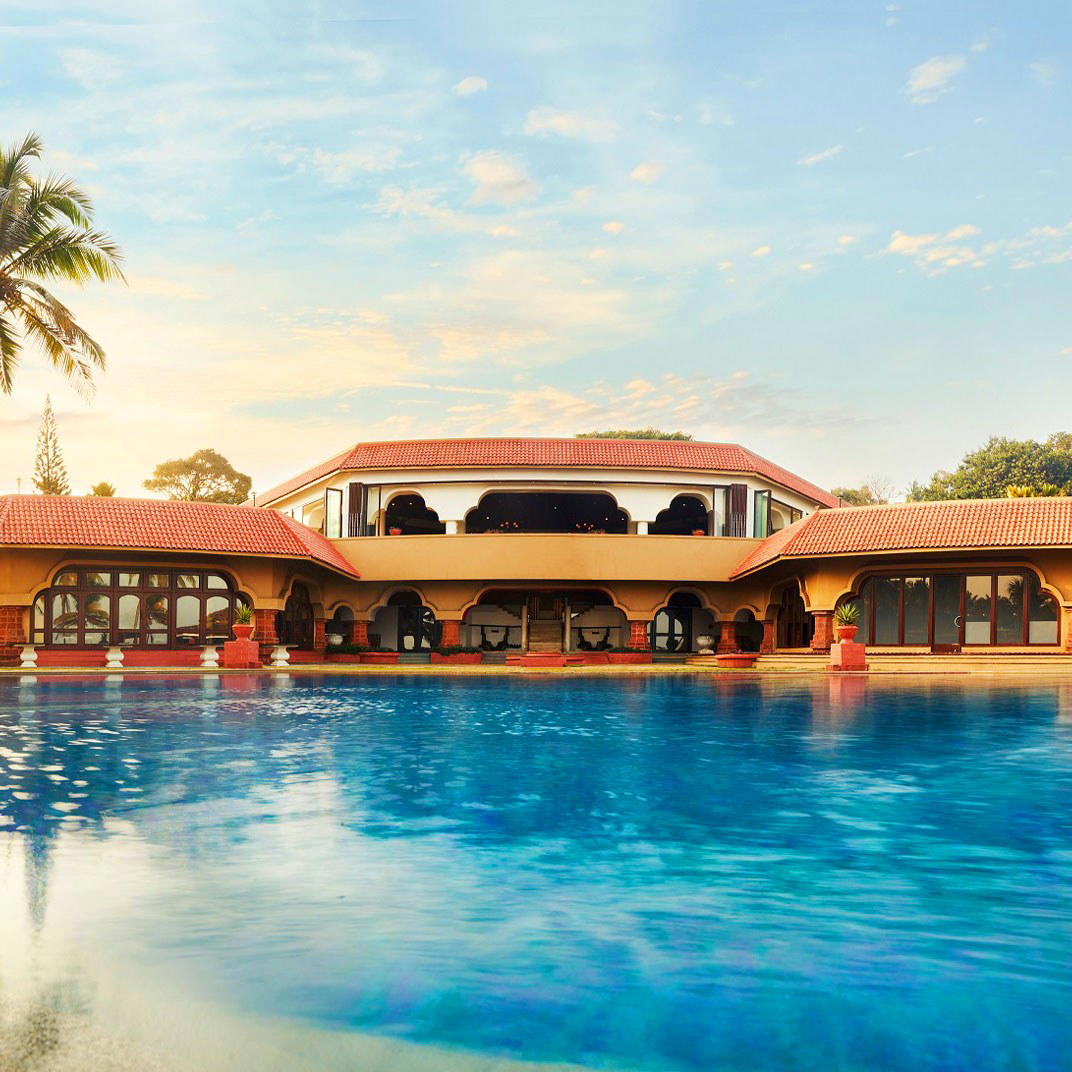
Where a Portuguese Fort Became a Hotel Footprint
The northern Goa coastline has accumulated hotel inventory at pace over the past two decades, but few properties in the state carry a physical context that predates the tourism industry itself. Fort Aguada was constructed by the Portuguese in 1612 to defend against Dutch and Maratha incursions, its laterite walls and lighthouse still standing at the tip of a promontory where the Mandovi River empties into the Arabian Sea. Taj Hotels integrated this structure into a resort campus at Sinquerim Beach in Candolim, producing something that most of Goa's newer beachfront builds cannot replicate: a property whose architecture is a historical document, not a design exercise.
That distinction carries weight in a region where luxury hotel development has largely defaulted to either large-format beach resorts with international-brand polish or boutique properties drawing on Indo-Portuguese vernacular for aesthetic credibility. The Fort Aguada campus occupies a different position — the heritage structure provides the authenticity that boutiques trade on, while the Taj group's scale and service infrastructure deliver the consistency that larger resorts promise. The 2025 Michelin Selected designation, part of the Michelin Hotels guide for India, confirms placement in a nationally recognised tier of hotel quality.
The Architecture as the Primary Argument
The laterite construction typical of Goa's Portuguese-era buildings gives the fort its particular visual register: warm ochre and rust tones that absorb afternoon light differently than concrete or marble. Laterite, the iron-rich sedimentary rock quarried extensively across Konkan coastal India, weathers to a texture that no contemporary material accurately reproduces, and the fort's surviving ramparts and the 1612 lighthouse give the property's upper terraces a silhouette that reads distinctly against the Arabian Sea horizon.
The integration of a working heritage fort into a resort layout presents architectural challenges that most hotel groups avoid rather than solve. At Fort Aguada, the resort campus spreads across different elevation levels, from the beachfront areas at Sinquerim up toward the fort's higher ground, meaning the physical experience of the property involves moving through layered historical and contemporary zones rather than navigating a single-level resort footprint. Visitors approaching from the beach encounter the resort differently than those arriving by road, which gives the property an unusual spatial variety for a hotel of its category.
Fort Aguada's distinction within this set is that the heritage structure is the actual building, not the backdrop.
Candolim and the North Goa Context
Candolim sits in north Goa's premium coastal corridor, positioned between the more frenetic Calangute to the north and the quieter Aguada headland to the south. The area attracts a visitor profile that skews toward extended-stay leisure travel rather than the short-break party tourism concentrated further up the coast. This geographic positioning supports Fort Aguada's resort model, which requires guests to engage with the property itself rather than using it as a base for external nightlife.
The Taj group's presence in north Goa extends beyond this property. The adjacent Taj Holiday Village Resort and Spa, Goa shares the Sinquerim Beach frontage and operates as a companion property with a different format and price positioning. Guests choosing between the two are effectively choosing between the heritage-integrated experience of Fort Aguada and a more conventional resort layout next door. For context on the wider Candolim area and dining options, our full Candolim restaurants guide covers the neighbourhood in detail.
Positioning Within India's Luxury Hotel Tier
The Taj Hotels brand operates across a wide spectrum of property types in India, from city business hotels to palace conversions, but its flagship properties carry a lineage that positions them differently from international chain entrants. The Taj Mahal Palace, Mumbai is the group's anchor reference point, a property with documented history dating to 1903 that defines what premium Taj hospitality is expected to deliver. Fort Aguada draws from similar logic: heritage provenance, a large-format resort campus, and a service model built around extended leisure stays rather than transactional overnight visits.
Within the broader range of Michelin Selected properties across India, Fort Aguada sits alongside other recognisably positioned hotels. The Leela Palace Jaipur and The Leela Palace New Delhi represent the palace-format competitor in the Michelin Selected tier. Properties such as Ananda in the Himalayas and Suryagarh in Jaisalmer occupy more specialist positions in terms of wellness focus or desert-fort character. Fort Aguada's position is defined by its coastal heritage format, a combination found nowhere else in the Taj portfolio.
For travellers building an India itinerary around architecturally significant properties, Fort Aguada pairs logically with heritage hotels elsewhere in the country. Amanbagh in Ajabgarh and Suján Jawai in Pali represent the design-led independent tier in Rajasthan, while Woods at Sasan in Sasan Gir and Kumarakom Lake Resort in Kumarakom illustrate how India's premium hotel sector has developed strong regional identities beyond the heritage palace category.
Planning a Stay
Goa's peak season runs from November through February, when the Arabian Sea is calm and daily temperatures hold between 26 and 32 degrees Celsius. The monsoon months from June through September close many Goa properties or operate at reduced capacity; Fort Aguada's position on the Mandovi estuary means the pre-monsoon and post-monsoon shoulder periods in October and March offer a reasonable compromise between crowd levels and weather reliability. Booking ahead is advisable for peak-season stays, particularly over the Christmas and New Year period when Goa's northern coast operates close to full occupancy across all tier levels. The Taj Hotels central reservations system handles bookings for this property alongside the wider group portfolio.
Side-by-Side Snapshot
Comparable venues nearby, for context on price, style, and recognition.
| Venue | Cuisine | Price | Awards | Notes |
|---|---|---|---|---|
| Taj Fort Aguada Resort & SpaThis venue — the venue you are viewing | Portuguese-colonial heritage resort with modern luxury | $100–200 | Michelin Selected | Not listed |
| Taj Holiday Village Resort and Spa, Goa | Indo-Portuguese inspired beachfront resort | $200–300 | La Liste Top Hotels | Candolim |
| Taj Bekal Resort and Spa, Kerala | Contemporary classic resort with Kettuvallam houseboat-inspired architecture blending local Kerala elements and modern luxury. | Not listed | Michelin Selected | Bekal |
| Taj Madikeri Resort and Spa, Coorg | Inspired by traditional Kodagu architecture with contemporary luxury cottages and villas set in rainforest. | $200–300 | Michelin Selected | Monnangeri |
| ITC Grand Chola, a Luxury Collection Hotel, Chennai | Palatial luxury hotel inspired by Imperial Chola architecture with four distinct artistic entry points and grand public spaces. | $200–300 | La Liste Top Hotels | Chennai |
| Sheraton Grand Palace Indore | Polished modern luxury hotel with grand palace-inspired grandeur. | Not listed | World Travel Awards | Omex City |
Recognition history
Dated appearances from independent guides and award organizations, with the underlying list record or original source where available.
Michelin Selected
Michelin
Continue exploring
More in Candolim
Hotels in Candolim
Browse all →
Bars in Candolim
Browse all →
Restaurants in Candolim
Browse all →

Wineries in Candolim
Browse all →
Details
- Romantic
- Elegant
- Scenic
- Sophisticated
- Ornate
- Honeymoon
- Romantic Getaway
- Family Vacation
- Wellness Retreat
- Anniversary
- Beachfront
- Infinity Pool
- Destination Spa
- Historic Building
- Panoramic View
- Spa
- Pool
- Fitness Center
- Room Service
- Concierge
- Kids Club
- Beach Access
- Tennis
- Wi Fi
- Valet Parking
- Waterfront
- Garden
Relaxed seaside luxury with Portuguese-style architecture, manicured gardens, crashing waves, and bird song creating a serene, elegant atmosphere.