Tabacón Thermal Resort & Spa



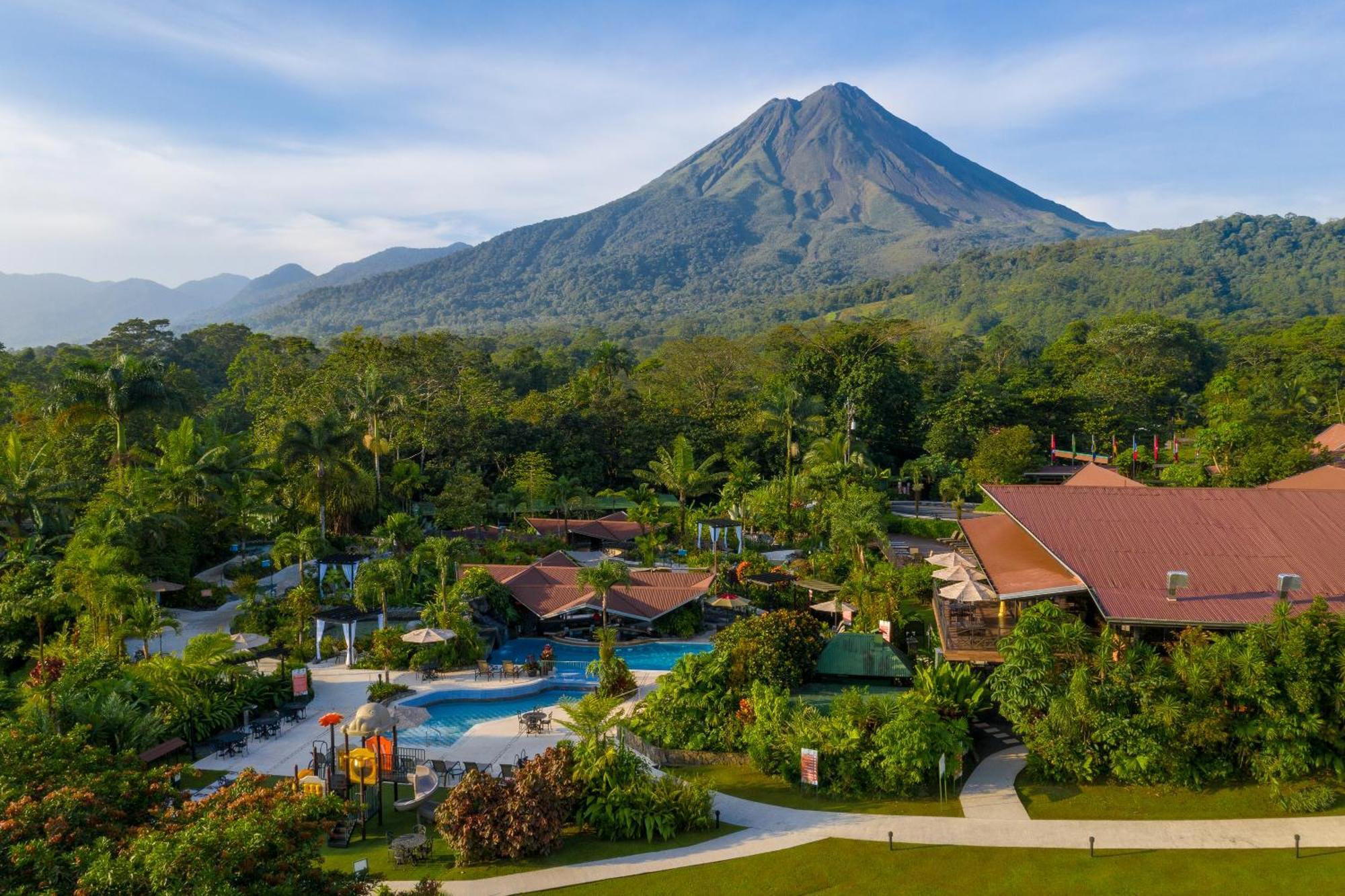
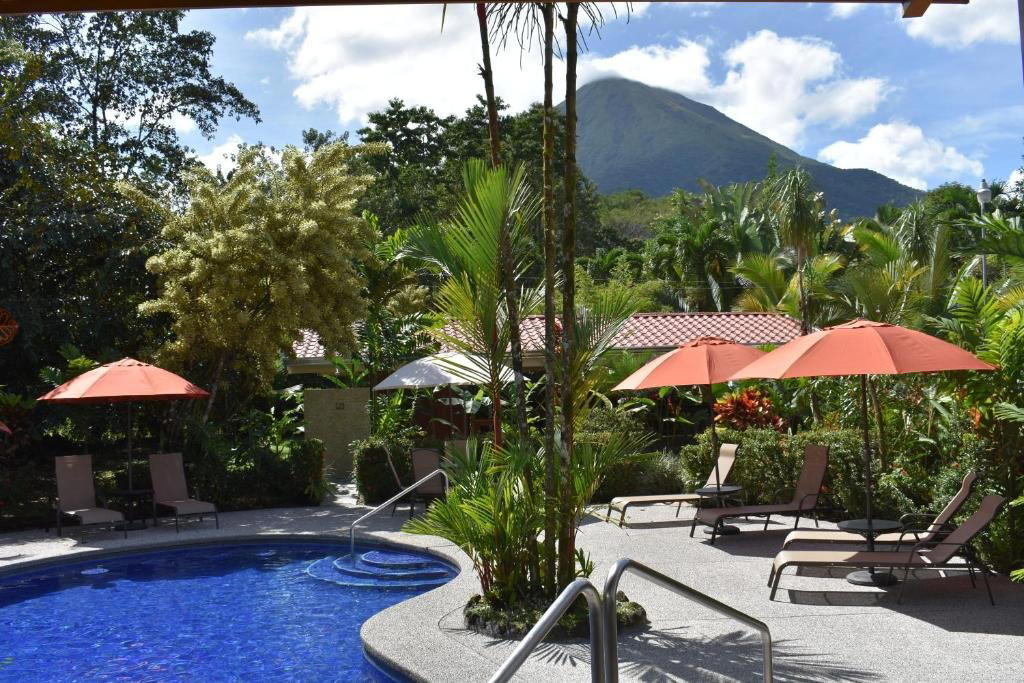
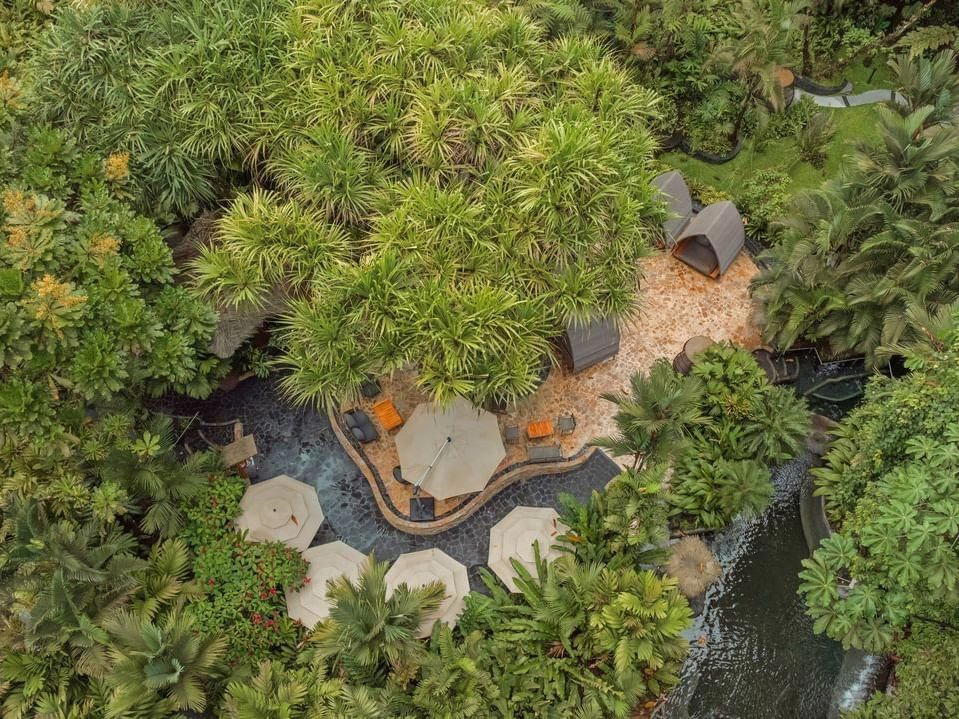
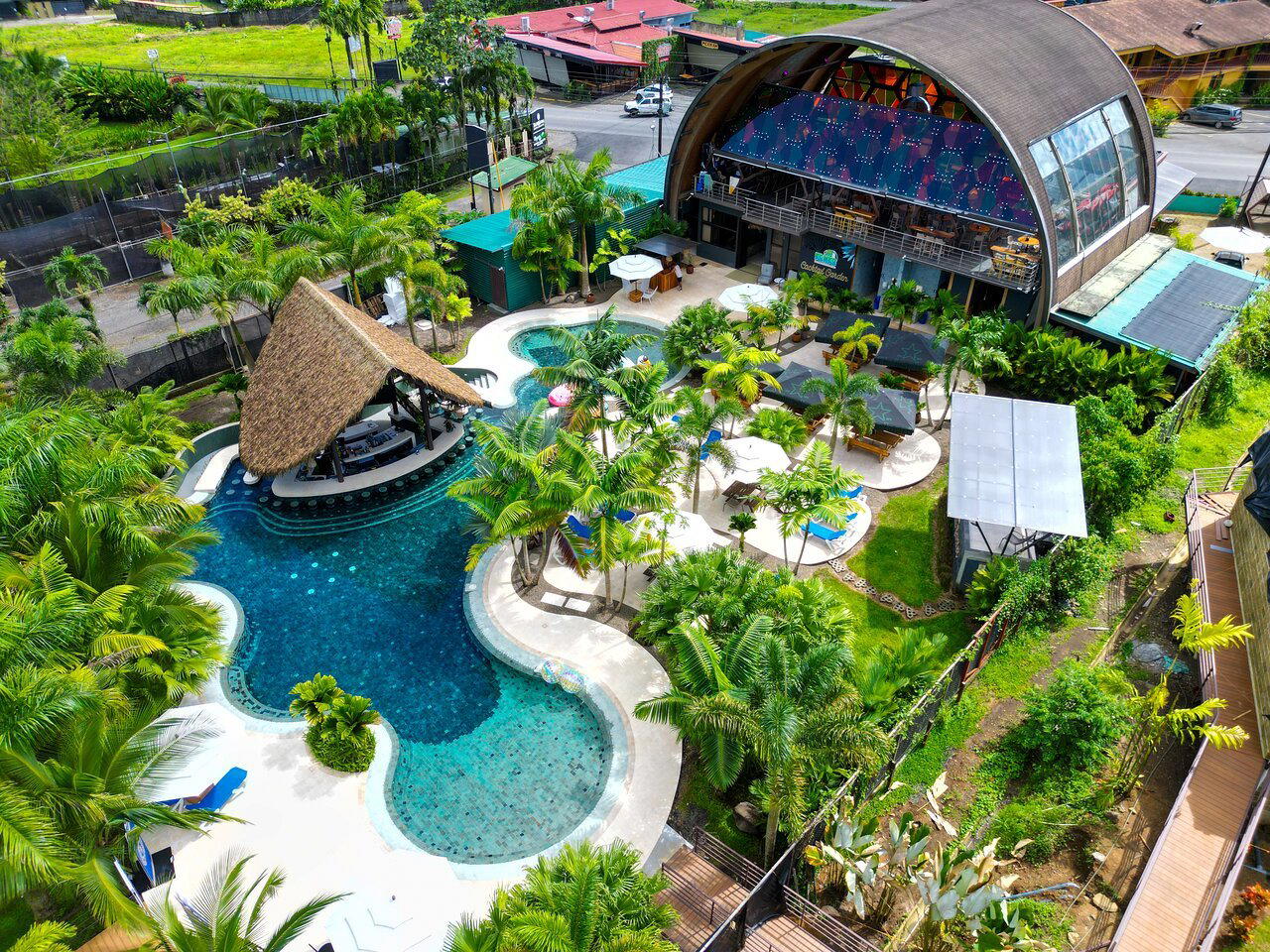
Tabacón Thermal Resort & Spa sits on 900 acres of rainforest reserve at the base of Arenal Volcano, 13 kilometres from La Fortuna de San Carlos. The resort's thermal springs emerge directly from volcanic earth and flow through the jungle in the largest naturally fed network of its kind in Costa Rica. Accommodations are designed with local materials and artisan craft, placing the property in the smaller, design-led tier of Costa Rican luxury.
Pearl is the En Primeur Club membership app — saves, bookings, and concierge access live there. Same editors, same standards.
- Address
- Noreste de Centro de la Fortuna de San Carlos 13 Km, Provincia de Alajuela, Nuevo Arenal
- Phone
- +50625191999
- Website
- tabacon.com
- Directions
- Get directions
 Saves & bookings on Pearl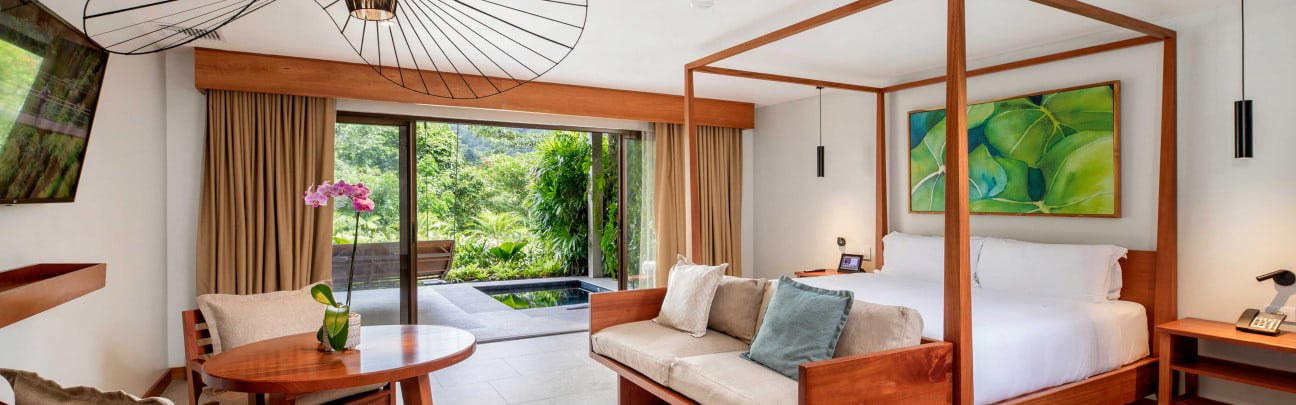
Where the Architecture Defers to the Volcano
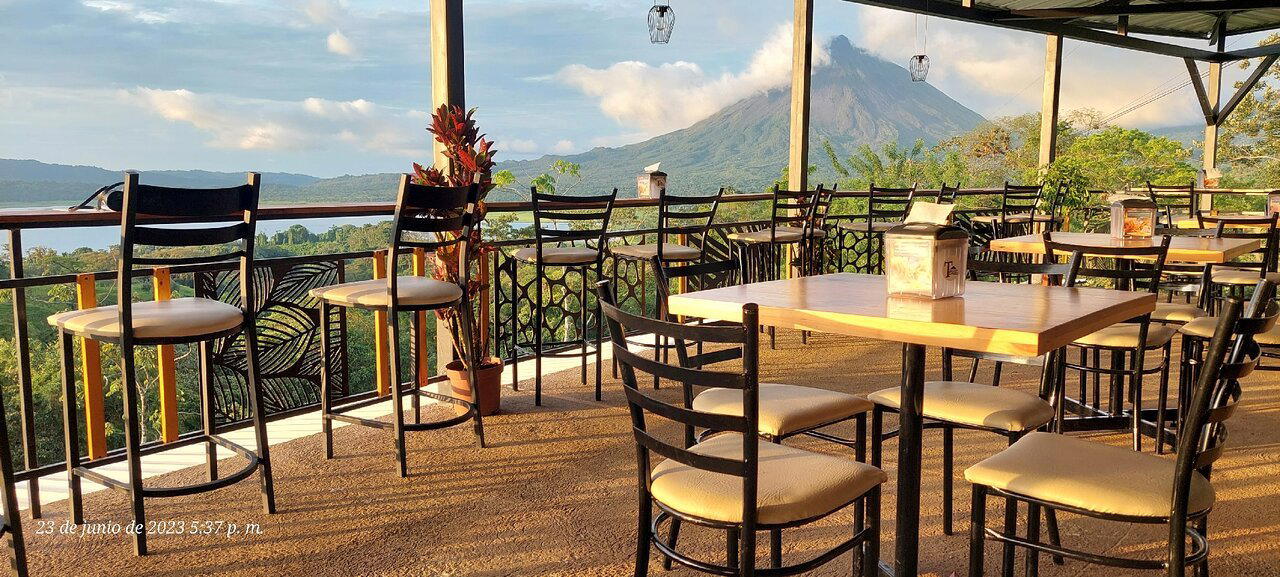
The road northeast from La Fortuna de San Carlos runs straight toward Arenal, and for roughly 13 kilometres the volcano dominates the windshield in a way that makes it clear the landscape, not the town, is the real reference point out here. Arriving at Tabacón Thermal Resort & Spa, that orientation continues: the built environment is arranged to recede rather than announce itself. Structures sit low in the treeline. Pathways follow the contours of thermal streams rather than impose geometry on them. The architectural logic is subtractive — remove what competes with 900 acres of rainforest reserve and an active stratovolcano, and what remains is enough.
That restraint is a considered position within Costa Rican luxury hospitality, where the dominant design question has long been how aggressively to buffer guests from the environment. The large-scale all-inclusive format, well represented along both Pacific coasts, answers that question with pools, air-conditioned corridors, and programmed activity. Smaller lodges in the cloud forest and Osa Peninsula, such as El Silencio Lodge & Spa in Bajos del Toro or Lapa Rios in Puerto Jimenez, answer it differently: permeability, open structures, and the acceptance of some discomfort as part of the proposition. Tabacón occupies a middle position — refined materials and attentive service, but architecture that insists on the volcanic and ecological context rather than insulating guests from it.
The Thermal Network as Structural Element
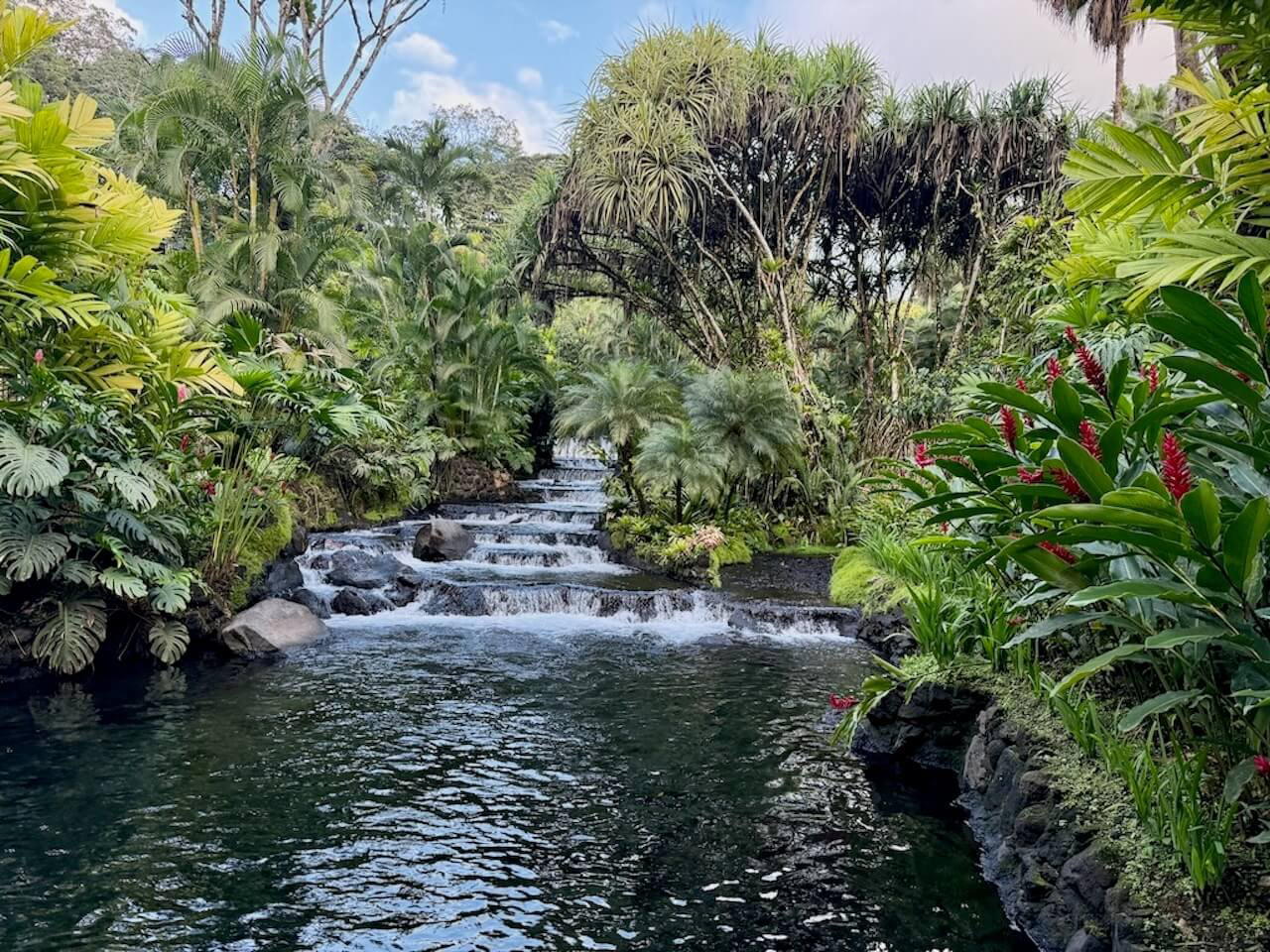
Costa Rica's volcanic geology produces thermal springs across the Central Highlands, but the concentration and volume at the Arenal base is singular in the country's hospitality context. At Tabacón, the mineral waters emerge from the volcanic earth and are routed through the resort's grounds in a network that is, by documented measure, the largest naturally flowing thermal spring system operated by any property in Costa Rica. This is not a heated pool complex fed by municipal water and a boiler; the source is geothermal, the chemistry is mineral-rich, and the flow is continuous and gravity-driven through the rainforest terrain.
From an architectural standpoint, this shapes everything. The springs are not amenities appended to the resort, they are the organizing spine around which the property is built. Pathways, terraces, and room orientations are arranged in relation to where water flows, which in turn follows the topography descending from the volcano's lower slopes. Guests move through the resort laterally, following water rather than arriving at a discrete amenity block. The effect is more akin to moving through a designed landscape than checking features off a hotel amenities list.
Properties across Costa Rica gesture at this kind of environmental integration. The Andaz Costa Rica Resort at Peninsula Papagayo in Guanacaste works with dry forest topography and Pacific coastline in a comparable way. Hacienda AltaGracia, Auberge Resorts Collection in Pérez Zeledón uses coffee estate terrain as its organizing context. What makes Tabacón's case particular is that the organizing element is active and geological, the springs are a product of the same volcanic system that has historically defined and periodically threatened La Fortuna itself.
Rooms, Materials, and the Local Craft Argument
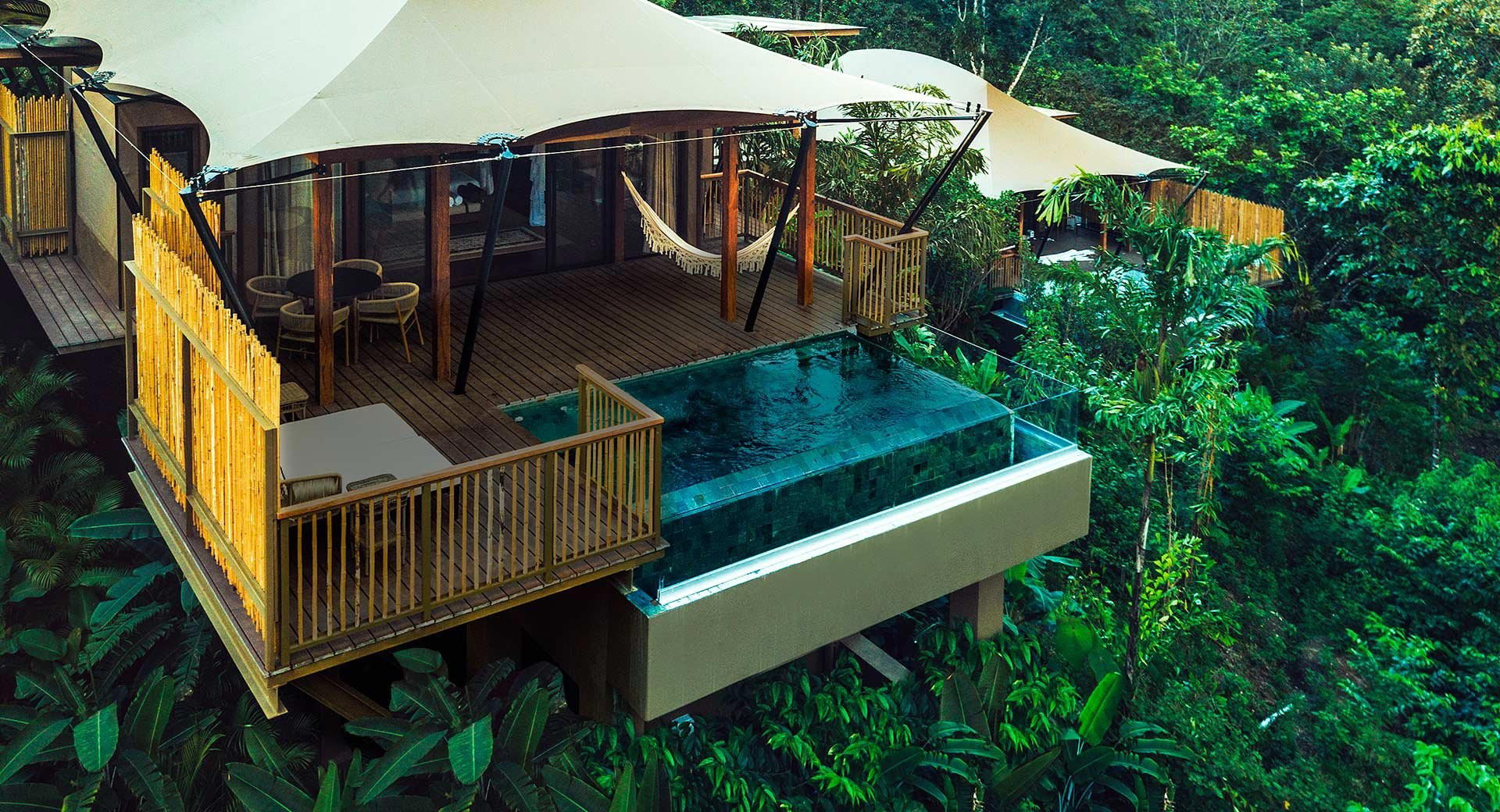
The accommodation design at Tabacón follows the wider regional turn toward local materials and artisan production as a marker of property identity. Rooms and suites use warm natural materials, wood, stone, textiles, with handcrafted details attributed to Costa Rican artisans. Layouts are generous, and terraces or garden orientations extend the interior footprint into the surrounding environment.
This approach to hospitality design has become a differentiator across the more considered tier of Costa Rican properties. Kura Boutique Hotel in Uvita and Hotel Nantipa in Santa Teresa de Cobano use comparable material strategies. Finca Rosa Blanca Coffee Farm and Inn in Jesús de Santa Bárbara applies it through an agricultural context. The pattern reflects a broader shift in how premium Costa Rican hospitality signals authenticity: not through imported luxury finishes, but through traceable local production and craft. Tabacón fits that pattern while operating at a larger footprint than many of its boutique counterparts, the 900-acre reserve gives the property room to spread accommodations in a way that preserves the sense of private sanctuary even at greater scale.
Dining Within the Costa Rican Tradition
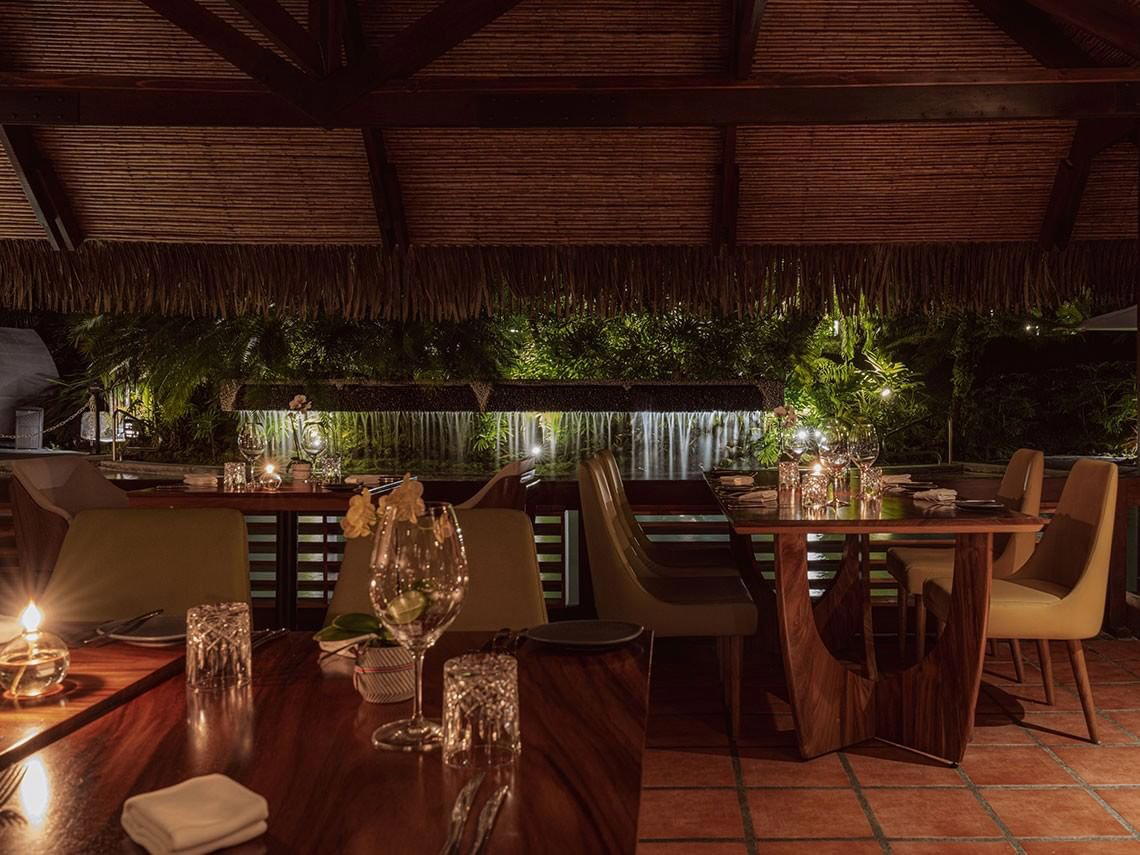
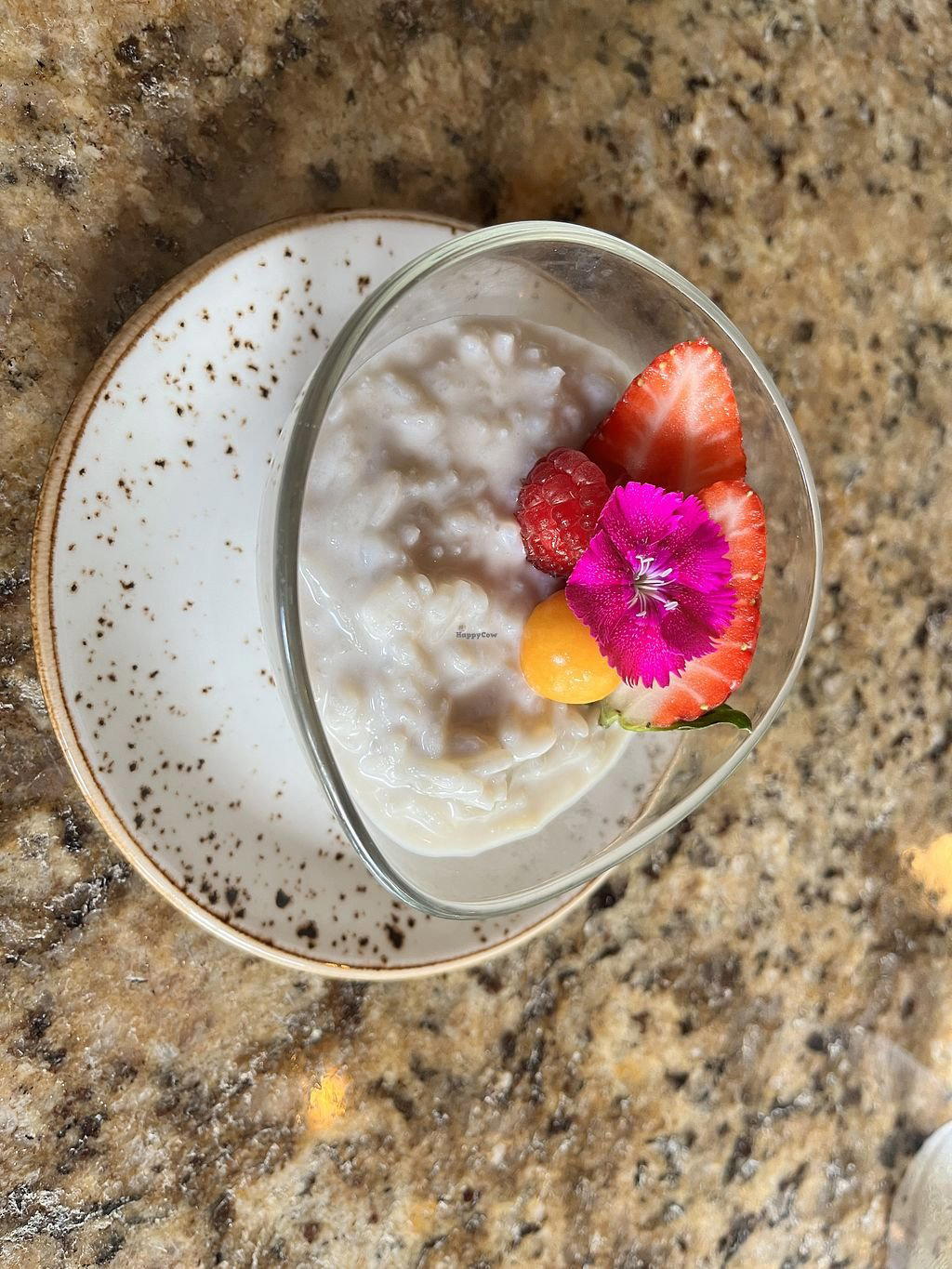
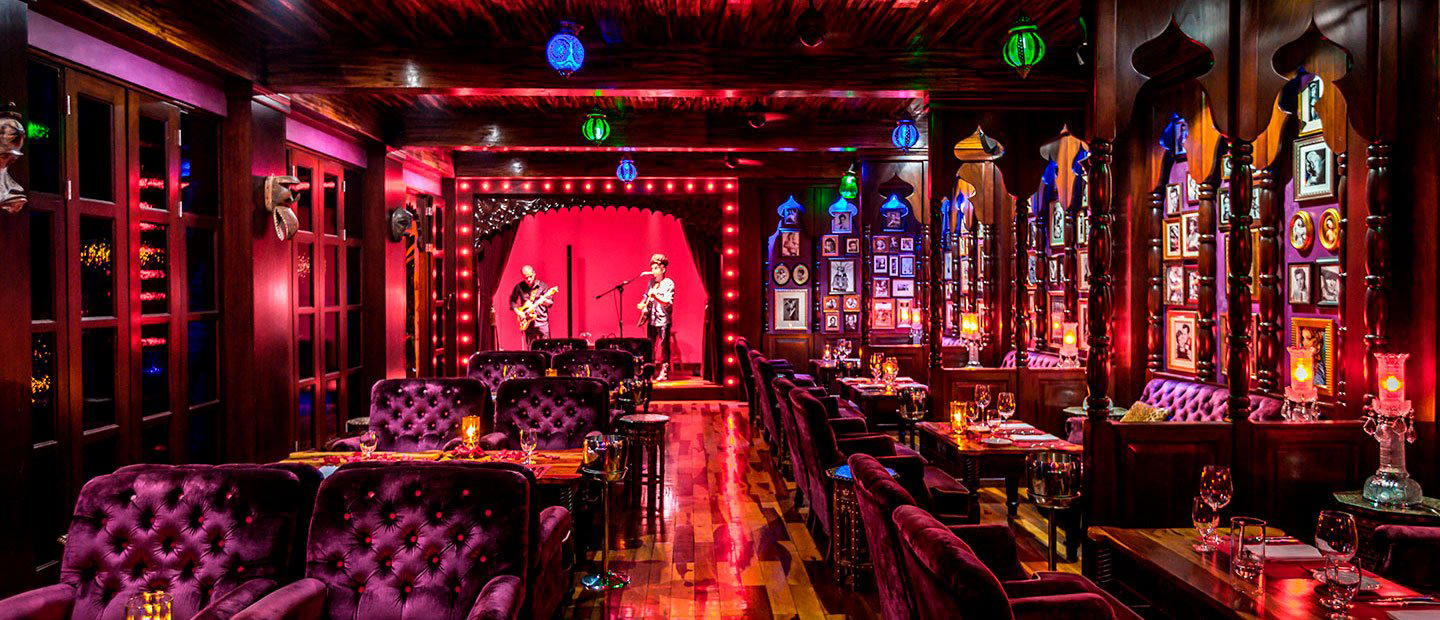
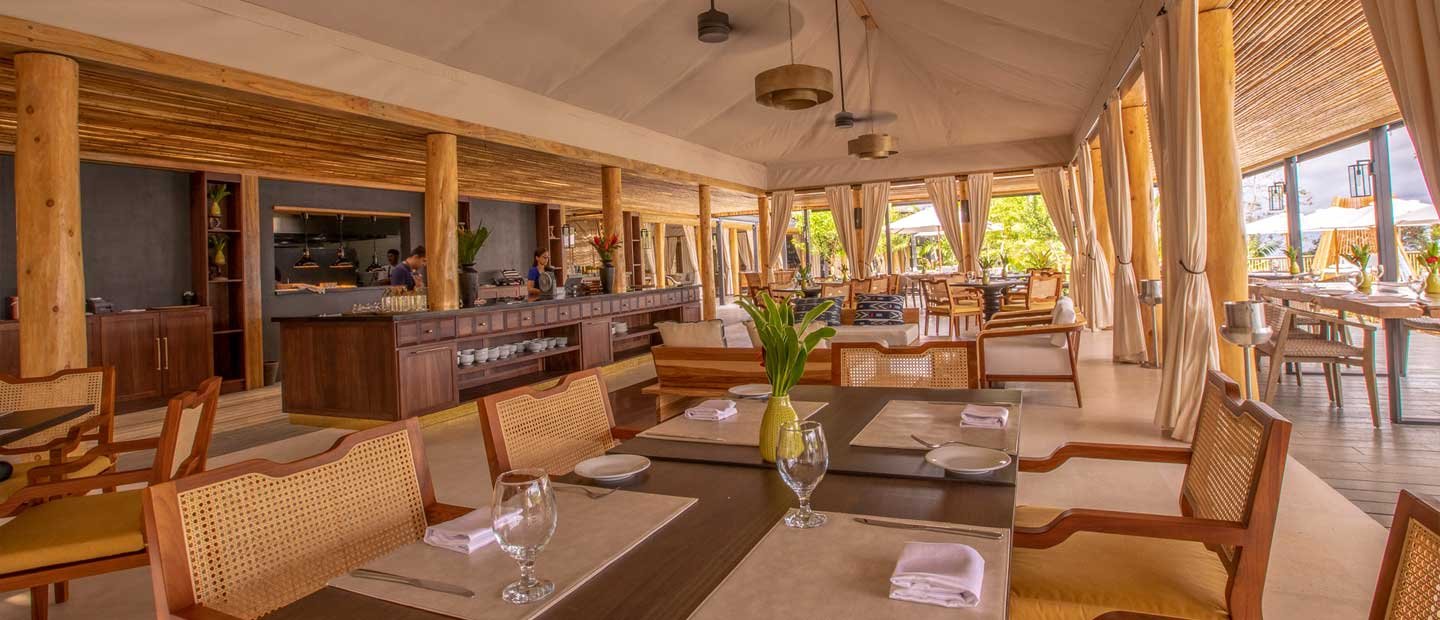
The gastronomy at Tabacón follows the country's broader culinary positioning rather than importing an international fine-dining framework. Costa Rican food culture is rooted in agricultural staples, rice, beans, plantain, tropical fruit, fresh seafood on the coasts, and the country's restaurant scene has increasingly found ways to refine that tradition through local sourcing and careful technique rather than by replacing it with European templates. Tabacón's approach to dining draws on locally sourced ingredients and time-honored techniques with contemporary interpretation, positioning the food program as an extension of the property's relationship to place rather than a standalone culinary statement.
For guests oriented toward dining as a primary travel driver, our full La Fortuna de San Carlos restaurants guide covers the wider options in the town and surrounding area. La Fortuna itself is a functional base for Arenal tourism rather than a destination dining town, which means the on-property food program carries more weight here than it might at properties in San José or Guanacaste, where urban restaurant options multiply the choices available to guests.
The Eco-Spa and the Open-Air Treatment Argument
Spa design at properties in biodiverse environments has increasingly moved toward open-air or semi-open formats, where the ambient ecosystem becomes part of the treatment experience rather than something to be air-conditioned away. Tabacón's eco-spa operates on this premise, treatments are set within the rainforest, with the sounds of flowing water and native wildlife present throughout. This is a consistent design decision rather than a marketing addition: the spa's position within the broader property follows the same logic of environmental integration that governs the room design and the thermal network layout.
Properties such as Arenas Del Mar Beachfront & Rainforest Resort in Aguirre and Esh Hotel & Spa in Nosara work with similar open-air spa formats adapted to their own ecological contexts. The spa-within-rainforest format is now well established in Costa Rican luxury, but the thermal spring setting at Tabacón gives the program an additional layer that few properties in the country can replicate.
Planning a Stay
Tabacón sits on the road northeast of La Fortuna de San Carlos, the address references 13 kilometres from the town centre, making it one of the closer high-end properties to the Arenal area's services and transport links. La Fortuna is accessible by road from San José in approximately three to four hours, with private transfers the practical choice for most guests arriving at Juan Santamaría International Airport. The dry season, broadly December through April, delivers the most consistent conditions for outdoor thermal spring use and volcano visibility, though Arenal's upper cone is frequently cloud-covered regardless of season. Advance reservations are advisable, particularly for the high season and holiday periods when Arenal-area properties fill across the price spectrum.
Guests considering Tabacón alongside other Costa Rican options at a comparable positioning should also look at Hotel Belmar in Monteverde, Villa Caletas Hotel in Garabito, Hotel Aguas Claras in Puerto Viejo, and Hotel Three Sixty in Ojochal de Osa. For Pacific-coast alternatives with a resort scale, JW Marriott Guanacaste Resort & Spa in Santa Cruz and Casa Chameleon at Las Catalinas in Potrero represent the range available. The Hotel Roca Negra in San Carlos provides a local mid-range reference point for travellers calibrating budget against experience. Guests transiting through San José may also consider Costa Rica Marriott Hotel Hacienda Belen in Belen or Residence Inn by Marriott San Jose Alajuela El Coyol for airport-adjacent accommodation.
Recognition history
Dated appearances from independent guides and award organizations, with the underlying list record or original source where available.
Mr & Mrs Smith Smith Seal of Approval
Mr & Mrs Smith
Virtuoso Luxury Hotel Partner
Virtuoso
Michelin Selected
Michelin
Small Luxury Hotels of the World Member
Small Luxury Hotels of the World
Continue exploring
More in La Fortuna de San Carlos
Hotels in La Fortuna de San Carlos
Browse all →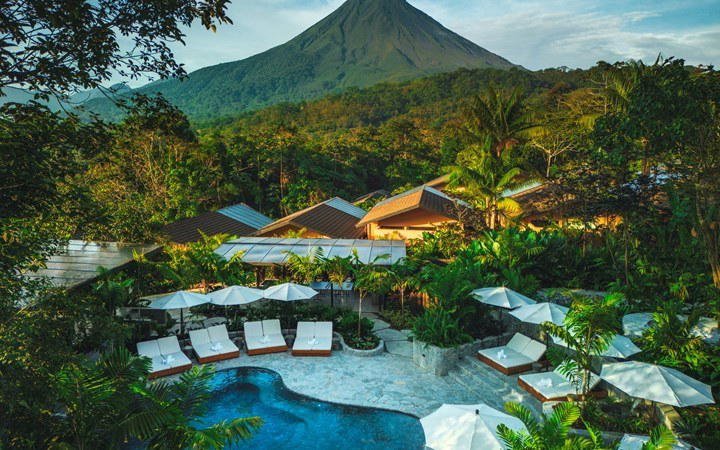
Bars in La Fortuna de San Carlos
Browse all →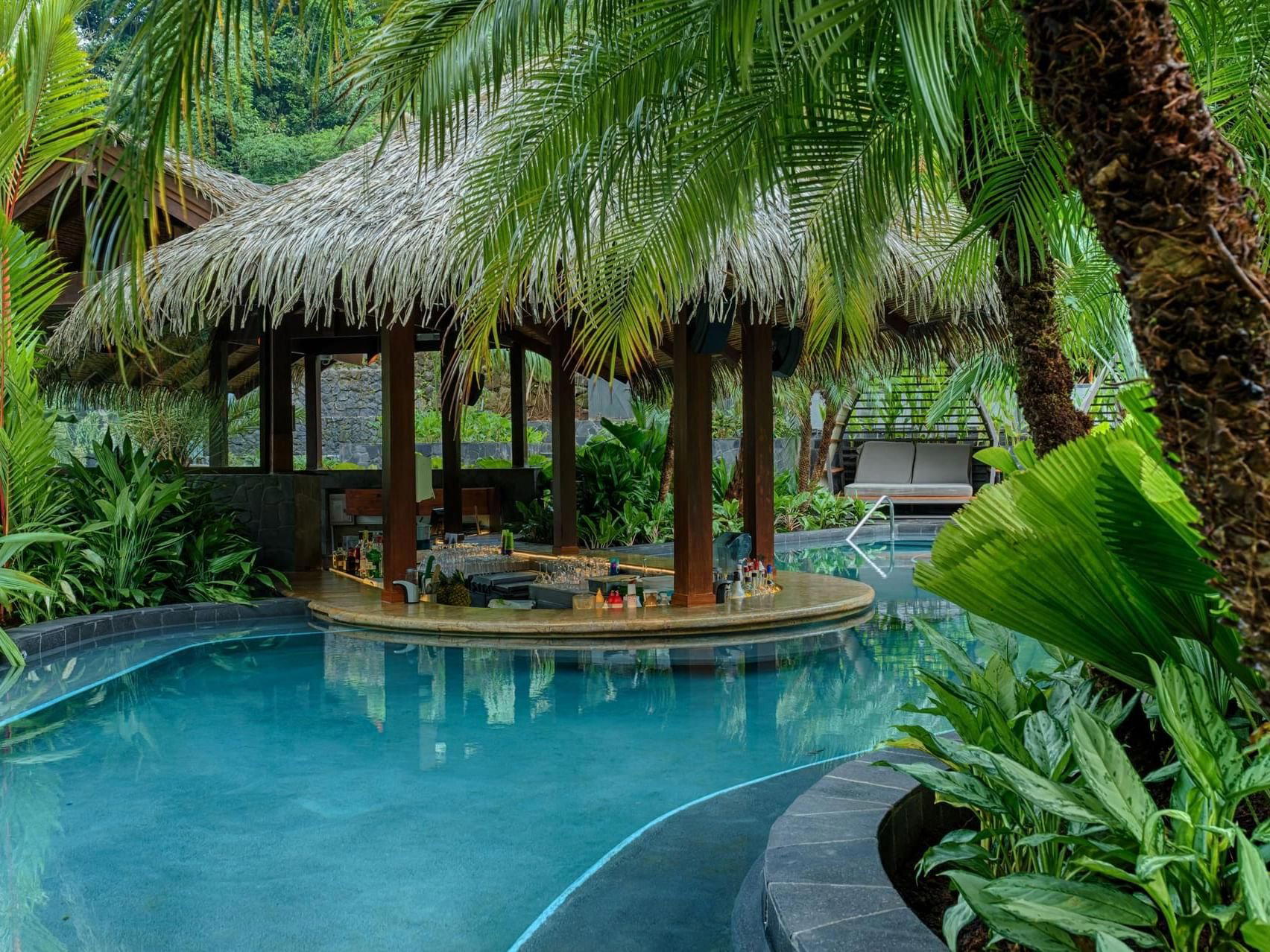
At a Glance
- Romantic
- Scenic
- Elegant
- Sophisticated
- Honeymoon
- Romantic Getaway
- Wellness Retreat
- Family Vacation
- Infinity Pool
- Destination Spa
- Panoramic View
- Pool
- Spa
- Fitness Center
- Room Service
- Concierge
- Wi Fi
- Mountain
- Garden
- Pool
- Spa
- Fitness Center
- Room Service
- Concierge
- Wi Fi
Lush rainforest setting with soothing sounds of waterfalls, open-air bungalows, and relaxing thermal pools.