Nayara Tented Camp





2 Michelin Keys · La Liste Top Hotels · Virtuoso Luxury Hotel Partner
Forty-four years into Costa Rica's conservation story, Arenal remains the country's most-watched volcano, and Nayara Tented Camp positions itself closer to that spectacle than any rival property. Thirty-eight stilted tents designed by Luxury Frontiers sit inside the national park boundary, each with a private pool trained on the crater. La Liste ranked the camp 94 points in 2026, and it has held the No. 1 resort ranking in Central America for four consecutive years.

Pearl is the En Primeur Club membership app, where members save venues, book tables and use the concierge.
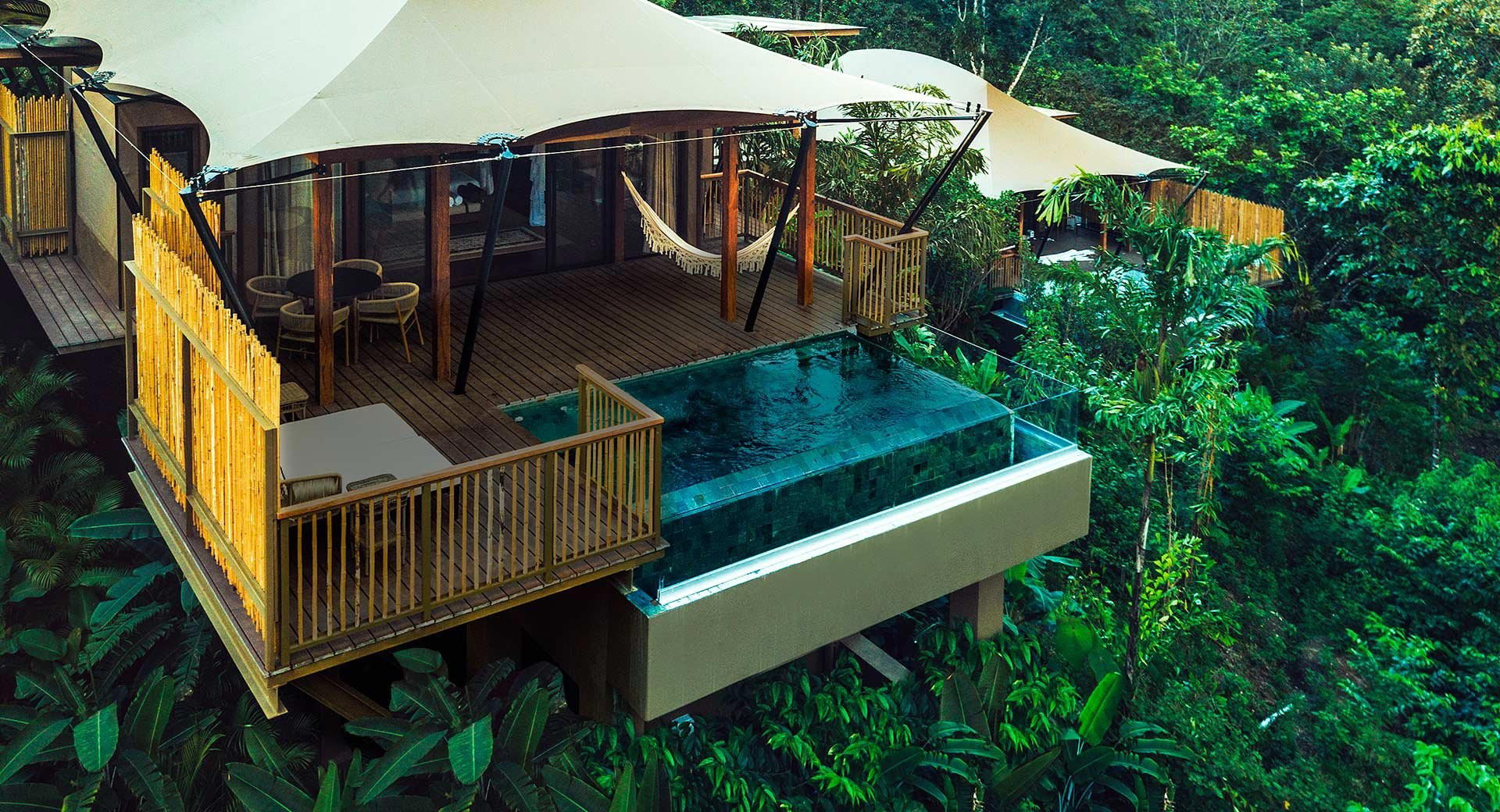
Architecture in the Canopy: How Luxury Frontiers Reinvented the Safari Formula for Costa Rica
The safari-lodge design tradition was built for open savanna: sweeping canvas, low horizons, and the logic of watching large mammals cross flat ground. Transporting that architectural grammar into a Central American cloud forest requires substantial rethinking. Luxury Frontiers, the firm whose work on high-end African camps defined much of what premium safari accommodation looks like today, took on that translation problem at Nayara Tented Camp, and the result sits in a category of its own inside the Costa Rican market.
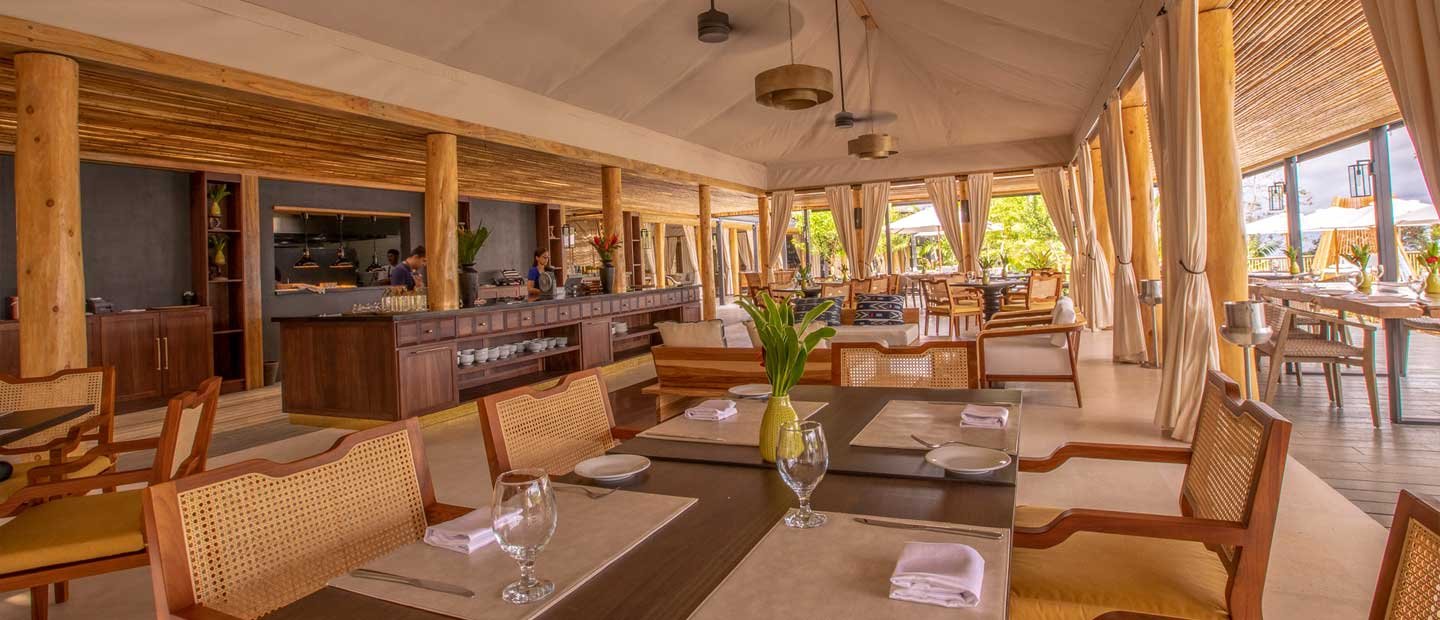
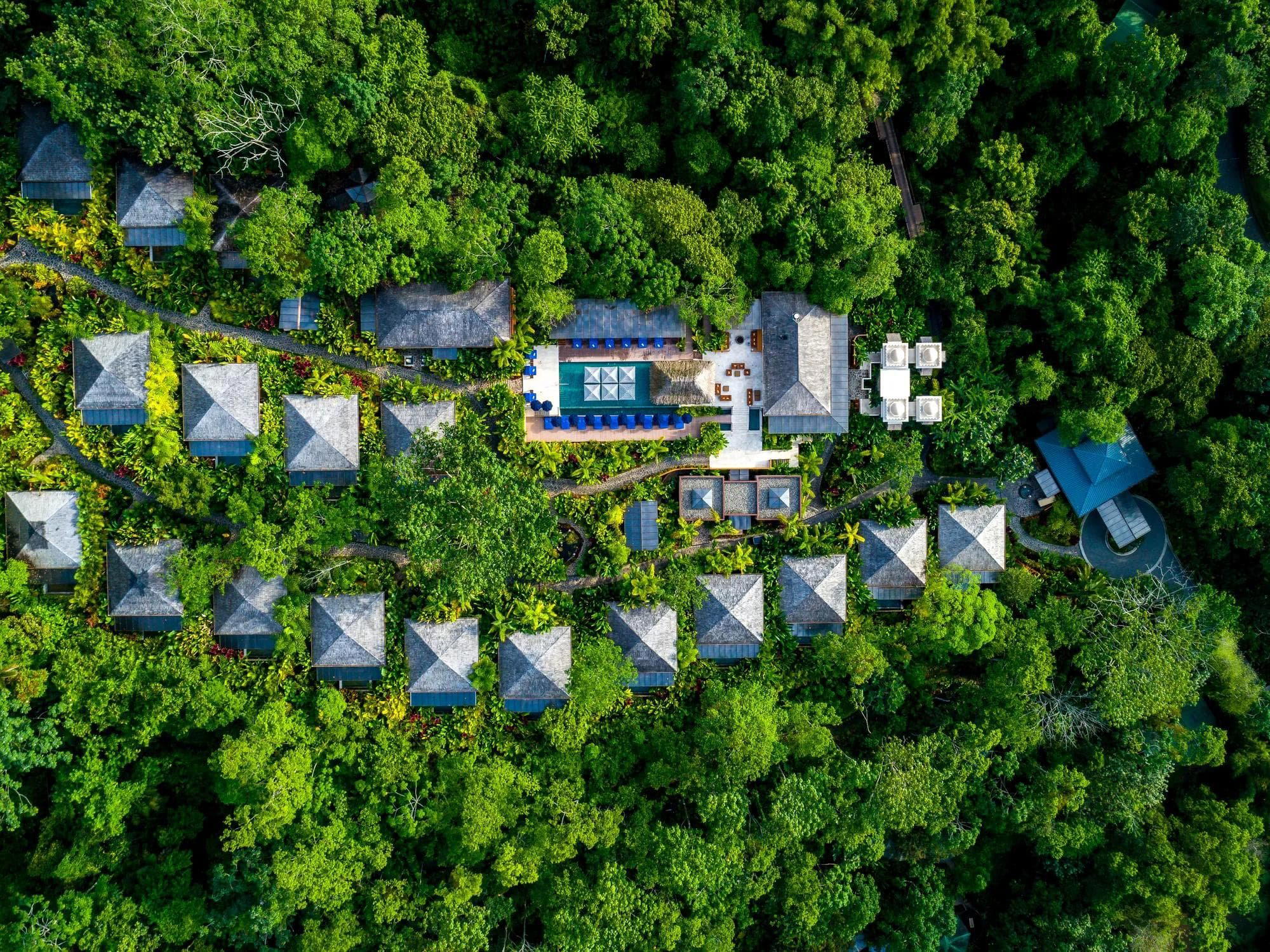
The 38 tents are raised on stilts, a structural decision that does two distinct things simultaneously. It keeps the physical footprint of each unit small relative to the forest floor, minimising ground disturbance in an active national park. And it positions guests at canopy level rather than beneath it, so the sightline from a private pool is trained outward across the treetops toward Arenal Volcano rather than upward through layers of vegetation. That elevation shift changes the entire atmospheric register of the stay. The sounds remain those of the rainforest floor, but the visual experience is aerial. Mornings arrive with mist moving below, not above.
This is the design signature that separates Nayara Tented Camp from most eco-lodge construction in Costa Rica, where refined structures exist but rarely achieve the structural ambition of a firm with Luxury Frontiers' safari-lodge credentials. Properties like El Silencio Lodge and Spa in Bajos del Toro or Hotel Belmar in Monteverde achieve genuine forest integration through different architectural languages, but neither imports a purpose-built safari-lodge design philosophy into the build.
The Tent as a Considered Object
In African safari culture, the tent is a functional form with strong aesthetic associations: canvas walls, mechanical ventilation, the smell of warm fabric in dry heat. In a tropical rainforest context, the engineering requirements are entirely different. Humidity, rainfall, insect pressure, and biodiversity density all demand modifications. What Luxury Frontiers produced at Nayara is a tent that reads as tent aesthetically while performing as a climate-appropriate structure. The canvas-and-hard-shell hybrid format is now familiar in premium Costa Rican properties, but Nayara Tented Camp is among the earlier and more fully resolved examples in this geography.
Each unit includes a private pool positioned to face the national park. This is less a luxury amenity in the conventional hotel sense and more an architectural device: it places water in the foreground of the Arenal view, softening the boundary between the built object and the protected landscape beyond. The bathtub and outdoor shower represent the same logic applied at a smaller scale, orienting a personal ritual toward the forest canopy or the night sky rather than an interior wall.
The sustainable luxury positioning here is not simply a branding claim. The stilted construction, local material integration, and park-boundary location are structural commitments, not design flourishes. That alignment between stated values and physical form is what drives the property's La Liste score of 94 points in 2026 and its four consecutive years as the No. 1 resort ranking in Central America.
Inside the Arenal Luxury Tier
Costa Rica's premium accommodation market has fragmented considerably over the past decade. The earlier pattern, large international-brand resorts on Pacific coast peninsulas versus small owner-operated eco-lodges inland, has given way to a more granular field. Properties like Andaz Costa Rica Resort at Peninsula Papagayo occupy the full-service resort tier with beach access and large-scale amenity infrastructure. Hacienda AltaGracia in Pérez Zeledón, part of the Auberge Resorts Collection, positions around equestrian and working-farm programming in the southern highlands. Casa Chameleon at Las Catalinas is a small-key clifftop property on the northern Pacific coast.
Nayara Tented Camp belongs to none of those sub-categories. Its competitive set is the specialist nature-immersion property where design quality, ecological positioning, and low-volume exclusivity define the offer. At 38 tents, the camp is large enough to sustain full-service programming but small enough to avoid the anonymity of a resort property. That scale is a deliberate editorial choice about the kind of experience it can deliver.
For context on Costa Rica's broader range, the country's accommodation spectrum runs from international business hotels like the Costa Rica Marriott Hotel Hacienda Belen near San José through mid-scale coastal options to properties at the wilderness end such as Lapa Rios in Puerto Jimenez and Drake Bay Getaway Resort. Nayara Tented Camp occupies a position toward the design-serious end of the premium wilderness tier, distinguished by the pedigree of its architectural firm rather than any claim to remoteness alone.
What the Setting Delivers
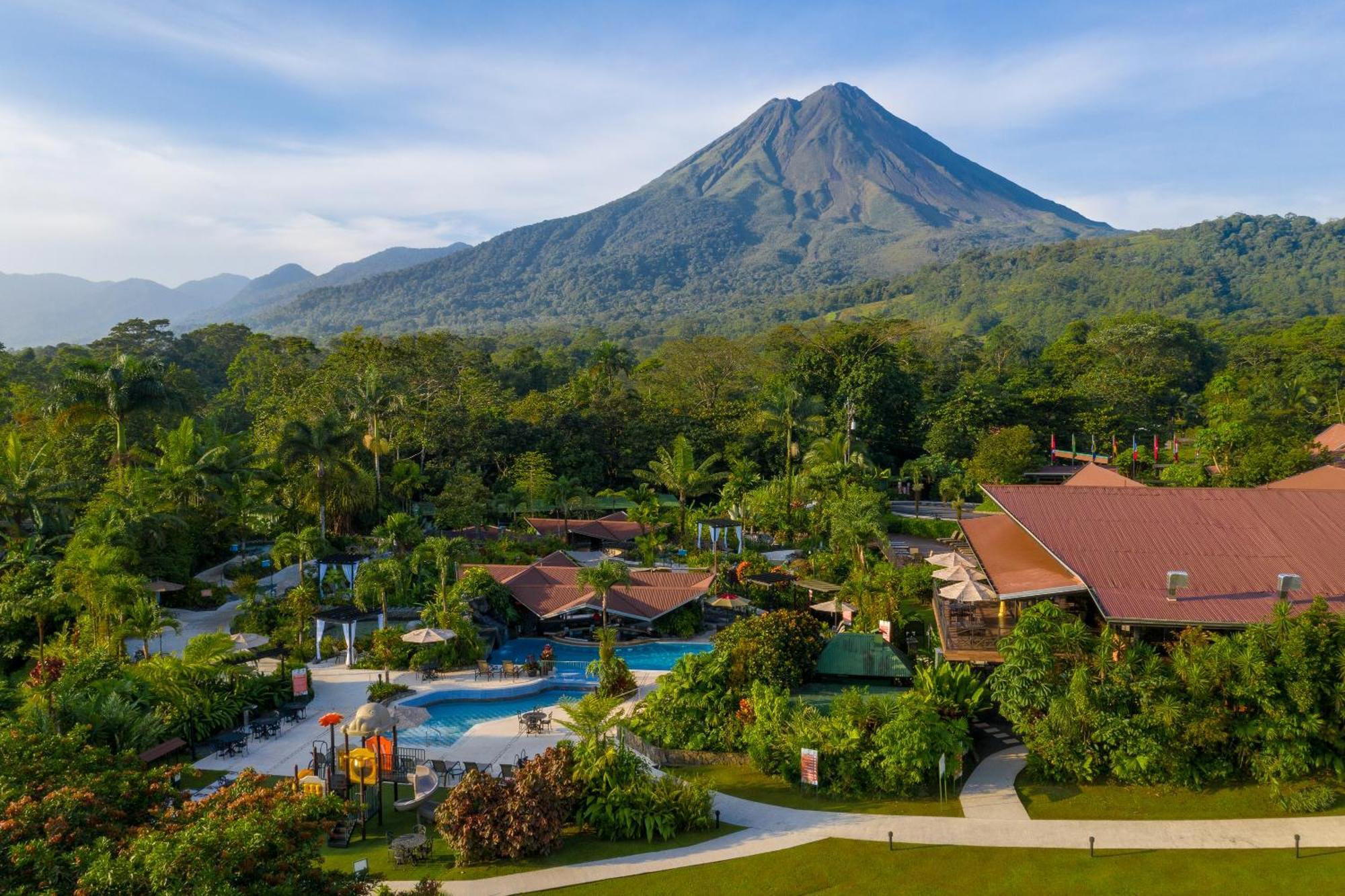
Arenal Volcano National Park is the geographical anchor. The volcano itself was dormant between major eruptions for centuries before its 1968 event reshaped the region; the surrounding park now protects roughly 12,000 hectares of tropical rainforest, secondary growth, and lake habitat. The wildlife density here runs to hundreds of bird species, multiple primate populations, and the full suite of Central American forest mammals. The acoustic environment at night, the chorus of insects and frogs calibrated to a humid forest at altitude, is a material part of the experience in a way that no amount of tent engineering can fully replicate or describe in advance. What the design does is ensure that guests are positioned to receive that environment, not insulated from it.
The camp describes itself as appropriate for both couples seeking seclusion and families looking for educational engagement with the forest. Those are genuinely different use cases, and a 38-tent property with this design brief can serve both. What both share is a preference for place-led programming over entertainment-driven resort activity.
Planning a Stay
Nayara Tented Camp sits on the 702 Road within the national park boundary near La Fortuna, Alajuela Province. La Fortuna is accessible from San José by road, typically around three hours, or by small plane to the local airstrip, which reduces travel time substantially for guests arriving from international connections. The dry season in the Arenal region runs roughly December through April, when cloud cover lightens and volcano views are more reliable, though the forest is at its most atmospheric during wetter months when the mist and rainfall are part of the experience rather than an inconvenience.
Guests comparing Costa Rica's premium forest and volcano-region options might also consider Kura Boutique Hotel in Uvita, Hotel Three Sixty in Ojochal, or Hotel Aguas Claras in Puerto Viejo for different regional characters within the same premium tier. For the broader Costa Rica hotel picture, our full Arenal Volcano National Park guide covers the range of options across the region.
Comparison Snapshot
Comparable venues nearby, for context on price, style, and recognition.
| Venue | Cuisine | Price | Awards | Notes |
|---|---|---|---|---|
| Nayara Tented CampThis venue (the venue you are viewing) | Luxury glamping with safari-inspired tented villas polished in rainforest. | Not listed | 2 Michelin Keys · La Liste Top Hotels | Not listed |
| Nantipa - A Tico Beach Experience | Scattered luxury bungalows in forested beachfront setting | $300–500 | Virtuoso Luxury Hotel Partner | Santa Teresa |
| Villa Caletas Hotel | tropical Victorian neo-classical fusion | Not listed | Michelin Selected | Herradura |
| Nayara Springs | secluded jungle luxury villas | $750–1,000 | 3 Michelin Keys · La Liste Top Hotels | La Fortuna de San Carlos |
| The Springs Resort & Spa at Arenal | Luxury nature resort with thermal springs and volcano views | $1,000–1,500 | Virtuoso Luxury Hotel Partner | La Fortuna |
| Azura Resort | luxury all-inclusive beachfront resort | Not listed | World Luxury Hotel Awards WLHA Regional Winner | Playa Sámara |
Recognition history
Dated appearances from independent guides and award organizations, with the underlying list record or original source where available.
Michelin 2 Keys
Michelin
La Liste Top Hotels
La Liste
Travel + Leisure 100 Favorite Hotels in the World #28 · No. 28
Travel + Leisure · 2026 Travel + Leisure 100 Favorite Hotels in the World
Virtuoso Luxury Hotel Partner
Virtuoso
Leading Hotels of World Member
Leading Hotels of World
Full recognition history (7 entries)
Michelin Selected
Michelin
Travel + Leisure 100 Favorite Hotels in the World #58
Travel + Leisure
Continue exploring
More in Arenal Volcano National Park
Hotels in Arenal Volcano National Park
All hotels in Arenal Volcano National Park →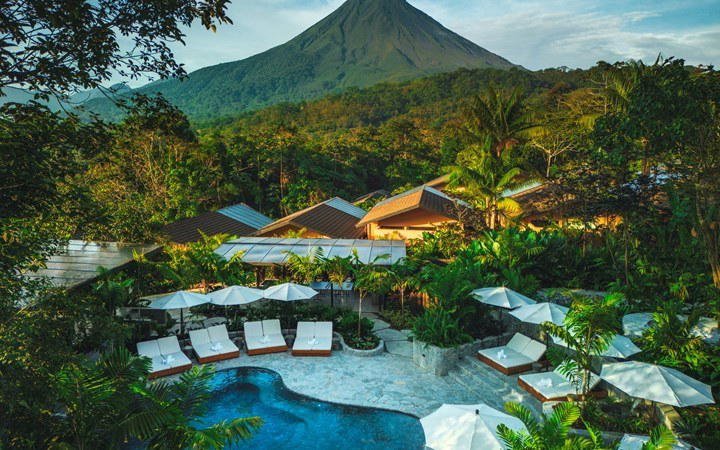
Bars in Arenal Volcano National Park
Browse all →
Details
- Romantic
- Scenic
- Elegant
- Rustic
- Intimate
- Sophisticated
- Ornate
- Honeymoon
- Romantic Getaway
- Family Vacation
- Wellness Retreat
- Anniversary
- Infinity Pool
- Private Villa
- Panoramic View
- Private Dining
- Terrace
- Pool
- Spa
- Fitness Center
- Room Service
- Concierge
- Wi Fi
- Laundry Service
- Mountain
- Garden
- Wheelchair Accessible
Tranquil rainforest immersion with lush jungle surroundings, open-air spaces, and a relaxing atmosphere enhanced by natural sounds and wildlife.