
Michelin Selected
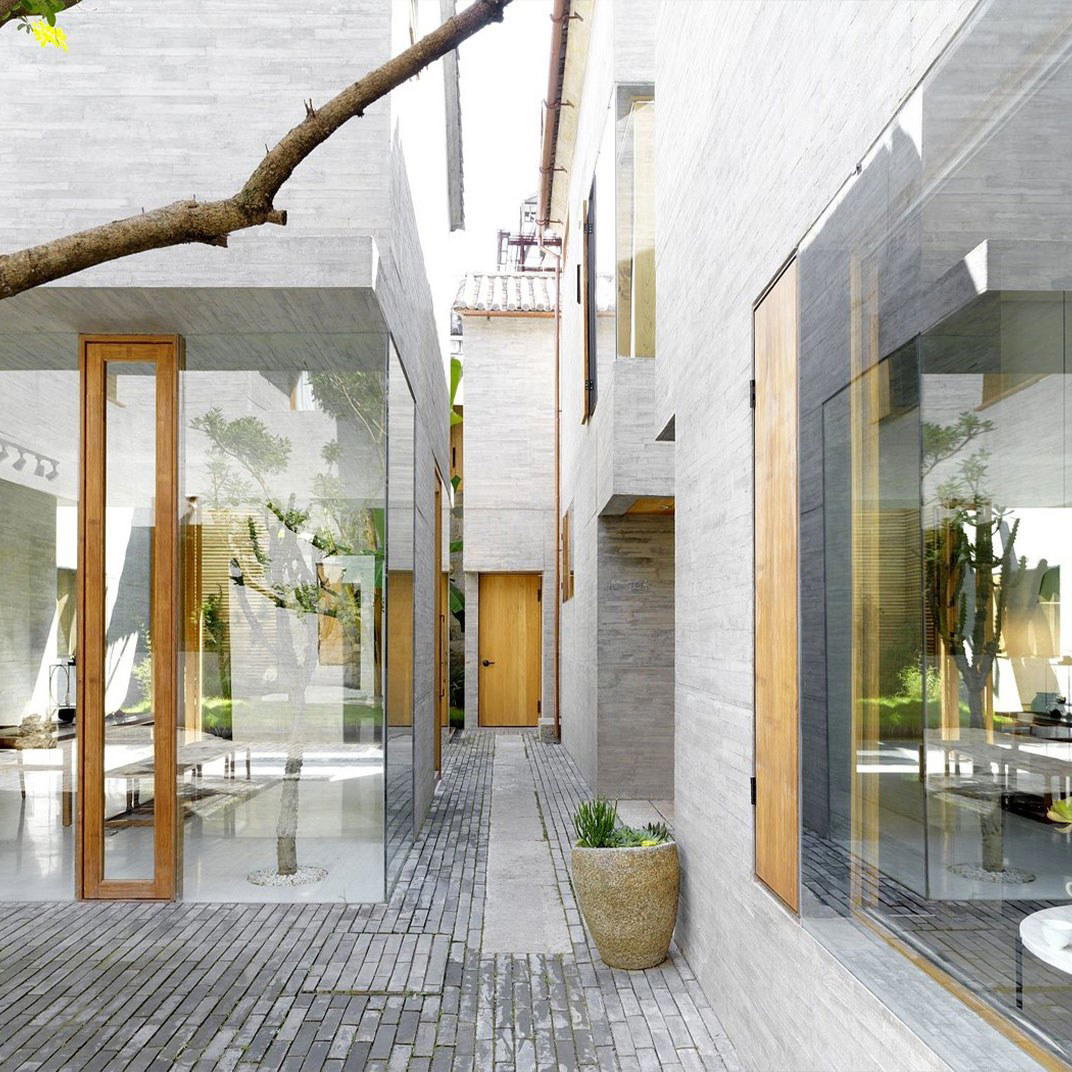
Sunyata Hotel, Dali holds a MICHELIN Selected distinction for 2025, placing it among a small tier of design-conscious properties in Yunnan's ancient walled city. Positioned on Yeyu South Road, it draws on the architectural grammar of the Bai ethnic tradition while sitting within reach of Cangshan Mountain and Erhai Lake. For travellers treating Dali as more than a transit stop, it offers a considered base.

Pearl is the En Primeur Club membership app — saves, bookings, and concierge access live there. Same editors, same standards.
Stone, Courtyard, and Silence: Dali's Design-Led Accommodation Tier
Dali's old town operates on a different logic from China's hotel-dense eastern cities. Where properties in Shanghai or Beijing compete through scale and brand recognition, the most talked-about places to stay in Dali — particularly those inside or near the ancient walled quarter — earn their status through architectural restraint and spatial intelligence. Sunyata Hotel, Dali sits inside that conversation.
The address, No. 51 Yeyu South Road, positions the property within proximity to the old town's traditional lanes, where whitewashed walls, grey-tiled rooftops, and carved wooden eaves define the built environment. Dali's Bai ethnic architecture is among the most formally coherent vernacular traditions in southwest China: symmetrical courtyard layouts, decorative marble inlay, and a palette drawn almost entirely from natural materials. Hotels that work with this grammar rather than against it tend to sit differently in their surroundings. Sunyata reads as one of those properties.
What MICHELIN Selection Signals in This Market
The MICHELIN Selected designation is not a star rating, but it is a meaningful filter in a city where accommodation options range from budget guesthouses to newer resort-style developments outside the old walls. MICHELIN's hotel selection process evaluates character, comfort, and a sense of place, criteria that carry particular weight in a heritage destination like Dali, where the wrong kind of renovation can sever a building from its context entirely. Being listed alongside properties like Honor Resort Yun Shu Dali in the same city points to a shared positioning: properties where the physical environment is understood as the primary offer.
For context on how MICHELIN Selected properties perform across China's broader hospitality market, the standard is applied consistently from urban addresses such as Mandarin Oriental Qianmen in Beijing and JW Marriott Hotel Shanghai at Tomorrow Square to more atmospheric regional stays. The fact that a smaller Dali property earns the same recognition as those urban towers suggests that the Michelin evaluators found something at Sunyata worth noting beyond mere comfort, most likely its relationship to local architectural tradition.
The Yunnan Context: Why Dali Rewards Slower Travel
Southwest China's design-conscious hotel tier has developed significantly over the past decade, driven partly by domestic travellers from Chengdu, Kunming, and the Pearl River Delta seeking a counterpoint to urban density. Dali occupies a specific position in this movement. Unlike Lijiang to the north, where mass tourism has reshaped much of the old town's commercial texture, Dali retains a slightly slower pace, and its architectural stock remains more genuinely intact. Properties like Hylla Vintage Hotel in Lijiang represent the design-aware hospitality approach applied to that neighbouring city; Sunyata applies comparable thinking to a destination where the surrounding fabric still supports it more convincingly.
The proximity of Cangshan Mountain to the west and Erhai Lake to the east gives Dali a geographic frame that few Chinese cities can match at this scale. These are not decorative backdrops but active landscape features that shape daily life, morning light across the lake, afternoon cloud movement over the peaks, and any hotel that positions itself to work with these elements rather than screen them out has a structural advantage. Sunyata's location on Yeyu South Road places it within the zone where those views remain accessible without requiring a resort footprint to capture them.
For travellers routing through Yunnan more broadly, the province has developed a network of design-led stays that reward advance planning. Songtsam Linka Retreat Lhasa and Songtsam Meili Lodge to the northwest represent a comparable philosophy of architecture-as-experience applied to the Tibetan plateau corridor. Sunyata occupies the more accessible southern anchor of what is effectively a design-aware hospitality trail through western China's highland zone.
Placing Sunyata in China's Wider Premium Hotel Conversation
China's premium accommodation market has bifurcated over the past several years. On one side sit large-format international brands, InterContinental Chengdu Global Center, InterContinental Chongqing Raffles City, The St. Regis Shenzhen Bao'an, offering consistent international standards with broad amenity sets. On the other sit smaller, place-specific properties where the architecture, the location, and the material culture of the surrounding region are the offer. Sunyata belongs to the second category, and its MICHELIN recognition places it among the more carefully vetted members of that group.
The same split is visible in other parts of China. The Hanyu Garden Reserve Suzhou takes a garden-architecture approach rooted in classical Suzhou aesthetics. Yihe Mansions in Nanjing works within a Republican-era architectural register. Tian Ranju Inn in Tian Tou Zhai applies the same thinking to rural village architecture. Sunyata's contribution to this conversation is the Bai courtyard tradition, one of the most visually coherent and geographically specific vernacular forms in the country.
Planning Your Stay
Sunyata Hotel is located at No. 51 Yeyu South Road in Dali, within practical reach of the old town's main gates and the covered market streets of the walled quarter. Dali is served by Dali Fengyi Airport, with regular connections from Kunming, Chengdu, and other major southwest hubs; the drive into the old town area takes roughly 45 minutes depending on traffic. Train access via Dali Railway Station offers an alternative for travellers arriving from Lijiang or Kunming by rail. Given the property's MICHELIN Selected status and the general popularity of Dali with domestic travellers during national holidays and the summer months, advance reservation is advisable, particularly for April through October. Contact details are best confirmed directly through the Michelin Guide's hotels platform or through current booking channels, as operational details can shift seasonally. For broader context on where to eat and drink during a stay, our full Dali restaurants guide covers the old town's dining scene in depth.
Travellers considering Dali as part of a longer China itinerary will find useful reference points in properties like The Ritz-Carlton, Xi'an for heritage-city context further north, or Hangzhou Muh Shoou Xixi Hotel and LN Hotel Five in Guangzhou for design-conscious stays elsewhere in China. For those building a global itinerary around architecturally considered properties, the reference set extends internationally to addresses like Badrutt's Palace Hotel in St. Moritz and Hôtel de Paris Monte-Carlo, properties where the building itself carries the argument for staying.
Comparable Venues
Comparable venues nearby, for context on price, style, and recognition.
| Venue | Cuisine | Price | Awards | Notes |
|---|---|---|---|---|
| Sunyata Hotel, DaliThis venue (the venue you are viewing) | Zen village micro-boutique with courtyard oasis | Not listed | Michelin Selected | Not listed |
| Honor Resort Yun Shu Dali | Modern luxury resort blending contemporary design with traditional Chinese elements, positioned as a Member of Small Luxury Hotels of the World. | $200–300 | Small Luxury Hotels of the World Member | Canghai International Golf Community |
| Norden Camp | Luxury nomadic Tibetan glamping with eco-friendly design. | Not listed | TIME 2026 TIME World's Greatest Places · Conde Nast Hot List Hotels | Sangke Grasslands |
| Huyi District | ecological garden style | Not listed | Not listed | Huyi District |
| Songtsam Basongcuo Linka Hotel | Tibetan resort lodge | Not listed | Tatler Listed in Best Hotels Asia-Pacific | Cuogao Town |
| Hotel Indigo Suzhou Yangcheng Lake | Boutique resort blending modern design with local Jiangnan water town elements | Not listed | Michelin Selected | Suzhou Industrial Park |
Recognition history
Dated appearances from independent guides and award organizations, with the underlying list record or original source where available.
Michelin Selected
Michelin
Continue exploring
More in Dali
Hotels in Dali
All hotels in Dali →
Details
- Quiet
- Scenic
- Minimalist
- Intimate
- Elegant
- Romantic Getaway
- Wellness Retreat
- Weekend Escape
- Historic Building
- Design Destination
- Wi Fi
- Air Conditioning
- Garden
Serene and tranquil atmosphere with chic contemporary design, simplistic furnishings, subtle artistic touches, and strategically placed windows opening to private courtyards.