


A 200-year-old, 1,927-acre agricultural estate in Portugal's Alentejo, São Lourenço do Barrocal has been converted into a 40-room luxury hotel without severing its working roots. The estate still produces organic wine, fruit, and livestock, and both restaurants draw directly from the land. A Leading Hotels of the World member, it sits in a specialist tier of estate-based hospitality that few Portuguese properties can match.
Pearl is the En Primeur Club membership app — saves, bookings, and concierge access live there. Same editors, same standards.
- Address
- São Lourenço do Barrocal, 7200-177
- Phone
- +351 266 247 140
- Website
- barrocal.pt
- Directions
- Get directions
 Saves & bookings on Pearl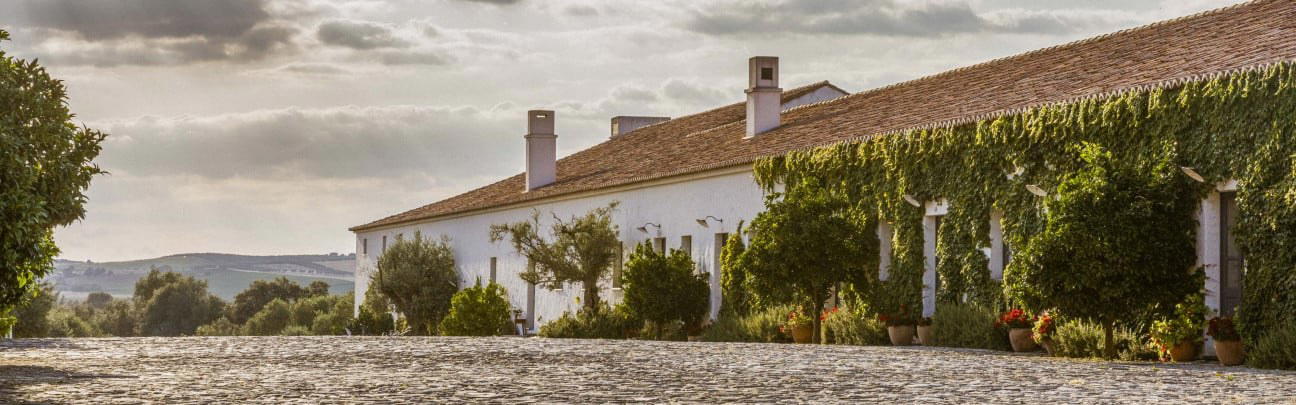
Where the Estate Is the Architecture
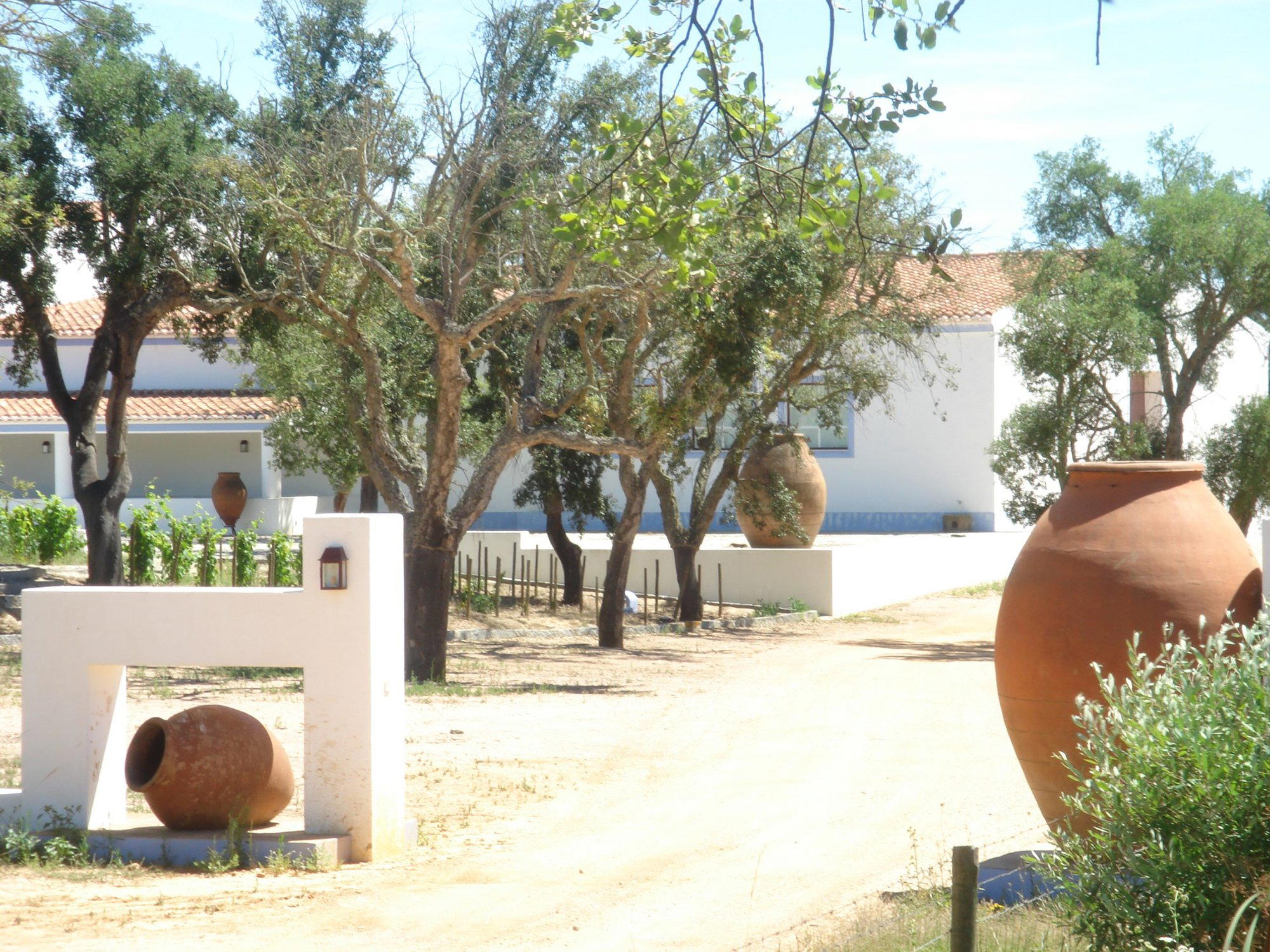
Approaching São Lourenço do Barrocal, the medieval silhouette of Monsaraz rises on the horizon while the road drops into a fold of the Alentejo plain, passing cork oaks and olive groves before the estate's low whitewashed buildings come into view. This is the Alentejo at its most elemental: wide sky, ochre earth, and a silence punctuated only by the wind through the trees. The built environment here does not announce itself. It settles into the landscape as if it always belonged, because in most material respects, it did. The oldest structures on the 1,927-acre estate predate the current family ownership, which extends back over 200 years, and the conversion to a hotel preserved rather than erased that sediment of time.
The design philosophy at work here is one that has become a serious reference point in European estate hospitality: adaptive reuse without cosmetic nostalgia. Barns, outbuildings, and an olive press have been given new functions as rooms, suites, and a spa, but the intervention is calibrated to leave the bones visible. Original architectural details, maps, and antiques operate as load-bearing elements of the interior, not as decoration applied over a blank contemporary shell. The result is 40 rooms and cottages that feel spatially distinct from one another, each shaped by its former function as much as by any unified design brief. See Ventozelo Hotel & Quinta in the Douro Valley for a comparable approach to agricultural heritage in northern Portugal, though the terrain and culinary tradition differ considerably.
Material Choices and Interior Logic
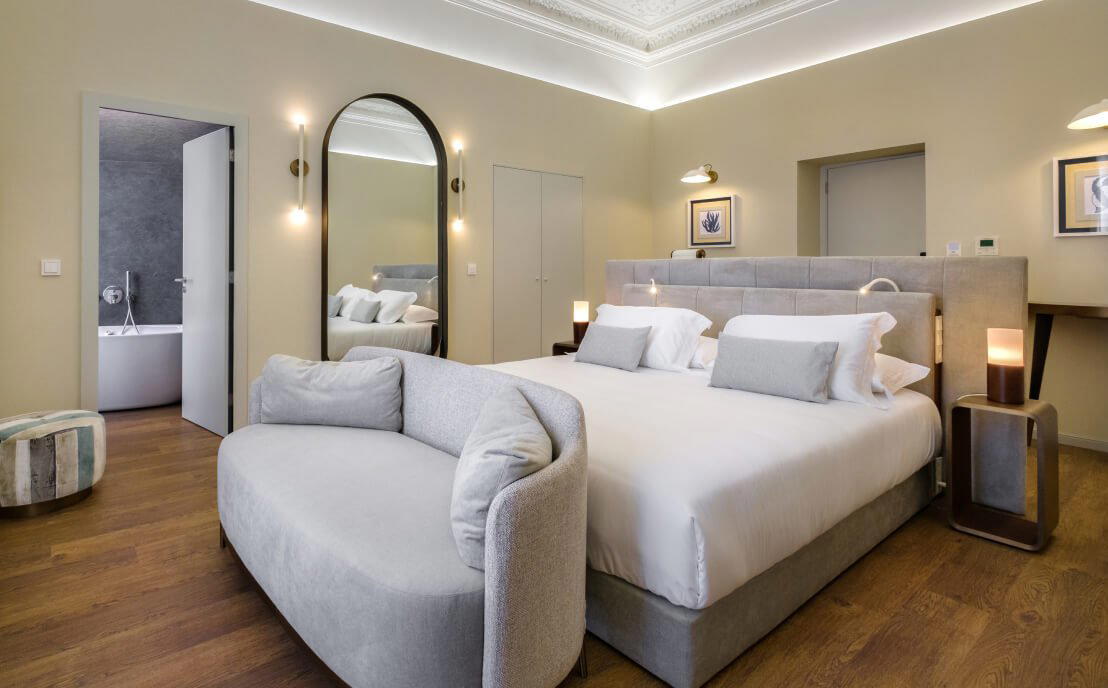
Portugal's design-led estate hotels have moved decisively away from the reproduced rustic aesthetic that dominated rural tourism a decade ago. São Lourenço do Barrocal sits in the current of that shift. The interiors combine selected Portuguese vintage pieces with contemporary crafted furniture, and the natural materials throughout, stone, wood, whitewashed plaster, read as structural rather than decorative decisions. Heated bathroom floors, Marshall Bluetooth sound systems, and USB outlets are the only signals that place these rooms in the present century; everything else is calibrated toward continuity with the estate's material history.
This is a different proposition from, say, the urban boutique model typified by properties like Hotel Britania Art Deco in Lisbon or M Maison Particulière in Porto, where design identity is the primary asset. At Barrocal, design is in service of the estate's continuity. The architecture tells the story of a working farm that became a hotel without ceasing to be a farm, and that narrative legibility is deliberate. Among Portuguese rural retreats, Craveiral Farmhouse in São Teotónia occupies a loosely adjacent category, though at a smaller scale and in a different agricultural register.
The Winery, the Kitchen, and the Land
The estate's agricultural identity is not a marketing frame laid over an otherwise conventional hotel operation. The winery produces single-estate wines from a facility lined with oak barrels and 14 traditional concrete tanks with a combined capacity of 80,000 liters, and guests can tour the production spaces directly. The farm's organic output, veal, acorn-fed Alentejo pork, seasonal produce, and fish from the nearby Alqueva lake, feeds both restaurants on site.
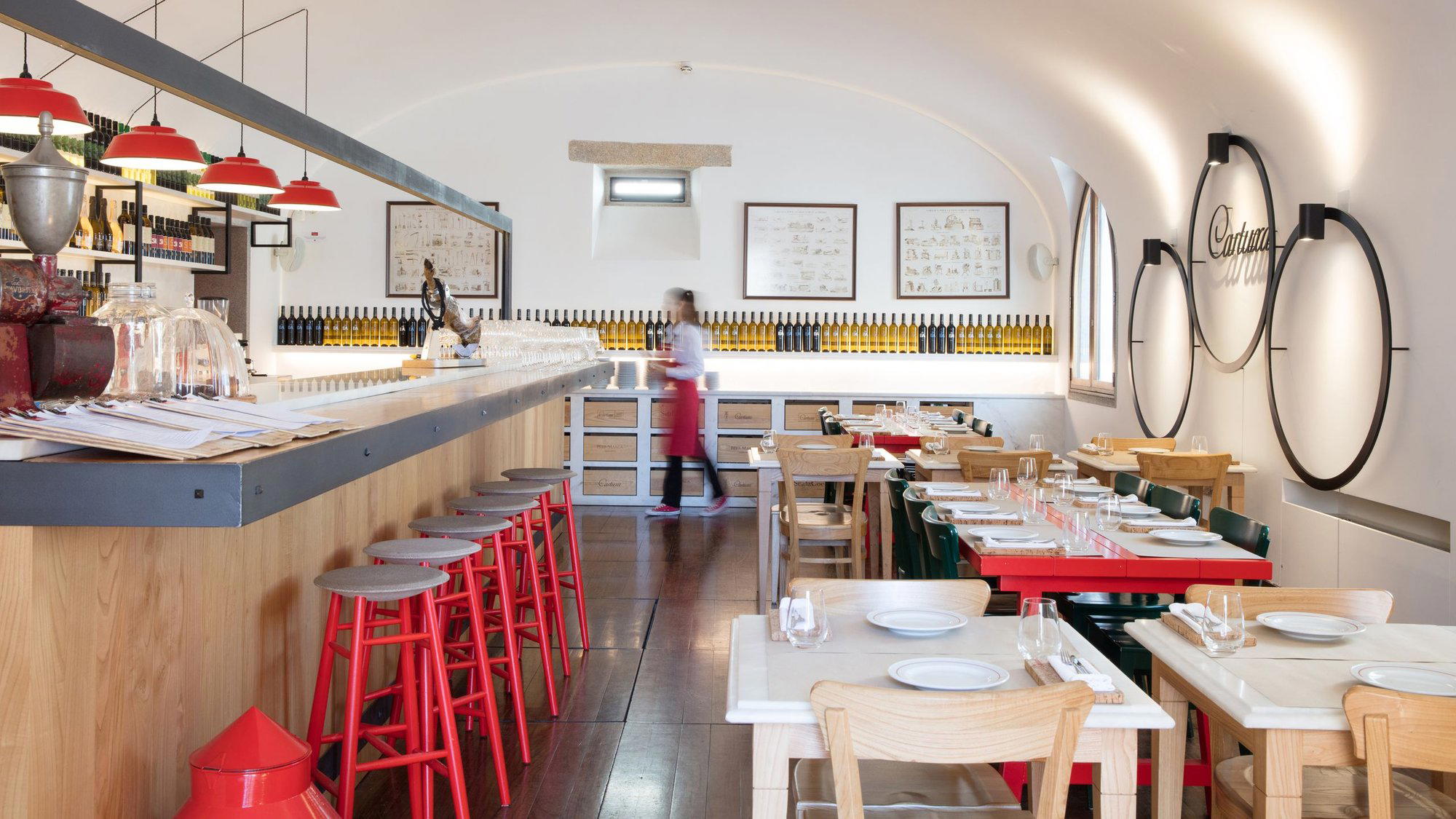
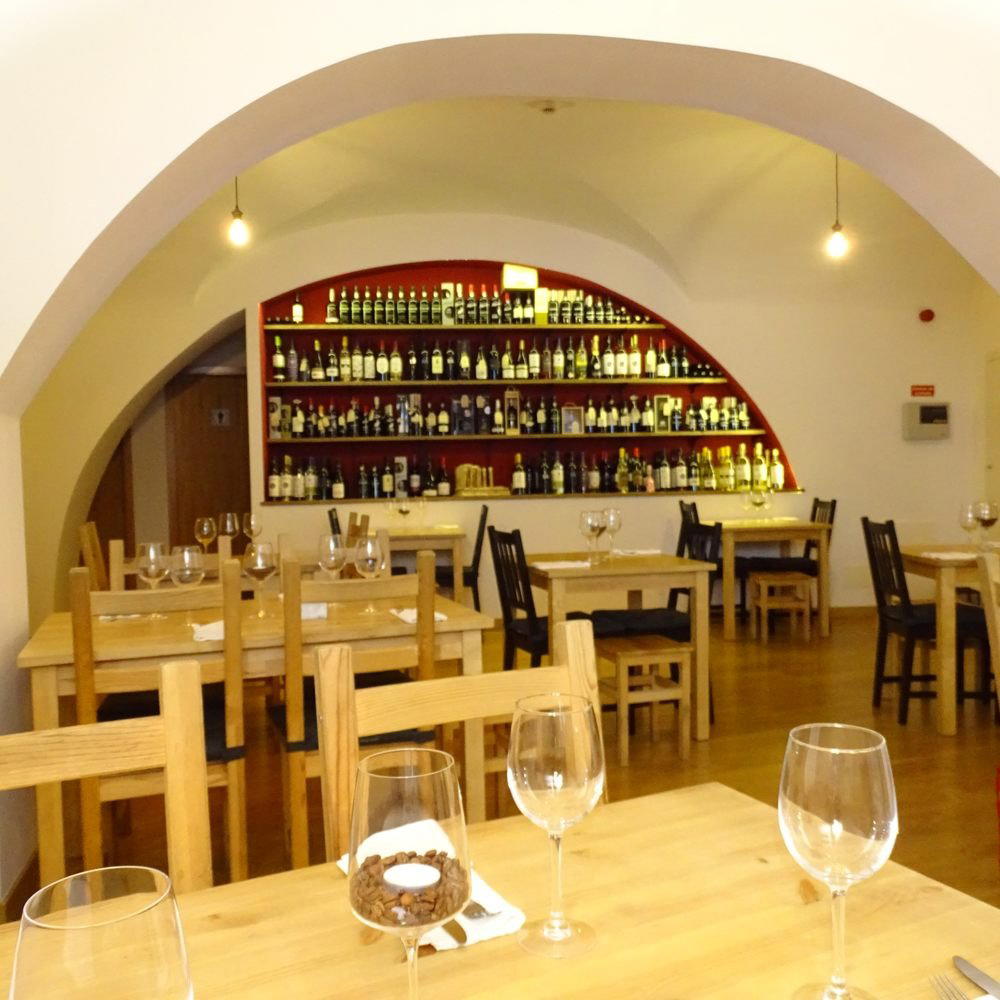
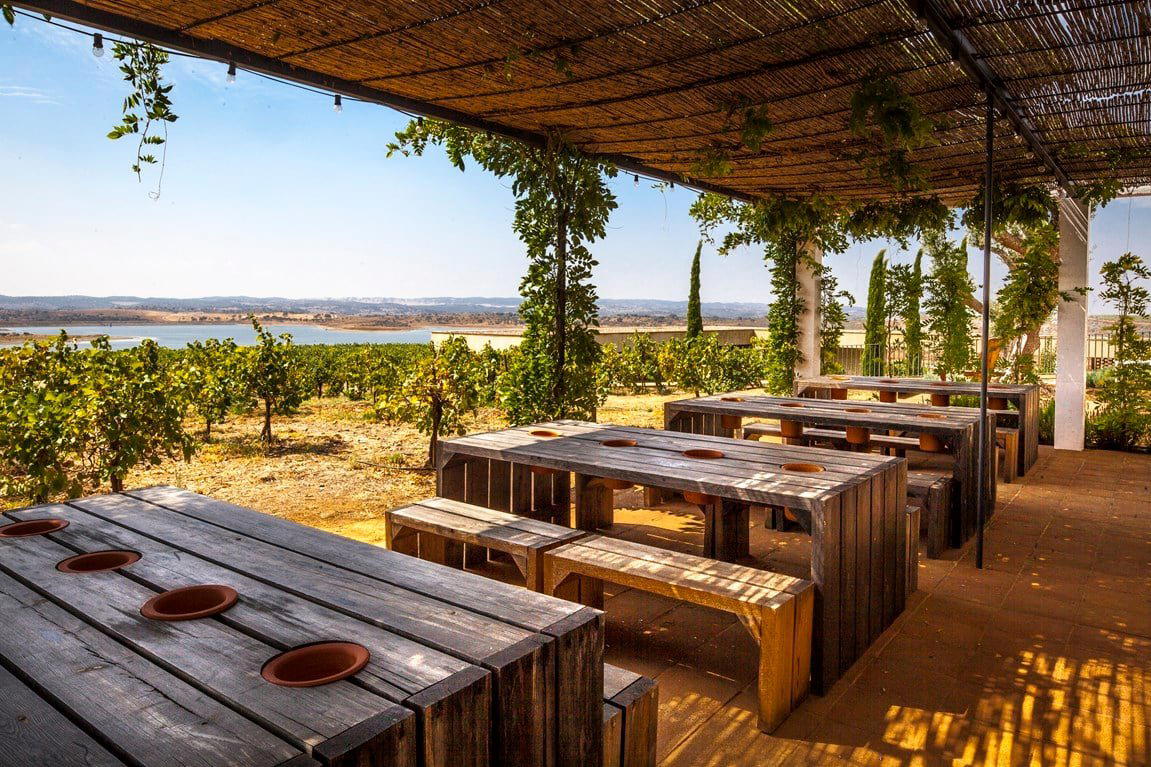
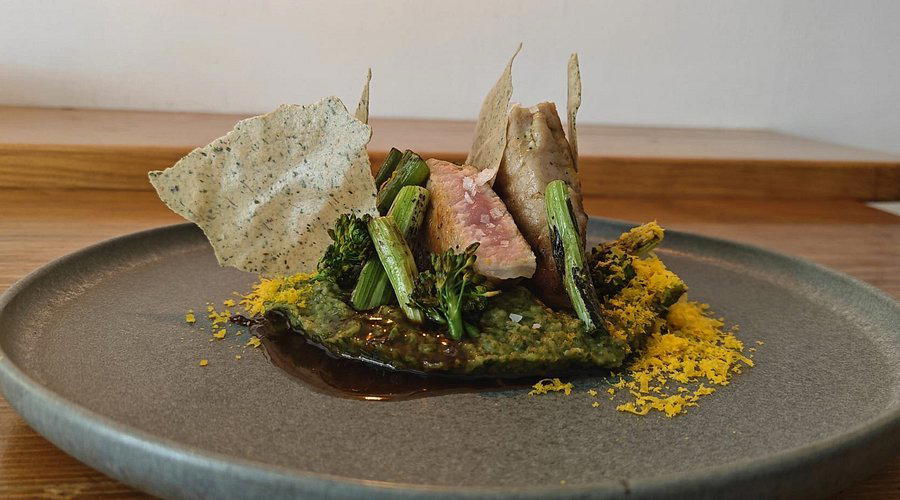
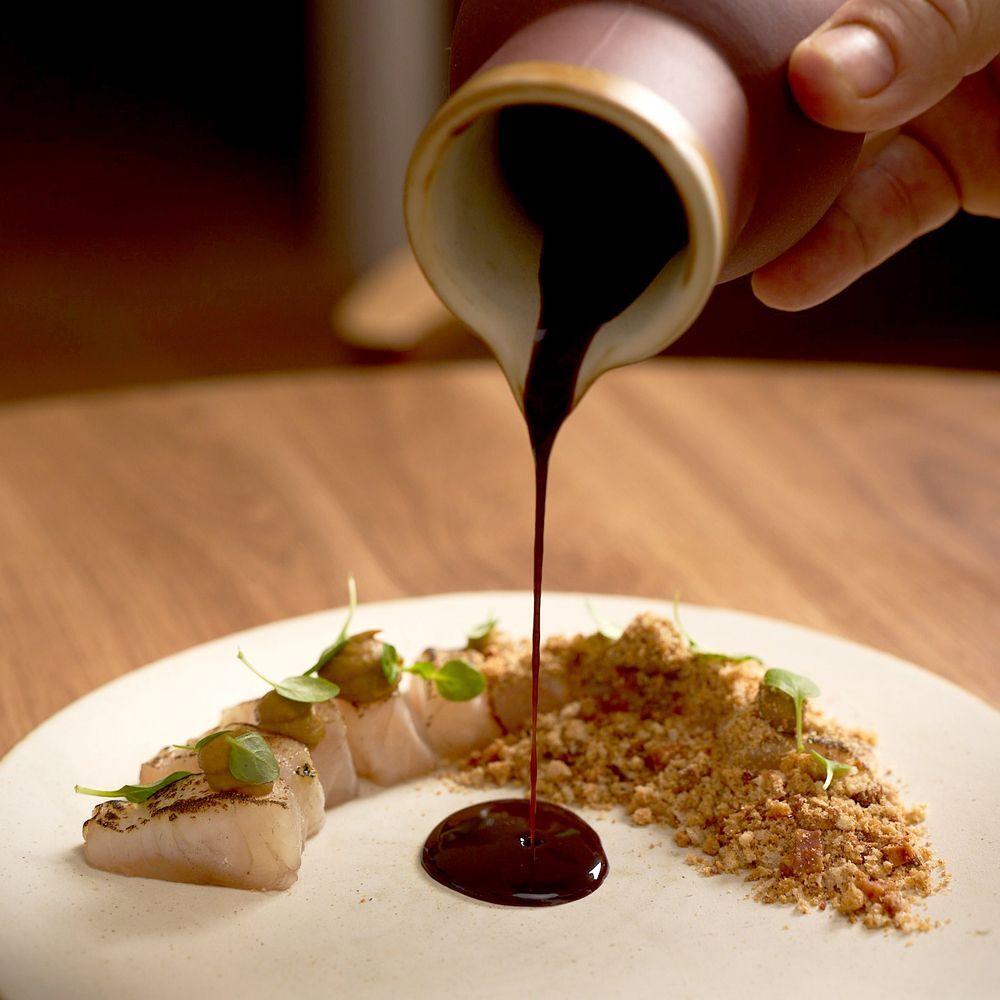
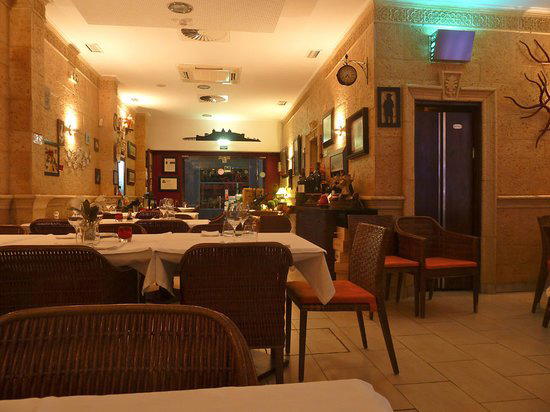
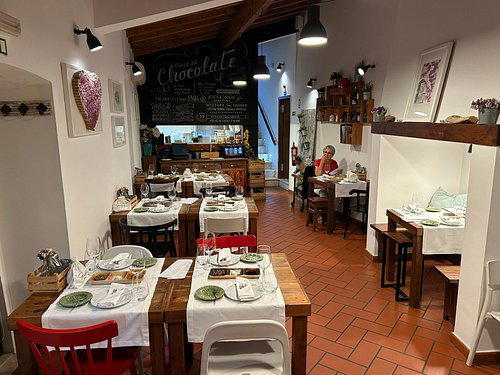
Farm-to-table as a concept has become so overused in hospitality that it rarely carries information anymore. Here, the supply chain is short enough to be verifiable on a walk through the property. The main restaurant, São Lourenço do Barrocal, applies a hyper-local sourcing discipline to Alentejo culinary tradition, a cuisine built on slow cooking, pork, bread-thickened sauces, and the region's olive oil and wine. The second restaurant, Hortelão, operates seasonally in late spring and summer beside the pool and organic garden, where the menu leans toward grilled vegetables, organic veal, and pork from the estate's own stock. The pool-adjacent setting and open-air format make Hortelão a different register from the main restaurant, and guests who visit outside the summer months will find it closed.
For readers interested in how the Alentejo's culinary tradition maps onto the broader Portuguese interior, our full Monsaraz restaurants guide covers the region's dining character in more detail.
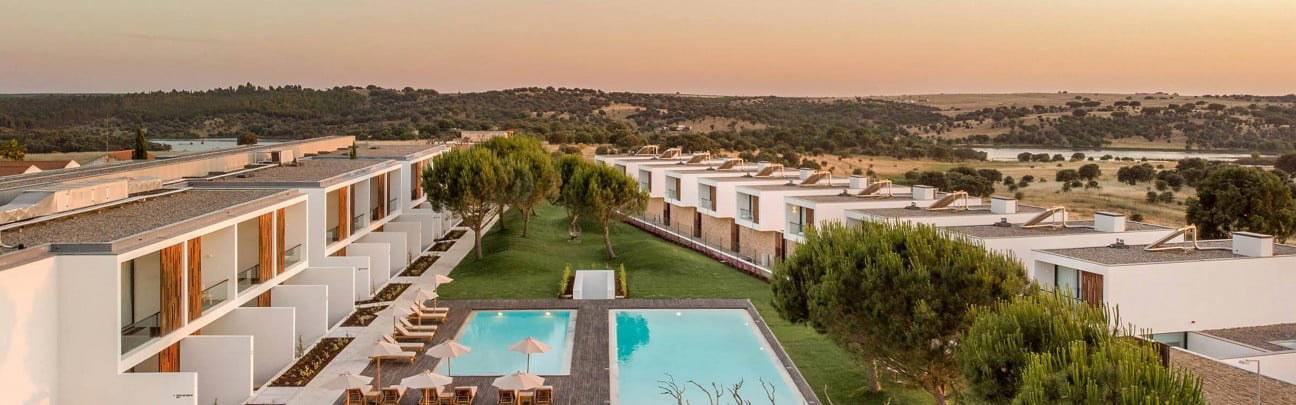
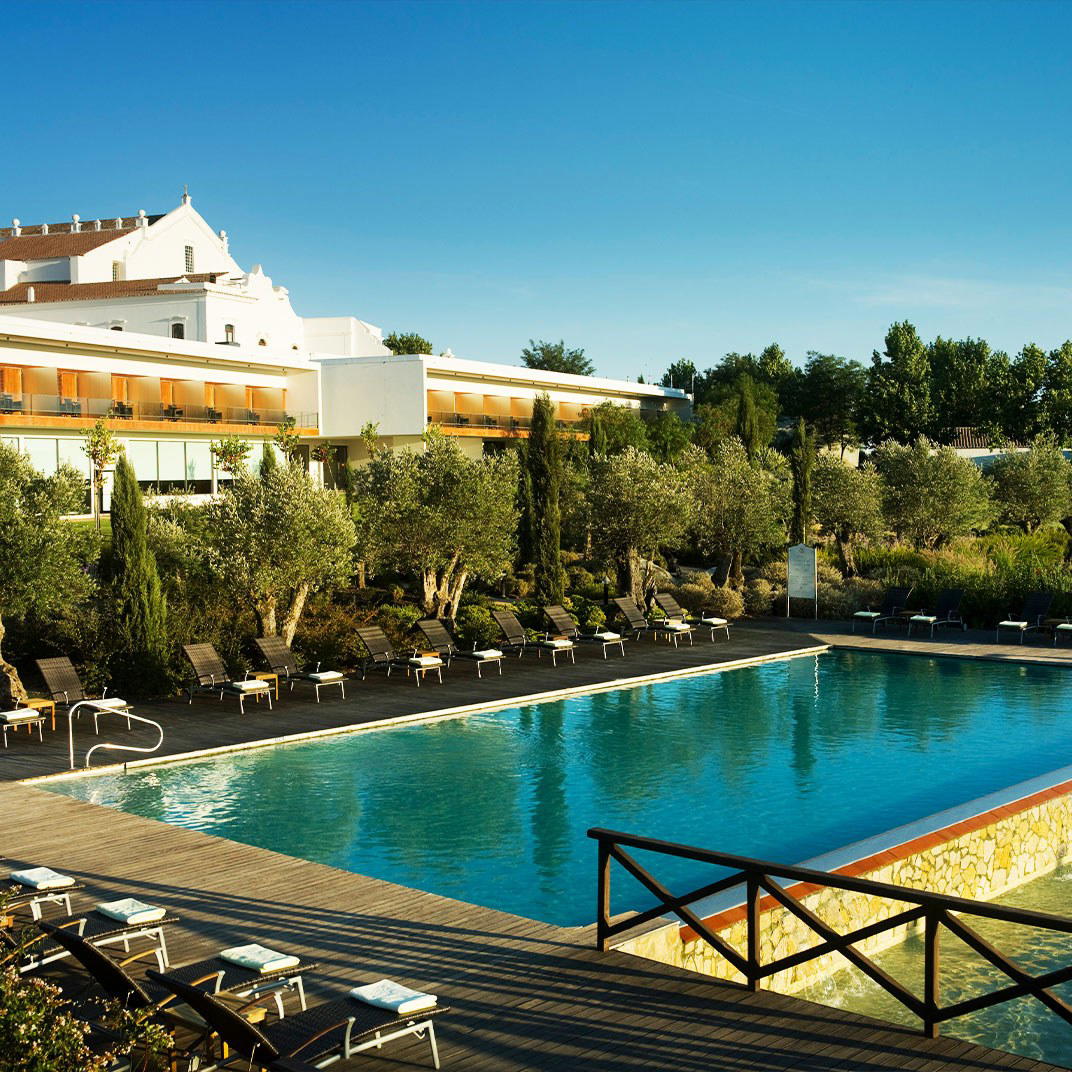
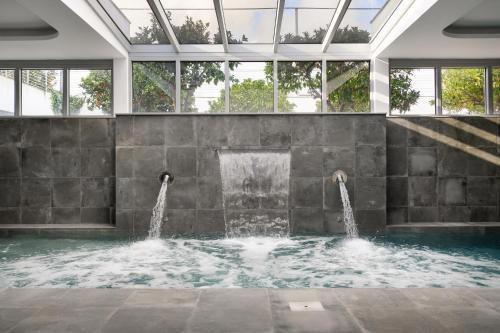
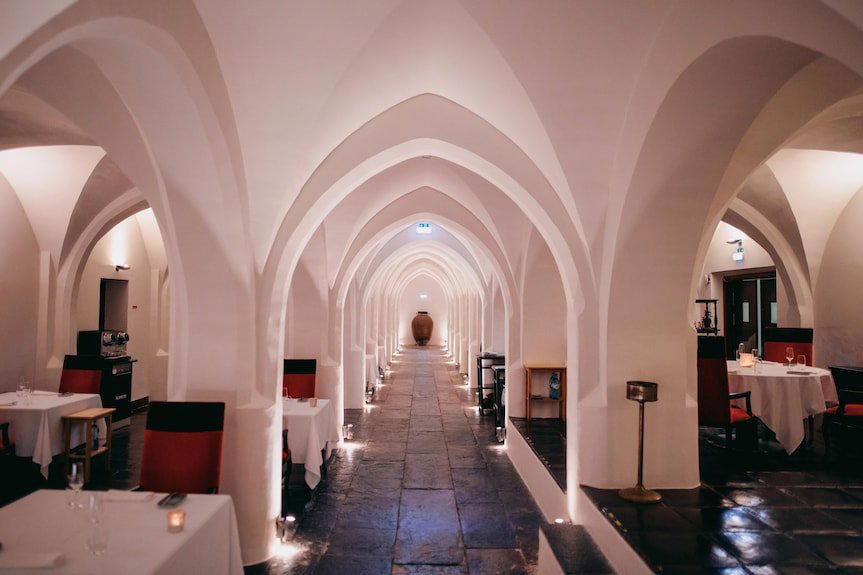
At 40 rooms across a nearly 2,000-acre property, density is not a concern. The spa, operating under the Susanne Kaufmann partnership, occupies a single vaulted aisle of 131 feet, connecting four treatment rooms, a hydrotherapy room with a cedar wood bathtub, dry saunas, and a fitness studio. The two outdoor pools, separated for adults and children, run from mid-spring to mid-autumn, open daily from 9:00 am to 8:00 pm. The hotel bar is housed in a vaulted room that was formerly part of the olive oil mill; the pool bar sits among the orange grove and vegetable garden. The stables operate eight boxes and a riding ring of 6,458 square feet.
As a Leading Hotels of the World member, Barrocal is positioned in the upper tier of European estate hotels that prioritize authenticity of place over brand-name infrastructure. Properties like Hospedaria da Pensão Agrícola in the Tavira area or Villa Epicurea in Sesimbra occupy adjacent territory at different price points and scales. For Algarve-based comparisons, Anantara Vilamoura and Bela Vista Hotel & Spa occupy the coastal luxury segment, a fundamentally different proposition in terms of setting and guest experience.
Elsewhere in Portugal, estate-based hotels with strong architectural and agricultural identities include Casa Vale do Douro in Cambres and Q.ta da Corte in Valença do Douro, though both operate within the Douro Valley wine region, where the visual and agricultural reference points differ from the Alentejo's cork oak and olive character. Further afield, Casa das Penhas Douradas in Manteigas and Casas da Lapa in Seia represent the mountain-rural tier of Portuguese boutique hospitality. Other notable Portuguese properties in different registers include Bussaco Palace Hotel in Luso, Carmo's Boutique Hotel in Ponte de Lima, Casa da Calçada in Amarante, Casa Mãe Hotel in Lagos, Casa Velha do Palheiro in São Gonçalo, Colégio Charm House in Tavira, 3HB Faro, Masana Algarve in Albufeira, and Boutique Hotel Teatro in Angra do Heroísmo.
Planning a Stay
The estate sits in the foothills below medieval Monsaraz and within reach of the Alqueva reservoir, one of western Europe's largest artificial lakes and a certified Starlight Tourism Destination for its dark skies. Rates from approximately $575 per night position Barrocal at the accessible end of Leading Hotels of the World estate properties without the volume of a resort. Guest rooms number 40 across a range of configurations, from rooms within the main farmhouse buildings to more private cottages scattered across the property. The Hortelão restaurant operates only in late spring and summer; visits outside that window should plan around the main restaurant. The farm shop is open to both hotel guests and visitors from outside the estate.
How São Lourenço do Barrocal Monsaraz compares with similar nearby venues.
| Venue | Awards |
|---|---|
| São Lourenço do Barrocal | Michelin 1 Key |
Recognition history
Dated appearances from independent guides and award organizations, with the underlying list record or original source where available.
Michelin 1 Key
Michelin
Mr & Mrs Smith Smith Seal of Approval
Mr & Mrs Smith
Virtuoso Luxury Hotel Partner
Virtuoso
Leading Hotels of World Member
Leading Hotels of World
Michelin 1 Key
Michelin

At a Glance
- Romantic
- Scenic
- Elegant
- Rustic
- Sophisticated
- Romantic Getaway
- Wellness Retreat
- Family Vacation
- Weekend Escape
- Historic Building
- Panoramic View
- Terrace
- Garden
- Wi Fi
- Pool
- Spa
- Fitness Center
- Room Service
- Concierge
- Restaurant
- Sauna
- Bicycle Rental
- Mountain
- Garden
- Wi Fi
- Pool
- Spa
- Fitness Center
- Room Service
- Concierge
- Restaurant
- Sauna
- Bicycle Rental
Elegant and peaceful with unpretentious luxury, featuring white-washed buildings, natural light, cozy terraces, and serene rural surroundings praised for comfort and warmth.
Know Before You Go
- Getting there
- São Lourenço do Barrocal, 7200-177