

Michelin Selected
Rosemary occupies a Médina address on Rue de la Bahia, holding Michelin Selected status in the 2025 guide to hotels and stays. The property sits within the compact, riad-dense quarter near the Bahia Palace, where small-scale hospitality and mediated calm define the category. For travellers placing Marrakech on a broader Morocco itinerary, it represents a considered Médina base with guide-level recognition behind it.

Pearl is the En Primeur Club membership app, where members save venues, book tables and use the concierge.
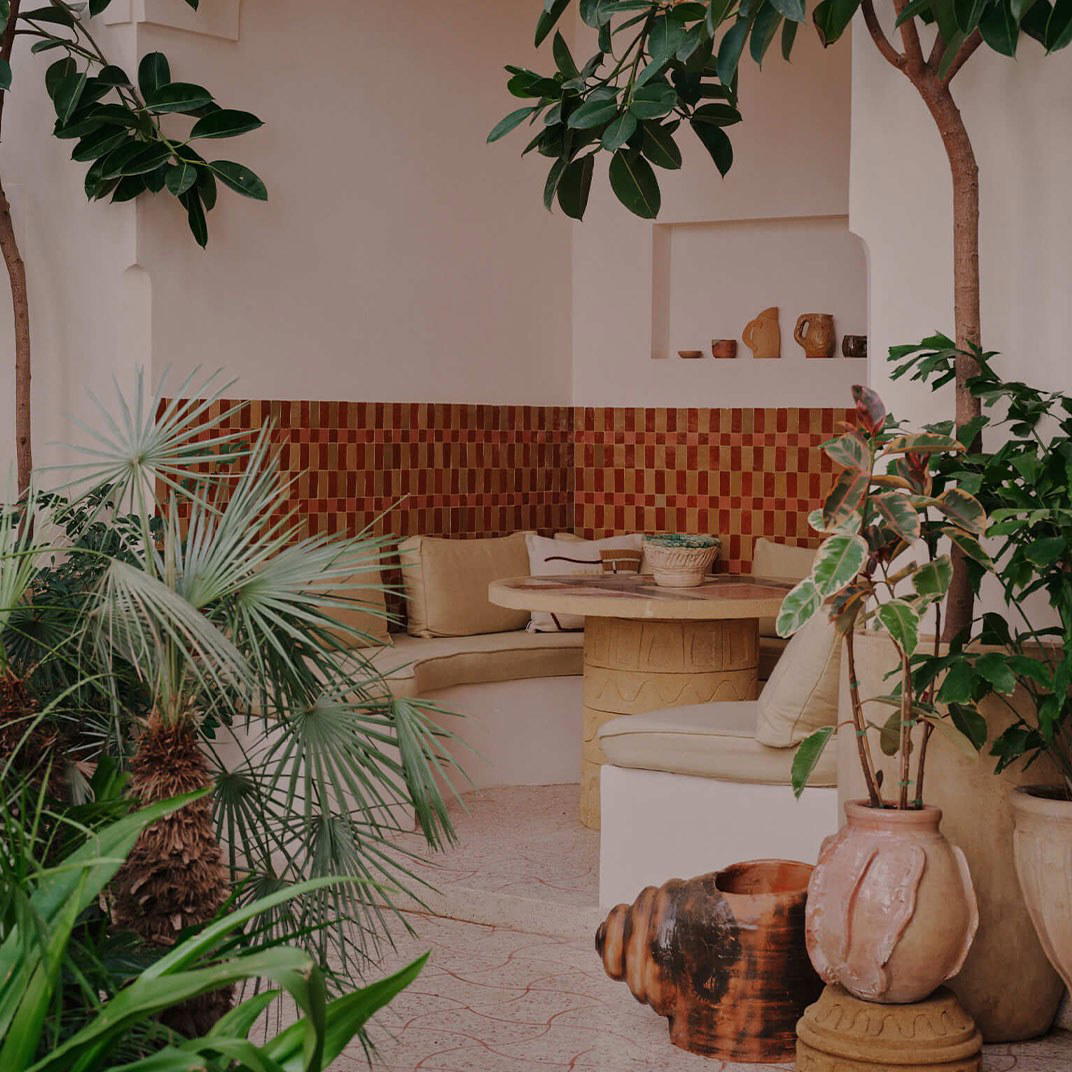
A Médina Quarter Where the Riad Format Has Matured
The streets radiating from the Bahia Palace in Marrakech's southern Médina represent one of the city's more settled pockets of small-scale hospitality. Over the past two decades, the riad conversion model spread unevenly across the old city: some neighbourhoods absorbed volume tourism and the quality deteriorated with it, while others, particularly this stretch toward Rue de la Bahia, retained a certain discipline. Properties here tend to be smaller, better maintained, and more deliberate about how guests move through the space. Rosemary, at 25 Rue de la Bahia Médina, occupies that context directly, and its inclusion in the Michelin Selected Hotels 2025 guide confirms it as one of the addresses the guide's editors identified as meeting a threshold for quality in this market.
Michelin's hotel selection process does not operate like its restaurant stars. The designation signals that inspectors found the property coherent, well-managed, and worth directing travellers toward, it does not rank against a scale. In Marrakech, where the riads-and-guesthouses category ranges from genuinely accomplished to poorly converted courtyard houses with unreliable service, that signal carries real information. Rosemary sits in the upper stratum of the Médina's boutique accommodation, alongside properties such as Dar Les Cigognes, Dar Darma, and Dar Kandi, all of which share a commitment to managed intimacy over volume.
The Format That Defines Small Médina Stays
The riad model succeeds when the team running it understands that the architecture is not the product on its own. A courtyard with a fountain, a rooftop terrace with Atlas views, carved plasterwork, these are structural givens across the category. What separates a functioning riad from a memorable one is the coordination between the people managing daily operations: how arrivals are handled after a disorienting walk through the Médina's narrower passages, how meals are timed relative to guest rhythms, how local knowledge is offered without performance. At smaller properties in this category, there is no separation between front-of-house, concierge, and the person who will serve you breakfast. The team dynamic is necessarily integrated, and when it works, the stay feels calibrated rather than improvised.
This is the specific register that Michelin's hotel inspectors are assessing in markets like Marrakech. The guide is not looking for spa square footage or lobby grandeur, it is measuring whether the hospitality system is coherent. Rosemary's selection suggests that coherence is present here, and for a property at this address, that means a team that can negotiate between the demands of medina living (noise, navigability, heat in the warmer months) and the expectations of guests arriving from international markets.
Placing Rosemary in the Broader Marrakech Picture
Marrakech's accommodation market now spans several tiers and formats. At one end, large-footprint hotels like La Mamounia and the BELDI COUNTRY CLUB operate with full resort infrastructure, multiple restaurants, and the kind of ground staff numbers that insulate guests from the city entirely. At the other end, the boutique Médina properties, riads and dars converted to guesthouses, ask guests to accept that they are genuinely inside the old city, not adjacent to it. The AnaYela, Dar Assiya, Dar Housnia, and Caravan by Habitas Agafay all sit in adjacent parts of this spectrum, each with its own guest profile and spatial logic.
Rosemary's Rue de la Bahia address places it within walking distance of the Bahia Palace, the El Badi ruins, and the southern souks without being inside the most congested pedestrian corridors near Jemaa el-Fna. For travellers who want proximity to the city's historical density but prefer a quieter approach route back to their accommodation, the southern Médina tends to deliver that balance more reliably than the northern sections around the tanneries or the central market clusters.
For broader Morocco itineraries, the city connects logically to a range of contexts: the Atlantic coast at Essaouira, the palmeries and kasbahs of the south near Ouarzazate and M'hamid, the medina hotels of Fez, the northern coast at Tangier and Tamuda Bay, and beach formats at Taghazout or El Jadida. Marrakech functions well as either a trip anchor or a single leg within something larger.
Seasonal Timing and Practical Considerations
Marrakech's climate creates a sharp seasonal logic for Médina stays. The April-to-May and September-to-November windows offer the most manageable conditions: temperatures in the high twenties, lower humidity than the coastal cities, and a functioning gap between the peak summer heat (July and August regularly exceed 40°C in the Médina) and the European holiday rush that fills properties from late December through February. Spring and autumn are when the city's riad category performs leading, both in terms of comfort and in the quality of service that smaller properties can sustain when occupancy is not at its absolute ceiling.
Given the property's Michelin Selected status and its location in a neighbourhood with limited new supply, booking lead times of four to six weeks are prudent for the peak spring and autumn windows. For travel around major Moroccan public holidays or during European school holiday breaks, extend that further.
For the dining and neighbourhood context beyond the property itself, our full Marrakech guide maps the city's key areas, restaurant options, and itinerary structures across the different traveller profiles the city attracts.
Travellers comparing Marrakech's boutique Médina tier against international small-luxury references such as Badrutt's Palace in St. Moritz or Hôtel de Paris Monte-Carlo should note that the comparison is format rather than grade. The Médina riad operates on entirely different spatial and service principles, intimacy and local embeddedness over institutional scale. The Fifth Avenue Hotel and its equivalents represent a different hospitality logic altogether. Comparable Morocco positions outside Marrakech include Palais AMANI in Fès, Kasbah Tamadot in Asni, and La Sultana Oualidia, each of which holds guide-level recognition within its own segment and geography. Château Roslane represents a further reference point for travellers interested in Morocco's wine-producing regions alongside their accommodation choices.
A Credentials Check
Comparable venues nearby, for context on price, style, and recognition.
| Venue | Cuisine | Price | Awards | Notes |
|---|---|---|---|---|
| RosemaryThis venue (the venue you are viewing) | Contemporary riad blending historic medina architecture with modern artisanal design | $200–300 | Michelin Selected | Not listed |
| BELDI COUNTRY CLUB | Traditional Moroccan village with riads and pavilions amid lush gardens | $100–200 | Not listed | Route de Barrage Cherifia |
| Riad Botanica | Restored 10th-century aristocratic riad blending Moroccan, Australian, and Art Deco influences | Not listed | Michelin Selected | Marrakech-Médina |
| Riad 72 | Art-school riad with Italian flair and Moroccan heritage | Not listed | Michelin Selected · Mr & Mrs Smith Seal of Approval | Marrakech-Médina |
| Riad Joya | Contemporary Moroccan riad with Italian design influences | $200–300 | La Liste Top Hotels | Marrakech-Médina |
| Caravan by Habitas Agafay | Contemporary classic and secluded tented camp | Not listed | Michelin Selected | Agafay Desert |
Recognition history
Dated appearances from independent guides and award organizations, with the underlying list record or original source where available.
Michelin Selected
Michelin
Tablet Hotels Best New Hotel Designs (Mexico & More)
Tablet Hotels · Tablet Hotels Design Awards 2026: Best New Hotel Designs (Mexico & More)
Continue exploring
More in Marrakech
Hotels in Marrakech
All hotels in Marrakech →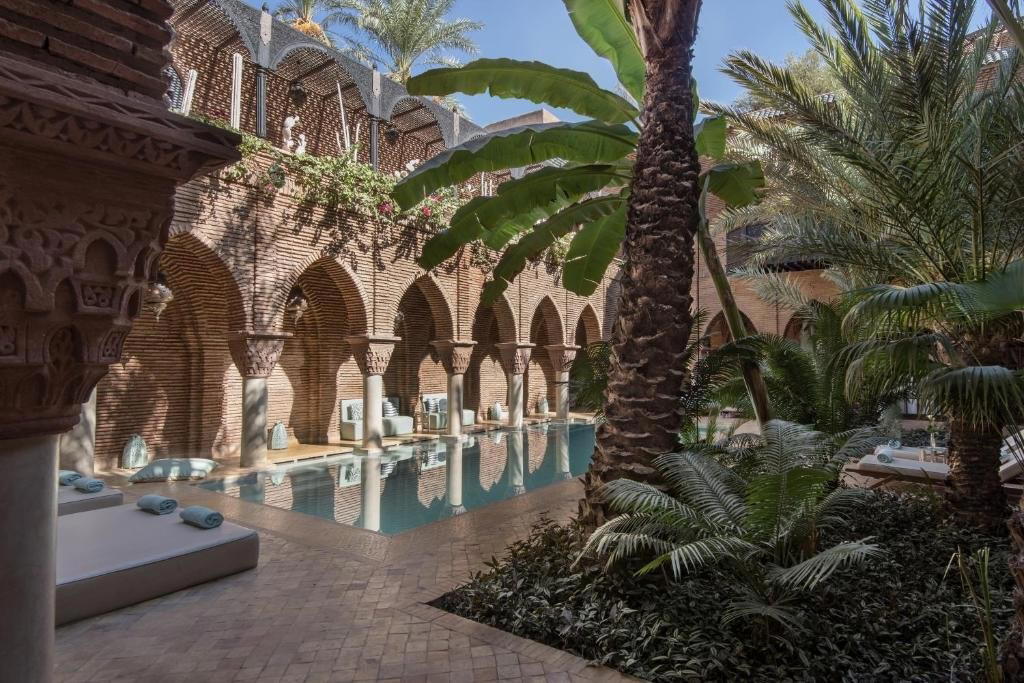
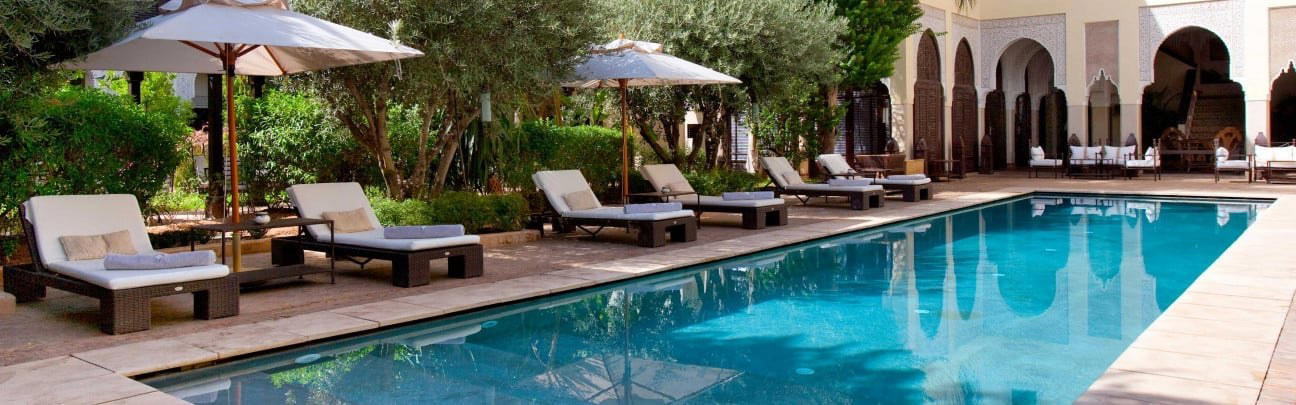
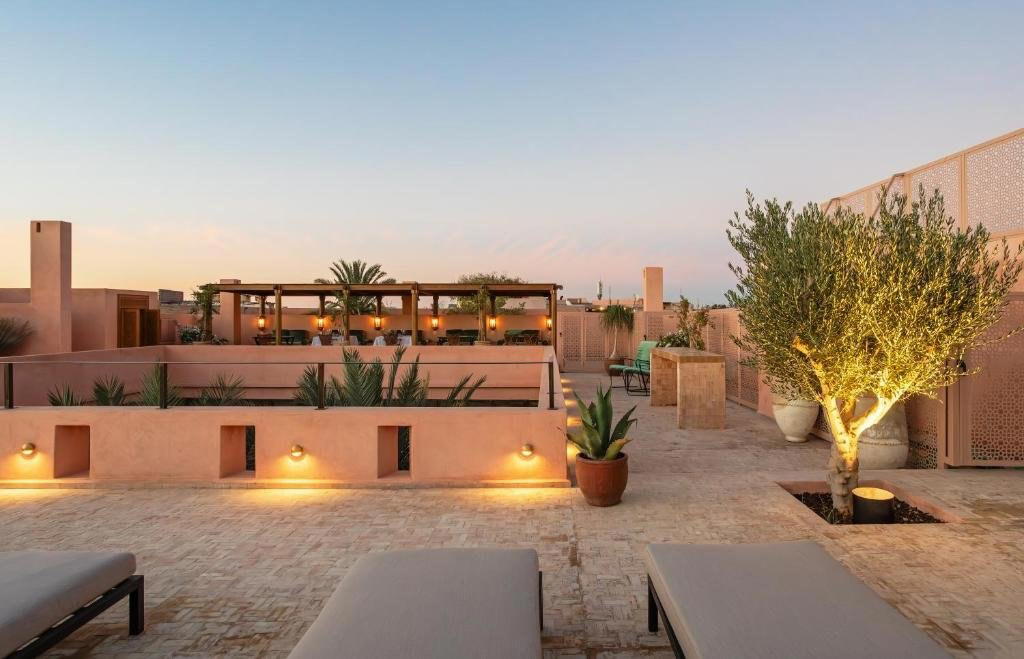
Bars in Marrakech
All bars in Marrakech →
Restaurants in Marrakech
All restaurants in Marrakech →
Wineries in Marrakech
Browse all →
Details
- Elegant
- Modern
- Intimate
- Sophisticated
- Cozy
- Romantic Getaway
- Honeymoon
- Wellness Retreat
- Anniversary
- Terrace
- Pool
- Spa
- Room Service
- Garden
- Wheelchair Accessible
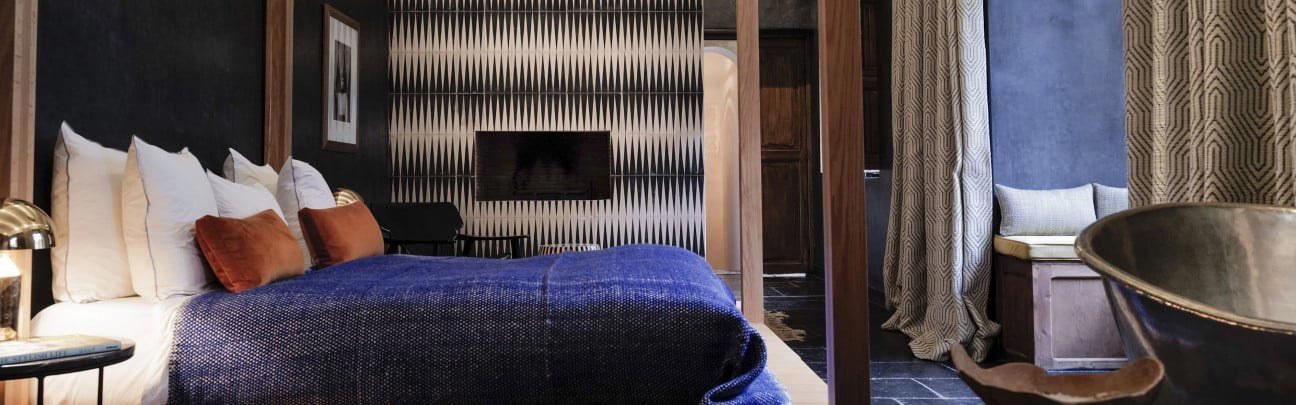
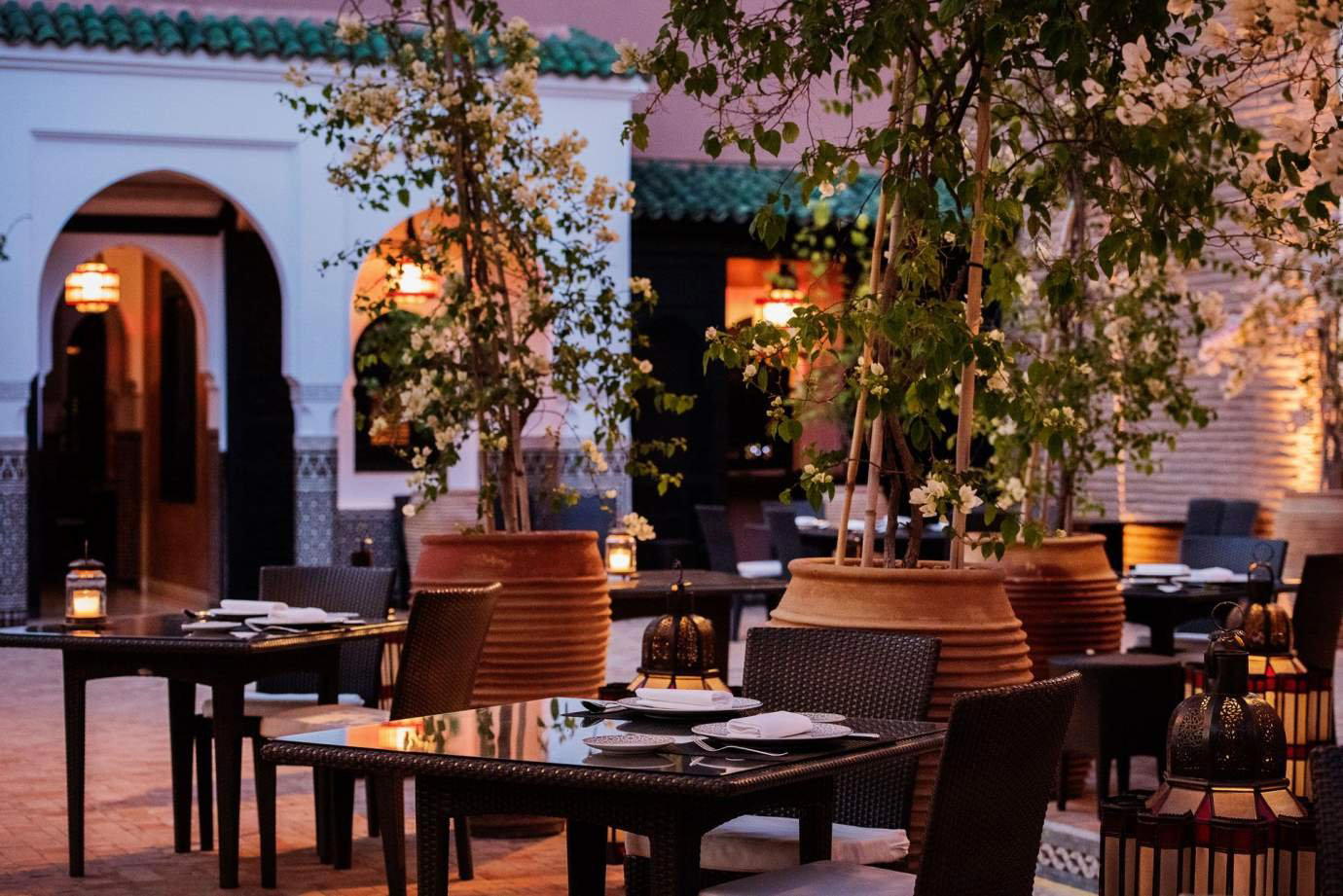
Peaceful and restful with a contemporary artisanal atmosphere centered around a jacaranda-shaded courtyard, scented hammam, and sun-drenched rooftop terrace.