

Michelin Selected
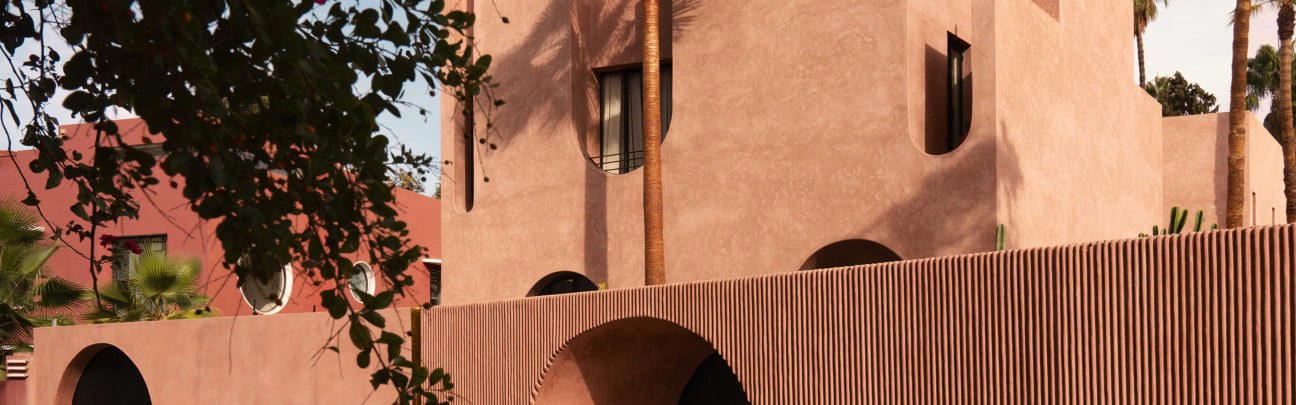
A Michelin Selected riad in Marrakech's Bab Doukkala quarter, Riad Botanica occupies a restored traditional house where the medina's architectural logic, courtyard, zellige, layered planting, shapes the stay as much as any amenity. The address places guests within the northern medina's quieter residential fabric, removed from the commercial pressure of Jemaa el-Fna, with the city's historic hammams and souks within walking distance.

Pearl is the En Primeur Club membership app, where members save venues, book tables and use the concierge.
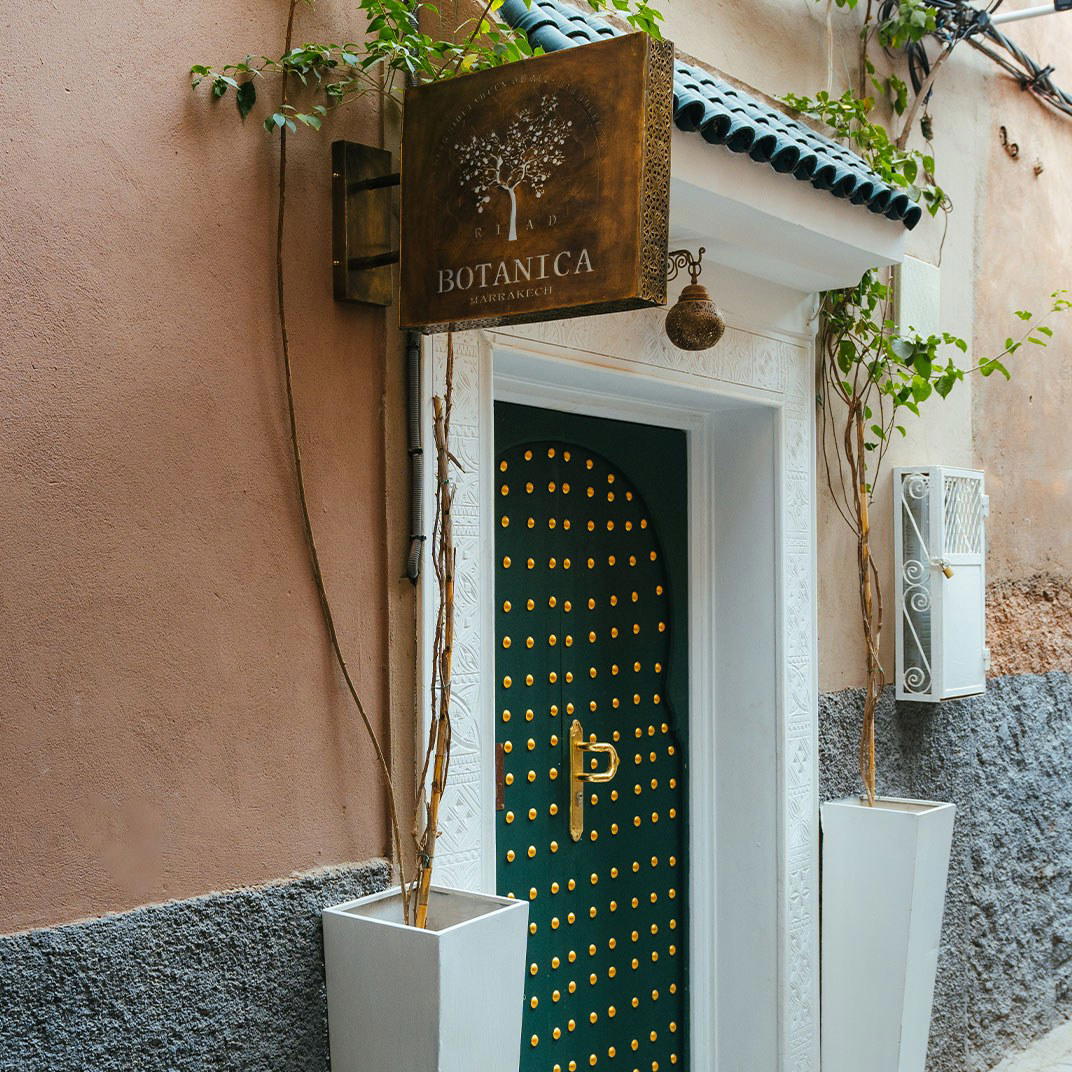
Inside the Northern Medina: What Bab Doukkala Means for a Riad Stay
Marrakech's riad accommodation has split into two broadly different experiences defined less by price than by address. Properties clustered around the Jemaa el-Fna and the southern souks trade on proximity to spectacle; those in the northern medina quarters, particularly around Bab Doukkala and the Mouassine neighbourhood, sit inside a denser, more residential grain where the streets narrow to shoulder width and foot traffic is mostly local. Riad Botanica occupies the latter register, at 78 Derb Sidi Lahcen Ou Ali in the Bab Doukkala district, and that address does a great deal of the editorial work before a guest even crosses the threshold.
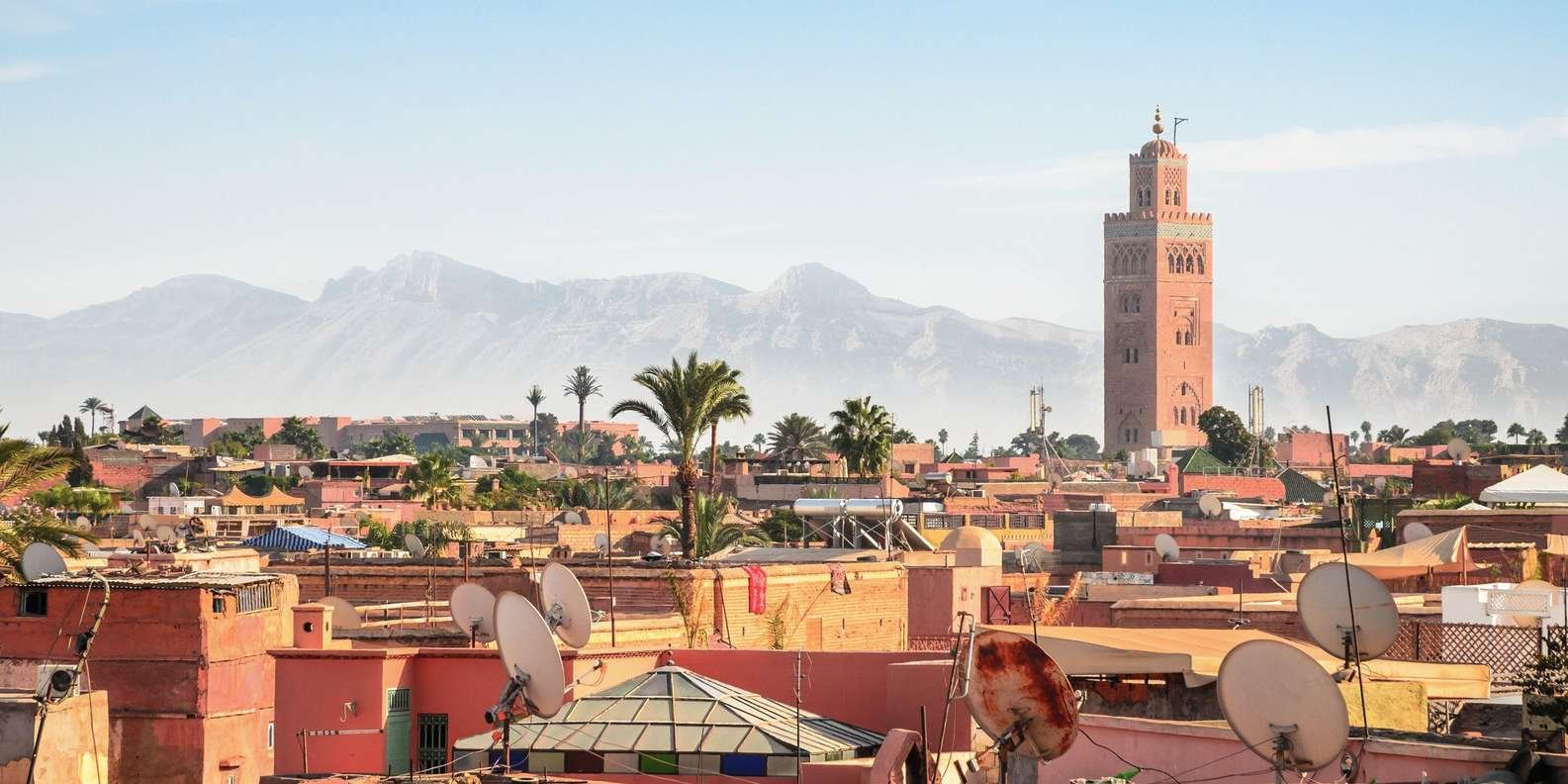
In this part of the medina, the approach to a riad is itself part of the experience. Derbs, the semi-private residential alleys that branch off the main arteries, are quiet enough that you can hear the city shift register as you walk deeper in. The surrounding neighbourhood holds some of Marrakech's most intact domestic architecture: the 16th-century Bab Doukkala Mosque anchors the district, and the covered market lanes nearby carry a working-city quality absent from the more touristed southern corridors. For a stay framed around the riad tradition specifically, rather than around resort amenities, this is a more coherent setting than the city's busier accommodation zones.
The Riad Format and What It Delivers Here
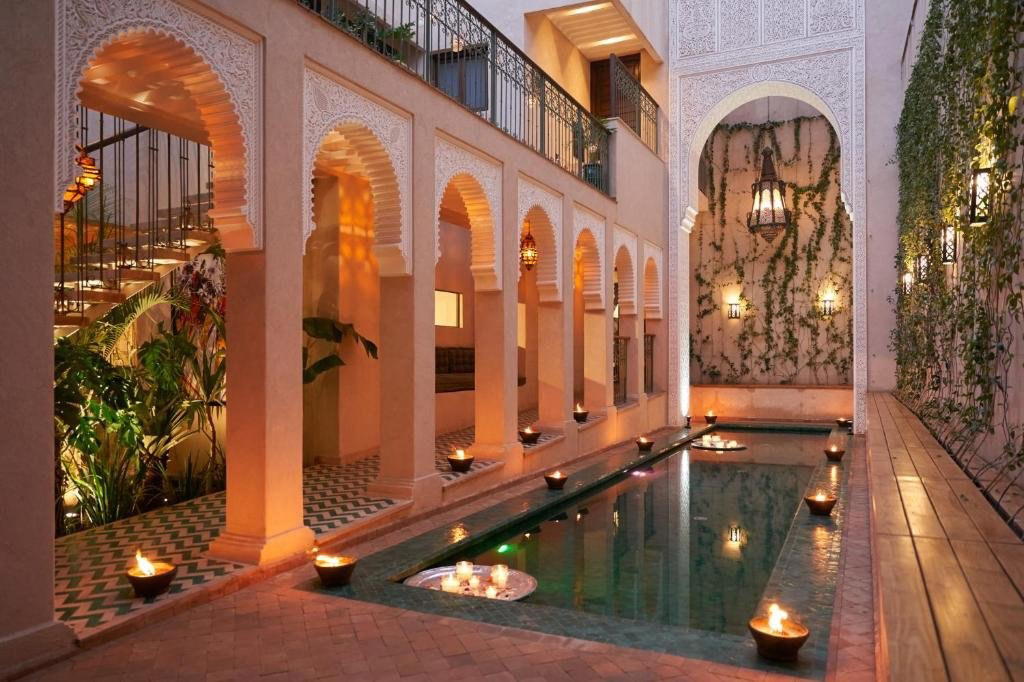
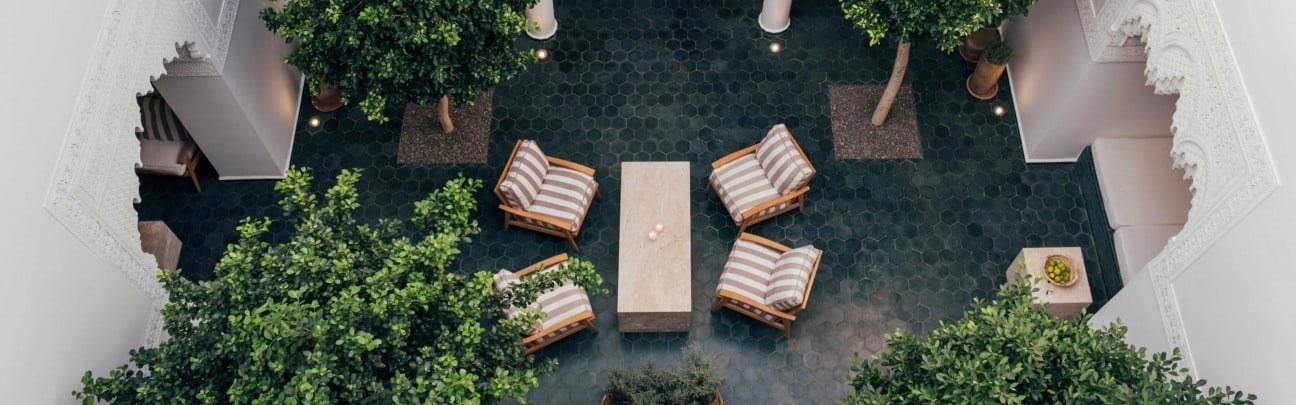
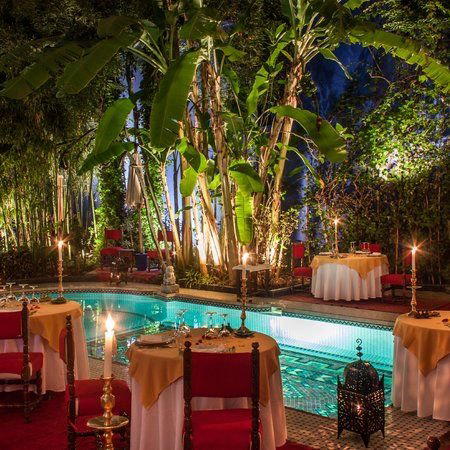
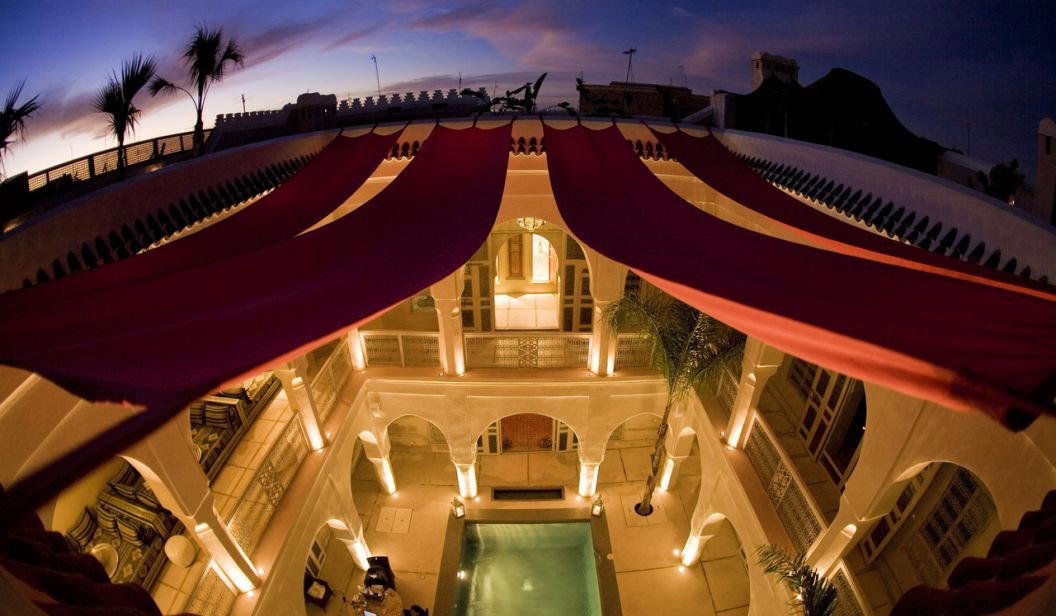
The riad typology is well understood in broad outline: an inward-facing house arranged around a central courtyard, designed so that the architecture creates privacy and climate control simultaneously. What varies considerably between properties is how that structure is inhabited. Riad Botanica's name signals a botanical emphasis, suggesting that planting plays a meaningful role in the courtyard composition rather than functioning as token decoration.
Michelin's hotel selection programme, which added Riad Botanica to its 2025 list, applies criteria around quality of welcome, comfort, and setting rather than restaurant performance. The distinction places the property in a validated peer group that includes recognised addresses across Morocco's medina cities. Within Marrakech specifically, Michelin Selected status functions as an editorial signal that the experience meets a consistent standard of hospitality and physical environment, useful context for travellers cross-referencing properties across a crowded category.
For comparison within the northern medina tier, properties such as AnaYela and Dar Darma represent the design-led riad format at different scales and price points. Dar Housnia, Dar Kandi, and Dar Les Cigognes each show how the restored traditional house format accommodates different interpretations, from intimate guesthouse operation to boutique hotel service levels. Dar Assiya occupies a comparable neighbourhood position. What separates them in practice tends to come down to courtyard scale, room count, and the ratio of indoor to outdoor space, factors that the Botanica's name implies are handled with particular attention to planting and greenery.
When to Go and How the City's Seasons Shape the Stay
Marrakech's climate divides the riad experience in ways that matter for planning. Spring, from March through May, brings the city's most accessible temperatures and the period when courtyard gardens perform leading, with roses and citrus in bloom across the medina's private interiors. This is when riad properties with genuine planting programmes justify their botanical claims most visibly. Autumn, September through November, offers comparable temperatures and quieter tourist volumes than spring's peak months.
Summer in Marrakech runs hot, with July and August regularly exceeding 38°C in the medina's enclosed streets. Properties without pool access or effective mechanical cooling become difficult in those months; the riad's traditional courtyard design provides meaningful passive cooling through shade and water features, but the degree of comfort depends heavily on the specific building and its circulation. Winter, December through February, is Marrakech's most misunderstood season internationally: daytime temperatures of 18-22°C make sightseeing comfortable, evenings drop sharply, and the city's gardens and souks operate without the crowd pressure of peak spring.
For travellers arriving from a European winter, the December-to-February window has become an increasingly well-understood travel period for Marrakech. Riad accommodation in the medina tends to book ahead for the pre-Christmas period and Eid holidays; planning two to three months ahead for those windows is standard practice. Spring peak bookings, particularly the Easter period, can require similar lead time across the city's more recognised riad addresses.
Marrakech's Riad Category in Context
The medina riad sector in Marrakech has expanded and stratified considerably over the past two decades. At the upper end, large-footprint palace hotels such as La Mamounia in Marrakesh and BELDI COUNTRY CLUB operate at a different scale and service model entirely. Properties like Caravan by Habitas Agafay have extended Marrakech's accommodation orbit into the desert plateau south of the city, offering a different landscape proposition altogether.
Within the medina specifically, the Michelin Selected tier represents properties that have passed a quality audit without necessarily competing on room count or amenity breadth. The format suits travellers who want the traditional riad experience, spatially and architecturally coherent, in a neighbourhood that retains its residential character. That combination is what Bab Doukkala provides as a district, and what an address on a derb in that quarter implies about the daily texture of a stay.
Morocco's riad tradition is not limited to Marrakech. Riad Mayfez Suites & Spa in Fez and Palais AMANI in Fès represent how the inward-facing house typology operates in Fez's medina, a UNESCO World Heritage site with different architectural scale and density than Marrakech. Travellers building a Morocco itinerary that pairs medina cities will find the format consistent in principle while distinct in character between the two cities. Further afield, Kasbah Tamadot in Asni and Dar Ahlam in Ouarzazate extend the traditional Moroccan accommodation vocabulary into the Atlas foothills and pre-Saharan south respectively, while Dar Azawad in M'hamid takes the format to the desert edge. Coastal options including Villa de l'O in Essaouira, La Sultana Oualidia in Oualidia, and Mazagan Beach & Golf Resort in El Jadida offer a different register for the same country. Northern Morocco adds Fairmont Tazi Palace Tangier in Tangier and Sofitel Tamuda Bay Beach & Spa in Tamuda Bay to a property set that covers the country's full geographic range. For those building a longer trip, Hilton Taghazout Bay Beach Resort & Spa in Taghazout and Château Roslane in Icr Iqaddar represent the country's Atlantic and wine-region dimensions. See our full Marrakech restaurants guide for broader city orientation.
Planning a Stay at Riad Botanica
The property sits in the Bab Doukkala quarter of Marrakech's medina, reachable on foot from the main medina axes but removed from the immediate noise of Jemaa el-Fna. Given the address structure of derbs, first-time visitors typically benefit from coordinating arrival directions with the property directly. The wider Bab Doukkala area gives access to the Mouassine fountain district, the northern souk lanes, and some of the medina's least commercially pressured walking streets, making it a functional base for medina exploration without the proximity costs of a Jemaa el-Fna address. Booking lead times for recognised riad addresses in Marrakech have shortened the available windows at peak periods; the Michelin Selected recognition makes Riad Botanica a more searched property than the average unlisted derb address, and planning accordingly is advisable for spring and winter holiday periods.
Similar Picks
Comparable venues nearby, for context on price, style, and recognition.
| Venue | Cuisine | Price | Awards | Notes |
|---|---|---|---|---|
| Riad BotanicaThis venue (the venue you are viewing) | Restored 10th-century aristocratic riad blending Moroccan, Australian, and Art Deco influences | Not listed | Michelin Selected | Not listed |
| Riad 72 | Art-school riad with Italian flair and Moroccan heritage | Not listed | Michelin Selected · Mr & Mrs Smith Seal of Approval | Marrakech-Médina |
| Caravan by Habitas Agafay | Contemporary classic and secluded tented camp | Not listed | Michelin Selected | Agafay Desert |
| Riad Joya | Contemporary Moroccan riad with Italian design influences | $200–300 | La Liste Top Hotels | Marrakech-Médina |
| BELDI COUNTRY CLUB | Traditional Moroccan village with riads and pavilions amid lush gardens | $100–200 | Not listed | Route de Barrage Cherifia |
| INARA CAMP | Luxury desert glamping blending Amazigh heritage with modern comfort | $200–300 | Michelin Selected · World Luxury Hotel Awards WLHA Continent Winner | Agafay |
Recognition history
Dated appearances from independent guides and award organizations, with the underlying list record or original source where available.
Michelin Selected
Michelin
Tablet Hotels Best New Hotel Designs (Mexico & More)
Tablet Hotels · Tablet Hotels Design Awards 2026: Best New Hotel Designs (Mexico & More)
Continue exploring
More in Marrakech
Hotels in Marrakech
All hotels in Marrakech →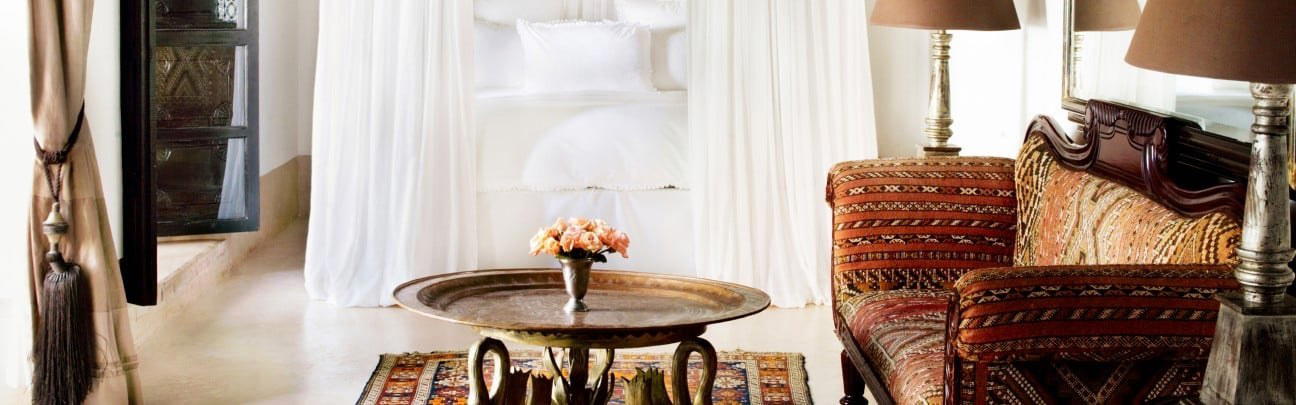
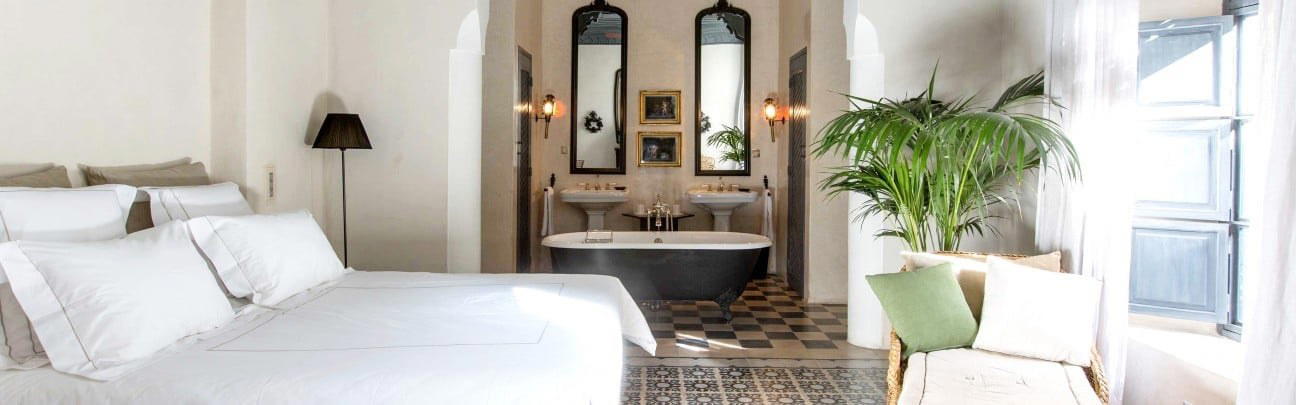
Bars in Marrakech
All bars in Marrakech →
Restaurants in Marrakech
All restaurants in Marrakech →
Wineries in Marrakech
Browse all →
Details
- Romantic
- Quiet
- Elegant
- Intimate
- Sophisticated
- Honeymoon
- Romantic Getaway
- Wellness Retreat
- Anniversary
- Garden
- Terrace
- Historic Building
- Pool
- Wi Fi
- Spa
- Concierge
- Room Service
- Garden
- Step Free Entrance
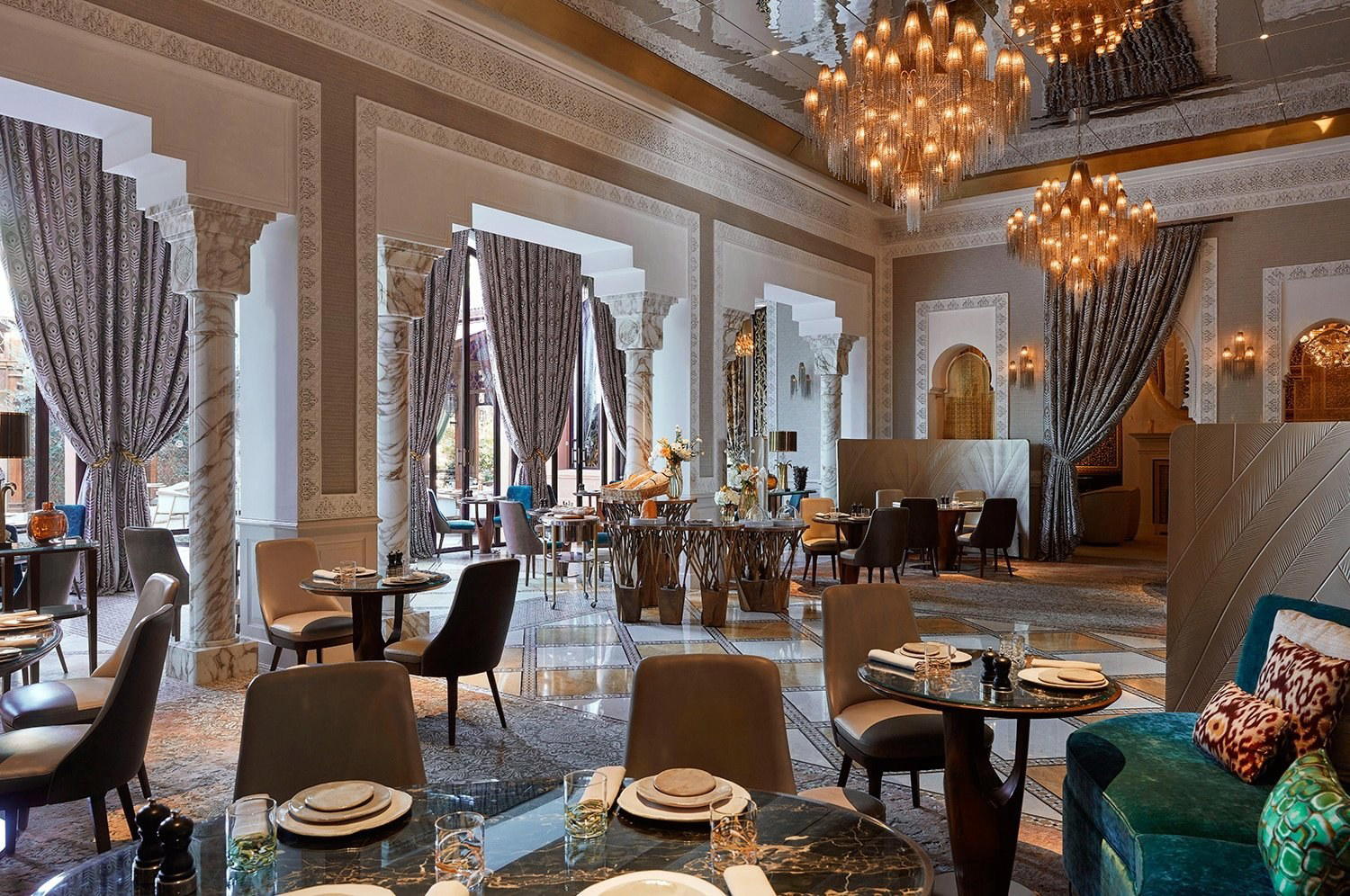
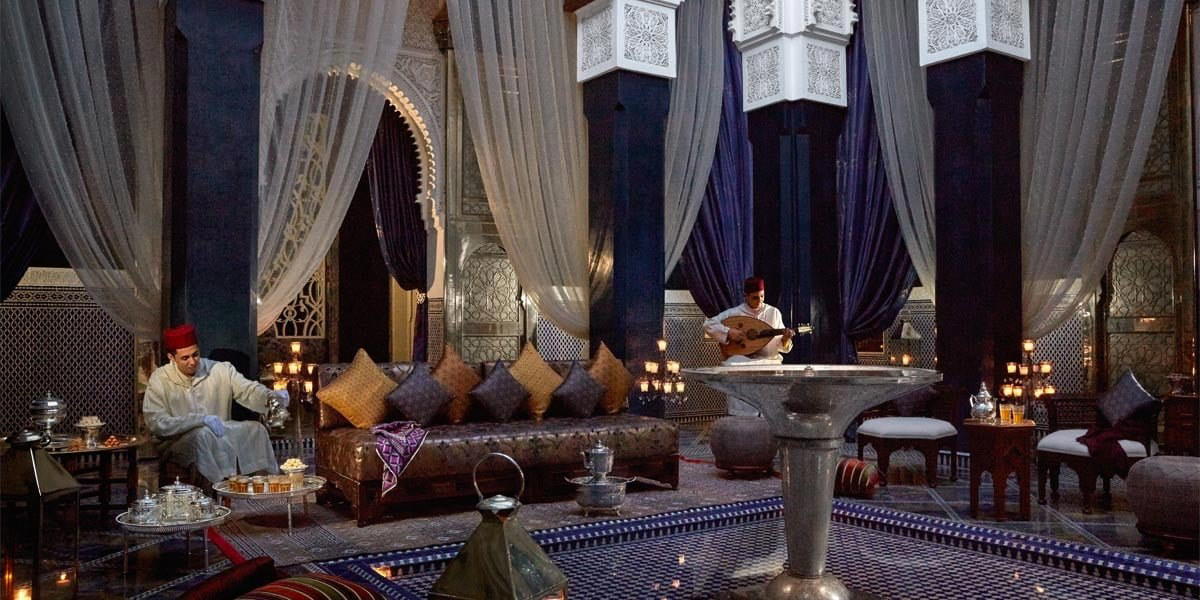
Shady, private, peaceful courtyard oasis with airy greenery, monochrome palette, rattan seating, and mosaic tiled floors evoking harmony.