
Sitting at Km 10.5 on the Tulum-Boca Paila corridor, Nômade Temple Tulum earned Michelin Selected recognition in 2025, placing it among a small cohort of Tulum properties held to that standard. The property operates in the design-led, low-footprint tier that defines the zone's most considered offerings, drawing guests who prioritize natural materials, ceremonial programming, and proximity to the biosphere reserve over resort-scale amenities.
Pearl is the En Primeur Club membership app — saves, bookings, and concierge access live there. Same editors, same standards.
- Address
- Carr. Tulum-Boca Paila Km 10.5, Tulum Beach, Zona hotelera, 77880 Tulum, Q.R., Mexico
- Phone
- (800) 204-9799
- Website
- nomadetulum.com
- Directions
- Get directions
 Saves & bookings on Pearl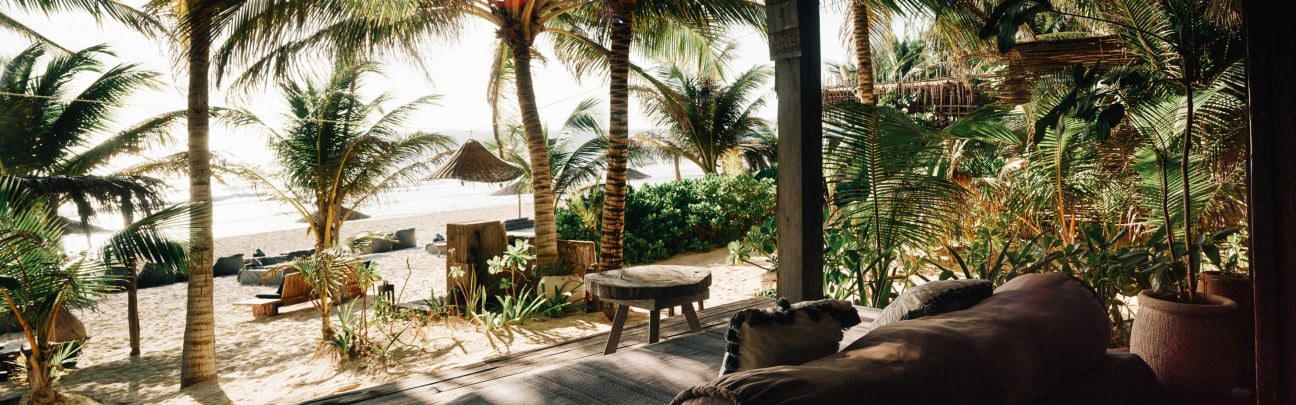
Where the Jungle Meets the Caribbean Shore
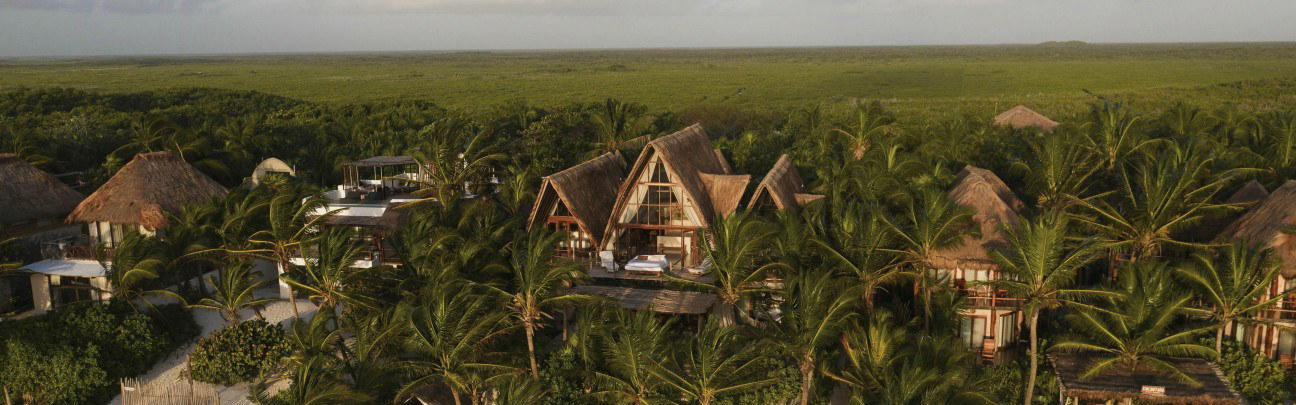
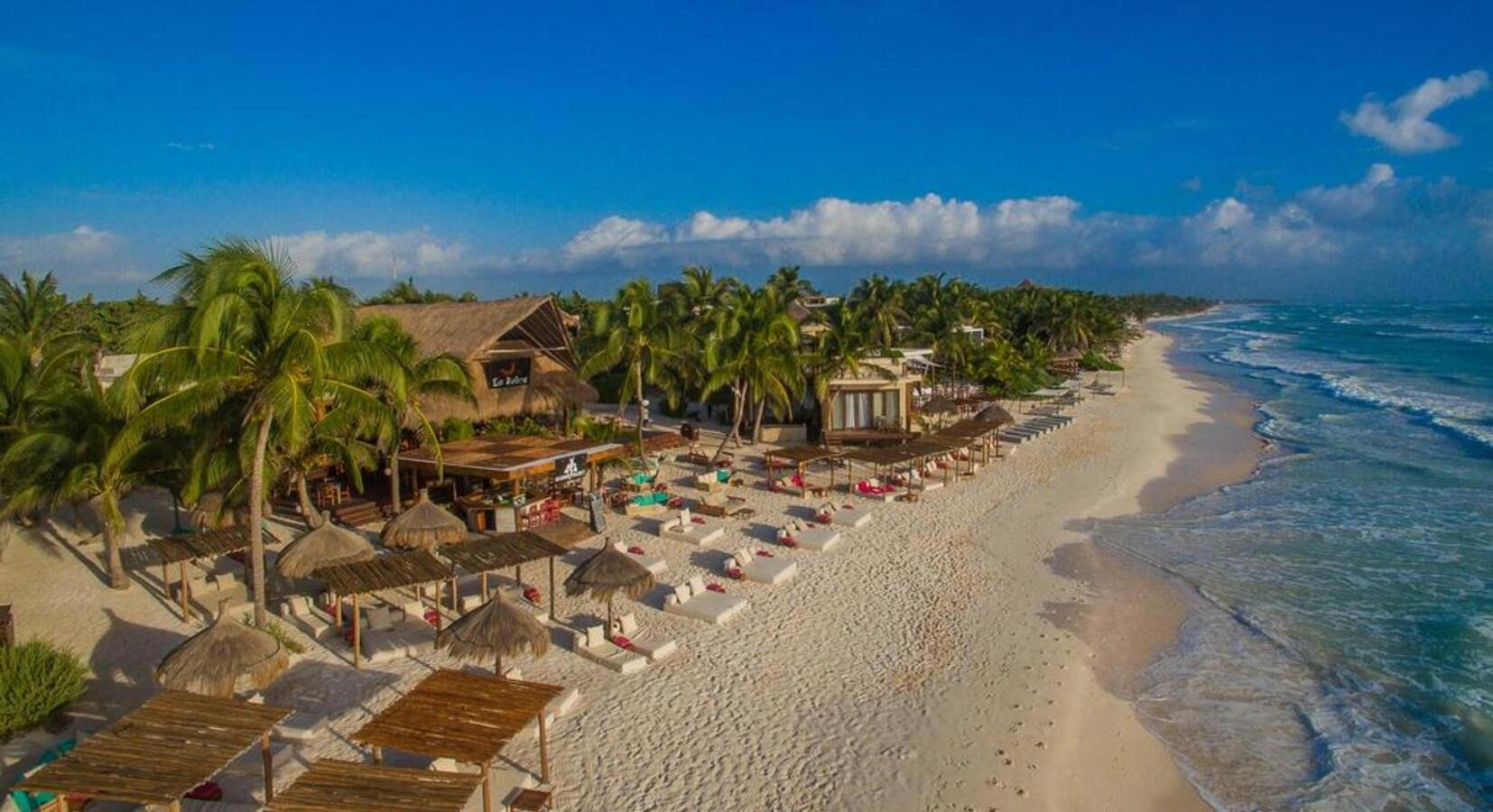
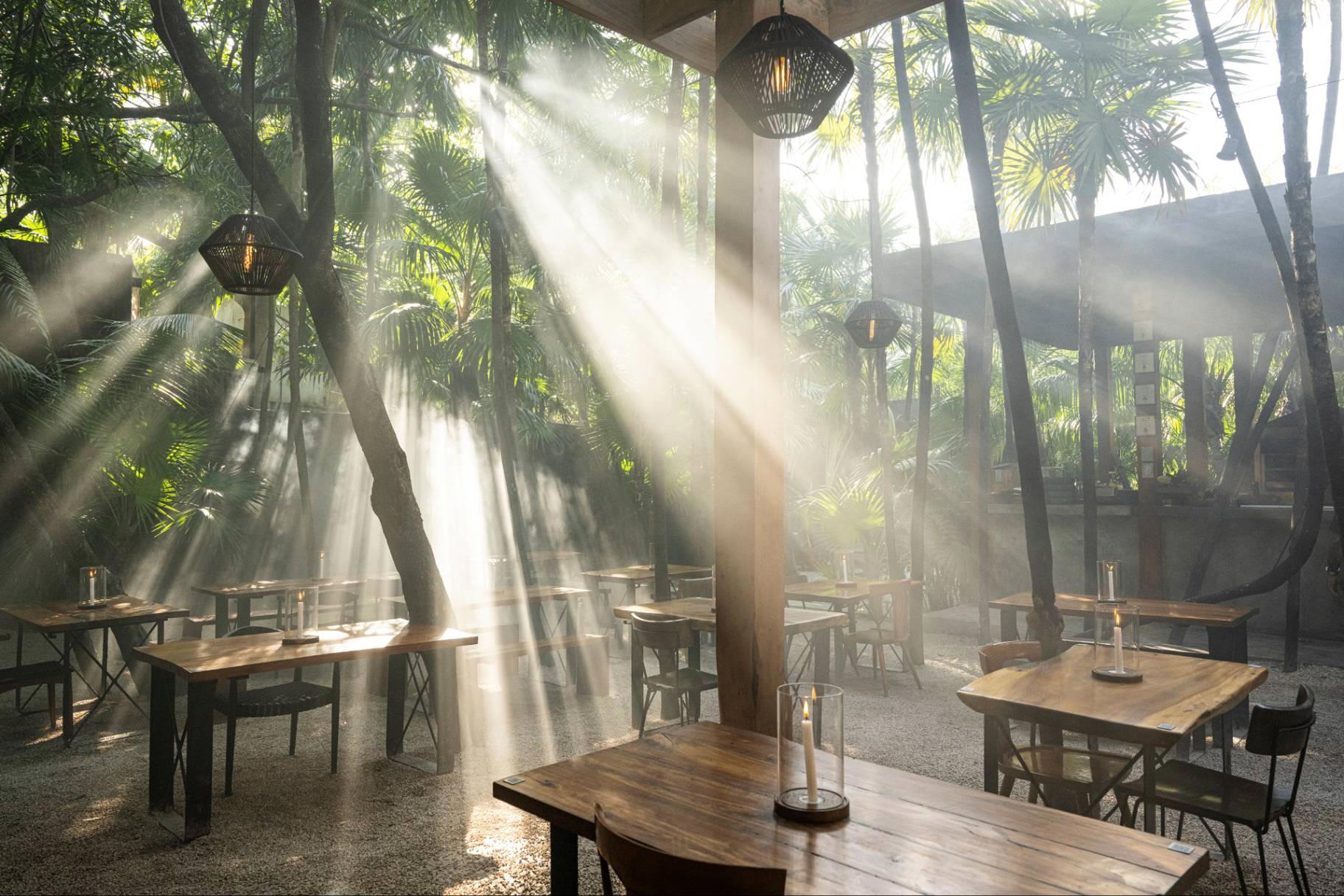
The stretch of coast running south from Tulum's main beach zone toward Boca Paila has a particular character that distinguishes it from the hotel cluster to the north. The road narrows, the vegetation thickens, and the properties along Km 10 and beyond tend to operate at a smaller scale with a more deliberate relationship to the surrounding landscape. Nômade Temple Tulum sits along this corridor, at Km 10.5, in the Tulum Beach hotel zone. The approach from the road is shaded and quiet, the sound of the sea arriving before the shoreline does.
Tulum's accommodation market has split decisively over the past decade. On one side: properties with large room counts, polished international amenities, and pricing calibrated to a global luxury traveler. On the other: a smaller tier of design-forward, lower-capacity properties that compete less on scale and more on concept, material authenticity, and programming depth. Nômade Temple Tulum belongs firmly to the second group, and its 2025 Michelin Selected recognition confirms a level of quality.
A Specific Type of Sourcing Philosophy
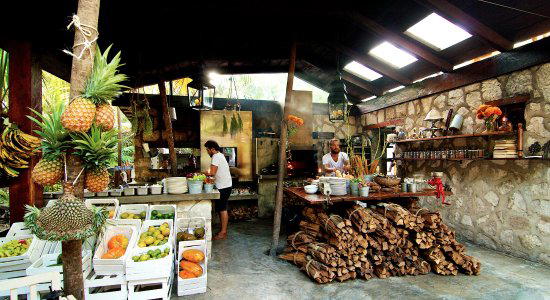
The properties along this southern corridor of the hotel zone have developed an approach to food and environment that distinguishes them from beach resorts elsewhere in the Yucatán Peninsula. The emphasis tends to fall on ingredients with traceable regional provenance: Yucatecan chiles, cacao from the state's interior, local fish caught in the waters between here and the biosphere, and produce sourced from small farms rather than centralized distributors.
Tulum sits at the edge of the Sian Ka'an Biosphere Reserve, a UNESCO-recognized protected area that covers more than 500,000 hectares of coastline, mangroves, and reef. Properties operating this close to that boundary face constraints that also function as creative prompts: access to certain ingredients is shaped by what the region actually produces, which in practice means a menu architecture that reflects the Yucatán's indigenous larder more directly than you would encounter at a resort in Cancún or Playa del Carmen. That proximity to the biosphere is one of the clearest differentiators between a property at Km 10.5 and one farther north on the beach zone's main access road.
How Nômade Sits Within the Tulum Hotel Tier
Comparing properties along the Tulum hotel zone requires some care, because the category groupings are not always intuitive. Hotels here compete less on star ratings and more on aesthetic coherence, programming depth, and the density of amenities relative to the number of rooms. Properties like Azulik and Hotel Esencia represent different approaches within the premium tier: Azulik leans into architectural spectacle and art programming; Hotel Esencia operates more as a secluded estate with a formal spa and a distinct residential quality. Ahau Tulum and BE Destination Tulum occupy adjacent territory, emphasizing wellness and community programming.
Nômade's positioning among this peer group is defined by the temple concept embedded in its name and its programming. The ceremonial and spiritual dimension shapes the daily rhythm of the property in ways that distinguish it from a hotel that simply offers yoga classes as an add-on. Properties operating in this space compete for a guest who is choosing between several credentialed options within the same price band, and the differentiator is usually programming specificity rather than room size or pool count. The Michelin Selected designation in 2025 functions as external validation of the overall standard.
For further context on this southern corridor and adjacent properties, Aldea Canzul, Amansala Resort, Ana y Jose Hotel & Spa Tulum, and Bespoke Tulum each serve adjacent market positions with distinct identities.
Mexico's Premium Property Context
Tulum's hotel zone represents one of several distinct premium accommodation geographies across Mexico, each with a different character. The Pacific coast offers an altogether different register: One&Only Mandarina in Riviera Nayarit and Montage Los Cabos in Cabo San Lucas represent large-footprint international luxury with a different relationship to scale. On the Riviera Maya itself, Maroma in Riviera Maya and Etéreo, Auberge Resorts Collection in Punta Maroma operate closer to the international resort model while maintaining genuine design credentials.
What makes the Tulum zone specifically interesting from an editorial standpoint is the degree to which properties here have constructed a coherent local identity that does not simply replicate models from Los Cabos or the Riviera Maya's northern stretch. The emphasis on natural materials, ceremony, and biosphere adjacency has created a micro-category with its own vocabulary, its own competitive dynamics, and its own traveler profile. Elsewhere in Mexico, properties like Chablé Yucatán in Mérida and Playa Viva in Juluchuca pursue related principles around sustainability and indigenous ingredient traditions, but in geographical and cultural contexts that produce quite different results.
Planning Your Stay
Nômade Temple Tulum sits at Km 10.5 on the Carr. Tulum-Boca Paila road, toward the southern end of the hotel zone. The Tulum hotel zone is not walkable end-to-end, and reaching the town center or the ruins requires either a bicycle, a golf cart rental, or a taxi; this is a structural feature of the area rather than a property-specific limitation. The high season runs from December through April, when the Caribbean is calm and the jungle humidity drops to manageable levels. Shoulder seasons in May and November offer fewer crowds at the cost of a higher probability of rain. Advance booking is advisable for peak-season travel.
Cuisine Lens
Comparable venues nearby, for context on price, style, and recognition.
| Venue | Cuisine | Price | Awards | Notes |
|---|---|---|---|---|
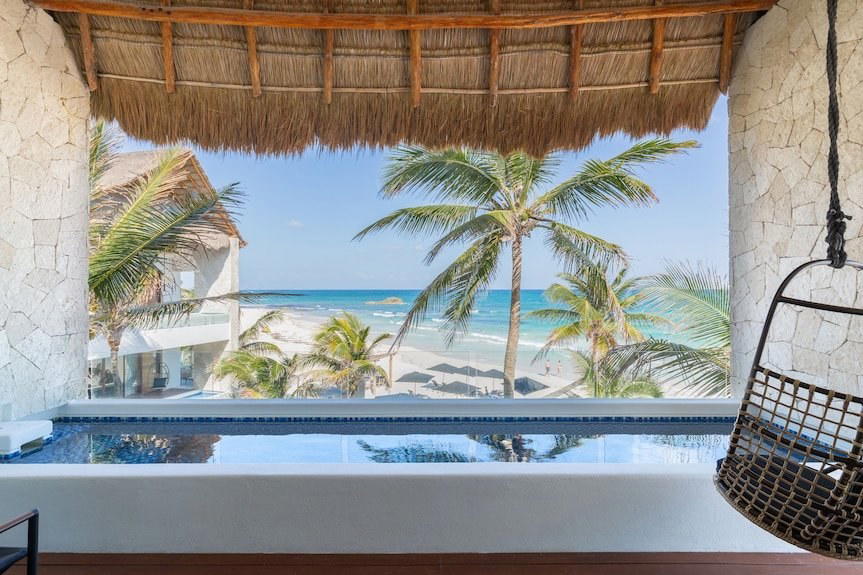
| Nômade Temple TulumThis venue — the venue you are viewing | Jungle-integrated eco-boutique with treehouses and private pool suites | $$$$ | 4-Star | Not listed |
| Ahau Tulum | Eco-friendly beachfront resort with rustic cabanas and barefoot sophistication | $$$$ | 4-Star | Tulum |
| Sanara Hotels & Residences | eco-boutique holistic retreat | $$$$ | 4-Star | Tulum |
| Chiringuito Tulum | Beachfront boutique with villa rental options | $$$$ | 4-Star | Tulum |
| La Valise Tulum | Artisanally-crafted beachfront villas blending jungle and sea. | $$$$ | 4-Star | Tulum |
| Sueños Tulum | Eco-friendly beachfront boutique resort with Mayan sanctuary vibe | $$$$ | 4-Star | Tulum |
Recognition history
Dated appearances from independent guides and award organizations, with the underlying list record or original source where available.
Mr & Mrs Smith Smith Seal of Approval
Mr & Mrs Smith
Michelin Selected
Michelin
At a Glance
- Bohemian
- Quiet
- Intimate
- Scenic
- Rustic
- Honeymoon
- Romantic Getaway
- Wellness Retreat
- Weekend Escape
- Beachfront
- Private Villa
- Infinity Pool
- Pool
- Spa
- Beach Access
- Wi Fi
- Waterfront
- Garden
- Pool
- Spa
- Beach Access
- Wi Fi
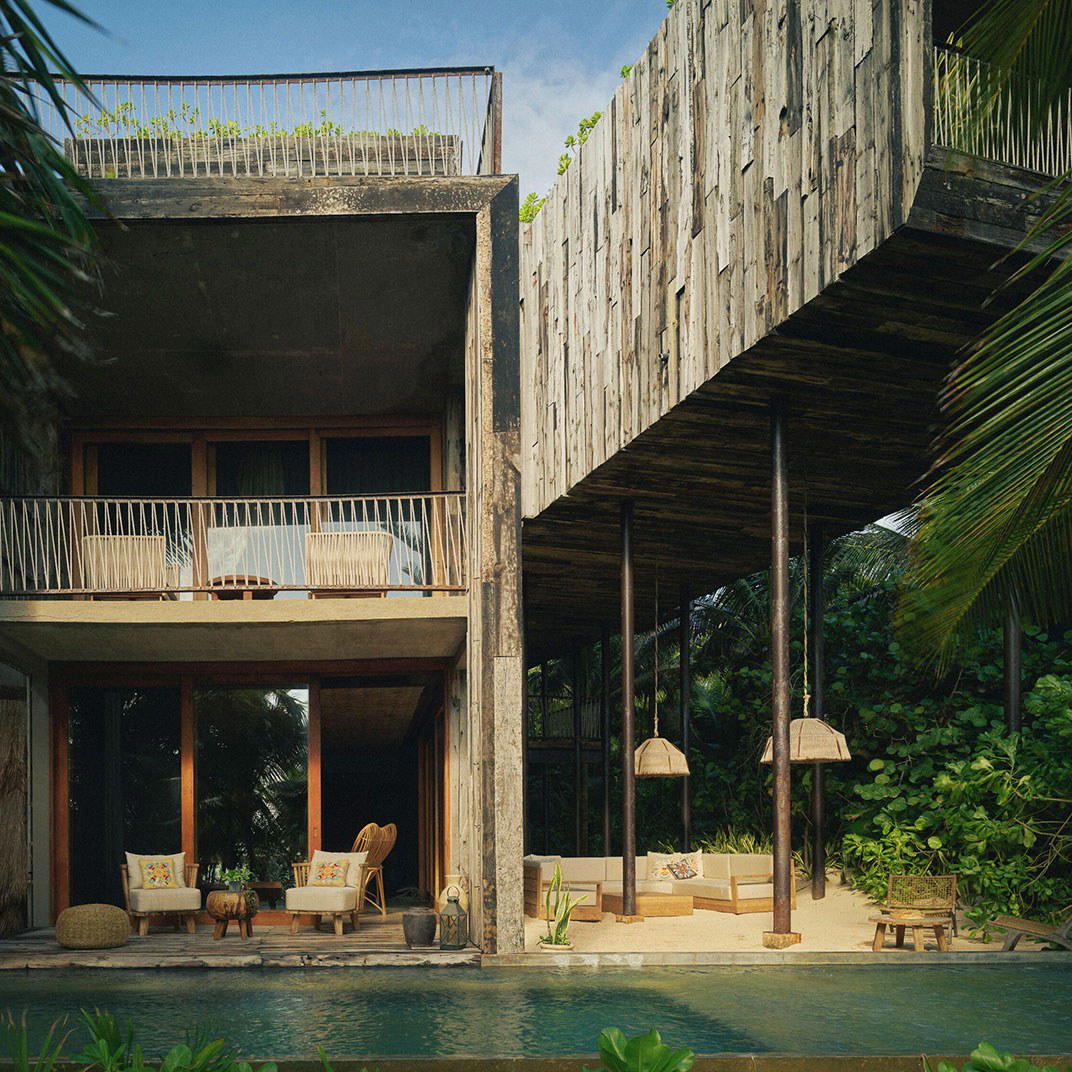
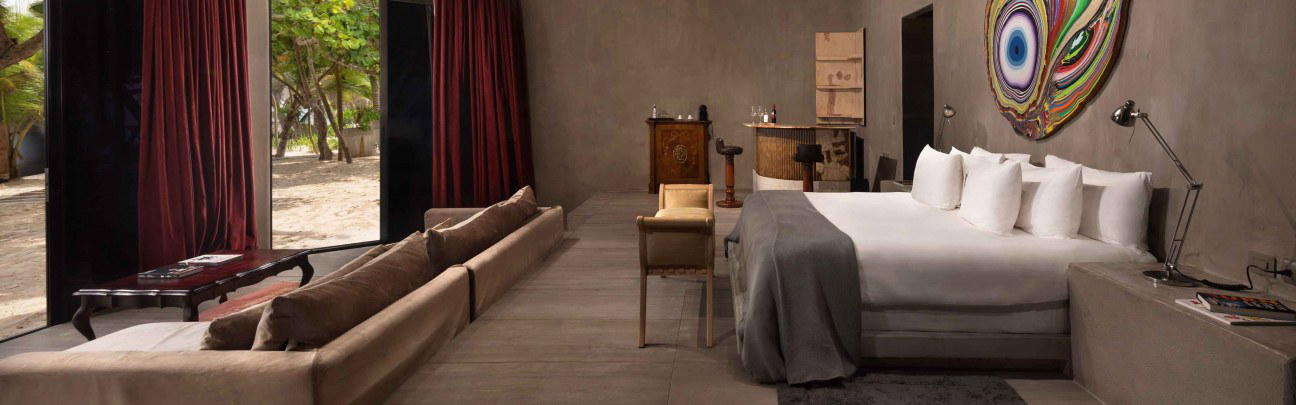
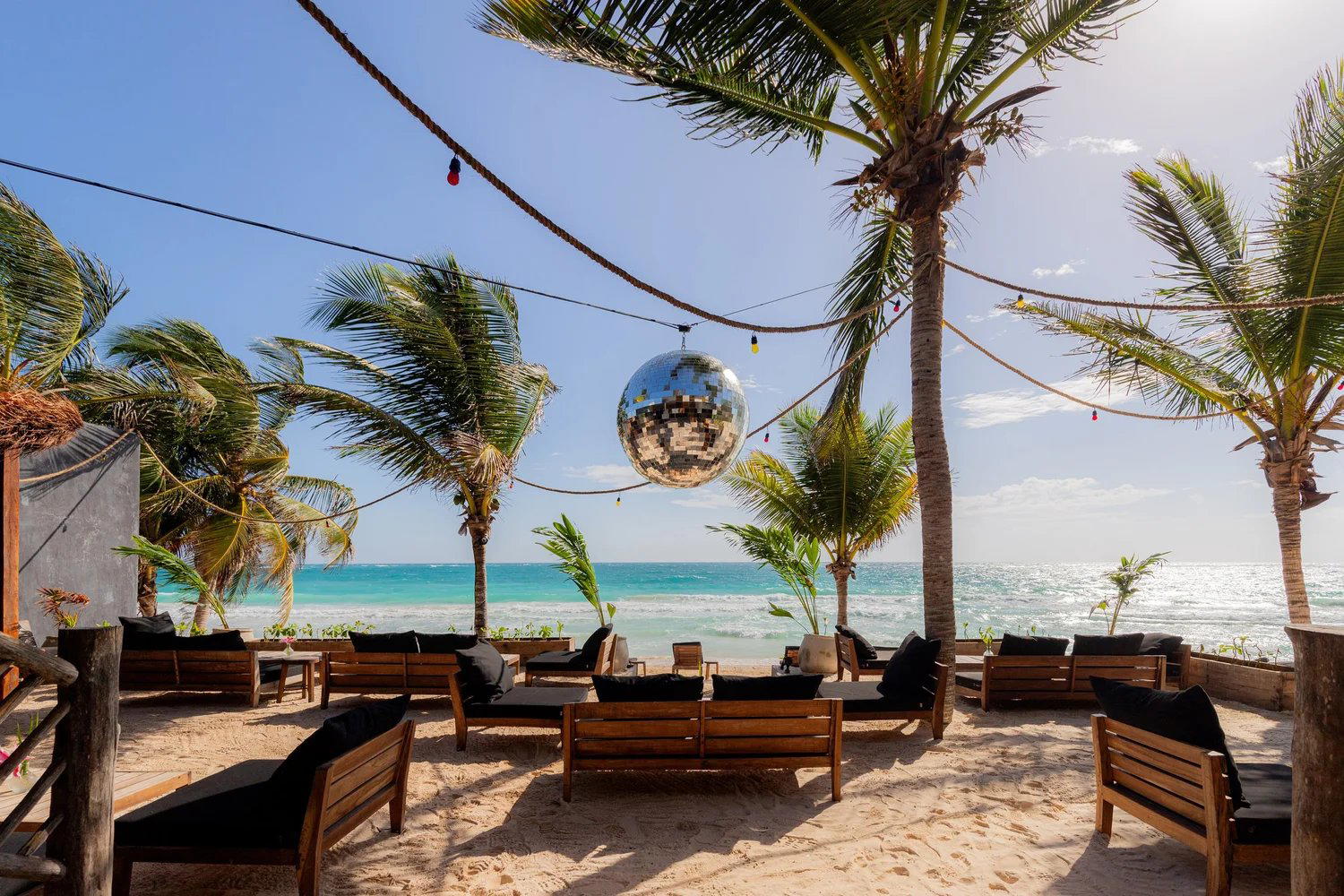
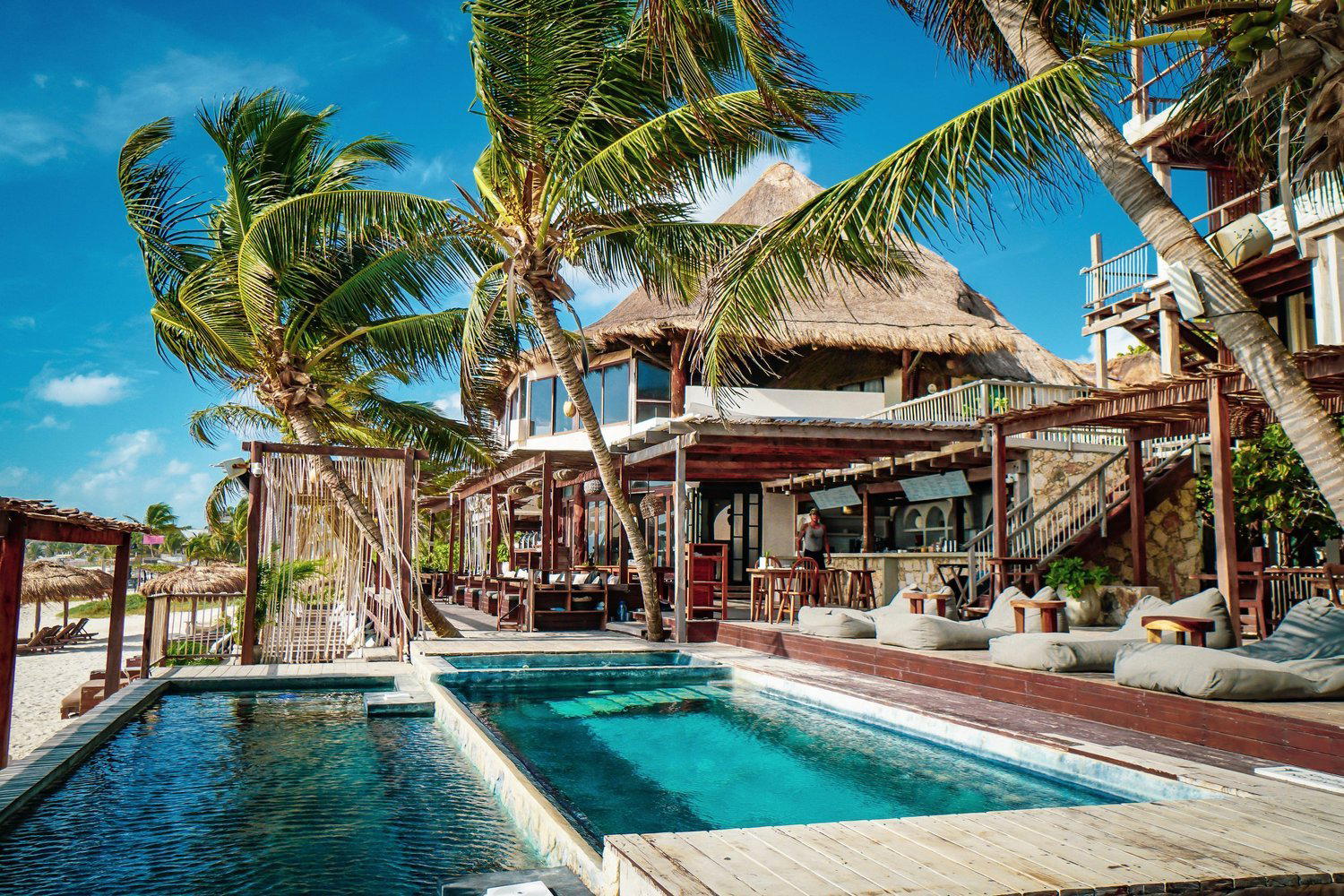
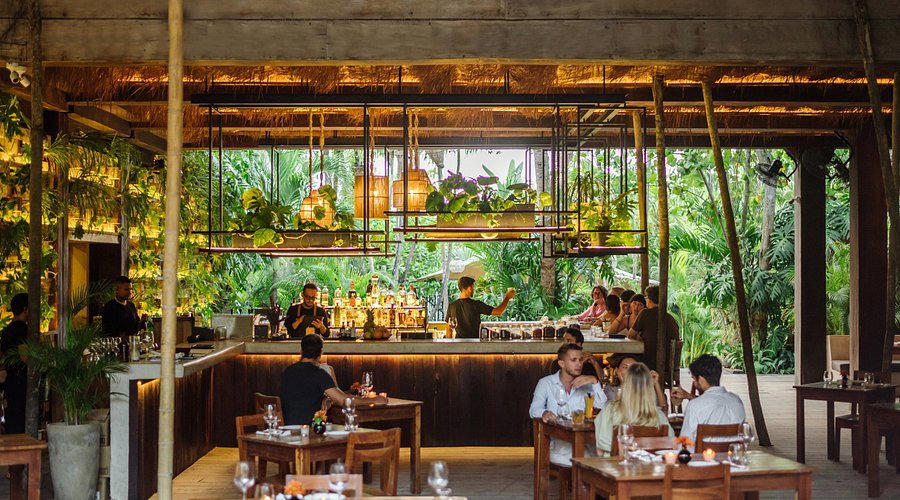
Peaceful jungle atmosphere with natural materials, lush gardens, and a homey-chic aesthetic blending Moroccan style and Tulum's bohemian vibe.