
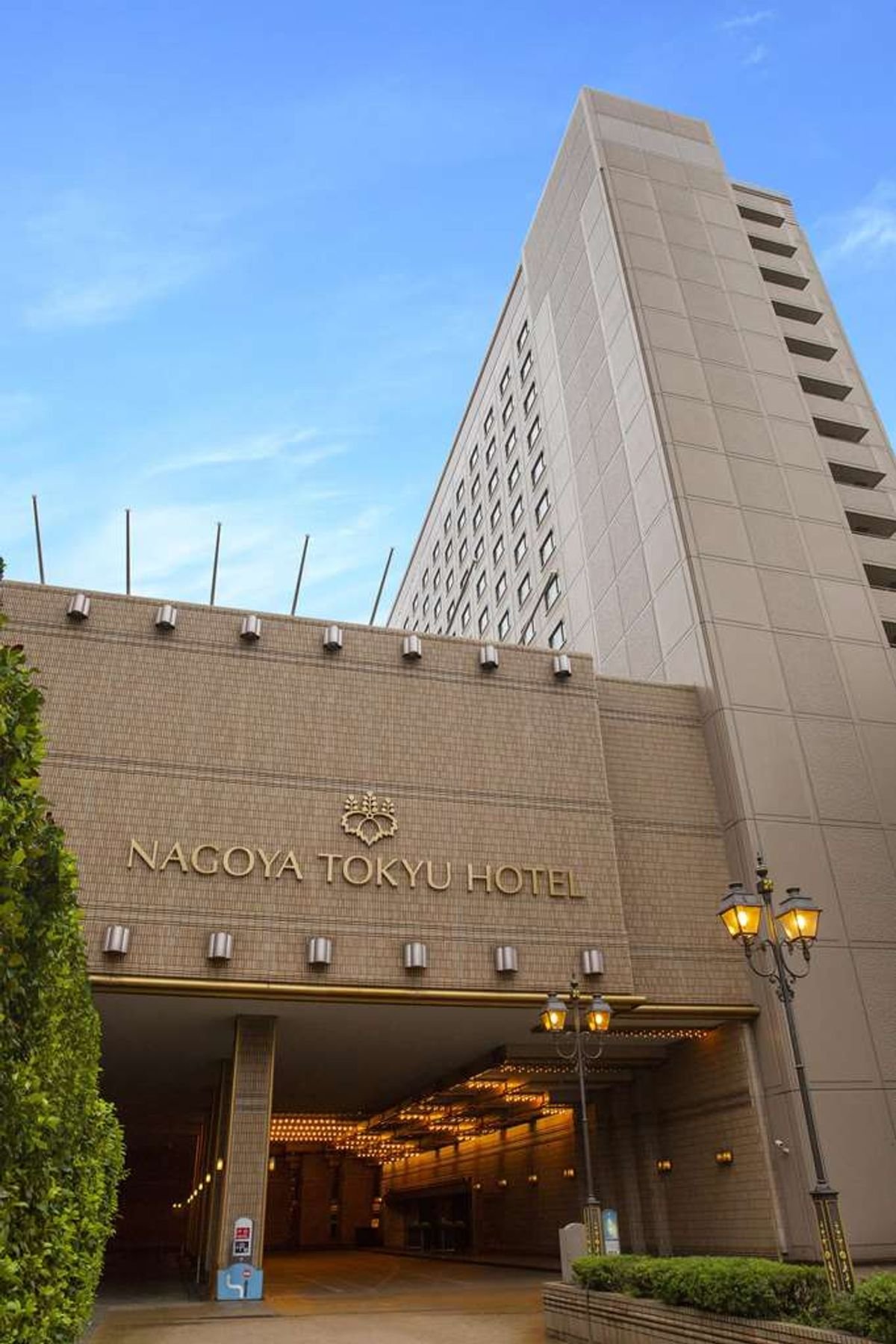
A 562-room city-centre property on Sakae, Nagoya Tokyu Hotel sits at the commercial and transit heart of one of Japan's most underestimated industrial cities. Its scale places it in a different tier from Nagoya's boutique and Michelin-keyed competitors, making it the practical anchor for business and leisure travellers who want central access without compromise.
Sakae's Commercial Core and Where the Tokyu Fits
Sakae is Nagoya's most concentrated urban district: department stores, underground shopping arcades, and transit connections radiating outward from its central intersection. A hotel at 4-chome-6-8 Sakae, Naka Ward puts guests within walking distance of Osu Kannon's covered shopping street, the Nagoya TV Tower, and the underground Sakae subway interchange. In a city where the distances between key sites are manageable on foot or via the Higashiyama and Meijo lines, address precision matters more than in looser-grid cities. Nagoya Tokyu Hotel occupies that address with 562 rooms, a footprint that signals a different operational philosophy from the smaller-key properties elsewhere in the city's hotel market.
Japan's major hotel groups have long operated urban towers in this category: large enough to absorb conference business, corporate travel, and leisure groups simultaneously, yet positioned to deliver the baseline service consistency that the Tokyu Hotels brand has built across its Japanese portfolio. That consistency is the product, rather than architectural drama or a single headline restaurant. Travellers choosing between this property and smaller competitors like TIAD, Autograph Collection or Espacio Nagoya Castle are essentially choosing between programmatic reliability and more curated, lower-capacity experiences. The Tokyu format answers a different question.
Scale, Service, and What 562 Rooms Actually Means
At 562 rooms, Nagoya Tokyu Hotel operates at a scale where service culture has to be systematised rather than personalised in the manner of a 30- or 50-key ryokan. Japan's large urban hotel sector has developed its own version of anticipatory service — the omotenashi tradition translated into standardised protocols rather than improvised hospitality. Front desk efficiency, luggage handling, multilingual signage, and in-room amenity consistency become the markers of quality at this scale, rather than the host-guest intimacy that defines properties like Nishimuraya Honkan in Kinosaki-cho or Asaba in Izu.
That distinction is not a criticism. The traveller arriving in Nagoya for a week of factory visits or supplier meetings in the automotive supply chain — Nagoya's dominant industry and the reason Toyota's global headquarters sits in nearby Toyota City , wants frictionless logistics over intimate ritual. Early check-in processing, reliable wake-up systems, accessible business facilities, and a breakfast operation that can turn over hundreds of covers efficiently are the real service tests at a property of this size. Tokyu Hotels' track record across its Japanese urban portfolio suggests these operational basics are well-managed.
For leisure travellers, the same scale offers a different kind of reassurance. Families managing children across a multi-city Japan itinerary, or groups splitting room costs, benefit from the breadth of accommodation configurations that a 562-room inventory makes possible. The comparison set here sits alongside The Tower Hotel Nagoya and Nagoya Kanko Hotel ESPACIO, both of which operate in Nagoya's upper-mid to full-service tier and provide a useful frame for understanding how the Tokyu positions itself in the local competitive market.
Nagoya as a Destination: The Case for Staying in Sakae
Nagoya sits between Tokyo and Kyoto on the Tokaido Shinkansen corridor, which has historically made it a stop rather than a destination for international travellers. That is shifting. The city's food culture, centred on miso katsu, hitsumabushi eel over rice, kishimen flat noodles, and the distinctively sweet-dark Nagoya-style cuisine called Nagoya-meshi, is developing a more serious critical profile. Our full Nagoya restaurants guide covers the range, from high-counter kaiseki to the teishoku lunch spots around Osu that have earned neighbourhood-level cult status.
The city's architectural draw has also grown. Nagoya Castle remains the centrepiece, with ongoing reconstruction of the Honmaru Palace's interior making repeat visits worthwhile. The Tokugawa Art Museum holds one of Japan's significant private collections of feudal-era objects. And the Atsuta Shrine, one of Shinto's most important sites, sits in the southern part of the city, accessible within 20 minutes from Sakae by subway. For travellers who have already done Tokyo's standard circuit and are considering their next Japanese itinerary, a Nagoya base makes geographic sense, particularly when combined with day trips to Ise-Shima or the Kiso Valley.
Properties like Amanemu in Mie sit close enough for overnight excursion planning from Nagoya. Travellers assembling multi-night Japan itineraries might also consider how a Nagoya stopover connects to ryokan stays at properties like Gora Kadan in Hakone or Fufu Kawaguchiko near Fujikawaguchiko, using Nagoya as an efficient transfer point on the Shinkansen axis. For those building itineraries that extend further, Benesse House on Naoshima or Halekulani Okinawa represent the further ends of a Japan journey anchored by a Nagoya city base.
The full range of what to do around a Nagoya stay is covered in our Nagoya experiences guide, with our Nagoya bars guide and our full Nagoya hotels guide providing additional context for planning across categories.
Planning Your Stay
Nagoya Tokyu Hotel's Sakae address gives guests direct access to the Sakae subway station, connecting to both the Higashiyama Line (west toward Nagoya Station, east toward Fujigaoka) and the Meijo Line (circular route serving the castle area and Kanayama). Nagoya Station, where the Tokaido Shinkansen stops, is approximately five minutes from Sakae by subway. Chubu Centrair International Airport connects to the city via the Meitetsu airport express, with Nagoya Station as the terminal point, placing the hotel roughly 45 minutes from the airport including the subway leg from Nagoya Station to Sakae.
At 562 rooms, availability at Nagoya Tokyu Hotel is generally more accessible than at smaller-key properties in Nagoya's upper tier, though the city's business travel calendar, centred on the automotive and manufacturing industry cycles, can create demand spikes around trade events and supplier conferences. Booking through the Tokyu Hotels programme is standard; the hotel's central location also makes it a logical choice for the first or last night of a broader Japan trip structured around Shinkansen travel, particularly for travellers routing between Tokyo and Kansai who want to build in a Nagoya night without booking complexity.
Travellers comparing options at the higher end of Japan's hotel market might also reference Bvlgari Hotel Tokyo, HOTEL THE MITSUI KYOTO, or ENOWA Yufu to understand the wider range of Japanese hospitality formats available across a multi-city itinerary. For those planning international extensions beyond Japan, Aman New York, The Fifth Avenue Hotel, and Aman Venice provide EP Club coverage for the other end of common Japan outbound routes. Additional winery and leisure resources for the broader Nagoya region are available via our Nagoya wineries guide.
Frequently Asked Questions
- What room should I choose at Nagoya Tokyu Hotel?
- With 562 rooms across a city-centre tower, higher floors will offer the clearest city views over Sakae's urban grid. Without published room-category data, the practical approach is to request an upper-floor room at booking or check-in. Business travellers should confirm whether club-floor or executive access is available, as Tokyu Hotels' urban properties typically offer enhanced floor access with lounge privileges that change the daily logistics of a multi-night stay.
- What is the standout thing about Nagoya Tokyu Hotel?
- The property's central strength is its location and scale in combination. Sakae is the most connected commercial district in Nagoya, and a 562-room inventory means the hotel can absorb different travel types without the booking pressure that affects smaller properties. In Nagoya's hotel market, where Michelin-keyed recognition has gone to properties like TIAD, Autograph Collection and The Tower Hotel Nagoya, the Tokyu positions itself on operational consistency and address quality rather than design or culinary distinction.
- How hard is it to get a room at Nagoya Tokyu Hotel?
- At 562 rooms, this is one of the larger hotel inventories in central Nagoya, which means availability is generally more manageable than at boutique or design-led properties in the city. The exception is peak business-travel periods tied to Nagoya's manufacturing and automotive industry calendar. Booking directly through Tokyu Hotels or a travel agent with access to the chain's inventory system is the standard approach. No specialist lead time is typically required outside of those demand peaks.
What It’s Closest To
These are the closest comparables we have in our database for quick context.
| Venue | Cuisine | Awards | Notes |
|---|---|---|---|
| Nagoya Tokyu Hotel | 562 Rooms | This venue | |
| The Tower Hotel Nagoya | Michelin 1 Key | Michelin 1 Key | |
| TIAD, Autograph Collection | Michelin 1 Key | Michelin 1 Key | |
| Espacio Nagoya Castle | |||
| Nagoya Kanko Hotel ESPACIO |
Preferential Rates?
Our members enjoy concierge-led booking support and priority upgrades at the world's finest hotels.
Access the Concierge