


Michelin Selected · World Luxury Hotel Awards WLHA Continent Winner · Gault & Millau Exceptional Hotel
A former 1930s Art Deco swimming complex in the 16th arrondissement, Molitor has been reborn as one of Paris's most architecturally distinctive hotel and spa properties. Its 2025 Gault & Millau five-point Exceptional Hotel designation and dual World Luxury Hotel Awards mark it as a reference point among heritage wellness stays in the French capital, sitting outside the Right Bank concentration where most palace-tier competitors cluster.

Pearl is the En Primeur Club membership app, where members save venues, book tables and use the concierge.
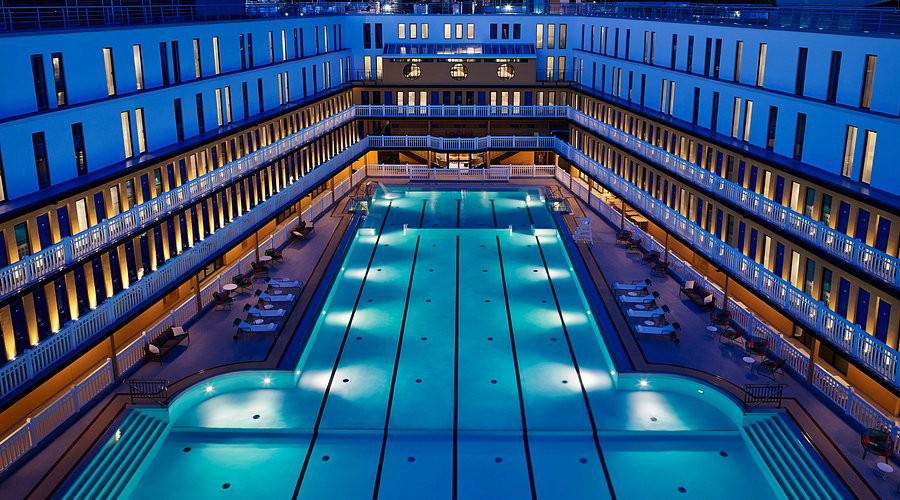
Water, Concrete, and the Logic of Reinvention
Paris's premium hotel stock divides broadly into two categories: the palace-tier properties of the 8th arrondissement Hotel Plaza Athénée, Four Seasons George V, Le Meurice, Hôtel de Crillon, and a smaller cohort of properties that derive their identity from architecture and neighbourhood rather than proximity to the Champs-Élysées. Molitor Hotel & Spa Paris belongs firmly to the second group. Built in 1929 as one of the most celebrated public swimming pools in Europe, the Piscine Molitor in the 16th arrondissement became a cultural marker long before it became a hotel: it was here, in 1946, that the bikini was reportedly first worn in public. After decades of closure and urban-legend status among Parisians, the complex was converted and reopened as a hotel. The pool halls remain. The painted murals survive. The Art Deco bones are intact. What the building communicates, architecturally, is something Paris's more conventional luxury hotels cannot replicate: the feeling that you are sleeping inside a civic monument rather than a purpose-built hospitality product.
The Wellness Case, Made in Concrete
Among Paris hotels that take a wellness-forward positioning, Molitor occupies a specific structural advantage: its spa is built around two actual pools, the indoor winter pool and the outdoor summer pool, both preserved from the original 1929 construction. This is not a wellness amenity bolted onto a hotel corridor. The aquatic infrastructure defines the property, and the spa programming operates accordingly, with the pool environment functioning as both the architectural centrepiece and the recovery anchor for guests. In the current wave of urban wellness travel, where hotels compete on treatment menus and therapist credentials, Molitor's differentiator is spatial: a 50-metre Art Deco pool hall is harder to replicate than any menu of massages.
For guests prioritising recovery, sleep quality, or decompression from a dense Paris schedule, the 16th arrondissement location reinforces the retreat logic. The neighbourhood is quieter than the central arrondissements, residential in character, with the Bois de Boulogne running immediately to the west. Early morning access to the pool, before the hotel's broader guest traffic builds, is the kind of timing detail worth factoring into your room booking and check-in time decisions. Contrast this with spa access at properties like Cheval Blanc Paris or La Réserve Paris, where the wellness offering is excellent but always secondary to the broader hotel programme. At Molitor, the spa and pool are the architectural premise, not a department.
Award Positioning and What It Signals
Molitor holds two World Luxury Hotel Awards designations: Regional Winner in the Luxury Heritage Hotel category and Continent Winner in the Luxury Event Hotel category. In 2025, Gault & Millau awarded it five points under its Exceptional Hotel classification. These are three distinct credentialing systems, and the combination is instructive. The Heritage Hotel designation confirms the property's architectural identity is being assessed and recognised on those specific terms, not merely as a boutique hotel with old bones. The Event Hotel continent-level win signals that the property's converted industrial spaces are functioning seriously for private and corporate programming, not just ambient use. The Gault & Millau five-point score places it in the same editorial framework as France's most closely watched food-and-hospitality properties, a designation that carries weight domestically even when the property in question is not primarily a restaurant.
At that sample size, the score is a reliable signal rather than a curated snapshot.
The 16th and What It Means for Your Stay
The 16th arrondissement is not where most first-time Paris visitors stay, and that is partly its appeal for a specific guest profile. The quarter runs along the Seine, contains the Palais de Chaillot, and borders the Bois de Boulogne, one of Paris's two large urban forests. It is a neighbourhood of broad avenues and relatively low ambient noise compared with the 1st or 8th. For guests whose Paris schedule centres on the Eiffel Tower (approximately 2 kilometres east), the Musée d'Art Moderne, or the Fondation Louis Vuitton, which opened in the Bois de Boulogne in 2014 and is a short walk or cycle from the hotel, the 16th location is logistically sound rather than peripheral. The trade-off is distance from the Right Bank concentration of three-Michelin-star dining. Guests planning heavy restaurant schedules involving properties like Le Bristol Paris or the institutions around the 1st should factor in the metro or taxi time. The Jasmin and Michel-Ange stations on Line 9 connect the neighbourhood to central Paris in under twenty minutes.
Heritage Hotels as a Category
Across France, a small number of properties have successfully converted civic or industrial architecture into functioning luxury hospitality without erasing the original spatial logic. Les Sources de Caudalie in Bordeaux built its identity around vineyard immersion; Domaine Les Crayères in Reims occupies a Belle Époque château; La Bastide de Gordes in Gordes adapts a Renaissance village structure. Each of these works because the architecture is not decorative overlay but structural premise. Molitor belongs in that list. The decision to preserve the pool hall as the central experience rather than subdivide it into more commercially efficient space was a material commitment, and it is what separates the property from hotels that use Art Deco detailing as aesthetic branding. Internationally, properties like Aman Venice demonstrate that the most durable luxury hotel identities are those where the building's original function is legible in how guests actually use the space.
For those comparing Molitor against French alternatives in the wellness-led heritage category, Royal Champagne Hotel & Spa in Champillon and La Réserve Ramatuelle in Ramatuelle offer comparable spa-forward positioning with strong architectural identity, though in radically different geographic contexts. A historic aquatic complex as spa anchor is structurally distinct.
Know Before You Go
Address: 16 Avenue de la Porte Molitor, 75016 Paris
Awards: Regional Winner, Luxury Heritage Hotel; Continent Winner, Luxury Event Hotel; Gault & Millau Exceptional Hotel 2025 (5 points)
Guest Rating:
Neighbourhood: 16th arrondissement, bordering the Bois de Boulogne; quieter residential character versus central Paris hotels
Transport: Line 9 (Jasmin or Michel-Ange stations) connects to central Paris in approximately 20 minutes
Nearby: Fondation Louis Vuitton (walking distance), Musée d'Art Moderne, Palais de Chaillot, Eiffel Tower (approx. 2km east)
Pool access: Two original pools from 1929 construction, indoor and outdoor, central to the spa and guest experience
Leading for: Guests prioritising wellness, aquatic access, and architectural heritage over Right Bank proximity
Explore more: See our full Paris restaurants and hotels guide for the broader city picture
At-a-Glance Comparison
Comparable venues nearby, for context on price, style, and recognition.
| Venue | Cuisine | Price | Awards | Notes |
|---|---|---|---|---|
| Molitor Hotel & Spa Paris - MGallery CollectionThis venue (the venue you are viewing) | Historic Art Deco urban resort with modern spa facilities | $300–500 | Michelin Selected · World Luxury Hotel Awards WLHA Continent Winner | Not listed |
| L’Hotel du Collectionneur | Belle Époque luxury palace with Art Deco design elements, positioned as a refined and sophisticated urban retreat near well-known Paris landmarks. | Not listed | Forbes Recommended · World Luxury Hotel Awards WLHA Country Winner | 8th arrondissement (Rue de Courcelles, near Parc Monceau) |
| San Régis Paris | 19th-century private mansion restored with period furniture and lavish decorations | $500–750 | Michelin Selected · La Liste Top Hotels | 8th arrondissement |
| Hôtel Splendide Royal Paris | Luxury boutique hotel blending Italian design sensibility with Parisian elegance; positioned as a 'pocket-sized family palace' emphasizing personalized service and refined comfort. | $750–1,000 | Michelin Selected · Relais Chateaux Award | 8th arrondissement (Rue Saint-Honoré area) |
| Hôtel de Crillon, A Rosewood Hotel | Contemporary luxury within an 18th-century palace; a marriage of historical architectural grandeur with modern residential elegance and refined amenities. | $1,000–1,500 | 2 Michelin Keys · Star Wine List | Place de la Concorde |
| Hotel Lancaster | Well-known 5-star luxury townhouse with classic Parisian elegance and contemporary amenities, positioned as a private home experience rather than a corporate hotel. | $500–750 | Michelin Selected · Star Wine List | 8th Arrondissement (Champs-Élysées) |
Recognition history
Dated appearances from independent guides and award organizations, with the underlying list record or original source where available.
Michelin Selected
Michelin
Gault & Millau Exceptional Hotel
Gault & Millau
World Luxury Hotel Awards WLHA Continent Winner
World Luxury Hotel Awards
Full recognition history (4 entries)
World Luxury Hotel Awards WLHA Regional Winner
World Luxury Hotel Awards
Continue exploring
More in Paris
Hotels in Paris
All hotels in Paris →
Bars in Paris
All bars in Paris →
Details
- Elegant
- Modern
- Sophisticated
- Well Known
- Romantic Getaway
- Wellness Retreat
- Business Trip
- Rooftop Pool
- Infinity Pool
- Destination Spa
- Terrace
- Historic Building
- Pool
- Spa
- Fitness Center
- Room Service
- Concierge
- Restaurant
- Wi Fi
- Valet Parking
- EV Charging
- Wheelchair Accessible
- Step Free Entrance
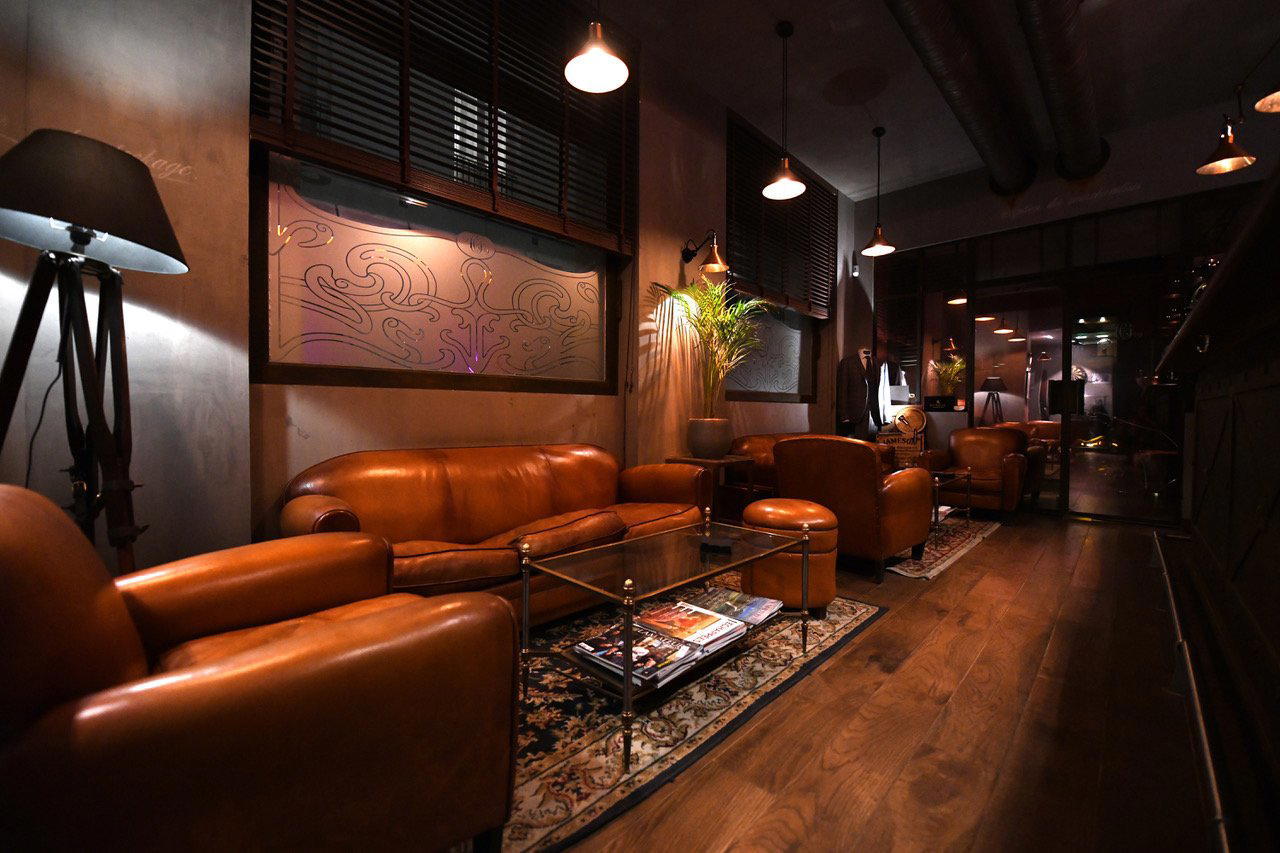
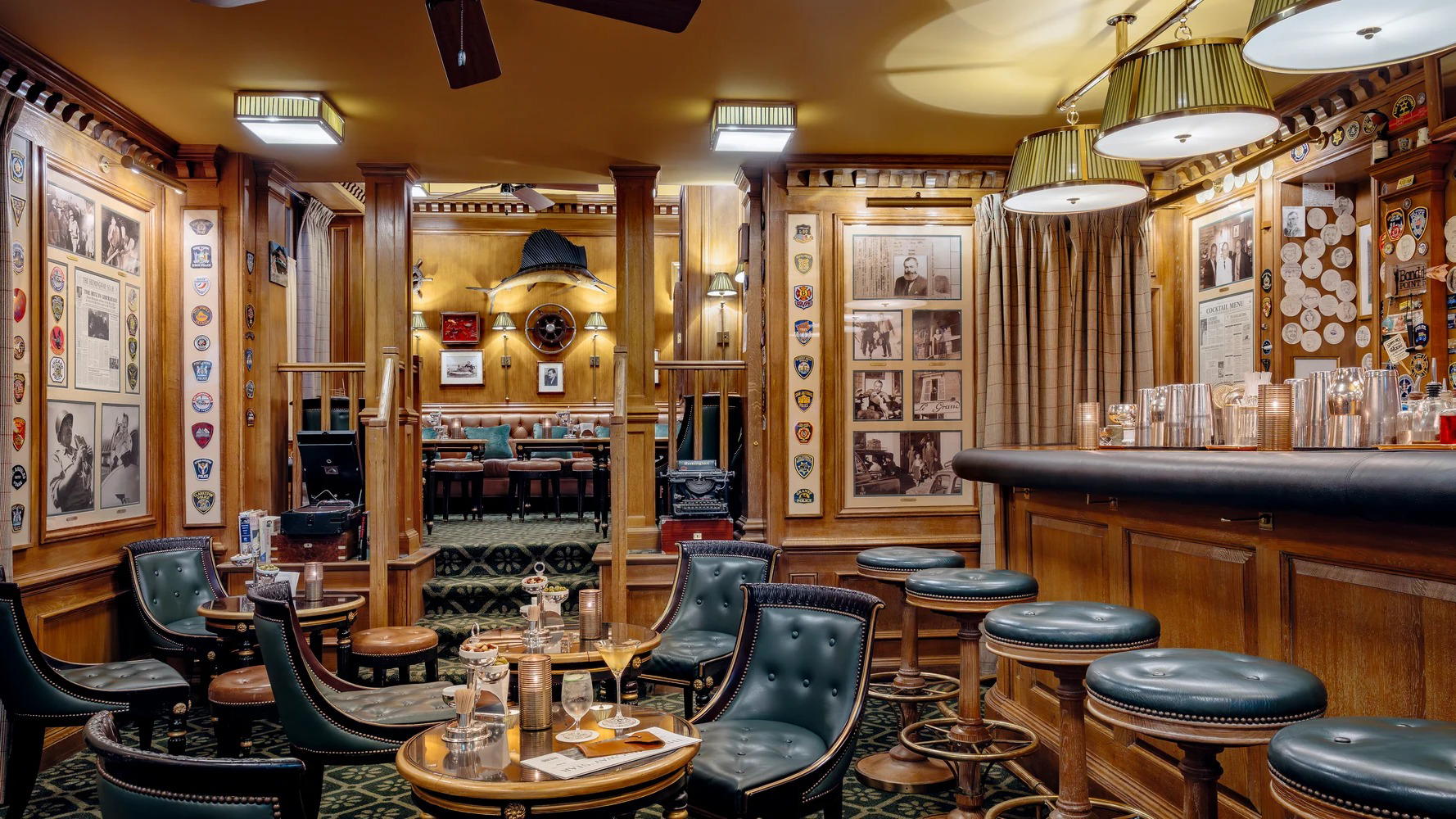
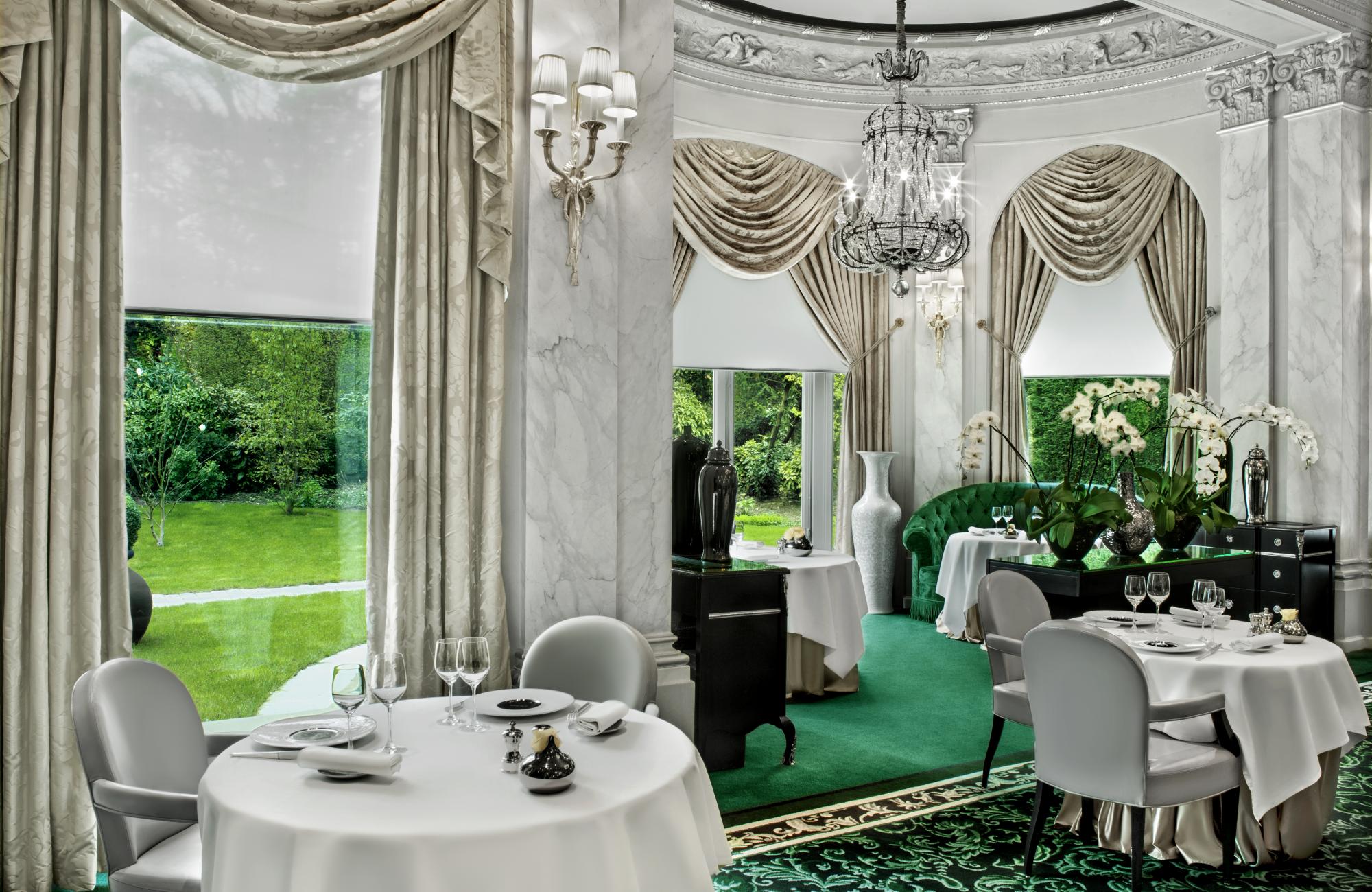
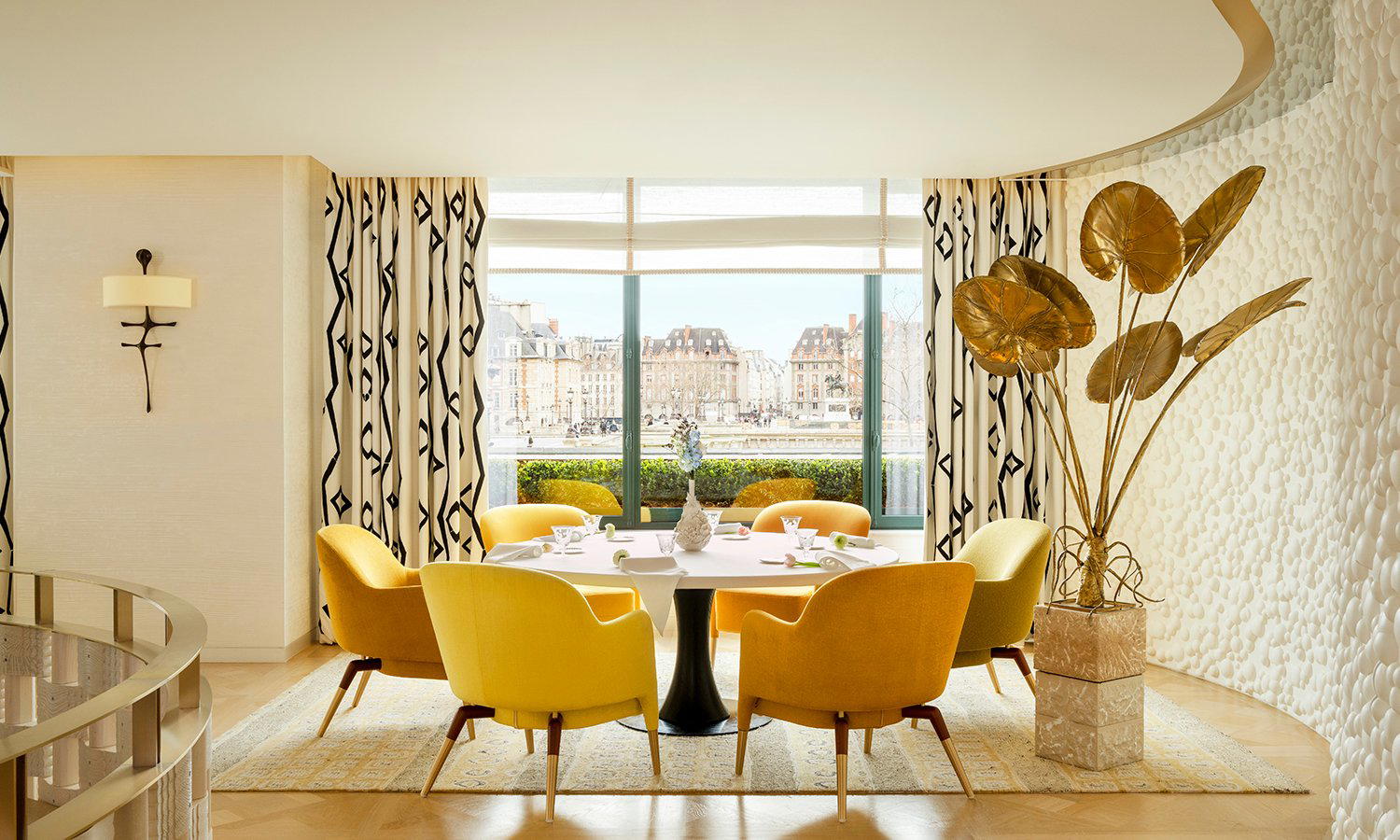
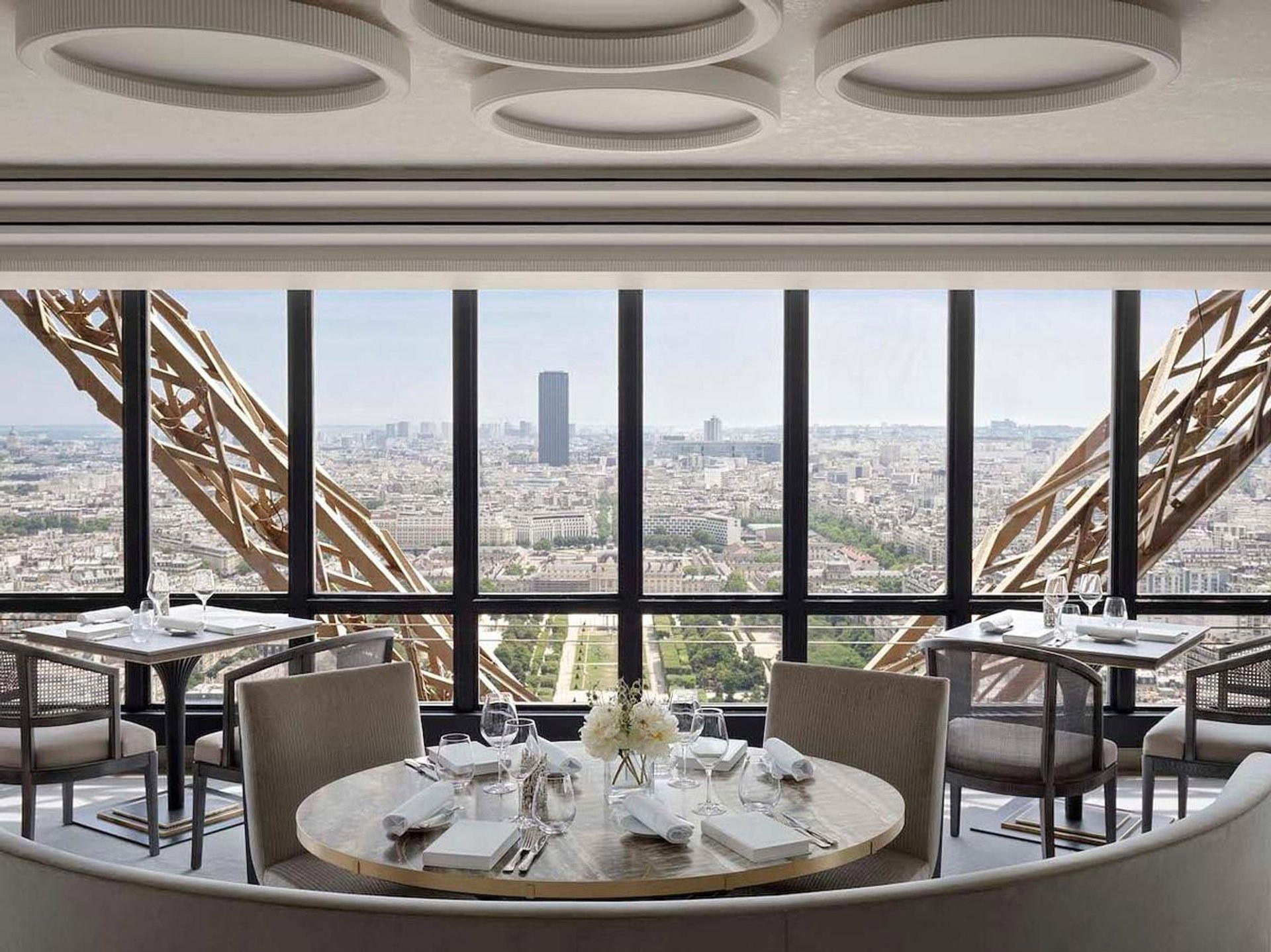
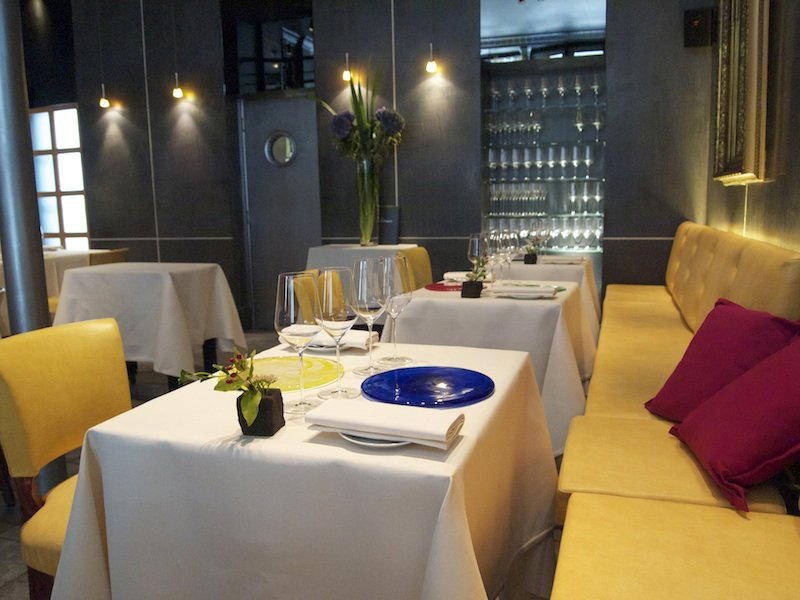
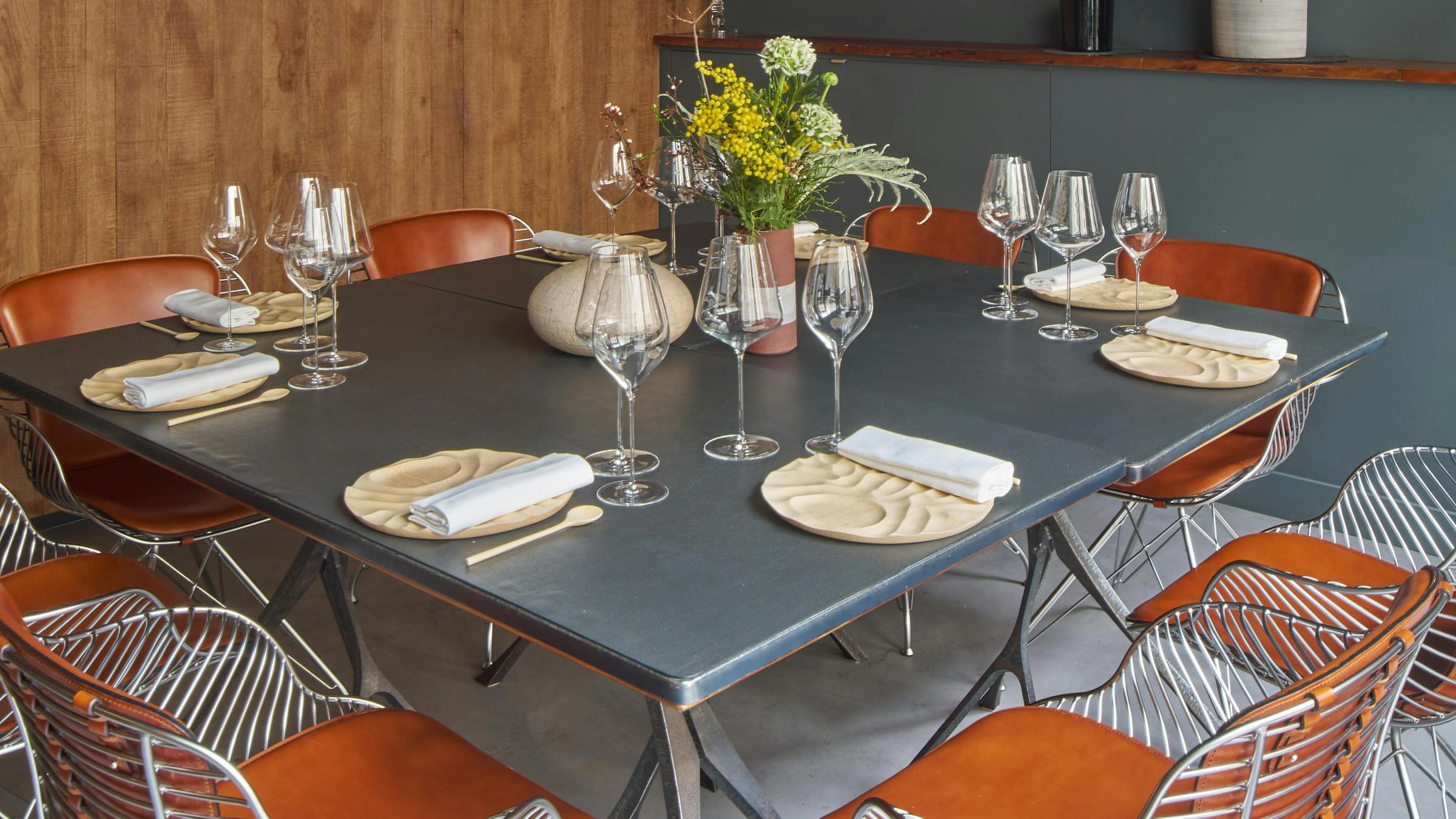
Elegant and relaxed atmosphere with contemporary style accented by Art Deco heritage, pool views, and a lively yet sophisticated vibe.