
Michelin Selected
A medieval merchant's townhouse converted into a Michelin Selected hotel on Figeac's rue Émile Zola, the Mercure Viguier du Roy positions itself as the most architecturally grounded address in a town that takes its built heritage seriously. Stone vaulting, exposed timber, and a sequence of historic rooms make it the natural base for visitors tracing the Lot Valley or the Champollion connection.

Pearl is the En Primeur Club membership app — saves, bookings, and concierge access live there. Same editors, same standards.
- Address
- 52 Rue Emile Zola, 46100 Figeac, France
- Phone
- +33 5 65 50 05 05
- Website
- mercure-viguierfigeac.com
- Directions
- Get directions
Medieval Stone and a Town That Earns Attention
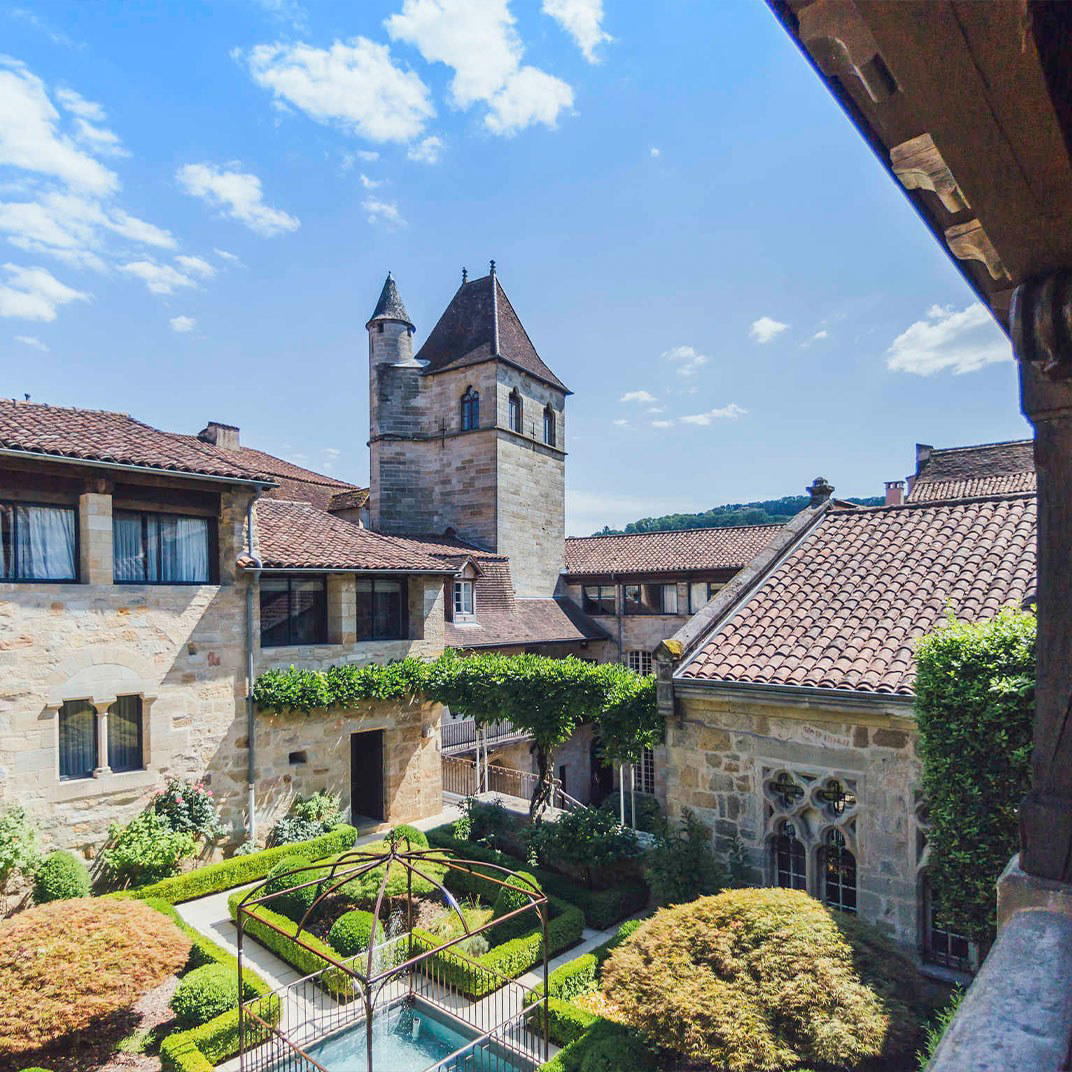
Figeac occupies an unusual position among France's medieval towns. Small enough to walk entirely in an afternoon, it has the density of architectural detail — Romanesque soleilhos, sandstone arcades, carved consoles — that larger tourist circuits overlook in favour of Cahors or Rocamadour. The Mercure Viguier du Roy sits at 52 rue Émile Zola inside one of those medieval townhouses that Figeac treats as ordinary and visitors find quietly arresting. The building has the bones of a former viguier's residence, meaning it carries centuries of civic weight in its stone, and the conversion into a hotel has preserved enough of that structure to make the architecture the main event rather than a backdrop.
That approach places this property in a specific category of French regional hotel: the adaptive reuse of a historic building where the fabric of the original construction does more work than any decorator could. Compared to the purpose-built rural luxury of La Bastide de Gordes or the grand-palace scale of Hôtel du Palais in Biarritz, this property is operating at a different register entirely: quieter, more intimate, and rooted in local context rather than imported grandeur. The Michelin Selected designation for 2025 signals that the quality floor is reliable without placing it in the same orbit as Michelin-starred properties such as Domaine Les Crayères in Reims or Royal Champagne Hotel and Spa.
What the Architecture Actually Delivers
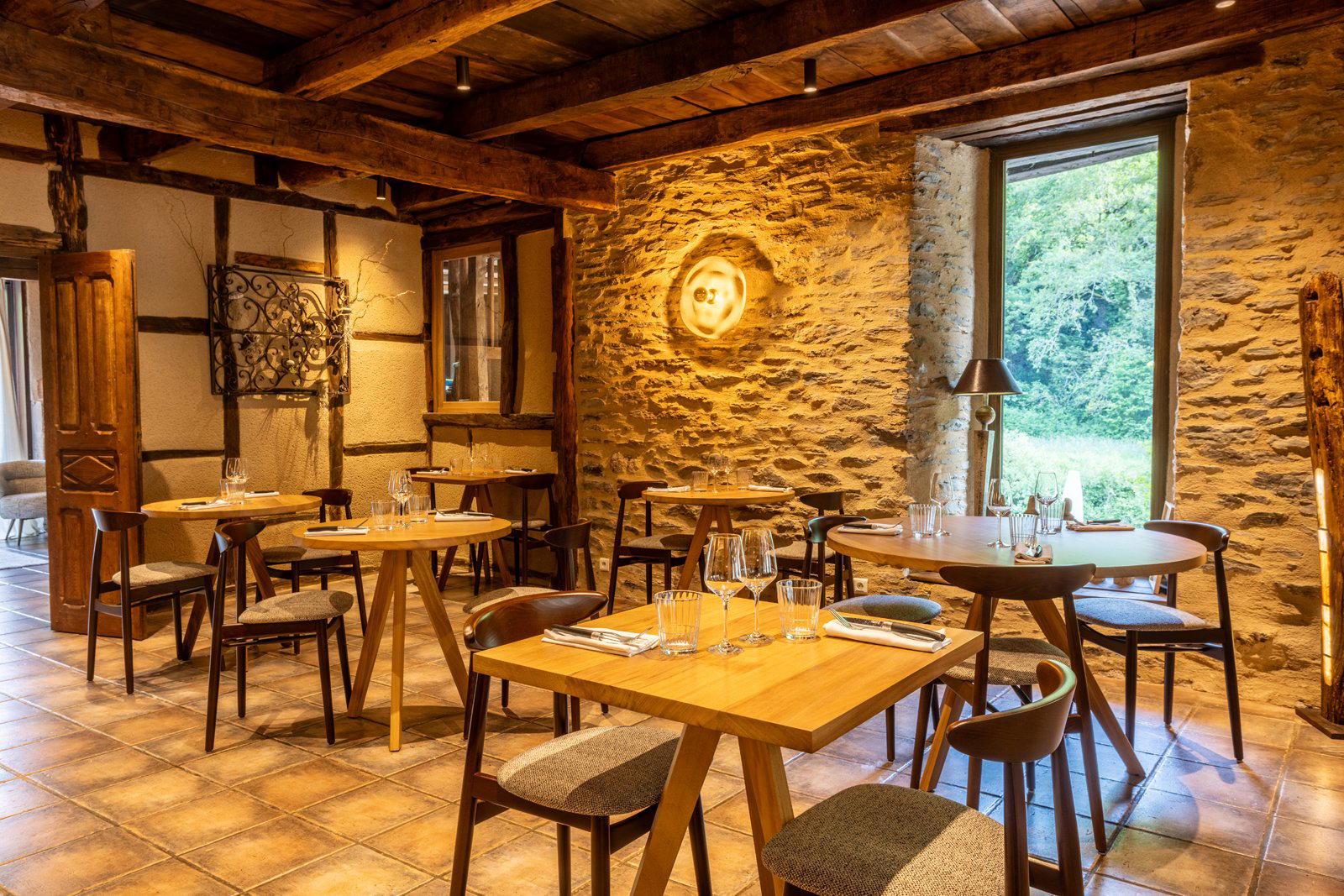
The physical experience of a converted medieval structure in southern France follows a recognisable logic: irregular room proportions, vaulted ceilings in certain ground-floor spaces, and stonework that has absorbed centuries of Quercy light and shadow. The Viguier du Roy's townhouse origin means guests move through spaces that were never designed for hospitality in any modern sense, which produces a kind of spatial surprise that standardised hotel construction cannot replicate. Low-arched doorways, a courtyard arrangement, and the characteristic pale golden stone of the Lot region define the aesthetic identity here.
This is not the same as the seamless historic conversion achieved at Château du Grand-Lucé or the polished estate atmosphere of Villa La Coste. The Mercure brand affiliation introduces a degree of chain standardisation that sits alongside rather than inside the historic shell. Travellers who have stayed at Hôtel Chais Monnet and Spa in Cognac or La Ferme Saint-Siméon in Honfleur, both properties where historic conversion is more total, will notice the difference in approach. What the Mercure affiliation does provide is consistency of service standards and booking infrastructure that independent medieval hotels in towns this size often cannot match.
Figeac as a Destination: The Context Around the Hotel
Arriving in Figeac requires a decision about priorities. The town's Champollion Museum, Jean-François Champollion, the decoder of the Rosetta Stone, was born here, anchors one kind of visit, while the Lot Valley trails and the proximity to Rocamadour and Conques anchor another. Figeac is also a staging point for the GR65 pilgrimage route, which brings a particular demographic through town in spring and summer, and the medieval quarter sees meaningful visitor traffic during those months without reaching the saturation of better-known Dordogne towns.
The hotel's position on rue Émile Zola places it within walking distance of the old town's main concentration of restaurants, the Saturday market, and the Champollion museum complex. For visitors approaching from Toulouse, Figeac is roughly two hours by road; from Paris, the most practical route involves a TGV to Brive-la-Gaillarde followed by a regional train or car hire. The hotel's address in the old town eliminates the need for a car once you've arrived, which in a medieval town of this compactness is a genuine practical advantage. See our full Figeac restaurants guide for where to eat during your stay.
Where This Property Sits in the French Hotel Market
The Michelin Selected category in 2025 covers a broad range of French accommodation, from auberges in wine country to urban boutique hotels. Selection indicates that Michelin's inspectors found the property worth recommending, but it carries none of the formal distinction hierarchy of the Michelin hotel stars that apply to properties like Le Bristol Paris or Hotel Du Cap-Eden-Roc.
The town simply does not have a deep field of comparable hotels, which means this property functions as the default reference point for visitors who want a reliable, well-located base with genuine historic character rather than a countryside estate experience. Properties seeking the estate format in the same broad region should look at Baumanière Les Baux-de-Provence or Château de la Gaude in Aix-en-Provence. For those whose priority is the Lot Valley and the medieval towns of the Quercy, Viguier du Roy is the anchoring address.
Planning Your Stay
Bookings can be made through the Mercure group's standard reservation channels, which means loyalty programme integration for Accor members and a degree of booking flexibility that independent properties in this category often lack. The town's key visiting seasons run from late April through October, with July and August bringing the highest visitor density to the old quarter. Spring visits in May and June offer the medieval streetscape at its least crowded while maintaining reliable weather for the valley trails. Autumn stretches the season further for those following the Lot River corridor or the pilgrimage route.
For travellers building a longer French itinerary, Figeac works well as a mid-point between the Atlantic coast wine country, where Les Sources de Caudalie represents the estate standard, and the Mediterranean properties of the south, from The Maybourne Riviera to Casadelmar in Porto-Vecchio. Its position in inland Occitanie makes it a counterweight to the coastal concentration of premium French hotel options, and the architectural logic of the building rewards the detour.
Comparison Snapshot
Comparable venues nearby, for context on price, style, and recognition.
| Venue | Cuisine | Price | Awards | Notes |
|---|---|---|---|---|
| Mercure Figeac Viguier du RoyThis venue — the venue you are viewing | Historic castle with modern comforts in a family home atmosphere | Not listed | Michelin Selected | Not listed |
| L'Amirauté Brest | Refined contemporary hotel with simple and elaborate decoration in sober neutral tones. | $1–100 | Michelin Selected | Downtown Brest |
| Joyet de Maubec | Contemporary classic in a historic 16th-17th century manor | $100–200 | Michelin Selected | vieille ville d'Uzerche |
| mk2 Hotel Paradiso Nation | Cinema-themed boutique hotel integrated with multiplex cinema. | Not listed | Michelin Selected | 12th Arr. |
| Hôtel Filigrane | Intimate 4-star Parisian boutique with an underground spa and a strong neighborhood-inspired identity around the Bourse and Bibliothèque de France. | Not listed | Not listed | 2nd arrondissement |
| Le Pic Blanc | Modern chalet-style ski resort hotel | Not listed | Michelin Selected | Les Bergers |
Recognition history
Dated appearances from independent guides and award organizations, with the underlying list record or original source where available.
Michelin Selected
Michelin
Continue exploring
More in Figeac
Details
- Romantic
- Classic
- Elegant
- Cozy
- Scenic
- Romantic Getaway
- Family Vacation
- Weekend Escape
- Historic Building
- Terrace
- Garden
- Wi Fi
- Pool
- Restaurant
- Room Service
- Meeting Rooms
- Bar
- Sauna
- Air Conditioning
- Garden
- Wheelchair Accessible
- Elevator
Contemporary lighting and refined, intimate atmosphere within ancient stone walls and courtyards, praised for its stylish medieval-modern fusion.