



1 Michelin Key · Mr & Mrs Smith Seal of Approval · Virtuoso Luxury Hotel Partner
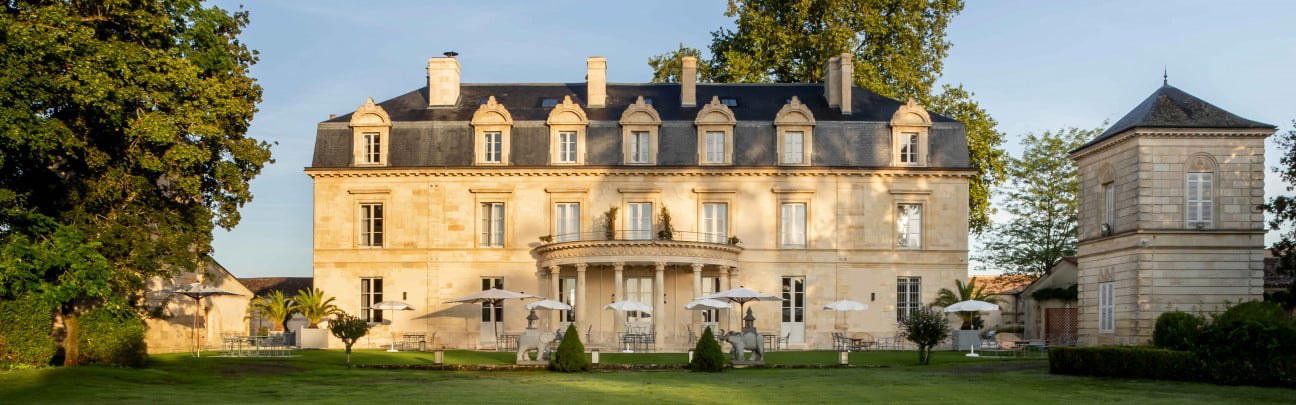
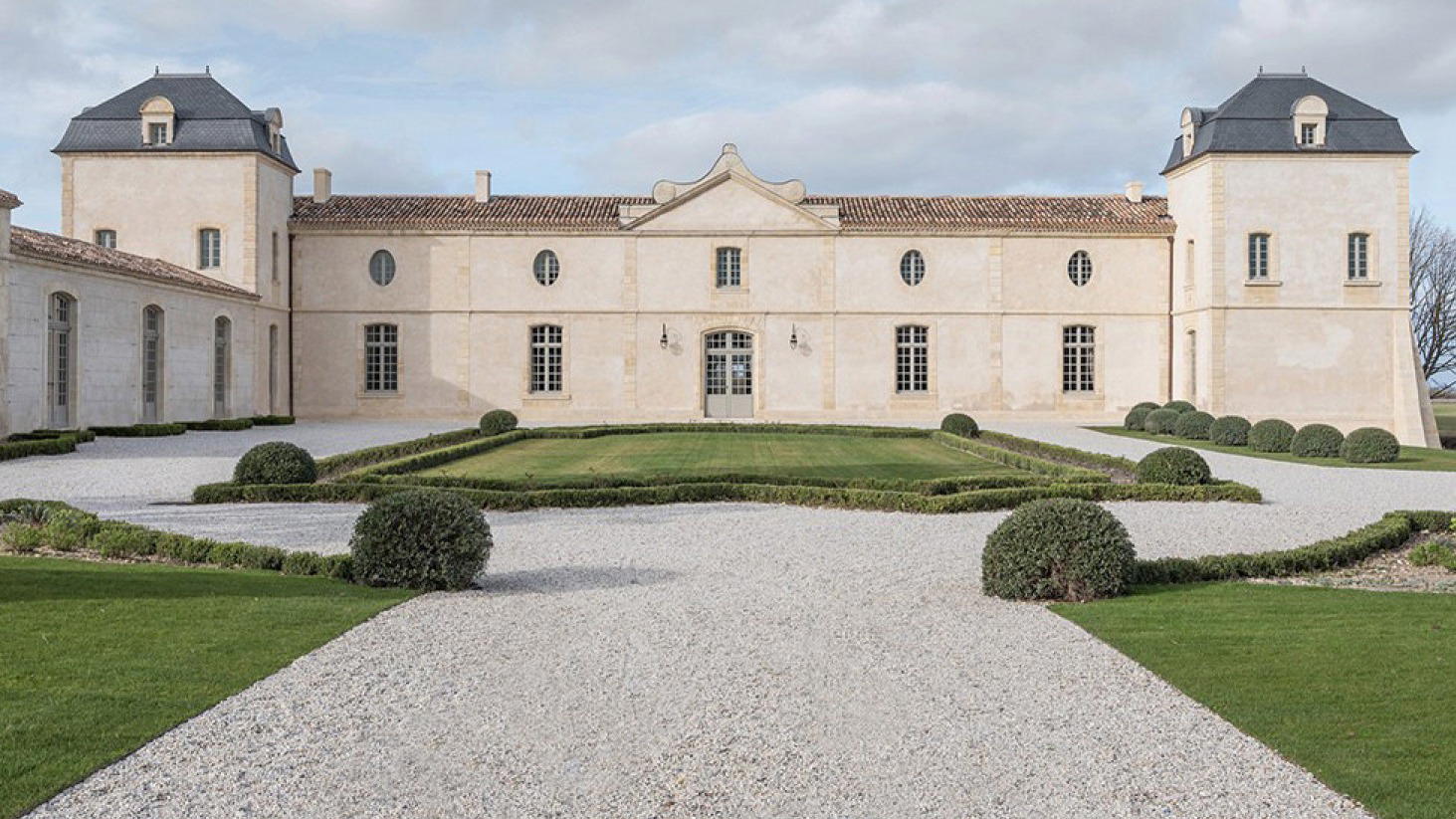
A former Cognac distillery converted by architect Didier Poignant into a five-star hotel, Hôtel Chais Monnet & Spa occupies two hectares on the Charente River with 92 rooms, a Michelin-starred restaurant, and four distinct drinking and dining spaces built inside heritage industrial structures. Gault & Millau awarded it Exceptional Hotel status in 2025, placing it at the top of Cognac's accommodation tier.

Pearl is the En Primeur Club membership app — saves, bookings, and concierge access live there. Same editors, same standards.
- Address
- 50 Av. Paul Firino Martell, 16100 Cognac
- Phone
- +33 5 17 22 32 23
- Website
- chaismonnethotel.com
- Directions
- Get directions
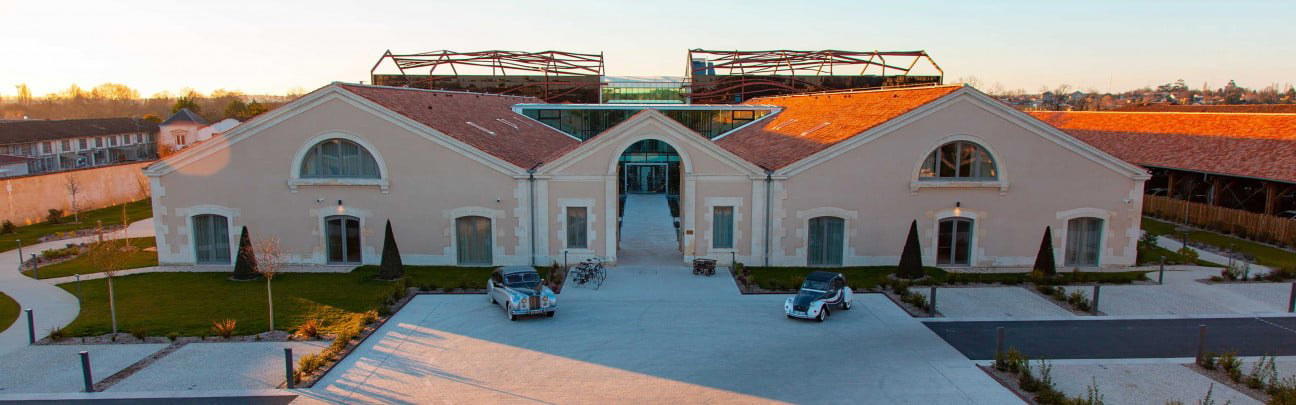
Where Cognac's Industrial Heritage Becomes a Hotel
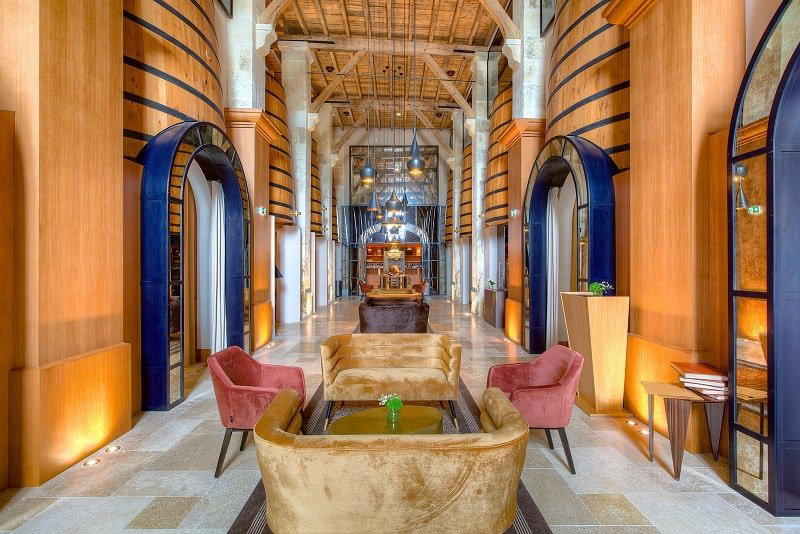
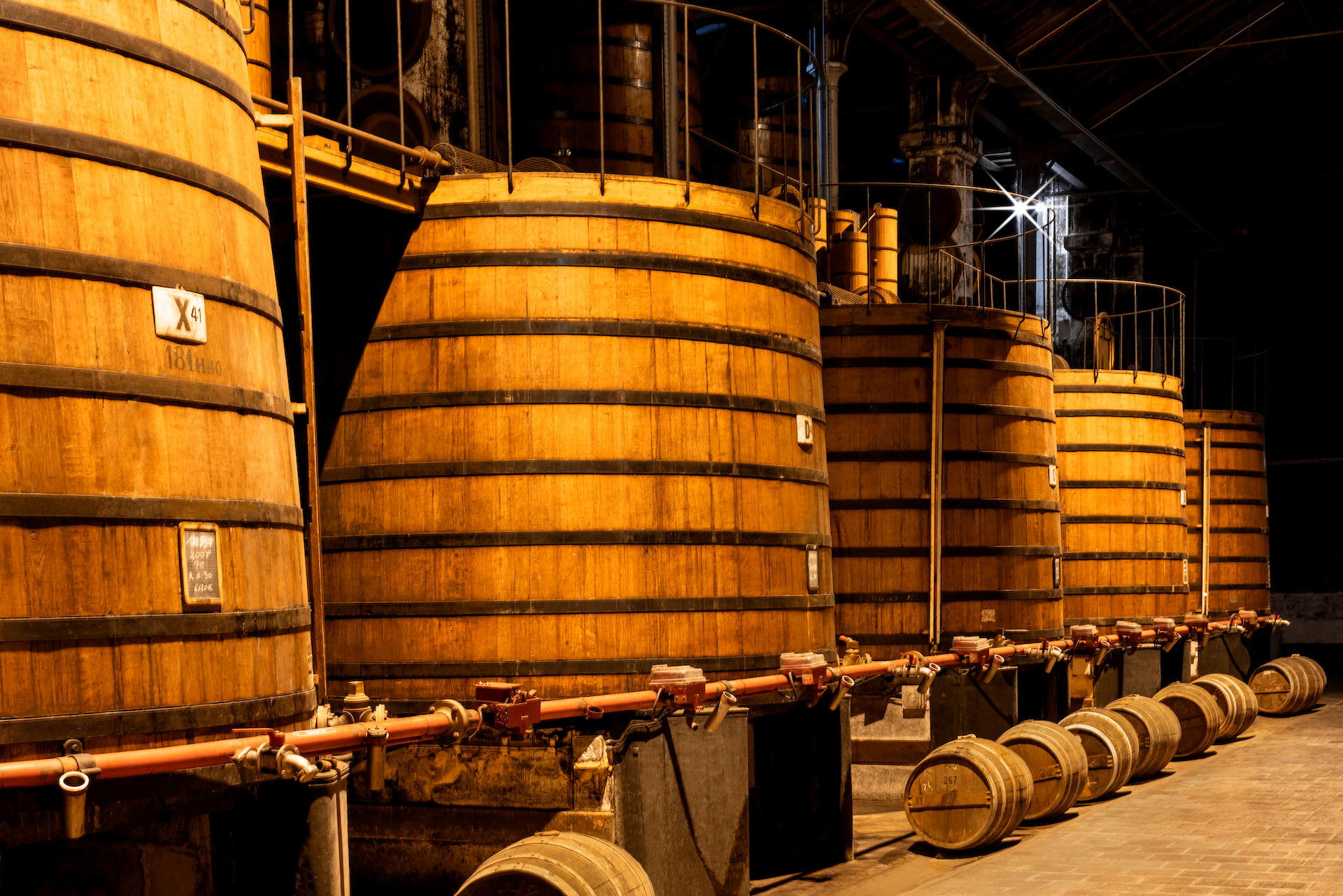
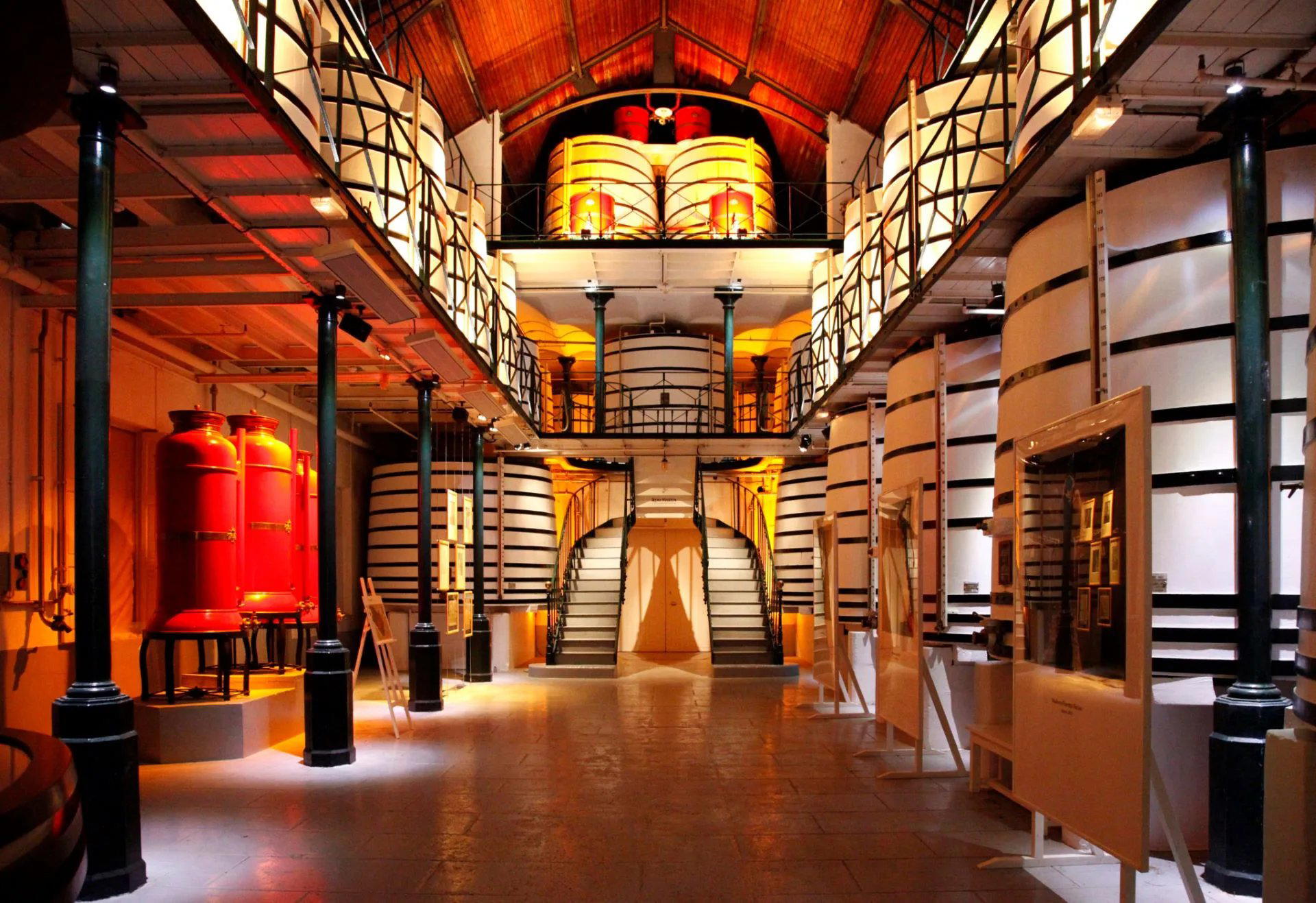
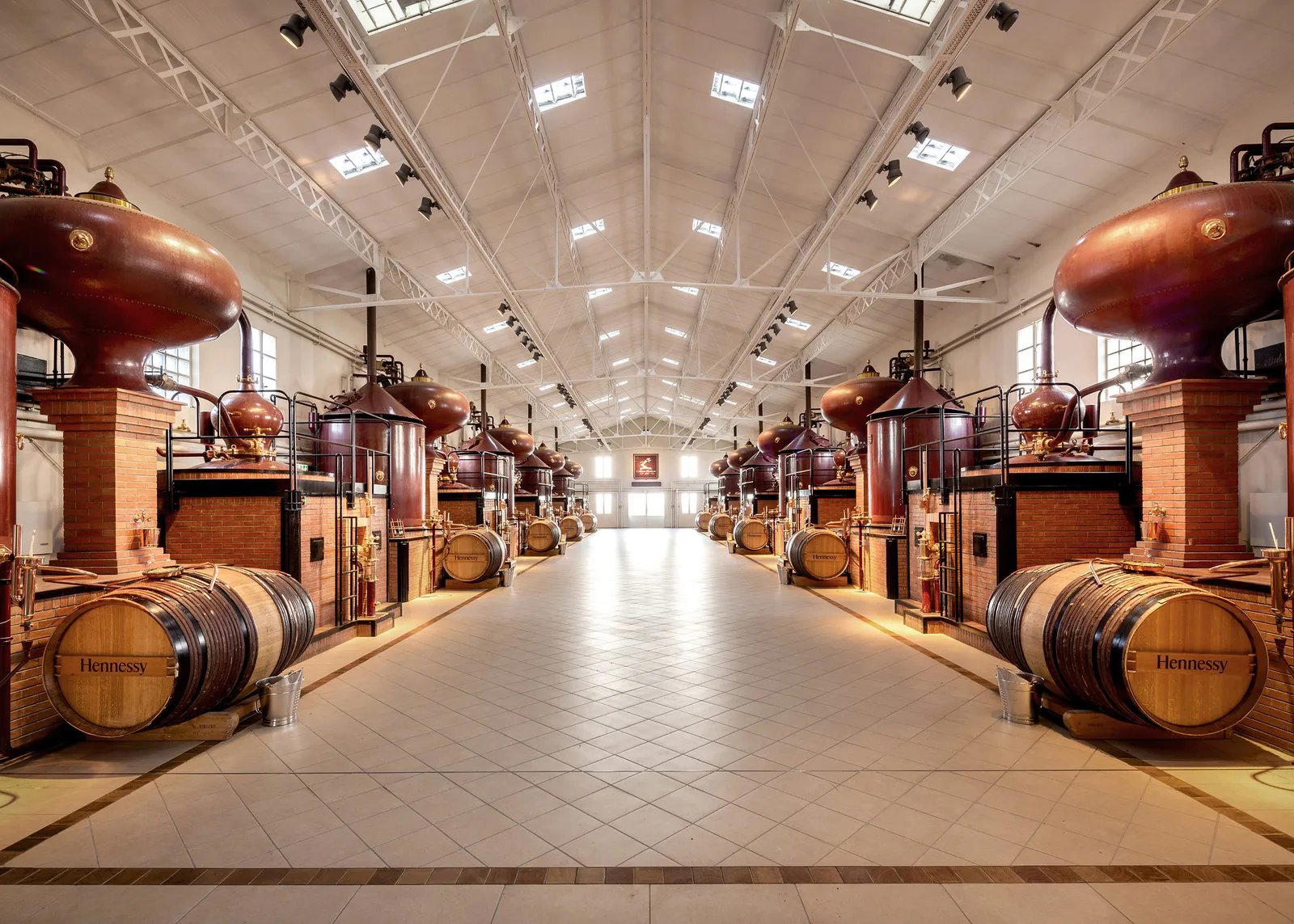
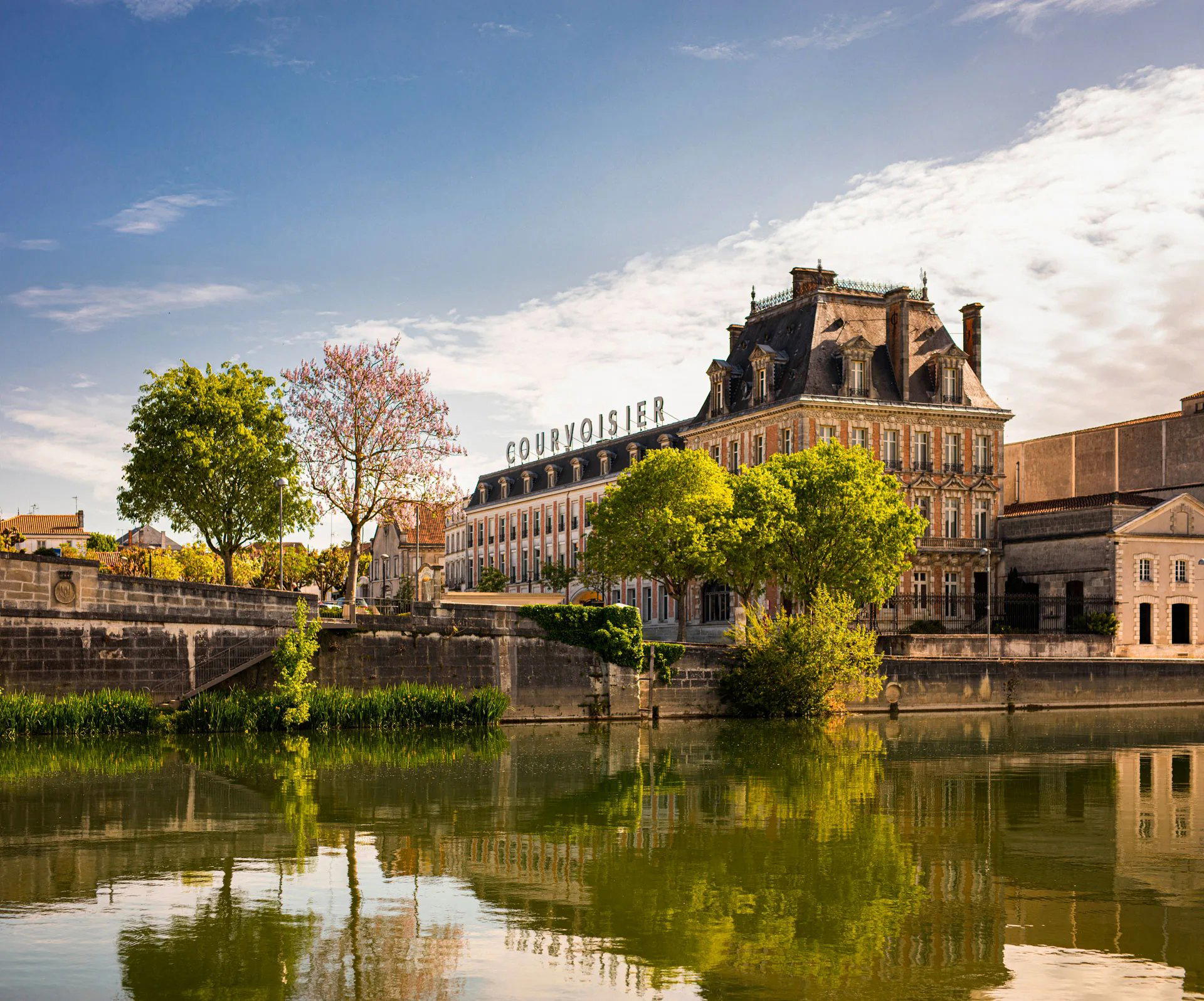
Cognac is a town defined by its warehouses. For centuries, the low stone chais that line the Charente River have aged barrels of spirit in near-darkness, their blackened walls marked by the part des anges — the angel's share evaporating through the stone. Most visitors encounter those buildings from the outside, on distillery tours, and move on. What architect Didier Poignant understood, when he was commissioned to transform the former Monnet Cognac distillery complex, is that the atmosphere inside those structures — the scale, the barrel-lined walls, the timber ceilings, is exactly what a hotel should inhabit rather than replicate. The result, spread across two hectares close to the town centre and the Charente's bank, is a property that frames the production culture of an entire region as its primary design argument.
French luxury hospitality has long gravitated toward châteaux and wine-country estates. Properties like Les Sources de Caudalie in Bordeaux and Royal Champagne Hotel & Spa in Champillon built their identities around proximity to vineyards. Hôtel Chais Monnet takes a different position: it is an urban industrial conversion, comparable in spirit to the adaptive-reuse hotels that have redefined heritage districts across Europe, but with the added layer that its raw material, a working cognac distillery, is the defining cultural institution of the city it sits in.
The Architecture: What Poignant Kept and What He Added
The tension in any significant adaptive-reuse project is between preservation and function. Poignant's approach at Chais Monnet was to let the heritage structures carry the most atmospheric of the hotel's public spaces, while housing guest rooms partly in both the renovated original buildings and a modern addition. The logic holds. You do not need to sleep inside a nineteenth-century cooperage, but you absolutely want to drink in one.
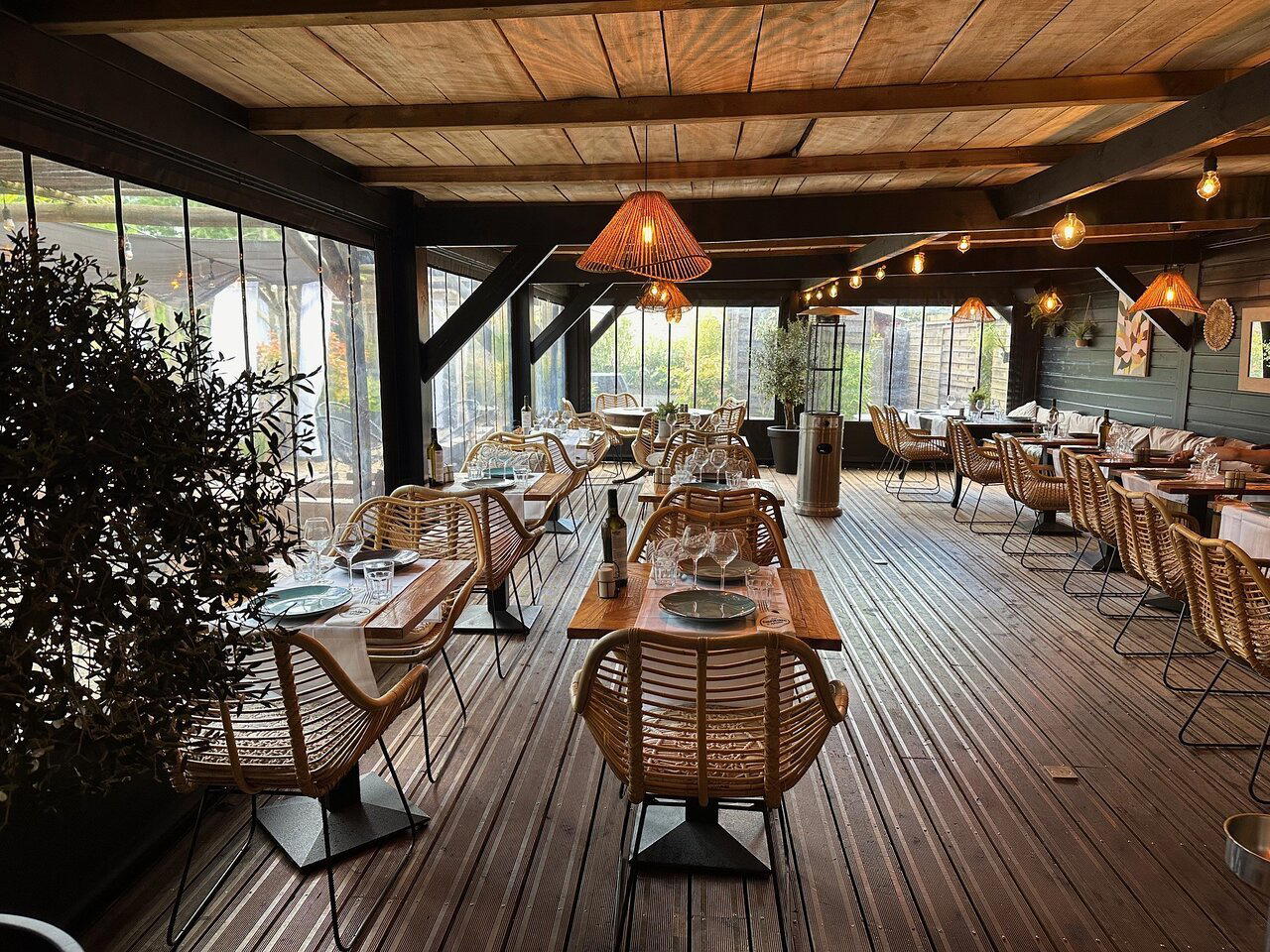
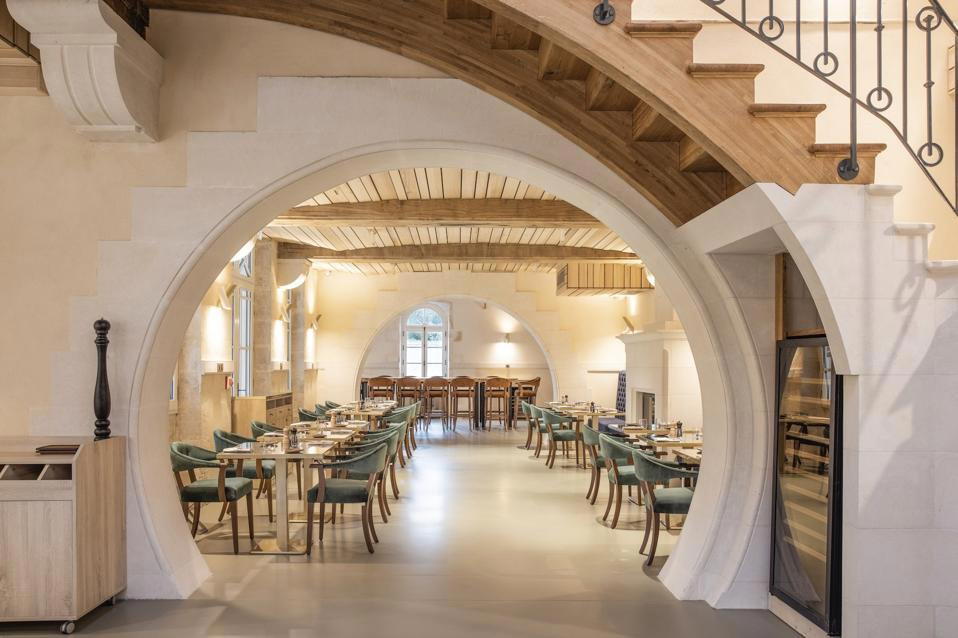
That cooperage, where barrels were once assembled, is now Jazz Bar 1838, a room with proportions and materiality that no amount of bespoke millwork could manufacture. The bar carries a cognac selection calibrated to the address, and the name anchors it to a specific moment in the Monnet distillery's history rather than trading in vague heritage nostalgia. Elsewhere in the heritage structures, the brasserie La Distillerie occupies a space defined by timbered ceilings original to the building, while Les Foudres, the fine-dining restaurant, is lined with the ancient foudres, large oak vessels, that give it its name. Each space has its own register, and the decision to differentiate them by building element rather than by interior decoration style is what makes the architecture coherent as an ensemble.
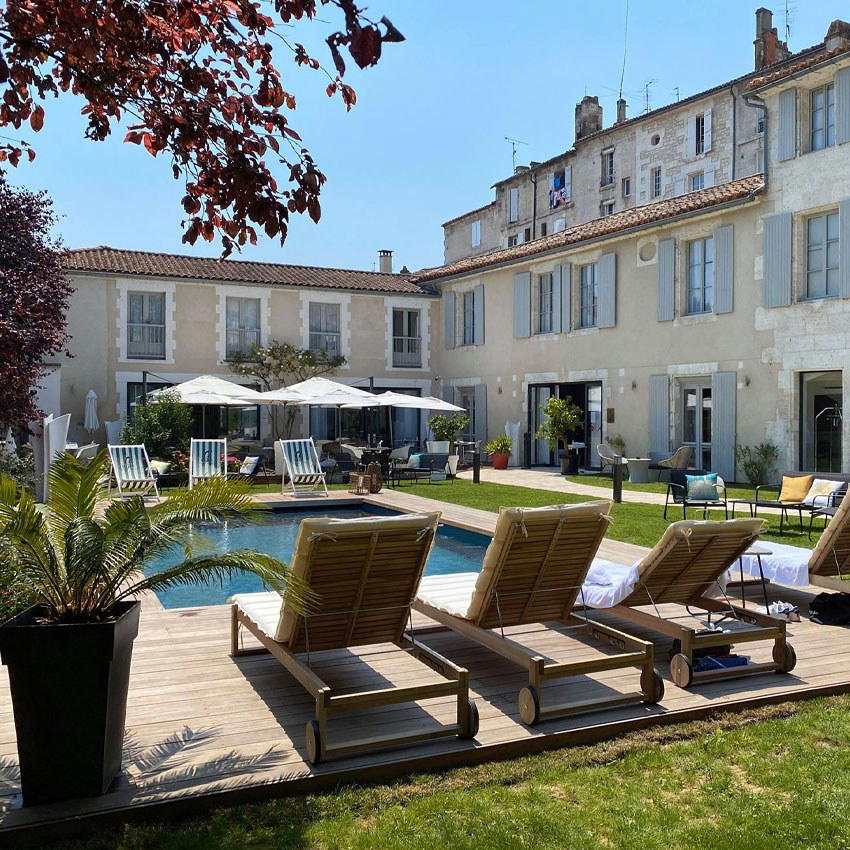
The modern addition, where the spa and wellness complex occupy the lower level, follows the logic of contemporary French luxury hospitality: 25-metre indoor/outdoor swimming pool, sauna, hammam, jacuzzi, and fitness room. This is a benchmark facility for a five-star property in a provincial French city, and its presence places Chais Monnet in a different tier from the smaller, design-led properties that define the other end of the regional luxury spectrum, such as La Nauve, Hôtel & Jardin, Cognac's other notable accommodation address.
Dining as a Function of Place
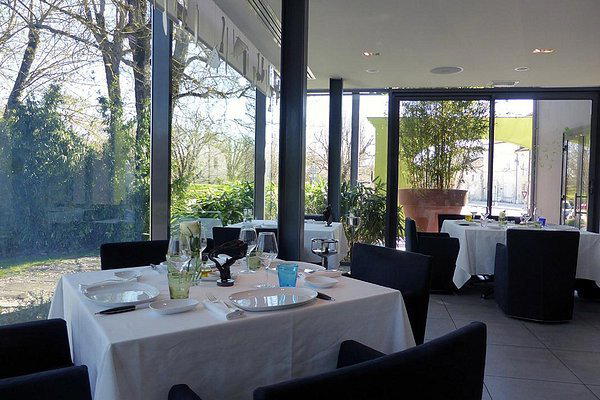
Cognac's dining scene is narrow by the standards of France's more-visited wine regions. The town draws visitors for the spirit, not the table, and high-end dining has historically followed the distillery calendar rather than developing independently. What Chais Monnet does by housing four distinct food and drink operations under one roof is effectively create a dining district within the hotel compound.
Les Foudres holds a Michelin star, which in a town with limited fine-dining competition is a significant signal. The award places it in the tier of destination restaurants that justify a stay rather than merely accompany one. For context, earning Michelin recognition in a city of Cognac's size requires the kitchen to pull visitors who have made a deliberate detour, the same structural dynamic that applies to starred restaurants in Reims or Beaune, where the table and the regional product are understood as a single proposition. Properties anchored to a starred restaurant, like Domaine Les Crayères in Reims, demonstrate how effectively a credentialed kitchen can shift a hotel's position in its market.
La Distillerie, the brasserie, operates in a more accessible register. Its timbered setting does a considerable amount of work in setting the tone, this is not a hotel brasserie with generic European menu positioning, but a room with a specific architectural identity that grounds whatever is on the plate. Café Angélique provides a third tier, suited to lighter meals and afternoon service. The four-venue structure is practical intelligence for a 92-room property: it gives guests genuine reasons to remain on-site across different times of day and moods, rather than requiring the fine-dining restaurant to do all the experiential lifting.
The Room Count and What It Signals
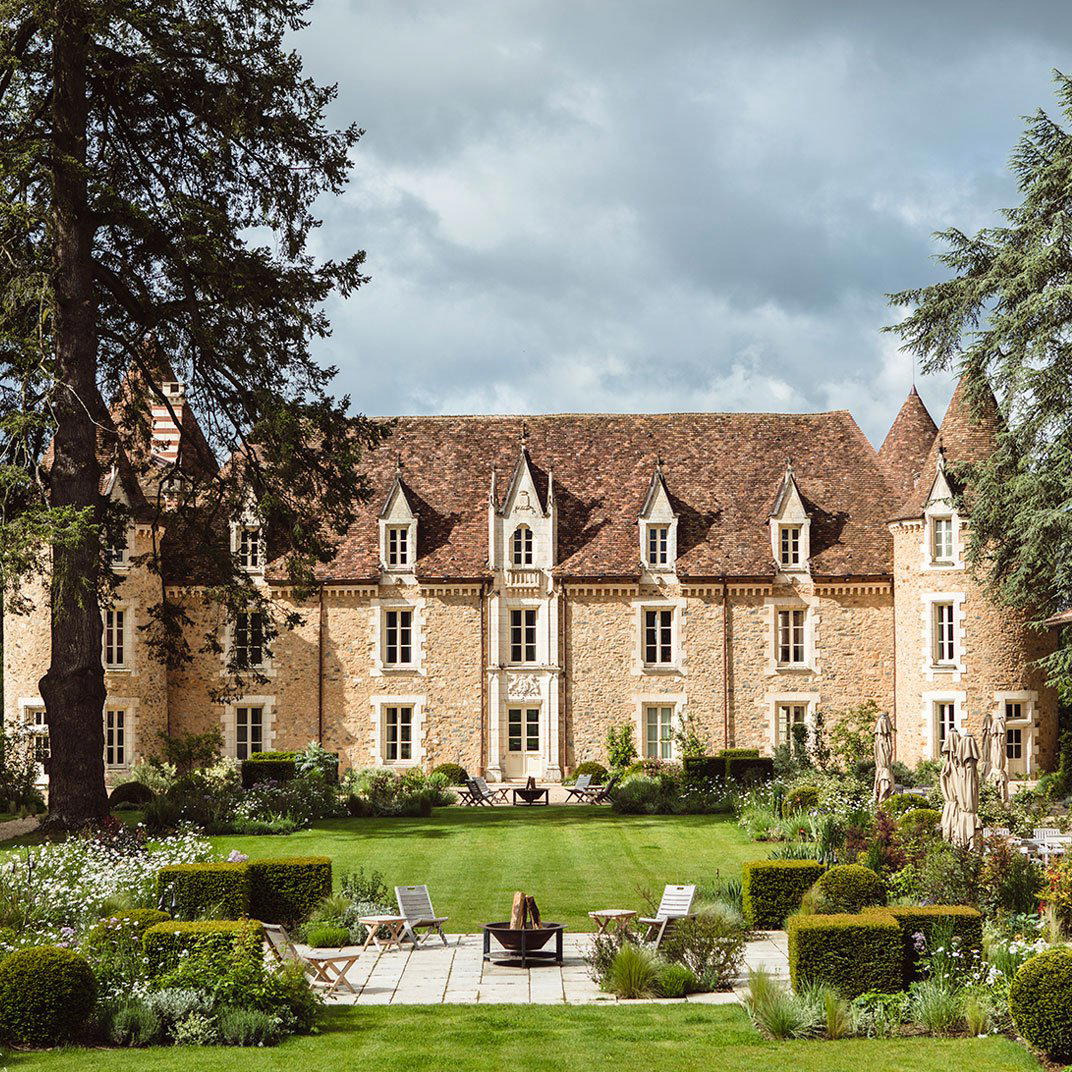
At 92 rooms and suites, Chais Monnet occupies the middle tier of French provincial five-star hotels by scale. It is large enough to host events and accommodate groups, the heritage spaces lend themselves to private hire, but not so large that individual guest experience is managed at distance. French luxury at this scale tends to follow one of two models: the tightly curated small property of 20 to 40 keys, where exclusivity is the primary offering, or the compound hotel where scale enables full programming. Chais Monnet belongs clearly to the second model, and the breadth of its amenities reflects that positioning. For comparison, the intimately scaled properties at the other end of the French luxury spectrum, such as Château du Grand-Lucé in Le Grand-Lucé or Château de Montcaud in Sabran, trade scale for a different kind of focus. Chais Monnet trades in breadth, and the industrial compound setting gives it the spatial authority to carry that weight without feeling like a resort.
Rooms blend French country-mansion detailing with visible elements of the underlying industrial heritage where the building fabric permits, exposed structural materials in the original building, contemporary comfort throughout. The Gault & Millau Exceptional Hotel rating in 2025, awarded five points, confirms the property's positioning at the top of its regional category.
Planning Your Stay
The hotel is at 50 Avenue Paul Firino Martell, within walking distance of the major cognac houses. Rates from approximately $386 per night place it at the upper end of Cognac's accommodation market, consistent with its five-star classification and the breadth of its on-site programming. Michelin-starred dining at Les Foudres warrants advance booking, particularly during the cognac harvest season in autumn when visitor numbers peak. The spa and pool complex is available to hotel guests without separate reservation, which is worth factoring into a multi-night stay calculation. For wider context on the town's dining and drinking options, see our full Cognac restaurants guide.
Travellers considering Chais Monnet alongside other French heritage conversions with strong culinary programming might also weigh Baumanière Les Baux-de-Provence in Les Baux, La Bastide de Gordes in Gordes, or Hôtel & Spa du Castellet in Le Castellet. For those whose itinerary extends to the broader Atlantic coast or Bordeaux wine country, Les Sources de Caudalie occupies a comparable position in the vineyard-hotel segment. Further afield on the Riviera, La Réserve Ramatuelle, Hotel Du Cap-Eden-Roc, The Maybourne Riviera, and Airelles Saint-Tropez represent a different register of coastal French luxury. For urban French properties, Cheval Blanc Paris sets the standard in the capital. Mountain travellers might consider Cheval Blanc Courchevel or Four Seasons Megève. Those looking toward the coast of Brittany will find Castelbrac in Dinard a considered alternative, while Corsica is represented by Casadelmar in Porto-Vecchio. Provence offers further choices at Villa La Coste, Château de la Gaude, and Château de la Chèvre d'Or in Èze. For international reference points in the adaptive-reuse luxury segment, Aman Venice and Aman New York demonstrate how heritage conversion operates at the highest tier of the global hotel market, as does The Fifth Avenue Hotel in New York City.
Comparable Venues
Comparable venues nearby, for context on price, style, and recognition.
| Venue | Cuisine | Price | Awards | Notes |
|---|---|---|---|---|
| Hôtel Chais Monnet & SpaThis venue — the venue you are viewing | Contemporary luxury in historic cognac industrial site | $300–500 | 1 Michelin Key · Mr & Mrs Smith Seal of Approval | Not listed |
| La Nauve, Hôtel & Jardin | 19th-century neoclassical villa restored with luxe interiors amid lush gardens and riverfront setting | Not listed | 1 Michelin Key · Mr & Mrs Smith Seal of Approval | Cognac |
| Les Sources de Cheverny | Historic château and farmhouse estate reimagined as a luxury wine-country retreat with contemporary comfort and rustic charm. | $500–750 | 2 Michelin Keys · Virtuoso Luxury Hotel Partner | Cheverny |
| Château du Grand-Lucé | Neoclassical French château built in 1760, meticulously restored to honor its noble heritage while accommodating modern luxury travelers. | Not listed | Michelin 2 Key | Le Grand-Lucé |
| Hôtel du Palais | Historic imperial palace blending Napoleonic grandeur with contemporary luxury | Not listed | 2 Michelin Keys · La Liste Top Hotels | Grande Plage |
| Domaine des Étangs | Restored 13th-century château estate blending heritage luxury with modern comforts | Not listed | 2 Michelin Keys · La Liste Top Hotels | Massignac |
Recognition history
Dated appearances from independent guides and award organizations, with the underlying list record or original source where available.
Michelin 1 Key
Michelin
Mr & Mrs Smith Seal of Approval
Mr & Mrs Smith
Virtuoso Luxury Hotel Partner
Virtuoso
Gault & Millau Exceptional Hotel
Gault & Millau
Full recognition history (6 entries)
Michelin 1 Key
Michelin
Michelin 2 Keys
Michelin
Continue exploring
More in Cognac
Hotels in Cognac
Browse all →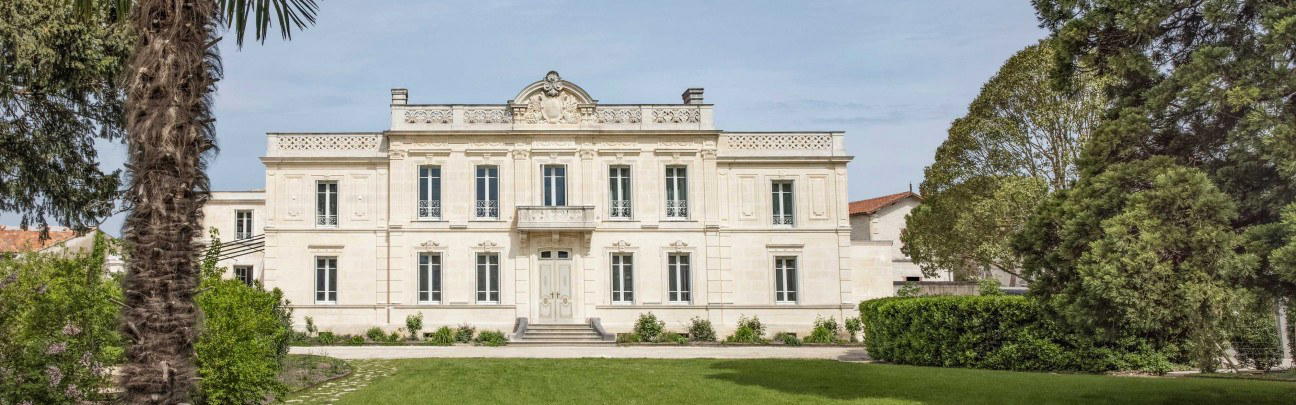
Bars in Cognac
Browse all →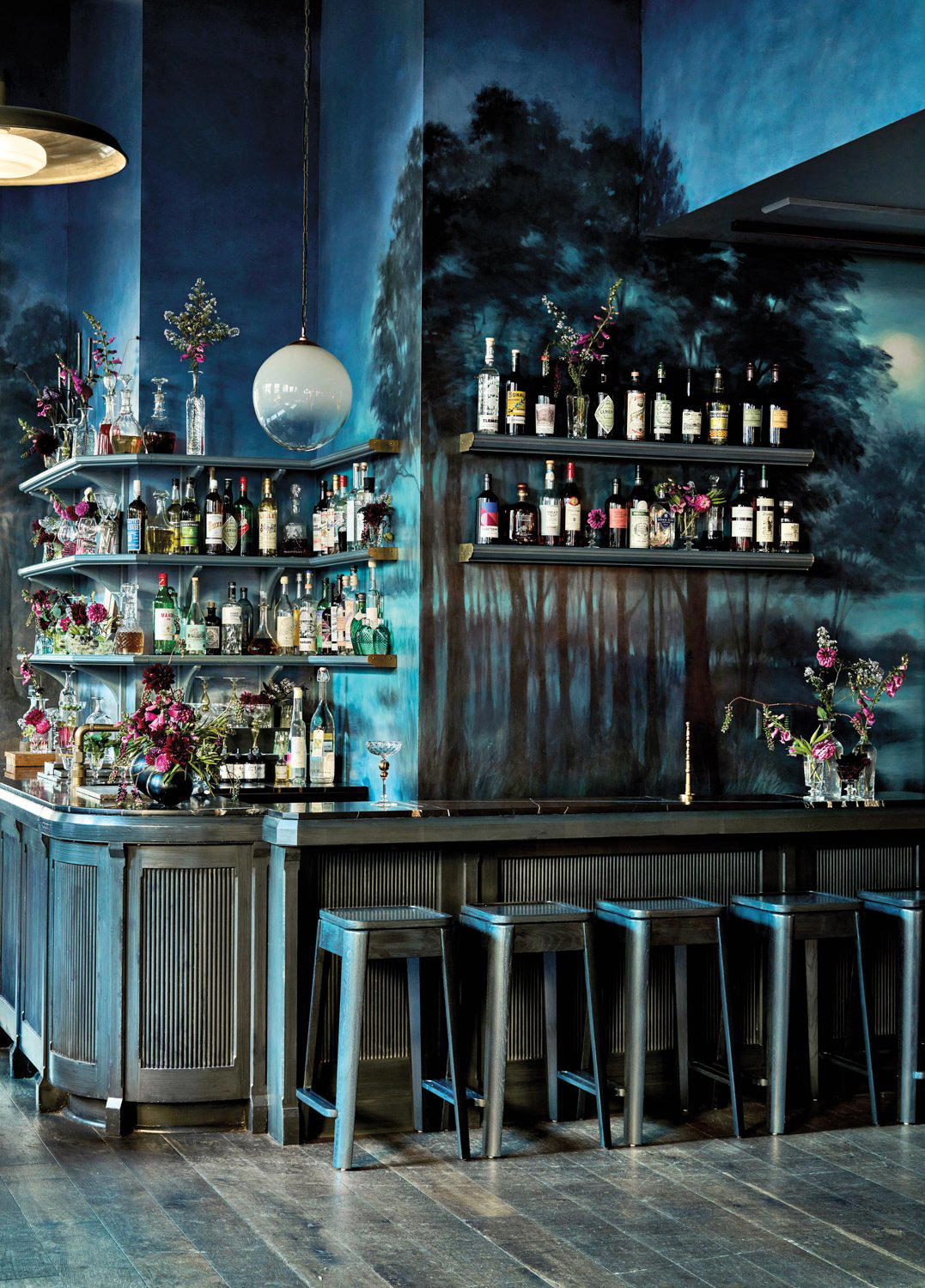
Restaurants in Cognac
Browse all →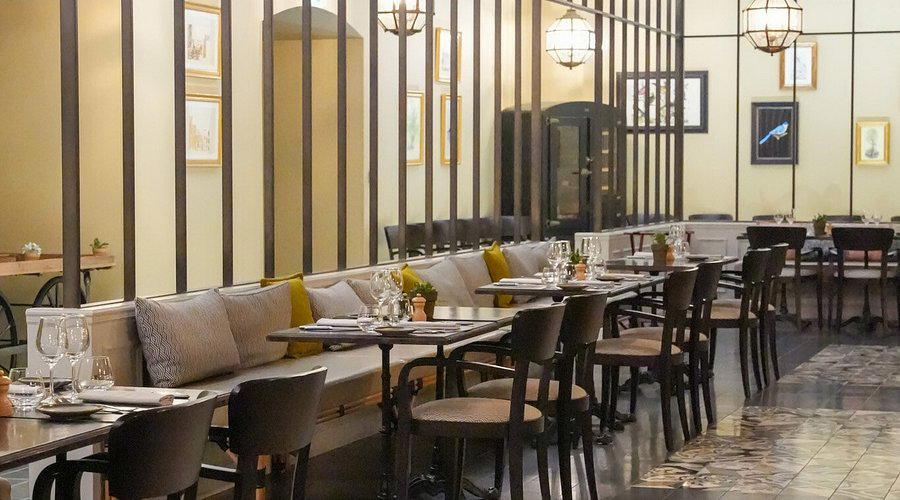
Details
- Elegant
- Sophisticated
- Classic
- Quiet
- Romantic Getaway
- Wellness Retreat
- Anniversary
- Weekend Escape
- Historic Building
- Rooftop Pool
- Destination Spa
- Terrace
- Panoramic View
- Pool
- Spa
- Fitness Center
- Room Service
- Concierge
- Wi Fi
- Sauna
- Hot Tub
- Restaurant
- Garden
- Wheelchair Accessible
- Elevator
- Step Free Entrance
- Accessible Parking
Elegant and sophisticated with classic French decor, natural materials, peaceful courtyards, soundproofed rooms, and relaxing spa atmosphere.