McDowell County, WV Convention and Visitors Bureau
The McDowell County Convention and Visitors Bureau, based at 143 Wyoming Street in Welch, West Virginia, serves as the primary gateway for understanding one of Appalachia's most architecturally and historically layered counties. Coal-era infrastructure, steep ridge topography, and a deeply specific regional identity make McDowell a destination for travellers drawn to places where industrial history and natural landscape intersect without apology.

Pearl is the En Primeur Club membership app — saves, bookings, and concierge access live there. Same editors, same standards.
- Address
- 143 Wyoming St, Welch, WV 24801
- Phone
- (304) 436-4242
- Website
- exploremcdowell.com
- Directions
- Get directions
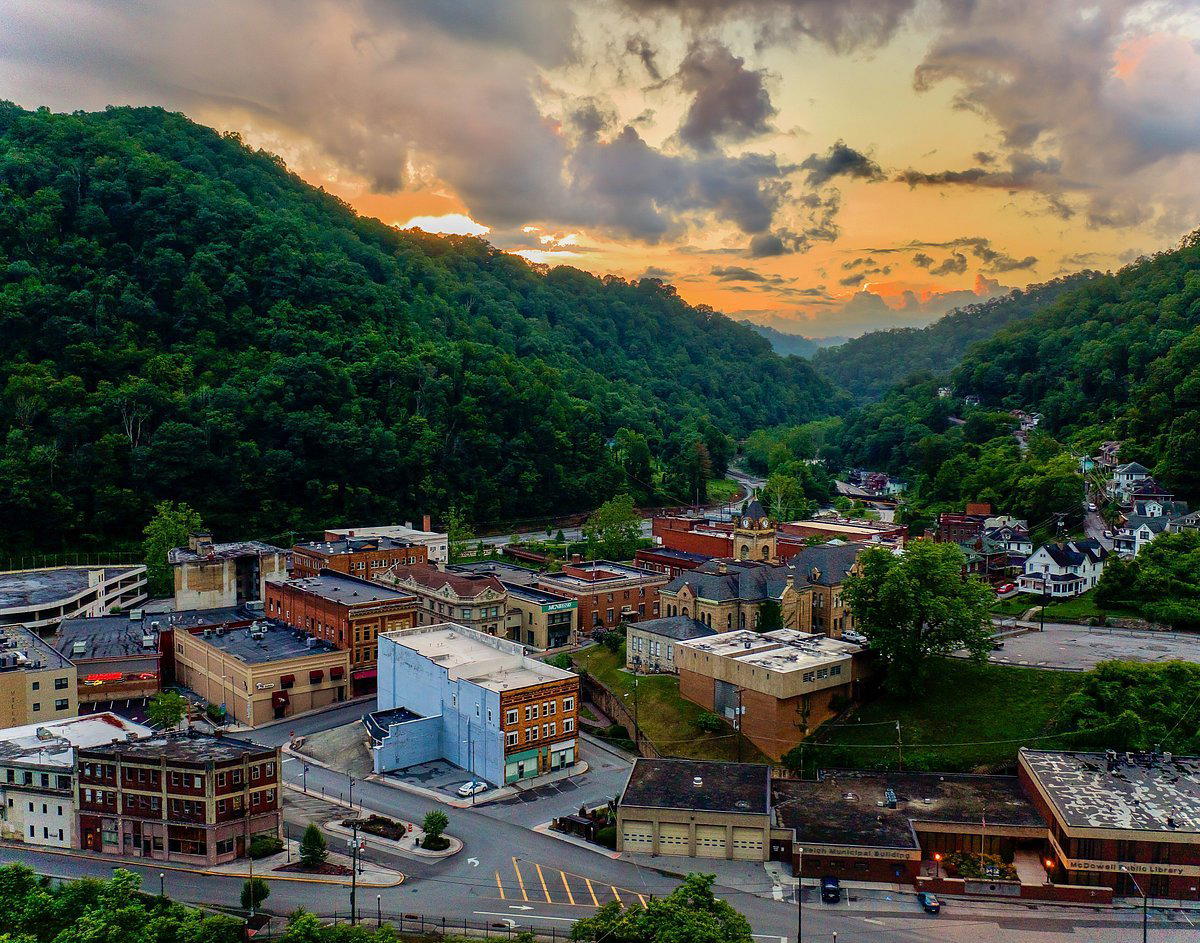
McDowell County and the Architecture of Appalachian Identity
Wyoming Street in Welch, West Virginia carries the kind of weight that only a place with a complicated history can hold. The commercial blocks of this small county seat are built from a period when McDowell County was one of the highest coal-producing counties in the United States, and the built environment reflects that boom-era confidence: multi-story brick facades, institutional buildings with civic ambitions, and streetscapes that were designed for a population several times what lives here now. The McDowell County Convention and Visitors Bureau, at 143 Wyoming Street, occupies this context directly. Arriving in Welch, visitors encounter a town whose physical fabric tells a more nuanced story than either the decline narratives that dominate outside coverage or the boosterism of tourism materials.
What the Built Environment Communicates
McDowell County's architectural character is not incidental to its tourism appeal; it is the appeal. The county sits in the southern West Virginia coalfields, a region where the built environment was shaped almost entirely by the extractive economy of the late nineteenth and early twentieth centuries. Company towns, union halls, courthouse squares, and rail infrastructure all left physical marks that remain visible. For visitors interested in industrial vernacular architecture, Appalachian built heritage, or the material history of American labor, this is a county with few regional equivalents. The streetscape of Welch itself represents a commercial ambition that was genuine and, for a period, well-funded. The Visitors Bureau sits within walking distance of the McDowell County Courthouse, a structure whose scale and detail reflect the county's former economic standing.
This is a different register from the resort-scale design statements found at properties like Amangiri in Canyon Point or Ambiente in Sedona, where architecture is a deliberate luxury signal. In McDowell County, the architecture is documentary. It records decisions made under specific economic pressures, and that record is what gives the county its character as a travel destination.
The Bureau as Orientation Point
A convention and visitors bureau in a county like McDowell performs a function that is more logistical than promotional. The region lacks the tourism infrastructure that makes independent research direct in better-documented destinations. Road signage for heritage sites is inconsistent, operating hours for local attractions shift seasonally, and the most historically significant locations are often on private land or accessible only with local guidance. The Bureau at Wyoming Street serves as the practical starting point for any serious engagement with the county. Staff can direct visitors to the Kimball War Memorial, the Pocahontas Exhibition Mine across the state line in Virginia, and the various ghost town remnants scattered across the mountain hollows.
This kind of orientation function matters more in McDowell County than it would in a destination with established tourism patterns. The county does not have the visitor volume that generates a strong secondary infrastructure of tour operators and third-party guides. Walking in to ask a specific question is often the most effective research method available, and the Bureau's address on Wyoming Street is the logical anchor for that conversation. For context on how destinations with fuller infrastructure handle visitor orientation, the contrast with properties like Blackberry Farm in Walland or SingleThread Farm Inn in Healdsburg is instructive: those properties curate a complete experience within their own footprint, whereas McDowell County asks visitors to assemble their own itinerary from dispersed, under-signposted resources.
Appalachian Heritage Tourism in Regional Context
Heritage tourism in the southern West Virginia coalfields has grown as a travel category over the past two decades, driven partly by the Route 52 Coalfields Heritage Driving Tour and partly by increased national interest in Appalachian history following a period of significant media attention. McDowell County sits at the southern end of this corridor, bordering Virginia, and draws visitors interested in the specific history of the United Mine Workers of America, the role of McDowell County in the Great Migration of African Americans to northern industrial cities, and the physical remnants of the company town system. This is not a heritage tourism market that overlaps with the clientele of Auberge du Soleil in Napa or The Fifth Avenue Hotel in New York City, but it is a travel category with genuine depth and a visitor profile that tends toward high engagement and repeat visits.
The Welch area specifically was the site of the Matewan Massacre's broader regional context, and the county's African American history is documented through the Coalfields Progress community and various local preservation efforts. These are stories that require local orientation to access, which returns the conversation to the practical value of the Bureau as a first stop.
Planning a Visit to McDowell County
Welch is accessible by road via US Route 52, which runs through the county from north to south. The nearest commercial airport is Mercer County Airport in Bluefield, roughly 35 miles to the southeast, though most visitors drive from larger regional airports in Charleston, Roanoke, or Charlotte. Accommodation options within the county are limited; visitors planning multi-day stays typically book lodging in Bluefield or Princeton and drive into the county for day visits. The Bureau at 143 Wyoming Street is the practical entry point for current information on site access, local guides, and seasonal conditions. For visitors accustomed to planning at properties where concierge infrastructure handles all logistics, such as Aman New York or Post Ranch Inn in Big Sur, McDowell County requires a different orientation: research done in advance, flexibility built into the schedule, and a tolerance for the kind of discovery that comes from places that have not been packaged for easy consumption.
For a broader overview of what the area offers, see our full Welch restaurants guide.
Comparison Snapshot
| Venue | Price | Awards |
|---|---|---|
| McDowell County, WV Convention and Visitors BureauThis venue — the venue you are viewing | Not listed | Not listed |
| Aman New York | Not listed | 3 Michelin Keys · World's 50 Best #87 |
| Amangiri | $1,000–1,500 | 3 Michelin Keys · World's 50 Best #45 |
| Hotel Bel-Air | $750–1,000 | 3 Michelin Keys · World's 50 Best #57 |
| The Beverly Hills Hotel | Not listed | 3 Michelin Keys · World's 50 Best #65 |
| The Carlyle, A Rosewood Hotel | $1,500–2,500 | 2 Michelin Keys · World's 50 Best #64 |
Details
- Rustic
- Cozy
- Weekend Escape
- Historic Building
- Wi Fi
- Mountain
Local and welcoming atmosphere focused on regional hospitality.