Las Colinas Golf & Country Club

Las Colinas Golf & Country Club in Dehesa de Campoamor holds both the 2025 World Travel Awards for Spain's Leading Villa Resort and Europe's Leading Villa Resort, a double that positions it at the summit of villa-format accommodation on the continent. Set on the Costa Blanca South, the property combines low-density residential design with golf-anchored amenities in a format that suits extended stays as much as short breaks.
Pearl is the En Primeur Club membership app — saves, bookings, and concierge access live there. Same editors, same standards.
- Address
- Dehesa de Campoamor, Spain
- Website
- lascolinasgolf.com
 Saves & bookings on Pearl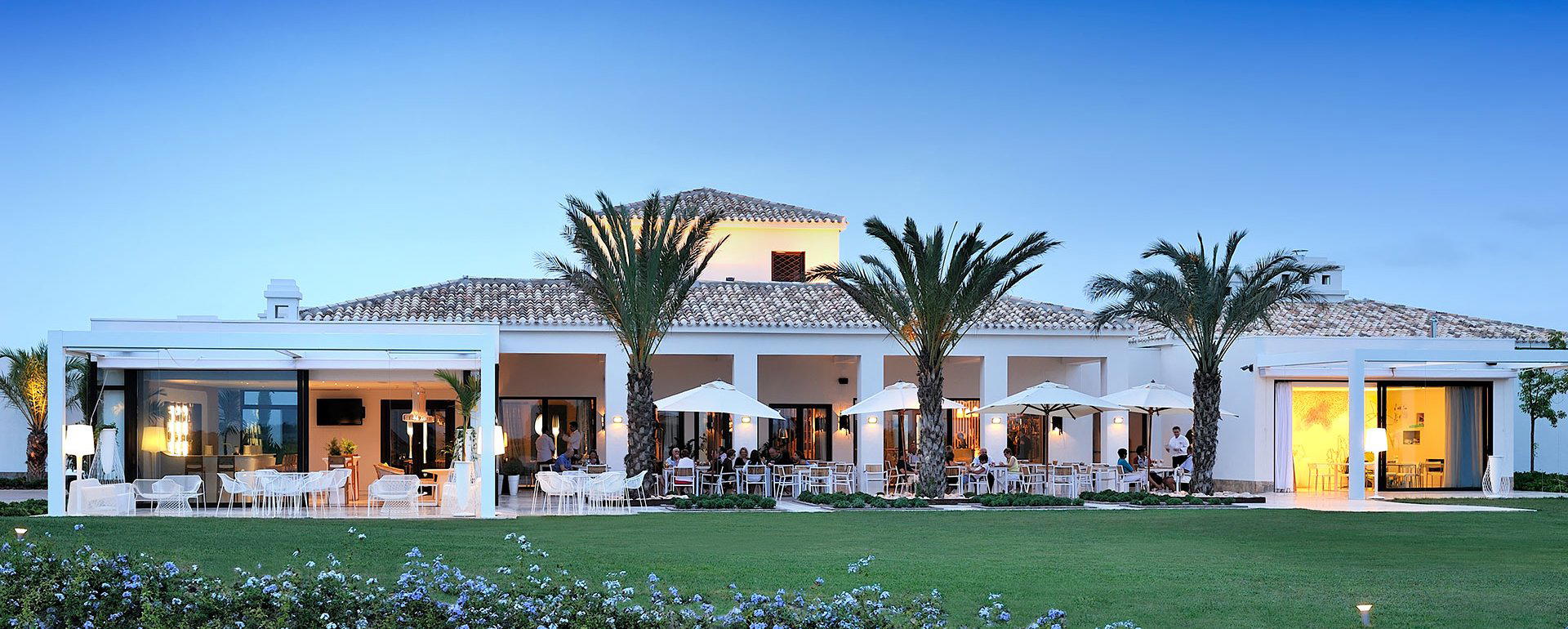
Villa Resort Architecture on the Costa Blanca South
The Costa Blanca South has spent two decades splitting between dense coastal apartment blocks and a quieter tier of low-density resort development that prizes space over spectacle. Las Colinas Golf & Country Club in Dehesa de Campoamor sits firmly in that second category. Where most Mediterranean resort architecture optimises for room count and seafront frontage, villa-format resorts in this part of Alicante province work from a different brief: distributed footprint, landscaped separation between units, and a visual language that borrows as much from residential design as from hospitality. The result, when executed well, is a property that reads more like a private enclave than a hotel compound.
That design orientation has earned Las Colinas a specific and meaningful credential: the 2025 World Travel Awards for both Spain's Leading Villa Resort and Europe's Leading Villa Resort. Winning both simultaneously signals strong recognition across the category, and a double win at the Spain and Europe level confirms that this property has separated itself from a large peer field. For context, Spanish villa resorts compete against strong entrants from the Balearics, the Canary Islands, and the Costa del Sol, markets with deep investment histories and established brand presences. Properties like Marbella Club Hotel and Bahia del Duque in Adeje represent what sustained reputational investment looks like in the Spanish resort tier. Sitting above them in this specific villa category, even for a single awards cycle, is a meaningful signal about what Las Colinas has built.
The Physical Logic of a Golf and Country Club Format
Golf-anchored resorts follow a particular architectural logic that most urban luxury hotels don't encounter. The course itself becomes the primary landscape element, setting sight lines, determining buffer distances between accommodation units, and imposing a greenery-to-built-ratio that no amount of planted courtyard can replicate. On the Costa Blanca South, where the inland hills transition toward the Mediterranean coast between Torrevieja and Cabo Roig, that topography gives course designers material to work with, elevation changes, natural scrubland, and views that shift depending on where on the property you're standing.
The villa format slots into this setting with particular coherence. Individual villas or villa-style units positioned along or adjacent to a course benefit from separation that a hotel corridor cannot offer. Morning views onto fairways rather than car parks; the absence of shared-wall noise that mid-range resort hotels accept as standard. This is the physical proposition that distinguishes a golf-and-country-club format from a resort hotel that happens to have course access. The distinction matters to the guest who is choosing between four or five nights here and a comparable length of stay at a Belmond property in Mallorca or a boutique hotel in Santanyí: the tradeoffs are real, and the golf-resort format wins on space and privacy where it might concede on cultural proximity and food-and-beverage density.
Where Las Colinas Sits in the Spanish Luxury Resort Field
Spain's premium accommodation scene has diversified considerably over the past decade. Urban properties anchored by restaurant credentials, the Mandarin Oriental Ritz in Madrid, Mandarin Oriental Barcelona, and Atrio in Cáceres, compete in a different segment from resort properties, where the draw is landscape, amenity spread, and physical scale rather than neighbourhood access and restaurant programming.
Within the resort tier specifically, the villa-format niche has grown as a distinct sub-segment. Properties like Abadía Retuerta LeDomaine in the Duero valley and Terra Dominicata in Escaladei demonstrate one version of the model, winery-anchored rural estates with limited keys and strong food-and-drink credentials. Las Colinas represents a different branch of the same tree: the golf-and-country-club format, where the course replaces the vineyard as the central amenity and the villa disposition of accommodation creates the privacy premium.
That positioning also explains why Las Colinas draws a guest profile distinct from the Costa Blanca's package-holiday market. Extended-stay guests, villa renters treating the property as a seasonal base, golf-focused travellers booking around course access, these are the audiences for whom a World Travel Awards-recognised villa resort competes not against beach hotels in the same postcode but against comparable formats in Portugal's Algarve, Tuscany, and the Algarve coast. The European scope of the 2025 award underlines that Las Colinas is being evaluated against exactly that wider field.
Dehesa de Campoamor as a Resort Address
Dehesa de Campoamor occupies a stretch of the Costa Blanca South that sits between the better-known tourist infrastructure of Torrevieja to the north and the quieter cape areas to the south. It is not a destination with a historic old town or a concentrated restaurant scene in the way that a city like Cáceres or Santiago de Compostela would offer. What it has is proximity to the coast, a lower density of development than the strip resorts further north, and a climate that makes extended outdoor activity practical across a longer season than most of northern Spain permits.
For guests arriving from the UK, Germany, or Scandinavia, the primary feeder markets for this part of Alicante province, the logistics follow a well-worn path: Alicante-Elche Airport (ALC) is the standard arrival point, and the drive south to Dehesa de Campoamor takes approximately 45 minutes depending on traffic. That accessibility has been part of the area's appeal since the 1980s, but Las Colinas represents a significant step up from the golf urbanisations that first made the area attractive to northern European buyers and visitors.
Travellers weighing the Costa Blanca South against Balearic options might also consider Hotel Can Cera in Palma, BLESS Hotel Ibiza, or Can Alberti 1740 in Mahón, each operating in a different format but occupying a comparable position in Spain's premium accommodation range.
Mas de Torrent in Torrent, Pepe Vieira in Poio, A Quinta da Auga in Santiago de Compostela, Casa Beatnik in A Coruña, and Can Mascort Eco Hotel in Palafrugell. Cap Rocat in Cala Blava and Akelarre in San Sebastián sit at different points on the Spanish spectrum but share the commitment to site-specific physical identity that the villa-resort format at its leading demands. Beyond Spain, the villa-resort model finds its global reference points at properties like Aman Venice and Aman New York, where distributed, privacy-led design has been built into the product logic from the ground up. The Fifth Avenue Hotel in New York and Canfranc Estación in the Pyrenees offer two further points of reference for guests who understand that resort architecture is always a statement about what the property thinks space is for. Torre del Marqués Hotel Spa & Winery in Sardoncillo rounds out the comparison set for those interested in how rural Spanish properties use land-scale to define their guest offer.
Planning a Stay
Las Colinas Golf & Country Club is a three-star resort with 64 rooms and a recommended reservation policy. The Costa Blanca South climate runs warmest from June through September, while spring and autumn are often particularly comfortable periods for golf and outdoor time. Winter stays are viable given the mild Alicante province climate, though some amenities at resort properties in this region operate on reduced schedules outside peak season, worth verifying at the time of booking.
A Quick Peer Check
Comparable venues nearby, for context on price, style, and recognition.
| Venue | Cuisine | Price | Awards | Notes |
|---|---|---|---|---|
| Las Colinas Golf & Country ClubThis venue — the venue you are viewing | Exclusive residential golf resort with low-density housing integrated into natural landscape; modern amenities blended with Mediterranean environment. | $$$ | 3-Star | Not listed |
| H10 Palacio Colomera | Historic palace conversion maintaining original architectural heritage while incorporating contemporary luxury and eco-friendly design principles. | $$$ | 4-Star | Plaza de las Tendillas |
| Hotel Iriarte Jauregia | Restored 17th-century palace blending tradition with modern comfort | $$$ | 4-Star | Bidania-Goiatz |
| The Riad Tarifa | Moroccan riad in historic Andalusian building | $$$ | 4-Star | Tarifa Old Town |
| Palacio Bellas Artes Hotel San Sebastián | Historic theatre redevelopment with Basque design influences | $$$ | 4-Star | Amara |
| H10 Universitat | Restored 19th-century building with modern interior design | $$$ | 4-Star | la Dreta de l'Eixample |
Recognition history
Dated appearances from independent guides and award organizations, with the underlying list record or original source where available.
World Travel Awards
World Travel Awards
At a Glance
- Scenic
- Elegant
- Sophisticated
- Quiet
- Wellness Retreat
- Family Vacation
- Romantic Getaway
- Golf Course
- Garden
- Terrace
- Panoramic View
- Infinity Pool
- Private Villa
- Wi Fi
- Pool
- Spa
- Fitness Center
- Golf Course
- Tennis Court
- Restaurant
- Bar
- Kids Club
- Bicycle Rental
- Parking
- Garden
- Mountain
- Wi Fi
- Pool
- Spa
- Fitness Center
- Golf Course
- Tennis Court
- Restaurant
- Bar
- Kids Club
- Bicycle Rental
- Parking
Mediterranean elegance with natural surroundings; modern facilities integrated into pine-covered hills and landscaped gardens with views of the golf course and distant mountains.