Four Seasons Resort Tamarindo






World's 50 Best #74 · La Liste Top Hotels · Star Wine List
Ranked #55 on the World's 50 Best Hotels list in 2025 and awarded 95 points by La Liste, Four Seasons Resort Tamarindo sits on a private peninsula within a 3,000-acre nature reserve on Mexico's Costalegre coast. Elena Reygadas oversees the flagship dining programme across three distinctly positioned restaurants, and 157 rooms and suites span beachfront and cliffside settings on one of the Pacific's least-developed luxury coastlines.

Pearl is the En Primeur Club membership app, where members save venues, book tables and use the concierge.
Where Pacific Mexico Has Barely Been Touched
The drive south from Puerto Vallarta along Highway 200 is one of the more instructive journeys in Mexican hospitality. For the first hour, resorts cluster and signage multiplies. Then, gradually, the coast opens: fewer hotels, longer stretches of undeveloped jungle, the Pacific showing up in wider, less interrupted slices. By the time you reach the turnoff for Costalegre, the bandwidth of mass tourism has dropped away entirely. This is the context in which Four Seasons Resort Tamarindo makes sense, not as an isolated property but as the anchor institution in a stretch of coastline that has resisted the development cycle playing out further north.
Costalegre, which translates loosely as the Happy Coast, runs for roughly 200 kilometres through Jalisco state and has been quietly accumulating serious hospitality credentials for years. Las Alamandas and Cuixmala established the region's low-key luxury logic decades before Tamarindo arrived. What the Four Seasons entry in 2023 added was scale and a structured dining programme capable of drawing attention from outside the usual regional audience. See our full Costalegre restaurants guide for the broader picture across the region.
The Dining Architecture: Three Registers, One Culinary Argument
Mexico's hotel dining has undergone a significant shift over the past decade. Properties that once treated their restaurants as afterthoughts, buffet supplements to the main business of rooms and pools, now compete on culinary credibility in ways that affect booking decisions. Tamarindo's approach follows the pattern seen at a handful of properties nationally, where a named chef with independent credibility takes responsibility for the food identity of the whole resort rather than a single restaurant.
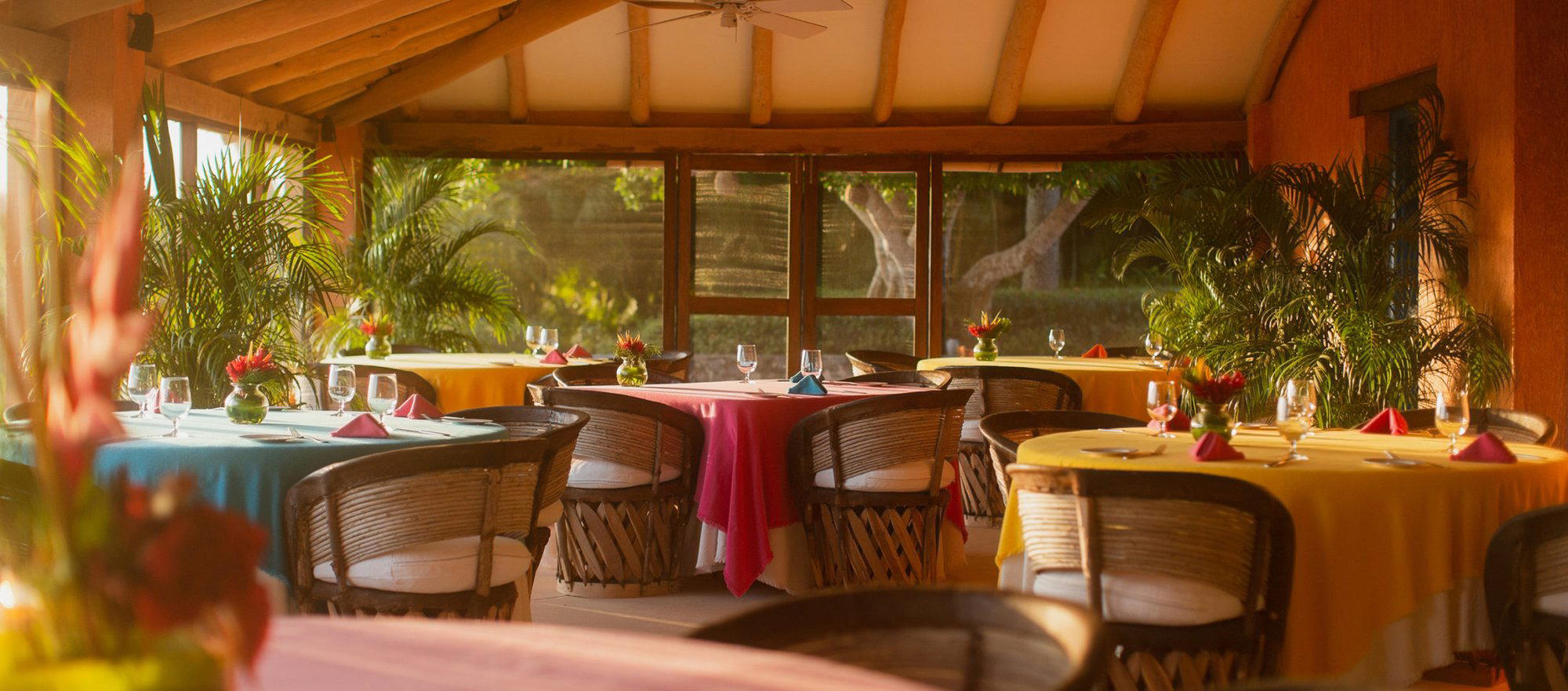
Here, that figure is Elena Reygadas, who runs Rosetta in Mexico City, one of the most referenced addresses in contemporary Mexican cooking. Her involvement at Coyal, the poolside restaurant, frames the dining programme in a specific culinary register: Mexican ingredients handled through French and Italian technique, a combination that Reygadas has made her signature in the capital. The morning pastry offering is documented as a particular point of strength, drawing on a discipline that has given Rosetta its reputation for precision at the lighter end of the menu.
Sal, positioned at beach level, operates with a different logic. Open-air, oriented toward fresh seafood and a raw bar, it earns its position from the geography: fishing culture along this stretch of the Jalisco coast is active, and the Pacific delivers different raw material than the Gulf or the Caribbean. Sunset timing matters here in a practical sense, since the westward exposure means the light arrives across water rather than land, which affects the feel of evening service more than any interior design decision.
Nacho, the third restaurant, sits at the casual end of the spectrum. A taqueria format built around tortillas, it reflects a decision to cover everyday eating within the property rather than requiring guests to default to room service for less formal meals.
This three-tier structure, a named chef flagship, a seafood specialist, and a taqueria, places Tamarindo's food programme closer to properties like One&Only; Mandarina in Riviera Nayarit than to the all-inclusive dining model. It also creates a genuine internal logic: guests eating across all three restaurants over several days encounter different expressions of Mexican food culture rather than variations on the same kitchen output.
The 3,000-Acre Argument for Low-Density Luxury
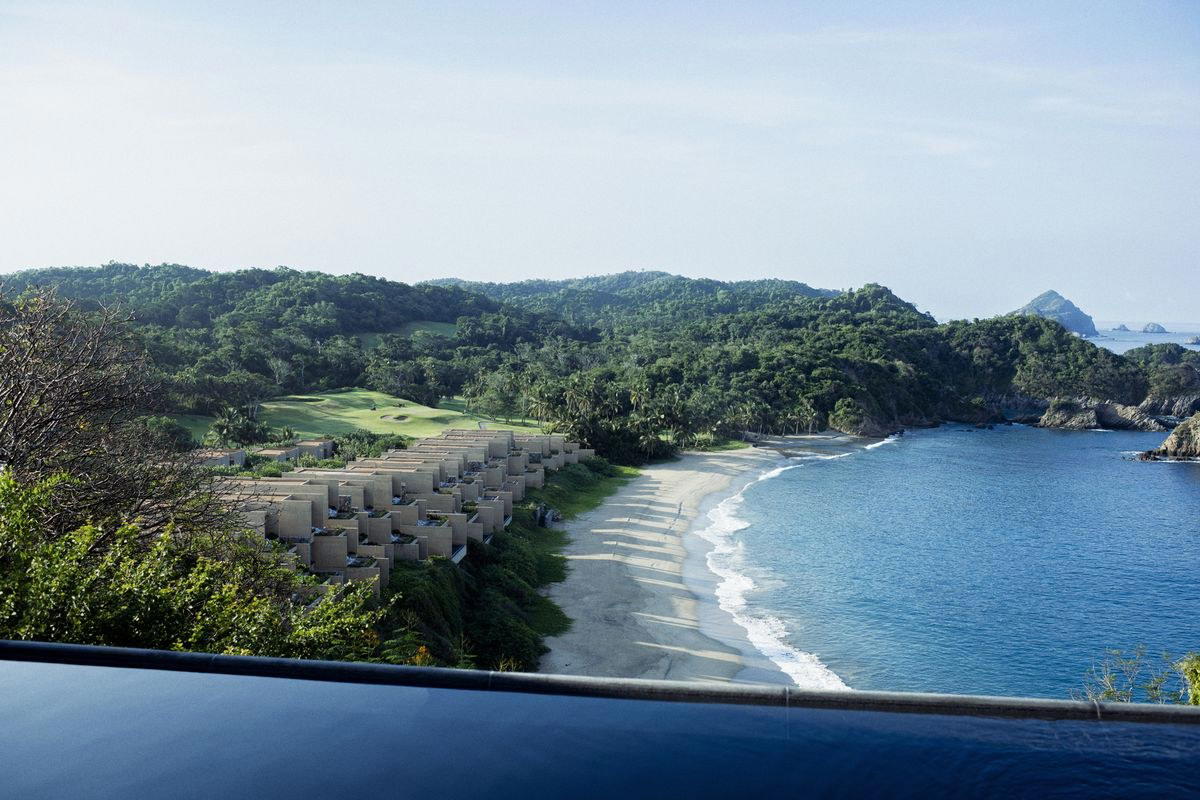
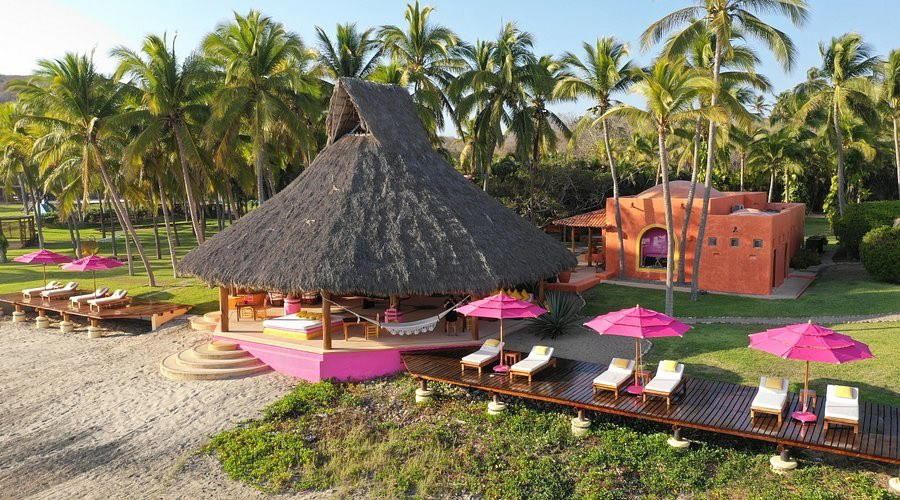
The resort occupies a private peninsula within a 3,000-acre nature reserve, with development covering only two percent of the total land. That ratio is the most significant physical fact about the property, and it explains much of how it feels to move through it. The architecture, led by a group of Mexican firms including Victor Legorreta, Mauricio Rocha, Mario Schjetnan, Estudio Esterlina and Uribe Krayer, uses stone, lava rock, wood, and sand-toned cement to place buildings within the landscape rather than against it. The material choices extend to the smaller decorative elements: henequén hampers woven by artisans from Xcanchakán and Santa Rosa, black clay candles from Michoacán. These are not decorative gestures but supply-chain decisions, ones that connect the property to specific Mexican craft traditions by region.
The 157 accommodations divide between beachfront and cliffside positions. The cliffside suites include 43-foot infinity pools on their terraces and hand-woven hammocks positioned over Pacific views, while bathrooms feature travertino marble in ocean blue carved directly into the floor. These are not details that photograph well in isolation; they work in context, where the materiality of the building and the physical setting reinforce each other.
For a sense of how Tamarindo's scale and low-density approach compares within Mexico's luxury hotel tier, properties like Chablé Yucatán and Hotel Esencia in Tulum operate with comparable land-to-room ratios and a similar commitment to local material sourcing, though in very different ecological and cultural settings.
Farm, Forest, and Golf: The Activity Infrastructure
Rancho Ortega, the 35-acre working farm on the property, supplies the kitchens with avocados, limes, mangoes, blue agave, figs, and tamarind. It also runs a pickling facility, grows microgreens, and produces nixtamalized corn for the tortillas served at Nacho. Complimentary tours of the farm are available, which makes the food supply chain visible to guests in a way that most hotel dining programmes keep opaque. A resident biologist leads guided walks through the 70 endemic plant species within the reserve, adding a structured educational layer to what would otherwise be passive landscape appreciation.
The golf offering is the 18-hole, par-72 El Tamarindo Golf Course, designed by David Fleming. The routing moves through palm groves and rocky coastline, which means the Pacific is visible from multiple points on the course rather than confined to one or two holes. Snorkelling equipment, kayaks, paddleboards, and water bicycles are available on a complimentary basis. More specialised water activity options, freediving and spearfishing courses, scuba trips focused on macrophotography, and lancha excursions using traditional local fishing boats, are available for guests who want direct engagement with the marine environment rather than its surface.
The spa operates from eight indoor-outdoor treatment rooms and draws on Oaxacan red clay as both a material and a treatment medium. The plunge pools and the copal-scented atmosphere tie the spa back to the same regional specificity that runs through the dining programme and the room design. Properties attempting this level of thematic consistency across spa, food, and architecture within a single site include Zadun, A Ritz-Carlton Reserve in Los Cabos and Maroma in Riviera Maya, both of which anchor their guest experience in local craft and indigenous ingredient traditions.
Awards Position and Competitive Context
Tamarindo ranked 55th on the World's 50 Best Hotels list in 2025, a significant placement for a property that opened only in 2023. La Liste gave it 95 points in its 2026 rankings, and the property holds a Star Wine List award for 2026. In Mexico's Pacific luxury tier, this positions it alongside properties with considerably longer track records. Four Seasons Resort Punta Mita, for comparison, operates in a more accessible destination with a larger international infrastructure around it. Tamarindo's awards performance suggests the isolation that might seem like a liability functions instead as part of the appeal, particularly for guests who have already covered the more accessible Pacific addresses.
For those building a broader Mexico itinerary, the Costalegre properties pair logically with Pacific-side alternatives at different points on the accessibility and formality spectrum. Xinalani in Quimixto and Playa Viva in Juluchuca operate at a smaller scale on the same coastline, while Las Ventanas al Paraíso in San José del Cabo and Montage Los Cabos serve a more infrastructure-connected audience in Baja. Guests focused on cultural programming over beach access might consider Casa de Sierra Nevada in San Miguel de Allende or Casa Polanco in Mexico City as part of a wider circuit.
Planning Your Stay
The resort sits along Highway 200 at Km 7.5, between Puerto Vallarta and Manzanillo, with the nearest major international airports at both cities. The access road leads onto the private peninsula, which physically separates the property from surrounding development and shapes the experience of arrival. Guests without interest in renting a car for the duration of their stay should confirm transfer arrangements before booking, as the location makes local transport options limited. The farm tour and culinary workshops, including fermented drinks classes covering tepache and similar preparations, are available to guests but require advance reservation. Rates are not publicly listed on the record but the Four Seasons positioning, the awards standing, and the low-density resort model collectively place it at the upper tier of Mexico's resort pricing.
Booking and Cost Snapshot
Comparable venues nearby, for context on price, style, and recognition.
| Venue | Price | Awards | Notes |
|---|---|---|---|
| Four Seasons Resort TamarindoThis venue (the venue you are viewing) | $2,500+ | World's 50 Best #74 · La Liste Top Hotels | Not listed |
| Las Alamandas | Not listed | 2 Michelin Keys · Virtuoso Luxury Hotel Partner | Costalegre, Secluded luxury beachfront estate with private beaches and expansive nature preserve |
| Las Alamandas | Not listed | 2 Michelin Keys · Virtuoso Luxury Hotel Partner | Costalegre, Secluded private estate-like beach retreat with contemporary Mexican architecture. |
| Four Seasons Resort Punta Mita | $750–1,000 | 2 Michelin Keys · La Liste Top Hotels | Punta de Mita, Traditional Mexican-style casitas with red-tiled roofs amid lush gardens against Pacific shores |
| Susurros del Corazón, Auberge Resorts Collection | $750–1,000 | 2 Michelin Keys · La Liste Top Hotels | Punta de Mita, Contemporary beachfront luxury resort with nature-inspired design integrating organic materials and Mexican artisan elements into a sophisticated coastal hideaway. |
| Xinalani | Not listed | 3 Michelin Keys | Quimixto, Eco-chic wellness retreat perched on cliffs |
Recognition history
Dated appearances from independent guides and award organizations, with the underlying list record or original source where available.
World's 50 Best Hotels 51-100 #74
World's 50 Best
La Liste Top Hotels
La Liste
Star Wine List
Star Wine List
Forbes 4-Star
Forbes
Travel + Leisure 100 Favorite Hotels in the World #32 · No. 32
Travel + Leisure · 2026 Travel + Leisure 100 Favorite Hotels in the World
Full recognition history (8 entries)
Virtuoso Luxury Hotel Partner
Virtuoso
Forbes 4-Star
Forbes
World's 50 Best Hotels 51-100 #55
World's 50 Best
Continue exploring
More in Costalegre
Hotels in Costalegre
All hotels in Costalegre →
Restaurants in Costalegre
Browse all →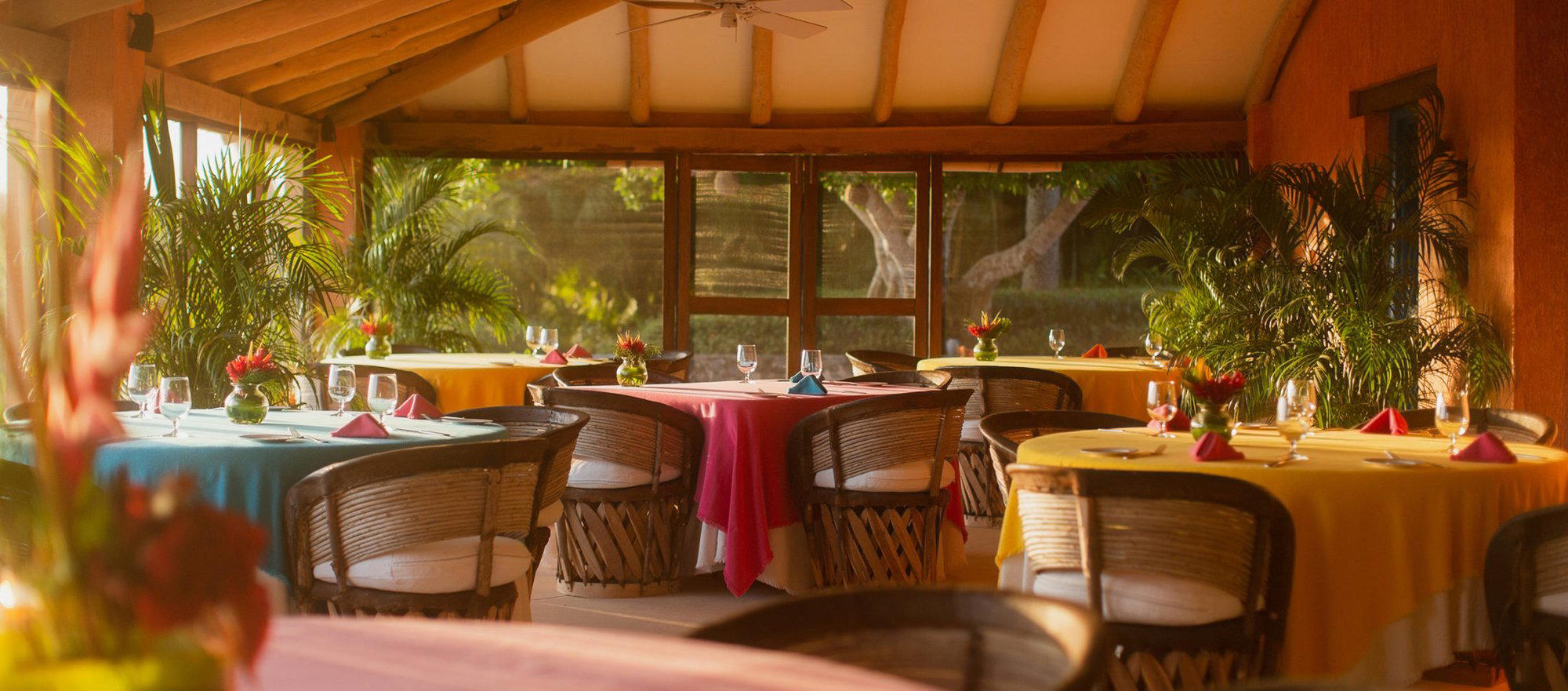
Details
- Romantic
- Scenic
- Elegant
- Sophisticated
- Quiet
- Honeymoon
- Romantic Getaway
- Family Vacation
- Wellness Retreat
- Anniversary
- Celebration
- Beachfront
- Infinity Pool
- Private Villa
- Destination Spa
- Golf Course
- Waterfront
- Panoramic View
- Private Dining
- Wi Fi
- Pool
- Spa
- Fitness Center
- Room Service
- Concierge
- Valet Parking
- Beach Access
- Golf Course
- Kids Club
- Waterfront
Modern luxury with refined contemporary Mexican design, bright open-air architecture inspired by ancient Mexico, floor-to-ceiling ocean views, and serene natural surroundings that create a tranquil, sophisticated atmosphere.