La Selva Eco-Lodge & Retreat

Named South America's Leading Eco-Lodge at the 2025 World Travel Awards, La Selva Eco-Lodge & Retreat sits deep in the Ecuadorian Amazon outside Puerto Francisco de Orellana. The lodge positions itself in the specialist tier of Amazon basin accommodation, where proximity to primary rainforest, low guest capacity, and structured naturalist programming define the competitive set rather than resort amenities.
Pearl is the En Primeur Club membership app — saves, bookings, and concierge access live there. Same editors, same standards.
- Address
- Puerto Francisco de Orellana, Ecuador
- Website
- laselvaecolodge.com
- Directions
- Get directions
 Saves & bookings on Pearl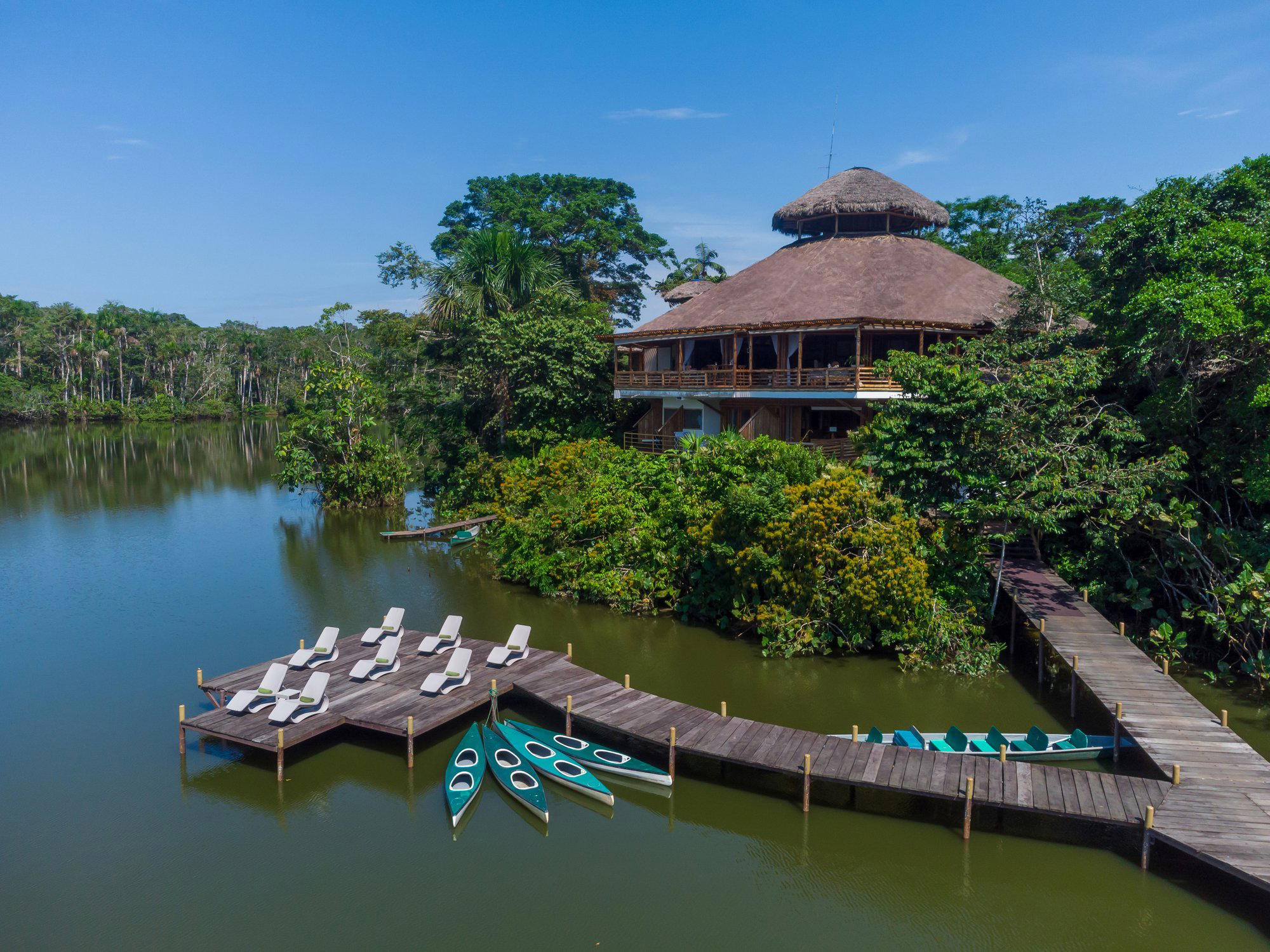
Where the Forest Sets the Terms
The Ecuadorian Amazon does not ease you in. The approach to La Selva Eco-Lodge & Retreat from Puerto Francisco de Orellana involves a motorised canoe along a blackwater tributary, with the tree canopy closing overhead before the lodge comes into view. This is not incidental atmosphere. It is the first architectural decision the lodge makes: physical separation from the road network is the structure that makes everything else possible. In a category where many properties bill themselves as Amazon lodges while remaining within earshot of a highway, the river-access-only format signals immediately which competitive tier this property occupies.
Across the broader Amazon basin, eco-lodge design has split into two recognisable camps. The first group maximises comfort metrics, delivering air-conditioned bungalows and swimming pools that could, in a different context, belong to any tropical resort. The second group treats the forest itself as the primary material, letting natural ventilation, ambient sound, and the unmediated presence of wildlife define the guest experience. La Selva belongs to the second group, and the 2025 World Travel Awards recognition as South America's Leading Eco-Lodge confirms that this positioning is being read accurately by the awards programme in the region.
Design as Environmental Argument
The design grammar of lodges in this category tends to draw on vernacular Amazonian construction: raised platforms, palm-thatch roofing, open-sided common areas that allow air movement without mechanical assistance. What separates the properties that win sustained critical attention from those that simply reference this vocabulary is the degree to which the construction choices serve the surrounding ecosystem rather than compete with it. At La Selva, the positioning on Garza Cocha lake adds a spatial dimension that many forest lodges lack. The water provides an unobstructed sightline, a different acoustic register from the forest interior, and access to a distinct microhabitat for wildlife observation, all within the lodge's immediate radius.
The lodge sits on a private reserve within the larger Yasuní Biosphere Reserve, among the more biodiverse terrestrial regions measured by science. That geographic fact is the single most consequential piece of information about the property. Yasuní holds documented records for species density across amphibians, birds, and mammals within any comparable area on earth. A lodge positioned inside or adjacent to that reserve is not making a marketing claim about nature access; it is operating in a zone where the baseline ecological complexity far exceeds what most rainforest properties can offer. This is the relevant peer comparison when assessing what La Selva actually delivers against properties marketing Amazon access from the periphery.
The Programme Architecture
In the specialist eco-lodge tier, the quality of the naturalist programme functions as the equivalent of a kitchen at a serious restaurant: it is the primary mechanism through which the property's core value is delivered. Lodges in the Yasuní corridor typically structure their offering around guided excursions at dawn and dusk, when mammal and bird activity peaks, supplemented by night walks, canoe transects, and canopy observation. The effectiveness of this format depends heavily on guide credentials and local ecological knowledge, which is why properties operating in this tier over sustained periods develop naturalist teams with deep site-specific expertise rather than rotating generalist guides.
Mashpi Lodge in Pichincha, which operates a cloud forest programme west of Quito and occupies a comparable specialist position in terms of low capacity and naturalist-led programming, and the Galápagos-based properties such as Pikaia Lodge in Galapagos Islands, Galapagos Safari Camp in Santa Cruz, Ecoventura - Galapagos in Puerto Baquerizo Moreno, La Laguna Galapagos Hotel in Isabela, and Angermeyer Waterfront Inn in Puerto Ayora. The distinction is ecological register: Galápagos properties deliver extraordinary endemic wildlife within a drier, more navigable archipelago environment, while the Yasuní Amazon offers primary rainforest complexity that rewards slower, more attentive engagement. Neither is a substitute for the other; they are different arguments about what a nature-focused stay can deliver.
Carlota in Quito or reference the colonial heritage tier represented by Hotel del Parque in Guayaquil. These function as urban counterpoints rather than competitors: the design language and guest experience objectives are categorically different.
Planning the Stay
Puerto Francisco de Orellana, known locally as Coca, is served by regular domestic flights from Quito, making the air connection the standard access route. The flight takes approximately 30 minutes, and transfers from Coca airport to the lodge's river embarkation point are coordinated by the property. The canoe transfer itself adds roughly an hour of travel time depending on water conditions, which means arrival days are substantive rather than administrative. Travellers arriving with restricted schedules should account for this when calculating effective nights at the lodge.
The Amazon basin operates on a bimodal rainfall pattern. The high-water season, roughly February through May, raises river levels and opens access to flooded forest environments, while the lower-water months expose riverbanks and concentrate wildlife around remaining water sources. Both periods offer distinct observation conditions rather than a clear superior. The relevant question for most travellers is which ecological dynamic they want to encounter, not which period to avoid.
Advance booking matters more than many travellers expect. Properties at this capacity level in the Yasuní corridor receive disproportionate demand from specialist wildlife tourism operators, conservation travel groups, and educational expeditions, which compress available dates for independent travellers. Booking through the property's direct channel or a specialist Ecuador operator several months ahead is the practical approach, particularly for stays coinciding with peak bird migration windows or holiday periods.
A Quick Peer Check
Comparable venues nearby, for context on price, style, and recognition.
| Venue | Cuisine | Price | Awards | Notes |
|---|---|---|---|---|
| La Selva Eco-Lodge & RetreatThis venue — the venue you are viewing | Sustainable eco-retreat blending native architecture with luxury comforts | $$$ | 4-Star | Not listed |
| Hotel Boutique La Casa de Marita Galápagos | Italian villa charm meets Ecuadorian coastal elegance with art-deco design elements and personalized, individually decorated rooms reflecting the island's natural beauty. | $$$ | 4-Star | Puerto Villamil |
| Hotel Boutique Cultura Manor by Café Cultura | Restored Republican-era manor blending cultural heritage with modern sophistication in Quito's historic center. | $$$ | 4-Star | La Mariscal |
| Angermeyer Waterfront Inn | Waterfront boutique inn with historic charm and modern comforts | $$$ | 3-Star | Puerto Ayora |
| Finch Bay Galapagos Hotel | Sustainable eco-lodge designed to blend seamlessly into the natural island environment with low-rise modern architecture. | $$$$ | 4-Star | Puerto Ayora, Santa Cruz Island |
| Mashpi Lodge | Sustainable luxury eco-lodge blending modern architecture with pristine cloud forest. | $$$$ | 5-Star | Pacto |
Recognition history
Dated appearances from independent guides and award organizations, with the underlying list record or original source where available.
World Travel Awards
World Travel Awards
At a Glance
- Rustic
- Scenic
- Quiet
- Intimate
- Wellness Retreat
- Family Vacation
- Romantic Getaway
- Group Retreat
- Panoramic View
- Private Villa
- Destination Spa
- Garden
- Terrace
- Wi Fi
- Spa
- Pool
- Restaurant
- Bar
- Garden
- Wi Fi
- Spa
- Pool
- Restaurant
- Bar
Airy, light wood tones inspired by native designs, breezy and cool with panoramic lake and forest views, lulling rainforest sounds.