La Laguna Galapagos Hotel sits on Av. Los Flamingos in Puerto Villamil, placing guests within walking distance of Isabela's flamingo lagoons and volcanic shoreline. The property occupies a quieter tier of Galapagos accommodation, where proximity to the island's ecosystem matters more than resort scale. For travellers routing through Isabela rather than the more trafficked Santa Cruz circuit, it represents a grounded base for the western archipelago.
Pearl is the En Primeur Club membership app — saves, bookings, and concierge access live there. Same editors, same standards.
- Address
- Av. Los Flamingos Y, 16 De Marzo, Puerto Villamil 200250, Ecuador
- Phone
- +593 95 945 6731
- Website
- lalagunagalapagoshotel.com
- Directions
- Get directions
 Saves & bookings on Pearl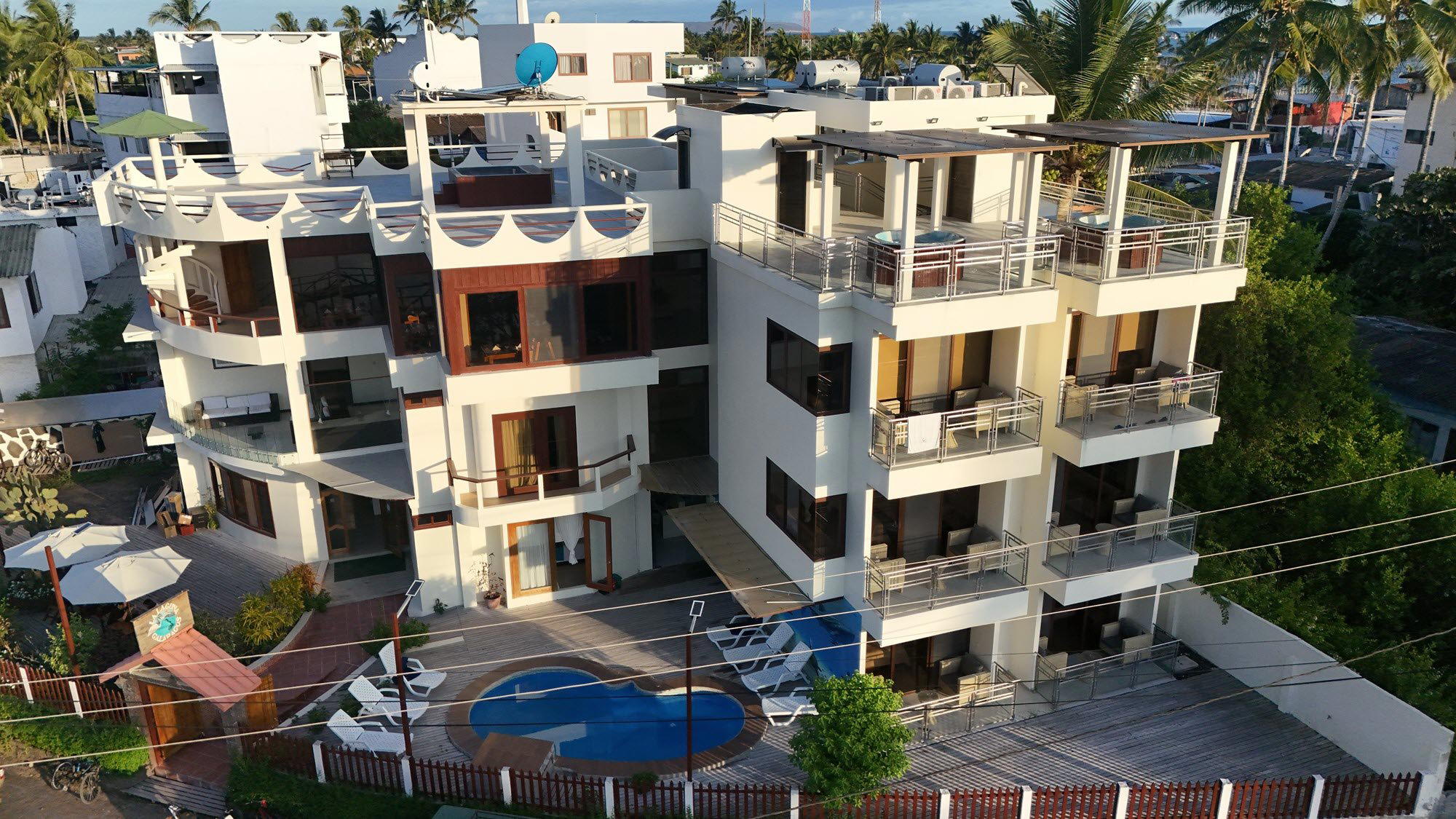
Where the Lagoon Defines the Architecture
Puerto Villamil is not a town that announces itself. Isabela's only settlement sits at the southern tip of the largest island in the Galapagos archipelago, where the road network thins to sand tracks and the built environment gives way almost immediately to brackish lagoons, lava fields, and the kind of bird life that stops experienced naturalists mid-sentence. Hotels here do not compete on the terms that drive luxury property design in, say, Paris or Tokyo. They compete on proximity and restraint: how close can a structure sit to a functioning ecosystem without disrupting it, and how much can a guest sense the landscape from their room?
La Laguna Galapagos Hotel is a 3-star hotel in Puerto Villamil, Isabela, at Av. Los Flamingos Y, 16 De Marzo. The street name is not incidental. The flamingo lagoons that sit behind the village are among the more accessible wild flamingo habitats in the Pacific, and properties on or near Av. Los Flamingos trade on that adjacency as their primary design asset. In a destination where the wildlife is the attraction, address functions as architecture.
The Isabela Accommodation Tier
Galapagos lodging has historically concentrated on Santa Cruz, where Puerto Ayora offers the widest spread of hotels, restaurants, and tour operators. Properties like Galapagos Safari Camp on Santa Cruz have built recognisable identities around design-led eco-tourism, while liveaboard operators such as Ecoventura out of Puerto Baquerizo Moreno serve travellers who prioritise range over a fixed base. Pikaia Lodge represents the upper end of fixed-base luxury in the archipelago, with design and service benchmarks that track against international eco-luxury peers.
Isabela sits outside that central circuit. Fewer visitors route through Puerto Villamil, ferry schedules from Santa Cruz run once or twice daily depending on season, and the island's infrastructure reflects its smaller visitor footprint. That relative quietness is precisely what draws a certain type of traveller: those who want the Galapagos without the relative bustle of Academy Bay. Within Isabela's own accommodation set, La Laguna occupies the mid-tier alongside properties like Hotel Boutique La Casa de Marita and Royal Isabela, where the competitive differentiation turns on room quality, lagoon orientation, and the ease of connecting to Isabela's specific sites: the Wall of Tears, Sierra Negra volcano, and the marine iguana colonies at Playa del Amor.
Design Logic in a Protected Zone
Building in the Galapagos operates under constraints that would be unrecognisable in most other destinations. The Galapagos National Park covers roughly 97 percent of the land area across the archipelago, and the inhabited zones where construction is permitted are tightly managed. Materials, footprints, and waste systems face scrutiny that shapes what any property can physically become. The result, across Isabela's hotel stock, is a vernacular that tends toward open-air structures, natural ventilation over air conditioning, and building heights that stay low against the flat coastal profile.
This is less a design philosophy chosen for aesthetic reasons and more a regulatory and ecological reality that architects and developers must work within. Properties that read as light-touch, locally-scaled, and materially honest are often that way because the alternative is not permitted. Understanding that context recalibrates how you assess accommodation in the archipelago: what looks like deliberate restraint is frequently the product of genuine constraint, and the better properties are those that work with that constraint rather than against it. For comparison, the kind of design ambition on display at Amangiri in Utah or Castello di Reschio in Umbria simply does not translate to a UNESCO World Heritage marine reserve.
Getting to Isabela
Reaching Puerto Villamil requires either a flight into Isabela Airport from Quito or Guayaquil via Baltra or San Cristóbal, or a two-hour speedboat crossing from Puerto Ayora on Santa Cruz. The ferry option is the more common approach for multi-island itineraries, though sea conditions between islands can be rough enough to dissuade travellers prone to motion sickness. Flights into Isabela's General Villamil Airport are less frequent and typically more expensive than routing through Baltra, but they eliminate the crossing entirely. Most guests visiting Isabela plan at least two nights minimum to justify the travel time; three to four nights allows for Sierra Negra and the coastal sites without rushing. Travellers beginning their Ecuador itinerary in Quito might consider bookending with a city property such as Carlota in Quito, or passing through Hotel del Parque in Guayaquil before the island leg. Those wanting a jungle counterpoint to the volcanic range of Isabela could extend toward the Amazon via La Selva Eco-Lodge in Orellana or north into the cloud forest at Mashpi Lodge in Pichincha.
Practical Orientation
The Galapagos high seasons run from June to September and December to January, when wildlife activity peaks and visitor numbers follow. Shoulder months, particularly March and April, offer warmer water for snorkelling with reduced crowd pressure at key sites. Puerto Villamil's beach and lagoon access is walkable from most accommodation on the main road, and the town's small size means that orientation takes less than an afternoon. Tour operators offering day excursions to Los Tuneles, the penguin colonies, and Sierra Negra crater can generally be arranged on arrival in Puerto Villamil, though travellers with fixed schedules should confirm availability in advance, particularly during the June-September peak when guide capacity fills quickly. There is no casino, no spa circuit, and no resort programming to speak of in Puerto Villamil; the town's appeal is its directness as a staging point for Isabela's natural sites. Accommodation here functions best when treated as a considered base, not a destination in itself.
Side-by-Side Snapshot
Comparable venues nearby, for context on price, style, and recognition.
| Venue | Cuisine | Price | Awards | Notes |
|---|---|---|---|---|
| La Laguna Galapagos HotelThis venue — the venue you are viewing | Small boutique hotel focused on comfort and scenic relaxation | $$$ | 3-Star | Not listed |
| Hotel Boutique La Casa de Marita Galápagos | Italian villa charm meets Ecuadorian coastal elegance with art-deco design elements and personalized, individually decorated rooms reflecting the island's natural beauty. | $$$ | 4-Star | Puerto Villamil |
| Angermeyer Waterfront Inn | Waterfront boutique inn with historic charm and modern comforts | $$$ | 3-Star | Puerto Ayora |
| Ecoventura - Galapagos | Luxury expedition yacht designed as a floating five-star boutique hotel with island-inspired contemporary interiors and sustainable eco-conscious operations. | $$$$ | 5-Star | San Cristobal |
| Hotel Otavalo | Restored Spanish colonial landmark | $$$$ | Not listed | city center |
| Finch Bay Galapagos Hotel | Hotel | Not listed | Not listed | Puerto Ayora |
Continue exploring
More in Isabela
Hotels in Isabela
Browse all →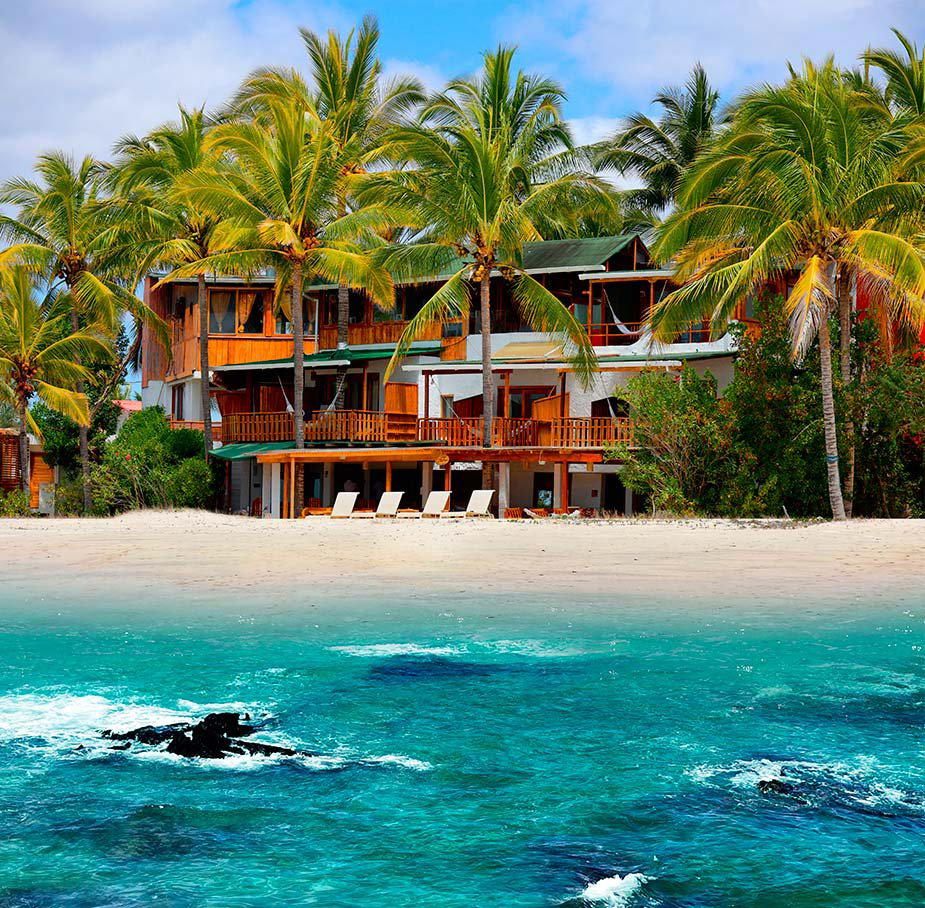
At a Glance
- Scenic
- Quiet
- Cozy
- Romantic Getaway
- Family Vacation
- Weekend Escape
- Panoramic View
- Terrace
- Wi Fi
- Pool
- Hot Tub
- Restaurant
- Bar
- Breakfast Included
- Air Conditioning
- Garden
- Waterfront
- Mountain
- Garden
- Wi Fi
- Pool
- Hot Tub
- Restaurant
- Bar
- Breakfast Included
- Air Conditioning
- Garden
Serene and relaxing island escape with shaded terrace, jacuzzi, and lagoon views, ideal for restful stays.