
1 Michelin Key
A 14-room country retreat on the Planeta family's western Sicilian estate, La Foresteria earned a Michelin Key in 2024 and sits at around $218 per night. Herb gardens, vineyard views, and a restaurant reinterpreting Sicilian tradition make it one of the more considered agriturismo-adjacent properties on the island. Wine tastings and cooking classes are built into the stay rather than bolted on as extras.

Pearl is the En Primeur Club membership app — saves, bookings, and concierge access live there. Same editors, same standards.
- Address
- SP79, Km 91, 92013 Contrada Passo di Gurra, AG
- Phone
- +39 0925 529986
- Website
- planetaestate.it
- Directions
- Get directions
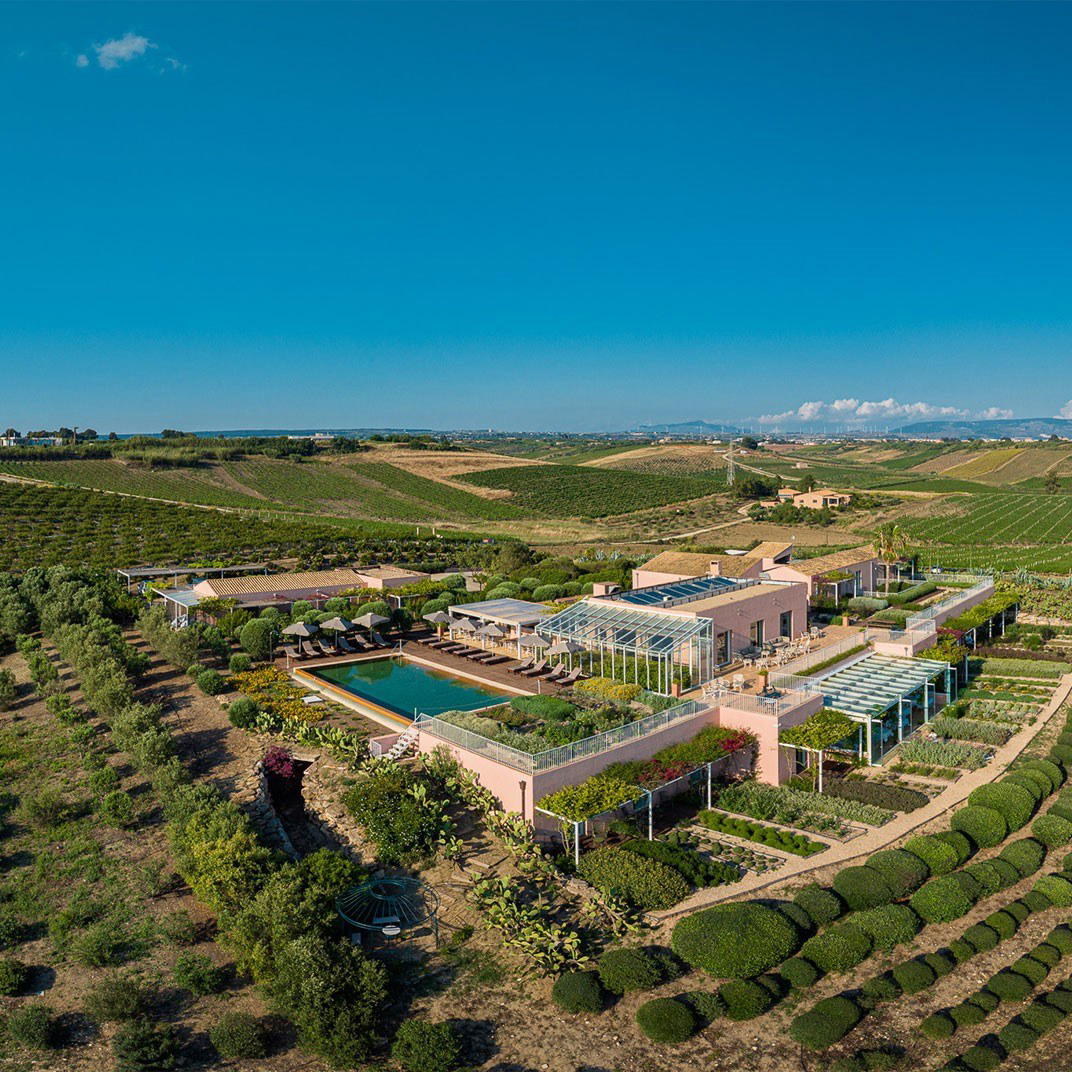
Vineyards, Olive Groves, and the Architecture of Restraint
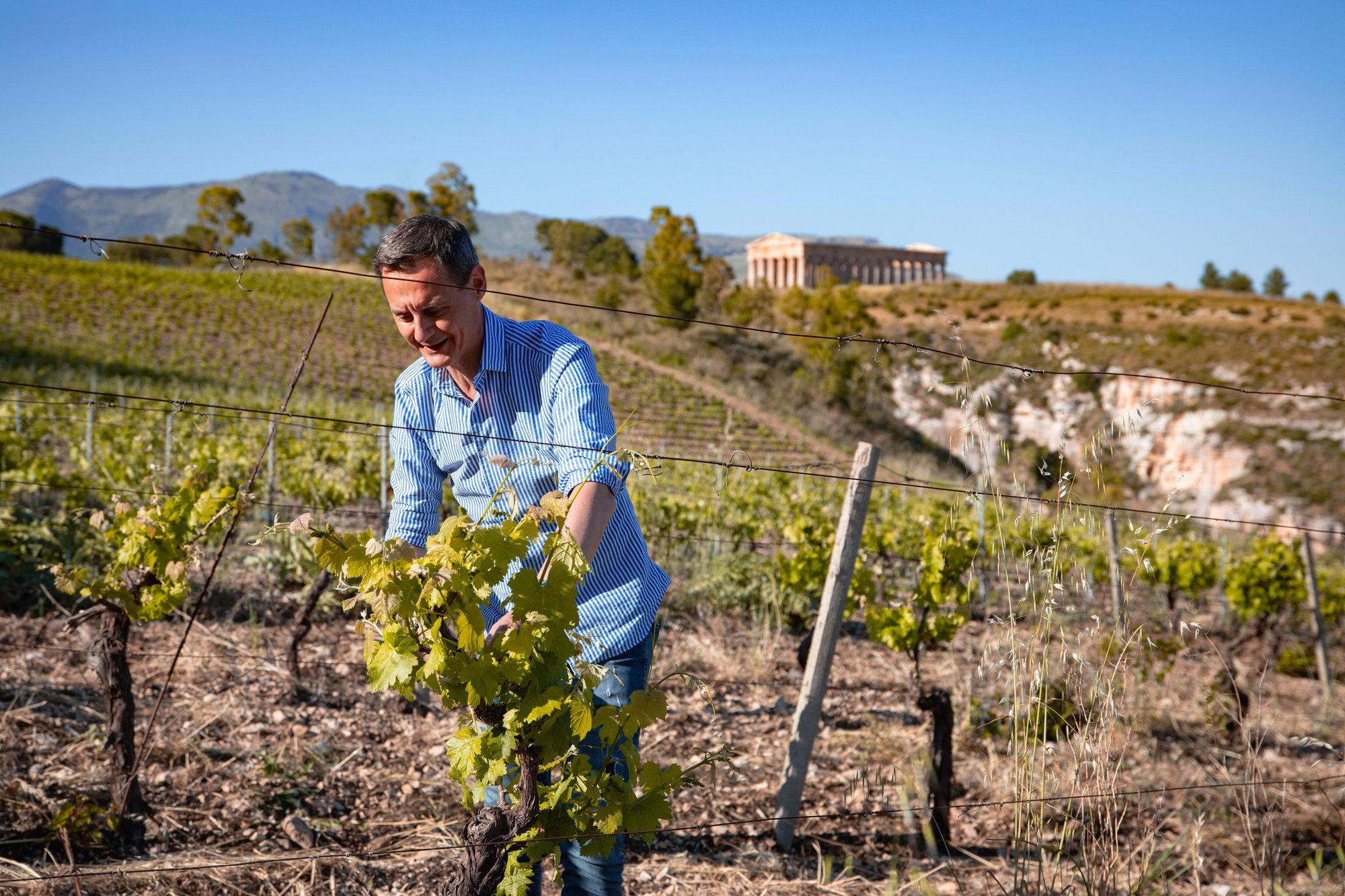
The far west of Sicily operates on a different register from the island's more visited corners. There are no baroque city squares, no cable-car queues, no tourist menus printed in six languages. The landscape between Menfi and the coast is agricultural in the oldest sense: vineyards, olive groves, and the kind of silence that suggests the land has been working quietly for centuries. It is into this setting that the Planeta family has placed La Foresteria, a 14-room estate retreat that earns its Michelin Key (awarded in 2024) not through spectacle but through the coherent logic of its design and its relationship to the land around it.
Across the Italian peninsula, a particular model of rural hospitality has consolidated around properties that ask guests to slow down and engage with a specific agricultural identity. Rosewood Castiglion Del Bosco in Montalcino does this through Brunello di Montalcino heritage; Borgo San Felice in Castelnuovo Berardenga through Chianti Classico terroir. La Foresteria belongs to the same category, but its version is distinctly Sicilian: the Planeta family's winemaking and olive oil production spans multiple locations across the island, and the estate at Contrada Passo di Gurra is where the hospitality arm of that operation takes physical form.
The Physical Logic of the Property
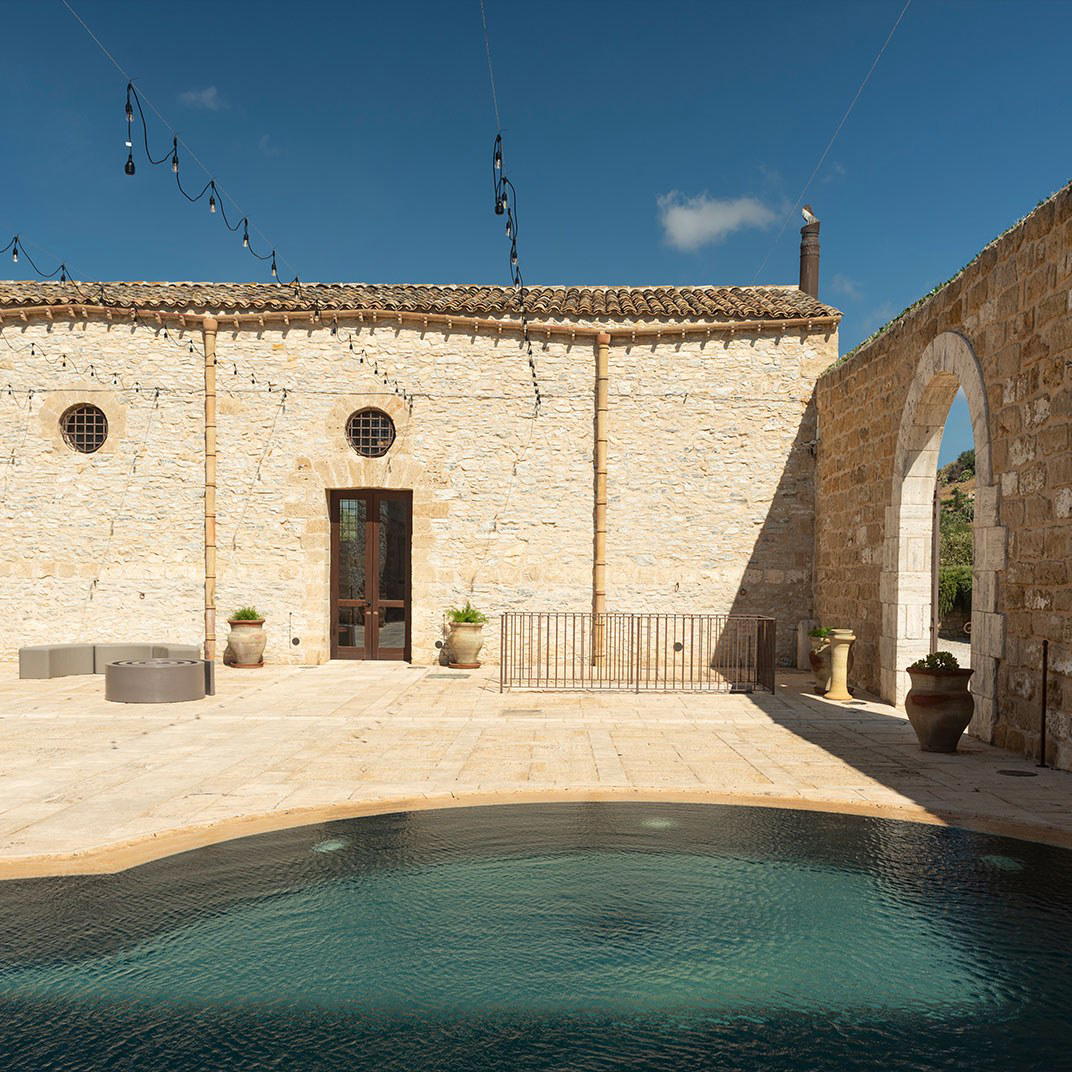
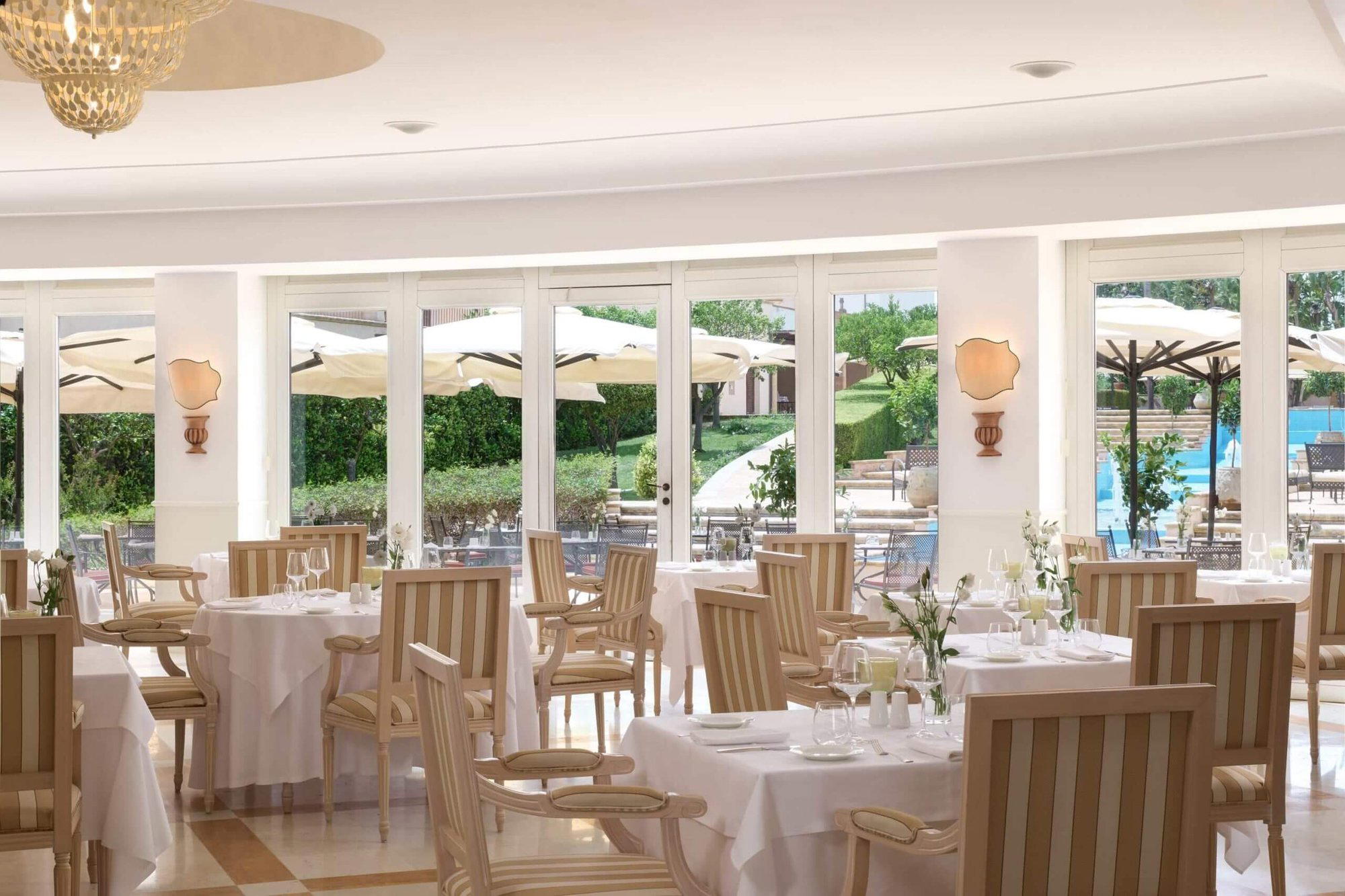
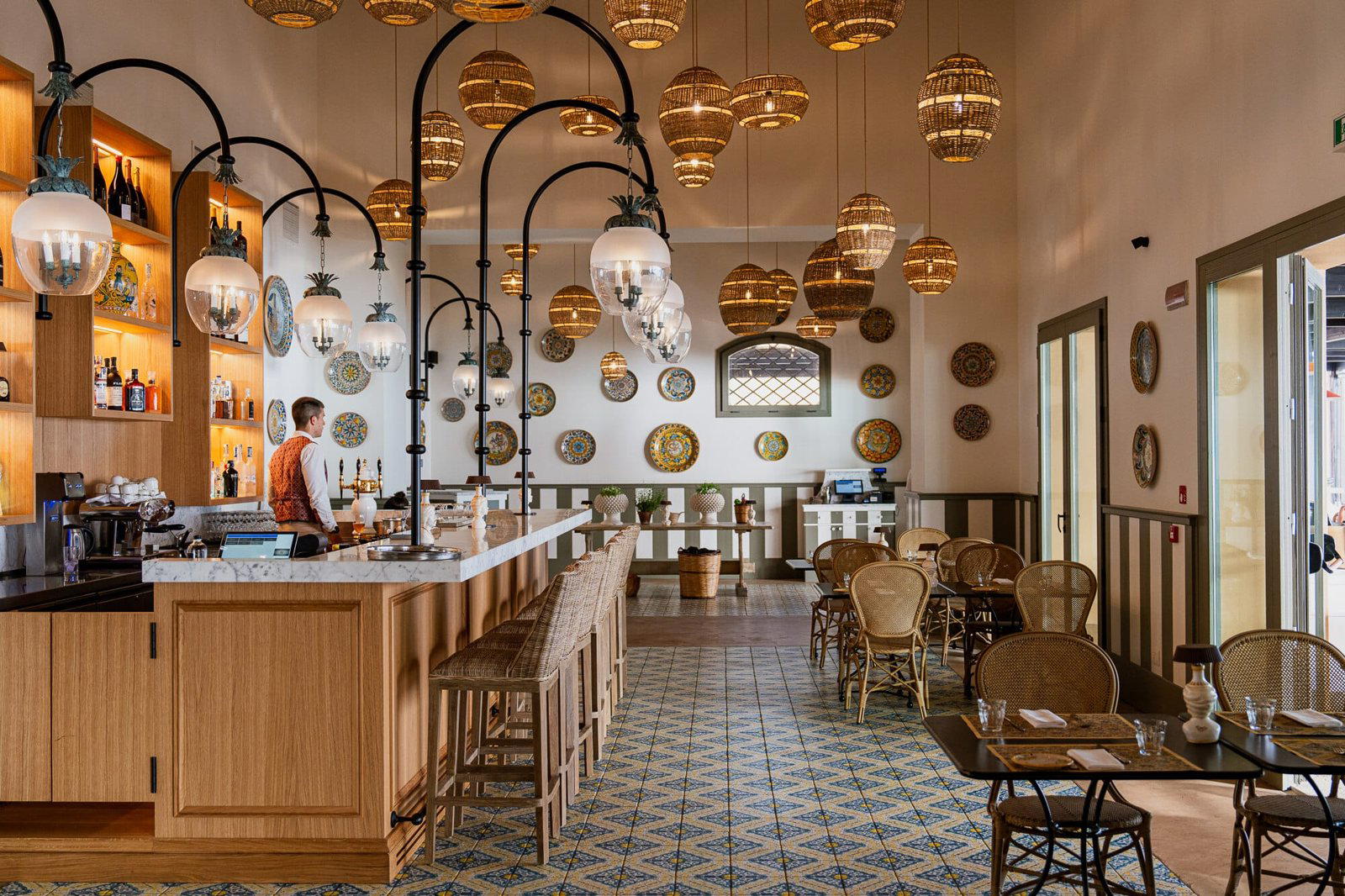
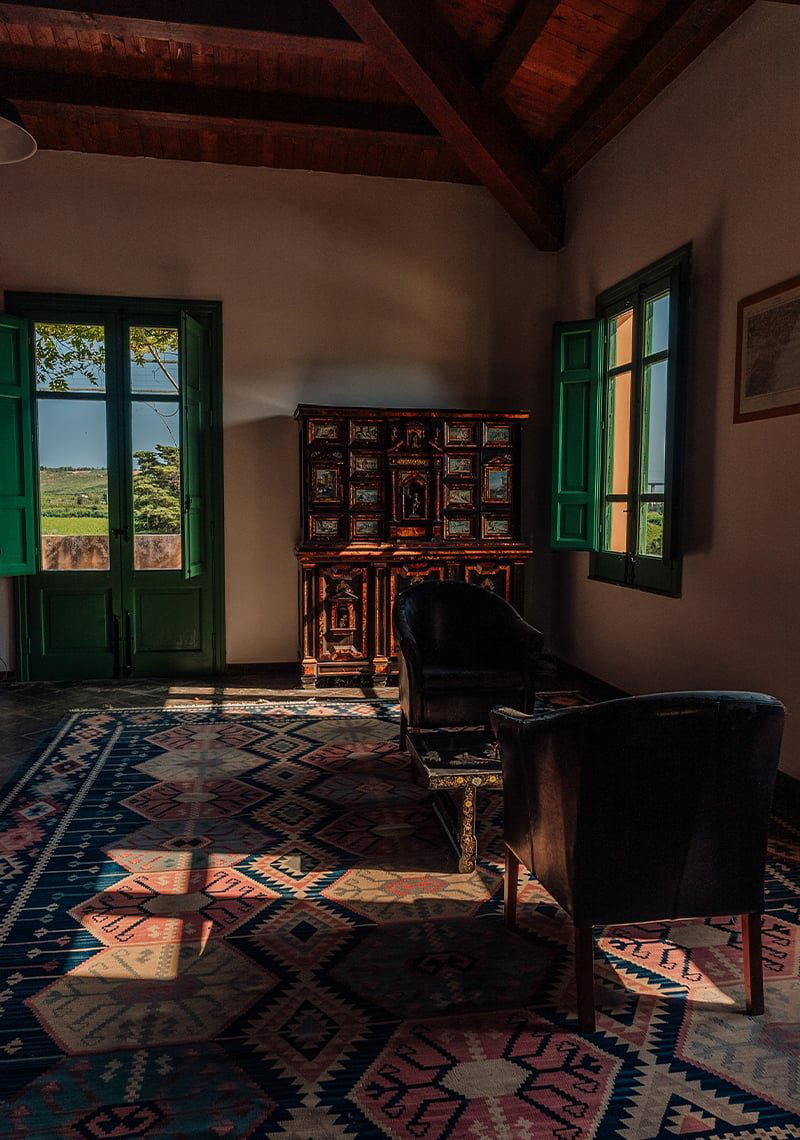
Contemporary in construction but classical in aesthetic approach, the property's architecture sits comfortably within the agricultural vernacular of western Sicily without tipping into pastiche. This is harder to achieve than it appears. Rural retreats across Tuscany and Umbria have spent two decades overcorrecting toward rustic theatrics, loading interiors with terracotta floors and exposed beams that feel curated rather than inherited. La Foresteria takes a different path: contemporary build, restrained finish, and a commitment to comfort that doesn't announce itself through ostentatious display.
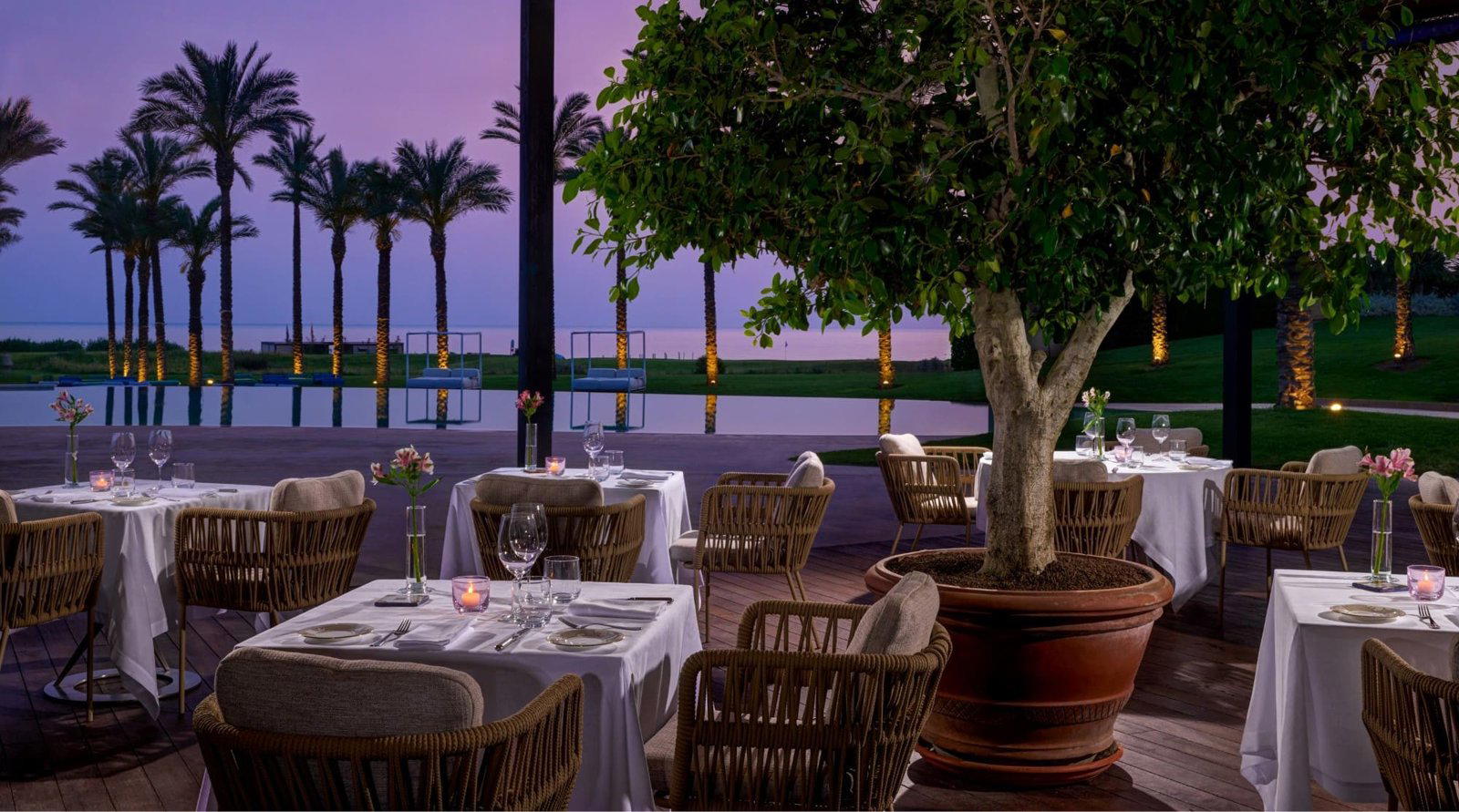
The 14 rooms are named for the herbs and plants of the surrounding estate, from lavender and rosemary to santolina and artemisia. The naming convention is not decorative; it reflects the physical reality of herb gardens that surround the pool area, which means guests encounter those same plants at breakfast, by the pool, and in the restaurant kitchen. That kind of integration between architecture, landscape, and daily experience is where the property operates most convincingly. At a rate around $218 per night, the value proposition rests not on room size or furniture specification but on what the setting makes possible.
Properties of comparable design ambition in Italy tend to price significantly higher. Castelfalfi in Montaione and Borgo Egnazia in Savelletri di Fasano both operate in the same category but at a different price tier. La Foresteria's positioning reflects western Sicily's relative distance from high-season luxury tourism, which works in the guest's favor.
The Restaurant and the Kitchen's Connection to the Estate
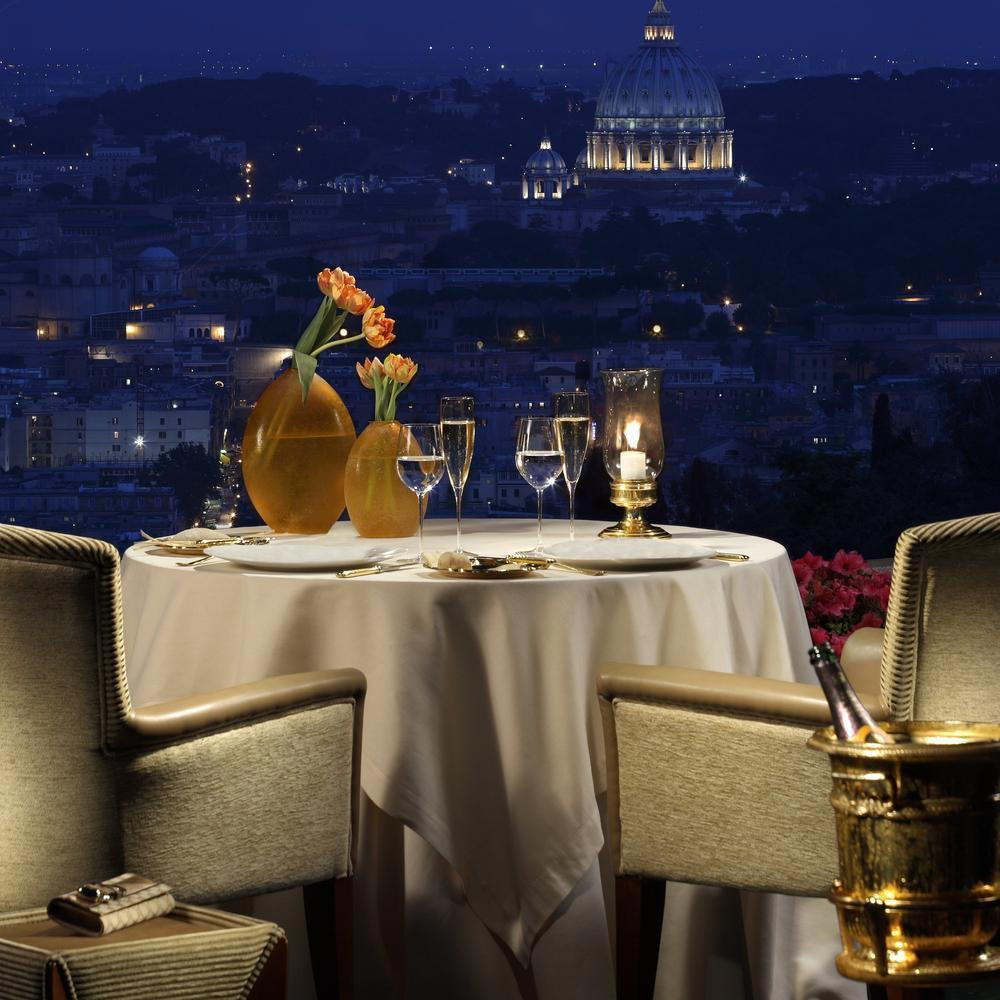
The restaurant La Foresteria is the property's most editorially interesting component. Sicilian cuisine carries one of the Mediterranean's most complex culinary histories: Arab, Norman, Spanish, and Greek influences have all left structural traces in the island's cooking, and that depth makes it a more demanding subject for a modern kitchen than it might appear. The restaurant works within that tradition while pushing it toward something more contemporary, reinterpreting the island's flavors rather than reproducing them.
In the broader context of Italian hotel dining, the relationship between kitchen and estate is increasingly a point of differentiation. At Casa Maria Luigia in Modena, the kitchen operates in close proximity to a defining regional food identity. La Foresteria's restaurant has a version of the same structural advantage: the Planeta olive oils produced on the estate, the wines from across the family's Sicilian operations, and the herbs from the surrounding gardens give the kitchen materials that arrive with verifiable provenance rather than supplier provenance. Breakfast runs as an expansive Sicilian-style buffet, which gives guests a useful orientation to the island's morning food culture before dinner makes more explicit claims on the tradition.
What the Stay Actually Involves
The Michelin Key designation, introduced in 2024 as the guide's framework for recognising hotels rather than restaurants, places La Foresteria in a peer group defined by experiential coherence rather than room count or amenity volume. With 14 rooms, the property operates at a scale where individual attention is structurally possible rather than aspirationally promised.
The programming on offer reflects the estate's actual assets. Wine tastings and cooking classes are available throughout the stay, drawing on the Planeta family's winemaking operation rather than being imported as generic hospitality extras. A beach club a few minutes' drive from the property extends the range of the stay without requiring the property to overreach its rural identity. Cycling and walking routes through the estate and surrounding countryside position this as a property that rewards physical engagement with its setting, not passive resort consumption.
For guests oriented toward active rural stays with a serious food and wine component, this combination is coherent. It sits in a different category from properties like Aman Venice or Bulgari Hotel Roma, where the hospitality experience is largely self-contained and the city does the contextual work. At La Foresteria, the estate itself is the context, and the guest's engagement with it is the point.
Where It Sits in the Italian Rural Hotel Category
Italy's wine-estate hotel category has expanded considerably over the past decade, with properties attaching rooms to established agricultural operations across Piedmont, Tuscany, Umbria, and increasingly Sicily. The better examples in this category, among them Castello di Reschio in Lisciano Niccone and Il Pellicano in Porto Ercole, succeed because the hospitality offer grows organically from something that existed before the hotel did. La Foresteria benefits from the same structural logic: Planeta's wine and olive oil production is the primary activity, and the retreat is built around it rather than the other way around.
That distinction matters for guests who want a stay that feels grounded rather than assembled. Properties like Four Seasons Hotel Firenze or Portrait Milano deliver a different kind of confidence: the assurance of an internationally recognised operational standard in a high-density city environment. La Foresteria's confidence is of a different kind, grounded in the specificity of one family's relationship to one stretch of Sicilian agricultural land.
Western Sicily's wine region has historically received less international attention than Etna's volcanic appellations or the Marsala traditions of the province's northern coast. Planeta's operation across multiple Sicilian sites has contributed to shifting that calculus, and staying at La Foresteria gives guests a useful vantage point on that shift. For context on planning time in the area, our full Menfi restaurants guide covers the broader dining picture in the region.
Planning the Stay
The property is located at SP79, Km 91, in Contrada Passo di Gurra, outside Menfi in the Agrigento province. The surrounding area rewards visitors who arrive with time to explore rather than a compressed itinerary: the Valle dei Templi at Agrigento, the salt flats near Trapani, and the coastline between Sciacca and Marsala all sit within reasonable driving range. Given the remote setting, a car is not optional. The $218 nightly rate covers the room and access to the estate's amenities; wine tastings and cooking classes are structured as in-house programming. The Michelin Key recognition in 2024 provides an external validation that the property's hospitality standards have been assessed against a defined framework, which is useful context for first-time visitors uncertain whether a wine estate's hotel operation will match the quality of its primary agricultural product. Here, the evidence suggests it does.
Comparable Spots, Quickly
Comparable venues nearby, for context on price, style, and recognition.
| Venue | Cuisine | Price | Awards | Notes |
|---|---|---|---|---|
| La Foresteria Planeta EstateThis venue — the venue you are viewing | Sicilian country estate designed as a traditional hamlet with simple linear architecture, terraces, courtyards, and herb gardens integrated into working vineyards. | $200–300 | 1 Michelin Key | Not listed |
| Country House Villadorata | Rustic elegance blending 19th-century Sicilian architecture with contemporary minimalist design, emphasizing natural materials and organic surroundings. | Not listed | 1 Michelin Key · Mr & Mrs Smith Seal of Approval | Val di Noto |
| Masseria della Volpe | Restored Sicilian masseria eco-resort with traditional rural architecture and contemporary comforts. | $300–500 | 1 Michelin Key | Noto |
| Wine Relais Feudi Del Pisciotto | 18th-century restored palmento wine estate | $200–300 | 1 Michelin Key · Michelin Guide New Hotels New Hotel | Niscemi |
| Grand Hotel Minerva | Historic palazzo converted to upscale boutique hotel with contemporary amenities and classical Italian design elements. | $300–500 | 1 Michelin Key · Virtuoso Luxury Hotel Partner | Santo Spirito |
| The Hoxton, Rome | Boutique design hotel with mid-century Italian influences and lively public areas. | Not listed | Michelin Selected | Salario |
Recognition history
Dated appearances from independent guides and award organizations, with the underlying list record or original source where available.
Michelin 1 Key
Michelin
Full recognition history (3 entries)
Michelin 1 Key
Michelin
Michelin 1 Key
Michelin
Continue exploring
More in Menfi
Hotels in Menfi
Browse all →
Bars in Menfi
Browse all →
Restaurants in Menfi
Browse all →


Details
- Romantic
- Scenic
- Quiet
- Rustic
- Elegant
- Romantic Getaway
- Anniversary
- Family Vacation
- Wellness Retreat
- Celebration
- Garden
- Terrace
- Panoramic View
- Private Dining
- Destination Spa
- Infinity Pool
- Wi Fi
- Pool
- Fitness Center
- Sauna
- Restaurant
- Bar
- Beach Access
- Parking
- Room Service
- Concierge
- Spa
- Vineyard
- Waterfront
- Garden
- Wheelchair Accessible
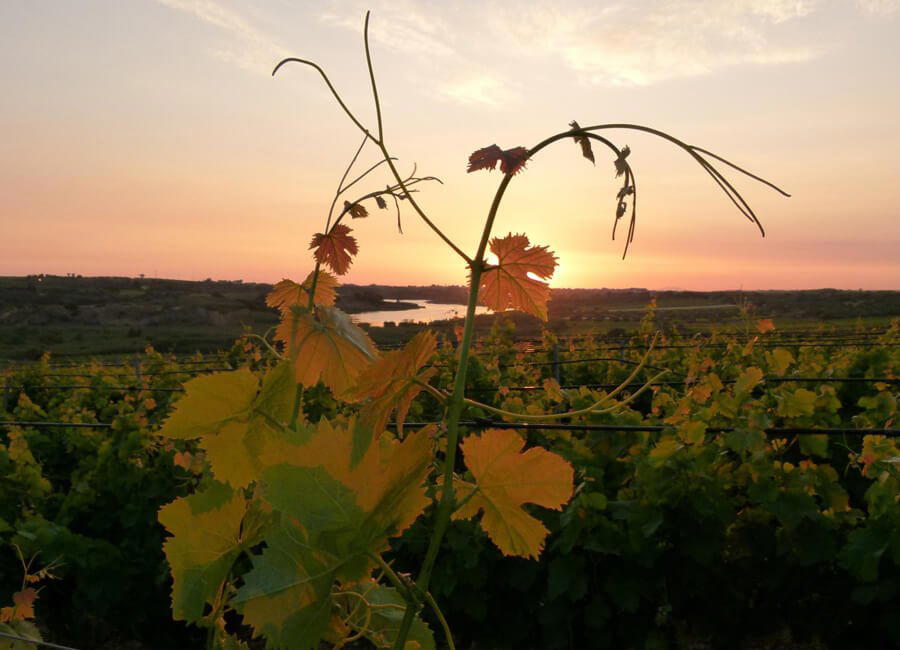
Peaceful and serene countryside setting with natural light from terraces and courtyards; warm hospitality with refined yet relaxed atmosphere enhanced by vineyard views and Mediterranean design.