

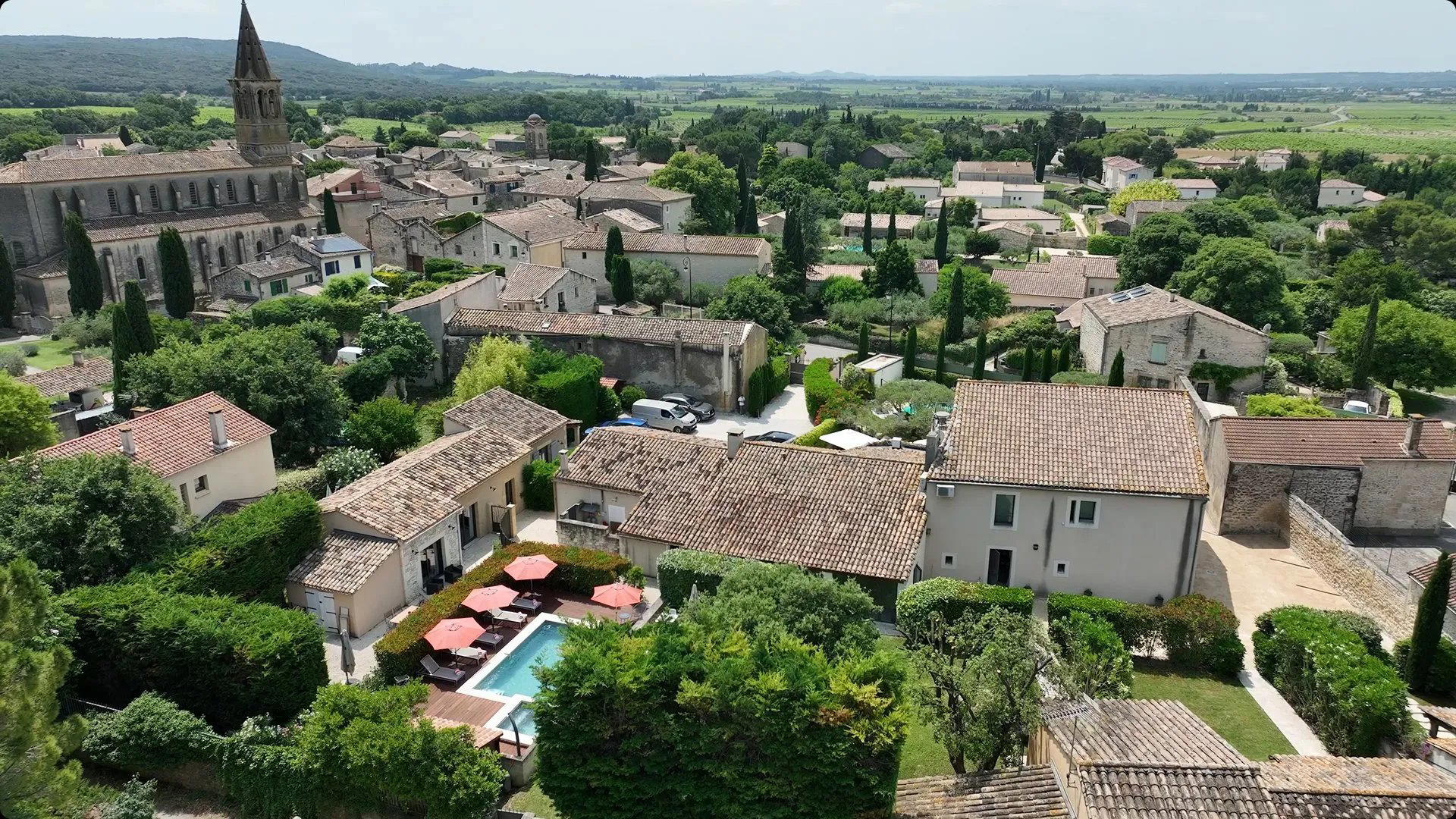
A 19th-century château in the Gard countryside, Château de Montcaud completed a full renovation in 2018 that placed contemporary interiors inside heritage stone walls. Recognised with Michelin 2 Keys (2024) and 92 points from La Liste Top Hotels (2026), the 29-room property runs two restaurants under chef Matthieu Hervé alongside a tennis court, pool, and a programme of regional experiences from vineyard visits to helicopter flights.
Pearl is the En Primeur Club membership app — saves, bookings, and concierge access live there. Same editors, same standards.
- Address
- Château de Montcaud, 30200 Sabran
- Phone
- +33 4 66 33 20 15
- Website
- chateaudemontcaud.com
- Directions
- Get directions
 Saves & bookings on Pearl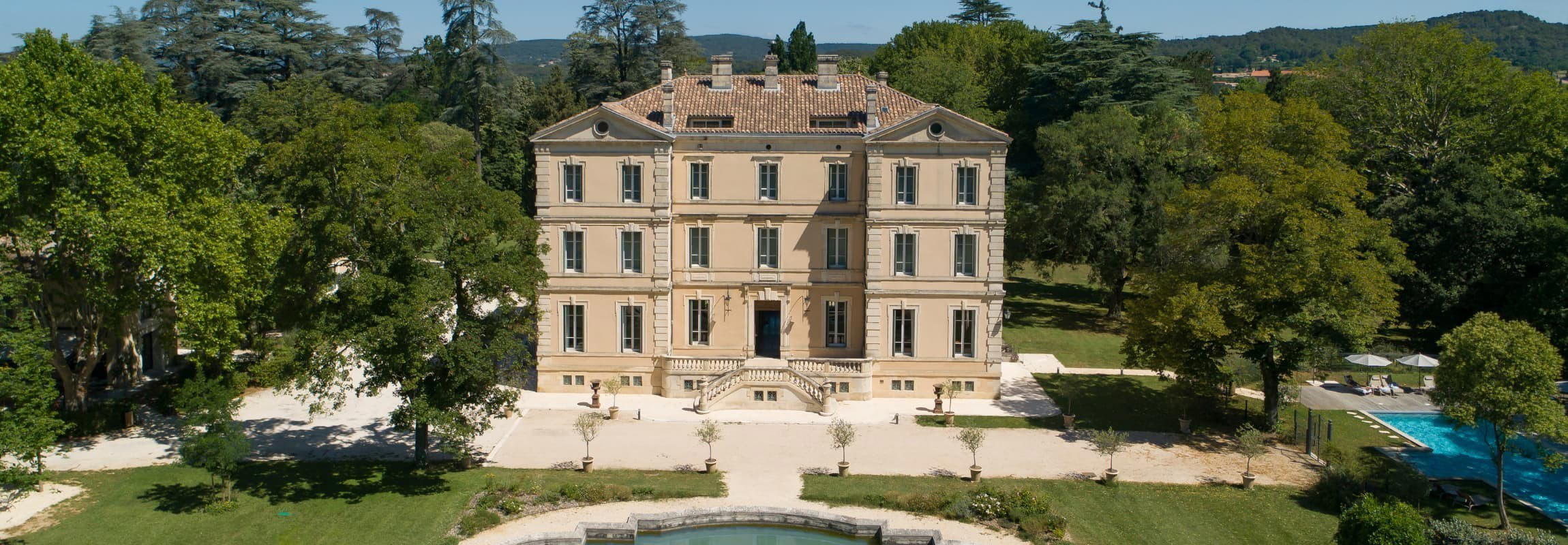
Stone Walls, Modern Rooms: The Château Hotel as a Design Proposition
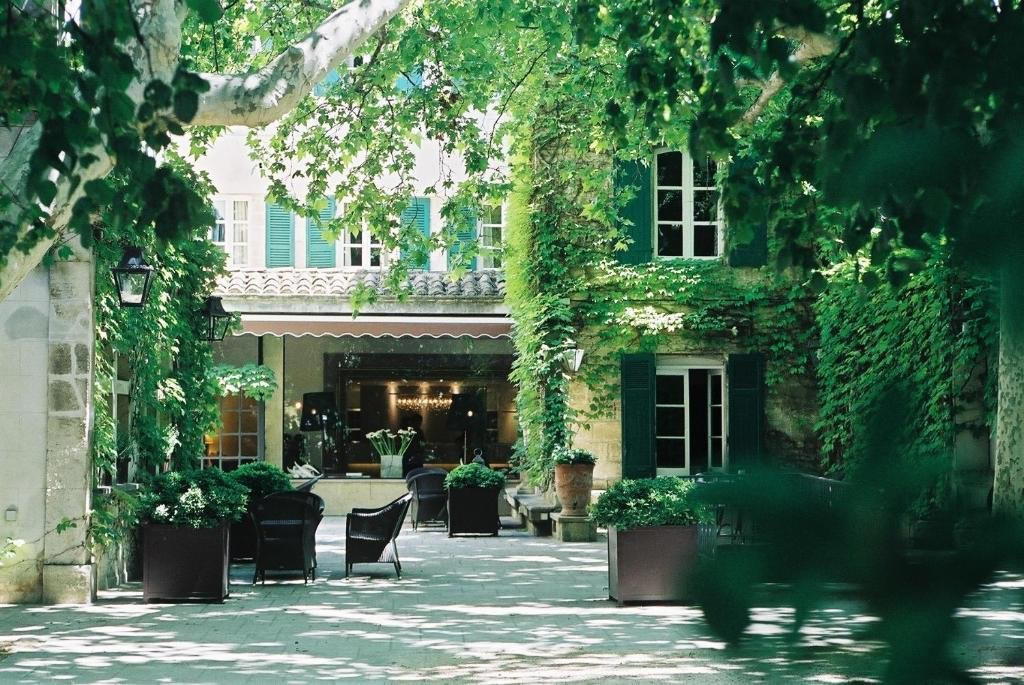
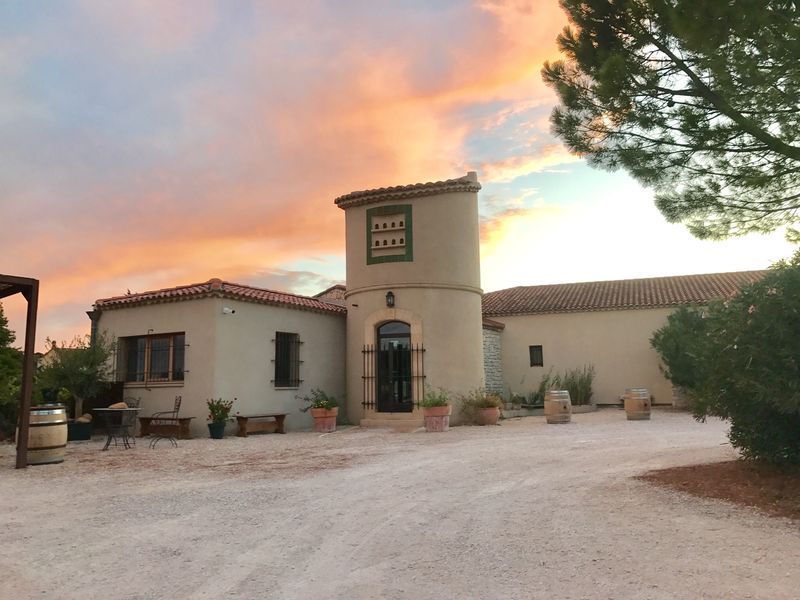
The approach to Sabran tells you something about what kind of hotel Château de Montcaud is going to be before you reach the door. The village sits in the Gard département, inland from the Rhône, in the kind of rolling, unhurried terrain that the South of France reserves for those willing to travel past the coast. The château itself, a structure dating to 1848, arrives as a composed silhouette of 19th-century stonework and shuttered windows, the kind of exterior that takes a century and a half to acquire. What it does not tell you, until you step inside, is that the renovation completed in 2018 made a deliberate and sustained argument for contrast.
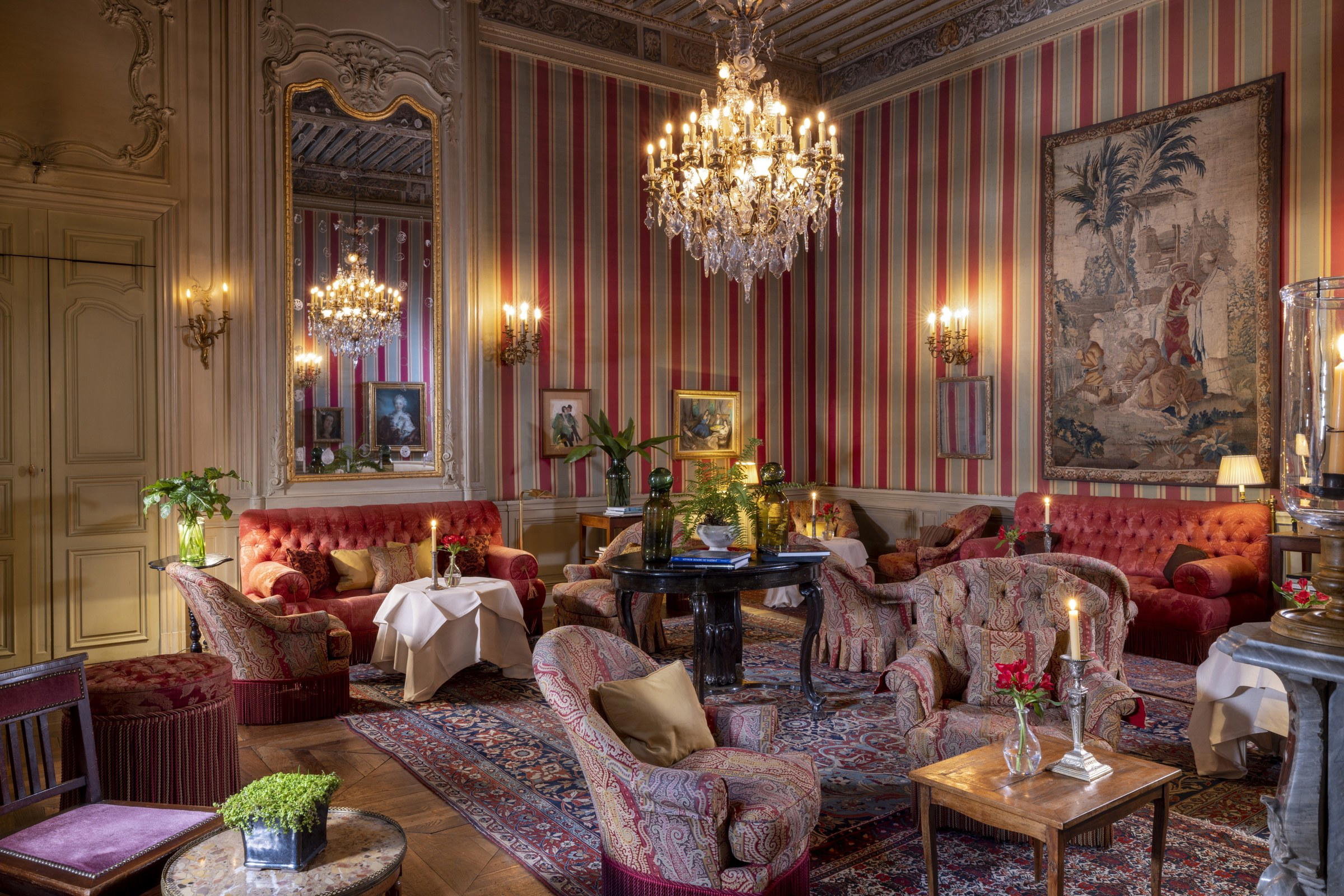
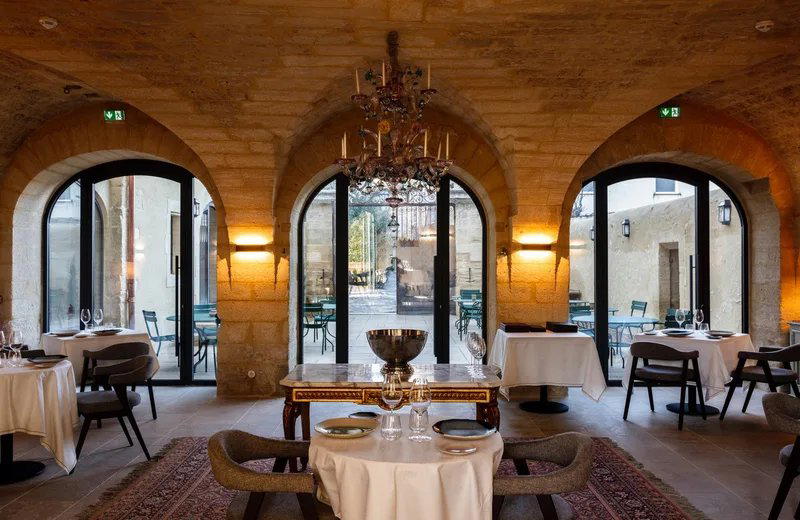
That argument is the central design proposition of the property. In France's luxury château hotel category, the instinct is usually to preserve period interiors alongside period exteriors, heavy drapes, toile wallpapers, gilded furniture arranged in rooms that feel lifted from a different era. Château de Montcaud takes the opposite position. The 19th-century architectural details, cornicing, proportions, ceiling heights, the bones of the building, remain intact and legible. The furniture, however, is contemporary: clean-lined, spare, chosen for visual simplicity rather than period fidelity. The result is a tension that reads as intentional rather than incongruous, a conversation between what the building is and what the hotel chooses to put inside it. For travellers fatigued by the nostalgic comfort of the standard French château hotel, this is a materially different experience.
Room Hierarchy in a 29-Key Property
With 29 rooms, Château de Montcaud sits at the scale where room count becomes a differentiator. French château conversions vary considerably in how generously they interpret their available space: some pack in rooms to maximise yield from the building's footprint, others resist the temptation. One structural advantage of the château format is that even rooms in the lower tier tend to inherit generous proportions from the original architecture. The Classic rooms here carry that benefit, arriving with dimensions that would qualify as mid-tier in many urban hotels. At the suite level, the property reaches what the available record describes as palatial, a word that carries specific meaning when applied to a 19th-century stone building rather than a purpose-built resort.
Michelin awarded the property 2 Keys in 2024, a designation that reads as recognition of the overall hotel experience rather than any single element. For a 29-room château in inland Gard, rather than on the Côte d'Azur or in a more trafficked wine region, that recognition carries additional weight. It places the property in a conversation with French luxury hotels that operate at significantly larger scale and in markets with considerably more established visitor infrastructure. Properties like Domaine Les Crayères in Reims or Château du Grand-Lucé in Le Grand-Lucé illustrate how the French historic-property hotel sector operates across diverse regions; Montcaud's recognition places it alongside that cohort despite its relative seclusion.
Two Restaurants and the Logic of a Self-Contained Stay
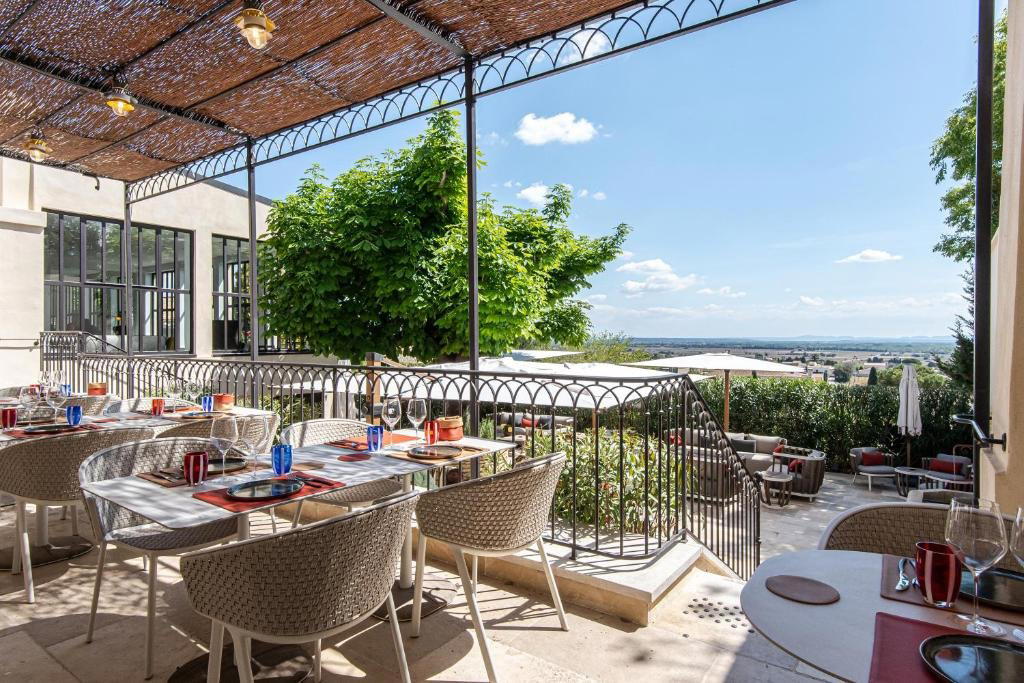
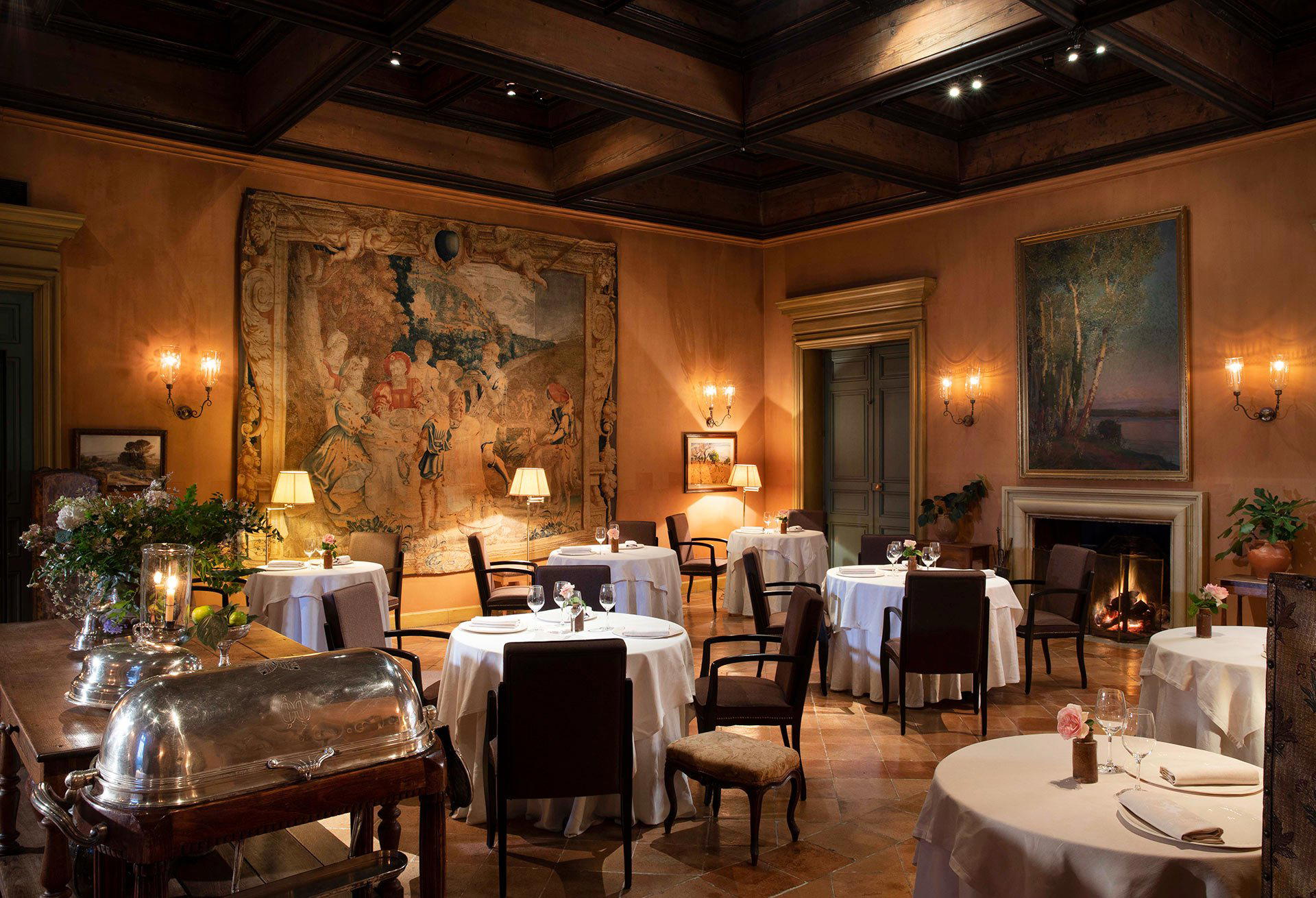
Château de Montcaud runs two restaurants under chef Matthieu Hervé. In a 29-room property, the decision to operate two distinct dining formats rather than a single restaurant reflects a specific hospitality logic: guests staying multiple nights need variation, and a château in this location cannot rely on a surrounding restaurant scene to fill that gap the way an urban hotel can. The South of France has produced some of France's most recognised hotel-restaurants, Baumanière Les Baux-de-Provence in Les Baux is the clearest regional precedent, and the dual-restaurant format at Montcaud positions the property within that tradition of treating the dining programme as central to the stay rather than supplementary to it.
The broader regional context is worth noting for anyone approaching from the coast. The Gard sits between the Rhône vineyards to the north and the garrigue landscapes leading toward the Languedoc to the west, a position that gives a serious kitchen access to two distinct wine regions and a larder shaped by both Provençal and Languedocian traditions.
Activities Beyond the Room
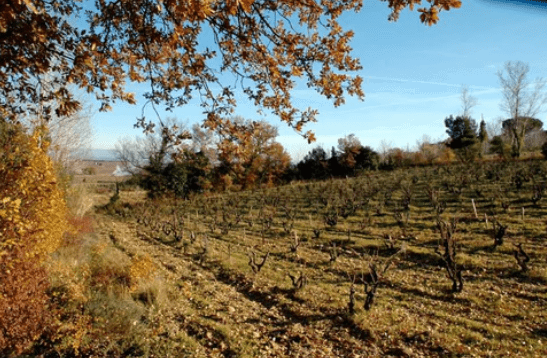
The grounds include a grass tennis court and an outdoor swimming pool, which represent the baseline expectation for a property at this tier. What distinguishes the activity offer is the range of off-property programming: wine tastings, vineyard visits, and helicopter flights over the Saint-Jean-du-Gard countryside are all cited as available arrangements. This kind of curated regional access matters in a location like Sabran, where the surrounding landscape is the primary draw but a guest arriving without local knowledge needs a structured entry point. The Gard is not a region that organises itself legibly for international visitors the way Burgundy or the Médoc does; the property's role as intermediary, connecting guests to vineyards, landscapes, and experiences that would otherwise require independent navigation, is a meaningful part of the value proposition.
Comparable properties in the French South that have built strong reputations for this kind of territorial programming include Villa La Coste in Le Puy-Sainte-Réparade and Coquillade Provence in Gargas, both of which use their position in the agricultural interior to offer wine and land-based experiences that coastal properties cannot replicate. Montcaud operates in a similar register, though the Gard's relative obscurity compared to the Luberon or Alpilles gives it a different starting point with most international travellers.
Positioning in the French Château Hotel Market
The French luxury château hotel market splits broadly into two cohorts. The first comprises historic properties absorbed by large luxury groups, the Cheval Blanc tier, or properties like Château Lafaurie-Peyraguey in Lieu-dit Peyraguey, where the estate's identity is amplified by group resources and distribution. The second cohort consists of independently operated or boutique-group properties that rely on the building's own character and a tightly controlled guest experience to compete. The hotel belongs to the second category, where the 29-room scale, the 2018 renovation, and the dual-restaurant programme are the operational instruments of the positioning rather than a group's brand equity.
Within that independent tier, the design decision to juxtapose a 19th-century exterior with contemporary interiors distinguishes Montcaud from properties that compete on period authenticity alone. It is a choice that attracts a specific kind of traveller: one who wants the spatial and atmospheric benefits of a historic château, the proportions, the grounds, the sense of remove from the ordinary, without the decorative conservatism that often accompanies them. Travellers comparing château options elsewhere in the South may also consider Château de la Chèvre d'Or in Èze or Château de la Gaude in Aix-en-Provence, both of which occupy related but distinct positions in the market. For the Riviera comparison set, Hotel Du Cap-Eden-Roc in Cap d'Antibes, The Maybourne Riviera in Roquebrune-Cap-Martin, and La Réserve Ramatuelle in Ramatuelle illustrate what the coastal tier offers by contrast, scale, sea access, and brand visibility that inland properties trade away in exchange for seclusion and price differentiation.
Planning a Stay
The property is located at the hotel, 30200 Sabran, in the Gard département of southern France. The 29-room count means availability is finite and advance planning is advisable, particularly for shoulder and summer season travel when regional demand in the South increases sharply. The full activities programme, including vineyard visits and helicopter excursions, is arranged directly with the hotel, as availability and scheduling for these experiences varies by season and group size.
Comparable Venues
Comparable venues nearby, for context on price, style, and recognition.
| Venue | Cuisine | Price | Awards | Notes |
|---|---|---|---|---|
| Château de MontcaudThis venue — the venue you are viewing | Renovated 19th-century Provençal chateau with modern luxury interiors | $$$$ | Michelin 2 Key | Not listed |
| Le Couvent des Minimes, Un Hôtel & Spa L'Occitane en Provence | Restored 17th-century convent in Provençal countryside | $$$$ | Michelin 2 Key | Mane |
| L'Apogée Courchevel | Luxury alpine chalet with contemporary interiors by India Mahdavi and Joseph Dirand. | $$$$ | Michelin 2 Key | Courchevel (Commune Non Irisée) |
| Les Roches Blanches | Historic Art Deco Mediterranean haven | $$$$ | Michelin 2 Key | Cassis |
| Maison Doucet | Contemporary luxury in historic Burgundy setting | $$$$ | Michelin 2 Star | Charolles |
| Coquillade Provence | Provençal luxury resort with vineyard estate | $$$$ | Michelin 2 Key | Gargas |
Recognition history
Dated appearances from independent guides and award organizations, with the underlying list record or original source where available.
La Liste Top Hotels
La Liste
Michelin 2 Keys
Michelin
Michelin 2 Keys
Michelin
Continue exploring
More in Sabran
Hotels in Sabran
Browse all →
Bars in Sabran
Browse all →
Restaurants in Sabran
Browse all →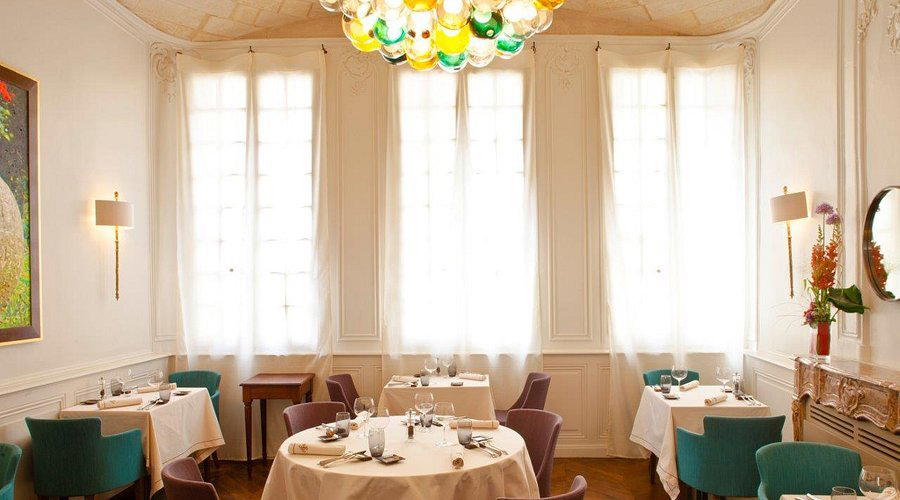
At a Glance
- Romantic
- Elegant
- Quiet
- Scenic
- Sophisticated
- Classic
- Romantic Getaway
- Honeymoon
- Anniversary
- Weekend Escape
- Historic Building
- Garden
- Terrace
- Panoramic View
- Wi Fi
- Pool
- Spa
- Fitness Center
- Room Service
- Concierge
- Tennis
- Garden
- Wi Fi
- Pool
- Spa
- Fitness Center
- Room Service
- Concierge
- Tennis
Contemporary styling with stylish visual simplicity contrasting antique architectural details and modern furniture, creating a serene and elegant atmosphere praised for its quiet gardens and peaceful poolside relaxation.