
World Luxury Hotel Awards WLHA Regional Winner
Hillside Beach Club occupies a pine-forested cove outside Fethiye where the Aegean meets the Taurus foothills, awarded both Regional Winner for Luxury Sustainable Resort and Country Winner for Luxury Beach Resort. The property operates in a small tier of Turkish coastal resorts that treat design and environmental integration as primary assets rather than amenities. Booking well in advance is standard for peak summer arrivals.

Pearl is the En Primeur Club membership app, where members save venues, book tables and use the concierge.
Where the Aegean Meets the Hillside
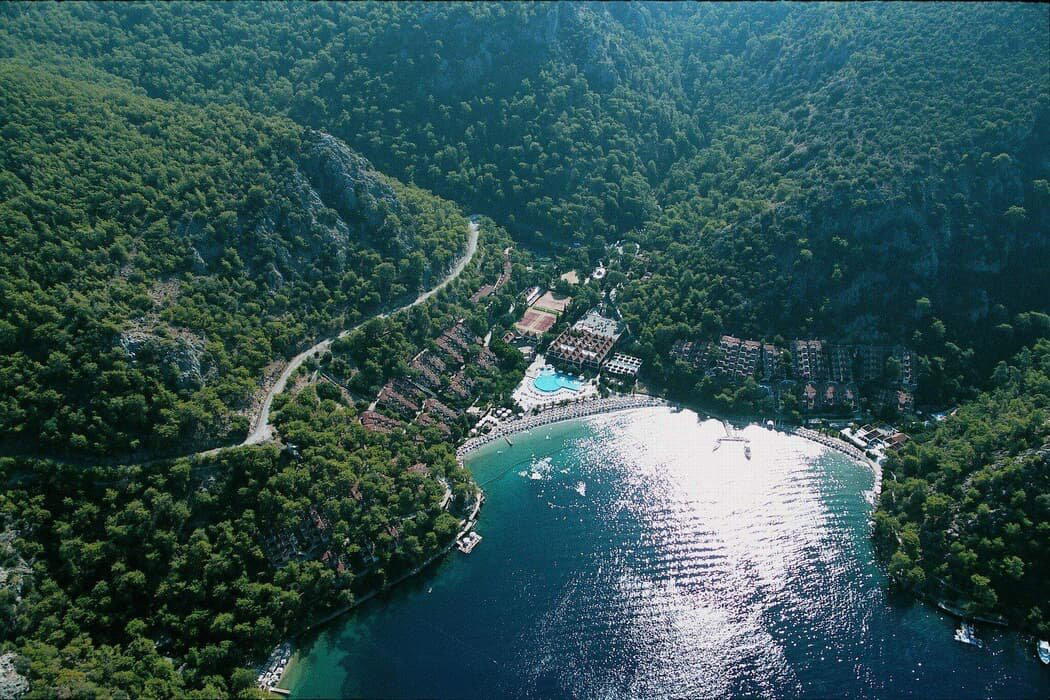
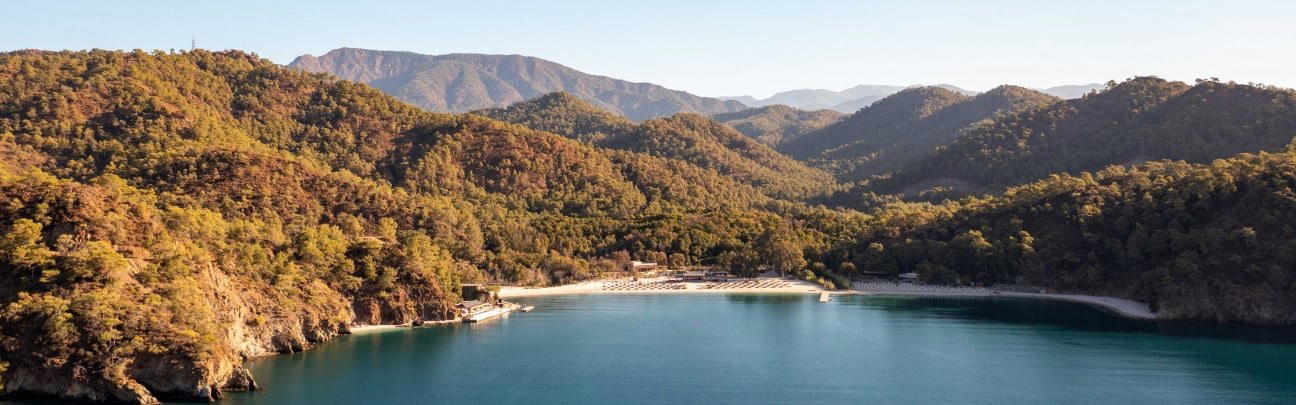
Kalemya Koyu sits in a pine-forested cove south of Fethiye, and arriving at Hillside Beach Club by boat rather than road sets the register for what follows. The approach from the water reveals a property terraced into the hillside across multiple levels, with pine canopy filtering the light above and the Aegean extending below. This kind of topographic integration is rare along Turkey's southwestern coast, where flat-site resort development has long been the path of least resistance. Here, the gradient is the architecture.
The Turquoise Coast has been running two distinct hospitality formats for decades: the large all-inclusive complexes clustered around Marmaris and Antalya, and a smaller tier of design-conscious properties that treat the coastline as a setting rather than a backdrop. Hillside Beach Club belongs firmly to the second category, and its dual recognition as a Regional Winner for Luxury Sustainable Resort and Country Winner for Luxury Beach Resort places it at the top of that peer group. Those are not interchangeable accolades: the sustainable designation speaks to operational commitments, while the beach resort recognition reflects the guest experience at sea level. Holding both simultaneously signals a property that is managing the tension between environmental responsibility and the expectations of premium coastal travel.
Design Logic on a Difficult Site
Building into a hillside creates problems that flat-site resorts never encounter: access, sightlines, noise travel, and the mechanical complexity of moving guests vertically. The design response at Hillside Beach Club treats these constraints as generators of form rather than problems to be solved out of sight. The property steps down to the water across multiple levels connected by paths, stairs, and what appear to be lift systems, each platform offering a different relationship to the sea. This is a fundamentally different spatial experience from a resort where the main pool and beach are on the same plane as the lobby.
Properties along the Bodrum peninsula have experimented with hillside siting for years, and venues like MACAKIZI BODRUM in Bodrum Mugla and D Maris Bay in Hisarönü represent comparable attempts to use topography as a design asset. The difference in Fethiye is the scale of the surrounding pine forest and the relative shelter of Kalemya Koyu, which creates a microclimate and an acoustic quality that open-sea sites cannot replicate. The cove contains sound. Wind becomes less of a factor. The environment does work that architectural detailing alone cannot.
The Cove Format and What It Changes
Cove-based resorts operate on a different logic from beach-strip properties. Access is controlled by the water on one side and the terrain on the others, which effectively limits the guest population to those who are staying or who have made a specific effort to arrive. This produces a different atmosphere from resorts where beach access is semi-public and footfall from surrounding areas is routine. For guests, the distinction matters: the beach experience in a protected cove is closer to a private setting even when the property itself is not particularly small.
This format aligns with a broader trend across premium Aegean travel, where protected-cove access has become a differentiator in its own right. The same logic drives the positioning of Ahãma in Göcek, where proximity to Göcek's sailing culture and sheltered bays shapes the guest profile as much as the rooms do. In Fethiye specifically, the cove format matters because the town itself sits on a broad open bay with significant marine traffic and seasonal crowds. Kalemya Koyu provides a degree of separation from that that day-trippers cannot easily replicate.
Sustainability Credentials in Context
The Regional Winner recognition for Luxury Sustainable Resort carries more weight when placed against the category norms. Coastal resorts in Turkey face particular sustainability pressures: water scarcity in summer months, pine forest fire risk, marine ecosystem sensitivity in the Aegean, and the operational demands of high-season guest volumes. A property that earns external recognition in this category is being evaluated against those specific challenges, not against a generic hospitality standard.
At the premium end of Turkish beach hospitality, sustainability accreditation has shifted from a differentiating feature to an expectation among a growing segment of international travellers. Properties like Allium Bodrum Resort & Spa in Bodrum and Regnum Carya in Belek operate in the same premium coastal tier and face similar scrutiny. The dual-award position of Hillside Beach Club suggests it is meeting that expectation while simultaneously delivering on guest experience metrics, which is the harder combination to sustain across a full operating season.
Fethiye in the Wider Turkish Travel Map
Fethiye sits roughly midway along Turkey's southwestern coast, positioned between the more developed resort corridors of Bodrum to the northwest and Antalya to the east. This geography has historically insulated Fethiye from the highest volumes of package tourism while still making it accessible. The town itself is a working port with a functioning marina, a covered market district, and Lycian rock tombs cut into the cliff face above the waterfront, which means it offers travellers a non-resort context that pure beach destinations along the coast cannot.
For visitors using Hillside Beach Club as a base, the surrounding area offers access to Ölüdeniz and the Blue Lagoon (one of the most photographed coves in the Mediterranean), the Butterfly Valley, and the kite-surfing flats near Fethiye town. The property's cove location does not isolate guests from these options; the marine access that makes the property distinctive also makes boat-based day trips direct. Readers planning broader Aegean itineraries can use our full Fethiye restaurants and hotels guide to contextualise where Hillside Beach Club sits relative to other Fethiye options, including Perdue Hotel and Yacht Classic Hotel.
Travellers comparing Hillside Beach Club against other Turkish luxury markets should note that Cappadocia-based properties such as Ajwa Cappadocia in Ürgüp, Argos in Cappadocia in Nevsehir, and Hu of Cappadocia in Uçhisar occupy a completely different seasonal and experiential register. The Aegean coast operates at its peak from May through October; interior Anatolia extends the season into autumn and winter. These are complementary itinerary segments, not competing choices. For Aegean coast benchmarks, the design-led boutique category is better represented by Alavya in Alacati and KestelINN Alaçatı in Cesme, both operating in the Çeşme peninsula micro-market to the north.
Planning Your Stay
The property is located at Belen Cad. No:132, Kalemya Koyu, Fethiye, accessible by road but most naturally approached from the water via Fethiye marina, roughly 15 kilometres by sea. Peak season along this stretch of the Turquoise Coast runs from mid-June through August, when the cove offers its most sheltered conditions and sea temperatures are at their highest. Shoulder season bookings in May or September give access to similar conditions with reduced competition for space. Guests comparing international luxury coastal formats may find useful reference points in properties such as Aman Venice in Venice, where site-specific design operates at a comparable level of ambition in a very different geography.
Comparable Spots, Quickly
Comparable venues nearby, for context on price, style, and recognition.
| Venue | Cuisine | Price | Awards | Notes |
|---|---|---|---|---|
| Hillside Beach ClubThis venue (the venue you are viewing) | Contemporary luxury resort designed in harmony with nature, blending minimalist modern aesthetics with natural furnishings and soothing tones. | $200–300 | World Luxury Hotel Awards WLHA Regional Winner | Not listed |
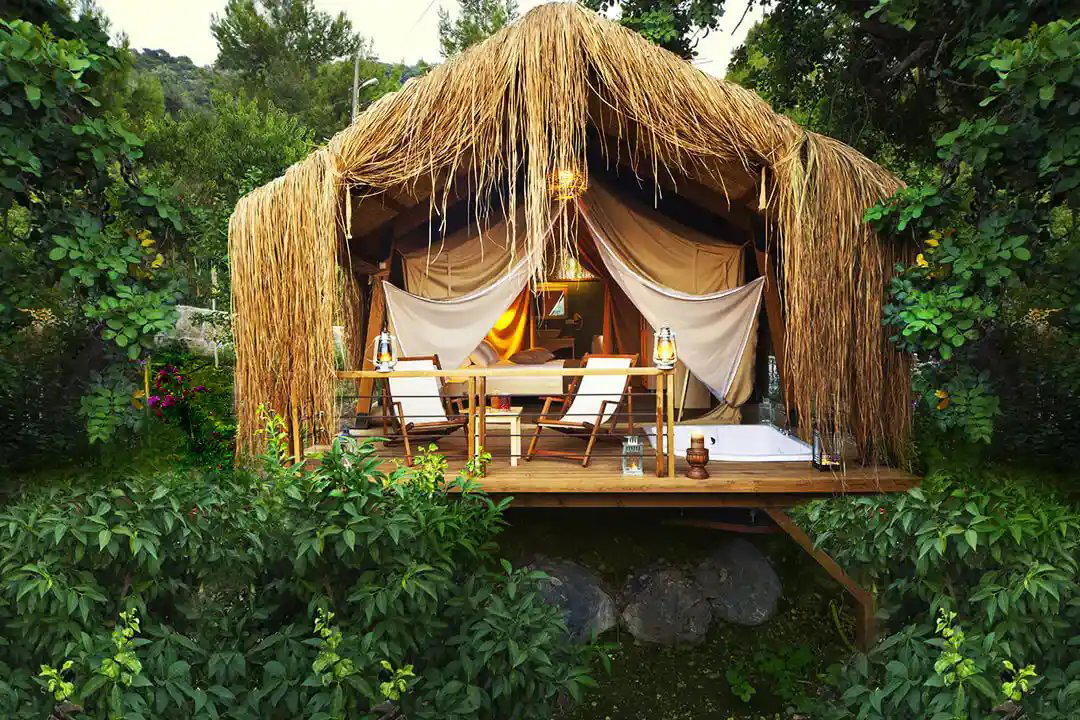
| Perdue Hotel | Cliffside boutique glamping-inspired suites | $300–500 | World Luxury Hotel Awards WLHA Continent Winner | Faralya |
| Yacht Classic Hotel | Luxury waterfront boutique with marina access | Not listed | World Travel Awards | Fethiye Harbor |
| Hotel Unique Fethiye | terraced boutique on steep slope opposite marina | Not listed | Michelin Selected | Karagözler |
| D-Resort Göcek | Mediterranean-influenced luxury resort | $100–200 | Small Luxury Hotels of the World Member | Göcek |
| Maxx Royal Kemer | ultra-modern hillside villas harmoniously integrated with nature | Not listed | Michelin Guide New Hotels New Hotel · Michelin Selected | Kemer |
Recognition history
Dated appearances from independent guides and award organizations, with the underlying list record or original source where available.
World Luxury Hotel Awards WLHA Regional Winner
World Luxury Hotel Awards
Full recognition history (2 entries)
World Luxury Hotel Awards WLHA Country Winner
World Luxury Hotel Awards
Continue exploring
More in Fethiye
Hotels in Fethiye
All hotels in Fethiye →
Bars in Fethiye
Browse all →

Details
- Romantic
- Scenic
- Elegant
- Sophisticated
- Honeymoon
- Romantic Getaway
- Family Vacation
- Wellness Retreat
- Anniversary
- Beachfront
- Infinity Pool
- Private Villa
- Destination Spa
- Waterfront
- Terrace
- Panoramic View
- Wi Fi
- Pool
- Spa
- Fitness Center
- Room Service
- Concierge
- Kids Club
- Beach Access
- Restaurant
- Bar
- Tennis Court
- Sauna
- Massage
- Waterfront
- Mountain
- Garden
- Wheelchair Accessible
- Elevator
- Accessible Restroom
Serene and contemporary with natural tones, calming sea breezes, and a sophisticated yet relaxed atmosphere enhanced by nightly entertainment in an amphitheater and access to tranquil adult-only areas.