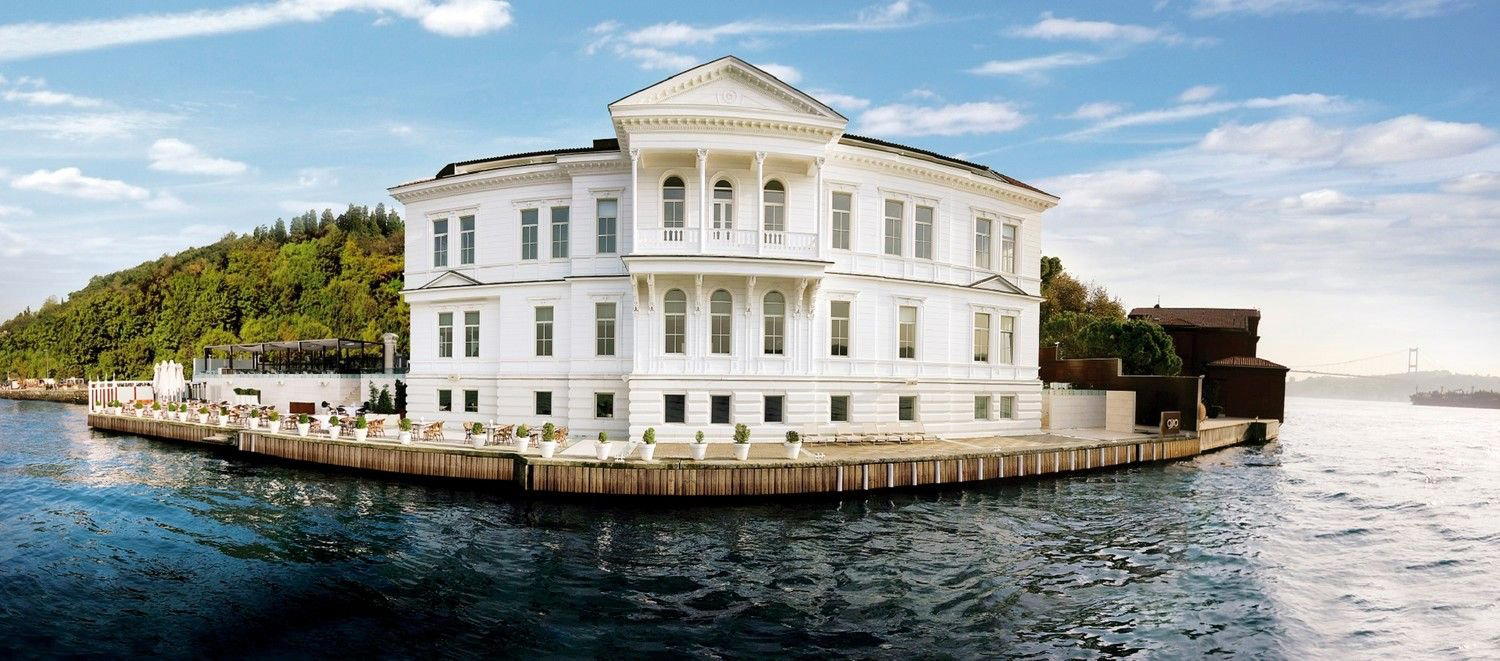
Ajia occupies a restored 19th-century Ottoman yalı on the Asian shore of the Bosphorus in Kanlıca, one of Istanbul's quietest waterfront addresses. The property sits apart from the European-side hotel cluster, offering a different relationship with the strait, close, unhurried, and defined by the water rather than the skyline behind it. For travellers willing to cross the bridge, that distance is precisely the point.

Pearl is the En Primeur Club membership app, where members save venues, book tables and use the concierge.
The Asian Shore, and Why It Changes Everything
Istanbul's premium hotel market is overwhelmingly concentrated on the European side. The Çırağan Palace Kempinski, the Four Seasons properties at Sultanahmet and the Bosphorus, the Fairmont Quasar, all sit west of the strait, orientated toward the city's historic and commercial centre. Ajia occupies a fundamentally different position: a restored 19th-century Ottoman yalı on the Kanlıca waterfront in Beykoz, on the Asian shore. That geography is not a compromise. It is the entire editorial premise of the property.
Yalıs, the timber waterfront mansions that once served as summer residences for Ottoman pashas and wealthy merchants, define the upper Bosphorus in a way that no European-side address quite replicates. The building Ajia occupies, the Ahmet Rasim Paşa Yalısı, carries that lineage in its address. Properties of this type sit at the intersection of two things Istanbul's hotel market rarely delivers together: genuine Ottoman architectural fabric and direct water proximity without a road or terrace intervening. For context on how rare that combination is, consider that most Bosphorus-view hotels are viewing the strait from a distance. Here, the water is the immediate foreground.
Among Istanbul's broader accommodation options, which range from the European design-led properties like 10 Karakoy and Aliée Istanbul to the historic Sultanahmet corridor anchored by AJWA Sultanahmet, Ajia represents a distinct niche: intimate scale, Asian-shore positioning, and a building with documentary history rather than a contemporary design language layered over a generic concrete frame.
The Waterfront Setting as Dining Theatre
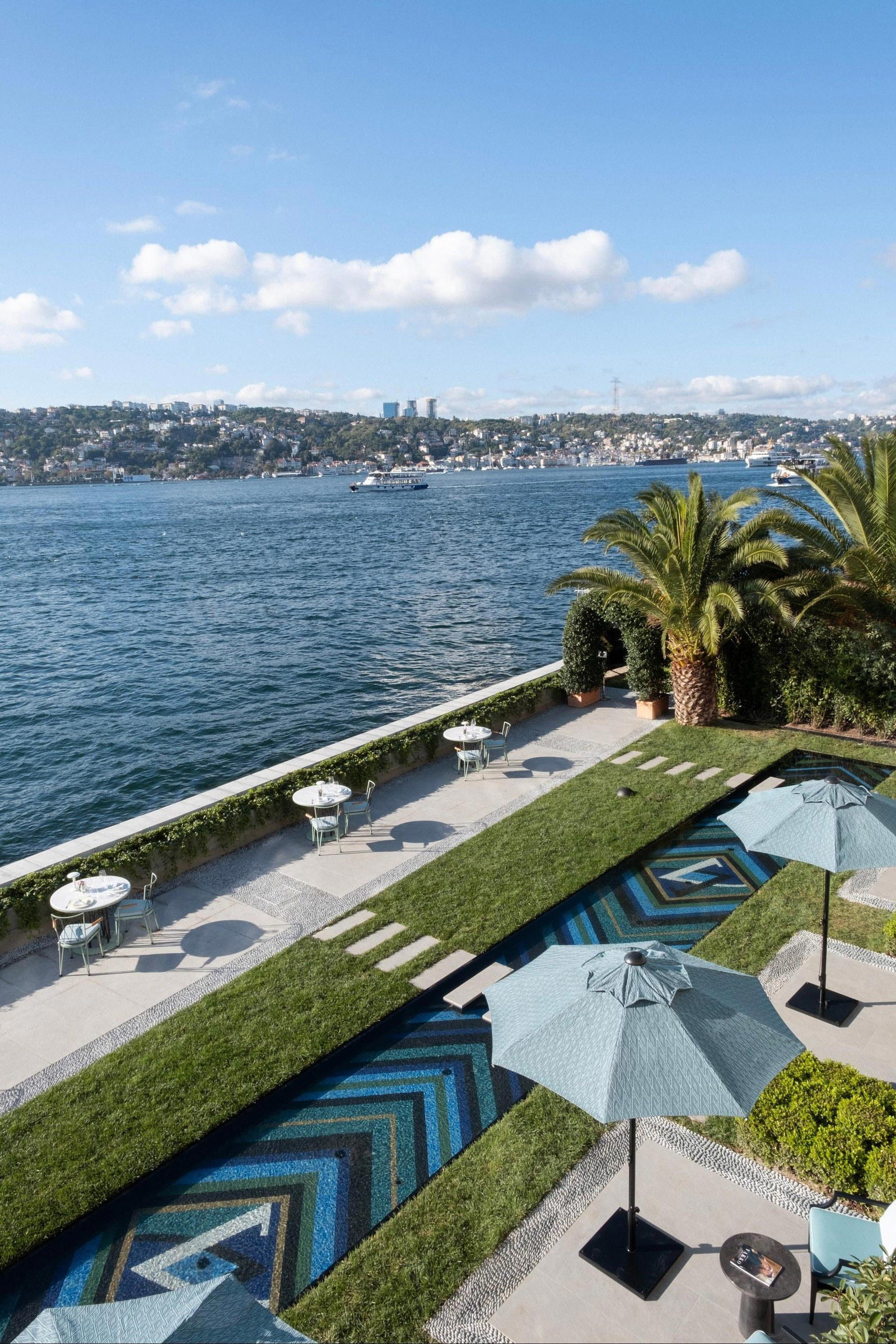
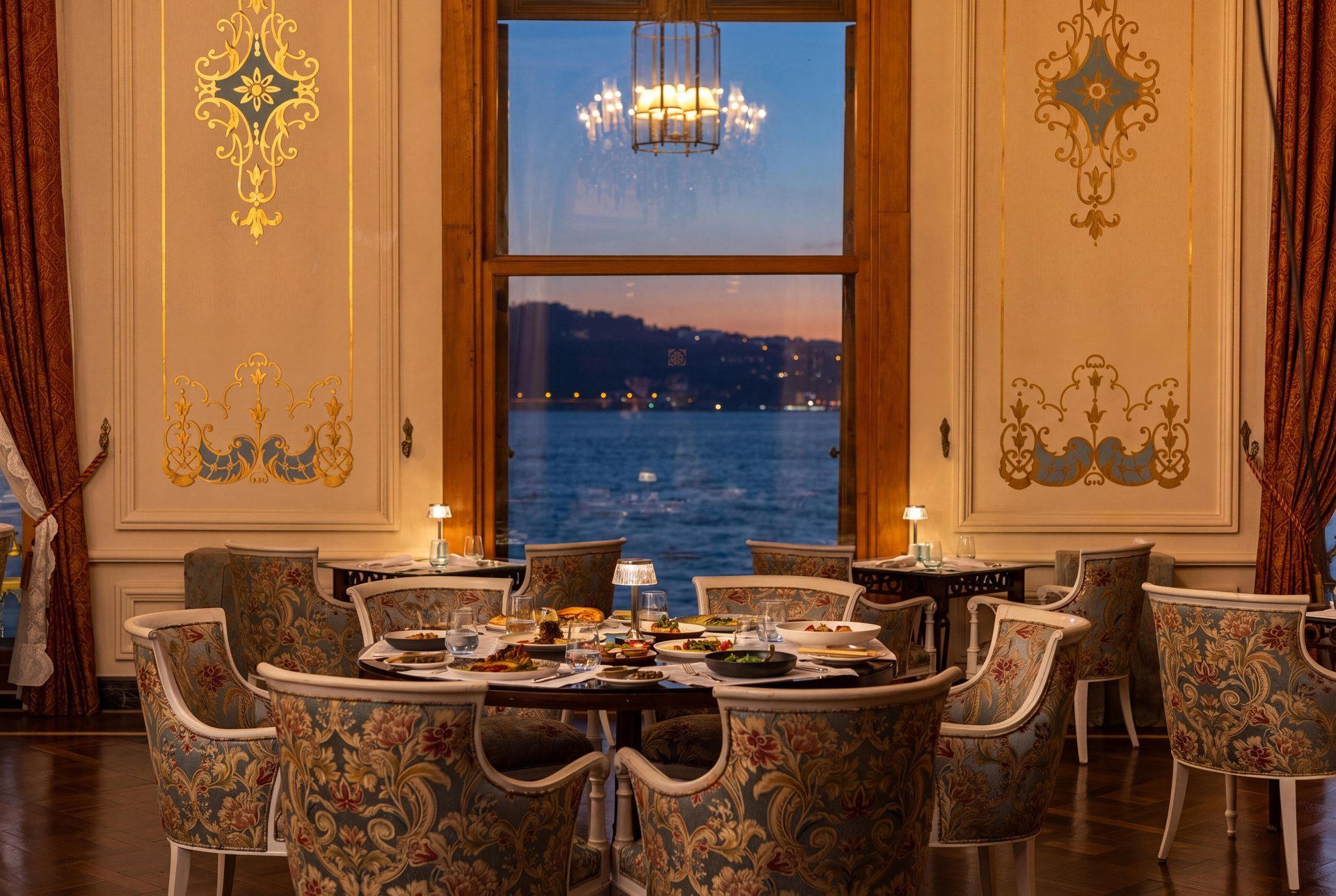
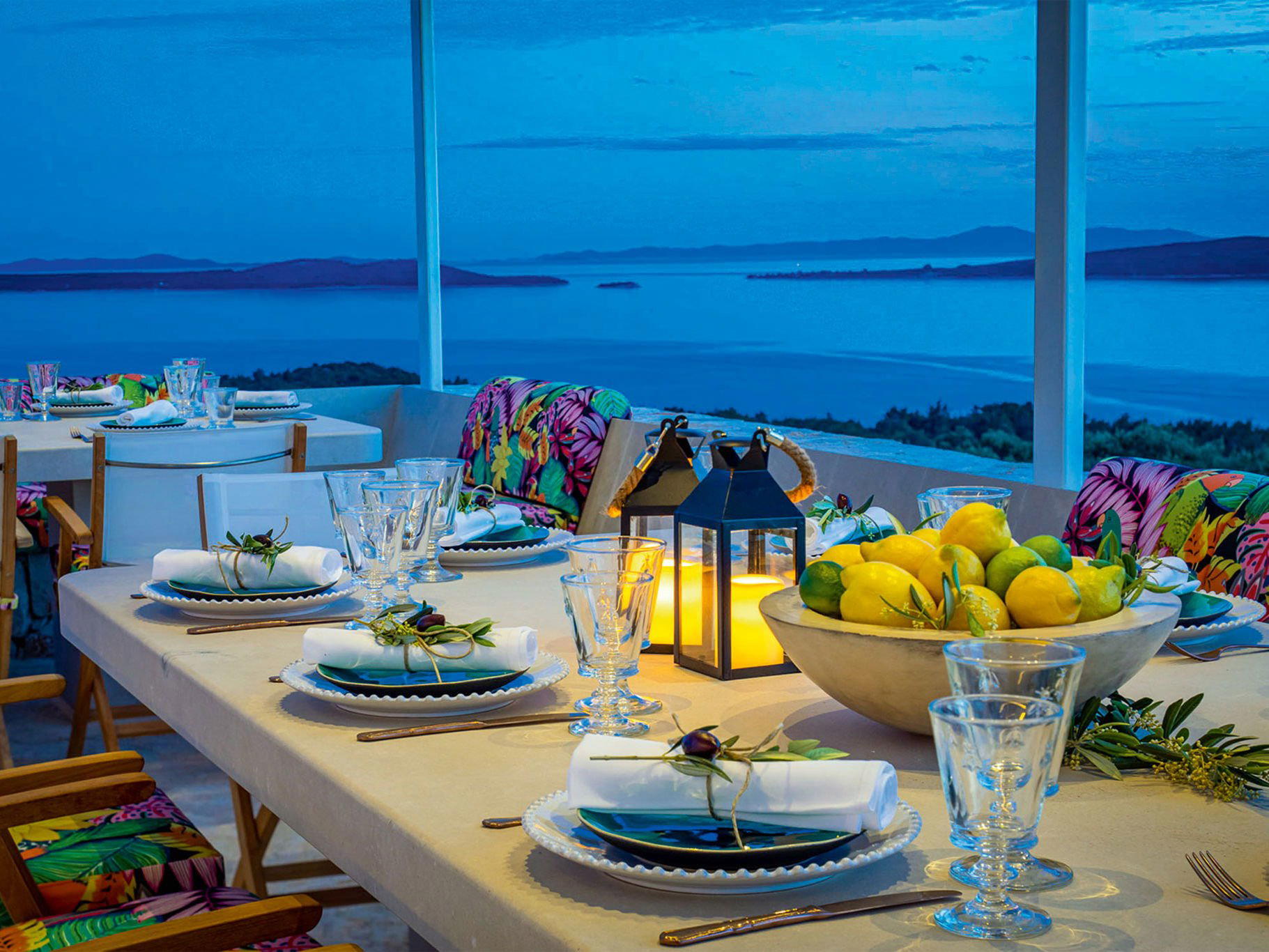
In the hierarchy of Istanbul dining contexts, few positions are as theatrically loaded as a yalı terrace on the Bosphorus at dusk. The upper Bosphorus, the stretch from Beykoz south through Kanlıca, carries a different quality of light than the busier central strait. Tanker traffic slows. The Asian hills behind the property are forested rather than built-out. The European shore visible across the water is distant enough to read as landscape rather than urban noise.
Dining at a property like Ajia is therefore less about what appears on the plate and more about where the plate arrives. Istanbul has a well-documented tradition of meyhane culture, long tables, shared meze, raki, and the Bosphorus as backdrop, and the yalı hotel dining format extends that tradition into a more controlled, residential register. The food and beverage programme at Ajia operates within that context: the setting does significant work before the kitchen is asked to contribute.
This is worth stating clearly for travellers calibrating expectations. The properties that compete with Ajia on pure dining programme ambition, the Four Seasons Bosphorus, which runs multiple restaurants, or larger European-shore hotels with celebrity-adjacent culinary identities, deploy more kitchen infrastructure. Ajia's dining identity is defined by setting first, programme second. That ordering suits a specific type of guest: one who has eaten at enough technically precise restaurants to understand that context is also an ingredient.
Kanlıca and the Logic of the Asian Shore
Kanlıca has one culinary identity that precedes any hotel: its yoghurt. The neighbourhood has been associated with a specific thick, slightly tangy style of yoghurt served in terracotta cups for well over a century, and the small waterfront cafes that sell it remain a fixture for Bosphorus boat excursions. That detail is not decorative local colour, it signals the character of the area. Kanlıca operates at a pace and with a local-commercial culture that predates the hospitality industry's interest in it.
For guests staying on the Asian shore, the practical calculus involves the Bosphorus Bridge or the Fatih Sultan Mehmet Bridge for overland movement, or the ferry network that connects the Asian villages to Eminönü and Kabataş on the European side. The ferry option, taking roughly 25-40 minutes depending on the route, is the more atmospheric crossing and positions a stay here as something closer to a village retreat with city access than a city hotel with a waterfront view. Travellers who book properties like Bebek Hotel by The Stay for their upper Bosphorus positioning on the European shore are making a comparable trade-off, proximity to the water over proximity to the centre, and Ajia extends that logic to its logical extreme by crossing the strait entirely.
Placing Ajia in the Turkish Boutique Hotel Tier
Turkey's premium boutique hotel sector has become more articulated over the past decade. Properties like Argos in Cappadocia in Nevsehir and Alavya in Alaçatı have established that the category can support serious design investment and hospitality credibility outside Istanbul. Coastal properties such as MACAKIZI BODRUM and Allium Bodrum Resort & Spa represent the Aegean summer circuit. D Maris Bay in Hisarönü and Hillside Beach Club in Fethiye anchor the southern coast. Within that national framework, Ajia fills a specific gap: a heritage-building boutique property in Istanbul with a yalı identity rather than a contemporary urban hotel identity.
The comparison set within Istanbul is narrow. Properties with genuine Ottoman residential architecture, water-direct positioning, and limited keys number in single figures. That scarcity is structural rather than curated, authentic yalıs on the Bosphorus that survive in good repair and hold the necessary permissions for hospitality use are not easily replicated. For travellers who have covered the European-shore options, including the Address Istanbul and the design-forward Barcelo Hotel Istanbul, the Asian-shore yalı format represents genuine category differentiation rather than variation within the same tier.
For broader Turkish travel context, Ajwa Cappadocia in Ürgüp and Hu of Cappadocia in Uçhisar offer comparably heritage-led propositions in a different geography. Our full Istanbul restaurants guide maps the European-side dining circuit for guests dividing time between shores.
Planning a Stay
Ajia's address on Halide Edip Adıvar Caddesi in Beykoz places it in a residential stretch of the Asian Bosphorus shore that is not walkable to major attractions. Guests should plan around private transfers or the ferry network rather than assuming taxi availability at the pace of a European-side hotel. The property's scale and residential character suggest it functions leading as a base for guests whose Istanbul programme is already defined, those returning to the city or those with a specific interest in the yalı architecture and upper Bosphorus geography rather than first-time visitors prioritising density of sightseeing access. Booking directly and requesting waterfront-facing accommodation is the logical first step, given that the Bosphorus view is the primary differentiator at this address.
Price and Recognition
| Venue | Price | Awards |
|---|---|---|
| AjiaThis venue (the venue you are viewing) | $200–300 | Not listed |
| Çırağan Palace Kempinski Istanbul | Not listed | Michelin Selected · La Liste Top Hotels |
| Fairmont Quasar Istanbul | Not listed | Michelin Selected · Forbes Recommended |
| Four Seasons Hotel Istanbul at Sultanahmet | Not listed | 3 Michelin Keys · La Liste Top Hotels |
| Four Seasons Hotel Istanbul at the Bosphorus | Not listed | 1 Michelin Key · La Liste Top Hotels |
| JW Marriott Hotel Istanbul Marmara Sea | Not listed | Michelin Selected · Forbes 4-Star |
Continue exploring
More in Istanbul
Hotels in Istanbul
All hotels in Istanbul →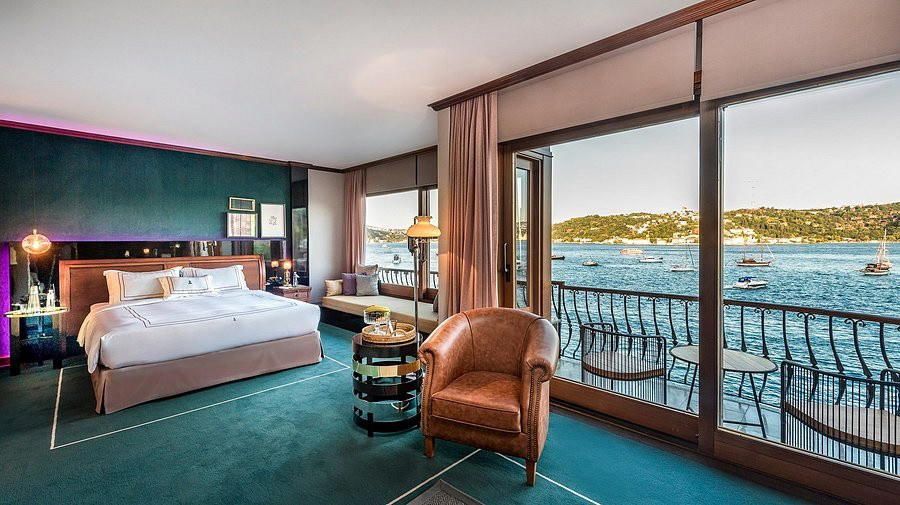
Details
- Romantic
- Elegant
- Sophisticated
- Intimate
- Scenic
- Romantic Getaway
- Honeymoon
- Anniversary
- Waterfront
- Terrace
- Historic Building
- Wi Fi
- Spa
- Massage
- Room Service
- Concierge
- Restaurant
- Garden
- Valet Parking
- Airport Transfer
- Waterfront
- Elevator
Peaceful and elegant with serene garden, terrace overlooking the Bosphorus, and soundproof rooms offering a tranquil escape.