Estancia El Ombú de Areco
Estancia El Ombú de Areco sits on the pampa outside San Antonio de Areco, the town most closely associated with Argentina's gaucho heritage. The property operates in the tradition of working estancias that opened their gates to guests, placing it inside a category where landscape, horsemanship, and colonial-era architecture do the work that amenities alone cannot. For travellers moving between Buenos Aires and the Argentine interior, it anchors the gaucho circuit's most historically grounded stop.
Pearl is the En Primeur Club membership app — saves, bookings, and concierge access live there. Same editors, same standards.
- Address
- Ruta 31 Cuartel VI, Villa Lía, San Antorio de Areco, Provincia de Buenos Aires, Argentina
- Phone
- +54 2326 49 2080
- Website
- estanciaelombu.com
- Directions
- Get directions
 Saves & bookings on Pearl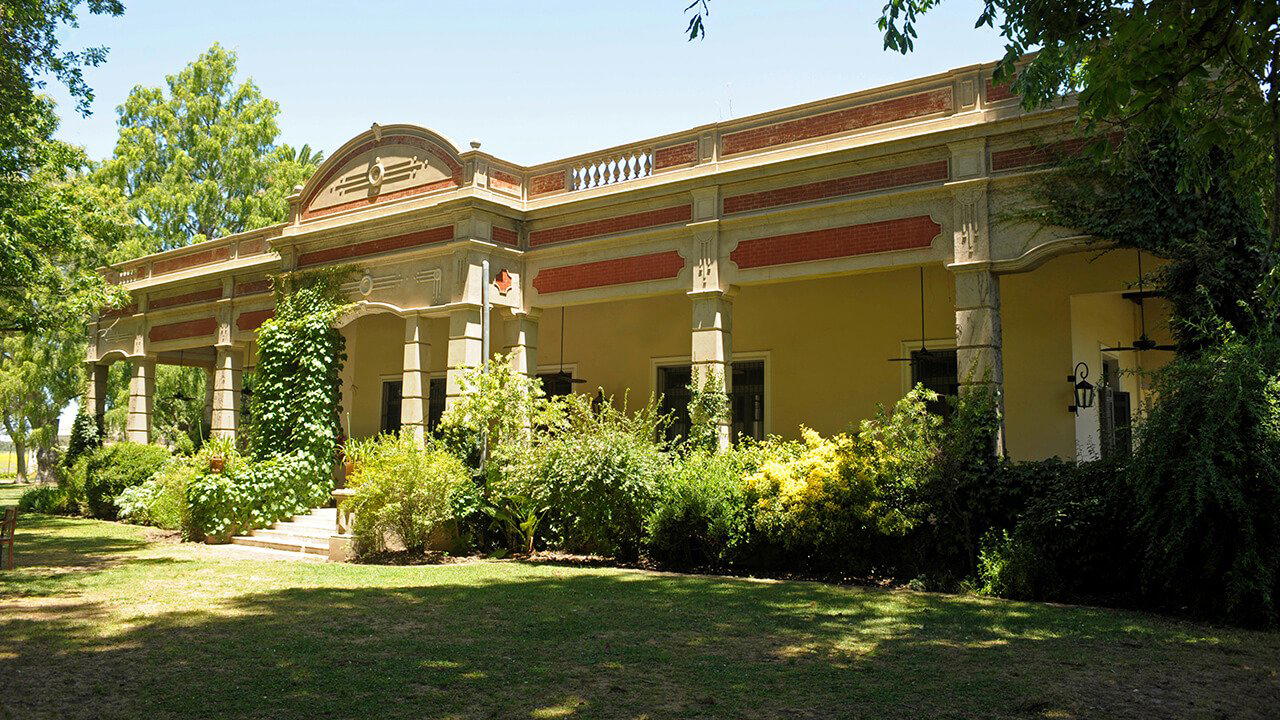
Where the Pampa Speaks First
Approach any working estancia on the Buenos Aires province pampa and the sequence is always the same: the road narrows, the tree line thins, and then the house appears across flat grassland with nothing to interrupt the sightline for kilometres. At Estancia El Ombú de Areco, that approach is the orientation. The property sits along Ruta 31 in the Cuartel VI district outside San Antonio de Areco, the town that has functioned as the cultural custodian of Argentina's gaucho tradition since the early twentieth century, when Ricardo Güiraldes published Don Segundo Sombra and fixed the region's identity in the national imagination. The estancia format at this latitude is not a resort category. It is an architectural and agricultural typology with a specific grammar: the casco principal (main house), the surrounding ombu trees that give this property its name, outbuildings organised around a central courtyard, and the working paddocks beyond. That grammar pre-dates modern hospitality as a category.
The Estancia Typology on the Pampa
Argentina's estancia-tourism category has split over the past two decades into broadly two tiers. The first tier operates as heritage accommodation: properties with colonial or nineteenth-century cascos, working cattle or horse operations, and guest programmes built around the land rather than imported amenity. The second tier has converged toward boutique-hotel standards, where the estancia label functions more as aesthetic framing than agricultural fact. El Ombú de Areco belongs to the first group, positioned within the San Antonio de Areco corridor that hosts the region's most concentrated cluster of historically grounded properties. Its nearest peer in that corridor is La Bamba de Areco, which has operated in a similar register for decades and draws a comparable profile of international and domestic travellers seeking direct engagement with the pampa rather than a poolside interpretation of it.
The broader Argentine estancia circuit extends well beyond Buenos Aires province. Properties like Estancia Cristina in El Calafate and Estancia La Bandada in San Miguel del Monte occupy different ecological and architectural registers, while Estancia Los Potreros in Río Ceballos anchors the Córdoba hill-country version of the format. What distinguishes the Areco cluster is the density of gaucho cultural infrastructure in the surrounding town: the silversmith workshops, the Museo Gauchesco Ricardo Güiraldes, and the annual Día de la Tradición festival held each November, which draws participants from across the country and marks one of the highest-demand windows for estancia bookings in the region.
Architecture as Primary Experience
The editorial angle that matters most for this property type is architectural, because the buildings are the experience in a way that is not true of most hotel categories. Pampa estancia cascos typically date from the late colonial or early republican periods, constructed in a vernacular that combined Spanish colonial planning logic with materials and labour available on the open plain: thick adobe or brick walls for thermal mass, deep verandas (corredores) to manage the summer heat, and interior courtyards that organise domestic life around a shaded central axis. The ombu tree itself, from which this estancia takes its name, is a defining feature of the pampa: a broad-canopied, fast-growing plant that settlers used to mark property boundaries and provide shade in a treeless environment. Properties that carry the ombu as their identifier are typically signalling continuity with that early agricultural settlement period.
Within this architectural tradition, the quality of the casco and the integrity of its relationship to the working land are the primary differentiators between properties. Renovation decisions made over decades either preserve or compromise the spatial logic of the original structure. Particularly legible estancias, from an architectural standpoint, are those where the corredor still functions as the primary social space, where the proportions of rooms have not been altered to match contemporary hotel standards, and where the relationship between interior and exterior remains organised around agricultural rhythms rather than guest convenience. These are the properties that read as lived rather than curated.
Gaucho Programming and the Land
Guest programming at Areco estancias centres on horsemanship, and the quality of that offering varies significantly across the category. At the serious end, guests ride alongside working gauchos on horses bred and trained on the property, covering ground that functions as active pasture. At the lighter end, trail rides are staged experiences with no connection to the agricultural calendar. The Areco cluster has historically maintained the former standard, in part because the surrounding pampa is still worked cattle country and the estancias retain functional horse operations. Asado, the open-fire beef preparation that sits at the centre of Argentine rural food culture, is the default dining format at these properties, with the parrilla functioning as a social institution as much as a cooking method.
For travellers building a broader Argentine itinerary, San Antonio de Areco sits approximately 113 kilometres north-northwest of Buenos Aires along RN 8, a two-hour drive that makes it viable as a day excursion from the capital, though the estancia experience only becomes legible over at least one overnight stay. Those extending into the wine country of Mendoza might consider properties like Cavas Wine Lodge in Alto Agrelo, Casa de Uco in Tunuyán, or Awasi Mendoza in Luján de Cuyo as logical continuation points. For Patagonian extensions, Explora El Chaltén and Charming Luxury Lodge in San Carlos de Bariloche operate in structurally similar territory: remote-setting properties where access and environment are the primary offering. For a Buenos Aires base before or after, Home Hotel positions at the design-led boutique end of the capital's accommodation market.
Those seeking comparable nature-integrated formats elsewhere in Argentina can also reference Arakur Ushuaia Resort and Spa, Awasi Iguazu in Puerto Iguazu, Correntoso Lake and River Hotel in Villa La Angostura, or Lodge Atamisque in Tupungato. For wine-estate formats specifically, Colomé Winery in Molinos and Algodón Wine Estates in San Rafael represent the Andean counterpart to the pampa estancia model. See our full San Antonio de Areco guide for broader context on the town's dining, cultural calendar, and surrounding properties.
Planning a Stay
Booking for estancias in the Areco cluster is most reliably handled through the property's direct channel or through specialist Argentine travel agencies that maintain live availability. Peak demand falls in November around the Día de la Tradición festival and during the January summer holiday period, when Buenos Aires families account for a significant share of bookings alongside international visitors. Shoulder season, particularly April through June, offers cooler temperatures better suited to extended riding and a quieter property dynamic. The Ruta 31 address places El Ombú de Areco outside the town centre, which means a vehicle or arranged transfer is required; self-drive from Buenos Aires along RN 8 is one practical approach for international visitors arriving independently.
A Quick Peer Check
Comparable venues nearby, for context on price, style, and recognition.
| Venue | Cuisine | Price | Awards | Notes |
|---|---|---|---|---|
| Estancia El Ombú de ArecoThis venue — the venue you are viewing | Historic estancia with Italian palazzo-style main house and colonial gallery. | $$$ | Not listed | Not listed |
| La Bamba de Areco | Historic colonial estancia transformed into a luxury boutique hotel blending tradition with modern comfort | $$$$ | 5-Star | San Antonio de Areco |
| Av. Cnel. Díaz 1736 | Hotel | $$ | Not listed | Once |
| La Urumpta Hotel, AKEN Mind | contemporary design hotel surrounded by lush vegetation | $$$ | 4-Star | Río Cuarto |
| 1828 Smart Hotel | Contemporary classic boutique with Deco influences and smart technology integration. | $$$ | 4-Star | Palermo |
| Hotel Pulitzer Buenos Aires | Contemporary urban tower blending modern design with Art Deco influences | $$$ | 4-Star | Torre de Los Ingleses |
Continue exploring
More in San Antonio de Areco
Hotels in San Antonio de Areco
Browse all →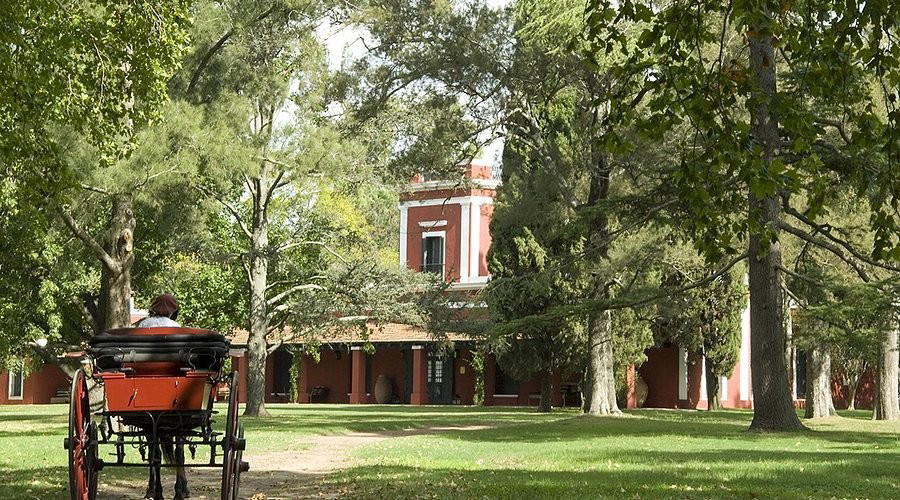
Restaurants in San Antonio de Areco
Browse all →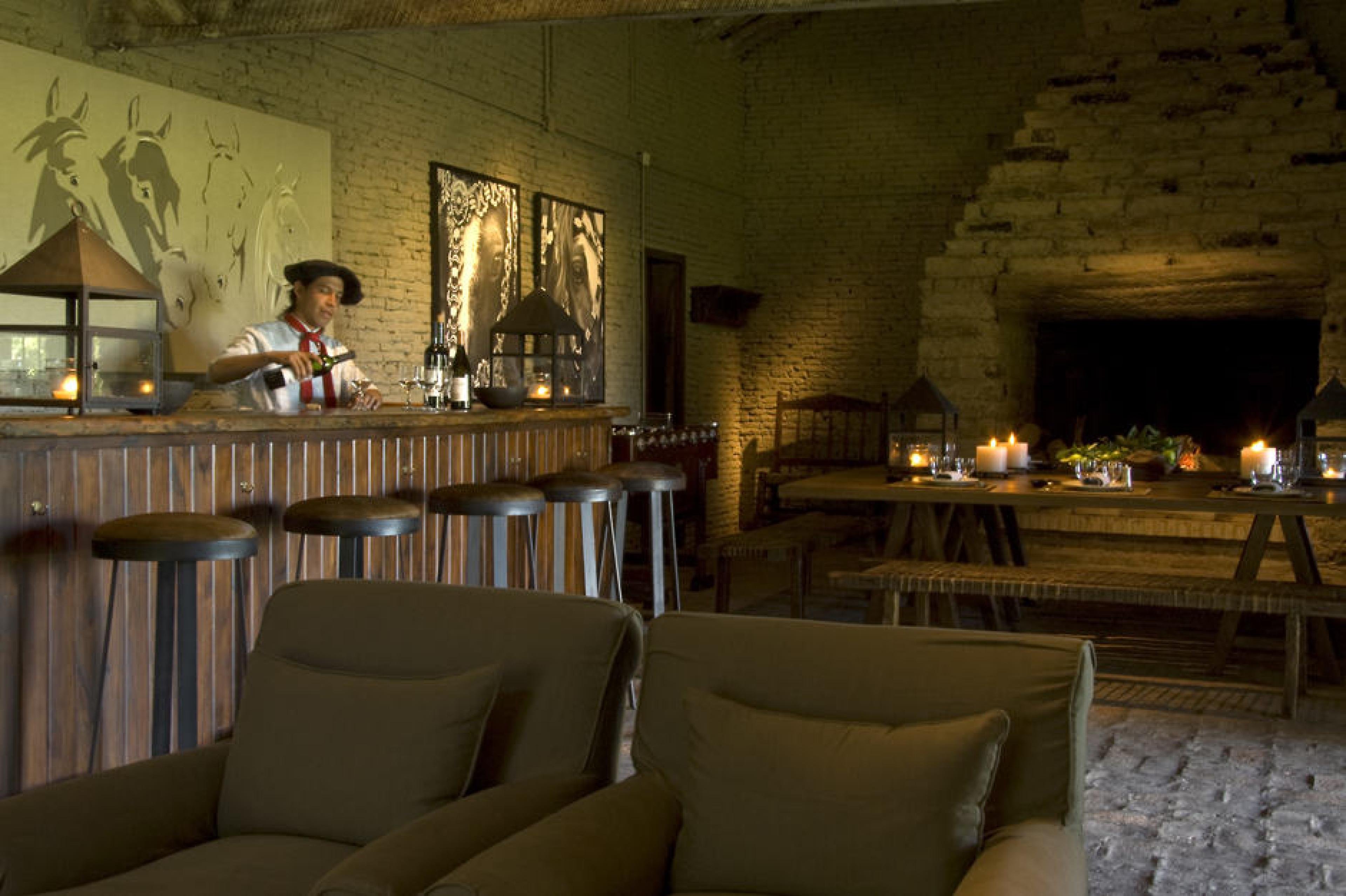
Wineries in San Antonio de Areco
Browse all →
At a Glance
- Rustic
- Scenic
- Cozy
- Historic
- Quiet
- Romantic Getaway
- Family Vacation
- Weekend Escape
- Group Retreat
- Historic Building
- Garden
- Terrace
- Pool
- Wi Fi
- Restaurant
- Concierge
- Garden
- Pool
- Wi Fi
- Restaurant
- Concierge
Pastoral quietude with dim light filtering through large windows onto antique furniture, warm central heating and wood-burning fireplaces, surrounded by centennial park gardens.