Algodon Wine Estates

Set along Ruta Nacional 144 in San Rafael, Algodon Wine Estates occupies a different register from Mendoza's better-known wine corridors, quieter, more expansive, and oriented toward guests who want sustained immersion in vineyard life rather than a day-trip tasting. The property combines working estate viticulture with lodge-format hospitality in one of Argentina's most underreported wine zones.
Pearl is the En Primeur Club membership app — saves, bookings, and concierge access live there. Same editors, same standards.
- Address
- RN144, Mendoza, Argentina
- Phone
- +54 260 429 5985
- Website
- algodonwineestates.com
- Directions
- Get directions
 Saves & bookings on Pearl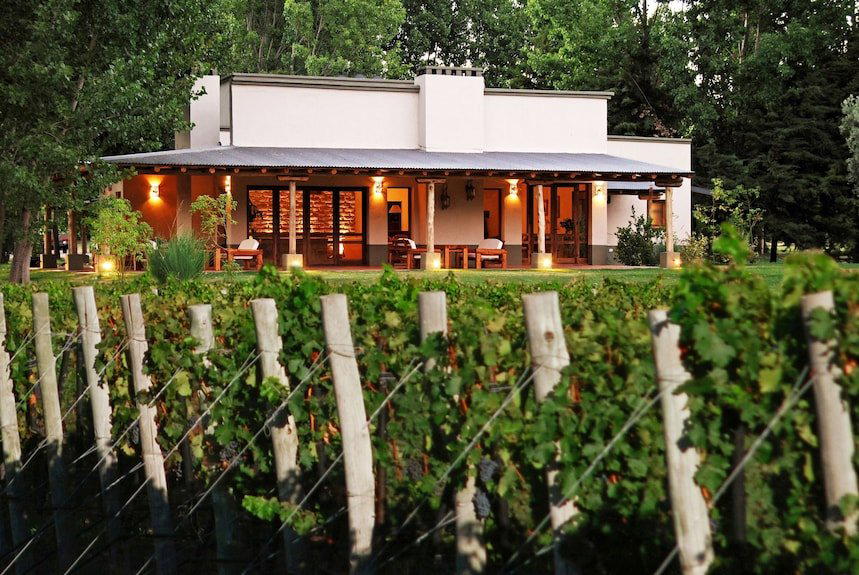
Where the Andes Shape the Vines
San Rafael sits roughly 230 kilometres south of Mendoza city, far enough from the Luján de Cuyo circuit to attract a different kind of traveller. The wine properties here operate under conditions that differ measurably from the Uco Valley benchmark: elevations are lower on average, the Diamante and Atuel rivers feed irrigation networks that date back centuries, and the diurnal temperature swings that concentrate phenolics in Malbec are driven as much by latitude as by altitude. Algodon Wine Estates sits within this geography along Ruta Nacional 144, a road that cuts through semi-arid scrubland before opening onto cultivated vine rows against a long Andean backdrop. The visual approach is characteristically Argentine in the estancia tradition: flat, open, and oriented toward the horizon rather than the skyline.
Architecture as Agricultural Statement
The physical character of premium wine estate lodges in Argentina has split into two distinct camps over the past decade. One camp pursues contemporary minimalism, importing design languages from European hotel groups and applying them to vineyard settings. The other stays closer to the regional vernacular, working with adobe, local stone, timber, and materials that read as indigenous to the landscape rather than placed on top of it. Algodon Wine Estates belongs to the second tradition. Properties in this category make an implicit argument through architecture: that the built environment should recede into the agricultural one, so that the vine rows and the mountains carry more visual weight than the structures that receive guests. It is an approach that rewards patience; the longer you stay, the more you notice.
This design posture aligns Algodon with a comparable set that includes Casa de Uco in Tunuyán and Lodge Atamisque in Tupungato, both of which use the Uco Valley terrain as a primary design element. The difference in San Rafael is spatial: the land reads wider and the sky, uninterrupted by high-altitude peaks at close range, has a particular clarity in the dry southern Mendoza season. Properties that work with this rather than against it tend to generate a slower, more grounded pace, the kind that suits multi-night stays built around riding, walking the vines, and table-based meals rather than itinerary-driven excursions.
The Logic of Staying South
Mendoza's wine tourism infrastructure is concentrated in the north: Maipú, Luján de Cuyo, and the Uco Valley draw the majority of international visitors, and properties like Cavas Wine Lodge in Alto Agrelo and Awasi Mendoza in Luján de Cuyo have built strong reputations within that northern cluster. San Rafael represents a deliberate departure. Guests who route this far south are generally self-selecting for quieter, more intimate conditions, with no equivalent density of wine tourism operators competing for attention on the same road. Choosing San Rafael over the established Uco circuit involves a tradeoff. You lose proximity to the region's most decorated producers and most polished tasting infrastructure. What you gain is space, lower visitor density, and a working wine estate environment where the distinction between guest amenity and agricultural operation remains visible.
For a broader picture of what the city offers across accommodation categories, the full San Rafael guide maps the area's properties and positions them relative to the region's food and wine offer. Maison Couturier represents the boutique-hotel alternative within the same city, operating at a different scale and with a more culinary-forward identity.
Vineyard Life at Estate Scale
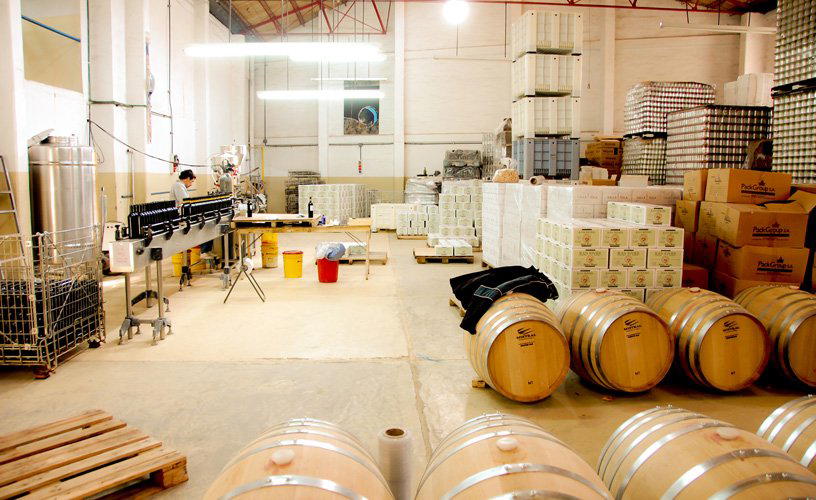
Working wine estates that double as lodges operate on a hospitality logic that differs from resort hotels. The rhythm is agricultural as much as it is recreational. Harvest season, which runs through February and March in this latitude, changes the property's energy in ways that are difficult to replicate at other times. Argentine Malbec estates at this scale tend to make their vineyards accessible to guests in ways that require some coordination, and timing a visit around active winemaking activity is generally worth the logistical effort. This is consistent with the broader Mendoza wine lodges category, where seasonality is an active planning variable rather than a footnote.
Comparable estate experiences further afield in Argentina demonstrate what the format can deliver at its most developed. Colomé Winery in Molinos operates at higher altitude in Salta with a more isolated setting and a documented art focus through the James Turrell Museum on site. Estancia El Ombú de Areco in Buenos Aires province brings the gaucho estancia tradition to bear in a flat pampa setting without the wine component. Algodon sits between these two reference points: a wine-producing operation with lodge hospitality in a landscape that reads as genuinely remote by Argentine tourism standards, without requiring the long-haul flights that Patagonian alternatives like Explora El Chaltén or Arakur Ushuaia Resort and Spa demand.
Getting There and Planning the Stay
San Rafael is served by a regional airport with connections to Buenos Aires, making it accessible without routing through Mendoza city, though many travellers combine the two. Visitors arriving from Buenos Aires can use Home Hotel as a Buenos Aires base before flying south. Those building a wider Mendoza circuit might also consider Casa Duhau in Mendoza city as a companion stay before heading south to San Rafael. For guests extending into the broader Cuyo region, Charming Luxury Lodge in San Carlos de Bariloche or Correntoso Lake and River Hotel in Villa La Angostura provide lake-district extensions further south that pair well with a wine-country opening leg.
Other Argentina properties worth considering within a multi-stop itinerary include Awasi Iguazu for the northeast, La Urumpta Hotel in Córdoba for a central Argentina stop, Estancia Los Potreros in Río Ceballos for Córdoba hills riding, El Colibrí in Santa Catalina for the Andean northwest, Estancia La Bandada for pampa estancia character, Chozos Resort by AKEN Spirit in Agrelo for the northern Mendoza wine belt, Estancia Cristina in El Calafate for Patagonia glacier access, and Las Leñas in Las Heras for Mendoza mountain access. International travellers building a broader luxury circuit might reference The Fifth Avenue Hotel, Aman New York, or Aman Venice as comparative benchmarks for understanding where the Argentine wine estate format sits in the broader spectrum of premium hospitality.
Comparable Venues
Comparable venues nearby, for context on price, style, and recognition.
| Venue | Cuisine | Price | Awards | Notes |
|---|---|---|---|---|
| Algodon Wine EstatesThis venue — the venue you are viewing | Contemporary villa-style hotel inspired by traditional Argentine estancia with modern luxury. | $$$$ | 5-Star | Not listed |
| Awasi Mendoza | Spanish colonial adobe villas set in vineyards | $$$$ | 5-Star | Luján de Cuyo |
| Entre Cielos Luxury Wine Hotel & Spa | Modernist vineyard resort blending luxury wellness with wine immersion | $$$$ | 5-Star | Lujan de Cuyo |
| El Cauce, Autograph Collection | Contemporary boutique hotel blending modern design with Mendoza wine country heritage | $$$ | 4-Star | Mendoza |
| Entre Cielos Wine & Wellness Hotel | Modern boutique resort integrated into vineyards | $$$$ | 5-Star | Lujan de Cuyo |
| Mine Hotel Boutique | Owner-driven intimate retreat blending aesthetics, design, and personalized service. | $$$ | 4-Star | Palermo Soho |
Recognition history
Dated appearances from independent guides and award organizations, with the underlying list record or original source where available.
Michelin Selected
Michelin
Continue exploring
More in San Rafael
Restaurants in San Rafael
Browse all →

At a Glance
- Romantic
- Scenic
- Elegant
- Rustic
- Sophisticated
- Honeymoon
- Romantic Getaway
- Wellness Retreat
- Weekend Escape
- Golf Course
- Panoramic View
- Private Dining
- Terrace
- Pool
- Spa
- Golf Course
- Tennis
- Wi Fi
- Concierge
- Restaurant
- Vineyard
- Mountain
- Garden
- Pool
- Spa
- Golf Course
- Tennis
- Wi Fi
- Concierge
- Restaurant
Tranquil and relaxing with rustic charm, vineyard views, cheerful country galleries opening to a pool courtyard, shaded brick patios, and fireplaces in rooms.