
Ol Jogi Wildlife Conservancy operates at a scale that few private properties in Africa can match: 58,000 acres of Laikipia wilderness, booked exclusively to a single group at a time. The house itself sets a different register from the tented camps that dominate the region, pairing serious interior comfort with a conservation programme anchored in rhino protection. Access is through Nanyuki, and demand is persistent.
Pearl is the En Primeur Club membership app — saves, bookings, and concierge access live there. Same editors, same standards.
- Address
- Naibor - Rumuruti Road. P.O Box 259
- Directions
- Get directions
 Saves & bookings on Pearl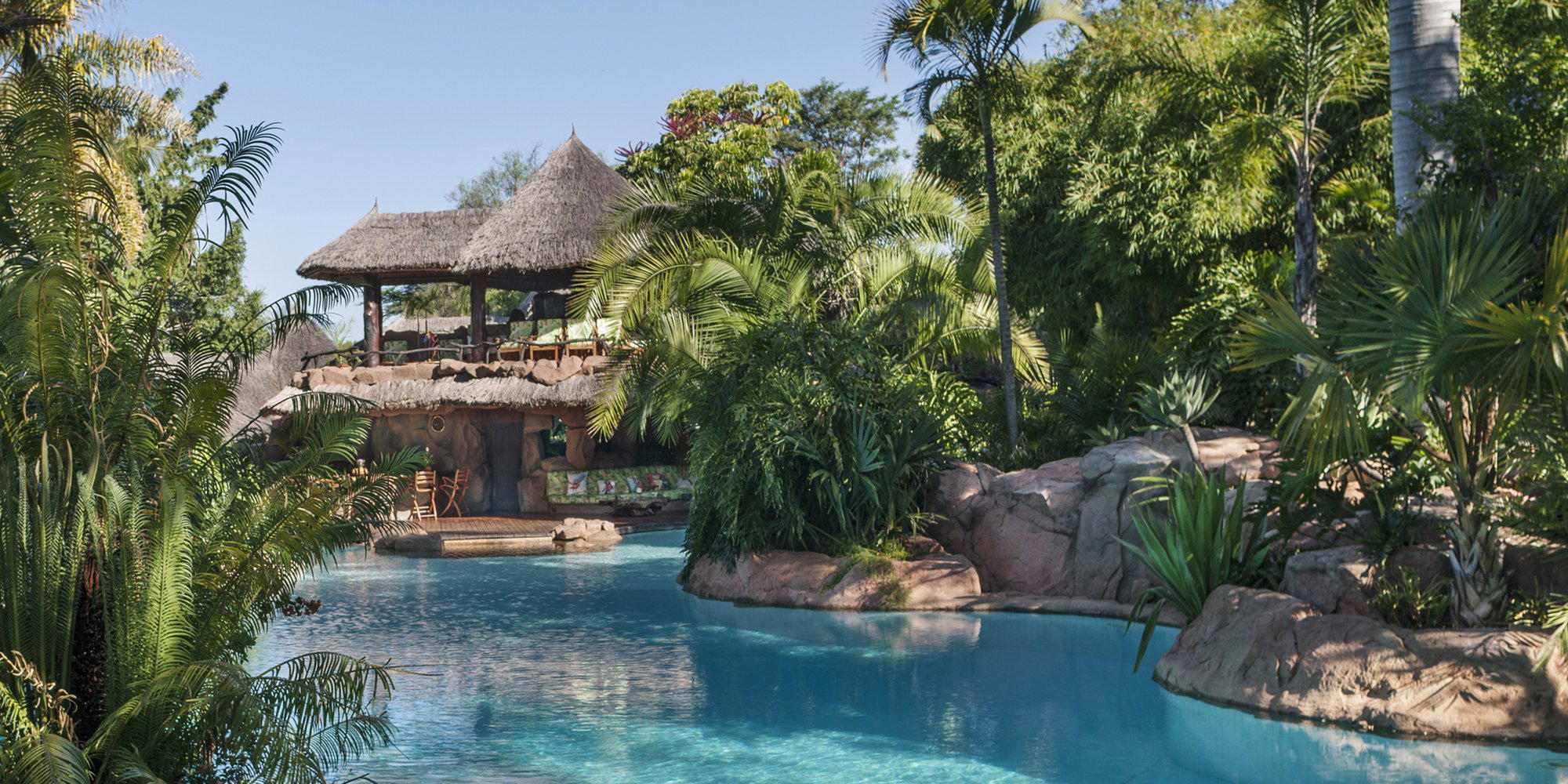
58,000 Acres, One Group: How Ol Jogi Reframes Private Wilderness in Laikipia
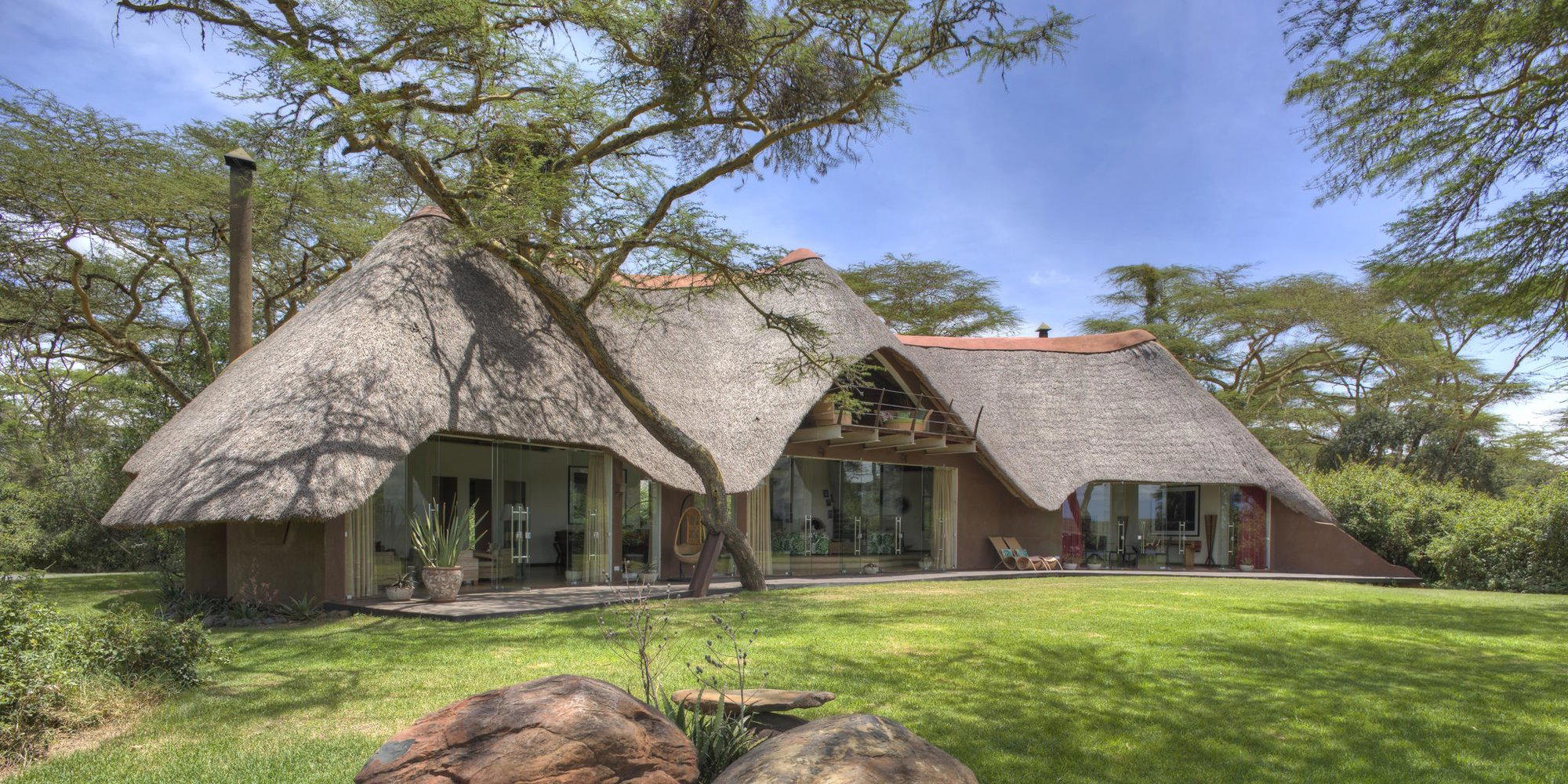
The approach to Ol Jogi sets the terms immediately. The Naibor-Rumuruti Road cuts through country that has not been subdivided, fenced for agriculture, or softened for mass tourism. By the time the conservancy perimeter comes into view, the sense of scale registers before any building does. Laikipia's plateau grasslands, broken by acacia woodland and rocky outcrops, stretch to the base of Mount Kenya on the eastern horizon. This is not scenery arranged for a guest experience; it is functional wildlife habitat that the conservancy manages as its primary purpose, with guests accommodated around that mission rather than the reverse.
That sequencing matters. Kenya's northern rangelands have produced several categories of private conservation property over the past two decades. The dominant model, represented by properties like andBeyond Suyian Lodge and Borana Lodge, involves tented or lodge-format accommodation within conservancies that carry multiple guests simultaneously. Ol Jogi operates on a different logic: the entire conservancy, all 58,000 acres of it, is sold to one group. Not one tent in a shared camp, not a private wing of a larger lodge. The full property, from the house to the game-drive network, belongs to a single party for the duration of their stay.
The House as a Counterpoint to the Wild
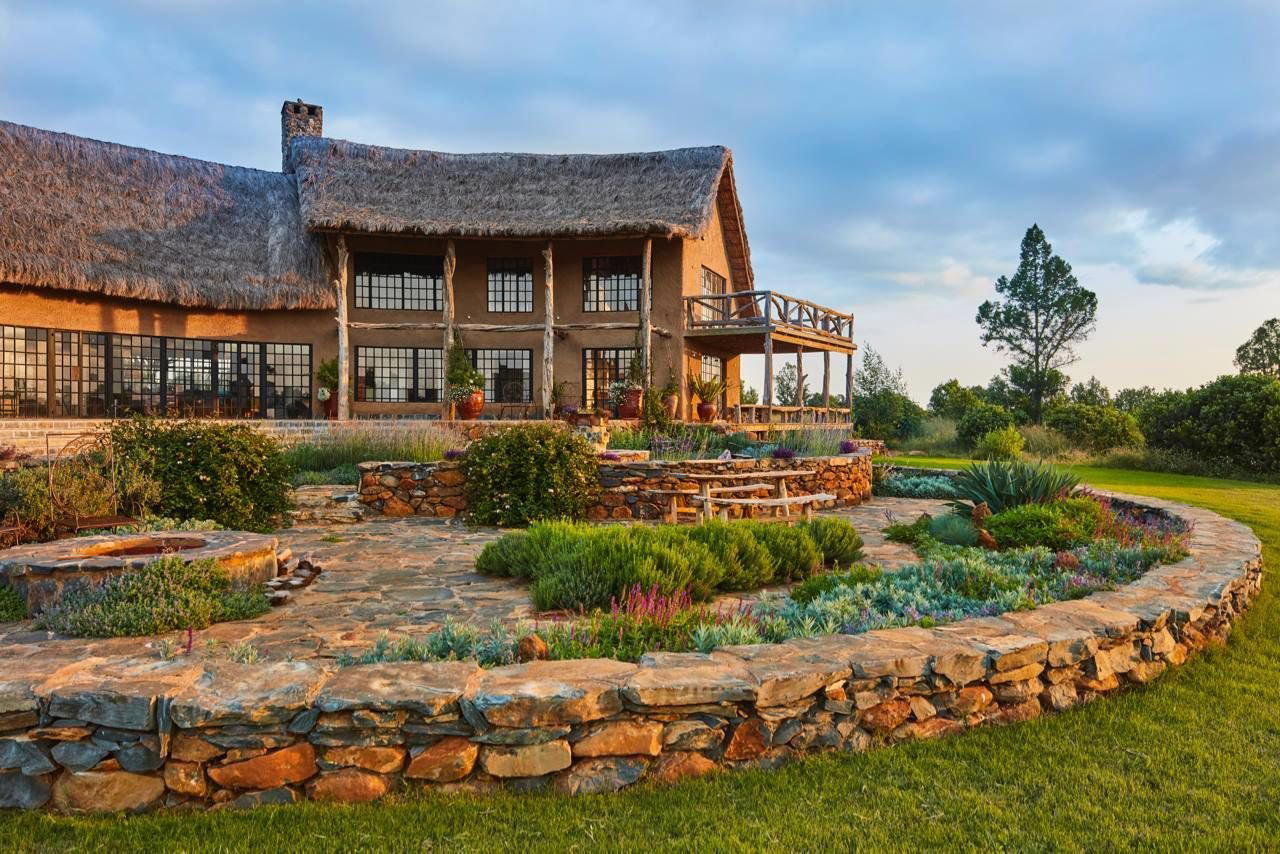
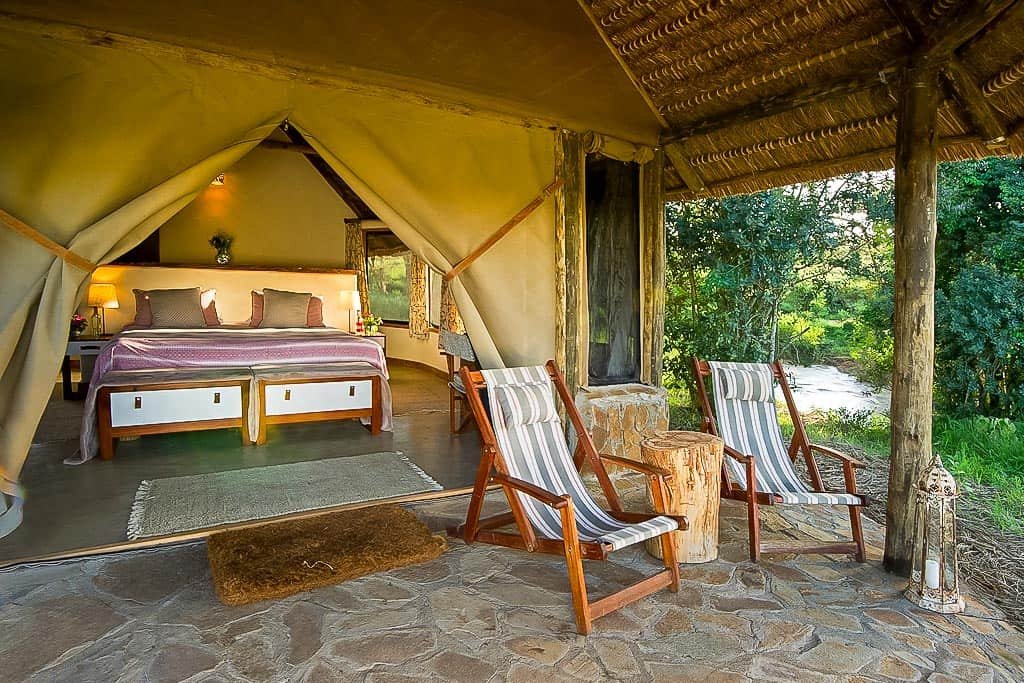
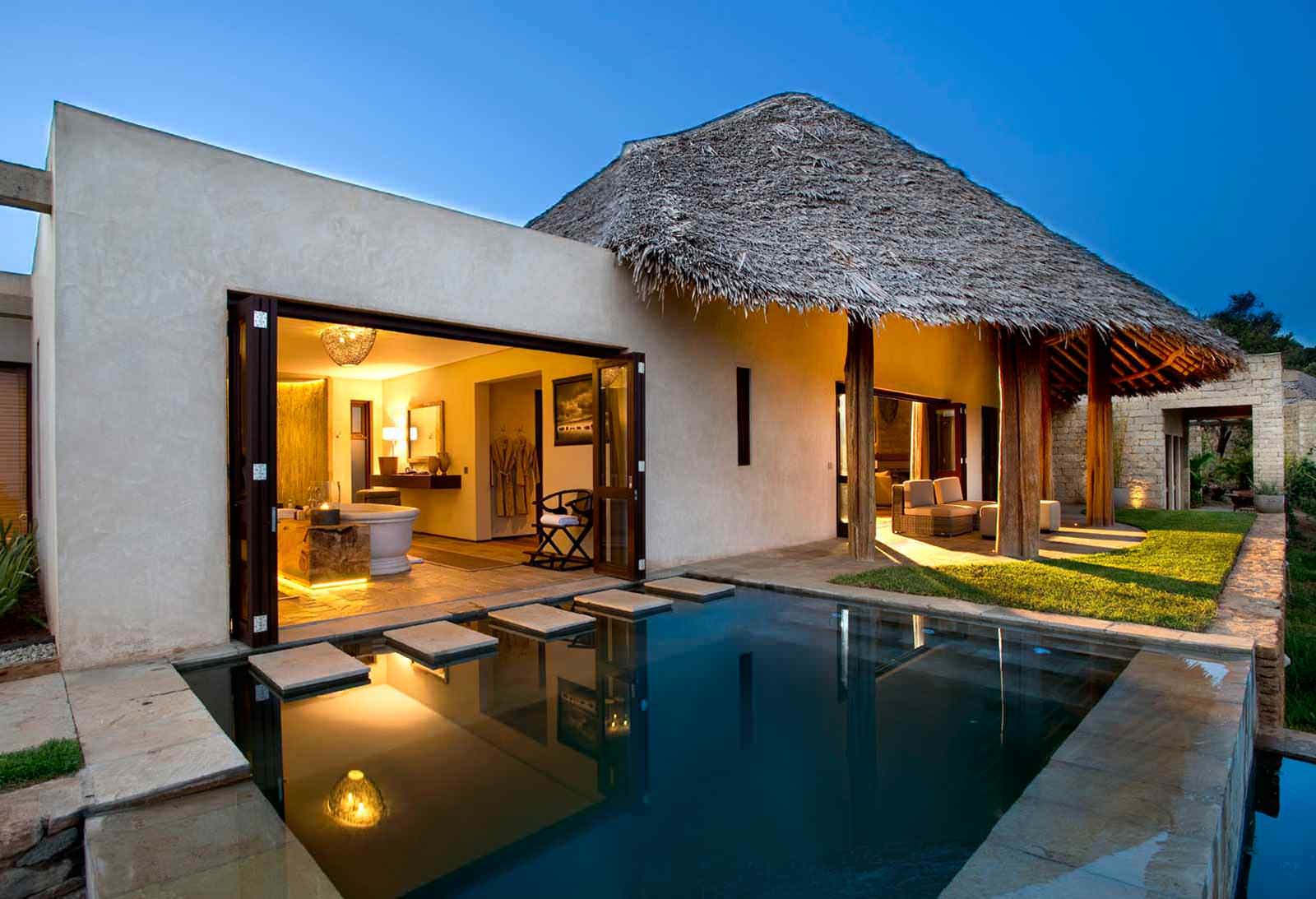
The decision taken in 2013 by the conservancy's directors to open Ol Jogi Home to paying guests was driven by a specific financial calculation: rhino conservation requires sustained capital, and the house offered a vehicle for generating it without introducing the high-volume visitor pressure that undermines the habitat. The house itself arrived at that purpose with considerable material assets. The interiors occupy a register that sits apart from the standard safari lodge vocabulary of canvas and reclaimed timber. Describing it as luxurious is accurate but underspecific: the more precise distinction is the contrast it creates with its surroundings. Walking out of a room furnished at that level directly into unmediated African wilderness, with no other guests on the property, is a compositional choice that few safari formats attempt.
Among Laikipia's premium private properties, the comparison set includes Segera Retreat, which applies an arts-and-conservation framework to its guest experience, and Sirai House, which operates on a similarly exclusive whole-house booking model. Ol Jogi's differentiator within that niche is the conservancy footprint: 58,000 acres is a meaningful number in ecological terms, large enough to support predator territories, seasonal elephant movement, and the rhino population that anchors the conservation programme. Guests are not in a game-rich enclosure; they are in functional wilderness that operates at landscape scale.
Location as the Primary Asset
Laikipia sits north and west of Mount Kenya, at elevations that keep temperatures moderate year-round relative to the coast or lower-altitude savannah parks. The plateau's mixed habitat, combining open grassland with riverine forest corridors and rocky escarpments, supports a breadth of species that single-ecosystem reserves cannot replicate. Elephant, lion, leopard, wild dog, Grevy's zebra, and a significant black rhino population all use the conservancy. The rhino presence is particularly notable: Laikipia holds one of Kenya's more significant black rhino populations outside of Ol Pejeta, and Ol Jogi's protection programme is part of that broader recovery effort.
The gateway is Nanyuki, reachable by scheduled light aircraft from Nairobi's Wilson Airport in under an hour, or by road from Nairobi in approximately three and a half hours. Nanyuki's position as the service hub for Laikipia's private conservancies means the infrastructure for arriving guests is well-established. For those exploring Kenya more broadly before or after a Laikipia stay, the country's lodge network extends in several directions: the Maasai Mara corridor includes properties like andBeyond Bateleur Camp and Mahali Mzuri in Olare Motorogi Conservancy, while Meru National Park is served by Elewana Elsa's Kopje. For the Amboseli region, ol Donyo Lodge in the Chyulu Hills operates a comparable conservation-integrated model.
Nairobi provides the natural transit point for international arrivals, with Villa Rosa Kempinski representing the city's upper bracket of urban hotel options for those overnighting before a northern Kenya itinerary. Guests continuing to the coast after a Laikipia stay have access to properties including Sarova Whitesands Beach Resort and Spa in Mombasa and Kinondu Kwetu in Diani Beach.
Low-Impact by Design
The exclusivity model serves two functions simultaneously. For guests, it eliminates the shared-camp dynamic where game vehicles from multiple groups converge on the same sighting and the illusion of solitude collapses. For the conservancy, it limits the cumulative disturbance footprint to a single visiting party at any one time. Both outcomes align with what Laikipia's most considered operators have been working toward: demonstrating that conservation finance and low-density tourism can be structured as complementary rather than competing forces.
This positions Ol Jogi in a niche within a niche. The whole-house, whole-conservancy format requires a guest group with both the means to secure the property and the flexibility to travel as a single party. It is, by construction, not a property that accumulates reviews in volume. Demand is communicated through direct channels rather than standard booking platforms, and the property's profile within Kenya's premium safari market rests on its conservation credentials and the scale of the asset rather than on awards-circuit positioning.
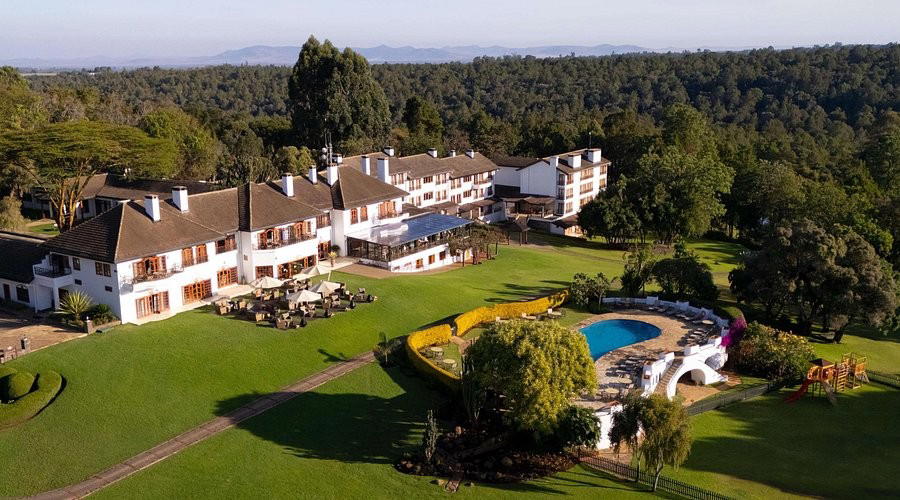
For a broader picture of what the Nanyuki area offers across formats and price tiers, our full Nanyuki guide covers the range from established lodge operations to private conservancy models. The Fairmont Mount Kenya Safari Club anchors the more traditional end of the spectrum, with a historical footprint and shared-access format that represents a different approach to the same northern Kenya geography.
Planning Your Stay
Ol Jogi Home is reached via the Naibor-Rumuruti Road, with the postal address at P.O. Box 259, Nanyuki. Because the property operates on a whole-house exclusive basis, booking is handled directly through the conservancy rather than through online travel platforms. Interested parties should expect a direct inquiry process rather than a standard availability calendar. The conservancy's communications are managed centrally, and early contact is advisable given the single-group format, which means availability is constrained by definition. Laikipia's wildlife calendar runs year-round, with the drier months of June through October and January through February generally producing the clearest game-viewing conditions as vegetation thins and water sources concentrate animals.
Just the Basics
Comparable venues nearby, for context on price, style, and recognition.
| Venue | Price | Notes |
|---|---|---|
| Ol Jogi Wildlife ConservancyThis venue — the venue you are viewing | $$$$ | Not listed |
| Sirai House | $$$$ | Borana Conservancy, Exclusive private safari house built with local materials emphasizing privacy and comfort |
| Fairmont Mount Kenya Safari Club | $$$$ | Nanyuki, Colonial-era luxury safari lodge blending heritage charm with modern amenities |
| andBeyond Suyian Lodge | $$$$ | Laikipia County, Contemporary luxury safari lodge with Afro Wabi-Sabi design philosophy, blending raw earthy African materials with modern elegance and Samburu cultural influences. |
| Segera Retreat | $$$$ | Nanyuki Town, Eco-luxury safari retreat harmonizing with nature featuring timber and thatch villas polished above botanical gardens. |
| Borana Lodge | $$$$ | Borana Conservancy, family-hosted luxury conservancy lodge built from local materials |
Recognition history
Dated appearances from independent guides and award organizations, with the underlying list record or original source where available.
Robb Report The 50 Greatest Luxury Hotels on Earth
Robb Report · 2026 Robb Report The 50 Greatest Luxury Hotels on Earth
Virtuoso Luxury Hotel Partner
Virtuoso
At a Glance
- Scenic
- Rustic
- Intimate
- Elegant
- Romantic Getaway
- Family Vacation
- Group Retreat
- Panoramic View
- Private Villa
- Pool
- Wi Fi
- Spa
- Laundry Service
- Mountain
- Pool
- Wi Fi
- Spa
- Laundry Service
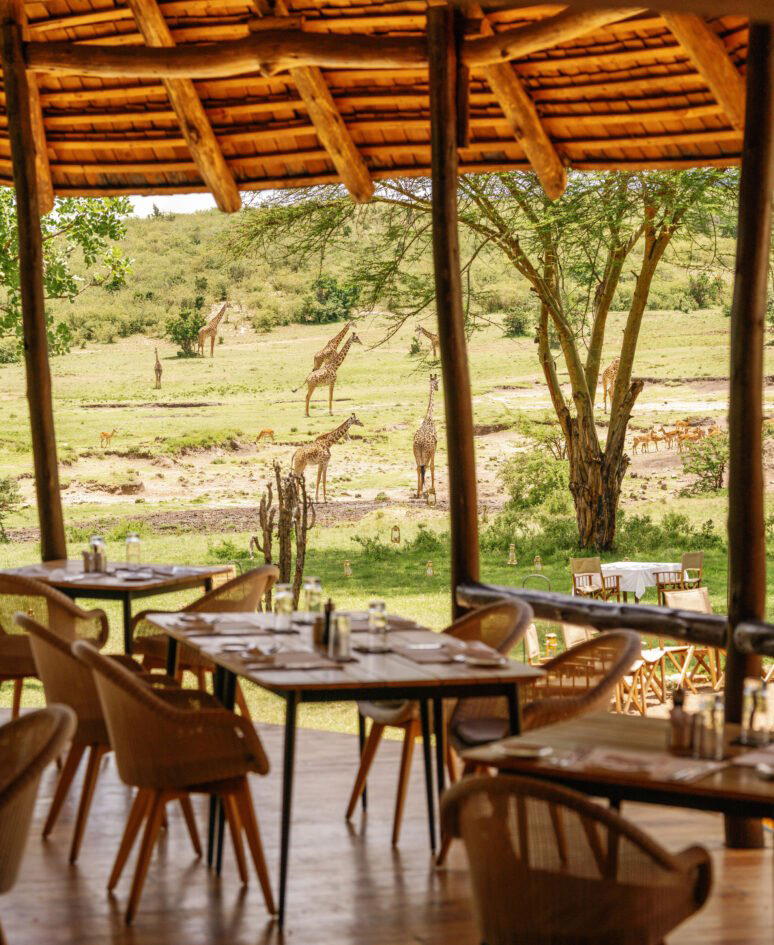
Serene bush atmosphere with sweeping vistas and immersive wildlife surroundings.