Amantaka




1 Michelin Key · Mr & Mrs Smith Seal of Approval · Forbes Recommended
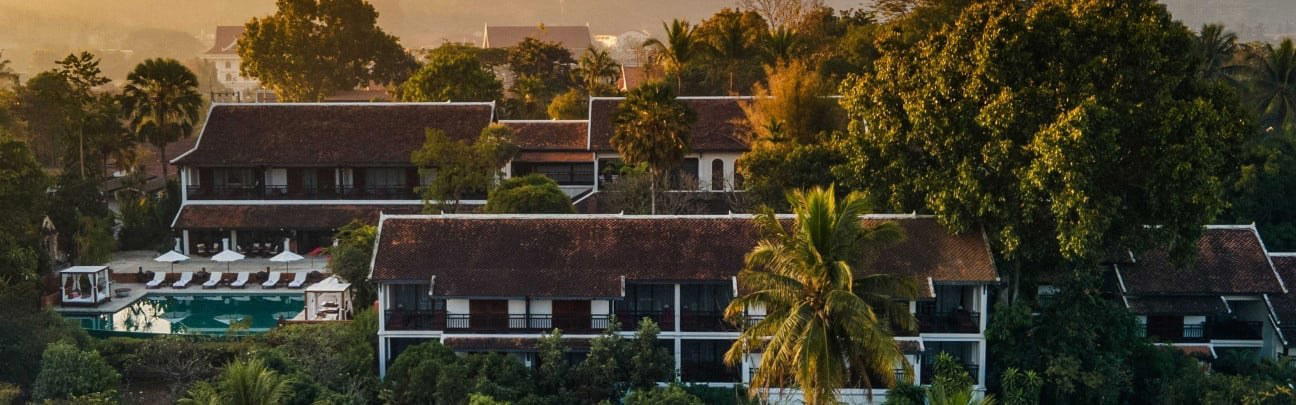
Set within a cluster of restored French colonial buildings in UNESCO-listed Luang Prabang, Amantaka earned a Michelin 1 Key recognition in 2025. The property's 24 suites occupy a peninsula framed by the Mekong and Khan Rivers, within walking distance of 32 temples and the royal palace district. It belongs to the Aman portfolio of low-key, high-access properties designed around place rather than spectacle.

Pearl is the En Primeur Club membership app, where members save venues, book tables and use the concierge.
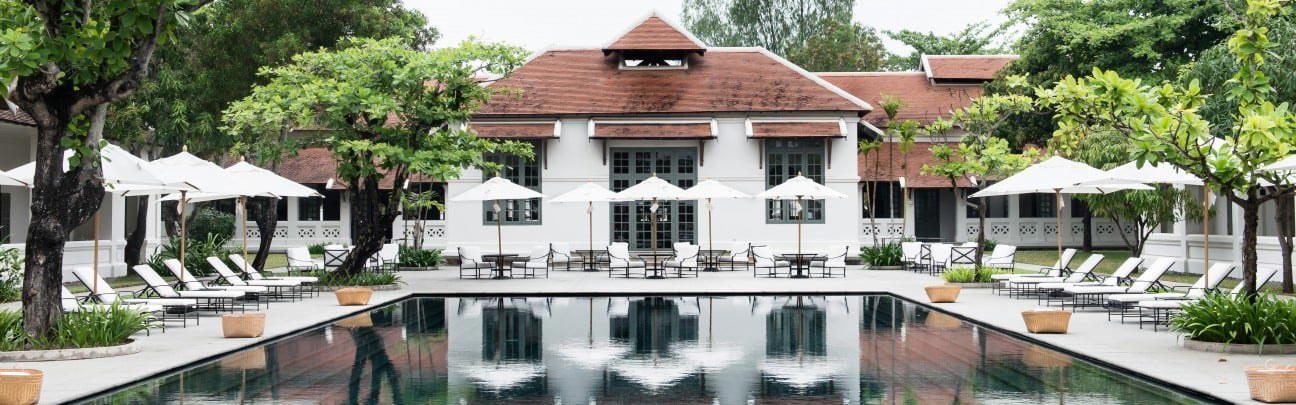
Colonial Architecture as the Organizing Principle
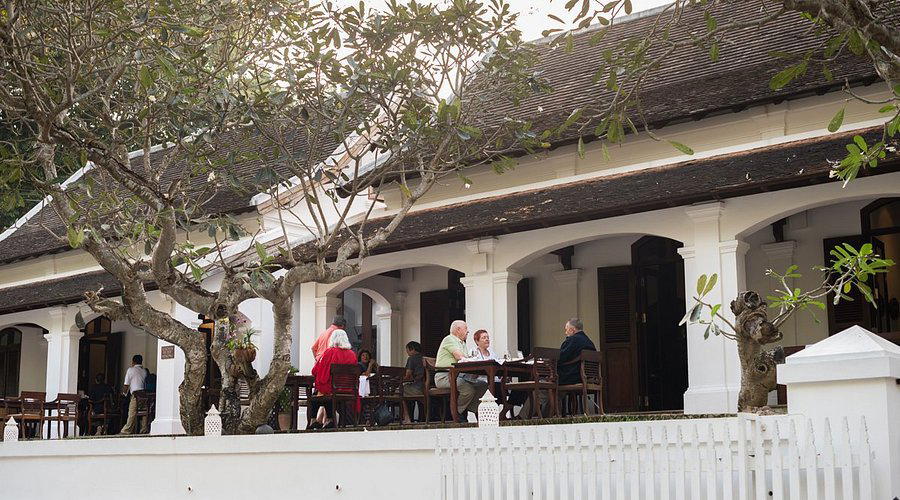
Luang Prabang's built identity rests on a particular accident of history: French colonial administrators arrived, built in the Beaux Arts manner, and then left those structures to be absorbed into a town that already had centuries of Lao temple architecture. The result is a streetscape unlike most of Southeast Asia, and it earned the city UNESCO World Heritage listing in 1995. Amantaka positions itself squarely inside that architectural inheritance, occupying a restored cluster of French colonial buildings at 55 Kingkitsarath Road. The louvered shutters, high ceilings, and wide verandas are not decorative references to an era, they are the era, maintained and adapted rather than replicated.
Approaching the property from the street, the colonial envelope reads quietly against the surrounding neighbourhood. There is no monumental entrance sequence designed to signal luxury from a distance. The scale is residential, the palette restrained, and the transition from the town's main road into the inner courtyard happens through a passage that narrows before opening. This compression-and-release pattern is a consistent feature of Aman properties globally: Aman Venice works through a palazzo's water gate, Amangiri through the desert plain, and Aman New York through a reclaimed Crown Building lobby. At Amantaka, the arrival is filtered through colonnade and courtyard before reaching the suite buildings set back from the road.
What the 24 Suites Actually Deliver
The suite inventory sits at 24 keys across five categories: eight standard Suites, four Pool Suites, eight Khan Suites, two Mekong Suites, and two Amantaka Suites. Floor areas range from 70 to 120 square metres, which places even the entry-level rooms well above what most Luang Prabang properties offer at equivalent or higher prices. The room count itself is a deliberate constraint, 24 keys at a property with this level of programming means that excursions, dining, and spa capacity are not strained by occupancy in the way they would be at a larger resort.
Each suite enters from the courtyard through louvered doors, opening into living areas with king-sized beds positioned centrally beneath the original high colonial ceilings. Outdoor areas are shaded by mango trees. The Pool Suites add a private plunge pool beyond the lounge; the two stand-alone Amantaka Suites step up again to include separate living and dining areas, large verandas, private treatment rooms, and their own pools. For travellers comparing options in the city, Rosewood Luang Prabang and La Résidence Phou Vao also occupy the upper accommodation tier, each with different spatial and design approaches. Amantaka's point of difference is the colonial building stock itself, the suites read as rooms inside a historical structure rather than purpose-built resort units dressed in period detail.
Geography as an Asset
The property sits on the peninsula formed by the confluence of the Mekong and Khan Rivers, just south of Phousi Mountain. This location is not merely scenic; it is practically significant. Luang Prabang's primary historical sites concentrate on the same peninsula: the 32 temples of the old city, the former Royal Palace (now the National Museum), and the night market that runs along the main street. Amantaka's address makes all of these walkable, which alters the rhythm of a stay considerably. Temple visits at dawn, when the alms-giving ceremony, the tak bat, takes place along the main road, do not require vehicle logistics from a resort on the city's outskirts.
The night market, the bakeries and boutiques on the main street, and the broader pedestrian character of central Luang Prabang are accessible without arrangement. Properties further from the peninsula, including some that offer larger plot sizes or more dramatic natural settings, trade this walkability for separation. The choice depends on whether a guest wants Luang Prabang to be the backdrop or the content of the trip. At Amantaka, the city is immediately adjacent.
Dining: Colonial Ambience, Lao and French Influences
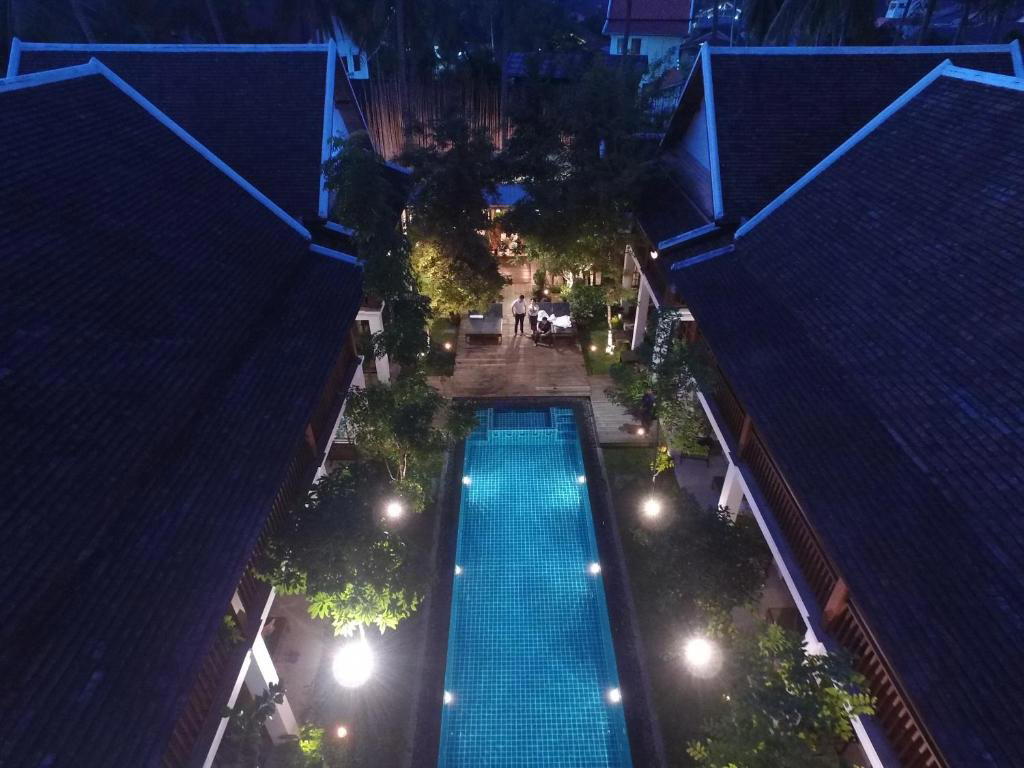
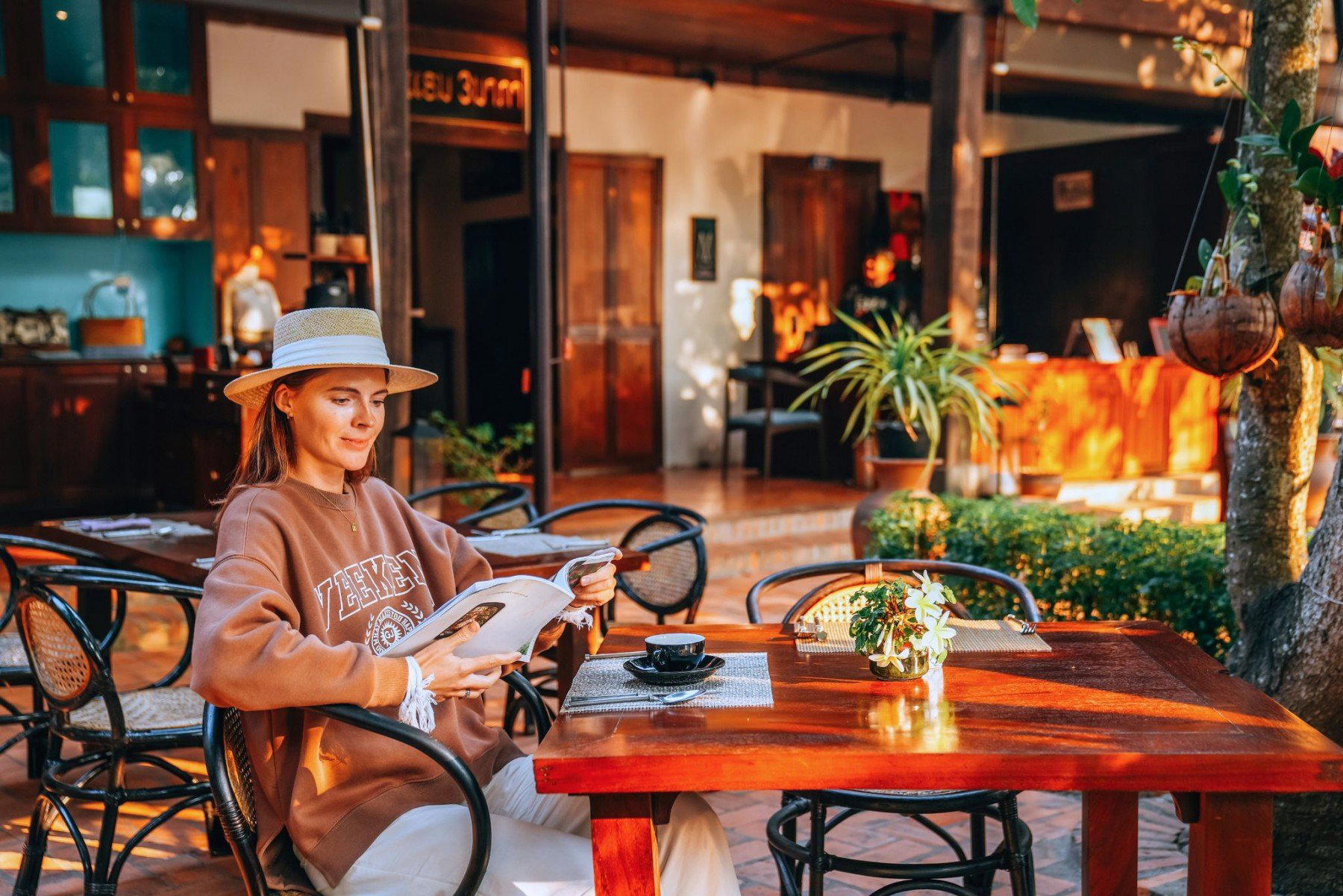
Property's dining operates across several settings, which reflects a considered approach to how guests use the space across the day. The main dining room maintains the colonial ambience of the buildings, airy, high-ceilinged, with a formality that suits evening. The Lounge Bar functions as the pre- and post-dinner anchor, suited to aperitifs or digestifs in a more relaxed register. The Pool Terrace runs as a casual all-day option serving lighter meals.
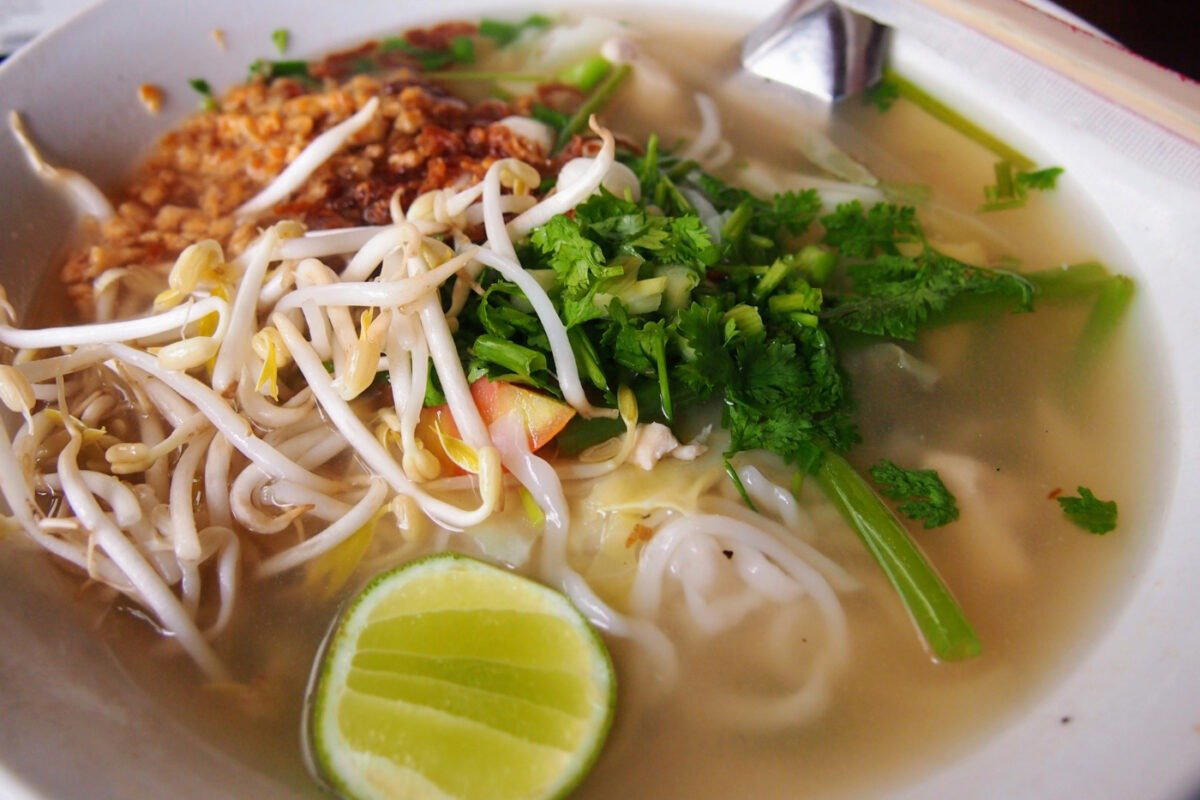
Culinary direction spans authentic Lao cuisine, French-influenced preparations, and broader international options, a range that reflects the town's own dual architectural and cultural heritage. Private dining can be arranged in several secluded locations around the property, including in-suite. This capacity for private setting meals is standard within the Aman model but particularly well-suited to Luang Prabang, where the surrounding landscape and courtyard spaces provide convincing alternatives to the main dining room. Cooking classes are also offered, giving guests a structured way into Lao culinary technique. See our full Luang Prabang restaurants guide for broader context on the city's dining scene.
Facilities and Excursion Programming
Spa occupies four self-contained treatment rooms with steam and sauna facilities, hot and cold plunge pools, and a treatment range that draws on Southeast Asian technique alongside Aman Spa's organic product line. A swimming pool, tennis centre, gym, and yoga studio complete the on-property facilities, comprehensive for a 24-suite property, and calibrated to the pace of a Luang Prabang stay rather than a beach resort.
Off-property programming extends considerably further. Amantaka organizes bespoke tours of the city's antique shops, galleries, museums, and private collections, a specific curatorial commitment to the town's cultural depth that goes beyond the standard waterfall-and-elephant-ride menu. The Khuang Xi waterfall day trip, elephant encounters, visits to mountain tribal villages, sunset climbs of Mount Phousi, jungle treks, and kayaking on the Khan River are all available as customized excursions. The surrounding geography, lush countryside, amber-coloured limestone cliffs, ancient cave complexes, gives these programs substantial content. This is a property where the excursion list reflects actual regional richness rather than manufactured activity.
For travellers comparing across Luang Prabang's upper accommodation tier, The Namkhan, Victoria Xiengthong Palace, The Grand Luang Prabang Affiliated by Melia, and Burasari Heritage each occupy different positions on the proximity-to-centre and design-character spectrum. Amantaka's distinction is its combination of UNESCO-context location, colonial building authenticity, and the Aman group's characteristic low-key programming density.
The Michelin Key and What It Signals
Amantaka received a Michelin 1 Key designation in 2025, placing it in the initial cohort of properties recognized under Michelin's hotel assessment expansion into Southeast Asia. The Michelin Key program evaluates the overall hotel experience rather than the restaurant alone, and a 1 Key designation in the first year of a new regional rollout carries meaningful signal: it confirms that the property meets international assessment standards in a market where verification has historically been inconsistent. For the Aman portfolio, it adds a formal third-party credential alongside the group's existing reputation. Peers in the Aman group carrying comparable formal recognition include Aman Venice and Aman New York, both properties where the relationship between architecture and guest experience is similarly central to the offer.
Planning a Stay
Luang Prabang's peak season runs from November through February, when temperatures drop to manageable levels and dry conditions make both temple circuits and outdoor excursions comfortable. These months also see the highest demand for properties at this tier. Amantaka's 24 suites book with meaningful lead time during peak months; planning three to four months ahead for travel between November and January is a reasonable baseline. The shoulder period from September to October offers lower competition for dates but coincides with the tail of the wet season, which affects some excursion options while simultaneously making the surrounding countryside and waterfall destinations at their most dramatic. The Lao New Year celebrations in April represent a shorter peak window worth considering for travellers interested in the cultural calendar.
For travellers building a broader Laos itinerary, Salana Boutique Hotel in Vientiane provides a considered option in the capital as a complement to a Luang Prabang stay. Those comparing Aman properties across other regions of the world may also find context in properties such as Amangiri, Castello di Reschio, Hotel The Mitsui Kyoto, and Cheval Blanc Paris as reference points for what the upper tier of design-led heritage hospitality looks like across different contexts. Additional reference points for luxury heritage properties in Europe include Badrutt's Palace Hotel in St. Moritz, Le Bristol Paris, Hotel Plaza Athénée, La Réserve Paris, Hôtel de Paris Monte-Carlo, Hotel Du Cap-Eden-Roc, and Hotel Sacher Wien, each of which illustrates how restored or historically significant architecture shapes a property's competitive positioning. For North American or Asia-Pacific comparisons, Hotel Bel-Air, The Fifth Avenue Hotel, Bvlgari Hotel Tokyo, and Hotel Esencia in Tulum each represent the design-led, low-key end of the luxury spectrum in their respective markets.
How It Stacks Up
Comparable venues nearby, for context on price, style, and recognition.
| Venue | Cuisine | Price | Awards | Notes |
|---|---|---|---|---|
| AmantakaThis venue (the venue you are viewing) | Restored French-colonial estate with UNESCO-protected buildings amid lush gardens | $1,000–1,500 | 1 Michelin Key · Mr & Mrs Smith Seal of Approval | Not listed |
| La Résidence Phou Vao, Luang Prabang | Colonial hilltop residence blending French and Laotian heritage. | $300–500 | Michelin Selected · La Liste Top Hotels | Phou Vao Hill |
| The Grand Luang Prabang Affiliated by Melia | Colonial-era architecture blended with traditional Laotian design, set within a former royal residence featuring manicured gardens and century-old trees. | Not listed | World Luxury Hotel Awards WLHA Country Winner | Luang Prabang |
| Sofitel Luang Prabang | Historic colonial mansion blending French elegance and Laotian heritage | $200–300 | Michelin Selected | Old Town |
| Rosewood Luang Prabang | Timeless Lao-French colonial oasis in rainforest with indigenous materials and cultural motifs. | Not listed | 3 Michelin Keys · Michelin Guide New Hotels New Hotel | Ban Nadueay Village |
| The Apsara Rive Droite | Contemporary homage to French colonial era with refined Asian design elements and curated antiques from owner's travels. | $100–200 | Michelin Selected · Mr & Mrs Smith Seal of Approval | Ban Phanluang |
Recognition history
Dated appearances from independent guides and award organizations, with the underlying list record or original source where available.
Michelin 1 Key
Michelin
Forbes Recommended
Forbes
Mr & Mrs Smith Seal of Approval
Mr & Mrs Smith
Virtuoso Luxury Hotel Partner
Virtuoso
Full recognition history (5 entries)
Michelin 1 Key
Michelin
Continue exploring
More in Luang Prabang
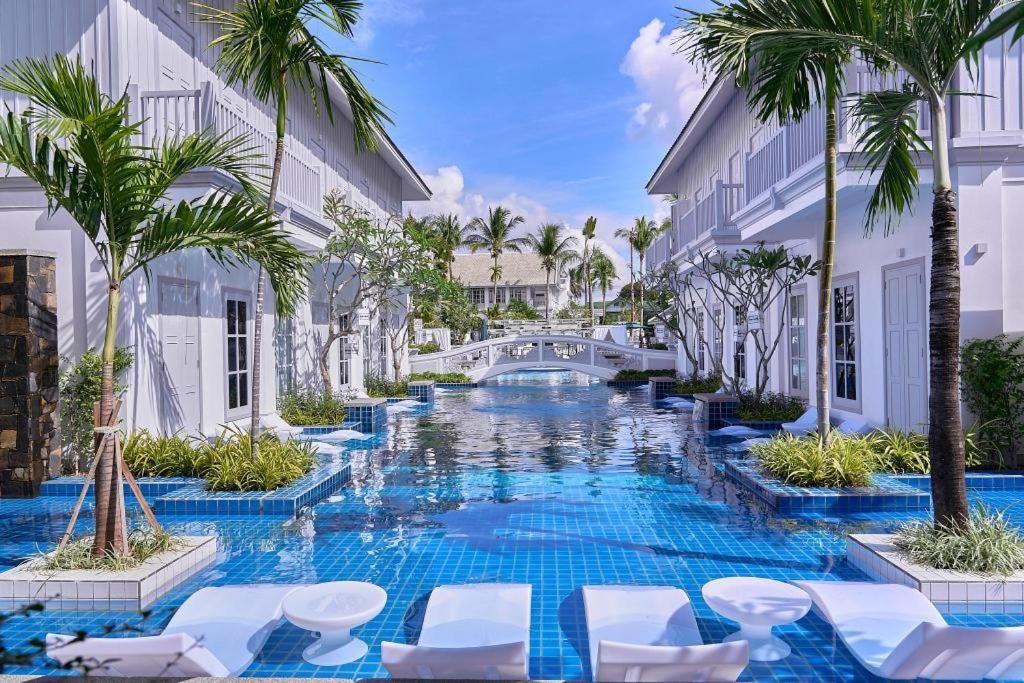
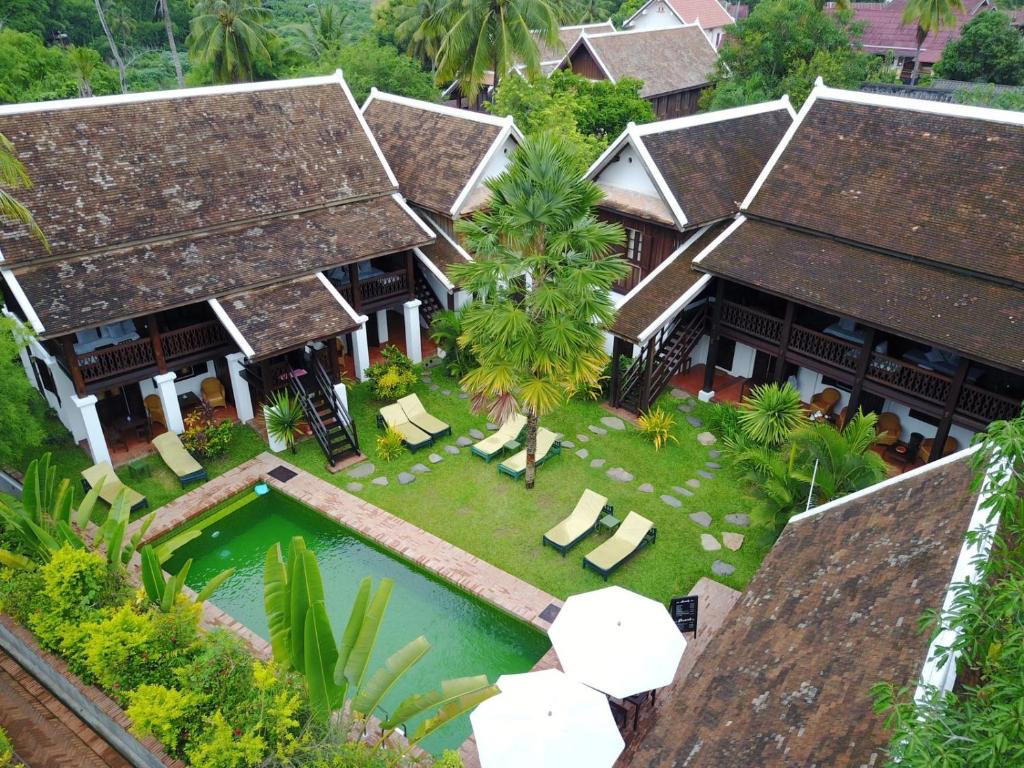
Details
- Elegant
- Quiet
- Sophisticated
- Intimate
- Scenic
- Honeymoon
- Romantic Getaway
- Wellness Retreat
- Anniversary
- Historic Building
- Panoramic View
- Pool
- Spa
- Fitness Center
- Room Service
- Concierge
- Laundry Service
- Garden
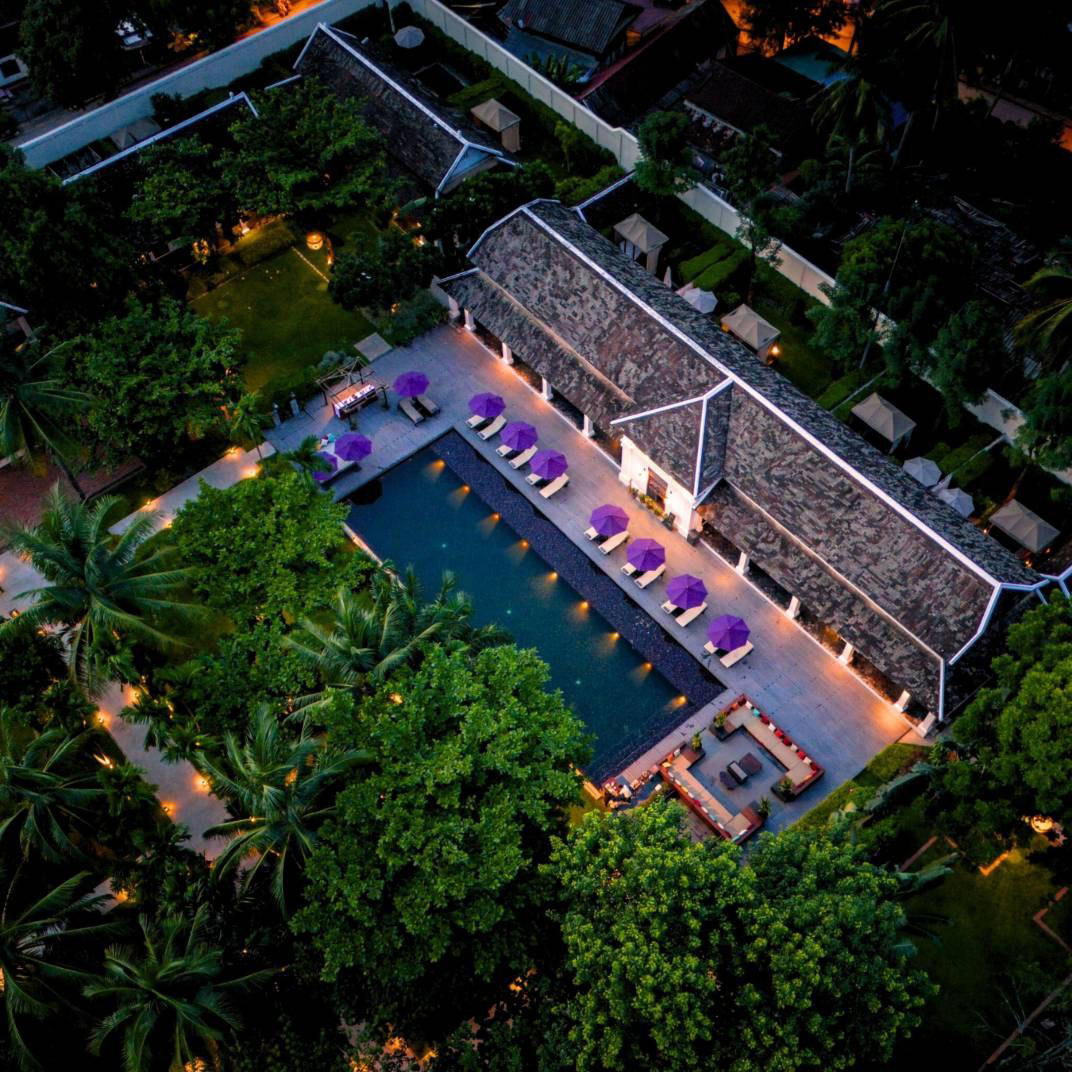
Serene and zen-like with natural light, lofty wooden ceilings, lush gardens, and tranquil poolside evenings lit by lanterns.