← Guides
Decanter's Jane Anson awarded Opus One 2013 a well-suited 100 points — and it trades at £3,050 per dozen, barely above younger, lower-scoring releases.
Decanter's Jane Anson awarded Opus One 2013 a well-suited 100 points — and it trades at £3,050 per dozen, barely above younger, lower-scoring releases.
Somewhere in the secondary market right now sits a bottle of Opus One 2013, the only vintage in the winery's recent history to receive a well-suited 100-point score from Decanter, priced at £3,050 per dozen. That's £460 more than the cheapest available vintage, the 2022, which scored 97 points. For collectors who track the relationship between critical scores and secondary market pricing, that gap is unusually narrow. The Opus One 2013 100-point distinction is singular; the pricing, for now, is not.
Across the last ten releases Decanter has reviewed, Opus One averages 97 points, a consistency that puts it level with Château Cheval Blanc and Château Haut-Brion on score, while undercutting all of Bordeaux's First Growths on price. That 97-point average is genuinely impressive. But the 2013 sits above it entirely.
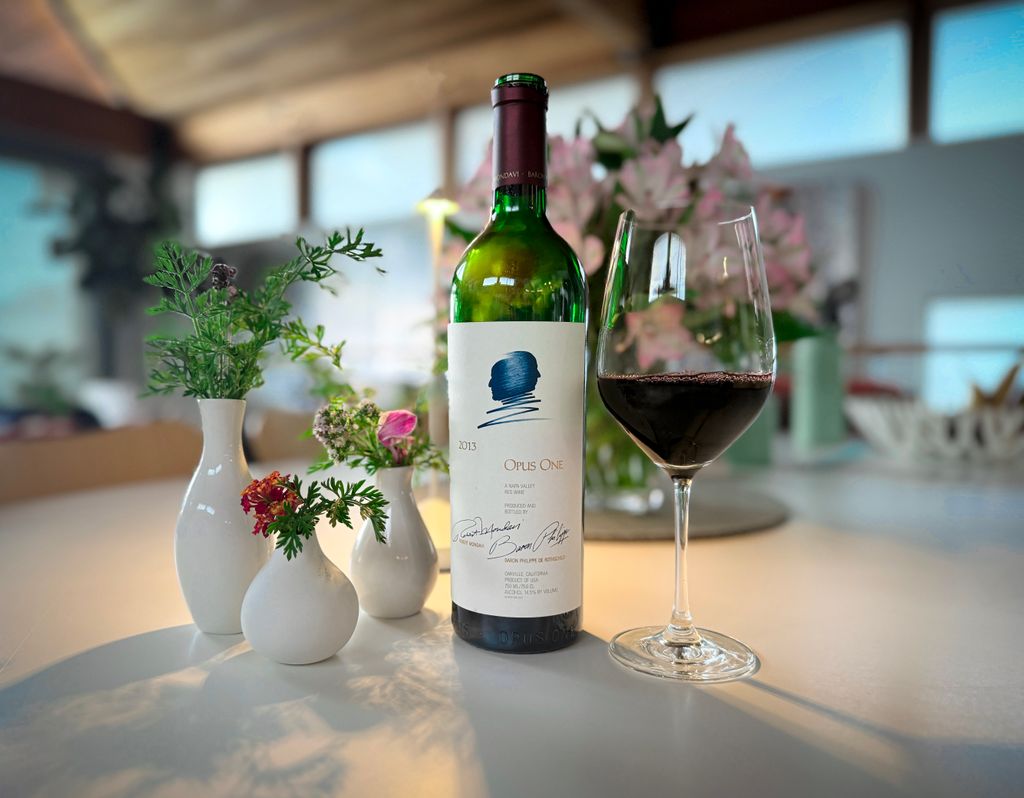
Napa Valley's 2013 growing season delivered conditions that Bordeaux that year could not match. While 2013 was a difficult vintage across the Gironde, uneven flowering, a cool summer, and late-harvest rain, Oakville enjoyed a long, even ripening season that allowed Cabernet Sauvignon to develop both concentration and structural precision. The contrast matters: a vintage that underwhelmed in Pauillac produced one of the leading bottles to emerge from this particular estate.
Jane Anson tasted the wine in 2019 and awarded it Decanter's only triple-digit score in Opus One's recent history. Her note captures why: "Dark deep rosemary spice and black olive paste deepens the flavours through the mid-palate and you just have to hang on as this goes spiralling through, drawing the flavours out to a lengthy finish," said Jane Anson.1 That phrase, you just have to hang on, is not the language of a wine that merely scores well. It describes something that pulls you through it.
For context, the 2018, 2019, and 2021 vintages each earned 98 points from Decanter, three points below the 2013. The 2022 and 2023 scored 97 and 98 points respectively. None of them has received the Opus One 2013 100-point rating. In a winery whose output is defined by consistency, that single vintage stands categorically apart.
Decanter's scoring at this level carries weight in the collector market. A triple-digit score from a critic of Anson's standing is not a routine occurrence. Across the California 50 index, which Liv-ex uses to track the secondary market performance of Opus One alongside Harlan, Screaming Eagle, Ridge Monte Bello, and Dominus, it is Opus One vintages that have seen the gains over the past year. The 2013 gained 4.2% month-on-month, according to Liv-ex, the same rate as the 2018, which has also drawn collector attention recently.

Vintage | Decanter Score | Secondary Market Price (per dozen) | Month-on-Month Gain (Liv-ex) | Notable Tasting Descriptor |
|---|---|---|---|---|
2013 | 100 | £3,050 | 4.2% | Dark rosemary spice, black olive paste, lengthy spiralling finish (Jane Anson) |
2021 | 98 | £2,950 | Not tracked separately | Consistent with estate's precision style |
2019 | 98 | £3,050 | Not tracked separately | Consistent with estate's precision style |
2018 | 98 | £2,850 | 4.2% | Striking, elegant and precise (Georgie Hindle) |
2023 | 98 | Not listed | Not tracked separately | Recent release, limited secondary market data |
2022 | 97 | £2,590 | Not tracked separately | Entry-point vintage, lowest available price |
The pricing picture for Opus One across its available vintages is unusually compressed. The 2022, the entry point, sits at £2,590 per case of 12 on Liv-ex. The 2018, despite its 98-point score and Georgie Hindle's description of it as striking, elegant and precise, trades at roughly £100 per dozen below the 2019 and 2021. And the 2013, with its Opus One 2013 100-point score and a tasting note that reads like a wine at full flight, is available at £3,050 per dozen.
That £460 spread between the cheapest and the highest-scoring vintage in Opus One's recent history is the anomaly collectors should be examining. In most fine wine categories, a well-suited score from a major critic commands a meaningful premium over 97- or 98-point peers. Here, the gap is narrow enough that the 2013 barely registers as a premium purchase. It is priced more like a lateral move from the 2022 than like the outlier it actually is.
The Liv-ex momentum data adds a time dimension to this. Both the 2013 and the 2018 recorded 4.2% month-on-month gains, a signal that buyers are already beginning to identify the value. When a wine with a distinctive critical distinction starts moving at the same rate as its nearest 98-point peer, the window for near-parity pricing tends to close. The 2012 vintage, which Decanter scored at 97 points, is already trading above the 2013, making the 100-point wine the cheaper of the two celebrated back-to-back Napa releases.
For collectors building a Napa position, the structure here is clear. The 2022 at £2,590 offers a 97-point entry. The 2018 at approximately £100 below the 2019 and 2021 offers a 98-point discount. And the 2013, at £3,050, offers the only well-suited score in the winery's recent history at a price that has not yet reflected that distinction. The 2023, rated 98 points by Jonathan Cristaldi and expected to be released through La Place de Bordeaux, may add another data point to this picture, particularly if it arrives at or below the 2022's price.
One further consideration for the 2013 specifically: supply is finite in a way that younger vintages are not. The 2022 and 2023 will continue to circulate through primary channels for years. The 2013 exists only in secondary market inventory, and that inventory moves in one direction.
To understand why a 100-point score from this producer carries the weight it does, it helps to understand what Opus One was built to be. Baron Philippe de Rothschild of Château Mouton Rothschild and Robert Mondavi began discussing the project in the early 1970s after a meeting in Hawaii. The ambition was specific: to take the Bordeaux estate model, a single winery surrounded by its own vines within a defined appellation, and plant it in Napa Valley. This was a deliberate departure from the dominant Napa practice of sourcing grapes across multiple AVAs.
The first vintage, 1979, was released in 1984. The dedicated winery in Oakville opened in 1991. From the outset, the wine was priced to signal its intent, not as a Californian curiosity but as a peer of the estates that had inspired it. The Bordeaux blend structure, the estate philosophy, the French co-ownership: all of it positioned Opus One as the Napa Valley label most likely to be taken seriously in London, Tokyo, and Hong Kong as well as San Francisco.
That international distribution, unusual for a Napa producer of this era, is part of why Opus One became the California reference point for non-American collectors. Winemaker Michael Silacci oversees the blending today, working with the Oakville estate's own fruit. The 2022 blend, as a reference point for the house style, runs 86% Cabernet Sauvignon, 8% Petit Verdot, 4% Merlot, 1% Cabernet Franc, and 1% Malbec, a Bordeaux-inflected composition that reflects the founding philosophy as clearly as the label does.
The Mouton Rothschild connection also matters for how collectors read Opus One's critical scores. Château Mouton Rothschild is a Bordeaux First Growth; its winemaking pedigree is not in question. When a wine built on that foundation receives a 100-point score from Decanter, it lands differently than it might for a producer without that lineage. The 2013 is not just the highest-scoring Opus One in recent memory, it is a well-suited score for a wine that was always designed to be measured against the world's leading.
The decision not to release a 2020 vintage, following the devastating forest fires that caused smoke taint across the region, is also instructive as context for the estate's standards. Forgoing an entire vintage, and the revenue that comes with it, is a statement about what Opus One is and is not willing to put its name on. It makes the 100-point 2013 feel less like a lucky outlier and more like the product of an estate that takes its own benchmark seriously.
Liv-ex's California 50 index has pulled back from its 2022 peak, a pattern shared across most fine wine indices globally. But within that index, Opus One has outperformed its peers over the past year. Harlan, Screaming Eagle, Ridge Monte Bello, and Dominus are all tracked alongside Opus One in the California 50; none has matched Opus One's vintage-level gains over the same period.
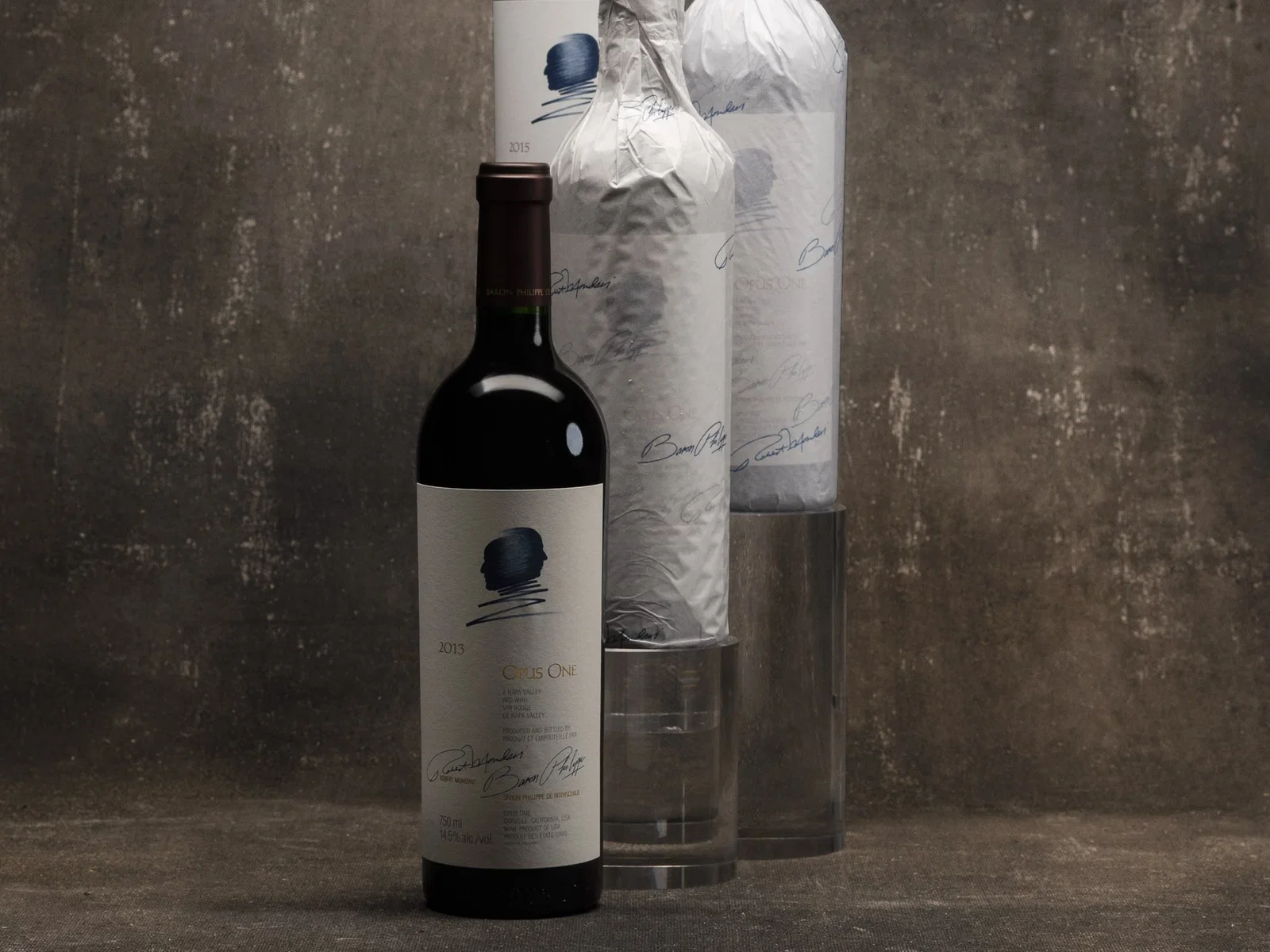
The 4.2% month-on-month gain recorded for both the 2013 and the 2018 suggests that buyers are already pricing in the quality differential, but the 2013's price has not yet moved to reflect its distinctive position as the sole 100-point vintage. That gap between critical distinction and market price is precisely the kind of inefficiency that experienced collectors look for. It does not persist indefinitely. The 2018's recent momentum, driven partly by its discount versus the 2019 and 2021, shows how quickly a perceived value can be absorbed once it becomes visible.
The average case price across Opus One's last ten releases sits just under £3,000, according to Decanter's analysis. The 2013, at £3,050, is barely above that average, for the only vintage in the set with a well-suited score. When the 2023 arrives through La Place de Bordeaux, it will add a new data point at the lower end of the price range, potentially drawing attention away from older vintages and compressing the window further.
For collectors tracking the Opus One 2013 100-point vintage specifically, the secondary market picture is one of a wine that has begun to move, 4.2% month-on-month is not noise, but has not yet repriced to reflect its singular critical standing. How long that remains true is a question the Liv-ex data will answer in the months ahead.
What makes the Opus One 2013 100-point score significant?
The Opus One 2013 is the only vintage in the winery's recent history to receive a well-suited 100-point score from Decanter, awarded by critic Jane Anson in 2019. Across the last ten Decanter-reviewed releases, Opus One averages 97 points, making the 2013 a categorical outlier rather than simply a strong vintage.
How much does the Opus One 2013 100-point vintage cost on the secondary market?
The Opus One 2013 is currently available at £3,050 per dozen on the secondary market. That is only £460 more than the cheapest available vintage, the 2022, which scored 97 points, an unusually narrow gap for a wine with a well-suited critical score.
Why did the 2013 vintage produce such a notable Opus One?
Napa Valley's Oakville appellation experienced a long, even ripening season in 2013, allowing Cabernet Sauvignon to develop both concentration and structural precision. This contrasted sharply with Bordeaux that year, where uneven flowering, a cool summer, and late-harvest rain made 2013 a difficult vintage across the Gironde.
How is the Opus One 2013 performing on the secondary market compared to other vintages?
According to Liv-ex data, the 2013 recorded a 4.2% month-on-month gain, the same rate as the 2018 vintage, which scored 98 points. Opus One vintages have seen particularly gains across the California 50 index over the past year, outperforming peers such as Harlan, Screaming Eagle, Ridge Monte Bello, and Dominus.
Which other Opus One vintages scored closest to the 2013?
The 2018, 2019, and 2021 vintages each earned 98 points from Decanter, three points below the 2013's well-suited score. The 2022 and 2023 scored 97 and 98 points respectively, and none has received the Opus One 2013's 100-point rating.
Get the App
Take the shortlist into the En Primeur Club app for concierge access, saved places, and the next step after discovery.
Get Exclusive AccessMore from the editors