← Guides
Domaine Arnoux-Lachaux publicly asked MICHELIN to remove it from the inaugural Grape Selection, citing lack of consultation and its 2020 policy against all press ratings.
Domaine Arnoux-Lachaux publicly asked MICHELIN to remove it from the inaugural Grape Selection, citing lack of consultation and its 2020 policy against all press ratings.
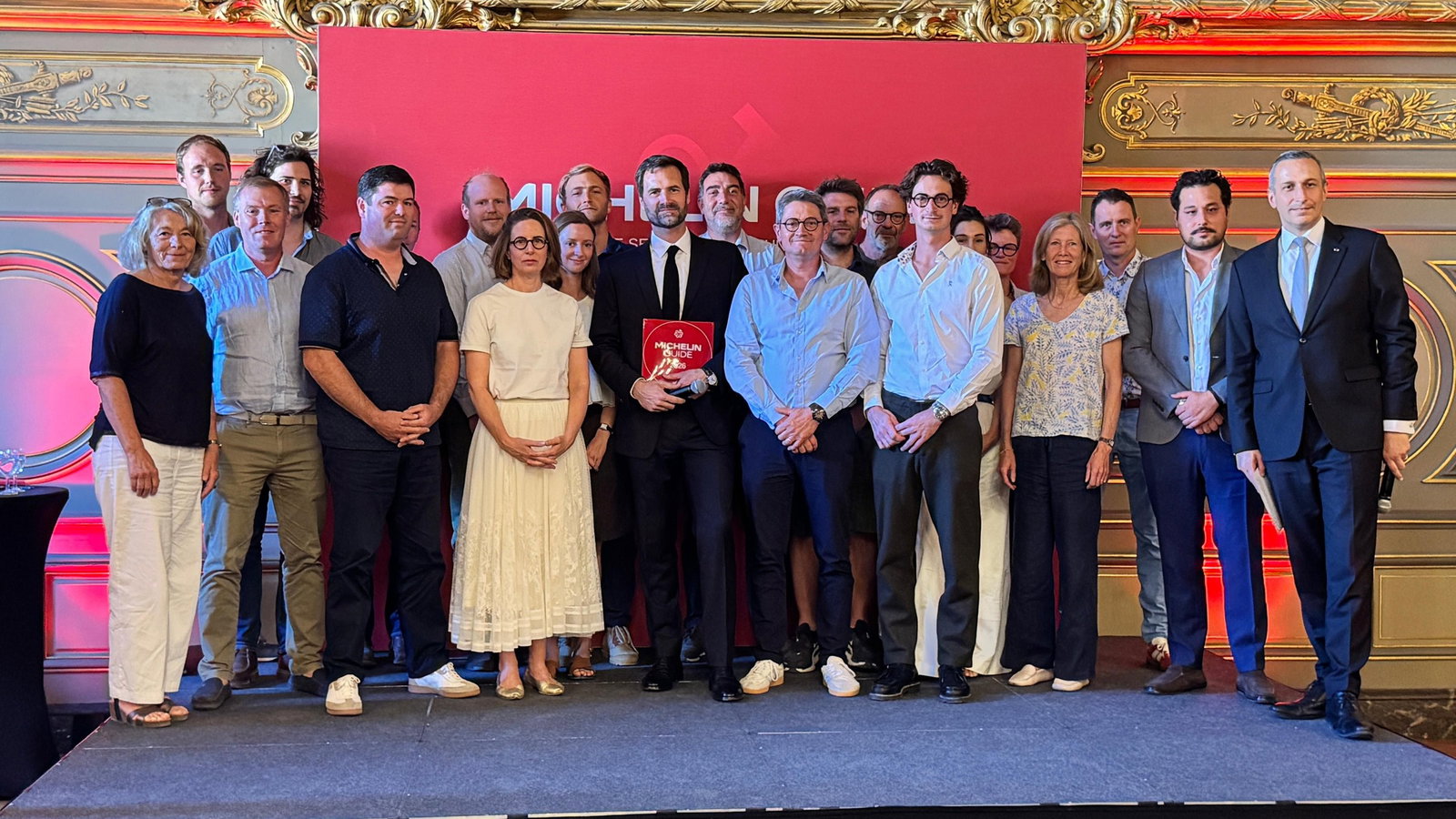
In Dijon’s Palace of the Dukes of Burgundy on 7 July 2026, MICHELIN poured its restaurant language into Burgundy cellars for the first time: the Grape Selection, a new rating for wine estates. Ninety-four domaines were recognized across four tiers, from three grapes down to a 'Selected' category carrying no grape. Within days, Domaine Arnoux-Lachaux, the sought-after Vosne-Romanée estate led by sixth-generation winemaker Charles Lachaux, posted an official statement on Instagram asking to be removed from the selection. It is the only estate known to have publicly asked MICHELIN to take it out.
The statement, signed by Florence Arnoux-Lachaux and Charles Lachaux, was measured but direct. “We do not know how the Domaine’s rating, reportedly based on five criteria, could have been established, as we have not received Michelin or presented our wines to the press since the 2020 vintage,” the pair wrote.1 The estate closed by thanking clients, partners, and wine lovers for their continued interest and messages of support. MICHELIN placed Arnoux-Lachaux in the lowest of its three grape tiers, a single grape, despite the domaine’s place among modern Burgundy’s most sought-after and highly priced names.
For Burgundy drinkers, the point lands quickly. This is a region where reputation is built parcel by parcel, through climat hierarchy, domaine history, and relationships that often begin long before a bottle reaches a list. MICHELIN’s restaurant-style inspection model now sits beside that older code, while deliberately setting aside the Grand Cru and Premier Cru classifications.
The question is whether MICHELIN’s five-criterion framework (quality of agronomy and soil vitality, technical mastery, identity, balance, and consistency across vintages) can catch the texture of Burgundy, or whether the guide’s move into wine ratings sits uneasily with a region led by growers, parcels, and trust.
Arnoux-Lachaux’s objection is procedural rather than qualitative. The estate says it has kept a policy since 2020 of not submitting wines to press reviews or ratings, and has not received MICHELIN or presented its wines to journalists since the 2020 vintage. In plain terms, the domaine says MICHELIN rated it without direct access to recent vintages or consultation with the winemaking team. That raises a practical question: how did the guide’s salaried experts, described as former sommeliers, wine critics, and winemakers, assess the estate across vintages and against five criteria?

MICHELIN says its tastings are collaborative and non-anonymous, unlike the guide’s restaurant inspections. Arnoux-Lachaux’s statement suggests something different: by its own account, it never received MICHELIN and never presented its wines to the press over the vintages in question. The estate framed its request for removal as a matter of consistency with its long-standing position, not as a quarrel with the single-grape rating itself. That matters because it turns the issue toward producer autonomy, not injured pride.
The timing matters too. Arnoux-Lachaux’s 2020 policy shift came as Charles Lachaux was consolidating the estate’s sixth-generation identity. The domaine has since leaned into direct-to-consumer sales, mailing-list allocations, and relationships with importers who understand its farming and winemaking philosophy. Opting out of critic ratings is a bet that the estate’s reputation, rooted in Vosne-Romanée terroir, biodynamic farming, and holdings from Les Suchots to the Nuits-Saint-Georges premier crus Clos des Corvées Pagets and Les Procès, speaks more clearly than any third-party score. For a producer whose bottles command four-figure secondary-market prices and whose allocations are oversubscribed years in advance, a single grape brings no obvious commercial lift, while an evaluation the domaine never consented to brings reputational risk. MICHELIN’s unilateral inclusion cuts across that choice, and the estate’s statement thanked clients and partners for their support in terms suggesting the rejection landed well with the collectors who follow it most closely.
The MICHELIN Grape Selection for Burgundy is the guide’s first-ever rating for wine estates and its first extension of the 'distinction' model beyond restaurants (stars, since 1926) and hotels (Keys, since 2024). Burgundy is the inaugural region, with Bordeaux announced to follow. The selection recognized 94 estates: nine at three grapes, 20 at two grapes, 33 at one grape, and 32 in a 'Selected' category carrying no grape. The nine three-grape estates are Domaine de la Romanée-Conti, Domaine Leroy, Domaine d'Auvenay, Cécile Tremblay, Dugat-Py, Roumier, Coche-Dury, Jean-Marc and Thomas Bouley, and Hubert Lamy.
For collectors, the guide brings a restaurant-style inspection model into a region where buying decisions have long been shaped by climat classification, domaine history, and personal relationships with producers or importers. Those same five criteria aim to assess the estate as a whole, across cuvées and vintages, rather than scoring individual bottles: the guide stresses that it rates the domaine’s overall approach, not a single wine or a single year.
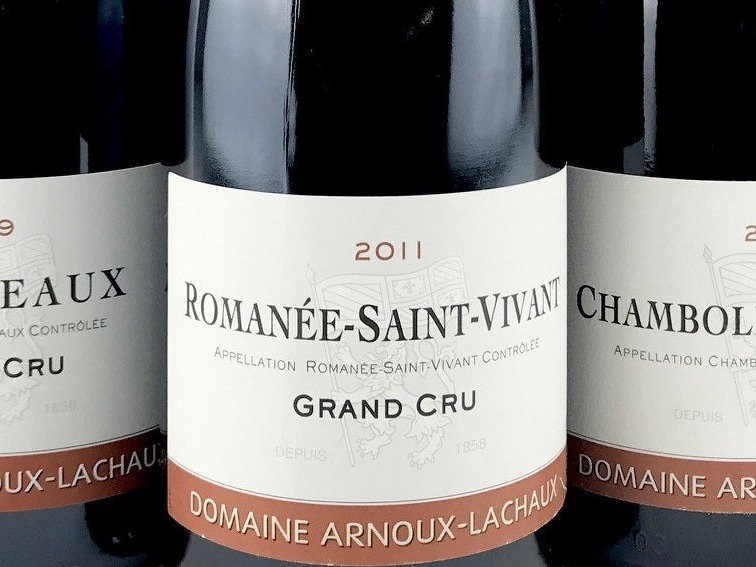
That estate-wide lens runs straight into Burgundy’s parcel-driven reality. A domaine may farm 15 hectares across 20 parcels, each with its own microclimate, soil composition, and winemaking protocol. A village Vosne-Romanée and a grand cru Romanée-Saint-Vivant are not the same wine, even when the same hands make them in the same cellar. Compressing that complexity into a one-to-three grape scale risks smoothing away the terroir distinctions that define the region.
The selection also leaves collectors asking how to weigh guide scores against the existing hierarchy. MICHELIN’s International Director, Gwendal Poullennec, who presented the selection, has said the assessors deliberately set aside the classified-vineyard system: in his words, 'we do not stop at the question of Grands Crus, Premiers Crus or other classifications.' To purists, stepping around the centuries-old climat hierarchy, the same framework recognized by UNESCO, is exactly the difficulty. Those classifications are not marketing language; they distill centuries of observation about which parcels consistently produce the complex, age-worthy wines, and putting that framework behind a five-criterion model reads, to many producers and collectors, as treating terroir as secondary to execution.
The Dugat-Py versus Armand Rousseau placement is the example most often raised: Dugat-Py received three grapes while Rousseau, one of the Côte de Nuits’ most revered names and the source of benchmark Chambertin and Chambertin-Clos de Bèze, received only one. On forums such as WineBerserkers, collectors called the split indefensible and argued that reducing domaines to a one-to-three scale is 'fundamentally at odds with the essence of Burgundian terroir.' Dugat-Py makes superb wines, but ranking it above Rousseau suggests MICHELIN’s criteria reward a different set of qualities, farming intensity, or stylistic consistency, than the market or the region’s own hierarchy recognize. The question for anyone allocating a serious Burgundy budget is whether the grapes should shape strategy at all, or whether the method sits too far from the region’s terroir-first culture to carry weight.
MICHELIN adapted its inspector system for wine, but the change exposes gaps that Burgundy producers and critics have been quick to point out. The guide says its salaried experts, described as former sommeliers, wine critics, and winemakers, assess each estate as a whole across vintages against the same five criteria. Unlike its anonymous restaurant inspections, these tastings are described as collaborative and non-anonymous.
Arnoux-Lachaux’s statement makes that collaboration sound one-sided. If the domaine never received MICHELIN, never presented wines, and never consented to evaluation, the word 'collaborative' loses force. Wine writer Esther Mobley, writing in the San Francisco Chronicle, questioned whether an inspector can 'assess something so complex and seasonal on a single visit,' and flagged the difficulty of judging Burgundy’s many négociant houses. Wine writer and educator Julia Coney warned that under such a system 'many small producers may not get the love they justly deserve.'
The 'consistency across vintages' criterion has drawn the sharpest criticism. Writing in The Somm Pour, Anna Belani-Ellis, DipWSET, argued the yardstick is out of step with Burgundy’s identity: “Burgundy has never been great despite vintage variation. It is great because of it,” she wrote.2 In her reading, a region whose climate is marginal, where frost, hail, harvest rain, and heat spikes are recurring features rather than anomalies, rewards producers who adapt to each vintage rather than iron it out; a cool year like 2021 should taste structurally different from a warm 2018. MICHELIN would likely counter that its criterion measures reliable excellence across variable vintages, not identical wines year to year. But to critics like Belani-Ellis, the framing still risks prizing uniformity over the vintage expression Burgundy is built on.
The soil-vitality criterion has also been questioned. In an analysis for The Grape Reset, Jamie Anderson argued the selection undercut its own agronomy standard, calculating that only about 21 of the 94 estates, roughly 22 percent, are certified organic or biodynamic, with organic pioneers scattered across the lower tiers. If soil vitality is genuinely core, he suggested, either the criterion is not being applied rigorously or MICHELIN defines it differently than the certification bodies do, a gap that matters to the many buyers who treat farming practice as a proxy for long-term quality and aging potential.
Commentators also noted a potential conflict of interest: MICHELIN owns Robert Parker Wine Advocate, a competing wine-rating publication. The guide’s entry into wine ratings puts it in direct competition with the 100-point system that has shaped Burgundy’s secondary market for decades. Whether MICHELIN’s ownership of Wine Advocate influenced the Grape Selection’s methodology or placements is unknowable, but the overlap complicates the guide’s claim to independence, especially for collectors who rely on multiple rating sources to triangulate quality and value.
As of mid-July 2026, MICHELIN had not publicly said whether it would honor Arnoux-Lachaux’s request to be removed, and no other recognized estate had joined the domaine in publicly objecting. But silence in Burgundy is not always agreement. Many top producers work through mailing-list allocations and direct-to-consumer models that reduce reliance on guide-led discovery. For estates with decade-long waitlists and secondary-market prices that dwarf retail, MICHELIN’s grapes offer no clear commercial benefit, while a low rating or procedural misstep can bruise reputation.
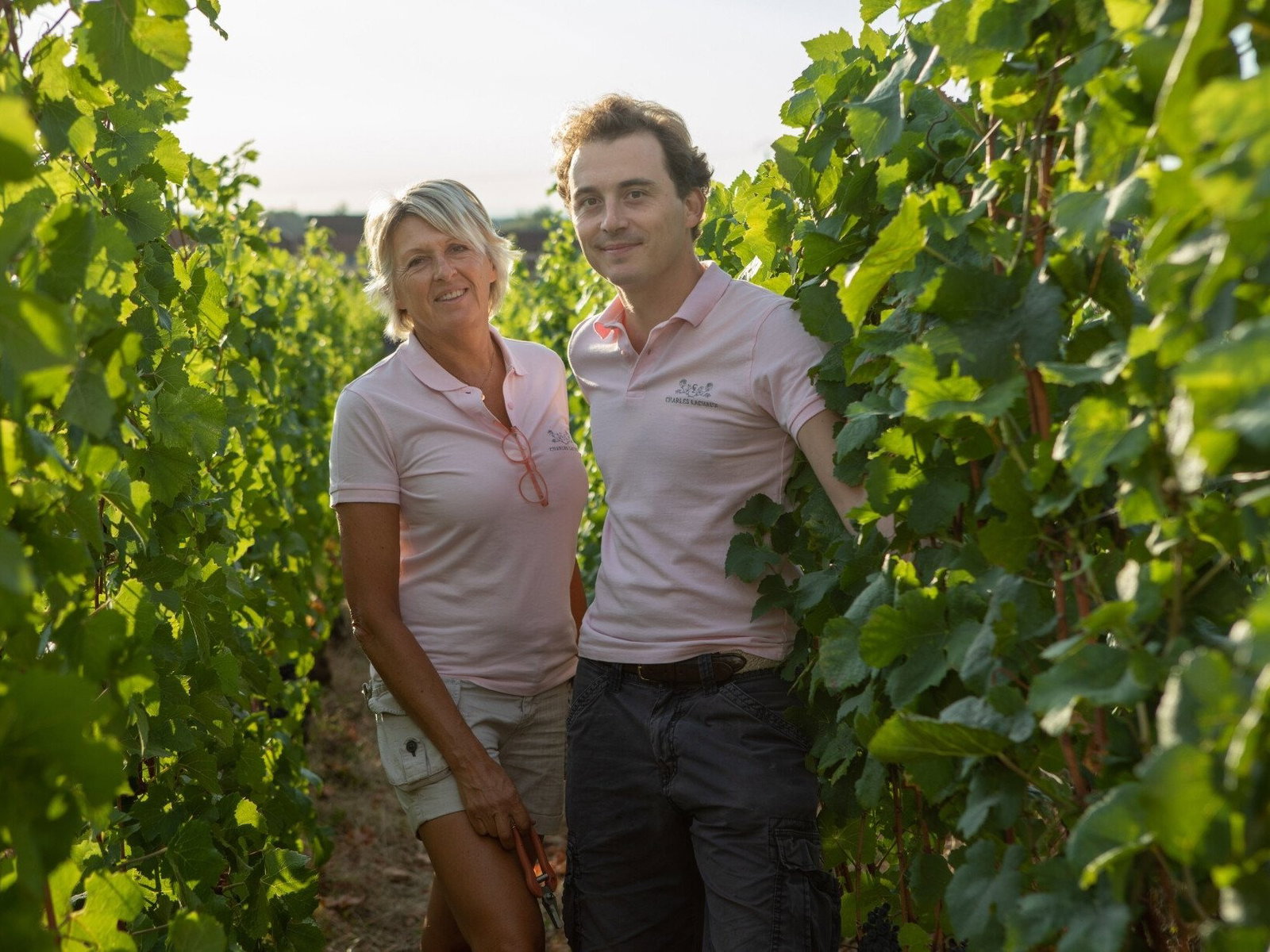
Arnoux-Lachaux’s public stance may give other domaines cover to refuse ratings, particularly those that have already opted out of critic tastings or see third-party scores as out of step with their farming and winemaking philosophy. The estate’s Instagram statement was carefully worded, thanking clients and partners for their support, and signaling that the rejection was well received by the domaine’s core audience. If other producers see that refusal carries no commercial penalty and may even tighten relationships with collectors who value producer autonomy, the Grape Selection could face a wave of withdrawals.
The larger question is whether MICHELIN’s restaurant-inspection model can be adapted to wine without losing what makes Burgundy legible to collectors. Restaurants are evaluated on execution: the dish you eat tonight is the dish the inspector ate last week. Wine is evaluated on terroir, vintage variation, and aging potential: the 2018 you taste today will not be the same wine in 2028, and the 2021 from the same parcel will be a different wine entirely. MICHELIN’s five criteria try to bridge that gap by assessing the estate as a whole, but the Arnoux-Lachaux rejection suggests the bridge is unsteady.
Poullennec has framed the aim as recognizing that 'excellence is not defined solely by the prestige of a name' but is 'expressed through precision in vineyard and cellar work, and the personality each vintner brings,' adding that the guide is interested in 'the history of the domaine, the work of the vine, and how the wines hold over time.' That argument has merit. Burgundy does have estates that trade on name recognition without matching the farming or winemaking rigor of their peers.
But its specific placements, Dugat-Py at three grapes and Armand Rousseau at one, Arnoux-Lachaux rated without ever being consulted, suggest the criteria are not yet tuned to the region’s own standards.
Whether more producers follow Arnoux-Lachaux is, for now, an open question. No other estate has objected publicly, and many of Burgundy’s most coveted names, already sold through mailing lists and multi-year waitlists, have little to gain from a grape and little to lose by declining one. If a public refusal proves to carry no commercial penalty, others may quietly ask to be left out; if MICHELIN adapts its method to Burgundy’s parcel-by-parcel, vintage-driven culture, the friction may ease. For now the two systems, a centuries-old climat hierarchy and a restaurant-style inspection model, still speak different languages, and the Arnoux-Lachaux rejection is the clearest sign yet that Burgundy’s top domaines are not certain they want a translation.
Get the App
Take the shortlist into the En Primeur Club app for concierge access, saved places, and the next step after discovery.
Get Exclusive AccessMore from the editors