Yoshino



On the Bowery in Lower Manhattan, Yoshino holds the #1 ranking on Opinionated About Dining's North America list for 2025 and a Michelin star, placing it at the top tier of New York's omakase scene. Chef Tadashi "Edowan" Yoshida brings a precision-driven approach to sushi and yakiniku, anchored by a hinoki counter sourced from a 300-year-old tree and service that turns each course into a deliberate, theatrical moment.
Pearl is the En Primeur Club membership app — saves, bookings, and concierge access live there. Same editors, same standards.
- Address
- 342 Bowery, New York, NY 10012
- Phone
- (917) 444-1988
- Website
- yoshinonewyork.com
 Saves & bookings on Pearl
The Bowery and the Omakase Tier It Now Anchors
Yoshino is a one-Michelin-star restaurant at 342 Bowery in New York. The Bowery has long operated as a corridor between worlds: the old-school tenements and restaurant-supply shops of its past rubbing against the boutique hotels and galleries that moved in over the past two decades. What the street had not previously produced was a counter-format Japanese restaurant capable of competing with the most awarded rooms in Manhattan. That changed quickly. By 2023, Opinionated About Dining had placed Yoshino at #5 among North American restaurants. A year later it climbed to #2 and earned a Michelin star. The trajectory is not typical of a restaurant still establishing its footing; it reads more like a venue that arrived fully formed.
That context matters for understanding what the Bowery location means here. New York's most decorated Japanese restaurants have historically clustered around Midtown: the concentration of expense-account dinners, business travel, and proximity to Midtown hotels made 57th Street and its surrounding blocks the natural home for counter formats operating at the $$$$ tier. Masa, the long-established benchmark for omakase pricing and precision in New York, operates in the Time Warner Center. Yoshino's placement south of Houston shifts the axis. The neighborhood around 342 Bowery draws a younger, design-conscious crowd, and the surrounding blocks host galleries, independent restaurants, and bars that make it a destination in its own right rather than an annex to a hotel district. For a restaurant anchored in craft and material specificity, the address is not incidental.
What the Counter Communicates Before the First Course
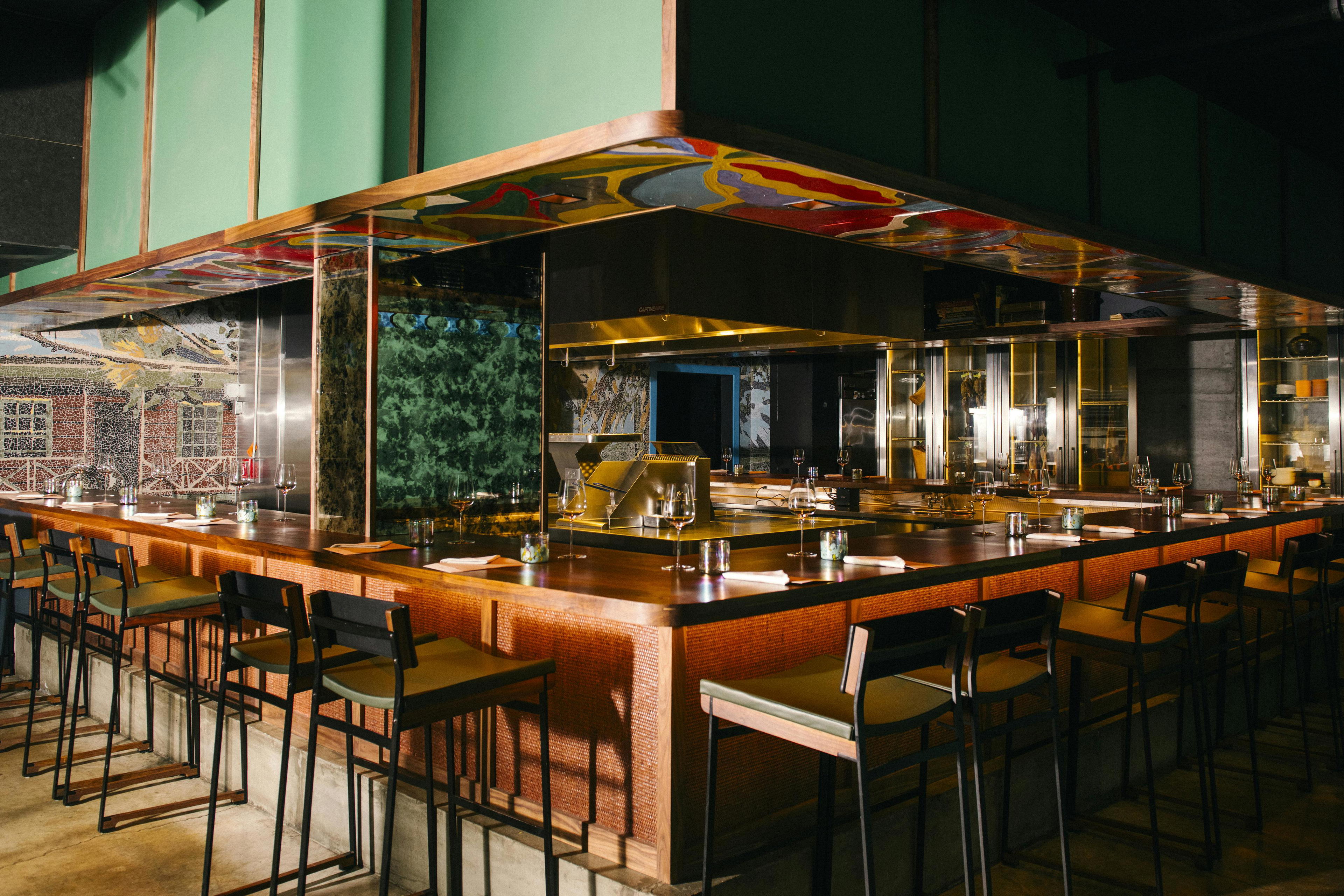
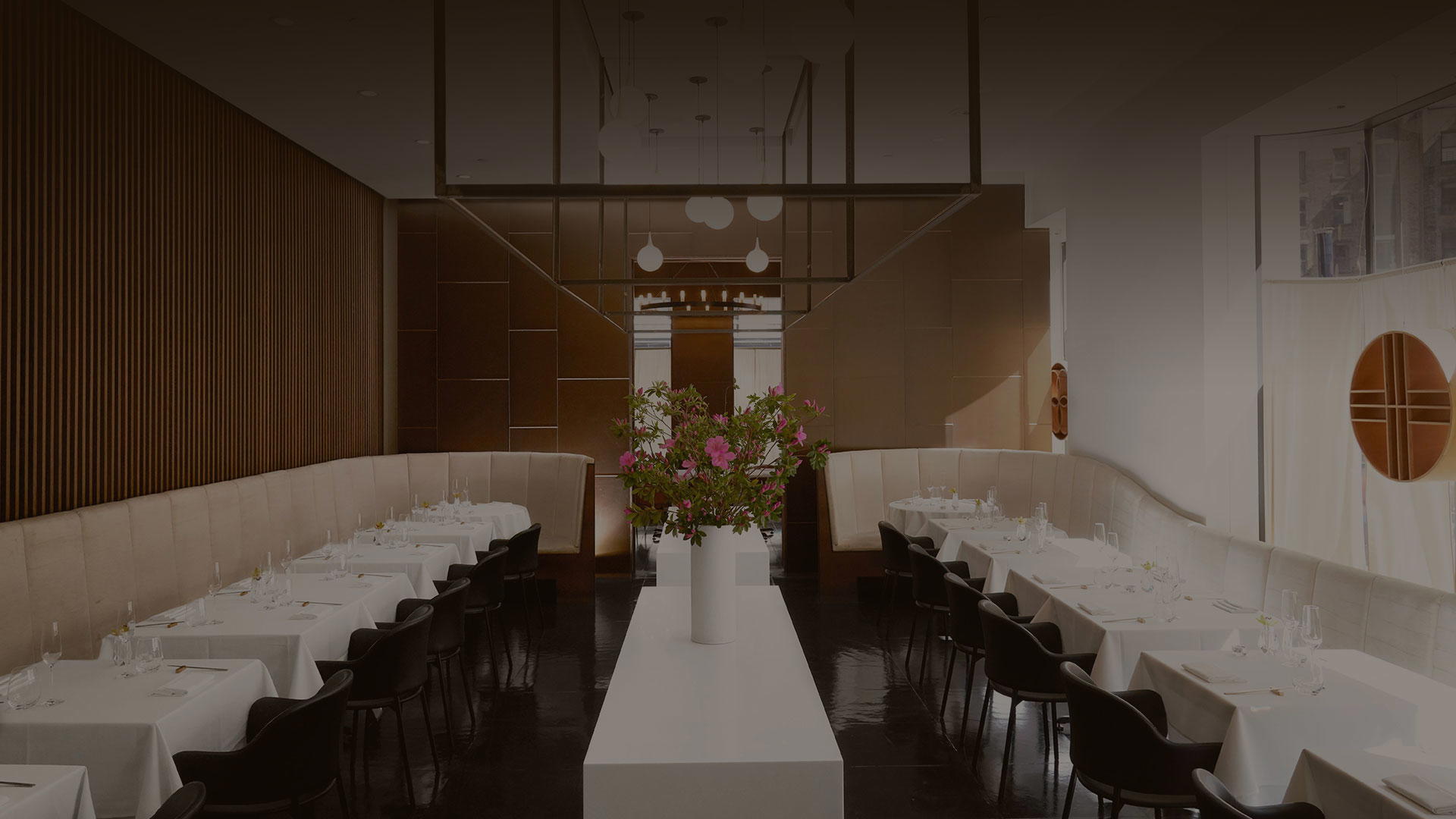
The physical environment at Yoshino carries much of the restaurant's argument before food arrives. The hinoki counter, sourced from a 300-year-old tree, is the central object in the room. Hinoki cypress is a material associated with Japanese bath culture and high-end traditional architecture; using it for a counter surface is a deliberate signal about material sourcing and the weight given to tactile experience. The chairs are hand-made, and the knives used in preparation were crafted by a master from Saga Prefecture, a region in Kyushu with a documented tradition in blade-making comparable to the knife-producing towns around Sakai in Osaka.
These details do the work that ambient lighting and generic minimalism do at lesser venues: they give the room a specificity that holds up to examination. The restaurant is named for Yoshino in Nara Prefecture, which informs the design logic. At the top tier of the New York omakase market, where Masa, Per Se, Le Bernardin, and Eleven Madison Park all compete for the same pool of serious diners, provenance of materials and the logic behind every design decision have become differentiating factors.
Cuisine Format: Sushi and Yakiniku in Sequence
The format at Yoshino combines sushi and yakiniku within the same omakase progression, which is a less common pairing at the counter level than pure sushi or pure kappo. In Japan, yakiniku and sushi occupy distinct restaurant categories with their own specialist cultures; running them in sequence under one roof is a structural choice that requires the kitchen to operate across two distinct disciplines. The award record suggests the execution holds. Opinionated About Dining, which weights peer opinion heavily and tends to be a leading indicator for Michelin movement, has tracked Yoshino upward consistently across three years and across both its North America and Japan-based lists simultaneously, a recognition that positions the restaurant in conversation with Japanese dining culture rather than simply American interpretations of it.
The meals carry theatrical presentation: a glass dome removed to reveal smoked salmon is characteristic of the experience. This kind of moment-building, where individual courses are framed as discrete events rather than sequential plates, has become more prevalent at the top of the New York market. Atomix uses a card-and-narrative format to frame each dish in its tasting menu. Alinea in Chicago and Lazy Bear in San Francisco have built entire identities around choreographed service. What distinguishes Yoshino's version is that the theater is concentrated in the act of revealing rather than in tableside preparation or plating from above: the dome lift is a contained, precise gesture, consistent with the precision-over-spectacle character of the room.
The nigiri is the main event of the meal, followed by bruléed tamago. At high-end omakase counters, the tamago course traditionally signals the end of the meal and functions as a test of technical control: it is a simple preparation with little room to conceal error. The bruléed variation introduces heat and caramel register to a format that usually foregrounds soft, custardy texture, and it is the kind of finishing detail that reinforces the theatrical logic of the meal as a whole.
Yoshino in the Broader New York High-End Dining Conversation
New York's $$$$ tier is genuinely crowded. Within Japanese cuisine specifically, the city has developed a depth of counter-format dining that mirrors what Tokyo produces in certain neighborhoods, and the competition for Opinionated About Dining rankings and Michelin stars is tracked closely by the dining public. Yoshino's rise from #5 in 2023 to #1 in 2025 on the North America list tracks faster than most comparable rooms. For comparison, restaurants at this tier typically hold steady rankings for three to five years before significant upward movement; a two-year climb through the leading five is more characteristic of a new Tokyo counter opening in an established district than of a New York restaurant finding its footing.
The La Liste score increase from 75 to 78 points between 2025 and 2026 is also worth noting. La Liste aggregates critic scores internationally, meaning the 78-point position reflects recognition beyond the New York market. At this score level, Yoshino sits in a bracket that includes restaurants in Napa, Los Angeles, Hong Kong, and Monte Carlo. That is the competitive frame the awards data implies, regardless of address or neighborhood.
Chef Tadashi "Edowan" Yoshida's track record predates the New York opening and accounts for some of the speed of recognition: a chef arriving with established credentials compresses the timeline that a first-time operator would need to build trust with critics and the OAD peer network. What Yoshino has done is transfer that credibility into a new format and address without diluting it.
Planning a Visit
Yoshino operates Monday through Saturday with seatings from 5:30 PM to 10:30 PM. The restaurant is closed on Sundays. For comparable destination-level dining outside New York, Single Thread Farm in Healdsburg and Emeril's in New Orleans represent the same commitment to place-specific dining at the high end of the American market.
Category Peers
Comparable venues nearby, for context on price, style, and recognition.
| Venue | Cuisine | Price | Awards | Notes |
|---|---|---|---|---|
| YoshinoThis venue — the venue you are viewing | Dining | $$$$ | Michelin 1 Star | |
| Dhamaka | Rustic Regional Indian | $$$ | Bib Gourmand | Lower East Side |
| Le Pavillon | Modern French Fine Dining | $$$$ | Michelin 1 Star | Midtown-Times Square |
| Torrisi | Modern Italian | $$$$ | Michelin 1 Star | SoHo-Little Italy-Hudson Square |
| Oxomoco | Modern Wood-Fired Mexican | $$$ | Michelin 1 Star | Greenpoint |
| 63 Clinton | Modern American Tasting Menu | $$$ | Michelin 1 Star | Lower East Side |
Continue exploring