Vagabond Wines (Soho flagship) - 14–16 Ganton Street
Vagabond Wines on Ganton Street operates on a self-pour enomatic system that turns the gap between wine list and glass into something hands-on. The Soho flagship draws a crowd that returns not for occasion dining but for the kind of exploratory drinking that builds over multiple visits. It sits at the intersection of wine retail, education, and bar culture in a neighbourhood that rewards that kind of hybrid format.

Pearl is the En Primeur Club membership app — saves, bookings, and concierge access live there. Same editors, same standards.
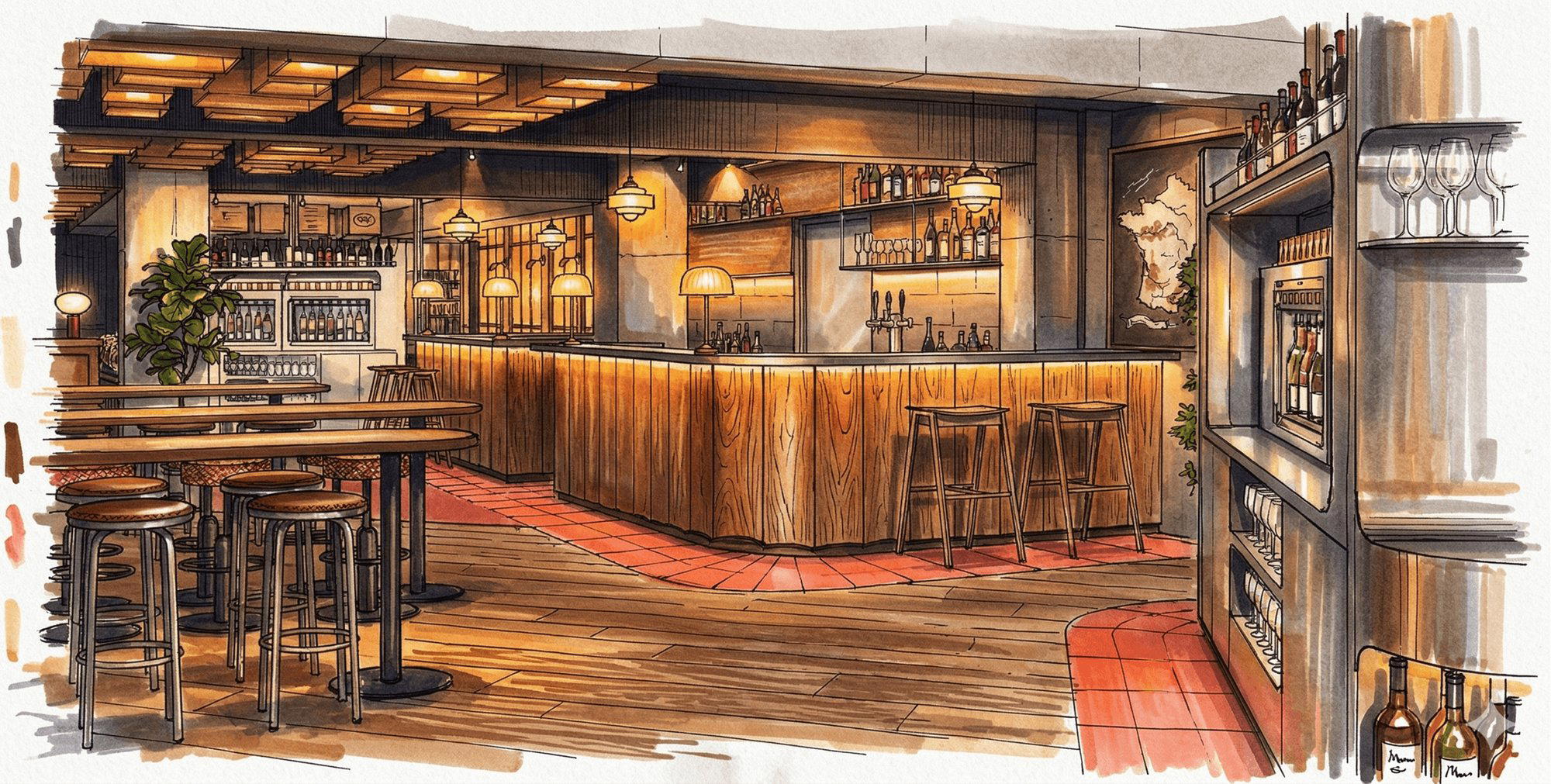
Ganton Street, and What Soho Does With a Wine Bar
Soho's drinking culture has always tolerated formats that sit slightly outside category. The neighbourhood has housed everything from members' clubs with credentialed cellars to standing-room-only natural wine spots where the list changes faster than the furniture. What it has rarely done, until relatively recently, is make wine exploration accessible at pace, without ceremony, and without the implicit pressure of a table service environment. Vagabond Wines on Ganton Street occupies that specific gap, and the regulars who return to it weekly understand that its value lies precisely in what it removes: the sommelier interlocutor, the fixed-price commitment, the sense that you need to know what you want before you arrive.
The self-pour enomatic system at the core of the Vagabond format is the structural fact around which everything else is organised. At around $35 per person, it sits in Soho as a self-pour wine bar with retail. Bottles are preserved under inert gas and dispensed in tasting measures or larger pours, meaning a single visit can move across a Grüner Veltliner, a left-bank Bordeaux, and a Tasmanian Pinot Noir without the arithmetic of ordering full bottles. That breadth, at controlled pour sizes, is what keeps the repeat visitor coming back. The list turns over, new arrivals appear on the machines, and the bar operates less like a static selection and more like a rotating cellar open to grazing.
The Format London's Wine Regulars Actually Use
London's wine bar scene has bifurcated sharply over the past decade. One pole is the carefully curated natural and low-intervention room, often with a short, rotating list and a point of view about farming. The other is the merchant-with-seats model, where depth of selection and the ability to buy retail alongside your glass is the draw. Vagabond occupies the second pole, though its retail component and its enomatic format give it a character distinct from the traditional merchant table. Comparison venues in the broader London bar circuit, from the cocktail precision of 69 Colebrooke Row to the technical programs at A Bar with Shapes For a Name, operate in a different register entirely. The Vagabond proposition is less about a singular bartender's vision and more about giving a knowledgeable regular the tools to direct their own evening.
That regulars' orientation shows in how the space gets used. Early in the week it draws a post-work crowd who know what they want to try and move through two or three pours before leaving. Weekends bring a slower, more deliberate pace: people working through a theme, a region, a grape variety across multiple machines, sometimes with staff on hand to frame what they're tasting, sometimes working through it independently. The format rewards return visits in a way that a conventional list-based bar cannot, because the selection is not static.
Soho's Hybrid Hospitality Tier
Ganton Street sits in the grid of streets between Carnaby and Kingly Court, a zone that has historically attracted independent retail and food concepts that read as more considered than the Oxford Street adjacency might suggest. The Vagabond flagship here is consistent with that neighbourhood character: it functions as retail, bar, and occasional education venue within a single footprint. Wine education events and tasting sessions are a documented part of the Vagabond format across its London locations, and the Soho site is the company's flagship, meaning programming tends to be anchored here.
Across the UK, formats that combine wine retail with on-premises drinking have gained traction as consumers have become more comfortable buying bottles to take home from the same place they drink by the glass. The trend is visible in Edinburgh at Bramble, where the commitment to depth and craft has built a loyal local following over many years, and in the ambitions of bars like Schofield's in Manchester that have positioned themselves as category-defining within their cities. The Vagabond model is a different answer to the same underlying question: how does a drinks venue become part of a customer's regular life rather than an occasional destination?
What Keeps People Returning
The unwritten menu at a self-pour wine bar is personal and cumulative. A regular at Vagabond builds, over time, a working map of the machines: which positions tend to carry the more obscure selections, which regions rotate most frequently, which price tiers offer particularly interesting discoveries at a tasting pour. That accumulation of knowledge is not available on a first visit, which partly explains why the format generates loyalty among people who treat wine as something to learn rather than simply consume.
The retail dimension reinforces this. A pour that works in the bar can be converted into a bottle to take home, which closes a loop that most bar formats leave open. For the wine-curious Londoner who wants to build a cellar alongside a social habit, that continuity between glass and purchase is a practical draw. It also positions Vagabond closer to the merchant end of the spectrum than to the bar end, despite the social atmosphere of the room.
Elsewhere in London's drinks circuit, venues like Academy and Amaro have developed their own loyal followings through format discipline and consistency. The common thread in that kind of loyalty is a room that rewards familiarity, where returning customers find value that first-timers do not yet have access to. Vagabond's enomatic format creates exactly that dynamic on the wine side.
Beyond London, comparable independent formats worth benchmarking include Merchant Hotel in Belfast for its depth of selection, Mojo Leeds for its approach to accessible drinking, Horseshoe Bar Glasgow for its democratic hospitality tradition, L'Atelier Du Vin in Brighton for its wine-and-cocktail hybrid, and Bar Leather Apron in Honolulu for its technically precise format in a different context.
Know Before You Go
Comparable Spots
Comparable venues nearby, for context on price, style, and recognition.
| Venue | Cuisine | Price | Notes |
|---|---|---|---|
| Vagabond Wines (Soho flagship) - 14–16 Ganton StreetThis venue — the venue you are viewing | wine_bar | $$$ | Not listed |
| Noble Rot Lamb's Conduit | wine_bar | $$$ | Bloomsbury |
| Olfaclub | wine_bar | $$$ | Walthamstow |
| 68 and Boston | cocktail_bar | $$$ | Soho |
| Bar Kinky | cocktail_bar | $$$ | Fitzrovia |
| Sky Garden | rooftop_bar | $$$ | Monument |
Continue exploring
More in London
Bars in London
Browse all →
Restaurants in London
Browse all →
Hotels in London
Browse all →



At a Glance
- Modern
- Trendy
- Sophisticated
- Date Night
- After Work
- Group Outing
- Casual Hangout
- Design Destination
- Standalone
- Standing Room
- Seated Bar
- Communal Tables
- Conventional Wine
- Natural Wine
Modern and innovative wine-focused atmosphere with self-service tasting experience.