Marksman



A brown-tiled Hackney Road fixture with St. JOHN lineage, Marksman occupies a specific position in London's pub dining canon: wood-panelled bar downstairs, more considered dining room above, and cooking that takes British seasonal produce as seriously as any white-tablecloth room. Holding a Michelin Plate and ranked #444 on Opinionated About Dining's 2025 Casual Europe list, it earns its reputation through restraint and sourcing rather than spectacle.
Pearl is the En Primeur Club membership app — saves, bookings, and concierge access live there. Same editors, same standards.
- Address
- 254 Hackney Rd, London E2 7SB, United Kingdom
- Phone
- +44 20 7739 7393
- Website
- marksmanpublichouse.com
 Saves & bookings on Pearl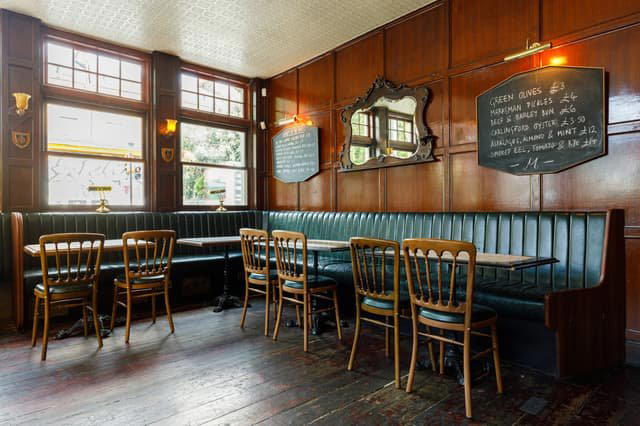
Where the British Pub Dining Revival Has Its Strongest Roots
The story of serious cooking in British pubs is not a recent one, but the version that emerged in East London over the past two decades carries particular weight. Hackney Road, once more notable for its furniture traders than its food, became part of a broader shift in which chefs trained at destination restaurants chose neighbourhood pubs over fine dining rooms as their vehicle. The Marksman, at number 254, is a modern British gastropub at 254 Hackney Rd, London E2 7SB, United Kingdom.
The building has a long history as a local pub. Its brown-tiled exterior is a recognisable feature of this stretch of E2, the kind of Victorian-era frontage that survived both wartime and postwar redevelopment. What changed was the ambition in the kitchen, brought by two alumni of St. JOHN, the Smithfield restaurant that, since the mid-1990s, has defined a certain mode of British cooking: no classical French scaffolding, no imported luxury ingredients as default, but a precise and unsentimental engagement with what British land and sea produce across the seasons.
St. JOHN Lineage and What It Means on the Plate
St. JOHN's influence on British restaurant culture operates like a culinary grammar. Its graduates tend to share a set of commitments: to offal and secondary cuts, to native species and heritage breeds, to the idea that technique should serve ingredient rather than obscure it. Restaurants with that lineage tend to price modestly relative to their cooking ambition, and they rarely pursue visual drama for its own sake.
At the Marksman, chefs Tom Harris and Jon Rotheram carry that inheritance into a pub format. The result sits in a specific and not especially crowded category: pubs with genuine kitchen seriousness, where the cooking merits the same critical attention as a standalone restaurant but the room retains the ease of somewhere you can drink without a booking. Dressed Dorset crab and traditional Sunday roasts are the kinds of reference points that surface in descriptions of the menu, produce-specific, British in orientation, and seasonal rather than signature-driven.
For context, the broader tier of high-ambition British cooking in London skews expensive. Dinner by Heston Blumenthal operates at ££££. L'Enclume in Cartmel, the highest-rated British restaurant of recent years, sits well outside London and outside casual dining. The Marksman at £££ occupies a price tier several steps below those rooms while working from a similar set of sourcing principles. That gap is what makes it relevant beyond its postcode.
The Room: Two Floors, Two Registers
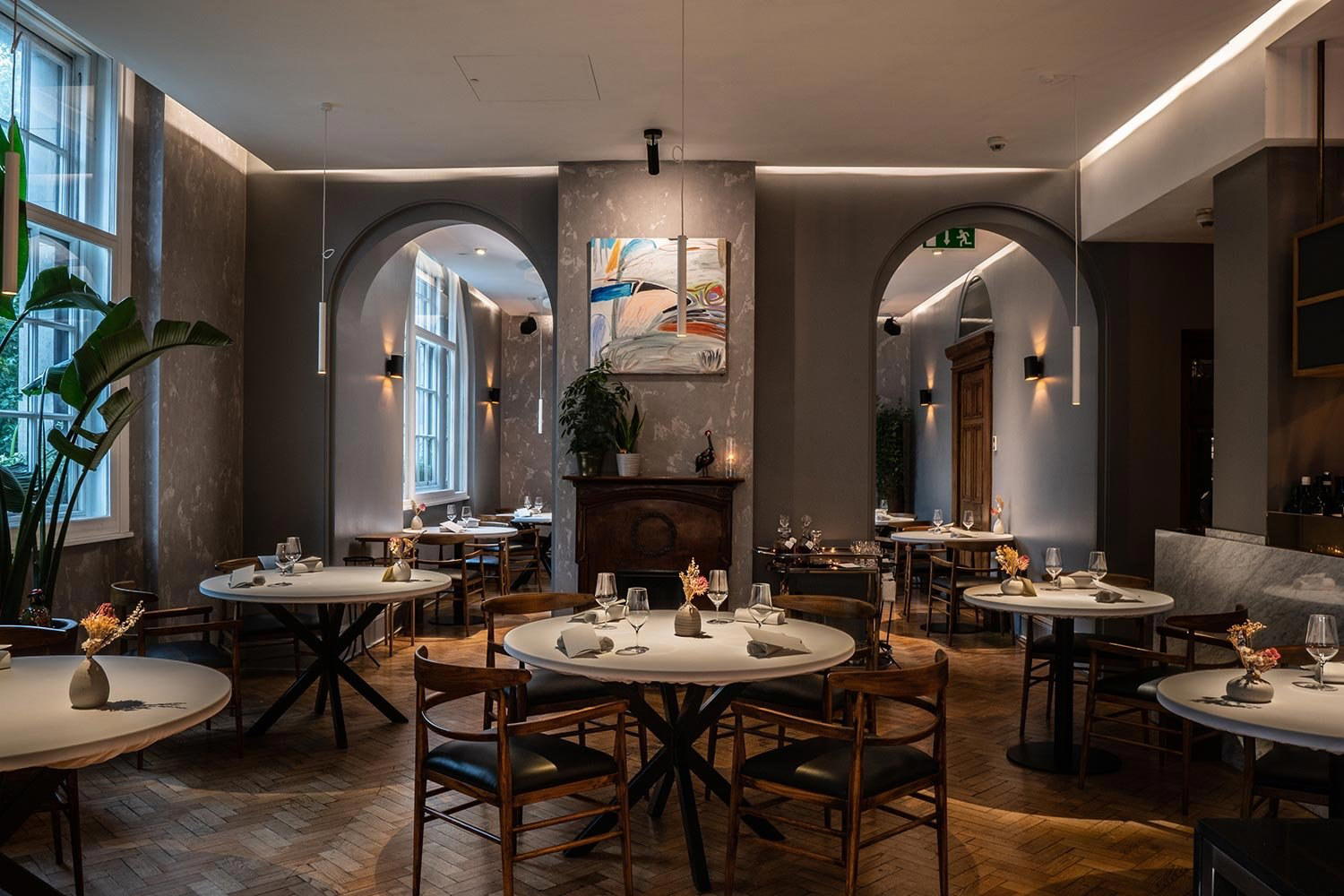
The ground floor of the Marksman functions as a proper pub. The wood-panelled bar carries the atmosphere of a traditional East End boozer, not a curated version of one, but a room that has developed that character over time. The first-floor dining room operates at a slightly different register: more considered in its layout, quieter, designed for eating rather than standing with a pint. The combination is deliberate. Neither floor requires you to be in the other's mode.
The rooftop terrace adds a third option in warmer months, and it has become one of the more sought-after outdoor spaces in this part of London. In a city where good outdoor drinking and eating space is genuinely scarce, a working terrace on Hackney Road carries practical value beyond the aesthetic.
Décor throughout avoids the reclaimed-wood-and-Edison-bulb template that became ubiquitous in East London during the 2010s. The brown tiles and wood panelling are original features, not installed nostalgia. That distinction matters to the kind of regulars the Marksman attracts.
How the Awards Position It
Recognition for pub dining has historically lagged behind the formal restaurant tier in critical infrastructure, but the Opinionated About Dining guide has become one of the more rigorous trackers of the casual end of serious European cooking. The Marksman appeared on OAD's Casual Europe list in 2023, moved to a ranked position at #386 in 2024, and climbed to #444 in 2025, the movement within that list reflecting sustained consistency rather than a single strong year. The Michelin Plate, held in both 2024 and 2025, signals that inspectors rate the cooking without placing it in the starred tier.
Across the wider British pub dining category, a small cluster of houses have earned comparable or stronger recognition. Hand and Flowers in Marlow is the most cited example at the top of that tier, holding two Michelin stars. Pipe and Glass in South Dalton represents the northern equivalent. The Marksman sits in a different comparable set: urban, casual, neighbourhood-rooted, and operating within reach of a broad population rather than as a destination requiring planning.
Its Google rating of 4.2 across 1,161 reviews adds a different kind of signal. That volume of reviews at that score suggests consistent delivery across a wide range of visitors, not just the specialist dining audience that reads OAD.
East London Dining in Context
Hackney Road in 2025 sits within a dining corridor that extends through Bethnal Green, Shoreditch, and into Haggerston. The concentration of serious, independently operated restaurants and bars in this stretch of E2 is higher than in most other parts of London outside the West End. What distinguishes the finest of them from the casual dining chains that have followed is a commitment to neighbourhood function: places that earn local loyalty first and visitor attention second.
The Marksman fits that model. It operates Tuesday through Sunday, closed Mondays, with weekday lunch service from Wednesday onward. The hours, running to midnight most nights, reflect a pub's operating logic rather than a restaurant's. You can arrive to eat or to drink, and neither choice requires justifying the other.
Other addresses in this part of London's restaurant scene take different approaches. Goodbye Horses and Llewelyn's operate in the same South-East and inner-East zones with distinct culinary perspectives. For a sense of how the rest of London's pub and restaurant scene spreads across different price points and styles, our full London restaurants guide maps the city across neighbourhoods.
British Cooking at This Price Tier: What the ££ Bracket Means
The ££ designation at a pub with Michelin recognition and OAD ranking is not common. Most restaurants at that award level have drifted upward in price as recognition has arrived, particularly in London, where rent pressure on hospitality has been sustained and visible. The Marksman remaining accessible at this price point is a feature of the pub format: it can absorb volume across the bar that a standalone restaurant cannot, which changes the economics of the kitchen.
For comparison, the West End's traditional British and European offer, 45 Jermyn St, Bob Bob Ricard Soho, The Devonshire, operates at different price tiers and with different room registers. None of them are doing the same thing as the Marksman; they are separate answers to separate questions about where and how to eat in London.
Further up the price scale, British cooking's finest expressions outside London include The Fat Duck in Bray, Moor Hall in Aughton, Gidleigh Park in Chagford, and Le Manoir aux Quat' Saisons in Great Milton. These are different propositions entirely, tasting menus, hotel grounds, destination travel. The Marksman is the version of serious British cooking you can reach on the Overground after work.
Know Before You Go
Address: 254 Hackney Rd, London E2 7SB
Price range: ££
Hours: Monday closed; Tuesday 4pm–midnight; Wednesday–Sunday 12pm–midnight
Awards: Michelin Plate (2024, 2025); Opinionated About Dining Casual Europe #444 (2025)
Cuisine: Traditional British, pub dining
Chef lineage: Tom Harris and Jon Rotheram, both alumni of St. JOHN
Nearby: London bars guide | London hotels guide | London experiences guide | London wineries guide
Comparable Spots, Quickly
Comparable venues nearby, for context on price, style, and recognition.
| Venue | Cuisine | Price | Awards | Notes |
|---|---|---|---|---|
| MarksmanThis venue — the venue you are viewing | Modern British Gastropub | $$$ | Michelin Plate | |
| Cora Pearl | Modern British Bistro | $$$ | Michelin Plate | Covent Garden |
| Lorne | Modern British Bistro | $$$ | Michelin Plate | Pimlico |
| Mount St. | Modern British Fine Dining | $$$$ | Michelin Plate | Mayfair |
| The Hero | Modern British Gastropub | $$ | Bib Gourmand | Little Venice |
| Bob Bob Ricard Soho | Classic British & French | $$$$ | Michelin Plate | Soho |
Continue exploring
More in London
Restaurants in London
Browse all →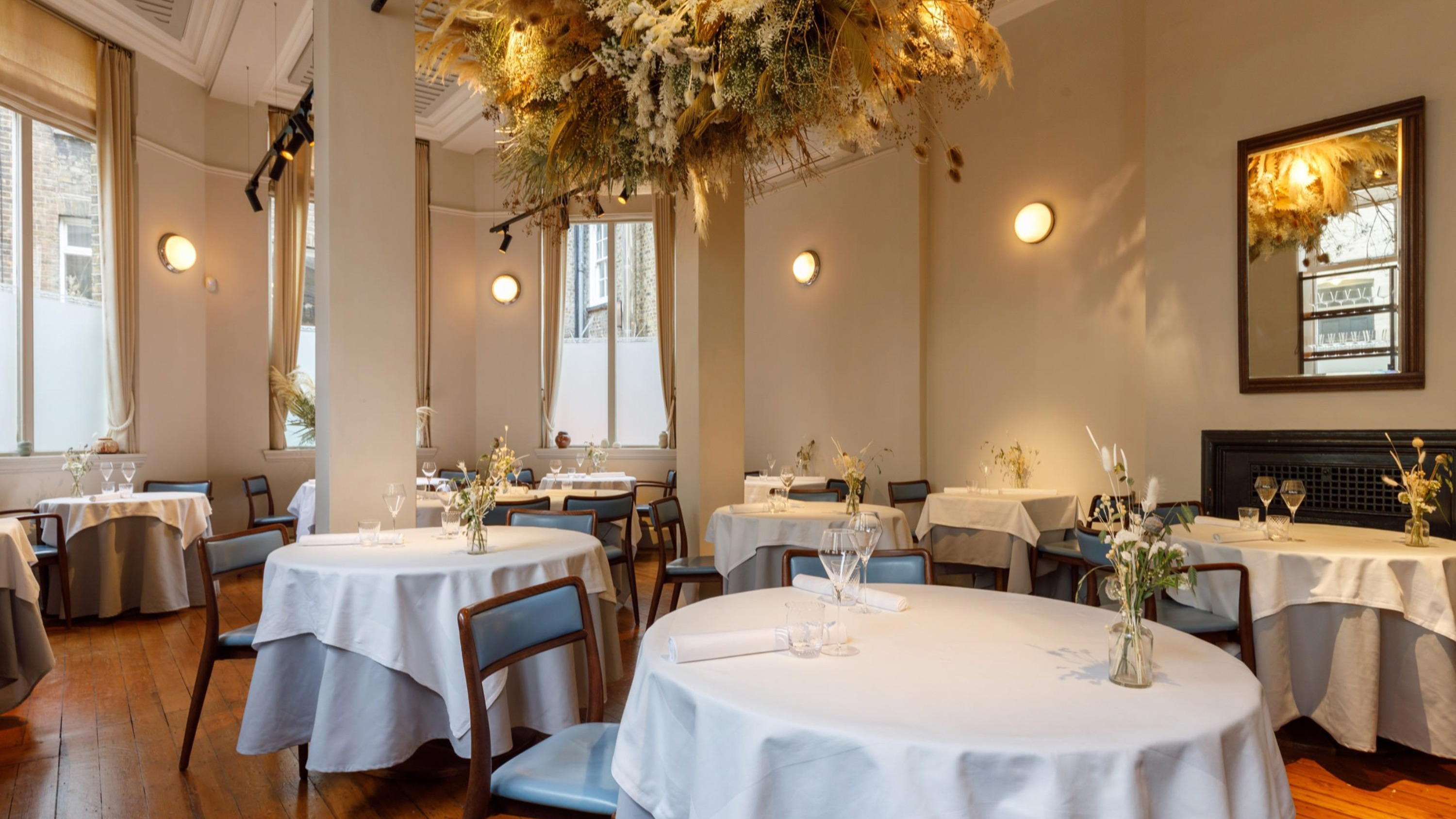
Bars in London
Browse all →
Hotels in London
Browse all →
Wineries in London
Browse all →
At a Glance
- Classic
- Cozy
- Trendy
- Date Night
- Group Dining
- Casual Hangout
- Rooftop
- Open Kitchen
- Craft Cocktails
- Local Sourcing
Wood-panelled traditional boozer atmosphere downstairs with candlelit tables and energetic vibe; more modern unpretentious dining room upstairs.