The Islands
A Caribbean-focused bar in the Prospect Heights neighborhood of Brooklyn, The Islands at 671 Washington Ave sits at an interesting juncture in New York's evolving cocktail culture, where rum-forward programs and island-inspired formats have moved from novelty to a recognizable category. Worth understanding in the context of how tropical drinking traditions have been reframed for northern audiences.

Pearl is the En Primeur Club membership app, where members save venues, book tables and use the concierge.
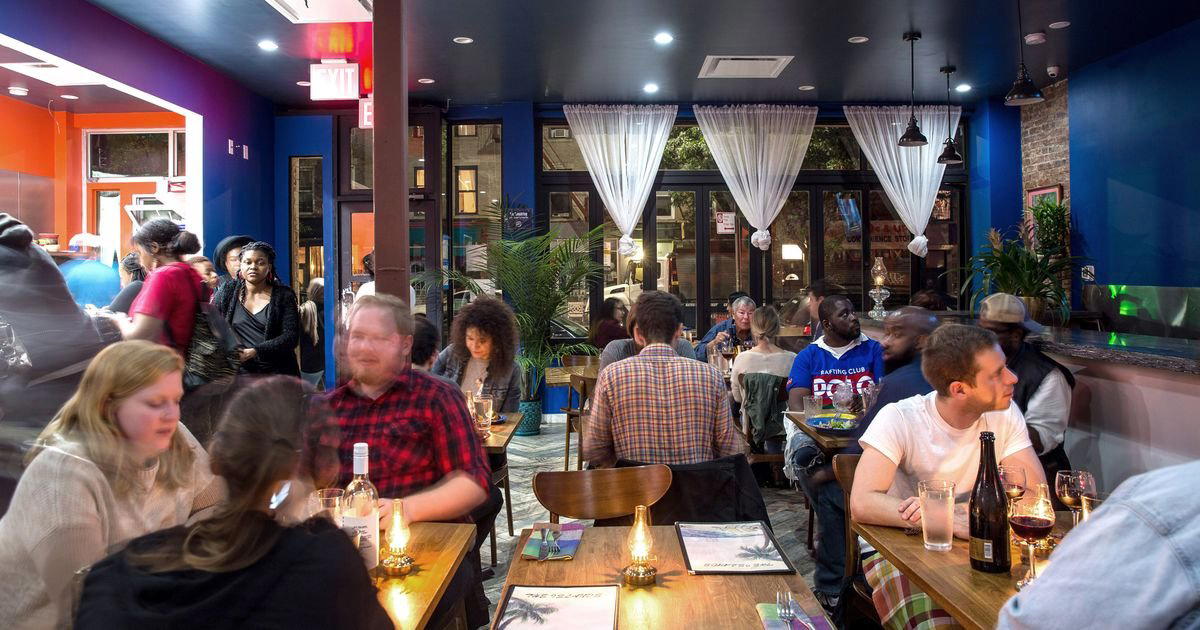
Brooklyn's Tropical Drinking Tradition and Where It Stands Now
New York's bar scene has cycled through several distinct phases in how it handles Caribbean and Pacific-influenced drinking formats. The early tiki revival of the 2000s leaned heavily on kitsch, ceramic mugs, crushed ice, and spectacle over substance. What followed, gradually and unevenly across the city's boroughs, was a slower reckoning with what these traditions actually represent: rum cultures with as much regional specificity as Burgundy's appellations, punch traditions that predate the cocktail as a category, and flavor profiles rooted in agricultural and historical realities rather than mid-century American fantasy. The Islands, operating out of 671 Washington Ave in Brooklyn's Prospect Heights, arrived in a period when that reckoning was already underway, and its evolution reflects how the conversation has shifted.
Prospect Heights as a Context, Not Just a Location
The neighborhood matters here. Prospect Heights sits at a crossroads between the institutional gravity of Crown Heights, the residential density of Park Slope, and the cultural energy that has moved steadily eastward through Brooklyn over the past fifteen years. Washington Avenue itself has developed a quiet identity as a corridor where local operators, rather than imported Manhattan concepts, set the tone. The Islands fits that pattern: a place oriented toward the community immediately around it, not toward destination-bar marketing aimed at tourists crossing the bridge. That neighborhood embeddedness is part of what gives the bar its character, and it's also what can make it less visible in broader citywide conversations about cocktail programs. Bars in this position tend to attract regulars before they attract critics, which shapes how they develop over time.
The Evolution Frame: How Caribbean Bar Formats Have Changed
To understand what The Islands is doing now, it helps to trace the broader arc. In the early phase of the tropical cocktail revival, most bars in this genre made their name on complexity and spectacle, multi-ingredient punches, elaborate garnishes, theatrical presentation. The market rewarded novelty. As the category matured, a different pressure emerged: authenticity and specificity. Bars that could articulate a point of view on specific rum-producing regions, on the distinction between rhum agricole and molasses-based styles, or on the history of Caribbean drinking culture began to occupy a more durable position. This is the shift that separates the current generation of Caribbean-influenced bars from their predecessors. Venues like Jewel of the South in New Orleans have applied similar thinking to Southern punch and rum traditions, while Bar Leather Apron in Honolulu operates with a Pacific-influenced rigor that has earned sustained recognition. The trajectory for serious bars in this category moves from novelty toward knowledge-driven programs.
Rum-Forward Programs in New York's Current Bar Scene
New York's cocktail infrastructure rewards certain formats more visibly than others. The city's most-discussed bars tend to cluster around either the technical-precision model, clarified drinks, fat-washing, precise dilution, or the classic-revival model, where provenance and historical accuracy are the organizing principles. Amor y Amargo on East Village's Stuyvesant Street has made bittersweet, spirit-forward drinking its entire identity, and sustained that position for years. Angel's Share in the East Village operates on a Japanese bar model of quietude and precision. Attaboy NYC runs a no-menu format built around guest interaction and technical fluency. Superbueno brings Latin-American energy to a format that combines accessibility with serious cocktail intent. Caribbean-focused bars operate in a different register from all of these, and their critical reception often lags their actual quality because the evaluative vocabulary for rum-forward programs is less established in mainstream coverage. That gap is closing, but slowly.
What Distinguishes the Current Direction
The category of Caribbean-focused bars in New York has moved, over the past several years, toward two distinct poles. One pole emphasizes atmosphere and accessibility, tropical aesthetics, approachable pricing, neighborhood regulars. The other emphasizes depth: rum selection organized by producing region, cocktails that reference specific historical traditions rather than generic tropical shorthand, and a level of staff knowledge that allows for genuine conversation about what's in the glass. The most durable bars in this category tend to find a workable synthesis rather than choosing one pole absolutely. Comparison cases from other cities are instructive: Julep in Houston has built a sustained following around Southern spirits with genuine depth of program, and Kumiko in Chicago has demonstrated that a strong point of view on a specific spirit tradition can anchor a bar's identity for years. ABV in San Francisco and Allegory in Washington, D.C. represent different takes on how a narrative-driven cocktail program sustains itself over time. The Parlour in Frankfurt on the Main shows how internationally, bars anchored by a coherent identity can punch well above their size in critical recognition. The Islands' position within this spectrum is shaped by its Brooklyn context: community-embedded, not aggressively marketed, and developing along a timeline set by its regulars rather than its press.
Planning a Visit: Practical Context
The bar is at 671 Washington Ave in Prospect Heights, accessible via the 2/3 trains at Bergen Street or the B/Q at 7th Ave, with a short walk from either. As with many neighborhood bars operating in Brooklyn's mid-size category, walk-in access is the standard mode, reservation infrastructure at this scale and format typically isn't the organizing logic. That said, visiting on a weeknight rather than a Friday or Saturday evening tends to produce a more considered experience at any Brooklyn bar of this type, simply because the room operates closer to its intended register. Contact and hours information is best confirmed directly before visiting, as these details shift seasonally for independent operators. For broader context on where The Islands sits within New York's drinking culture, the EP Club New York City guide covers the full range of bars and restaurants across the five boroughs.
Cuisine and Awards Snapshot
A quick peer list to put this venue’s basics in context.
| Venue | Cuisine | Price | Awards |
|---|---|---|---|
| The IslandsThis venue (the venue you are viewing) | Not listed | Not listed | Not listed |
| The Long Island Bar | Not listed | $30–50 | World's 50 Best #64 · Top 500 Bars Best Bars #367 |
| Dirty French | Not listed | Not listed | World's Best Steaks 50 Best #32 · Star Wine List |
| Superbueno | Not listed | $30–50 | World's 50 Best #61 · Top 500 Bars Best Bars #54 |
| Amor y Amargo | Not listed | $20–30 | World's 50 Best #23 |
| Angel's Share | Wine Bar | $20–30 | World's 50 Best #31 · Top 500 Bars Best Bars #280 |
Continue exploring
More in New York City
Bars in New York City
All bars in New York City →
Restaurants in New York City
All restaurants in New York City →

Details
- Date Night
- Live Music
- Seated Bar
Superb live jazz atmosphere with sophisticated charm.