The Drovers Inn
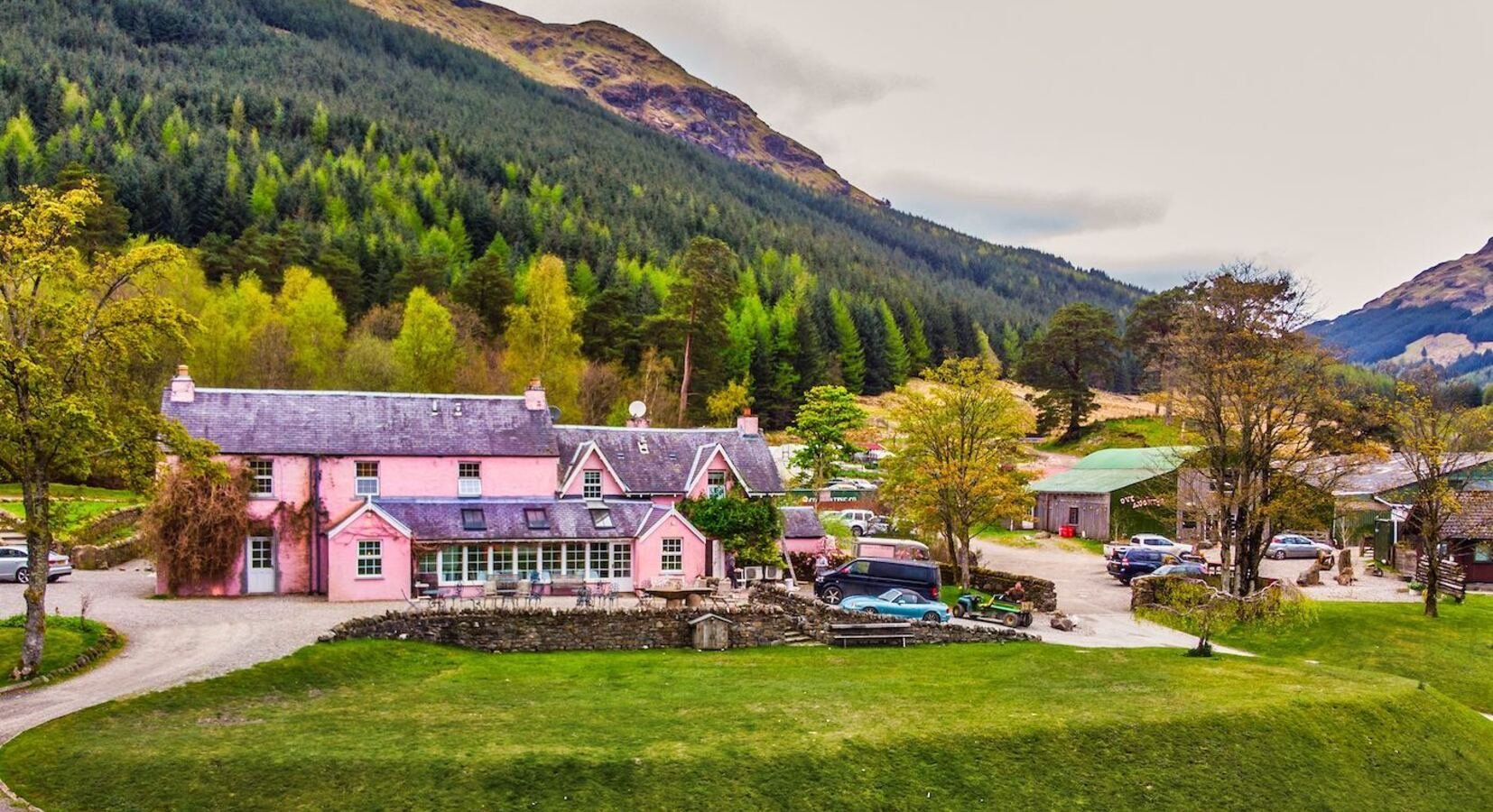
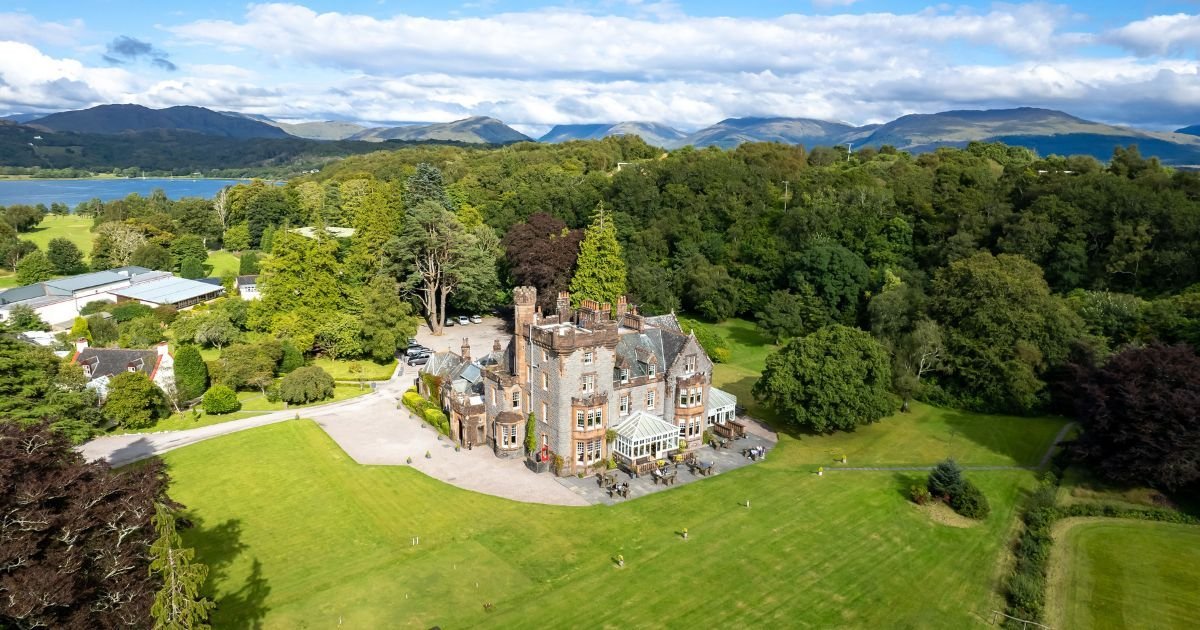
The Drovers Inn sits on the northern shore of Loch Lomond, occupying a roadside coaching inn that has served travellers on the route to the Highlands for centuries. Its back bar carries a substantial collection of Scotch whiskies drawn from across the major regions, placing it in a peer set defined less by city-centre polish than by geographic remoteness and historical accumulation. For anyone travelling the A82 corridor, it functions as a serious whisky stop.
 Discover on Pearl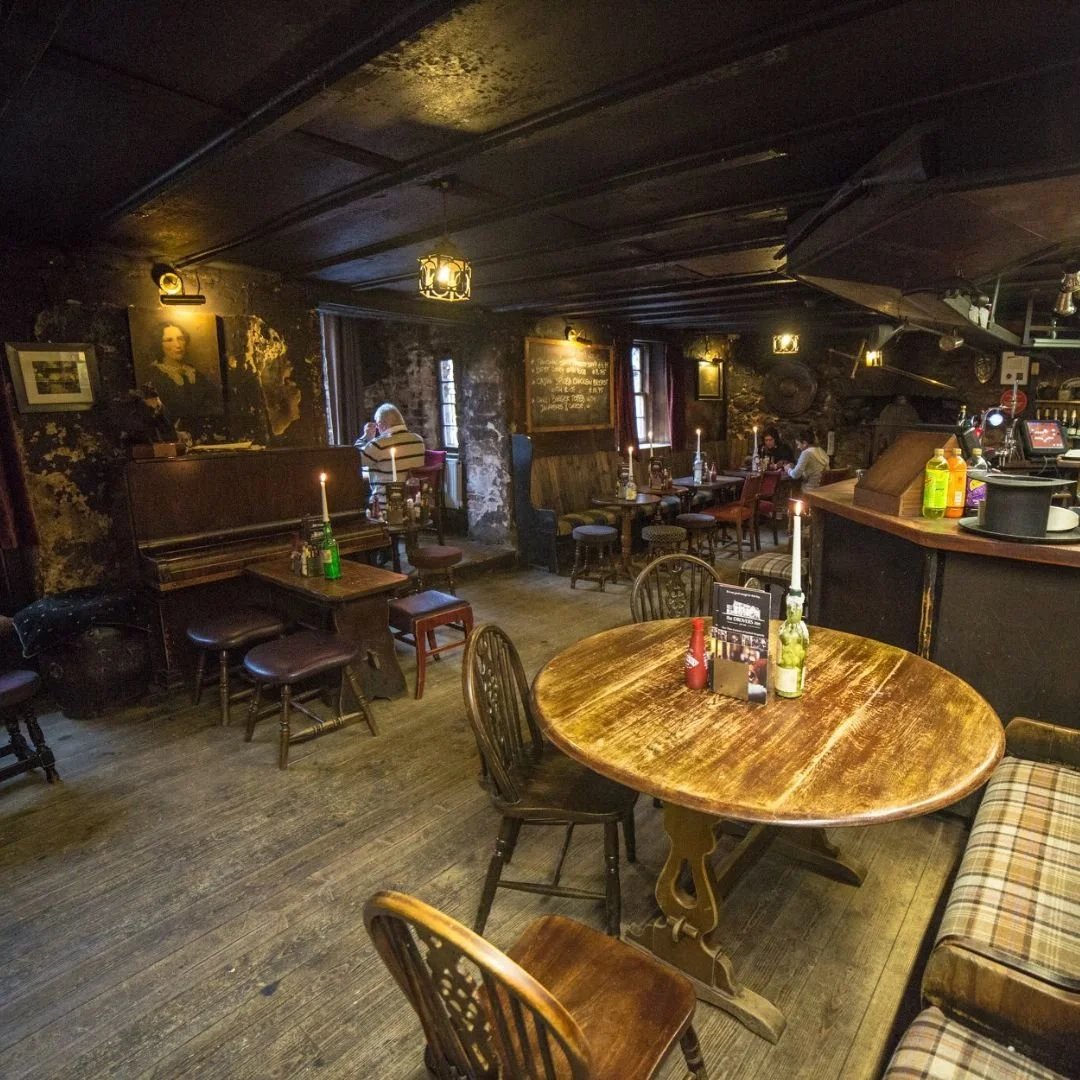
Where the Road North Meets the Back Bar
There is a particular category of Scottish drinking establishment that exists outside the urban whisky-bar circuit entirely. Not the curated minimalism of a city-centre specialist, not the hotel lounge softened for international guests, but the roadside inn that has simply absorbed time: smoke-stained walls, mounted stag heads, open fires, and a gantry that tells the story of decades of accumulation rather than deliberate curation. The Drovers Inn, positioned on the northern edge of Loch Lomond at Inverarnan on the A82, belongs firmly to that tradition.
The building itself dates to 1705, and its function has remained substantially unchanged since drovers pushed cattle south through this corridor toward lowland markets. The route it served was one of the great working arteries of pre-industrial Scotland, and the inn was less a destination than a necessary pause in a long journey. That framing still applies. Most visitors arrive having driven north from Glasgow or south from Glencoe, and the inn functions as a physical and psychological threshold between the Central Belt and the deeper Highlands.
The Gantry as Historical Record
The editorial angle on The Drovers Inn is not its food program or its accommodation, though both exist. It is the back bar and what it represents as a whisky collection in a building with genuine historical continuity. Bars with serious whisky collections tend to fall into one of two models: the urban specialist that builds stock systematically around a declared philosophy, or the legacy establishment where bottles have arrived over generations without formal curation, producing a gantry that reflects history more than intention.
Drovers Inn belongs to the second model, and that distinction matters when assessing what you are actually drinking. At a purpose-built whisky bar in Edinburgh or Glasgow, the selection reflects deliberate acquisition decisions made by a team with access to the modern secondary market. At a place like this, the range has a different provenance: long-standing supplier relationships, regional loyalties, and the kind of incremental stock-building that happens when a venue has been in continuous operation long enough that whisky collecting becomes habitual rather than strategic.
For context, Scotland's major whisky-producing regions each contribute a distinct character to a serious collection. Speyside expressions tend toward fruit and honeyed malt; Islay toward peat and iodine; Highland distilleries occupy a wide middle ground; Campbeltown carries a briny, often maritime quality that separates it from its neighbors. A back bar that draws across these regions without simply defaulting to the dominant commercial labels tells you something about the venue's engagement with the category. The Drovers Inn's position as a waypoint on the route to whisky country proper, with Loch Lomond Distillery within reasonable distance and the broader Highland distillery circuit accessible further north, places it in logical geographic proximity to the production sources its collection represents.
For comparison, urban Scottish bars operating at the serious whisky end of the spectrum, such as Bramble in Edinburgh, operate with cocktail programs built around spirits knowledge and deliberate selection. The Drovers Inn is not competing in that register. Its peer set is defined by age, location, and accumulated stock rather than cocktail technique, and it should be assessed on those terms.
The Room Itself
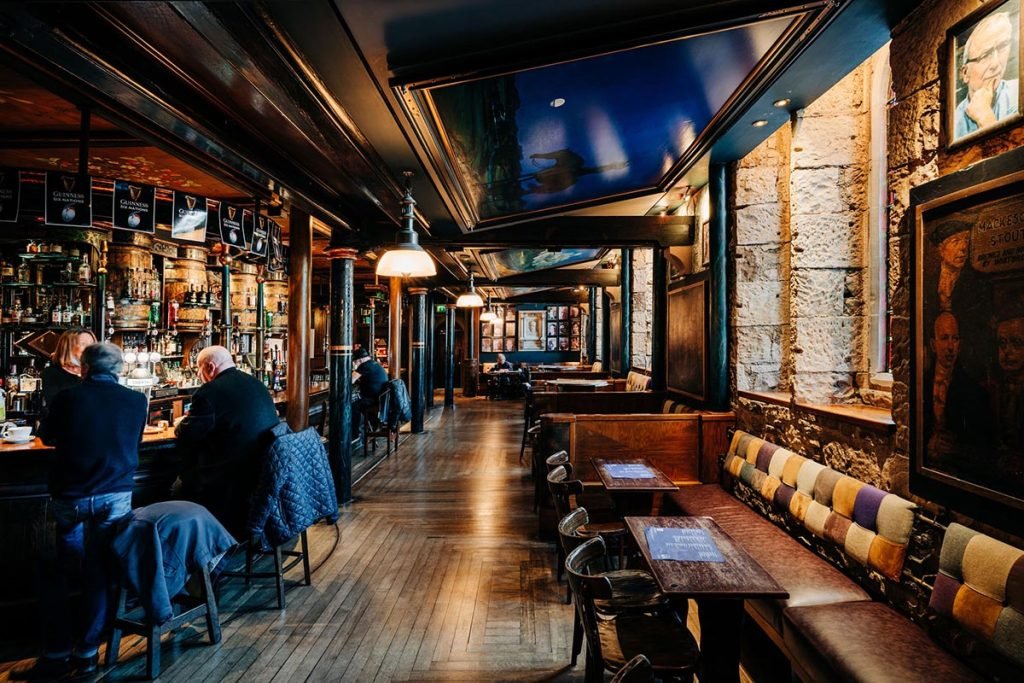
The physical character of the bar is part of what the experience delivers. Low ceilings, flagstone floors, taxidermy throughout, and the kind of patina that cannot be replicated in a new-build. There is a school of thought in hospitality that atmosphere is produced by design decisions and careful material sourcing. The Drovers Inn demonstrates the alternative: atmosphere produced by the absence of renovation over a very long period. Whether that registers as atmospheric or simply worn depends on what the visitor is seeking, but it is not something that can be manufactured.
In this respect it sits in a broader Scottish tradition of inns that have retained character precisely by not modernising to meet shifting hospitality expectations. Monachyle Mhor Hotel, also in the Stirling area, represents the opposite pole: a property that has invested in considered design while maintaining Highland remoteness. The two operate in the same geographic corridor but address entirely different visitor expectations.
Placing It in the Wider Bar Circuit
The serious whisky bar circuit across the United Kingdom spans a wide range of formats. At the technically sophisticated end, 69 Colebrooke Row in London and Schofield's in Manchester operate with program discipline and formalized spirits knowledge. The Merchant Hotel in Belfast carries one of the most documented whiskey collections in Ireland. At the heritage end, the Horseshoe Bar in Glasgow demonstrates how Victorian pub architecture creates a particular relationship between the building and the drink. The Drovers Inn is in neither register but occupies a third category: the historic waypoint inn, where the depth of the spirits collection is inseparable from the physical and historical context of the building.
Further afield, Digby Chick in the Western Isles offers a point of comparison for remotely located Scottish bars where geography conditions both the offer and the visitor relationship. Mojo Leeds and Avon Gorge by Hotel du Vin in Bristol sit at the urban heritage end of the UK bar spectrum, while L'Atelier Du Vin in Brighton and Bar Leather Apron in Honolulu represent the international range of bars where spirits depth is a primary program credential. None of these share the Drovers Inn's specific combination of age, location, and operational continuity.
Planning a Visit
The Drovers Inn is located at Inverarnan on the A82, approximately midway between Loch Lomond's southern end and Crianlarich, making it a natural stop on any drive between Glasgow and the central Highlands. For those travelling the West Highland Way on foot, it sits directly on the long-distance walking route and has historically served as a rest point for walkers completing the Loch Lomond section. Accommodation is available on site, which means the whisky collection is accessible without the constraint of needing to drive onward the same evening, a practical advantage that changes how you engage with the back bar.
Visitors coming specifically for the whisky should arrive with some preparation around regional styles and distillery names, since the value of a collection like this lies in selecting beyond the standard commercial expressions. For broader context on what else the area offers, our full Stirling restaurants and bars guide covers the wider circuit across the region.
Budget and Context
These are the closest comparables we have in our database for quick context.
| Venue | Price | Awards | Notes |
|---|---|---|---|
| The Drovers Inn | This venue | ||
| Bar Termini | World's 50 Best | ||
| Callooh Callay | World's 50 Best | ||
| Happiness Forgets | World's 50 Best | ||
| Mojo Leeds | World's 50 Best | ||
| Nightjar | World's 50 Best |
Continue exploring