Elements


In the affluent suburb of Bearsden, Elements sits at the serious end of Glasgow's neighbourhood dining scene, earning a Michelin Plate in 2025 for cooking that applies classical technique to Scottish produce with quiet confidence. West Coast langoustines, a considered wine list, and a plant-based tasting menu that draws green-guide recognition make it a destination worth crossing the city for. Rated 4.9 on Google across early reviews.
Pearl is the En Primeur Club membership app — saves, bookings, and concierge access live there. Same editors, same standards.
- Address
- 19 New Kirk Rd, Bearsden, Glasgow G61 3SJ, United Kingdom
- Phone
- +44 141 433 0576
- Website
- elementsgla.com
- Directions
- Get directions
 Saves & bookings on Pearl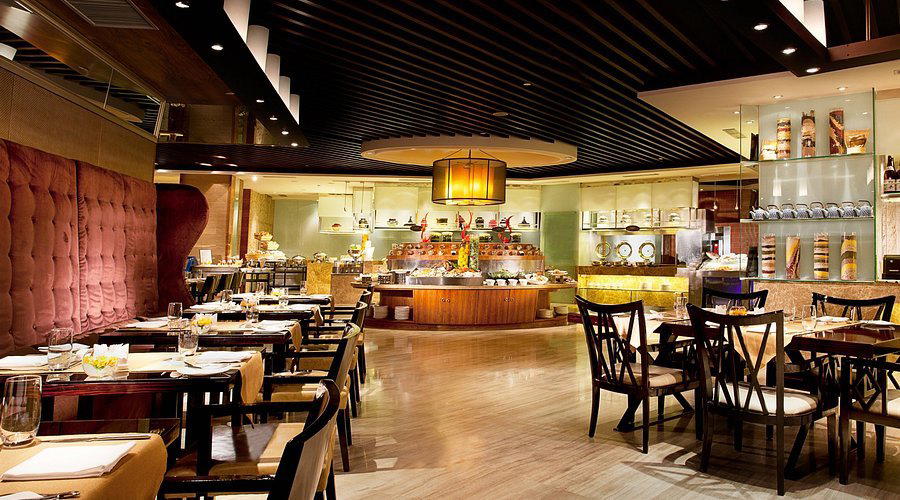
Bearsden and the Case for Suburban Fine Dining
Glasgow's dining conversation tends to anchor itself in the city centre, where Cail Bruich and Unalome by Graeme Cheevers compete for the same pool of special-occasion bookings. But some of the most considered cooking in any British city ends up in residential suburbs, where lower overheads allow kitchens to spend money on ingredients rather than on postcode. Bearsden, one of Glasgow's most prosperous outer suburbs, has long had the spending power to support serious food. Elements, at 19 New Kirk Road, is the room that has stepped into that position.
The neighbourhood context matters because it shapes everything from the room's register to who is sitting at the next table. This is not destination dining for out-of-towners navigating a city-centre map; it is a local room that has quietly accumulated credentials serious enough to draw visitors from across Glasgow and beyond. That dynamic, a neighbourhood restaurant earning Michelin recognition without trading on city-centre visibility, is a specific kind of achievement. It describes a similar trajectory to rooms like Hand and Flowers in Marlow or Gidleigh Park in Chagford: places where the address is incidental to the quality and where the audience travels to the kitchen rather than stumbling upon it.
The Room: Considered Without Being Austere
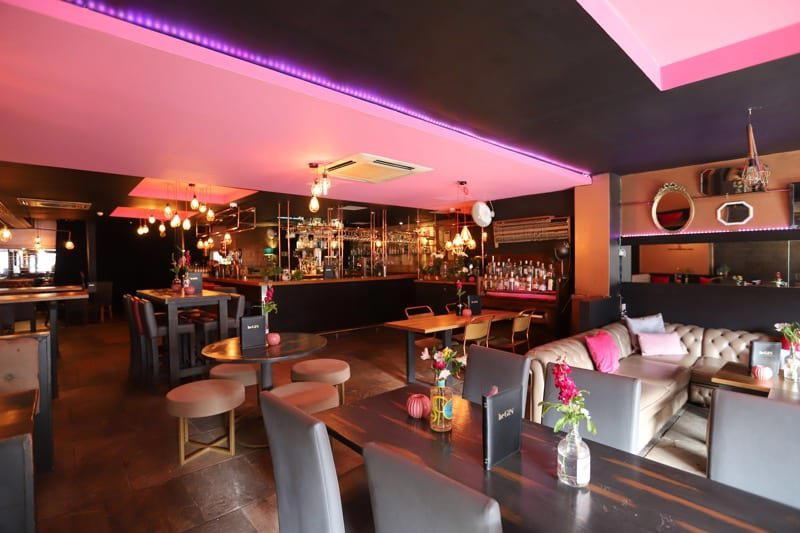
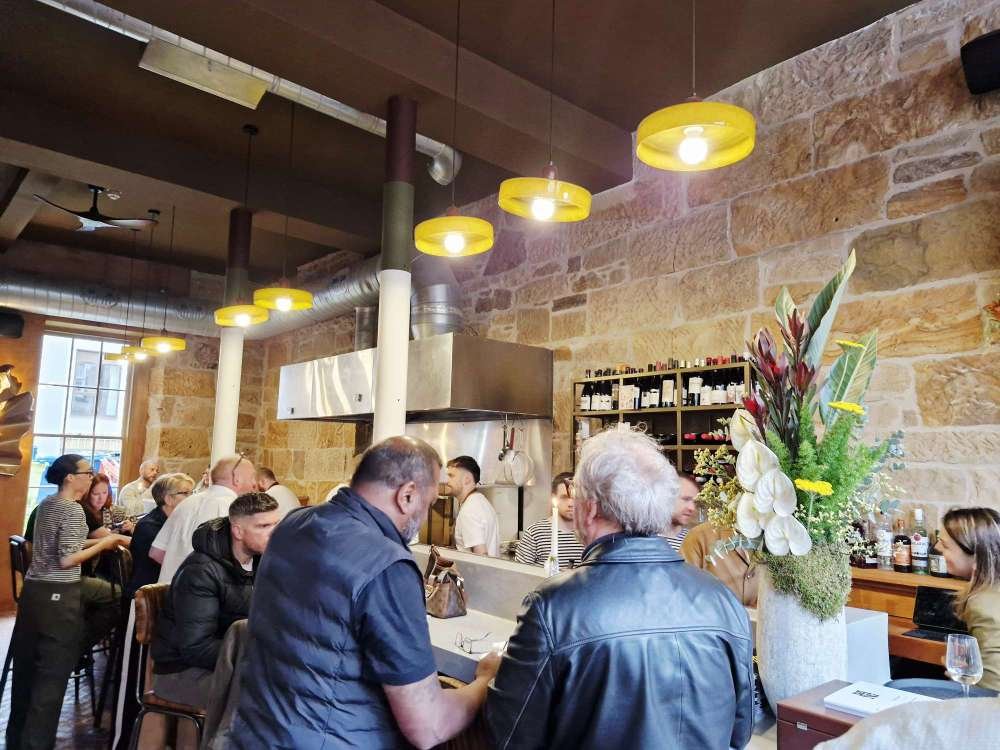
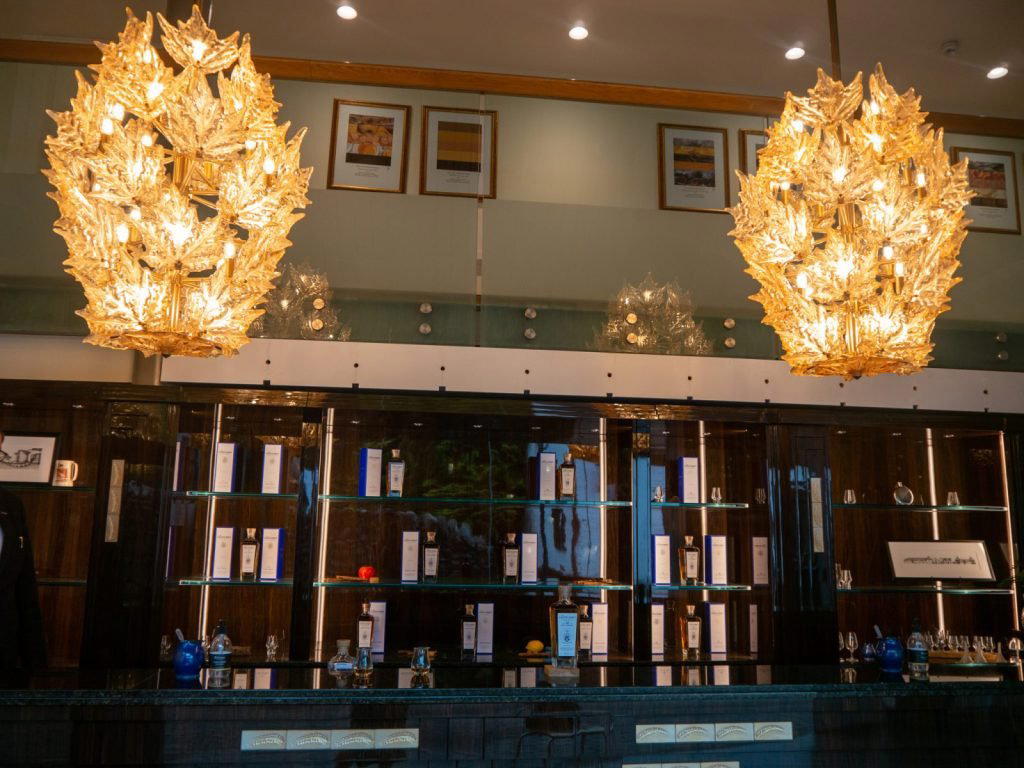
The interior at Elements signals its ambitions through material choices rather than grandeur of scale. Royal blue fabrics, dark wood, and gold furnishings give the room a warmth that avoids the cold minimalism common in technically ambitious kitchens. The renovation reads as deliberate rather than fashionable, a room that wants diners to be comfortable enough to focus on what arrives at the table. Wine is displayed openly, functioning both as décor and as a preview of what the list contains. In a city where Brett and Number 16 each occupy their own distinct register, Elements lands closer to polished than to bare-bones.
For context on where that sits in the Glasgow market: Cail Bruich and Unalome operate at ££££, drawing on Michelin star recognition to justify city-centre pricing. Elements, priced at £££, occupies a tier below that ceiling, which makes it accessible to a broader group while still signalling that the kitchen is not cutting corners on sourcing or execution.
What the Kitchen Does
The cooking at Elements is grounded in classical French technique applied to Scottish produce. That combination, broadly speaking, defines a significant strand of serious British restaurant cooking, running from L'Enclume in Cartmel at one extreme to more accessible neighbourhood rooms at the other. Where Elements distinguishes itself within that tradition is in the layering of precise international influences on top of an essentially Scottish foundation.
The clearest example on record is West Coast langoustines served with chawanmushi and vadouvan. That combination draws simultaneously on Japanese steamed egg technique and South Indian spice, placing both alongside one of Scotland's most prized shellfish. The choice is not cosmetic: each element is doing structural work, adding a distinct textural or flavour register that would leave a gap if removed. That kind of restraint in cross-cultural borrowing is harder to execute than it looks, and it distinguishes the approach from the more superficial global referencing that characterised a previous generation of modern British cooking.
Kitchen also operates a plant-based tasting menu, which has attracted recognition from We're Smart, a green-guide network that assesses the culinary use of plant ingredients. That accreditation places Elements inside a small cohort of British restaurants that treat vegetable-led cooking as a serious technical programme rather than an accommodation for dietary preference. For comparison, rooms like Moor Hall in Aughton and The Fat Duck in Bray have each navigated the question of how tasting-menu restaurants handle plant-based requests; Elements appears to have built a dedicated programme rather than a derivative of its standard menu.
Chef Gary Townsend leads the kitchen. The public record establishes a clear orientation toward seasonal and local sourcing, with international travel informing how those Scottish ingredients are treated rather than overriding them. That approach, using global technique as a lens on local produce rather than as a substitute for it, is currently where the more interesting strand of Scottish fine dining is operating. Fallachan Kitchen represents a related strain of thinking elsewhere in the city.
Awards and Positioning
Elements holds a Michelin Plate for 2025. Within the Michelin hierarchy, the Plate sits below a star but above the general Guide listing, denoting cooking of good quality that the inspectors consider worth singling out. For a suburban neighbourhood restaurant at the £££ price point, it is a meaningful signal: Michelin inspectors are noting the kitchen's ambition and execution, even if the room has not yet accumulated the consistency or profile to push into star territory.
For reference on how that positions Elements against its peers: Cail Bruich operates at the Michelin-starred tier in Glasgow's city centre. Unalome by Graeme Cheevers sits in the same starred bracket. Elements competes in the tier immediately below that, at a price point that makes it more accessible while still operating within a recognisably serious culinary framework. Internationally, the style of cooking at Elements resonates with what rooms like Frantzén in Stockholm or FZN by Björn Frantzén in Dubai pursue at the very leading end: classical rigour, local provenance, precise international influence. Elements operates at a different scale and price, but the underlying logic of the cooking points in the same direction.
Planning Your Visit
Elements is at 19 New Kirk Road, Bearsden, Glasgow G61 3SJ, accessible from the city centre by train to Bearsden station or by car. The £££ price range places it above Glasgow's casual dining tier but meaningfully below the ££££ rooms at the top of the city's fine dining market, making it a practical option for occasions that call for something serious without the full ceremony of a starred counter. The wine list is described as well-stocked with range across price points, which is consistent with a room that is genuinely trying to match a broad clientele rather than upselling on prestige labels. Booking in advance is advisable given the combination of limited suburban capacity and the draw of Michelin recognition. For a broader picture of where Elements sits within Glasgow's restaurant scene, see our full Glasgow restaurants guide. For accommodation options in the city, our Glasgow hotels guide covers the main properties across categories. Bars, wineries, and experiences are mapped in our Glasgow bars guide, Glasgow wineries guide, and Glasgow experiences guide respectively.
| Venue | Cuisine | Price |
|---|---|---|
| ElementsThis venue — the venue you are viewing | Modern Cuisine | £££ |
| Cail Bruich | Modern Cuisine | ££££ |
| Unalome by Graeme Cheevers | Modern British | ££££ |
| Margo | Mediterranean Cuisine | ££ |
| Celentano's | Italian | ££ |
| GaGa | Malaysian | ££ |
Recognition history
Dated appearances from independent guides and award organizations, with the underlying list record or original source where available.
AA Rosettes 3 Rosettes
AA Rosettes
Michelin Plate
Michelin
Michelin Plate
Michelin
We're Smart World 4 Radishes
We're Smart World
Continue exploring
More in Glasgow
Restaurants in Glasgow
Browse all →
Bars in Glasgow
Browse all →
Hotels in Glasgow
Browse all →

Wineries in Glasgow
Browse all →
At a Glance
- Elegant
- Sophisticated
- Modern
- Intimate
- Date Night
- Special Occasion
- Chefs Counter
- Open Kitchen
- Extensive Wine List
- Local Sourcing
Current opening hours
- Monday
- Closed
- Tuesday
- Closed
- Wednesday
- 6–11:45 p.m.
- Thursday
- 12–11:45 p.m.
- Friday
- 12–11:45 p.m.
- Saturday
- 12–11:45 p.m.
- Sunday
- 12:30–11:45 p.m.
Hours can change for holidays and private events. Last verified .
Swish space blending royal blue fabrics, dark wood, gold furnishings, plush velvet seats, bright lighting from dramatic fixtures, and an open kitchen view creating a buzzy yet relaxed neighbourhood atmosphere.