Òran Mór
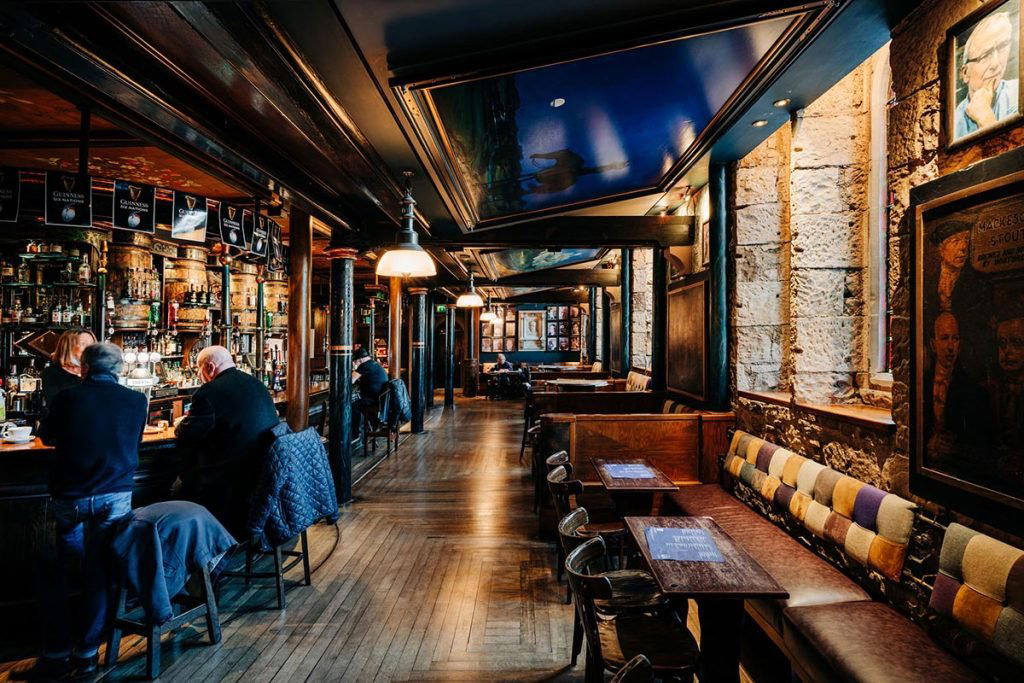
A converted Victorian church on Byres Road, Òran Mór is one of Glasgow's most architecturally striking venues, housing a bar, restaurant, and celebrated lunchtime theatre programme. The A-listed building's painted ceiling murals and stained-glass interior set a tone that few city spaces match. It sits at the cultural heart of the West End, drawing a crowd that spans students, academics, and out-of-town visitors alike.

Pearl is the En Primeur Club membership app — saves, bookings, and concierge access live there. Same editors, same standards.
Where the West End Puts Its Leading Architecture to Work
Glasgow's West End has a particular relationship with repurposed space. Tenement-floor restaurants, converted Victorian baths, and former church halls have all found second lives as dining and drinking venues, and Byres Road sits at the axis of this tradition. Òran Mór occupies a position at the top of that road, in a former Church of Scotland building dating to 1862, and its A-listed status tells you something immediately about the weight of the space before you've ordered a drink. The sheer scale of the nave, the painted ceiling murals commissioned from artist Alasdair Gray, and the stained-glass light that falls differently depending on the hour: these are not decorative choices made by a hospitality designer. They are the building itself, pressed into service.
Few bars in Scotland carry this kind of architectural freight. Bramble in Edinburgh operates on pure atmosphere through compression and intimacy. The Merchant Hotel in Belfast channels Victorian grandeur through a different register, all gilded excess. Òran Mór's version is more civic: a space that feels as though it belongs to the neighbourhood rather than to any particular hospitality concept.
The Alasdair Gray Ceiling and What It Means for the Room
The painted ceiling is the detail most visitors cite first, and it earns that attention. Alasdair Gray, one of Scotland's most significant visual artists and writers of the twentieth century, produced a mural cycle across the barrel-vaulted ceiling that transforms the drinking experience into something closer to gallery attendance. This is not decorative wallpaper. The figures, cosmologies, and text woven into the ceiling reward sustained looking, which means a long evening at Òran Mór can function as a slow visual education if you're willing to look up regularly.
This matters for the atmosphere in a way that goes beyond aesthetics. The ceiling establishes an immediate register of seriousness and cultural intent. You are not in a themed pub or a corporate bar fit-out. The space has intellectual ambition, and the crowd it attracts tends to reflect that: academics from the neighbouring University of Glasgow, creative professionals, and visitors who've come specifically for the building. The proximity to 182 Queen Margaret Dr and the broader cluster of independent venues along Byres Road means the venue sits inside a neighbourhood with a strong sense of its own cultural character.
A Play, a Pie, and a Pint: The Lunchtime Theatre Format
Òran Mór's A Play, a Pie, and a Pint programme has been running since 2004 and has become one of the most distinctive formats in British theatre. The model is specific: a short new play, performed at lunchtime, accompanied by a pie and a drink, at an accessible price point. Over two decades, the programme has premiered hundreds of new works and established itself as a significant commissioning platform for Scottish writers and performers. The format's longevity is itself an editorial point: in an era when arts funding is contested and experimental theatre increasingly dependent on festival windows, a sustained lunchtime slot with a loyal audience represents a durable model.
From an atmosphere standpoint, this means Òran Mór at lunchtime operates differently from almost any comparable venue. The audience moves between the bar space and the performance area, the casual format lowering the threshold for theatre attendance in a way that formal evening programming rarely achieves. This is the West End's version of democratic culture: high quality, low barrier, delivered in a space with genuine architectural presence.
Drinking in the Space: The Bar Programme in Context
The bar at Òran Mór draws on the same West End demographic that fills 39 Ashton Ln and the neighbourhood's other independent venues. Scottish whisky is well-represented, as you'd expect in a city where the category carries both local pride and tourist expectation. The drinks selection leans toward the broad rather than the hyper-curated: this is not a precision cocktail bar in the manner of 69 Colebrooke Row in London or Schofield's in Manchester, where the programme is the primary proposition. At Òran Mór, the space is the primary proposition, and the bar supports it rather than competing with it.
That distinction matters when you're deciding where to spend an evening. If technically driven cocktails are the priority, the West End has other addresses. If the priority is drinking well inside a space with genuine cultural and architectural weight, Òran Mór is harder to match in Glasgow. For comparison, Carlton George Hotel offers a different register of quality in a city-centre setting, while Gamba nearby keeps its focus tightly on food. Òran Mór's pitch is broader and more atmospheric.
The whisky range is worth particular attention for visitors unfamiliar with Scottish pour culture. Glasgow sits in a region that bridges Lowland and Highland styles, and a well-chosen venue in the West End will typically stock expressions from both, alongside Island and Islay malts for those drawn to peat. The staff familiarity with the category at this level of venue is usually sufficient for guidance without being specialist-level. For those who want to push further into the category, independent whisky bars elsewhere in the city offer deeper programming, but for the casual session that starts with the building and moves to the glass, the range here is proportionate.
The West End in Comparative Context
Glasgow's West End has consistently held its own against the city centre as a dining and drinking destination, and Byres Road functions as its commercial and cultural spine. The street rewards walking: independent bookshops, bakeries, and cafes give way to wine bars and restaurants as you move south, and the neighbourhood's proximity to the university ensures a year-round population rather than the weekend-only rhythms of some premium dining corridors. Venues like Bar Leather Apron in Honolulu and L'Atelier Du Vin in Brighton and Hove illustrate how neighbourhood bars elsewhere anchor their identity in a specific programmatic proposition. Òran Mór's proposition is partly spatial, partly cultural, and partly civic: it is the kind of venue that cities with strong local identity tend to produce and protect. See our full Glasgow restaurants guide for the broader picture.
Compared to Mojo Leeds, which anchors its identity in music and late-night programming, Òran Mór runs across a longer and more varied arc: morning coffee, lunchtime theatre, afternoon drinks, and evening dining. That breadth is unusual at this scale and is part of what gives the venue its neighbourhood-institution quality.
Planning Your Visit
Òran Mór sits at the junction of Byres Road and Great Western Road in Glasgow's West End, within walking distance of Hillhead subway station. For A Play, a Pie, and a Pint performances, booking in advance is advisable, particularly during festival periods and the academic term when the neighbourhood population peaks. The bar and restaurant are accessible without booking for most sessions, though weekend evenings attract capacity crowds given the size and reputation of the space. Visitors combining the venue with a broader West End evening should note the concentration of independent restaurants and bars within a short radius, which makes Òran Mór a natural anchor rather than a sole destination.
Cuisine-First Comparison
| Venue | Price | Awards |
|---|---|---|
| Òran MórThis venue — the venue you are viewing | $20–30 | Not listed |
| The Absent Ear | $20–30 | Top 500 Bars Best Bars #418 |
| The Loveable Rogue West End | Not listed | The Good Food Guide GFG Good |
| Horseshoe Bar Glasgow | $10–20 | Not listed |
Continue exploring
More in Glasgow
Bars in Glasgow
All bars in Glasgow →
Restaurants in Glasgow
All restaurants in Glasgow →
Hotels in Glasgow
All hotels in Glasgow →
Wineries in Glasgow
Browse all →
Details
- Lively
- Well Known
- Historic
- Energetic
- Late Night
- Group Outing
- Celebration
- Live Music
- Historic Building
- Seated Bar
- Lounge Seating
- Whiskey
Current opening hours
- Monday
- 11 AM–2 AM
- Tuesday
- 11 AM–2 AM
- Wednesday
- 11 AM–2 AM
- Thursday
- 11 AM–3 AM
- Friday
- 11 AM–3 AM
- Saturday
- 11 AM–3 AM
- Sunday
- 11 AM–3 AM
Hours can change for holidays and private events. Last verified .
Electric and atmospheric interior like a step back in time, with arts and crafts style in a converted chapel.