The Cellar Club
The Cellar Club occupies a particular corner of London's cocktail scene where serious craft meets a format built for staying, not rushing. The bar's focus on high-quality cocktails places it alongside the city's more technically minded drinking rooms, where what's in the glass takes precedence over what's on the walls. For those who treat an evening's drinking as a deliberate act, it warrants attention.

Pearl is the En Primeur Club membership app — saves, bookings, and concierge access live there. Same editors, same standards.
London's Cocktail Bars Have Split Into Two Camps
Over the past decade, London's serious drinking culture has cleaved into two recognisable modes: the high-concept bar where theatre and narrative carry as much weight as the drink itself, and the quieter, craft-led room where the glass is the point. 69 Colebrooke Row helped establish the former category in Islington, its clinical precision and small-format intimacy becoming a template others studied closely. A Bar with Shapes for a Name pushed further into the conceptual, building menus around geometric logic and colour theory. The Cellar Club sits in a different register from both: a cocktail bar whose identity is rooted in the quality of what it produces rather than the framework it builds around production.
That distinction matters in a city where bar concepts proliferate faster than bar talent. London now has more cocktail venues trading on atmosphere, novelty, or neighbourhood cachet than it has bars where the person behind the counter is the genuine reason to visit. The Cellar Club belongs to the latter category, and understanding that positioning is the first step to understanding what you're walking into.
The Room Itself
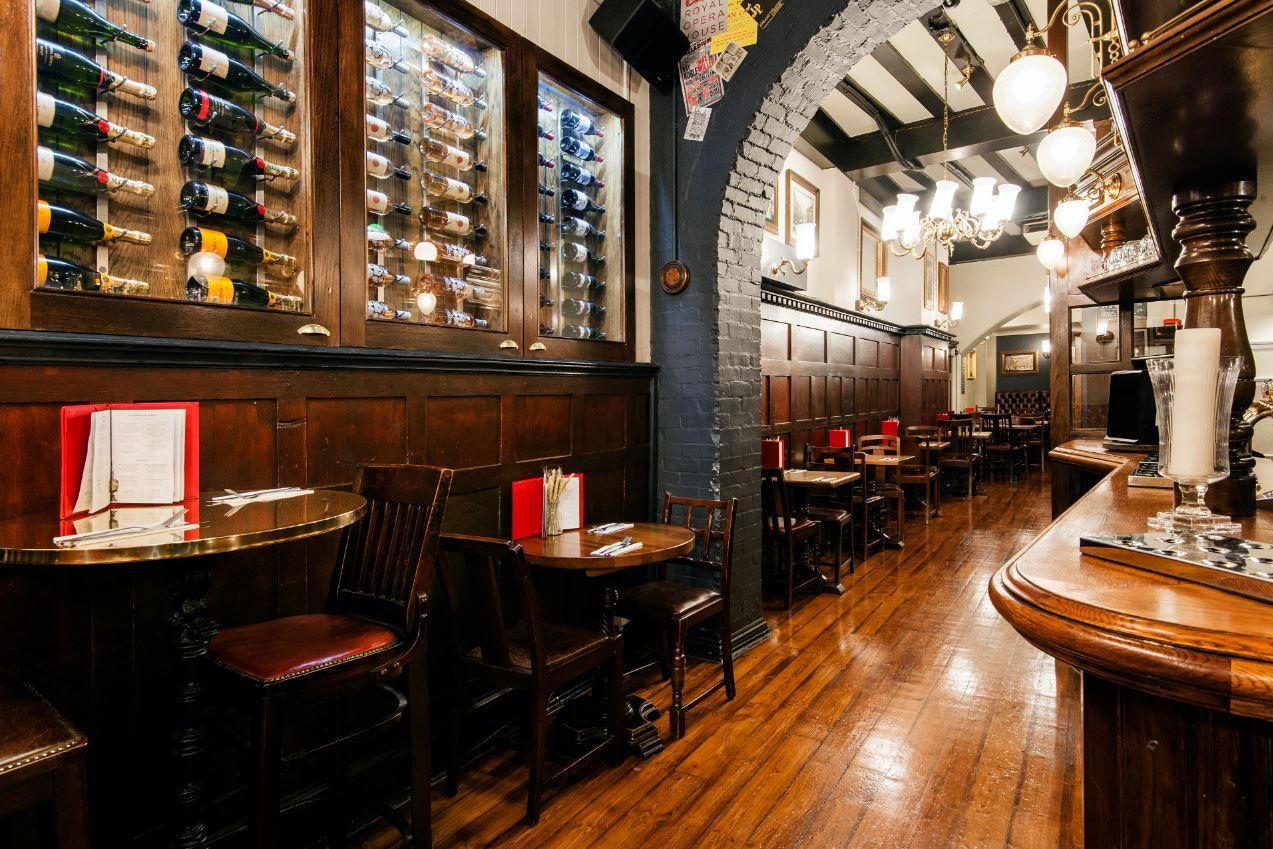
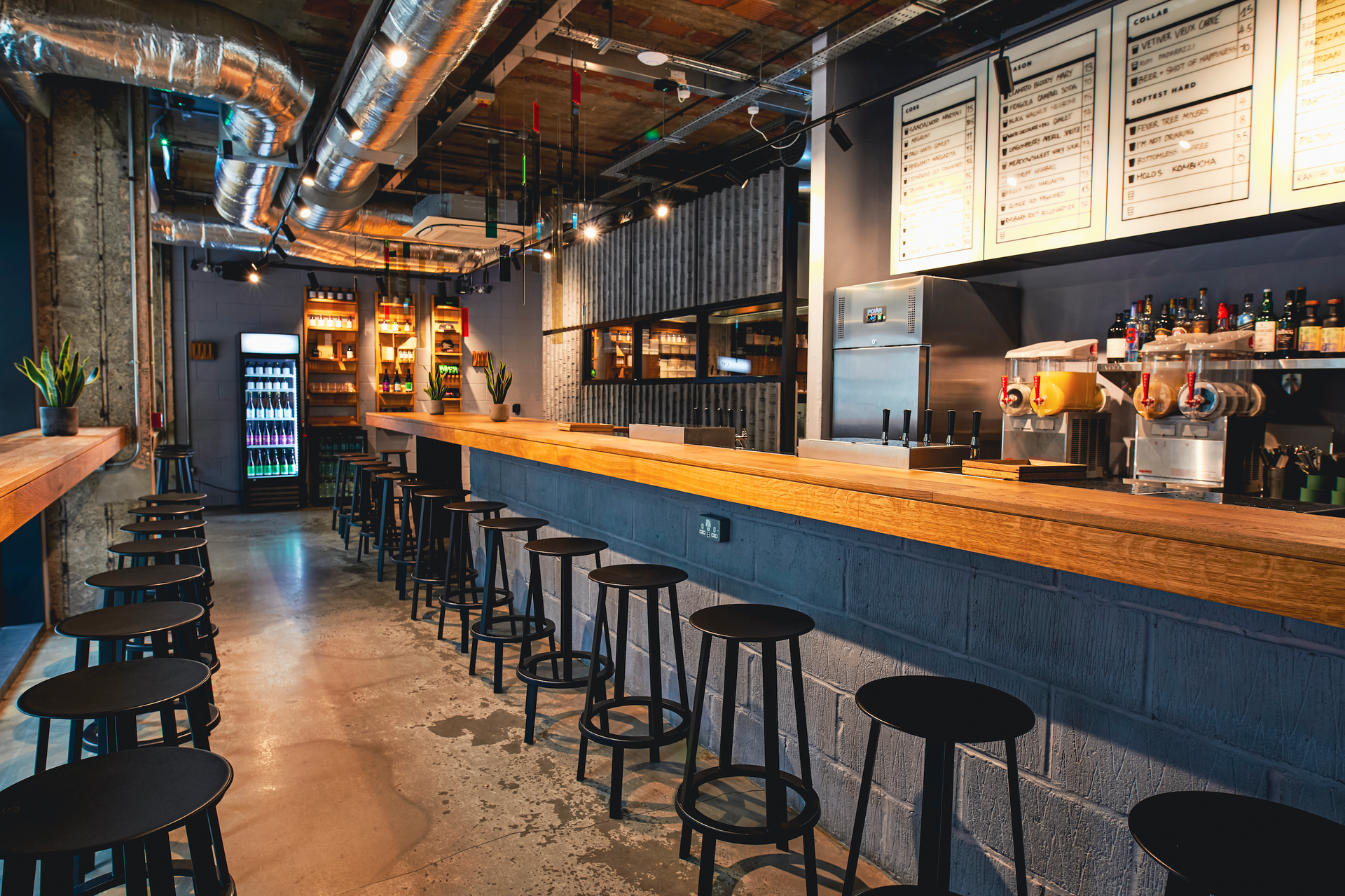
There is a particular type of London bar that announces itself quietly: no doorbell ritual, no costumed staff, no narrative printed on the menu to explain why drinking here is a meaningful act. The experience begins at counter level, with the bar team's movements and the sound of ice being cracked or a tin being rolled across marble. The Cellar Club operates in this mode. What you encounter on entry is a space organised around the act of making and serving drinks, not around performing the idea of a bar.
This matters because atmosphere in a serious cocktail room is generated differently than in a hospitality venue built around décor or drama. It accumulates through small signals: the pace at which a bartender assesses a guest's preference before making a suggestion, the decision to stir rather than shake a particular build, the way a garnish is applied or withheld. These are the details that separate a technically trained bar programme from a venue that simply sells cocktails in a pleasant room.
Craft as the Editorial Line
London's most discussed cocktail bars share a common thread: the person behind the bar has usually trained under someone, passed through a programme with documented rigour, or worked in a comparable set where standard-setting was competitive. Academy represents one strand of this, its approach shaped by structured technique and a consistent house style. Amaro occupies another, with a focus on Italian bittersweet spirits that requires specific knowledge to execute at any depth. The Cellar Club's emphasis on high-quality cocktails places it in a space where the training and palate of the bar team determine the ceiling of what's possible on any given evening.
That framing, craft-led rather than concept-led, has parallels beyond London. Bramble in Edinburgh built its reputation over years through exactly this approach: a focused programme, skilled staff, and a refusal to let the room's design do the work the drinks should be doing. Schofield's in Manchester operates similarly, its classic-leaning menu a deliberate signal that the bar takes its references seriously. Even at the Merchant Hotel in Belfast, where the room is grand and the setting theatrical, the bar programme's credibility rests on technique rather than atmosphere alone. The Cellar Club fits within this British tradition of bars that earn their standing through what they put in the glass.
What the Bartender's Craft Actually Means Here
The editorial angle of craft-first bartending is easy to invoke and harder to substantiate. In practical terms, it means a bar where the person you're speaking to across the counter has opinions about dilution, about balance between acid and spirit, about when a modern technique serves a drink and when it obscures it. It means a menu that reflects considered choices rather than a sweep through fashionable categories. And it means that the quality of a guest's experience is weighted toward the human behind the bar rather than the room they're sitting in.
Across the UK's cocktail scene, this approach tends to cluster in smaller venues with relatively limited seat counts, where a high staff-to-guest ratio is achievable and the bar team can give genuine attention to each order. London's best-regarded craft bars, from the long-standing intimacy of Happiness Forgets in Hoxton to the focused programming at Nightjar, share this structural logic. The Cellar Club's positioning within the high-quality cocktails category suggests it operates with similar priorities, even if the specific format details remain to be confirmed on arrival.
How It Fits London's Broader Drinking Map
London is a city where the cocktail bar offer has expanded substantially, but where the serious tier remains relatively thin. The volume of bars using craft language is high; the number that actually deliver on it is lower. In that context, venues that commit to a craft-led identity without hedging toward food, entertainment, or broad accessibility tend to attract a specific kind of drinker: someone who knows what they want and is looking for the room most likely to provide it at a consistent level.
For those who want to map The Cellar Club against the wider UK scene, the comparisons are instructive. Mojo Leeds and Horseshoe Bar Glasgow both demonstrate that serious drinking culture exists well outside the capital, but London's concentration of trained talent and competitive peer pressure tends to push its craft bars toward a higher technical standard. Internationally, Bar Leather Apron in Honolulu and L'Atelier du Vin in Brighton illustrate how cocktail programmes rooted in specific expertise translate across geographies. The Cellar Club belongs to this broader conversation about what it means to take drinking seriously, wherever you happen to be doing it.
Planning Your Visit
Comparison Snapshot
Comparable venues nearby, for context on price, style, and recognition.
| Venue | Cuisine | Price | Notes |
|---|---|---|---|
| The Cellar ClubThis venue — the venue you are viewing | lounge | $$ | Not listed |
| Brick Ln | cocktail_bar | $$ | Spitalfields |
| Greenberry Café | lounge | $$ | Primrose Hill |
| Dame Alice Owen | pub | $$ | Finsbury |
| The Churchill Arms, Kensington | pub | $$ | Kensington Palace Gardens |
| Il Baretto | wine_bar | $$ | Marylebone |
Continue exploring
More in London
Bars in London
Browse all →
Restaurants in London
Browse all →
Hotels in London
Browse all →




At a Glance
- Lively
- Intimate
- Group Outing
- Casual Hangout
- After Work
- Celebration
- Live Music
- Standalone
- Historic Building
- Standing Room
- Seated Bar
- Lounge Seating
- Classic Cocktails
- Craft Cocktails
Intimate underground setting with a lively, energetic atmosphere enhanced by live performances and audience interaction.