Google: 4.4 · 198 reviews
Snail Bar

Snail Bar on Shattuck Avenue has become a reference point for the new Oakland dining scene, drawing comparisons to foundational Bay Area wine-and-food institutions of an earlier generation. The wine list and kitchen work in close conversation, producing a format where the glass and the plate are treated as equal partners rather than afterthoughts to each other.
 Discover on Pearl
Pearl is the En Primeur Club membership app — saves, bookings, and concierge access live there. Same editors, same standards.
Oakland's Wine-Bar Moment, Measured on Shattuck Avenue
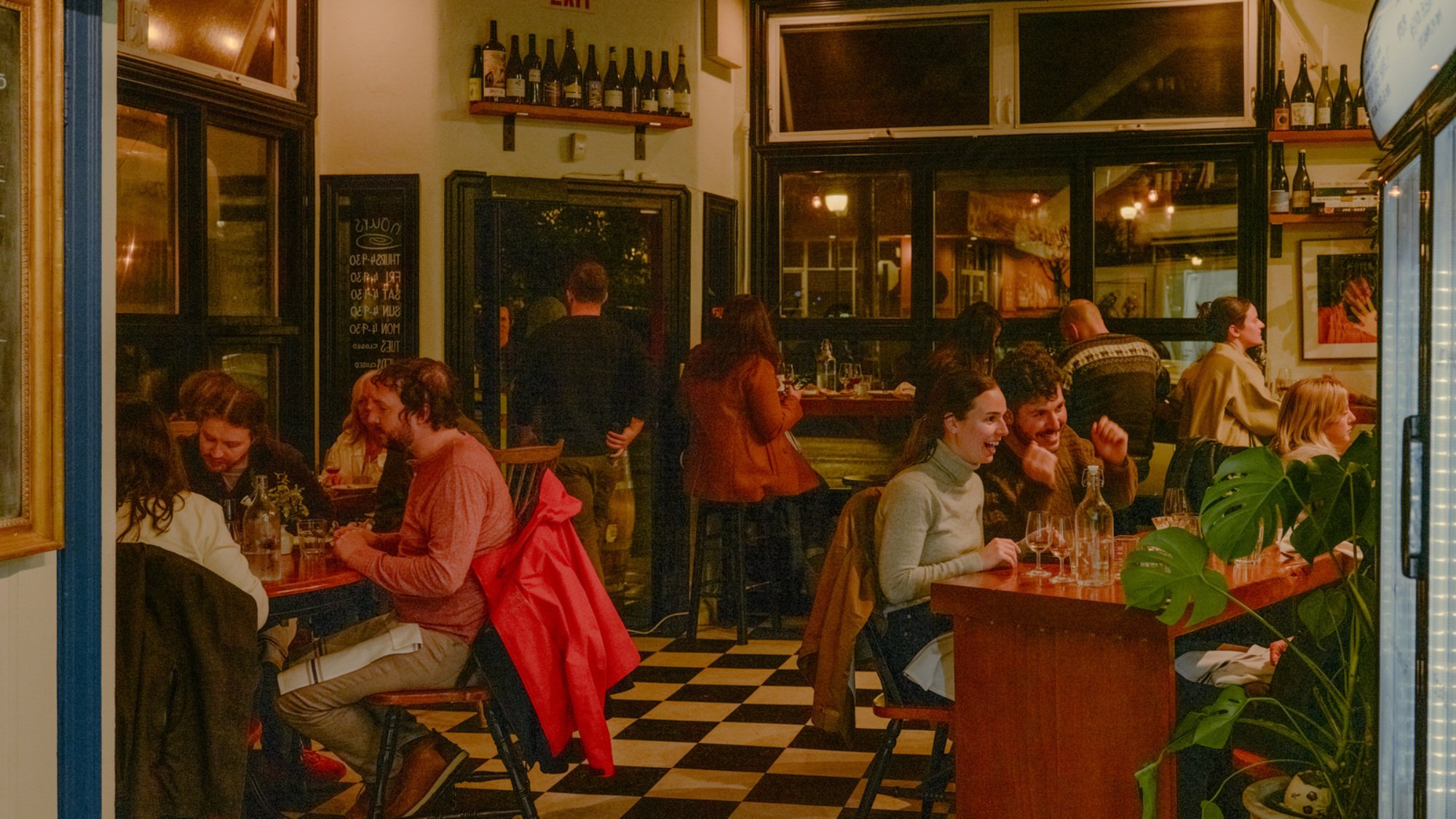
There is a particular kind of restaurant that only emerges when a city's food culture has reached a certain critical mass: not a flagship, not a concept, but a neighborhood room that manages to concentrate everything the scene has figured out. Shattuck Avenue in North Oakland has long been one of the Bay Area's more underappreciated corridors for this kind of place, and Snail Bar at 4935 Shattuck Ave. sits squarely within that tradition. The awards commentary attached to it is pointed: this is, in the estimation of those tracking the Bay Area closely, the restaurant at which to demonstrate how far Oakland's wine and dining culture has traveled, and a modern heir apparent to the energy that Chez Panisse set in motion decades ago on the same general stretch of the East Bay.
That is not a small claim. Chez Panisse functions as a kind of founding document for California's ingredient-first, producer-conscious approach to hospitality, and drawing a line from it to Snail Bar places the latter inside a longer story about what the East Bay believes restaurants are for. The comparison is about attitude and priorities, not mimicry: Snail Bar operates in a format and price register that makes it more accessible than its spiritual predecessor, which is precisely part of what makes it a useful indicator of where things currently stand.
The Format That Makes the Collaboration Visible
The specific format of Snail Bar, a wine-focused room where the kitchen and the floor operate in close alignment, is one that has become increasingly important to the contemporary American restaurant conversation. Venues in this category, from Bay Grape a few miles away to comparable programs nationally at places like Kumiko in Chicago and Jewel of the South in New Orleans, share a common logic: the sommelier and the chef operate as co-authors of the experience rather than parallel departments that happen to share a roof.
What distinguishes the leading rooms in this format is the legibility of that collaboration to the guest. When it works, ordering a glass doesn't feel like a transaction separate from the food decision. The menu suggests pairings by implication, through how dishes are written and what the floor team volunteers without prompting. The kitchen in turn produces food that is built for the wine list, not simply food that happens to arrive at a table where wine is also being poured. This coherence between plate and glass is the editorial claim Snail Bar makes on the Oakland dining scene, and it is the reason the room draws comparisons to institutions rather than simply to good neighborhood spots.
Within Oakland itself, the peer set for this kind of program includes Belotti Ristorante E Bottega, where Italian wine and food logic runs through the entire operation, and alaMar Dominican Kitchen, which takes a different approach to the relationship between beverage identity and kitchen identity. 13 Orphans rounds out a city that has grown into one of the more interesting mid-sized dining destinations on the West Coast. Snail Bar occupies a particular position in that set: the wine bar where the wine is genuinely the point, not décor for a restaurant that happens to have a list.
The Team Dynamic as Hospitality Argument
In American restaurant culture, the model that separates beverage from kitchen has been standard operating procedure for most of the industry's modern history. The sommelier curates a list; the chef writes a menu; guests connect the dots themselves, with varying success. What wine-forward rooms like Snail Bar argue, implicitly and through execution, is that this separation produces a worse outcome for the guest than genuine integration does. The front-of-house team carries more interpretive weight in this model: they are not simply describing bottles but translating between the kitchen's intentions and the guest's glass.
This places significant demands on the floor staff, who need fluency in both directions. It also rewards guests who engage with the recommendations rather than ordering independently of the team's input. The format tends to produce a more conversational table, one where the room's knowledge becomes part of the experience rather than something available on request. For a city that has historically run a little below the radar compared to San Francisco, venues operating at this level of floor intelligence are part of what is shifting Oakland's reputation among people who pay close attention to where American hospitality is moving.
Nationally, the restaurants doing this most clearly include ABV in San Francisco, Bar Leather Apron in Honolulu, Julep in Houston, Superbueno in New York City, and The Parlour in Frankfurt on the Main, each of which uses team integration as its primary hospitality mechanism. Snail Bar belongs in that conversation as the East Bay's most visible entry point into it.
Planning a Visit
Snail Bar is located at 4935 Shattuck Ave. in the Temescal-adjacent stretch of North Oakland, a walkable corridor with enough surrounding restaurants and bars to make it the center of an evening rather than a destination that requires planning around. Booking details and hours are leading confirmed directly through current listings, as the venue does not publish a dedicated web presence in the standard format. Given the room's reputation and its position as a go-to for wine-minded diners across the Bay Area, walk-in availability at peak times is not guaranteed, particularly on weekends. The size of the room keeps the experience intimate, which is part of the point, but it also means capacity fills quickly when the word is out. For broader context on what else the city offers, our full Oakland restaurants guide maps the scene across neighborhoods and price tiers.
Cuisine and Awards Snapshot
A compact peer snapshot based on similar venues we track.
| Venue | Cuisine | Awards | Notes |
|---|---|---|---|
| Snail Bar | This venue | ||
| Punchdown | |||
| 13 Orphans | |||
| Umami Mart | |||
| Homeroom | |||
| minimo |
Continue exploring
More in Oakland
Bars in Oakland
Browse all →
Restaurants in Oakland
Browse all →
Hotels in Oakland
Browse all →






At a Glance
- Cozy
- Trendy
- Intimate
- Modern
- Date Night
- Casual Hangout
- Design Destination
- Standalone
- Seated Bar
- Lounge Seating
- Outdoor Terrace
- Natural Wine
Charming and cozy with black-and-white checkered tiles, leafy plants, bustling open kitchen, and a convivial street corner atmosphere.