Red Emma's Bookstore Coffeehouse
Red Emma's Bookstore Coffeehouse on Greenmount Avenue sits at the intersection of Baltimore's independent café culture and its long-running tradition of community-anchored spaces. Part coffee shop, part radical bookstore, part event venue, it draws a cross-section of the city's students, activists, and neighbourhood regulars into a single room where a cup of coffee and a shelf of political theory coexist without apology.
Pearl is the En Primeur Club membership app — saves, bookings, and concierge access live there. Same editors, same standards.
- Address
- 3128 Greenmount Ave, Baltimore, MD 21218
- Phone
- +1 410 601 3072
- Website
- redemmas.org
- Directions
- Get directions
 Saves & bookings on Pearl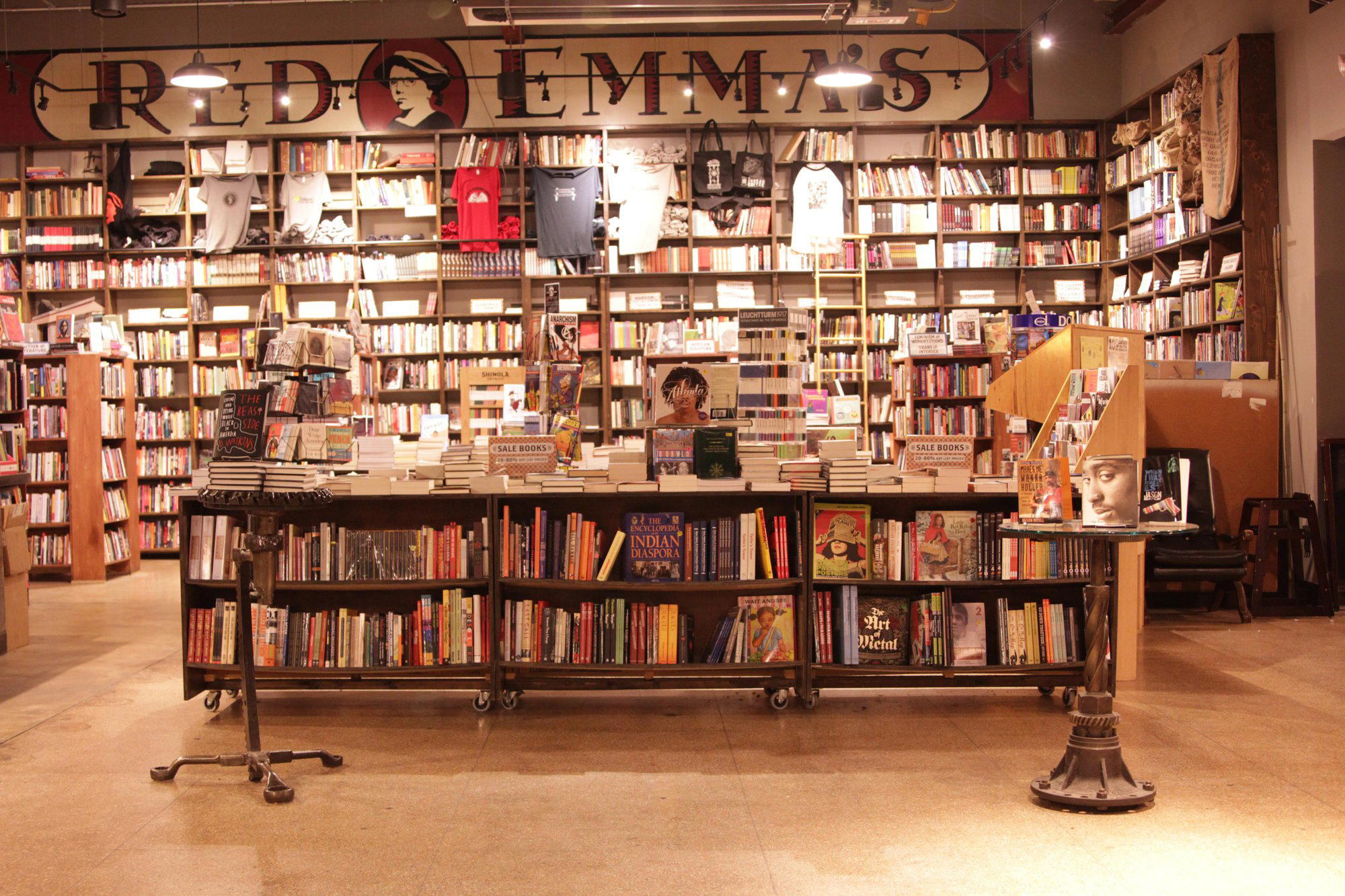
A Room Where Coffee and Print Culture Share the Same Floor
Walk into Red Emma's on Greenmount Avenue and the first thing you register is density: books packed into shelves that line the walls, mismatched furniture arranged with the pragmatic informality of a space that actually gets used, and the low ambient noise of people who came to work, read, or argue a point rather than to be seen. The smell is the particular combination of roasted coffee and paper that belongs to a specific type of place: the kind that has been operating long enough to absorb its own atmosphere. In Baltimore's Waverly neighbourhood, where Greenmount Avenue shifts from commercial strip to something more residential and worn, that atmosphere carries weight.
Baltimore's independent café scene has, over the past decade, sorted itself into roughly two registers: the design-forward espresso bar aimed at a specialty-coffee audience, and the community-rooted space where the drink is secondary to what happens around it. Red Emma's sits firmly in the second category, and makes no apology for the distinction. The coffee is there, the food is there, but the room is organised around the idea that a coffeehouse can be a civic institution rather than a retail experience.
The Bookstore-Café Format and What It Asks of a Visitor
The bookstore-café hybrid is a format with its own logic and its own demands. In cities where this model has taken hold — think the politically engaged independent bookshops of Portland, Chicago's community-run spaces on the South Side, or the worker co-operative cafés that have surfaced in Philadelphia and Pittsburgh — the expectation is that the visitor brings some tolerance for the informal. Seating at Red Emma's is not precious. The space accommodates the long afternoon visitor with a laptop as readily as the quick coffee between errands. That flexibility is structural rather than accidental: a worker-owned cooperative has different priorities than a profit-optimised café chain, and those priorities show up in how the space behaves.
The books themselves are curated in the way that distinguishes a focused independent from a general retailer. Anarchist theory, labour history, feminist thought, and radical politics occupy the shelves alongside more broadly accessible titles in fiction and social criticism. For visitors arriving from outside Baltimore, this signals something about the venue's position in the city: it functions as an anchor for a particular intellectual community, not as décor. Browsing the shelves before ordering coffee is part of the intended rhythm of the visit.
Waverly and the Greenmount Avenue Context
Greenmount Avenue runs north from downtown Baltimore through a series of neighbourhoods that have seen genuine disinvestment alongside genuine community organisation. Waverly, where Red Emma's current location sits, has a character defined less by recent development than by the institutions that have persisted through it. The 32nd Street Farmers' Market runs nearby on weekends and draws a broad cross-section of the city. The neighbourhood's café options are limited compared to the denser commercial strips of Hampden or Charles Village, which makes Red Emma's role as a gathering point more pronounced. When a single venue fills multiple functions in a neighbourhood, it becomes load-bearing in a way that a venue in a saturated market never has to be.
For visitors exploring Baltimore's food and drink scene beyond the Inner Harbour's more obvious clusters, Greenmount Avenue rewards the detour. Other Baltimore venues drawing attention for their own distinct approaches include Alma Cocina Latina, Baba'de, Barcocina, and Alonso's, each operating in a different register and neighbourhood pocket. The full Baltimore restaurants guide maps these patterns across the city.
The Cooperative Model and What It Produces in Practice
Worker-owned cooperatives in the food and beverage sector operate under a different set of incentives than conventional ownership structures. Decisions about hours, programming, pricing, and space allocation are made collectively, which tends to produce venues that are more responsive to their immediate community and less responsive to trends set elsewhere. Red Emma's has been operating under this model long enough that the approach has become embedded in the physical space itself: the programming (readings, talks, meetings, benefit events) reflects the interests of the workers and the community they serve rather than a marketing calendar.
This matters for the visitor because it changes what you can expect from the experience. The space is not managed for hospitality in the conventional sense. Staff are owners with stakes in the enterprise, which produces a different quality of presence than the transactional service common to chain cafés. Whether that registers as warmth or simply as competence depends on the visitor, but it is a consistent feature of the co-op café format when it functions well.
Planning a Visit
Red Emma's operates as a walk-in space. No reservation is required or available for the café portion of the visit, and the open seating arrangement means that peak hours mid-morning and at lunchtime will be the most crowded. For visitors who want to attend a specific event, readings and community programming run regularly, checking the venue's schedule in advance is the practical step. The Greenmount Avenue location is accessible by public transit on routes running north from central Baltimore. Parking on the surrounding residential streets is generally available outside peak hours.
Visitors travelling to Baltimore for food and drink specifically may want to use Red Emma's as a morning or afternoon anchor rather than a destination in its own right. The café functions well as a base for a few hours of reading or work in a neighbourhood that does not otherwise have many comparable spots. For those comparing the broader co-operative and community-café model across American cities, venues like ABV in San Francisco and Kumiko in Chicago offer different but instructive points of reference in the independent bar and café space. Further afield, Bar Leather Apron in Honolulu, Jewel of the South in New Orleans, Julep in Houston, Superbueno in New York City, and The Parlour in Frankfurt on the Main each represent different expressions of what an independently minded drinks or café venue can become when it commits to a point of view.
Continue exploring
More in Baltimore
Bars in Baltimore
Browse all →
Restaurants in Baltimore
Browse all →

At a Glance
- Cozy
- Bohemian
- Casual Hangout
- Live Music
- Communal Tables
- Lounge Seating
Current opening hours
- Monday
- Closed
- Tuesday
- 9 AM–8 PM
- Wednesday
- 9 AM–8 PM
- Thursday
- 9 AM–8 PM
- Friday
- 9 AM–8 PM
- Saturday
- 9 AM–8 PM
- Sunday
- 10 AM–4 PM
Hours can change for holidays and private events. Last verified .
Welcoming community space with a cozy atmosphere for reading, discussions, and events.
Know Before You Go
- Getting there
- 3128 Greenmount Ave, Baltimore, MD 21218