Rainhas Churrascaria
On Northern Boulevard in Corona, Queens, Rainhas Churrascaria plants itself in one of New York City's most concentrated Latin American dining corridors. The churrascaria format — Brazilian-style grilled meats served in continuous rotation — sits at the intersection of Queens' immigrant food traditions and the kind of communal eating rarely found in Manhattan. For those tracking where the city's serious meat culture actually lives, Corona is the answer.
Pearl is the En Primeur Club membership app — saves, bookings, and concierge access live there. Same editors, same standards.
- Address
- 108-01 Northern Blvd, Corona, NY 11368
- Phone
- +1 718 779 8808
- Website
- rainhas.com
- Directions
- Get directions
 Saves & bookings on Pearl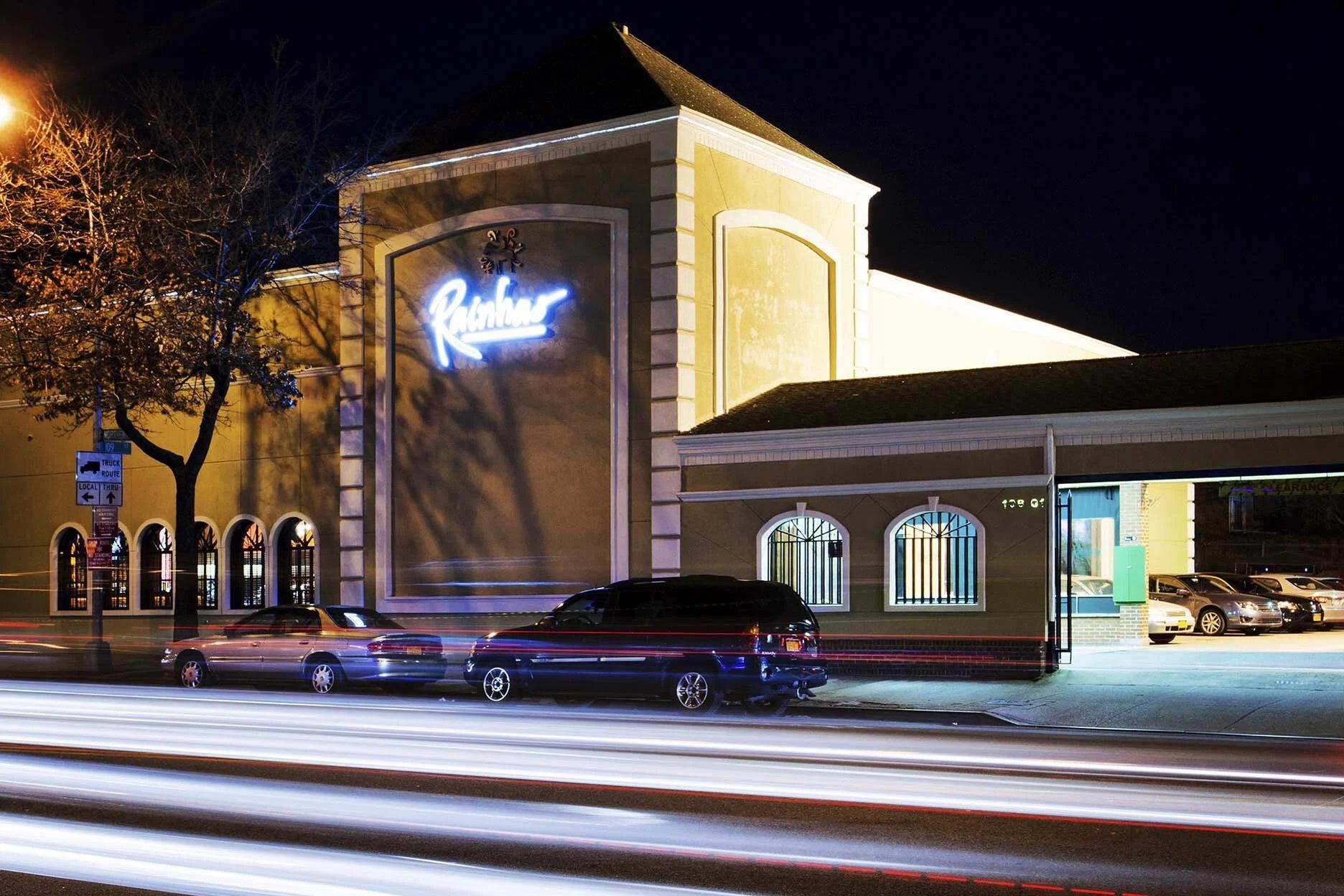
Corona, Queens and the Geography of Brazilian Grilling
Northern Boulevard through Corona and Jackson Heights is among the most densely layered food corridors in New York City, a stretch where Ecuadorian cevicherías sit alongside Colombian bakeries and Mexican taquerías occupy storefronts that have changed hands and cuisines across generations. Rainhas Churrascaria at 108-01 Northern Blvd operates inside this tradition: a Brazilian churrascaria embedded in a Queens neighbourhood that has long absorbed waves of Latin American migration and, in the process, produced some of the city's most direct and unmediated cooking. The address alone tells you something about where this restaurant positions itself — not in the Brazilian enclaves of Newark or the Ironbound, not in the tourist-accessible blocks of Midtown, but in the working immigrant corridor of western Queens, where the clientele tends to know what they came for.
The churrascaria model itself has a specific logic. In Brazil, the rodízio format — continuous table service of skewered meats carved tableside, with a red-and-green token system that signals when you want more, developed as a way of feeding large groups efficiently without sacrificing the theatrics of live-fire cooking. That format migrated to the United States in the 1980s and 1990s, first through Brazilian communities in cities like Boston and New York, and later into a more commercialised tier of dining that made it a staple of midtown expense accounts. The neighbourhood churrascaria, by contrast, tends to operate closer to the Brazilian original: less choreography, more meat, lower price points, and a room that skews toward regulars rather than tourists. In Queens, that version of the format has found one of its most consistent homes.
What the Northern Boulevard Corridor Means for the Experience
Eating on Northern Boulevard involves a different set of expectations than eating in, say, the West Village or the Upper East Side. The neighbourhood is not organised around destination dining in the conventional sense; it is organised around community eating, which is a different thing. Restaurants here tend to have deep roots among specific immigrant groups, sustained not by press attention but by word of mouth across tight social networks. That insularity, which can make places harder to find for outsiders, is also what tends to keep the cooking honest. There is less pressure to adapt to a generalist palate when your core audience already knows the cuisine and will notice if corners are cut.
For a churrascaria specifically, neighbourhood placement matters because the format rewards repeat visits. The rodízio is not a one-time spectacle; it is a structure that reveals its logic over multiple meals, knowing which cuts come early in the rotation versus which arrive later, calibrating the pacing of your meal against the rhythm of the servers, learning when to deploy the token. A venue embedded in a residential corridor rather than a tourist zone is more likely to develop that kind of repeat customer base, which in turn tends to produce a more calibrated kitchen. The restaurants that survive on Northern Boulevard do so because locals return, which imposes its own form of quality control.
Brazilian Churrasco in New York City's Meat Culture
New York has a complicated relationship with serious grilled meat. The steakhouse tradition is well-documented and expensive, running from old-guard rooms in Midtown to newer Argentinian-influenced formats in the Meatpacking District. Brazilian churrascaria occupies a distinct position in that spectrum: it is communal rather than individual, process-driven rather than cut-specific, and historically more associated with abundance than with precision aging or provenance rhetoric. The all-you-can-eat rodízio format, which dominates the category in the United States, places it in a different competitive set than, say, a dry-aged ribeye program at a tasting-menu-style steakhouse.
What separates the better churrascarias from the indifferent ones is largely a question of fire management and timing. Brazilian churrasco relies on slow cooking over charcoal or wood embers, with the meat resting on long metal skewers angled toward the heat source at specific distances depending on the cut. The picanha, a rump cap cut that is the canonical centrepiece of any credible churrascaria, should arrive with a rendered fat cap, a pink interior, and enough residual heat to continue cooking slightly at the table. Getting that right consistently is a technical achievement, not an automatic function of the format. In neighbourhoods like Corona, where the clientele includes Brazilians who grew up with the real thing, that standard is enforced informally but effectively.
For context on how serious bar and cocktail culture aligns with this kind of neighbourhood dining in New York, venues like Superbueno and Amor y Amargo represent the Latin-influenced and craft-spirits ends of the city's drinking scene, while Angel's Share and Attaboy NYC illustrate how technical cocktail programs have evolved in Manhattan. The contrast is instructive: Queens' food corridor operates largely outside that press-driven recognition economy, which tends to mean lower price points and a closer relationship between the kitchen and its immediate community.
Across the United States, the same pattern of neighbourhood specificity applies to the bar and restaurant scenes of other cities: Jewel of the South in New Orleans, Julep in Houston, Kumiko in Chicago, and ABV in San Francisco each earn their positions through deep local embeddedness rather than generalist appeal. The same principle holds in international contexts, from Bar Leather Apron in Honolulu to Allegory in Washington, D.C. and The Parlour in Frankfurt on the Main. Rainhas Churrascaria belongs to that same logic of place-specific credibility.
Planning Your Visit
Rainhas Churrascaria is located at 108-01 Northern Blvd, Corona, NY 11368, accessible via the 7 train (Junction Blvd or 103rd St-Corona Plaza stops place you within walking distance of the corridor). As with most neighbourhood churrascarias operating on this stretch, it is worth arriving with a group: the rodízio format scales with the table, and the communal rhythm of the meal benefits from multiple people pacing their token signals together. For the broadest view of New York City's restaurant scene across all neighbourhoods and price tiers, see our full New York City restaurants guide.
Dress: Casual neighbourhood standard. Getting there: 7 train to Junction Blvd or 103rd St-Corona Plaza, then a short walk along Northern Blvd.
Continue exploring
More in New York City
Bars in New York City
Browse all →
Restaurants in New York City
Browse all →
Hotels in New York City
Browse all →




At a Glance
- Lively
- Group Outing
- Celebration
- Special Occasion
- Live Music
- Seated Bar
- Booth Seating
- Classic Cocktails
Current opening hours
- Monday
- 5–10 PM
- Tuesday
- 5–10 PM
- Wednesday
- 5–10 PM
- Thursday
- 5–10 PM
- Friday
- 5 PM–12 AM
- Saturday
- 12 PM–12 AM
- Sunday
- 12–10 PM
Hours can change for holidays and private events. Last verified .
Spacious and clean with beautiful decor, live singer adding charm, and a mix of new generation and Hispanic music creating a pleasant atmosphere.
Know Before You Go
- Getting there
- 108-01 Northern Blvd, Corona, NY 11368