Prince Charles occupies a former public swimming pool beneath Kreuzberg's streets, now one of Berlin's more structurally distinctive club and bar spaces. The venue operates at the intersection of nightlife architecture and underground culture, drawing a crowd that treats the space itself as part of the experience. It sits in a city where repurposed infrastructure has become a defining feature of the bar and club scene.
Pearl is the En Primeur Club membership app — saves, bookings, and concierge access live there. Same editors, same standards.
- Address
- Prinzenstraße 85F, 10969 Berlin, Germany
- Phone
- +49 15678 662100
- Website
- bechstein-network.com
- Directions
- Get directions
 Saves & bookings on Pearl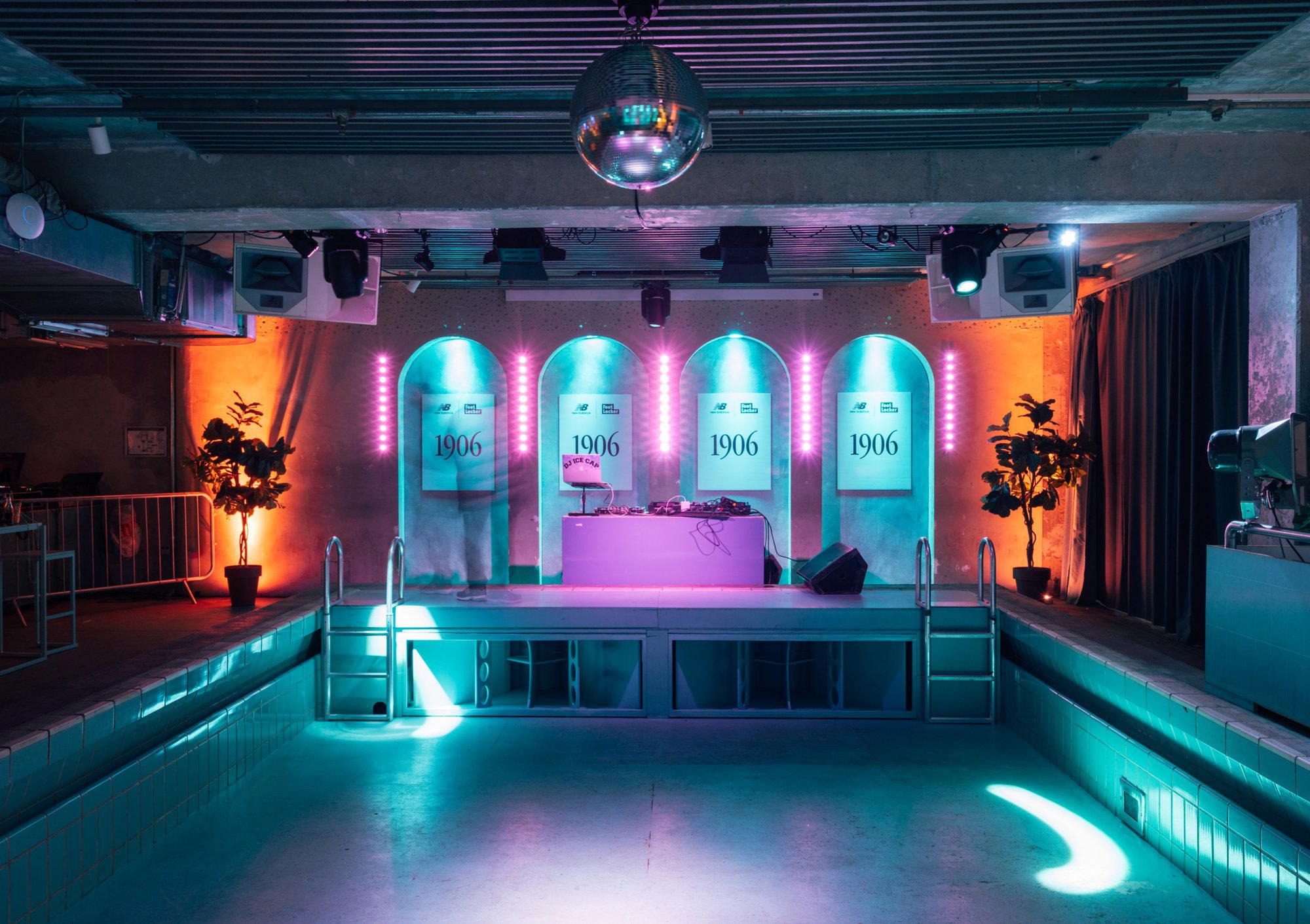
Kreuzberg Underground: The Culture of Repurposed Space
Berlin's bar and club scene has long treated abandoned infrastructure as raw material. Former power stations, Cold War bunkers, and decommissioned industrial buildings have been converted into spaces that carry their architectural history into the experience, and the building's past becomes part of the atmosphere in a way that purpose-built venues rarely achieve. Prince Charles, located at Prinzenstraße 85F in Kreuzberg, extends that tradition into a former public swimming pool. The tiled walls, the recessed floor where the basin once sat, the geometry of a space designed for function rather than hospitality: all of it remains legible, and that legibility is precisely what gives the venue its character.
Kreuzberg itself has operated as the axis of Berlin's alternative culture for decades, and bars in this district tend to reflect a specific set of priorities: atmosphere over polish, spatial interest over conventional comfort, programming over décor. Prince Charles fits that pattern. The approach here is less about curating an experience from scratch and more about allowing the existing structure to define the terms. In a city where that philosophy has produced some of the world's most-discussed nightlife spaces, it is a credible position to occupy.
The Architectural Argument for Sustainable Hospitality
The broader trend in European nightlife design has moved, slowly but measurably, toward adaptive reuse as a form of environmental responsibility. Converting an existing structure rather than demolishing and rebuilding eliminates the embodied carbon cost of new construction and preserves the material history of a neighbourhood. In Berlin, where post-reunification development pressure has been intense, the decision to repurpose rather than replace carries additional weight. Spaces like Prince Charles are part of a larger pattern in which Kreuzberg's built fabric has been conserved through cultural activation rather than commercial redevelopment.
This framing matters because it positions adaptive reuse venues differently from bars that simply adopt a vintage aesthetic. The sustainability case here is structural and material, not decorative. The pool tiles are original; the spatial configuration is inherited. Whatever programming the venue hosts takes place inside a container that was preserved rather than manufactured, and that distinction is worth making explicit when assessing what kind of operation this is.
Across Germany, this approach appears in venues of varying scales. Kieler Brauerei am Alten Markt in Kiel operates from a historic brewery building where the production heritage is built into the walls. Uerige in Düsseldorf has maintained a brewpub identity inside a structure whose continuity is itself part of the product. The instinct to retain rather than replace is present across the German bar scene, but Berlin has applied it most consistently at the level of nightlife infrastructure.
Prince Charles in the Context of Berlin's Bar Scene
Berlin's bar circuit divides, roughly, into two operating philosophies. The first is the precision cocktail bar: technically exacting, often intimate, focused on the glass. Buck and Breck operates in this register, with a reservation-only format and a counter that seats a small number of guests. Lebensstern brings a comparable seriousness to its program. Stagger Lee and Velvet each occupy distinct positions in that more considered tier of Berlin drinking.
The bar belongs to a different category: the space-led venue, where the physical environment is the primary offering and programming serves the architecture rather than the reverse. This is not a criticism; it reflects a genuinely different value proposition. Guests here are not choosing between competing cocktail menus. They are choosing a room, and the room happens to be a former swimming pool in one of Berlin's most historically layered neighbourhoods.
For visitors arriving from other German cities, the contrast is instructive. Goldene Bar in Munich operates with a level of interior finish that reflects Munich's relationship with craft and detail. Le Lion Bar de Paris in Hamburg sits in Hamburg's tradition of considered, French-inflected cocktail culture. The Parlour in Frankfurt brings a lounge sensibility suited to that city's financial district adjacency. The bar is none of those things, and its position in the Berlin scene is defined partly by what it is not: it does not compete on cocktail credentials or interior curation in the conventional sense. It competes on the basis of the space itself.
Beyond Germany, the format has parallels. Bar Leather Apron in Honolulu and Bar Trattoria Celentano in Cologne each demonstrate how a strong spatial identity shapes the entire guest experience, even when the drink program operates independently of the architecture. The principle travels: rooms with a history generate a different kind of attention than rooms built specifically to receive it.
What to Expect When You Arrive
Prinzenstraße 85F sits in central Kreuzberg, within reasonable reach of the U-Bahn network. The neighbourhood operates late, and the bar follows that pattern: this is not an early-evening destination. Visitors planning a night that moves through Berlin's bar scene would reasonably position the bar toward the middle or later portion of an itinerary, after more structured cocktail settings and before, or instead of, the city's larger club venues.
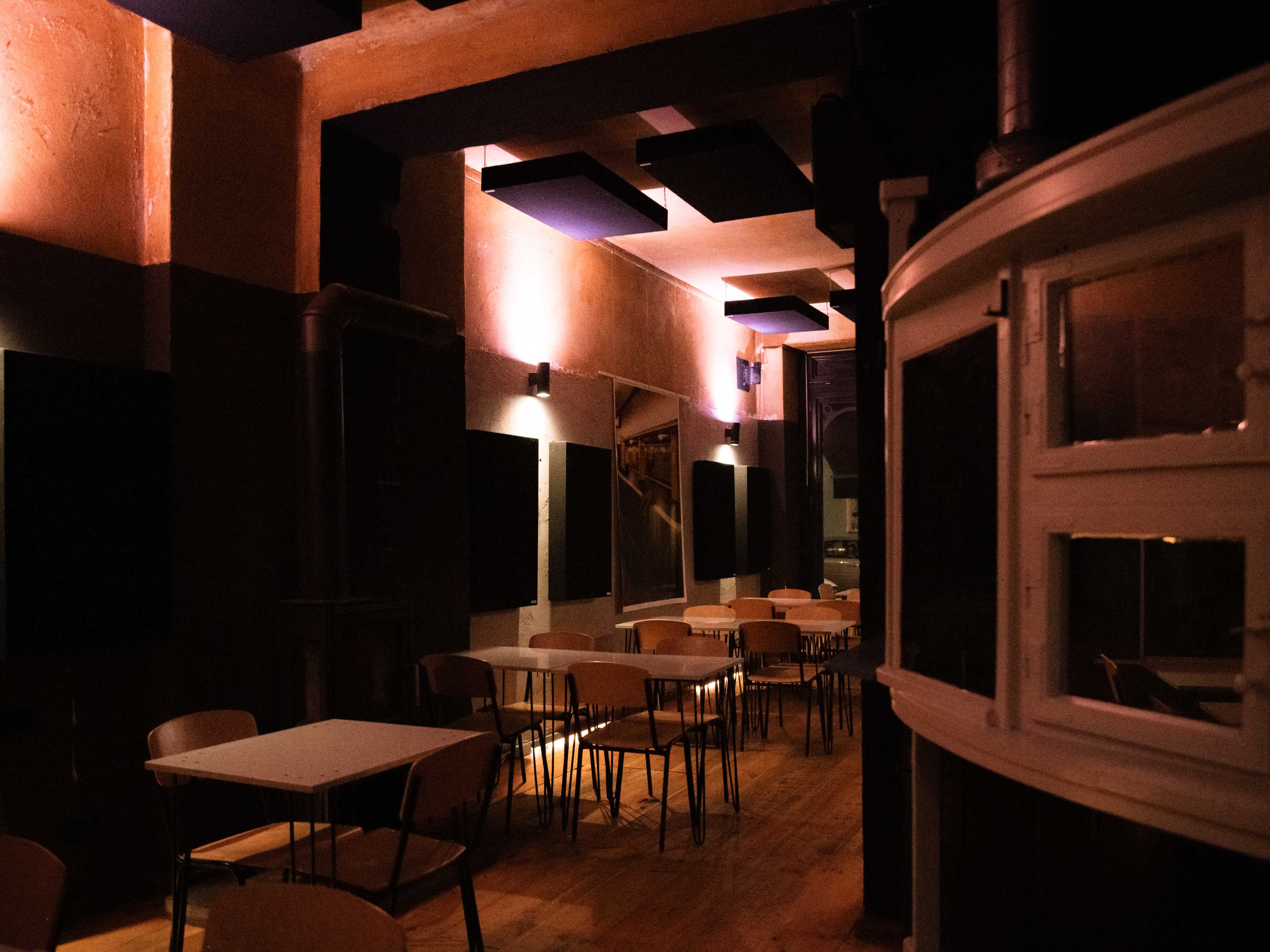
What is consistently reported in accounts of the space is that the former pool architecture creates a below-street-level sense of enclosure that is distinct from the above-ground bar formats that dominate in other European capitals. The ceiling heights, the tile work, the residual geometry of the basin: these are not aesthetic choices but inherited features, and they produce an atmosphere that is difficult to replicate in a purpose-built space.
The Short List
Comparable venues nearby, for context on price, style, and recognition.
| Venue | Cuisine | Price | Notes |
|---|---|---|---|
| Prince CharlesThis venue — the venue you are viewing | Kreuzberg, lounge | $$ | Not listed |
| 8000 Vintages | Not listed | $$ | Kreuzberg, wine_bar |
| Berghain | Panorama Bar | Friedrichshain, lounge | $$ | Not listed |
| Mauerwinzer | Not listed | $$ | Scheunenviertel, wine_bar |
| YAAM | Friedrichshain, Bar | $$ | Not listed |
| Schwarze Traube | Not listed | $$ | Kreuzberg, cocktail_bar |
Continue exploring
More in Berlin
Bars in Berlin
Browse all →
Restaurants in Berlin
Browse all →
Hotels in Berlin
Browse all →
Wineries in Berlin
Browse all →
At a Glance
- Lively
- Trendy
- Energetic
- Late Night
- Group Outing
- Live Music
- Outdoor Terrace
Energetic club atmosphere in an unconventional historic space with dancing in the old pool area.