Pete's Tavern
New York's oldest continuously operating bar, Pete's Tavern on Irving Place has anchored the Gramercy dining scene since 1864. The back bar carries a selection of spirits and draft beers that matches the room's lived-in character, and the kitchen runs a reliable American pub menu. It is as much a document of the city's social history as it is a neighborhood bar.
Pearl is the En Primeur Club membership app — saves, bookings, and concierge access live there. Same editors, same standards.
- Address
- 129 E 18th St, New York, NY 10003
- Phone
- +1 212 473 7676
- Website
- petestavern.com
- Directions
- Get directions
 Saves & bookings on Pearl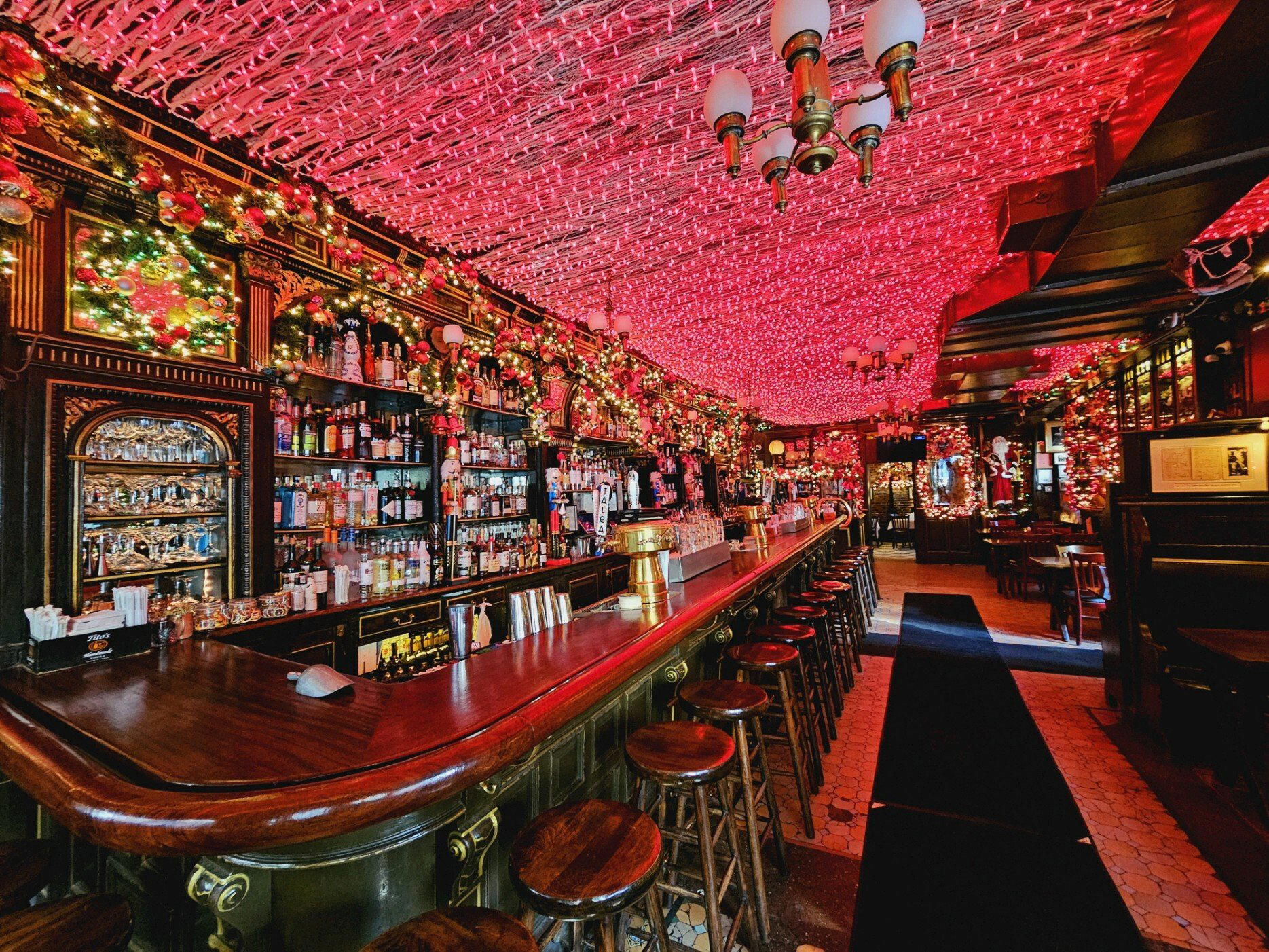
A Gramercy Institution Since 1864
Pete's Tavern is a bar at 129 East 18th Street in New York City, known for its long-running Gramercy presence and casual, walk-in-friendly format. The bar has been open since 1864, making it one of the longest continuously operating taverns in the United States. That claim is not mere nostalgia: the pressed-tin ceiling, the original mahogany bar, and the booth where O. Henry reportedly drafted "The Gift of the Magi" are still in place. In a city where a five-year-old restaurant counts as an institution, 160-plus years of unbroken service puts Pete's in a category of its own historical weight.
The Gramercy and Flatiron corridor has shifted considerably around the tavern. The neighborhood now houses a range of more programmatically driven bars, from the bitters-forward precision of Amor y Amargo to the highly technical cocktail programs at Attaboy NYC. Pete's sits at the other end of that spectrum: its identity is durability, not innovation, and it reads as an anchor point against which more recent openings define themselves.
The Back Bar: Volume Over Rarity, Context Over Curation
The editorial angle most relevant to Pete's Tavern is not what sits behind the bar but what that bar represents as a format. American tavern back bars of the nineteenth century were built as general-purpose repositories: whiskeys, gins, cordials, and whatever draft lines the house could negotiate. Pete's operates within that tradition rather than against it. The spirits selection is broad rather than deep, designed to serve a neighborhood crowd that spans office workers, tourists drawn by the O. Henry connection, and Gramercy regulars who have been coming for years.
This stands in deliberate contrast to the curatorial back-bar model that has defined much of New York's premium bar culture over the last decade. Places like Angel's Share in the East Village built their reputations on depth of selection and a precise, almost academic approach to spirits knowledge. Superbueno approaches its spirits through a different lens of cultural specificity. Pete's makes no such claim. Its draft beer program and its whiskey-forward bar call are not points of connoisseurship; they are points of accessibility.
What the back bar at Pete's does offer is context. To stand at that mahogany counter is to occupy the same physical space where Tammany Hall-era politicians, Gilded Age writers, and mid-century Gramercy residents drank. That historical layering is its own kind of depth, even if it is not expressible in tasting notes. For drinkers who travel to understand how American bar culture evolved before the craft cocktail era, Pete's is a primary source.
The O. Henry Room and the Literary Geography of Irving Place
The booth associated with O. Henry sits near the front of the room. Whether the story was actually written there is a matter of some scholarly debate, but the association is documented in the public record and the bar has embraced it as part of its identity for generations. Irving Place itself was a literary address: Washington Irving, for whom the street is named, lived nearby, and the block retains a residential, almost European quality that sets it apart from the commercial intensity of Park Avenue South one block west.
This kind of cultural geography matters when assessing what type of drinking experience Pete's Tavern actually delivers. It is not a bar built for the serious spirits enthusiast who wants to work through an allocated American single malt or compare regional mescal expressions. Those needs are better served elsewhere in the city. Pete's works for the reader who wants their drink to come with a specific, locatable piece of New York history attached to it.
Seasonal Timing and the Room at its leading
The bar operates a sidewalk seating area that comes into its own in late spring and early autumn, when Irving Place is at its most walkable and the canopy of street trees provides cover from the afternoon sun. The interior room, which is dimly lit and anchored by its long bar, reads well in colder months when the pressed-tin ceiling and vintage fixtures create the kind of atmosphere that is genuinely difficult to manufacture in a newer space.
Weekend evenings draw a tourist contingent alongside the neighborhood crowd, which affects the pace of service and the overall tone of the room. Weekday afternoons and early evenings tend to offer a quieter experience that allows the room itself to do more of the work. For visitors to New York who want to see the bar rather than simply drink in it, arriving early on a weekday is the practical choice.
Peers in This Market
Comparable venues nearby, for context on price, style, and recognition.
| Venue | Cuisine | Price | Notes |
|---|---|---|---|
| Pete's TavernThis venue — the venue you are viewing | pub | $$ | Not listed |
| Kindred | wine_bar | $$ | Midtown South-Flatiron-Union Square |
| Goodnight Sonny | cocktail_bar | $$ | East Village |
| Marlton Espresso Bar | lounge | $$ | Greenwich Village |
| Congee Village | lounge | $$ | Lower East Side |
| The Gutter L.E.S. | dive_bar | $$ | Lower East Side |
Continue exploring
More in New York City
Bars in New York City
Browse all →

Restaurants in New York City
Browse all →

Hotels in New York City
Browse all →







At a Glance
- Classic
- Well Known
- Cozy
- Casual Hangout
- After Work
- Historic Building
- Booth Seating
- Private Rooms
- Classic Cocktails
Current opening hours
- Monday
- 12 PM–2 AM
- Tuesday
- 12 PM–2 AM
- Wednesday
- 12 PM–2 AM
- Thursday
- 12 PM–2 AM
- Friday
- 12 PM–2 AM
- Saturday
- 12 PM–2 AM
- Sunday
- 12 PM–2 AM
Hours can change for holidays and private events. Last verified .
Vintage decor with original 40-foot rosewood bar, tin ceiling, tile floor, and high-backed booths evoking old New York charm.