Where the East Village Fits in New York's Cocktail Conversation
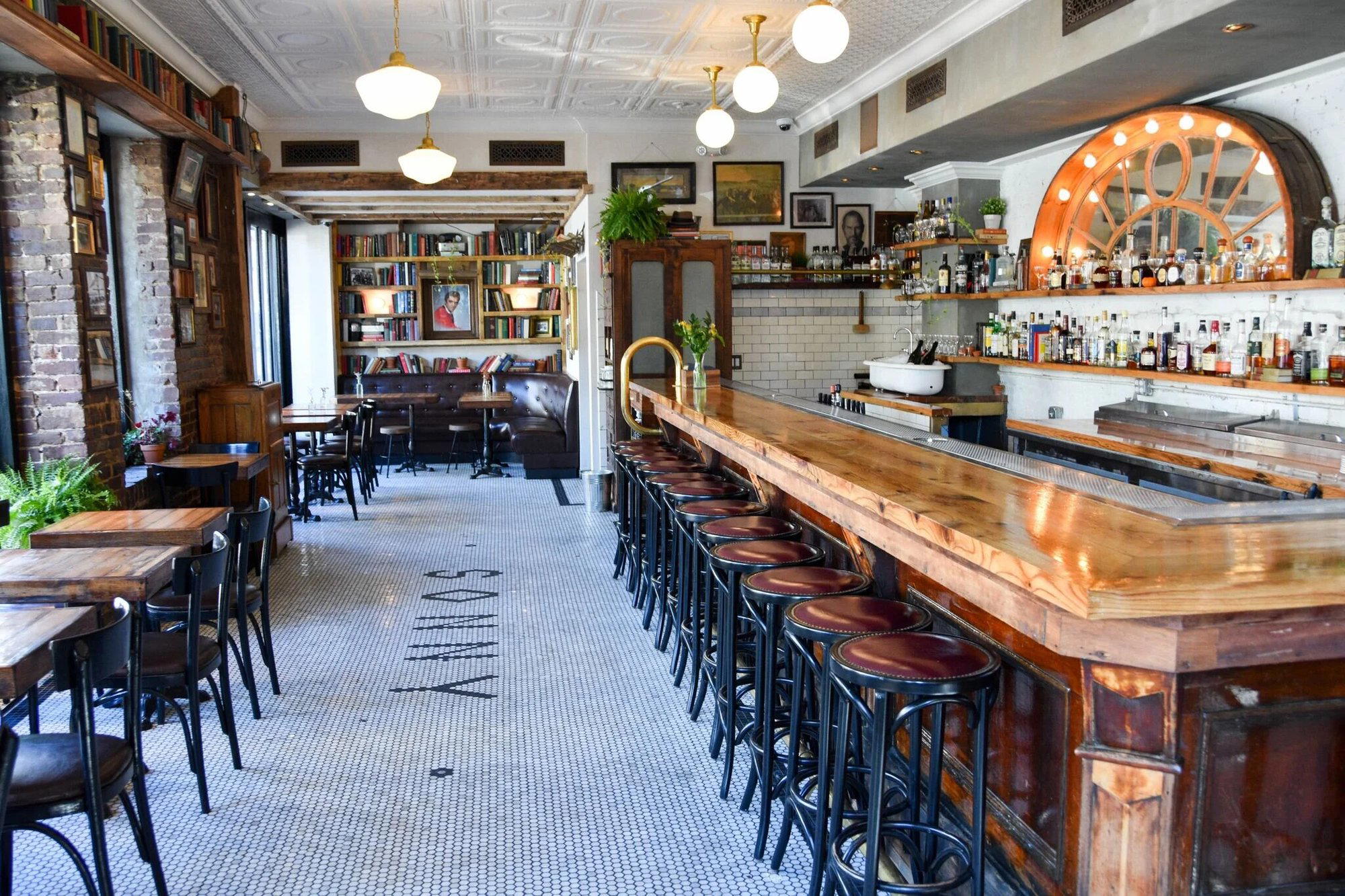
The East Village has historically functioned as a correction to Manhattan's more polished bar districts. When the cocktail revival moved upscale in Midtown and the West Village, the East Village maintained a different relationship with accessibility, one where ingredient-driven drinks coexisted with neighborhood regulars and the room did not feel like an audition. That character remains a meaningful differentiator for bars on this stretch of First Avenue.
Goodnight Sonny belongs to New York's neighborhood cocktail-bar tier, with a walk-in-friendly format and a casual dress code. Amor y Amargo has built its identity around amaro specificity to such a degree that it functions almost as a category statement. Angel's Share, a short distance east, remains one of the city's more disciplined Japanese-influenced rooms. Attaboy NYC operates without a menu, relying on guest-directed conversation to drive service. Each of these represents a distinct model for what a serious cocktail room can look like without Michelin hardware, and Goodnight Sonny exists in that same competitive conversation.
Kumiko in Chicago structures its entire program around the relationship between cocktails and Japanese culinary technique, with floor staff trained to guide guests through that pairing logic. Jewel of the South in New Orleans frames collaboration through a historically informed lens, connecting cocktail history to menu decisions. ABV in San Francisco has long operated as a model of the kitchen-integrated bar. What connects these rooms is a recognition that the leading bar experiences are not produced by one person at the counter but by a team operating with shared intent across every guest-facing role.The Collaborative Model and What It Produces
At a bar like Goodnight Sonny, the team dynamic matters. New York's cocktail culture has largely moved past the era of the singular bartender as auteur. What the better East Village rooms have developed instead is a model where the bartender's program is amplified by floor staff who know the menu well enough to extend the conversation, and where kitchen output, where applicable, is coordinated with the drink list rather than treated as a separate department.
This matters to the guest in concrete ways. When the person who takes your coat and the person who builds your drink are working from the same reference points, the experience of the room becomes more coherent. Recommendations land more accurately. The evening moves with less friction. In bars where that coordination breaks down, the gap shows immediately: a bartender with a sophisticated palate producing drinks that the floor staff cannot articulate is a kind of waste, and guests feel it even when they cannot name what is missing.
Rooms that get this right tend to generate a specific kind of loyalty. Guests return not just because a particular drink was good but because the experience of being guided through a program felt considered from beginning to end. That kind of repeat business is what sustains a bar in a neighborhood like the East Village, where novelty tourism has a short half-life and the regulars set the actual character of the room.
Bar Leather Apron in Honolulu, where precision and hospitality are treated as inseparable disciplines, and The Parlour in Frankfurt on the Main, which applies a similar logic in a different cultural context. The pattern recurs because it works, and because guests are increasingly literate enough to notice when it is absent.
Reading the Room on First Avenue
Bars like Goodnight Sonny represent a particular New York proposition: serious without being solemn, neighborhood-rooted without being insular. The East Village has enough density of good drinking rooms that a bar cannot survive on location alone. What keeps a room like this relevant is the consistency of its program and the ability of its team to hold a consistent standard across the week, not just on Friday at 10pm when every table is full and the energy is self-generating.
Compared to the more theatrical end of New York cocktail culture, where immersive format and elaborate presentation carry weight, this address operates with less spectacle and more service depth. Superbueno on the same downtown circuit brings a different energy entirely, with a Latin-influenced program and a room that leans louder. Each serves a different purpose in a city where bar-hopping is a common format and guests often move through two or three rooms in an evening. The bar reads as a later stop, a room with enough momentum to carry a night toward its close rather than launch it.
The East Village bar scene is walkable and layered, with distinct rooms sitting within a few blocks of each other. Bars that operate in a similar register in other cities, including Julep in Houston and Allegory in Washington, D.C., offer useful points of comparison for understanding what the serious neighborhood cocktail room looks like when it is functioning at full capacity.Questions About Goodnight Sonny
What should I try at Goodnight Sonny?
Menu details and signature drinks are not listed in the record. East Village cocktail rooms at this level typically operate with a seasonal menu built around well-sourced spirits and house-made modifiers, with bar staff positioned to guide guests based on preference. The collaborative service model means your leading move is to describe what you are in the mood for rather than defaulting to a familiar order.
What should I know about Goodnight Sonny before I go?
The bar is located in the East Village at 134 1st Ave, a neighborhood with a high density of drinking rooms that rewards some planning. The bar is a walk-in-friendly East Village bar at 134 1st Ave, with a $35 per person price point. Arriving midweek or early in the evening will typically yield more space and more room for conversation with the bar team.
How does Goodnight Sonny compare to other serious cocktail bars in the East Village?
The East Village has a compact but competitive cocktail scene, with rooms like Amor y Amargo and Angel's Share occupying distinct program identities within a few blocks. The bar at 134 1st Ave sits in that same walkable circuit and is best understood as part of a neighborhood drinking culture that has moved decisively toward team-driven, guest-focused service over the past several years, rather than as a standalone destination built around a single bartender's signature style.