On Laugavegur, Reykjavik's main commercial artery, ÓX operates at a remove from the city's louder drinking spots, offering a program built around bartender craft and considered service. The format positions it within the smaller, specialist tier of the Icelandic bar scene, where depth of technique and ingredient sourcing carry more weight than volume or spectacle.
 Discover on Pearl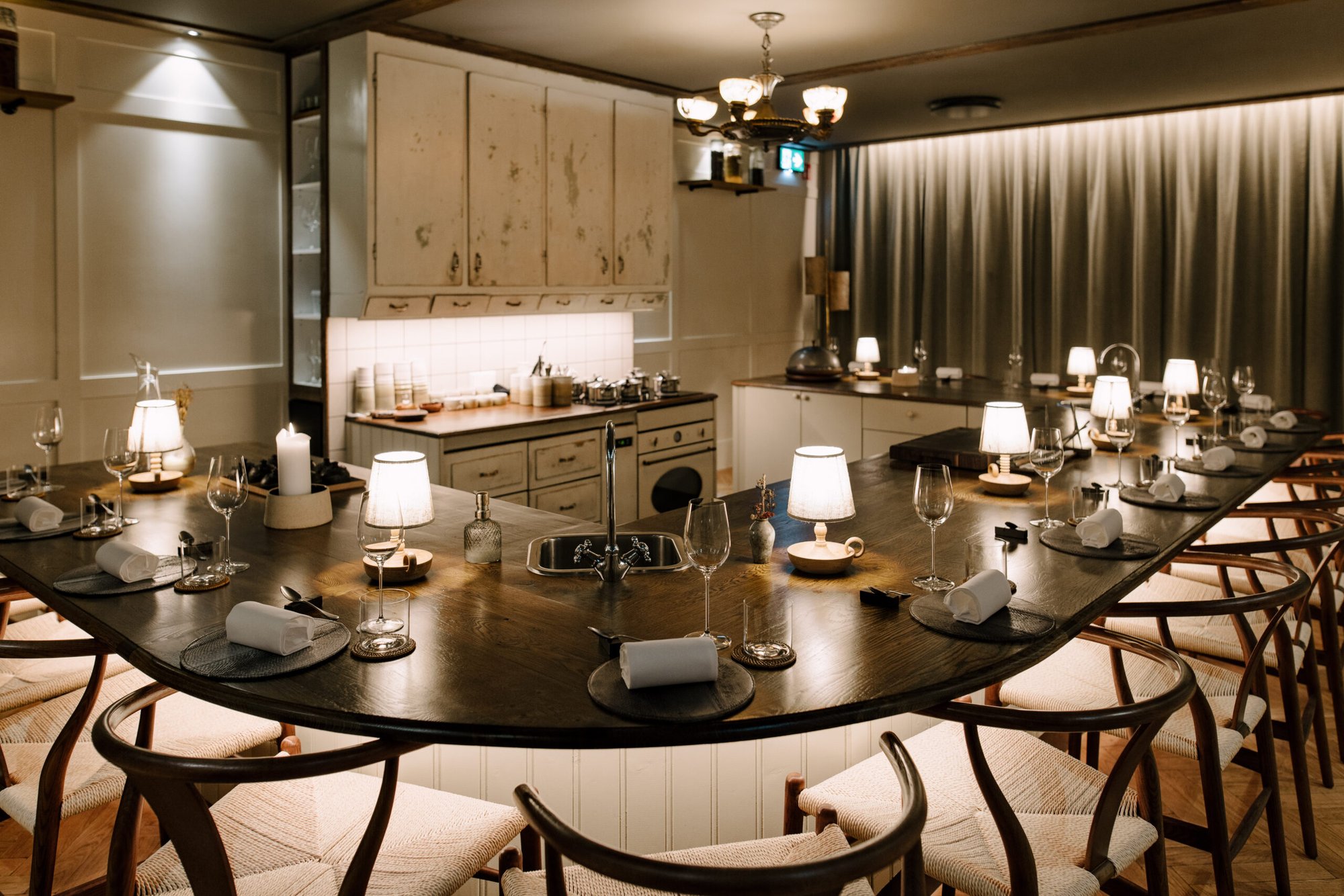
Laugavegur After Dark: Where Reykjavik's Craft Bar Scene Concentrates
Reykjavik's drinking culture has always occupied an unusual position in European bar geography. The city runs small, the licensing culture runs late, and the leading programs tend to cluster along or just off Laugavegur, the main commercial street that transforms from a daytime retail corridor into something considerably more interesting after nine. Within that corridor, bars have split in recent years between high-volume venues chasing weekend tourist traffic and smaller, more deliberately constructed operations where the bartender's role is closer to that of a chef: sourcing, developing, and presenting a point of view rather than executing volume.
ÓX, at Laugavegur 55, sits in the second category. The address places it on one of the street's busier stretches, but the operation itself reads as the antithesis of its louder neighbours. In a city where the bar scene can feel compressed by scale, venues like this one carry a disproportionate amount of critical weight. Internationally recognised craft programs from Bar Leather Apron in Honolulu or Jewel of the South in New Orleans demonstrate what a bar with genuine depth of practice looks like in its local market. ÓX appears to be positioning itself similarly for Reykjavik, though on a scale appropriate to a city of 130,000 people.
The shortlist, unlocked.
Hard-to-book tables, cellar releases, and concierge-planned trips.
Get Exclusive Access →The Bartender's Framework: Craft as Editorial Stance
Across European and North Atlantic bar culture, the shift from bartender-as-operator to bartender-as-author has been the defining movement of the past decade. What that looks like in practice varies by city, but the signals are consistent: a program built around technique (fermentation, clarification, fat-washing, house-made bitters), an emphasis on provenance at the ingredient level, and a service approach that assumes the guest wants engagement rather than speed.
Iceland presents a particular set of conditions for this kind of practice. The country's isolation, combined with a well-documented tradition of fermentation and preservation, gives bartenders working here access to local raw material that has no real equivalent elsewhere in Europe. Arctic herbs, Icelandic dairy, skyr derivatives, and locally foraged botanicals have all appeared in serious bar programs across Reykjavik. The leading operations in the city treat these not as novelty additions but as the foundation of a coherent flavor philosophy, much in the way that Nordic cuisine's shift to foraged and fermented ingredients reshaped how Scandinavian restaurants competed internationally from the early 2010s onward.
Compared to peers on the Reykjavik scene such as Bodega and Bryggjuhúsið, ÓX appears to occupy a more intentionally focused register, where the program is the draw rather than the atmosphere or the wine list. That positioning aligns it with specialist bars like Kramber in Iceland and Náttúrufræðistofnun that have built reputations on technical specificity rather than breadth of offering.
The Physical Register: What the Room Signals
Bars in Reykjavik tend toward the atmospheric by necessity: the long winters, the particular quality of northern light, and the compactness of the city all push interiors toward warmth and enclosure. A venue on Laugavegur 55 operates within those constraints, and the way a bar organises its physical space in this context is itself a statement about its program. Tight counters, deliberate lighting, and a room configured for conversation and observation rather than movement and volume all signal a particular kind of seriousness. That seriousness is the competitive advantage in a market where the alternative is contributing to the general noise of a weekend evening on Iceland's most trafficked bar street.
The bar itself, in the craft-focused tier, becomes the focal point of the room in a way that a restaurant kitchen rarely does. The work is visible: the mise en place, the technique, the pacing. Guests at a program like ÓX's are implicitly invited to watch the process, which means the bartender's relationship to their tools and their ingredients becomes part of the hospitality. This is a different register from the cellar-program bars like 12 Tónar or the broader social operations like BakaBaka, where the program serves the room rather than defining it.
Iceland's Bar Scene Beyond the Capital
Reykjavik concentrates the country's drinking culture to a degree that no other Icelandic town can match, but interesting programs have been developing outside the capital. Götubarinn in Akureyri and operations like Gott restaurant in Vestmannaeyjar and Prýði in Vestmannaeyjabær represent a diffusion of serious drinking culture beyond the capital that mirrors what happened in Danish and Norwegian cities a few years earlier. For visitors whose itinerary extends beyond Reykjavik, these are worth noting. But the city remains where the technical programs concentrate, and Laugavegur remains where those programs are most accessible.
For the full context of where ÓX sits within the city's broader food and drink scene, our full Reykjavik restaurants guide maps the key operations by type and neighbourhood.
Planning a Visit
ÓX's address at Laugavegur 55 places it within walking distance of the majority of Reykjavik's central accommodation, which makes logistics direct. The Laugavegur corridor is navigable on foot year-round, though the character of an evening there shifts considerably by season: summer brings extended daylight and considerably more tourist volume; winter concentrates the crowd but also concentrates the atmosphere that makes these bars work. Given the specialist nature of the program, arriving early in an evening session rather than after midnight will yield better engagement with the bar team and a more considered experience of what the menu is doing.
Specific pricing, hours, and booking procedures are not confirmed in our current data and should be verified directly with the venue before travel. Given Reykjavik's scale, programs at this tier tend to operate without the advance booking pressure of comparable London or New York operations, but that assumption should be checked during peak tourist season (June through August), when the city's bar capacity relative to visitor volume compresses significantly.
The shortlist, unlocked.
Hard-to-book tables, cellar releases, and concierge-planned trips.
Get Exclusive Access →Frequently Asked Questions
Just the Basics
A quick context table based on similar venues in our dataset.
| Venue | Notes | Price |
|---|---|---|
| ÓX | This venue | |
| Bodega | ||
| Bryggjuhúsið | ||
| Port 9 | ||
| Vínstúkan Tíu Sopar | ||
| Hotel Borg by Keahotels |
Need a Table?
Our members enjoy priority alerts and concierge-led booking support for the world's most difficult bars and lounges.
Get Exclusive AccessThe shortlist, unlocked.
Hard-to-book tables, cellar releases, and concierge-planned trips.
Get Exclusive Access →