Meadow Neighborhood Eatery + Bar
Meadow Neighborhood Eatery + Bar occupies a strip-mall address on West Bitters Road that belies the care inside. The bar program anchors the experience, placing it within San Antonio's growing interest in craft cocktails as a daily ritual rather than a special-occasion luxury. It reads as a neighborhood room with genuine intent.
Pearl is the En Primeur Club membership app — saves, bookings, and concierge access live there. Same editors, same standards.
- Address
- 555 W Bitters Rd #110, San Antonio, TX 78216
- Phone
- +1 210 481 4214
- Website
- meadowsanantonio.com
- Directions
- Get directions
 Saves & bookings on Pearl
Where West Bitters Road Gets Serious About Drinking
Strip-mall dining in the San Antonio suburbs operates under a particular kind of expectation: casual, convenient, familiar. Meadow Neighborhood Eatery + Bar, at 555 West Bitters Road in the Hill Country Village pocket just north of the city, leans into the neighborhood positioning without apologizing for it. The address reads as accessible, but the orientation of the room signals something more considered. Bar-forward spaces in this price tier and format across American cities have spent the last decade sorting themselves into two camps: those that use craft cocktail language as decoration, and those that actually build the program around it. Meadow lands closer to the latter.
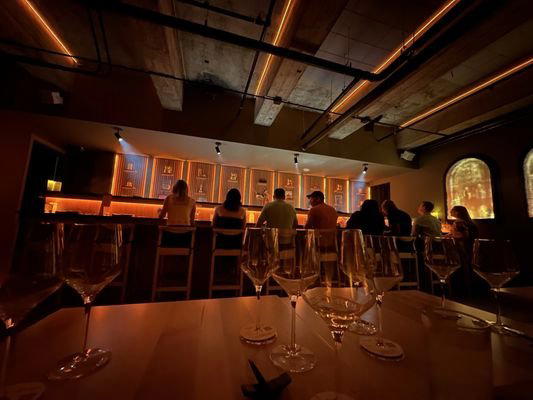
The physical environment reflects that priority. Strip-mall rooms live and die by how they handle light, sound, and the distance between a guest and the bar. A space that positions the bar as its organizational center, rather than an afterthought bolted to a dining room, communicates intent before the first drink is ordered. Meadow, within its format, reads as a room organized around that intention: the kind of neighborhood place where you come for a drink and find yourself staying for another.
The Cocktail Program in Context
San Antonio's bar scene has historically operated in the shadow of Austin and Houston, both of which developed more nationally visible craft cocktail cultures earlier. Julep in Houston built its identity around Southern whiskey traditions with rigorous sourcing; Kumiko in Chicago applied Japanese technique and precision to cocktail construction at a level that earned national attention. These are programs defined by a clear thesis. The more interesting question for a neighborhood bar is whether it needs that kind of thesis at all, or whether the thesis is the neighborhood itself.
Meadow's positioning as a neighborhood eatery and bar suggests a different ambition: not destination drinking but habitual drinking, the kind of place a regular returns to because the drinks are reliably good and the room feels like theirs. That model has proven durable in American cities where cocktail culture has matured past the phase of novelty. ABV in San Francisco built exactly that kind of loyalty on Valencia Street. The format works when the program has enough depth to reward repeat visits without requiring the guest to treat each visit as an education.
What distinguishes a bar program at this level is often less about the most ambitious drink on the menu and more about the floor of quality: whether the direct orders, the whiskey sour or the gin and tonic, arrive with the same care as the signature builds. Bars that get that floor right tend to build the kind of neighborhood reputation that sustains a room over years rather than months. Bitter and Twisted in Phoenix demonstrated that a technically serious menu could coexist with high volume; Bar Leather Apron in Honolulu showed that the same discipline applied in a smaller, more intimate format could build sustained critical recognition.
Neighborhood Bar as a Category
The neighborhood bar category in American dining has undergone a quiet restructuring. What was once defined by proximity and price has increasingly been redefined by the quality of its bar program. The gastropub model that spread through American cities in the 2000s gave way to a more hybrid format: a room that takes food seriously but whose identity is organized around drinking rather than eating. Meadow's name signals that hybrid clearly. Eatery comes second.
In the broader American context, the bars that have held their ground longest tend to share a few structural characteristics: a menu that changes seasonally rather than staying static, a commitment to local or regional spirits alongside global standards, and a physical environment that rewards lingering. Jewel of the South in New Orleans revived a historic format and used it to anchor a serious cocktail program within a specific culinary tradition. Allegory in Washington D.C. built a narrative-led drink menu inside a hotel lobby format. Each operates with a clear sense of what the room is for.
For Meadow, the Hill Country Village address places it in a suburban corridor where the competition is largely chain casual dining and the bar program is typically an afterthought. In that context, a room that actually prioritizes its drinks occupies a distinct position, not because it is competing with destination bars downtown, but because it is offering something the immediate neighborhood largely does not have. That is a different kind of use, and it tends to generate a different kind of loyalty.
How It Sits Among American Bar Programs
Nationally, the bars that have achieved the most sustained recognition share a tendency to commit to a specific point of view rather than trying to cover every category. Canon in Seattle built one of the most extensive spirits libraries in the country and made depth the program's identity. Superbueno in New York City applied Latin American flavor traditions to a technically precise cocktail program. Bar Kaiju in Miami drew from Japanese pop culture references to build a visually and conceptually coherent room. Even The Parlour in Frankfurt demonstrated that the neighborhood bar format could carry serious cocktail intent across cultural contexts.
Meadow does not operate in that tier of national visibility, but the model it represents, a neighborhood room that takes the bar seriously without positioning itself as a destination, is in many ways harder to sustain. Destination bars can build identity through novelty and press. Neighborhood bars build identity through consistency and return visits. For an area like Hill Country Village, a room that gets that balance right fills a gap that is more useful to daily life than a higher-profile downtown alternative.
Planning a Visit
Meadow sits at 555 West Bitters Road, Suite 110, in the strip-mall corridor that runs through the Hill Country Village area north of central San Antonio. For visitors staying in the broader San Antonio area, it reads as a reliable stop before or after activity in the northern suburbs rather than a cross-city destination. Contact and booking information is best confirmed directly, as operational details were not available at the time of writing. For a broader picture of where Meadow fits within the local dining scene, see our full Hill Country Village restaurants guide.
Continue exploring
More in Hill Country Village
Bars in Hill Country Village
Browse all →

Restaurants in Hill Country Village
Browse all →
Hotels in Hill Country Village
Browse all →
Wineries in Hill Country Village
Browse all →
At a Glance
- Cozy
- Elegant
- Sophisticated
- Warm
- Date Night
- Group Outing
- Casual Hangout
- Special Occasion
- Standalone
- Design Destination
- Seated Bar
- Lounge Seating
- Booth Seating
- Craft Cocktails
- Conventional Wine
- Classic Cocktails
Current opening hours
- Monday
- Closed
- Tuesday
- 11 AM–2 PM, 4–9:30 PM
- Wednesday
- 11 AM–2 PM, 4–9:30 PM
- Thursday
- 11 AM–1 PM
- Friday
- 11 AM–2 PM, 4–9:30 PM
- Saturday
- 10 AM–2 PM, 4–9:30 PM
- Sunday
- 10 AM–2 PM
Hours can change for holidays and private events. Last verified .
Friendly, fun, warm and relaxing environment with a neighborhood feel; set in a shopping center with a welcoming, intimate atmosphere.
Know Before You Go
- Getting there
- 555 W Bitters Rd #110, San Antonio, TX 78216